吉林大学学报(医学版) ›› 2026, Vol. 52 ›› Issue (5): 1428-1438.doi: 10.13481/j.1671-587X.20260523

• 临床研究 • 上一篇    

16S rDNA扩增子测序分析抗菌光动力疗法对慢性牙髓炎和慢性根尖周炎患者感染根管菌群的影响

俞敏1,2,孔垂范2,3,林焱1,2,赵莉2()   

  1. 1.石河子大学第一附属医院,新疆 石河子 832000
    2.新疆维吾尔自治区人民医院口腔科, 新疆 乌鲁木齐 830000
    3.新疆医科大学研究生院,新疆 乌鲁木齐 830000
  • 收稿日期:2025-12-23 接受日期:2026-02-04 出版日期:2026-09-28 发布日期:2026-10-15
  • 通讯作者: 赵莉 E-mail:rmyyzhaoli@163.com
  • 作者简介:俞 敏(1998-),女,甘肃省武威市人,在读硕士研究生,主要从事牙体牙髓病学诊断和治疗方面的研究。
  • 基金资助:
    新疆维吾尔自治区卫健委天山英才医药高层次人才培养计划项目(TSYC202301B017)

Impact of antimicrobial photodynamic therapy on infected root canal microbiota in patients with chronic pulpitis and chronic apical periodontitis using 16S rDNA amplicon sequencing

Min YU1,2,Chuifan KONG2,3,Yan LIN1,2,Li ZHAO2()   

  1. 1.Department of Stomatology,First Affiliated Hospital,Shihezi University,Shihezi 832000,China
    2.Department of Stomatology,People’s Hospital of Xinjiang Uygur Autonomous Region,Urumqi 830000,China
    3.Graduate School,Xinjiang Medical University,Urumqi 830000,China
  • Received:2025-12-23 Accepted:2026-02-04 Online:2026-09-28 Published:2026-10-15
  • Contact: Li ZHAO E-mail:rmyyzhaoli@163.com

摘要:

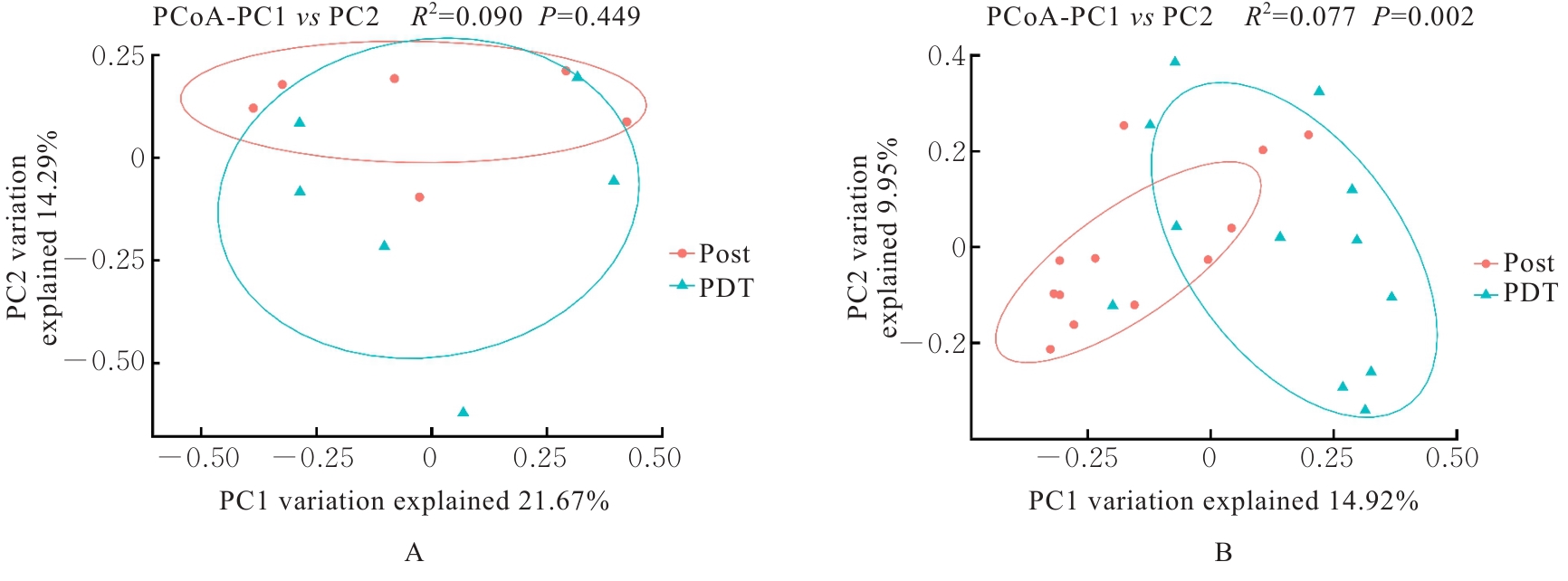
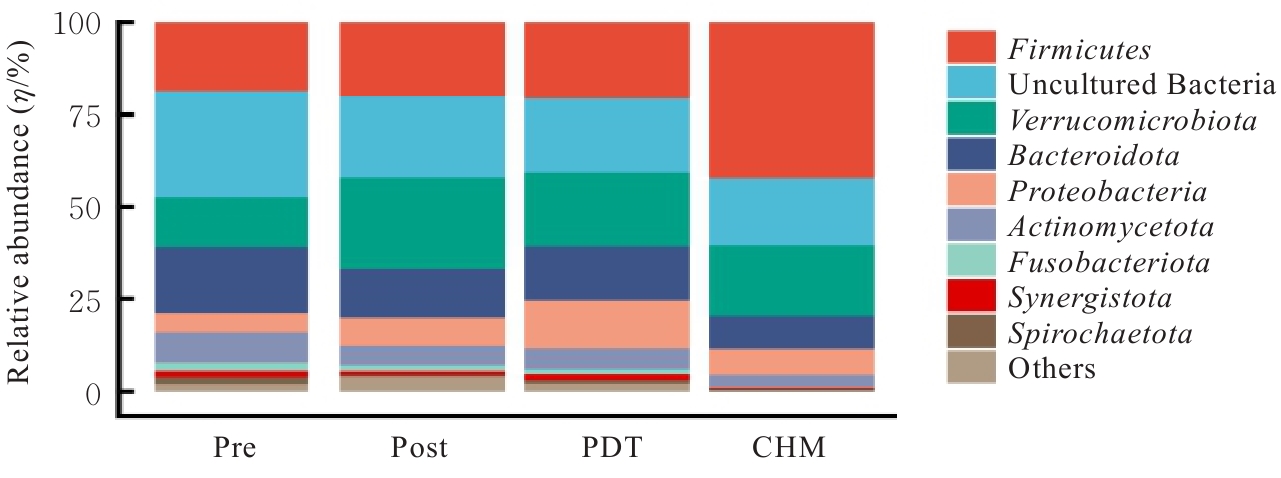
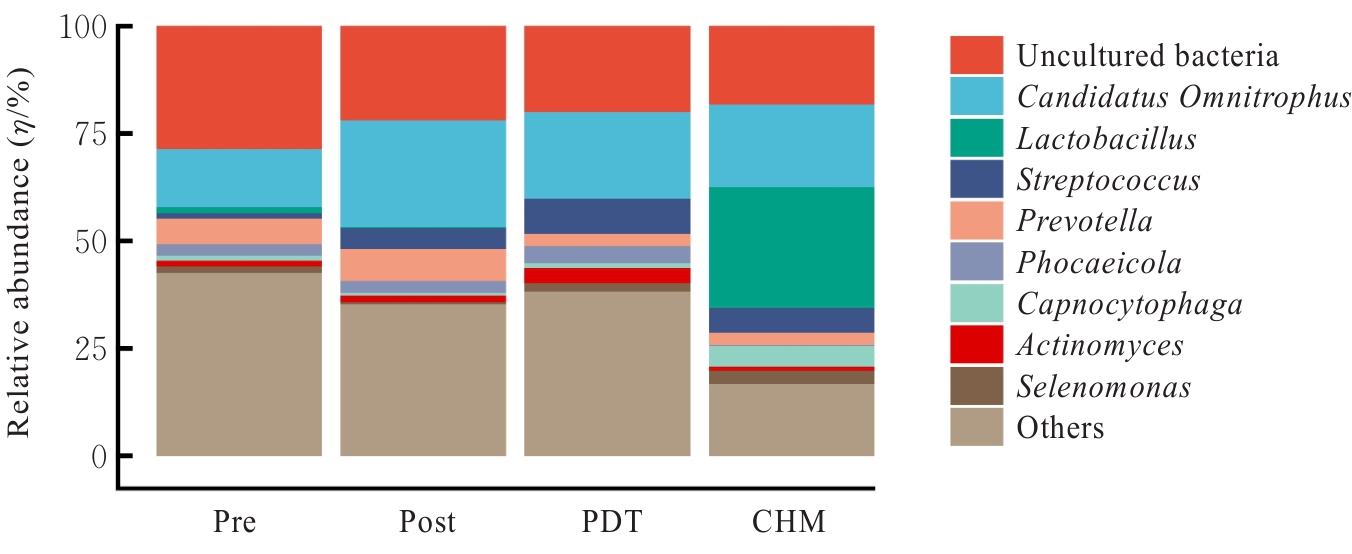
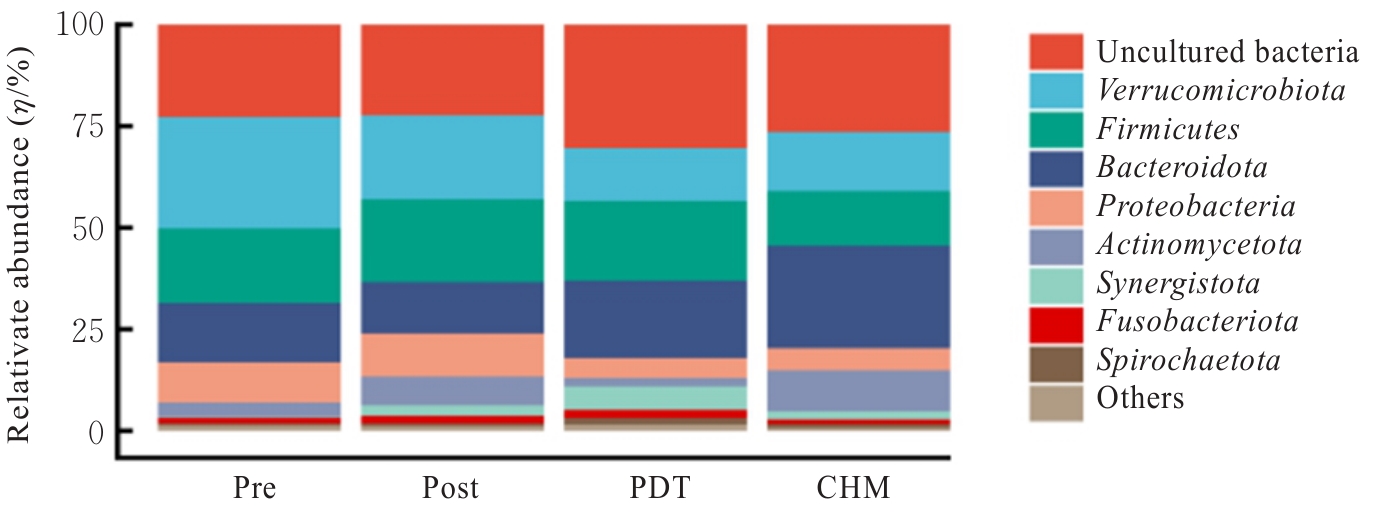
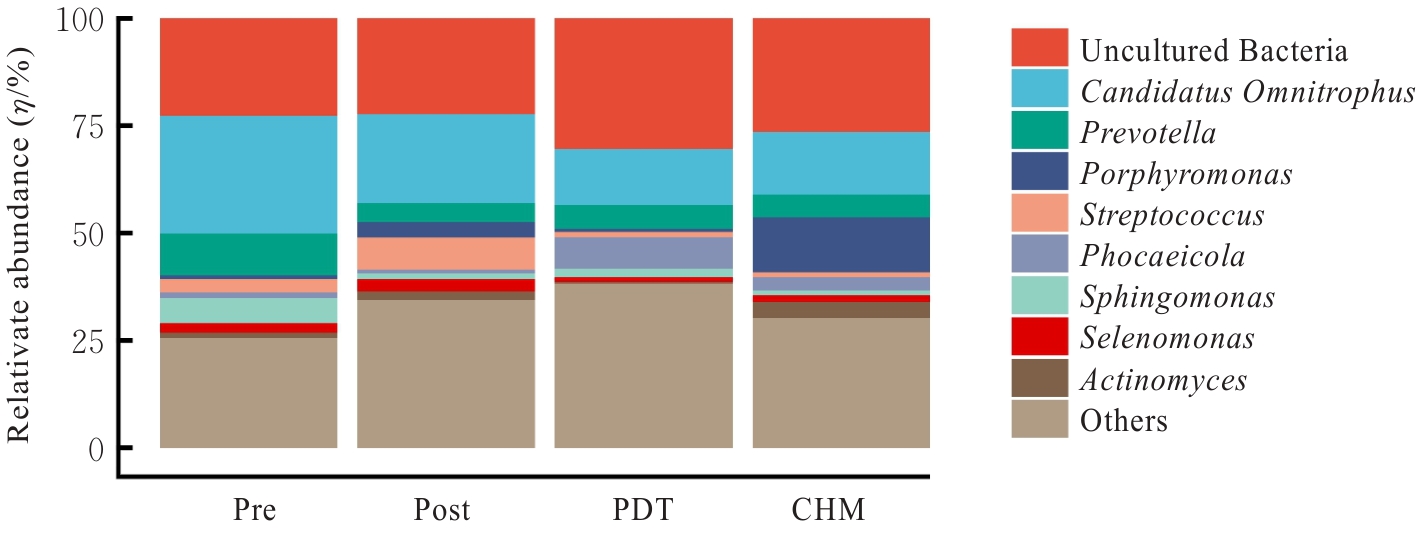
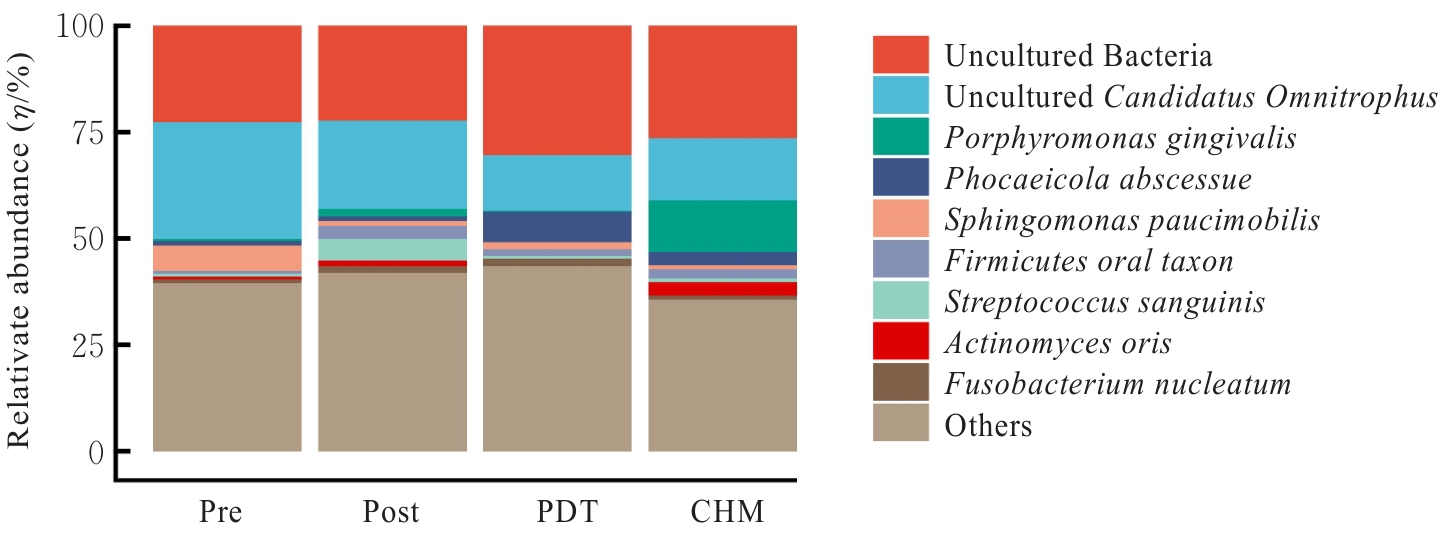
目的 利用16S 核糖体DNA(rDNA)扩增子测序技术系统分析抗菌光动力疗法(aPDT)对感染根管菌群的影响,评估其作为根管消毒辅助手段的临床应用效果。 方法 临床纳入15例慢性牙髓炎(CP)患者为CP组,15例慢性根尖周炎(CAP)患者为CAP组,分别采集2组患者开髓后(Pre组)、常规根管预备与消毒后(Post组)、aPDT干预后(PDT组)和氢氧化钙法(CHM)封药后(CHM组)4个关键阶段的根管菌群样本。对通过质量检测与文库构建的合格样本进行16S rDNA扩增子测序,分析样本中根管菌群的Alpha多样性指数(Chao1指数、Shannon指数和Simpson指数)、Beta多样性指数和群落组成差异。 结果 CP组患者样本中,PDT组测序失败率明显高于Post组(P<0.05);后续分析共纳入6例样本。CP组患者4组样本的Alpha多样性指数均呈降低趋势,但差异无统计学意义(P>0.05);Post组和PDT组Beta多样性指数比较差异无统计学意义(P>0.05);与其他3组比较,CHM组样本中厚壁菌门(Firmicutes)、加氏乳杆菌(Lactobacillus gasseri)和未培养的乳杆菌(uncultured Lactobacillus)相对丰度均明显升高(P<0.05)。CAP组患者样本中,PDT组与Post组测序失败率比较差异无统计学意义(P>0.05);后续分析共纳入12例样本。CAP组患者4组样本的Chao1指数有降低趋势,但Alpha多样性指数比较差异均无统计学意义(P>0.05);Post组和PDT组Beta多样性指数比较差异有统计学意义(P<0.05);与Post组比较,PDT组样本中放线菌门(Actinobacteria)、链球菌属(Streptococcus)、放线菌属(Actinomyces)和牙龈卟啉单胞菌(Porphyromonas gingivalis)相对丰度明显降低(P<0.05);与其他3组比较,CHM组样本中卟啉单胞菌属(Porphyromonas)和Porphyromonas gingivalis相对丰度明显升高(P<0.05)。 结论 aPDT辅助根管消毒有明显的抗菌增效作用,其效果存在疾病类型特异性。CP患者中,aPDT可进一步提升灭菌效果,并呈现降低根管菌群丰富度和均匀度的趋势;CAP患者中,aPDT除呈现降低根管菌群丰富度的趋势外,还可改变根管菌群群落组成。aPDT对菌群变化的影响可能与患者预后有关。

关键词: 抗菌光动力疗法, 慢性牙髓炎, 慢性根尖周炎, 根管菌群, 16S核糖体DNA扩增子测序

Abstract:

Objective To systematically analyze the effect of antimicrobial photodynamic therapy (aPDT) on root canal microbiota in infected root canals using 16S ribosomal DNA(rDNA) amplicon sequencing technology, and to evaluate its clinical efficacy as an adjunct to root canal disinfection. Methods Fifteen patients with chronic pulpitis (CP) were enrolled as CP group, and 15 patients with chronic apical periodontitis (CAP) were enrolled as CAP group. Root canal microbiota samples were collected from patients in two groups at four key treatment stages: after access cavity preparation (Pre group), after routine root canal preparation and disinfection (Post group), after aPDT intervention (PDT group), and after calcium hydroxide(CHM) dressing (CHM group). 16S rDNA amplicon sequencing method was used to analyze qualified samples that passed quality inspection and library construction, including Alpha diversity indices (Chao1 index, Shannon index, Simpson index), Beta diversity, and community composition differences of root canal microbiota in samples from patients in two groups. Results In samples of patients in CP group, compared with Post group, the sequencing failure rate was significantly increased in PDT group (P<0.05), and 6 samples were subsequently included for analysis. The Alpha diversity indices in four groups of CP patients all showed a decreasing trend, with no statistically significant differences (P>0.05). No statistically significant difference was observed in Beta diversity between Post group and PDT group of CP patients (P>0.05). Compared with other three groups, the relative abundances of Firmicutes, Lactobacillus gasseri, and uncultured Lactobacillus were significantly increased in samples in CHM group (P<0.05). As for samples of patients in CAP group, no statistically significant difference was observed in the sequencing failure rate between PDT group and Post group (P>0.05), and 12 samples were subsequently included for analysis. The Chao1 index in four groups of CAP patients showed a decreasing trend, with no statistically significant differences in any Alpha diversity indices (P>0.05). A statistically significant difference was observed in Beta diversity between post group and PDT group of CAP patients (P<0.05). Compared with Post group, the relative abundances of Actinobacteria, Streptococcus, Actinomyces, and Porphyromonas gingivalis were significantly decreased in samples in PDT group (P<0.05). Compared with other three groups, the relative abundances of Porphyromonas and Porphyromonas gingivalis were significantly increased in samples in CHM group (P<0.05). Conclusion As an adjunct to root canal disinfection, aPDT exerts significant synergistic antimicrobial effects, with efficacy varying by disease type. In CP patients, aPDT enhances sterilization efficacy and shows a trend of decreasing the richness and evenness of root canal microbiota. In CAP patients, aPDT not only shows a trend of reducing root canal microbiota richness but also alters the community composition of root canal microbiota. The effect of aPDT on microbiota alterations may be associated with patient prognosis.

Key words: Antimicrobial photodynamic therapy, Chronic pulpitis, Chronic apical periodontitis, Root canal microbiota, 16S rDNA amplicon sequencing

中图分类号: 

  • R781.05