吉林大学学报(工学版) ›› 2026, Vol. 56 ›› Issue (7): 1870-1881.doi: 10.13229/j.cnki.jdxbgxb.20241359
• 交通运输工程·土木工程 • 上一篇
风和演化车流下的桥梁⁃模数式伸缩缝分析框架及伸缩缝磨损分析
刘宁1,2( ),刘焕举1(),李鹏智1,胡香群1,詹雨昂1
- 1.河北工程大学 土木工程学院,河北 邯郸 056038
2.长安大学 旧桥检测与加固技术交通运输行业重点实验室,西安 710000
Bridge⁃modular expansion joint analysis framework and expansion joint wear analysis under wind and evolutionary traffic flow
Ning LIU1,2(),Huan-ju LIU1(),Peng-zhi LI1,Xiang-qun HU1,Yu-ang ZHAN1
- 1.School of Civil Engineering,Hebei University of Engineering,Handan 056038,China
2.Key Laboratory of Transport Industry of Bridge Detection Reinforcement Technology,Chang'an University,Xi'an 710000,China
摘要:
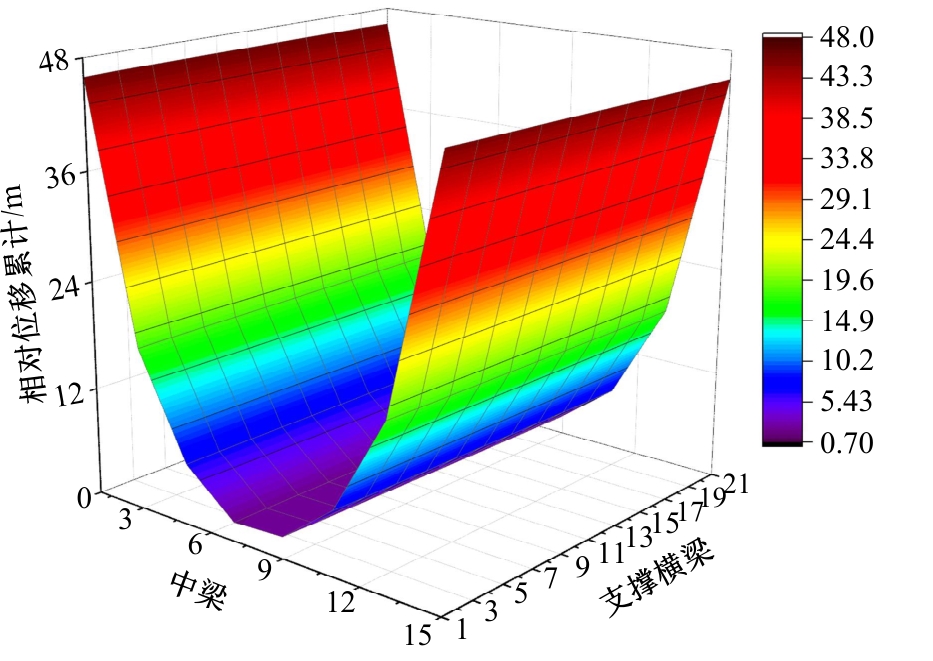
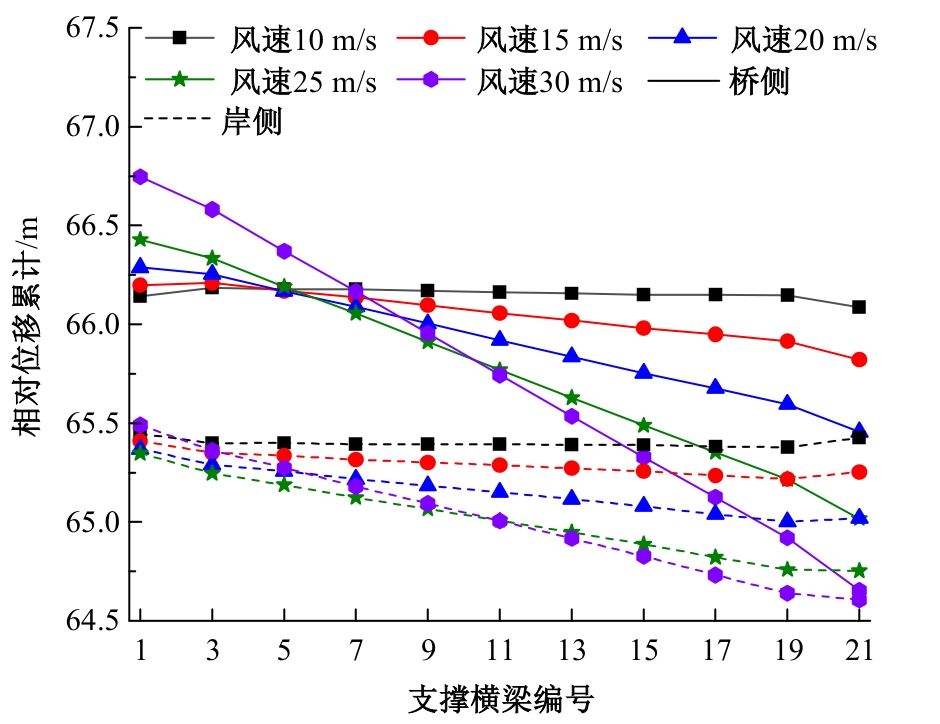
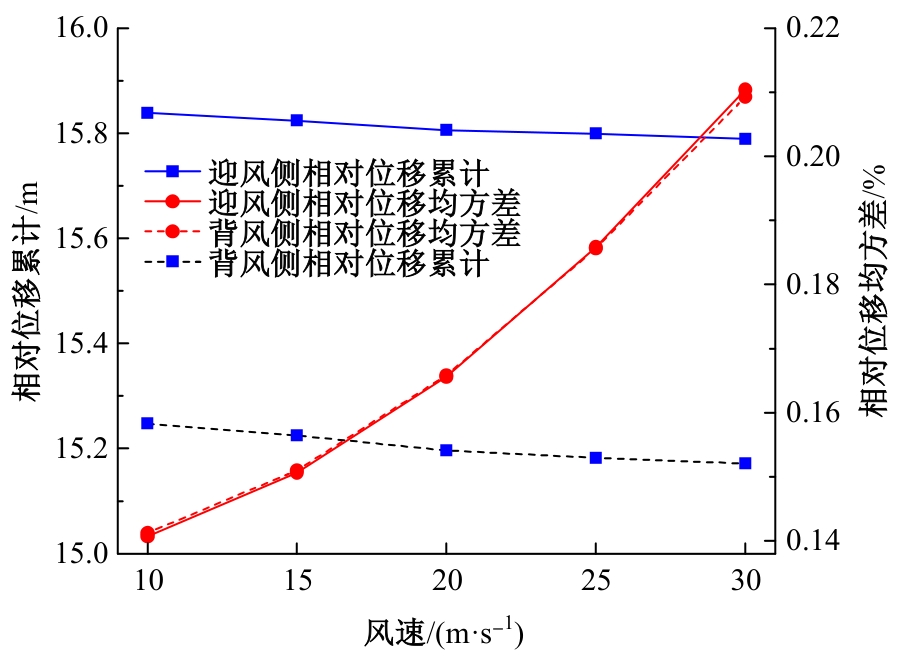
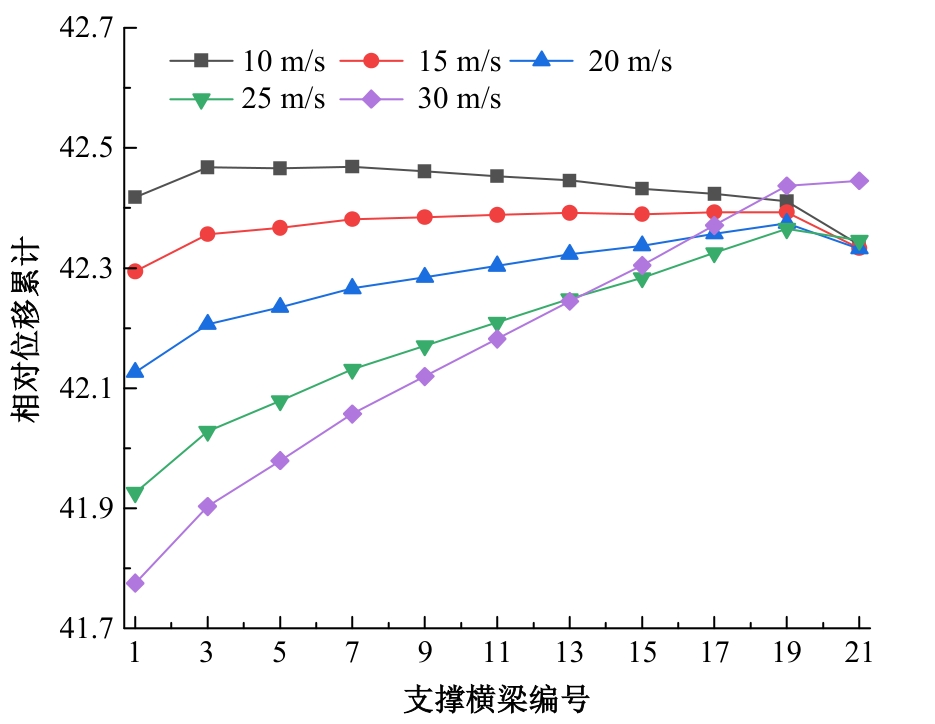
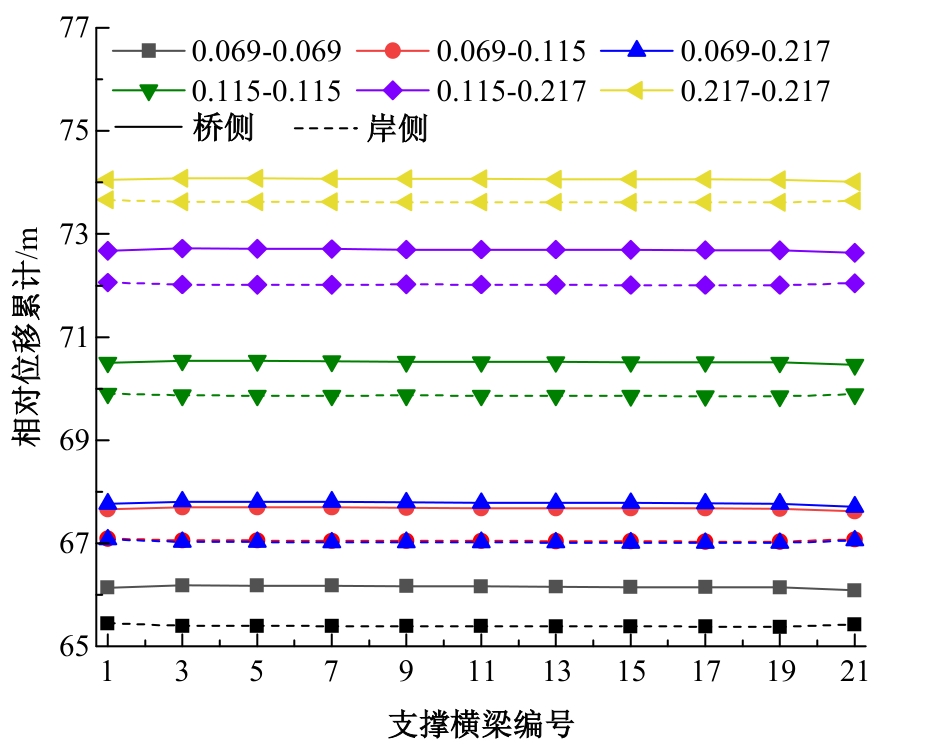
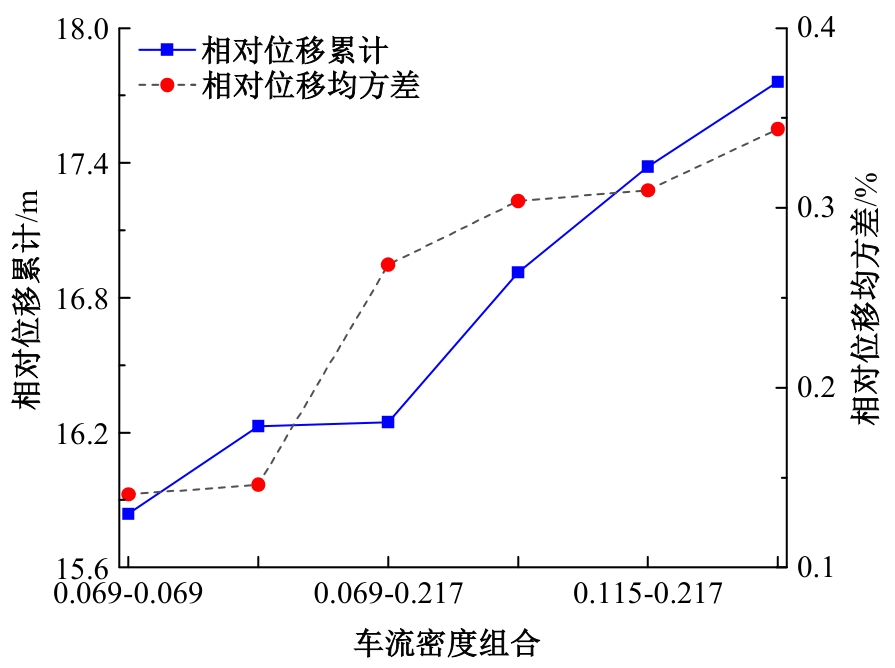
模数式伸缩缝的磨损本质上是其内部多构件在荷载作用下持续联动响应的累积结果,风荷载与车流构成其运动的主要外部动因。为实现磨损的精准分析,本文构建了融合动因荷载演化过程的“荷载-桥梁-伸缩缝”耦合分析系统。首先,针对桥梁-伸缩缝结构所处的风环境和车流演化两个运营场景,分别进行独立程序仿真;并从伸缩缝响应分析的需求出发,提出了主要方向车辆风荷载取值方法和统一简化的气动干扰处理方法,形成了结构的风场与车流演化场景及其荷载化关联模式。其次,采用多点约束联结同尺度的桥梁和伸缩缝模型,通过程序循环调用方式,将运营场景及其荷载化过程与桥梁-伸缩缝同尺度模型的响应分析环节相贯通,建立了风-车-桥梁-伸缩缝一体化分析系统,为伸缩缝磨损分析提供了计算平台。最后,选取斜拉桥-模数式伸缩缝结构,基于磨损指标,开展了风和演化车流共同作用下的伸缩缝磨损参数分析。结果表明:位移箱内滑动支承与压紧支承的设计参数可统一配置,而剪切弹簧及上、下层梁间的滑动支承和压紧支承则需差异化设计;位移箱内磨损在迎风面随风速增大而增大,在背风侧则呈减小趋势,剪切弹簧及上、下层梁间支承的磨损随风速增大而减小;双向车流密度之和对磨损起控制性作用,密度和越大磨损越严重,且车流分布越均匀磨损越大;与风速变化相比,车流对伸缩缝磨损的影响更为显著。
中图分类号:
- U441.2
| [1] | Sun Z, Santos J, Caetano E, et al. Interpreting cumulative displacement in a suspension bridge with a physics-based characterisation of environment and roadway/railway loads[J]. Journal of Civil Structural Health Monitoring, 2023, 13: 387-397. |
| [2] | Hu Jian-hua, Wang Lian-hua, Song Xiao-peng, et al. Field monitoring and response characteristics of longitudinal movements of expansion joints in long-span suspension bridges[J]. Measurement, 2020, 162: 1-13. |
| [3] | Guo Tong, Liu Jie, Huang Ling-yu. Investigation and control of excessive cumulative girder movements of long-span steel suspension bridges[J]. Engineering Structures, 2016,125: 217-226. |
| [4] | 丁勇, 王佩, 游玖昂, 等. 桥梁伸缩缝跳车冲击荷载计算方法与模型实验[J]. 哈尔滨工业大学学报, 2020, 52(3): 129-135, 146. |
| Ding Yong, Wang Pei, You Jiu-ang, et al. Numerical methods and model experiment for impact load induced by vehicle bumping at bridge expansion joint[J]. Journal of Harbin Institute of Technology, 2020, 52(3): 129-135, 146. | |
| [5] | Guo Tong, Huang Ling-yu, Liu Jie, et al. Damage mechanism of control springs in modular expansion joints of long-span bridges[J]. Journal of Bridge Engineering, 2018, 23(7): No. 04018038. |
| [6] | 刘焕举, 武隽, 刘宁, 等. 精细微观车流-桥梁耦合系统构建及伸缩缝纵向变形分析[J]. 中国公路学报,2021, 34(12): 115-128. |
| Liu Huan-ju, Wu Jun, Liu Ning, et al. Construction of fine microscopic vehicle-bridge coupling system and analysis of longitudinal deformation of the expansion joint[J]. Cina Journal of Highway and Transport,2021, 34(12): 115-128. | |
| [7] | 韩大章, 郭彤, 黄灵宇, 等. 随机车辆荷载下大跨钢桥伸缩缝纵向位移响应及病害控制研究[J]. 振动与冲击, 2019, 38(24): 172-178. |
| Han Da-zhang, Guo Tong, Huang Ling-yu, et al. A study on longitudinal displacements and damage control of expansion joints of long-span steel bridges under stochastic traffic loads [J]. Journal of vibration and shock, 2019,38(24):172-178. | |
| [8] | 严情木, 王少华, 杨刚, 等. 大位移桥梁伸缩缝的垂向动力学响应研究[J]. 机械设计与制造, 2013(7): 41-43, 46. |
| Yan Qing-mu, Wang Shao-hua, Yang Gang, et al. Research of vertical dynamic response of the large displacement bridge expansion joint[J]. Machinery Design & Manufacture, 2013(7): 41-43, 46. | |
| [9] | Yuan Xin-zhe, Li Rui-qi, Wang Jian-guo, et al. Dynamic numerical analysis of single-support modular bridge expansion joints[J]. Steel and Composite Structures, 2016, 22(1): 1-12. |
| [10] | 孙正峰, 王少华, 李冰, 等. 基于ABAQUS的大位移桥梁伸缩缝垂向动力学分析[J]. 机械强度, 2014, 36(2): 228-232. |
| Sun Zheng-feng, Wang Shao-hua, Li Bing, et al. Vertical dynamic analysis of the large displacement bridge expansion joint[J]. Journal of Mechanical Strength, 2014, 36(2): 228-232. | |
| [11] | Hou Jian-ling, Wang Jin, Xu Wei-bin, et al. An analysis method of vehicle-bridge coupling vibration considering effects of expansion joint parameters and its application[J]. Structural Control and Health Monitoring, 2022, 29(11): No.3065. |
| [12] | Ding Yong, Zhang Wei, Au F T K. Effect of dynamic impact at modular bridge expansion joints on bridge design[J]. Engineering Structures, 2016, 127: 645-662. |
| [13] | 丁勇, 韩凌霞, 吕建华, 等. 模数式桥梁伸缩缝疲劳寿命分析与结构优化[J]. 中国公路学报, 2021, 34(2): 265-275. |
| Ding Yong, Han Ling-xia, Jian-hua Lü, et al. Fatigue life analysis and structural optimization of modular bridge expansion joint[J]. China Journal of Highway and Transport,2021,34(2):265-275. | |
| [14] | 张露, 李冰, 王少华, 等. 载重车辆-伸缩缝耦合系统的垂向振动数值模拟方法[J]. 西南交通大学学报, 2022, 57(5): 1032-1039. |
| Zhang Lu, Li Bing, Wang Shao-hua, et al. Numerical simulation method for vertical vibration of heavy vehicle-expansion joint coupled system[J]. Journal of Southwest Jiaotong University, 2022, 57(5): 1032-1039. | |
| [15] | 刘宁, 刘焕举, 史赛威, 等. 车流作用下大跨桥梁-伸缩缝一体仿真方法及动力分析[J]. 湖南大学学报:自然科学版, 2025, 52(1): 149-159. |
| Liu Ning, Liu Huan-ju, Shi Sai-wei, et al. Integrated simulation method and dynamic analysis of long-span bridge-expansion joint under traffic flow[J]. Journal of Hunan University(Natural Sciences),2025,52(1):149-159. | |
| [16] | 韩万水. 风-汽车-桥梁系统空间耦合振动研究[D]. 上海: 同济大学土木工程学院, 2006. |
| Han Wan-shui. Three-dimensional coupling vibration of wind-vehicle-bridge system[D]. Shanghai: School of Civil Engineering, Tongji University, 2006. | |
| [17] | Han Wan-shui, Liu Huan-ju, Wu Jun, et al.Dynamic analysis of long-span cable-stayed bridges under wind and traffic using aerodynamic coefficients considering aerodynamic interference[J]. Wind and Structures, 2017, 24(5): 405-430. |
| [18] | 陈晓冬. 大跨桥梁侧缝行车安全分析[D]. 上海: 同济大学土木工程学院, 2007. |
| Chen Xiao-dong. Analysis of vehicle safety under cross wind on long span bridge[D]. Shanghai: School of Civil Engineering,Tongji University, 2007. |
| [1] | 范亮,曾文,文强,赵富裕,徐英铭. 集束群钉装配式钢-混组合梁桥自振特性与车桥耦合分析[J]. 吉林大学学报(工学版), 2025, 55(7): 2354-2364. |
| [2] | 周勇军,穆丰睿,蔡诚,杨帆. 基于正交试验法的悬索桥索夹螺杆紧固力损失影响因素[J]. 吉林大学学报(工学版), 2025, 55(4): 1188-1196. |
| [3] | 周敉,田兴旺,朱国强,马雷. 装配式桥墩UHPC湿接缝的剪切强度计算方法[J]. 吉林大学学报(工学版), 2025, 55(12): 3928-3941. |
| [4] | 王瑞正,张元海. 设置柔性横隔板的曲线波形钢腹板钢箱组合梁畸变效应[J]. 吉林大学学报(工学版), 2025, 55(11): 3641-3652. |
| [5] | 陈永,安卓奥博,张娇娇. 基于旋转自注意力改进Mask RCNN的桥梁裂缝检测方法[J]. 吉林大学学报(工学版), 2025, 55(11): 3660-3672. |
| [6] | 刘世明,张威,马印平,刘永健. 超高性能钢壳混凝土连续刚构桥概念设计与可行性[J]. 吉林大学学报(工学版), 2025, 55(10): 3242-3252. |
| [7] | 王淑坤,冯育泽,张景然,张心明,郑龙. 仿清道夫下唇结构除污性能分析[J]. 吉林大学学报(工学版), 2025, 55(1): 392-400. |
| [8] | 薛宇欣,周勇军,王业路,范凯翔,赵煜. 基于悬锤系统的简支梁桥冲击系数测试方法适用性[J]. 吉林大学学报(工学版), 2024, 54(9): 2557-2567. |
| [9] | 孙永新,蔺鹏臻,杨子江,冀伟. 考虑黏结-滑移效应的UHPC梁裂缝宽度计算方法[J]. 吉林大学学报(工学版), 2024, 54(9): 2600-2608. |
| [10] | 郭雪莲,韩万水,王涛,周恺,张修石,张书颖. 大件车通行弯桥抗倾覆稳定安全系数评估方法[J]. 吉林大学学报(工学版), 2024, 54(8): 2229-2237. |
| [11] | 肖林,魏欢博,卫星,康志锐. 钢混组合梁栓钉锈胀下混凝土板开裂行为数值分析[J]. 吉林大学学报(工学版), 2024, 54(7): 1958-1965. |
| [12] | 张春雷,邵长宇,苏庆田,戴昌源. 球扁钢肋钢纤维混凝土组合桥面板正弯矩受力性能试验[J]. 吉林大学学报(工学版), 2024, 54(6): 1634-1642. |
| [13] | 黄汉辉,陈康明,吴庆雄. 钢管混凝土桁式弦杆组合连续梁抗弯性能[J]. 吉林大学学报(工学版), 2024, 54(6): 1665-1676. |
| [14] | 张彦玲,贾云飞,贾晓远,郑旺,李运生. 装配式小箱梁桥内力横向分布系数建议公式[J]. 吉林大学学报(工学版), 2024, 54(6): 1688-1700. |
| [15] | 邵长江,崔皓蒙,漆启明,庄卫林. 近断层大跨RC轻柔拱桥纵向阻尼器减震研究[J]. 吉林大学学报(工学版), 2024, 54(5): 1355-1367. |
|
||