Journal of Jilin University(Medicine Edition) ›› 2026, Vol. 52 ›› Issue (5): 1291-1301.doi: 10.13481/j.1671-587X.20260511
• Research in basic medicine • Previous Articles
Network pharmacology analysis and in vitro experimental validation of inhibitory effect of ginseng-lithospermum erythrorhizon extract on proliferation and invasion of human keloid fibroblasts
Dongyu YANG1,Meiqi YUAN1,Jiajing HONG2( )
- 1.Department of Preventive Treatment of Disease,Third Affiliated Clinical Hospital,Changchun University of Chinese Medicine,Changchun 130117,China
2.Department of Acupuncture Basic Teaching and Research,College of Acupuncture and Tuina,Changchun University of Chinese Medicine,Changchun 130117,China
-
Received:2026-01-10Accepted:2026-04-30Online:2026-09-28Published:2026-10-15 -
Contact:Jiajing HONG E-mail:1011943881@qq.com

CLC Number:
- R285.5
Cite this article
Dongyu YANG,Meiqi YUAN,Jiajing HONG. Network pharmacology analysis and in vitro experimental validation of inhibitory effect of ginseng-lithospermum erythrorhizon extract on proliferation and invasion of human keloid fibroblasts[J].Journal of Jilin University(Medicine Edition), 2026, 52(5): 1291-1301.
share this article
Tab. 1
Active ingredients of ginseng-lithospermum erythrorhizon"
| Herb | MOL ID | Active ingredient | Molecular weight |
|---|---|---|---|
Ginseng | MOL002879 | Diop | 390.62 |
| MOL000358 | β-sitosterol | 414.79 | |
| MOL000449 | Stigmasterol | 412.77 | |
| MOL003648 | Inermin | 284.28 | |
| MOL000422 | Kaempferol | 286.25 | |
| MOL004492 | Chrysanthemaxanthin | 584.96 | |
| MOL005308 | Aposiopolamine | 271.34 | |
| MOL005314 | Celabenzine | 379.55 | |
| MOL005317 | Deoxyharringtonine | 515.66 | |
| MOL005318 | Dianthramine | 289.26 | |
| MOL005320 | Arachidonate | 304.52 | |
| MOL005321 | Frutinone A | 264.24 | |
| MOL005344 | Ginsenoside Rh2 | 622.98 | |
| MOL005348 | Ginsenoside Rh4 | 458.80 | |
| MOL005356 | Girinimbin | 263.36 | |
| MOL005357 | Gomisin B | 514.62 | |
| MOL005360 | Malkangunin | 432.56 | |
| MOL005376 | Panaxadiol | 460.82 | |
| MOL005384 | Suchilactone | 368.41 | |
| MOL005399 | Alexandrin | 414.79 | |
| MOL005301 | Ginsenoside Rg5 | 442.80 | |
| MOL000787 | Fumarine | 353.40 | |
Lithospermum erythrorhizon | MOL001494 | Mandenol | 308.56 |
| MOL002372 | (6Z, 10 E, 14E, 18 E)-2, 6, 10, 15, 19, 23-hexamethyltetracosa-2,6, 10, 14, 18, 22-hexaene | 410.80 | |
| MOL002883 | Ethyl oleate | 310.58 | |
| MOL000359 | Sitosterol | 414.79 | |
| MOL007714 | 1-methoxyacetylshikonin | 344.39 | |
| MOL007715 | [(1R)-1-(5,8-dihydroxy-1,4-dioxo-2-naphthyl)-4-methyl-pent-3-enyl] propanoate | 344.39 | |
| MOL007716 | Acetylshikonin | 330.36 | |
| MOL007722 | Isoarnebin 4 | 288.32 | |
| MOL007728 | Lithospermidin A | 388.45 | |
| MOL007734 | 5-[(E)-5-(3-furyl)-2-methyl-pent-2-enyl]- 2,3-dimethoxy-p-benzoquinone | 316.38 | |
| MOL007735 | Des-O-methyllasiodiplodin | 278.38 | |
| MOL007736 | Lithospermidin B | 388.45 |
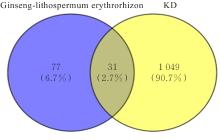
Fig. 1
Venn diagram of common targets between ginseng-lithospermum erythrorhizon and KD"
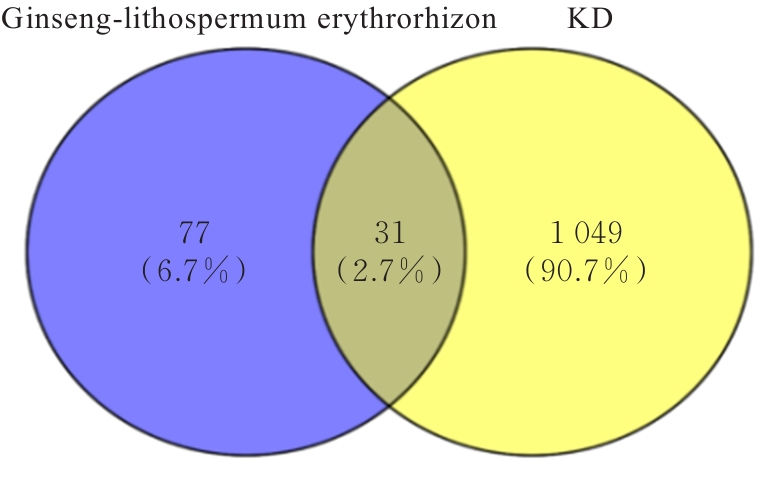
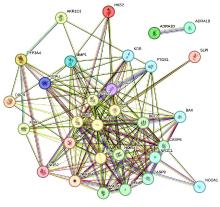
Fig. 2
PPI network diagram of common targets between ginseng-lithospermum erythrorhizon and KD"
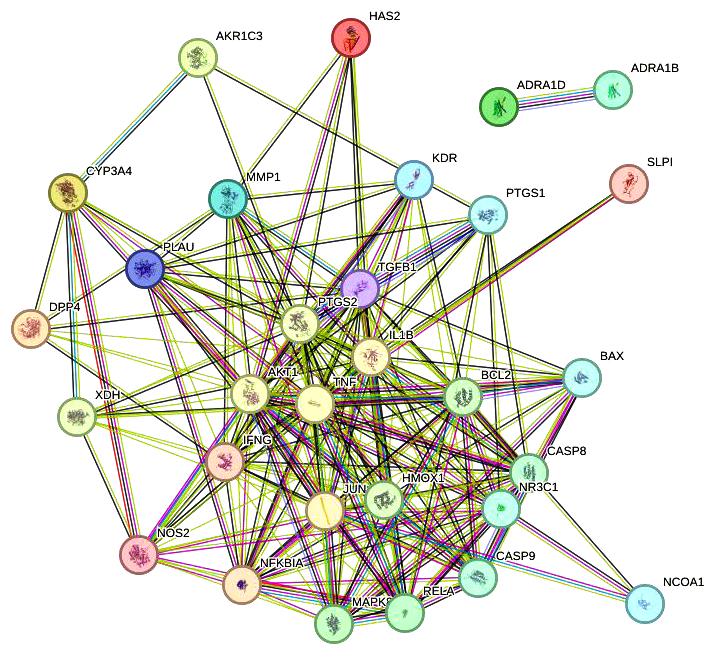
Fig. 3
Drug-KD-target network diagram"
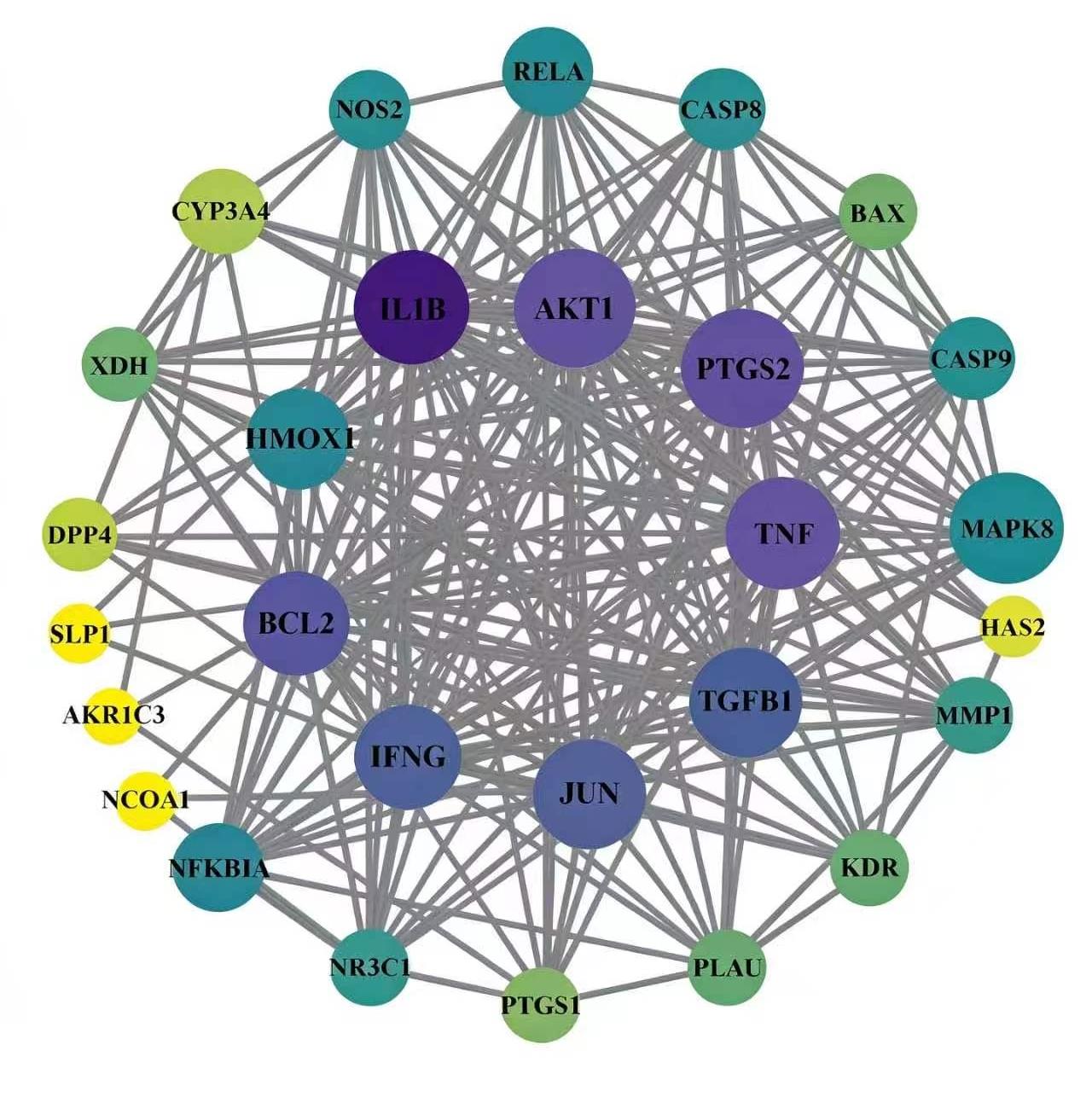
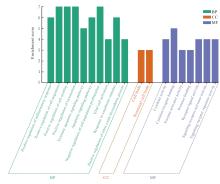
Fig. 4
GO functional enrichment analysis of key targets"
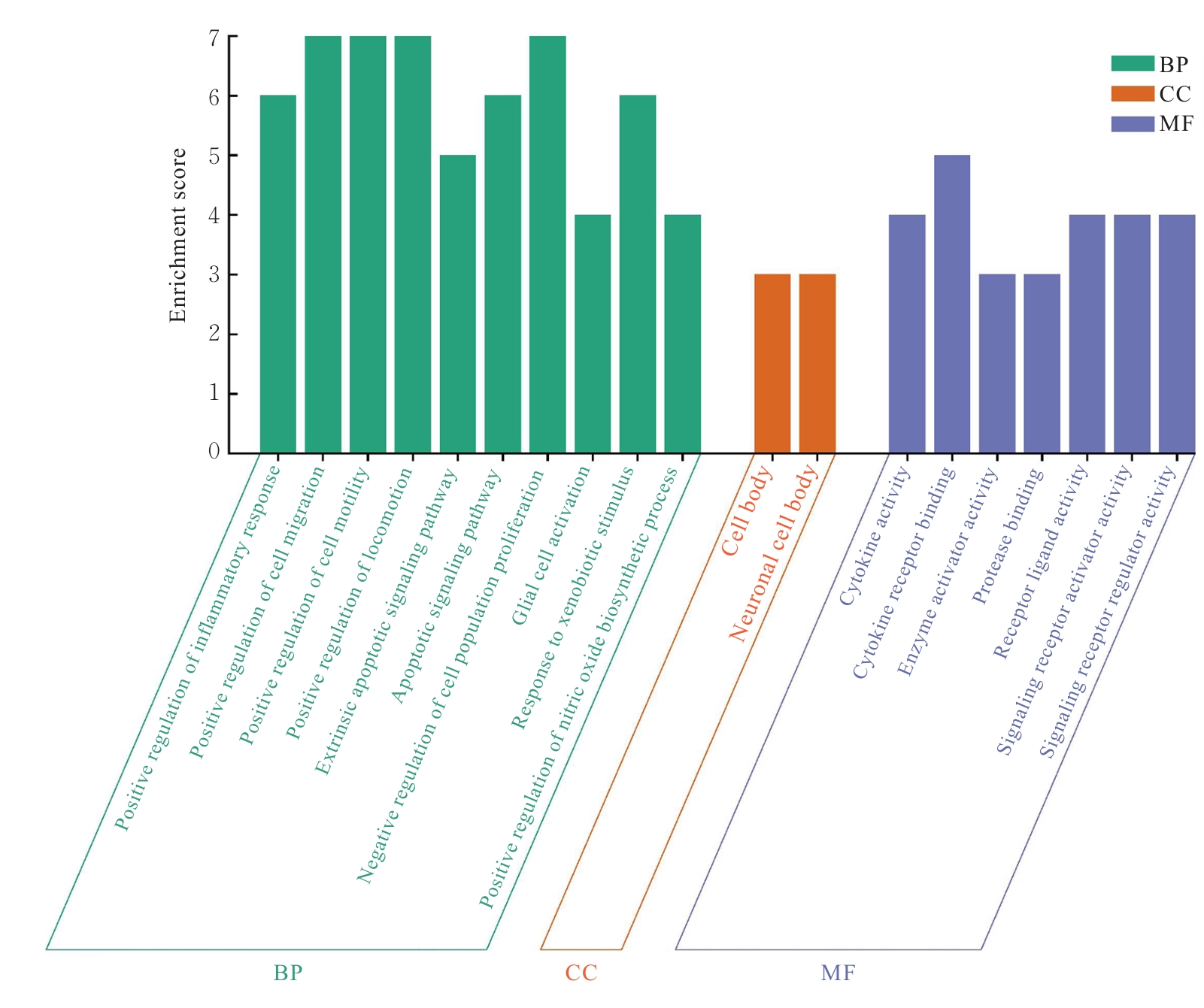
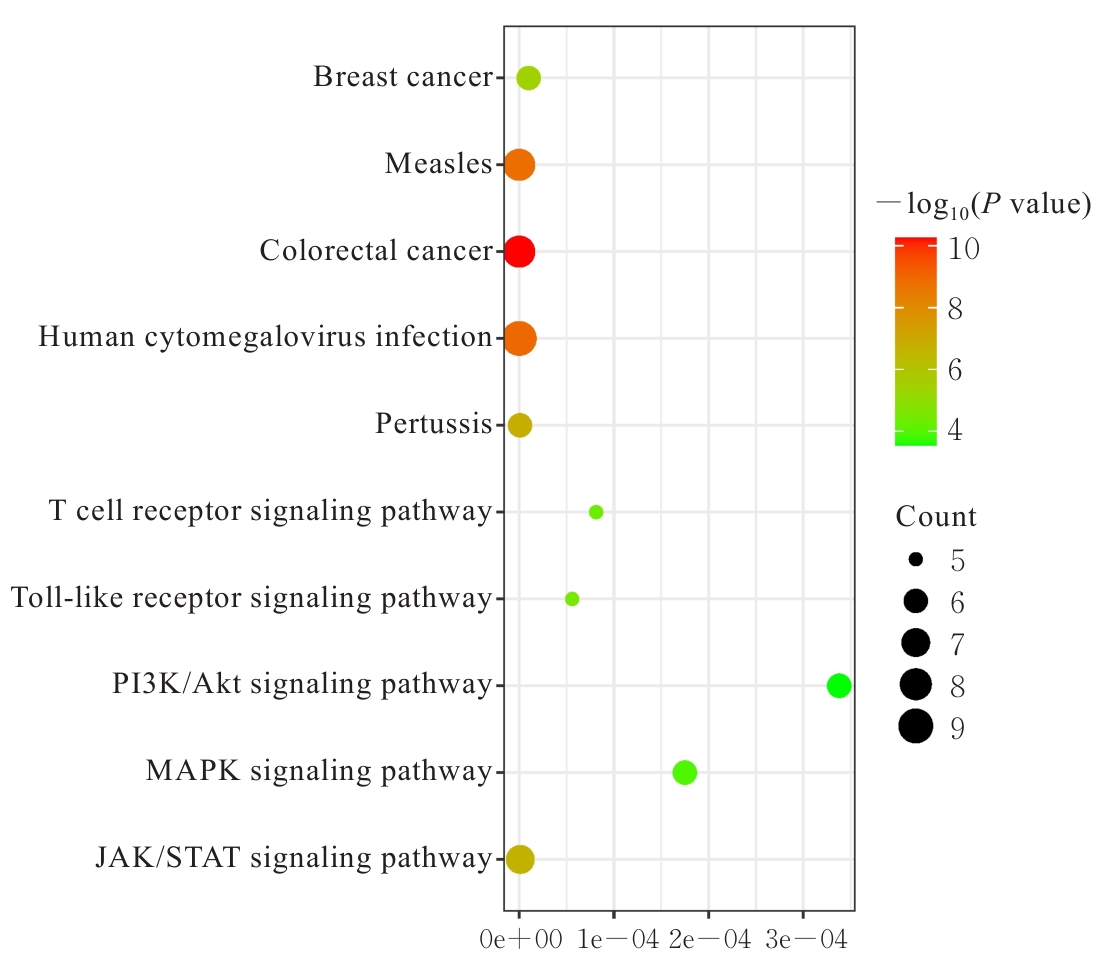
Fig. 5
KEGG signaling pathway enrichment analysis of key targets"
Tab.2
Binding energy of molecular docking of active ingredients of ginseng-lithospermum erythrorhizon with core targets"
| Target | Herb ingredient | Binding energy (kcal·mol-1) |
|---|---|---|
AKT1 | β-sitosterol Stigmasterol Mandenol Isoarnebin 4 Ginsenoside Rh2 | -5.63 -5.86 -5.27 -6.93 -7.24 |
IL-1β | β-sitosterol Stigmasterol Mandenol Isoarnebin 4 Ginsenoside Rh2 | -5.82 -6.14 -4.53 -7.53 -7.72 |
PTGS2 | β-sitosterol Stigmasterol Mandenol Isoarnebin 4 Ginsenoside Rh2 | -8.25 -10.13 -7.74 -8.76 -9.12 |

Fig. 6
Molecular docking model of active ingredients of ginseng-lithospermum erythrorhizon with core targets"

Tab.3
Survival rates of HKF cells in various groups"
| Group | Survival rate |
|---|---|
| Control | 100.0±0.92 |
| Ginseng-lithospermum erythrorhizon extract | |
| Low dose | 81.7±1.31* |
| Medium dose | 50.4±2.43* |
| High dose | 27.7±2.77* |
Tab.4
Percentages of cell cycle of HKF cells in various groups"
| Group | G0/G1 phase | S phase | G2/M phase |
|---|---|---|---|
| Control | 40.58±0.77 | 56.11±0.98 | 3.31±0.35 |
| Ginseng-lithospermum erythrorhizon extract | |||
| Low dose | 53.17±1.45* | 43.06±1.29* | 3.77±0.19* |
| Medium dose | 61.59±1.28* | 34.54±1.48* | 3.86±1.21* |
| High dose | 71.25±1.18* | 22.99±1.09* | 5.76±1.29* |
Tab.5
Numbers of invasion cells of HKF cells in various groups"
| Group | Number of invasion cells |
|---|---|
| Control | 87.27±3.43 |
| Ginseng-lithospermum erythrorhizon extract | |
| Low dose | 62.23±4.57* |
| Medium dose | 41.76±3.88* |
| High dose | 32.43±3.27* |
Tab.6
Expression levels of AKT1,IL-1β and PTGS2 mRNA in HKF cells in various groups"
| Group | AKT1 | IL-1β | PTGS2 |
|---|---|---|---|
| Control | 1.00±0.04 | 1.00±0.05 | 1.00±0.06 |
| Ginseng-lithospermum erythrorhizon extract | |||
| Low dose | 0.89±0.05* | 0.89±0.04* | 1.16±0.07* |
| Medium dose | 0.87±0.04* | 0.88±0.05* | 1.18±0.08* |
| High dose | 0.86±0.05* | 0.86±0.04* | 1.24±0.06** |
| [1] | RU J L, LI P, WANG J N, et al. TCMSP: a database of systems pharmacology for drug discovery from herbal medicines[J]. J Cheminform, 2014, 6: 13. |
| [2] | 贾尚洁, 陈 涛. miRNA在瘢痕疙瘩中的研究现状[J]. 中国美容医学, 2024, 33(2): 195-198. |
| [3] | DO D V, ONG C T, KHOO Y T, et al. Interleukin-18 system plays an important role in keloid pathogenesis via epithelial-mesenchymal interactions: IL-18 system and keloid pathogenesis via epithelial-mesenchymal interactions[J]. Br J Dermatol, 2012, 166(6): 1275-1288. |
| [4] | 蔡 浩. IGF-1及受体在病理性瘢痕和肉芽组织中的表达[D]. 广州: 中山大学, 2009. |
| [5] | 李世茹, 吴小莉, 张美娜, 等. 5-FU及复方倍他米松局部封闭注射联合点阵CO2激光治疗瘢痕疙瘩[J]. 中国美容医学, 2026, 35(3): 128-131. |
| [6] | ASHRAFI M, XU Y, MUHAMADALI H, et al. A microbiome and metabolomic signature of phases of cutaneous healing identified by profiling sequential acute wounds of human skin: an exploratory study[J]. PLoS One, 2020, 15(2): e0229545. |
| [7] | HARN H I, OGAWA R, HSU C K, et al. The tension biology of wound healing[J]. Exp Dermatol, 2019, 28(4): 464-471. |
| [8] | 赵庆利, 孟如松, 杨庆琪, 等. 自制中药提取物对瘢痕疙瘩成纤维细胞增殖的影响[J]. 中国美容医学, 2010, 19(5): 701-703. |
| [9] | 阮 敏. 紫草素在口腔鳞癌NF-κB信号通路中作用机制的研究[D]. 上海: 上海交通大学, 2008. |
| [10] | KAZUMURA K, YOSHIDA L S, HARA A, et al. Inhibition of neutrophil superoxide generation by shikonin is associated with suppression of cellular Ca2+ fluxes[J]. J Clin Biochem Nutr, 2016, 59(1): 1-9. |
| [11] | ANDÚJAR I, RÍOS J L, GINER R M, et al. Pharmacological properties of shikonin-a review of literature since 2002[J]. Planta Med, 2013, 79(18): 1685-1697. |
| [12] | WU H, XIE J S, PAN Q R, et al. Anticancer agent shikonin is an incompetent inducer of cancer drug resistance[J]. PLoS One, 2013, 8(1): e52706. |
| [13] | ZHANG P, ZHANG D F, ZHOU W A, et al. Network pharmacology: towards the artificial intelligence-based precision traditional Chinese medicine[J]. Brief Bioinform, 2023, 25(1): bbad518. |
| [14] | ZHANG Y H, HUANG F M, LI J B, et al. Identification of protein-protein interaction associated functions based on gene ontology[J]. Protein J, 2024, 43(3): 477-486. |
| [15] | MARGIOTTA E, RAMRAS S, SHTEYNBERG A. Recurrence of primary and secondary keloids in a select African American and Afro-Caribbean population[J]. Ann Plast Surg, 2022, 88(3): S194-S196. |
| [16] | LIU A H, SUN X L, LIU D Z, et al. Epidemiological and clinical features of hypertrophic scar and keloid in Chinese college students: a university-based cross-sectional survey[J]. Heliyon, 2023, 9(4): e15345. |
| [17] | FANG X W, WANG Y X, CHEN H, et al. Hypertrophic scarring and keloids: epidemiology, molecular pathogenesis, and therapeutic interventions[J]. MedComm, 2025, 6(10): e70381. |
| [18] | WANG X X, LIU K, RUAN M Y, et al. Gallic acid inhibits fibroblast growth and migration in keloids through the AKT/ERK signaling pathway[J]. Acta Biochim Biophys Sin, 2018, 50(11): 1114-1120. |
| [19] | DIENANTA S B, JANNAH A R, EBNUDESITA F R, et al. The effectiveness of depigmentation, interleukin-1β, and transforming growth factor-B antibodies in activating and increasing collagenase in keloid as adjuvant therapy after scar excision[J]. Indones Androl Biomed J, 2021, 2(1): 16-22. |
| [20] | 魏 斌, 范金财, 严 笠, 等. 敲减PTGS2对皮肤成纤维细胞基因表达谱的作用[J]. 基础医学与临床, 2012, 32(4): 396-401. |
| [21] | 魏 斌. 瘢痕疙瘩发病机制初步探讨: siRNA沉默成纤维细胞PTGS2基因表达的实验研究[D]. 北京: 中国协和医科大学, 2008. |
| [22] | ANDREWS J P, MARTTALA J, MACARAK E, et al. Keloids: the paradigm of skin fibrosis: pathomechanisms and treatment[J]. Matrix Biol, 2016, 51: 37-46. |
| [23] | 朱莲花, 李美玲, 李周娜, 等. 瘢痕疙瘩发病机制的研究[J]. 中国皮肤性病学杂志, 2017, 31(5): 560-562. |
| [24] | LIU J, YAN J F, QI S B, et al. The PI3K/AKT/mTOR pathway in scar remodeling and keloid formation: mechanisms and therapeutic perspectives[J]. Front Pharmacol, 2025, 16: 1678953. |
| [25] | YIN Q, WOLKERSTORFER A, LAPID O, et al. The JAK-STAT pathway in keloid pathogenesis: a systematic review with qualitative synthesis[J]. Exp Dermatol, 2023, 32(5): 588-598. |
| [26] | KIM H, ANGGRADITA L D, LEE S J, et al. Ameliorating fibrotic phenotypes of keloid dermal fibroblasts through an epidermal growth factor-mediated extracellular matrix remodeling[J]. Int J Mol Sci, 2021, 22(4): 2198. |
| [27] | 万红双, 刘艳红, 高钟镐, 等. 炎症反应在瘢痕疙瘩形成中的作用机制[J]. 临床皮肤科杂志, 2024, 53(9): 571-574. |
| [28] | WANG Y, CHEN Y H, WU J F, et al. BMP1 promotes keloid by inducing fibroblast inflammation and fibrogenesis[J]. J Cell Biochem, 2024, 125(7): e30609. |
| [29] | SANDULACHE V C, PAREKH A, LI-KOROTKY H, et al. Prostaglandin E2 inhibition of keloid fibroblast migration, contraction, and transforming growth factor (TGF)-β1-induced collagen synthesis[J]. Wound Repair Regen, 2007, 15(1): 122-133. |
| [30] | YEH F L, SHEN H D, LIN M W, et al. Keloid-derived fibroblasts have a diminished capacity to produce prostaglandin E2[J]. Burns, 2006, 32(3): 299-304. |
| [1] | Yang BAI,Tingting XIONG,Yanling LI,Zhongji HU,Xiao LAN,Yuan CHEN,Xiaoping HUANG,Huang DING,Changqing DENG. Inhibitory effect of combination of Astragaloside Ⅳ, Panax notoginseng saponins, and borneol on inflammatory injury after cerebral ischemia/reperfusion in rats and its mechanism [J]. Journal of Jilin University(Medicine Edition), 2026, 52(5): 1234-1243. |
| [2] | Dongyu XIANG,Guiyu CHEN,Yue XIANG. Effects of Panax notoginseng saponins on biological behaviors of gastric cancer cells and Keap1-Nrf2 signaling pathway [J]. Journal of Jilin University(Medicine Edition), 2026, 52(5): 1273-1281. |
| [3] | Yang GUO,Jinglei CUI,Meng CAI,Yingfang MA,Yunhua ZHANG,Yang WANG. Network pharmacology analysis and experimental verification of therapeutic effect of astilbin on myocardial infarction in mice and its mechanism [J]. Journal of Jilin University(Medicine Edition), 2026, 52(4): 893-904. |
| [4] | Shuang HAN,Jingwen HUANG,Yue SHI,Xinyue HUANG,Mengru GUO,Yi ZHENG,Ning MA. Network pharmacology analysis of mechanism of Taohong Siwu Decoction in treating periodontitis and its in vitro experimental validation [J]. Journal of Jilin University(Medicine Edition), 2026, 52(3): 703-718. |
| [5] | Ruyi YANG,Yuling WANG,Wei YANG. Effects of ginseng pectin alcohol-precipitated fraction on phenotype and function of mouse bone marrow-derived dendritic cells [J]. Journal of Jilin University(Medicine Edition), 2026, 52(2): 375-383. |
| [6] | Meng CAI,Yang GUO,Yingfang MA,Jinglei CUI,Jia LUO,Lili WEI,Yunhua ZHANG,Yang WANG. Therapeutic effect of prunetin on myocardial infarction model mice and its mechanism [J]. Journal of Jilin University(Medicine Edition), 2026, 52(1): 125-134. |
| [7] | Huaimin LIANG,Jiacheng JIN,Wenhua CHEN,Yuyao LI,Hangyu WANG,Ke ZHANG,Jinhui WANG. UPLC-Q-TOF/MS and network pharmacology analysis and experimental verification based on potential active ingredients and mechanisms of medicinal Mulberry Leaves in anti-acute kidney injury [J]. Journal of Jilin University(Medicine Edition), 2026, 52(1): 56-69. |
| [8] | Jian LIU,Lu XING,Tianye LAN,Fan YAO,Wen WANG,Yufu DONG,Jinpu WU,Ran BI,Liwei SUN,Xuenan CHEN,Weimin ZHAO. Improvement effect of ginseng alcohol extract on sleep of aged drosophila and its mechanism [J]. Journal of Jilin University(Medicine Edition), 2025, 51(4): 896-903. |
| [9] | Qiuyue WANG,Zhengning YANG,Xiaofeng HUANG,Minghan HUANG,Wenrong WANG. Network pharmacology and molecular docking analysis based on mechanism of Compound Gastritis Mixture in treatment of chronic atrophic gastritis [J]. Journal of Jilin University(Medicine Edition), 2025, 51(3): 691-702. |
| [10] | Junjie JIANG,Hao WU,Kang HE,Zhiqiang SAN,Qing YANG,Hui LI,Na LI. Repair effect of ginseng polypeptide thermosensitive hydrogel on heat-induced skin injury in rats and its mechanism [J]. Journal of Jilin University(Medicine Edition), 2025, 51(2): 360-369. |
| [11] | Xinchen ZHOU,Shuhan DONG,Zhuo ZHANG,Mingmei SHEN,Xiangjun WANG,Ying LI,Limei LIU. Network pharmacology analysis based on potential mechanism of dandelion-mulberry leaf in treatment of acute myeloid leukemia [J]. Journal of Jilin University(Medicine Edition), 2024, 50(4): 1087-1097. |
| [12] | Shan CAO,Yijia ZHANG,Yang BAI,Fang CHEN,Sha XIE,Qianqian HAN. Network pharmacological analysis and in vitro experimental verification based on anti-atherosclerosis mechanism of Xiaoban Tongmai Formula [J]. Journal of Jilin University(Medicine Edition), 2024, 50(4): 925-938. |
| [13] | Jinli TAN,Dan HUANG,Jingyang LIAO,Liuchong ZHU,Wenbin LIU. Molecular docking analysis on screening of novel antibacterial targets and their drugs of Staphylococcus aureus based on pan-genomics and subtractive proteomics techniques [J]. Journal of Jilin University(Medicine Edition), 2024, 50(4): 970-977. |
| [14] | Zijia ZHU,Xia CHEN,Man CUI,Jihong WEN,Ping WANG,Dong SONG. Bioinformatics and molecular docking technology analysis on mechanism of salidroside on key differential genes of triple negative breast cancer [J]. Journal of Jilin University(Medicine Edition), 2024, 50(3): 759-769. |
| [15] | Yang YU,Dan TIAN,Donghe NI,Duo ZHANG. Network pharmacologry and molecular docking analysis based on mechanism of monk fruit in treatment of diabetic nephropathy [J]. Journal of Jilin University(Medicine Edition), 2024, 50(1): 161-167. |
|
||