吉林大学学报(工学版) ›› 2026, Vol. 56 ›› Issue (7): 1926-1936.doi: 10.13229/j.cnki.jdxbgxb.20241381
具备有序牺牲机制的混合配筋铁路自复位桥墩力学行为分析
刘正楠( ),陈兴冲,张维科,马华军
- 兰州交通大学 土木工程学院,兰州 730070
Mechanical behavior of hybrid reinforced railway self-centering bridge piers based on ordered sacrificial mechanism
Zheng-nan LIU(),Xing-chong CHEN,Wei-ke ZHANG,Hua-jun MA
- School of Civil Engineering,Lanzhou Jiaotong University,Lanzhou 730070,China
摘要:
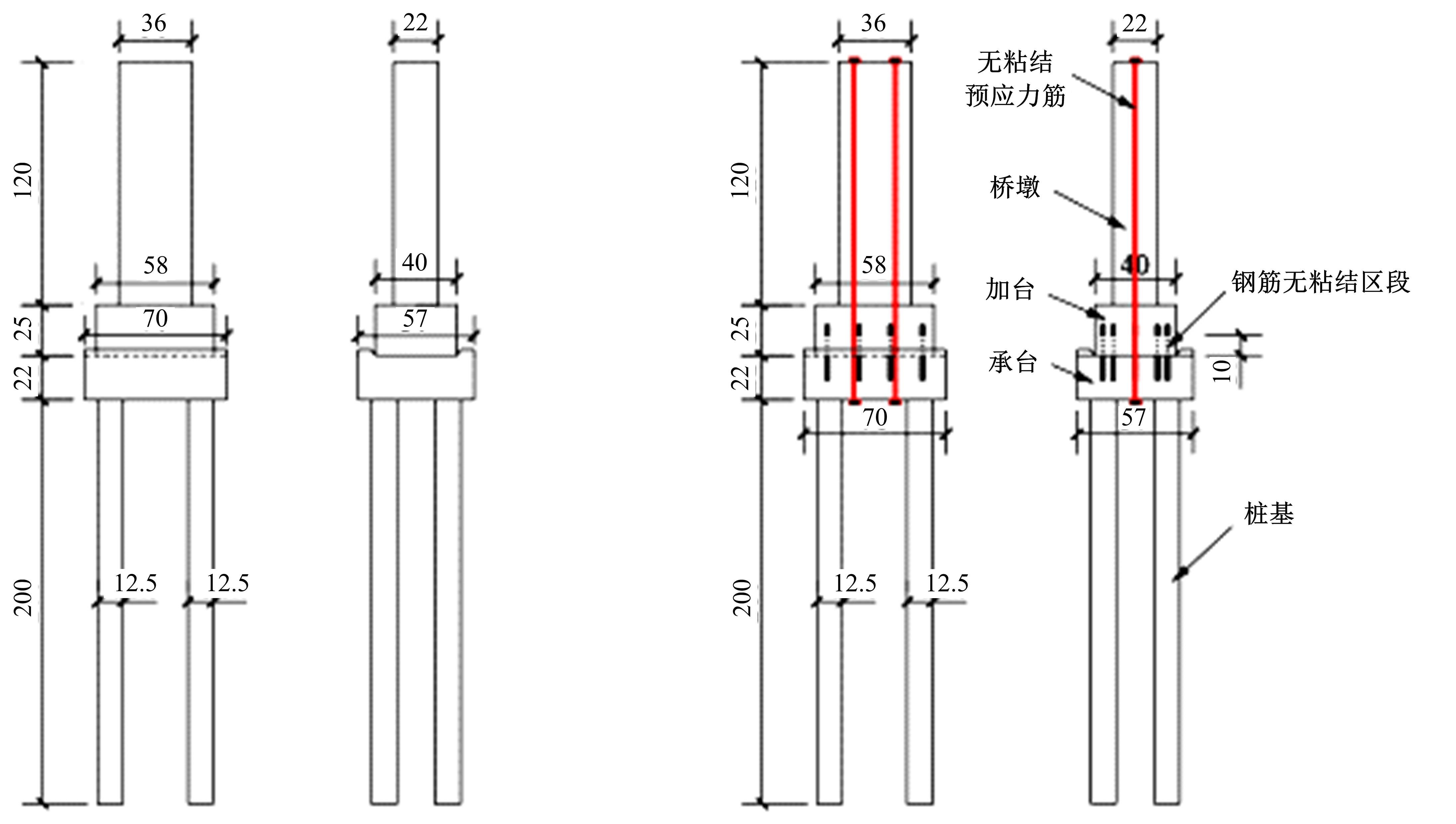
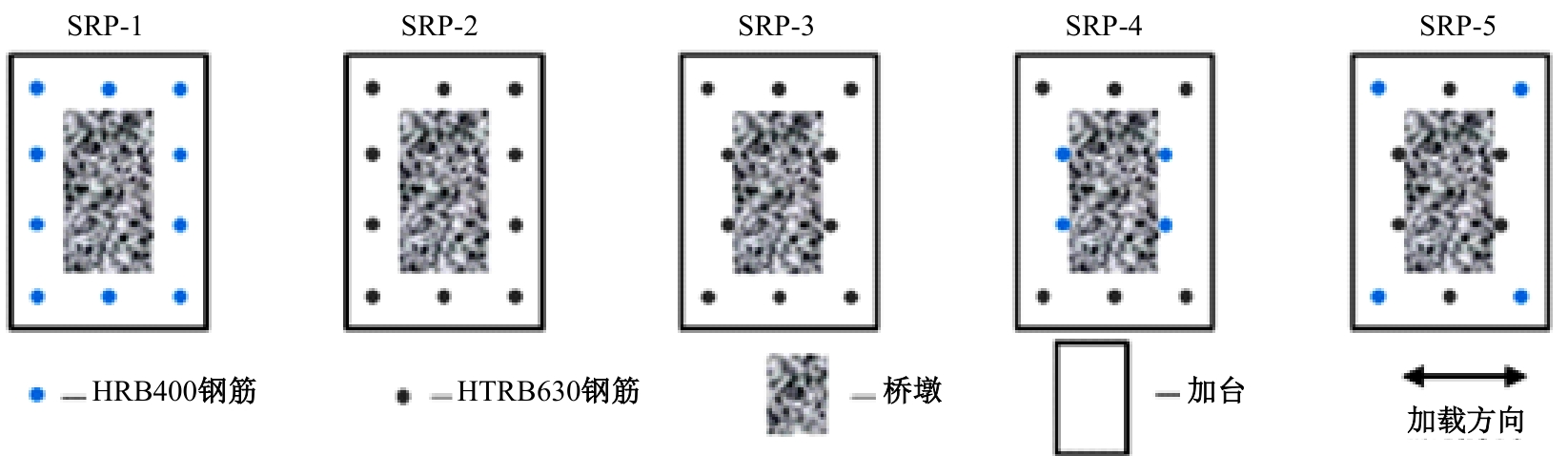
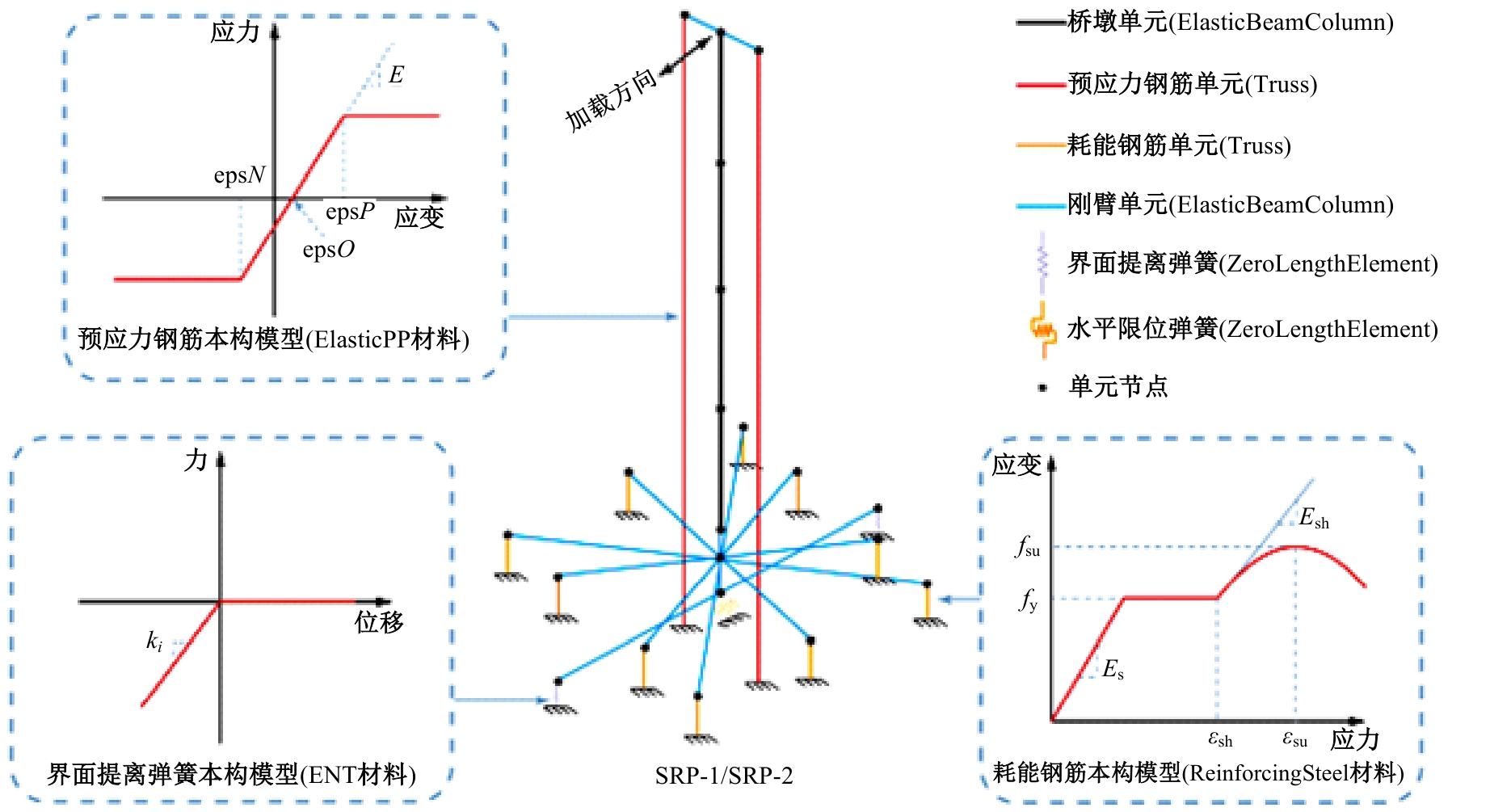
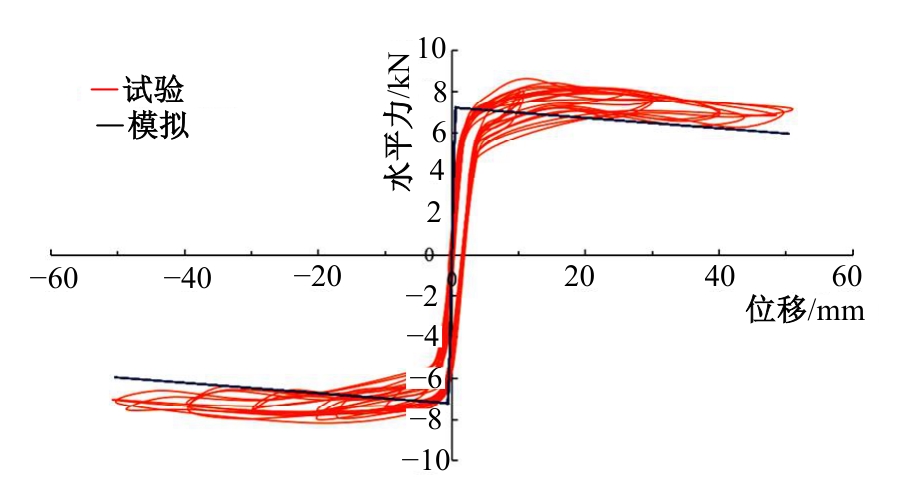
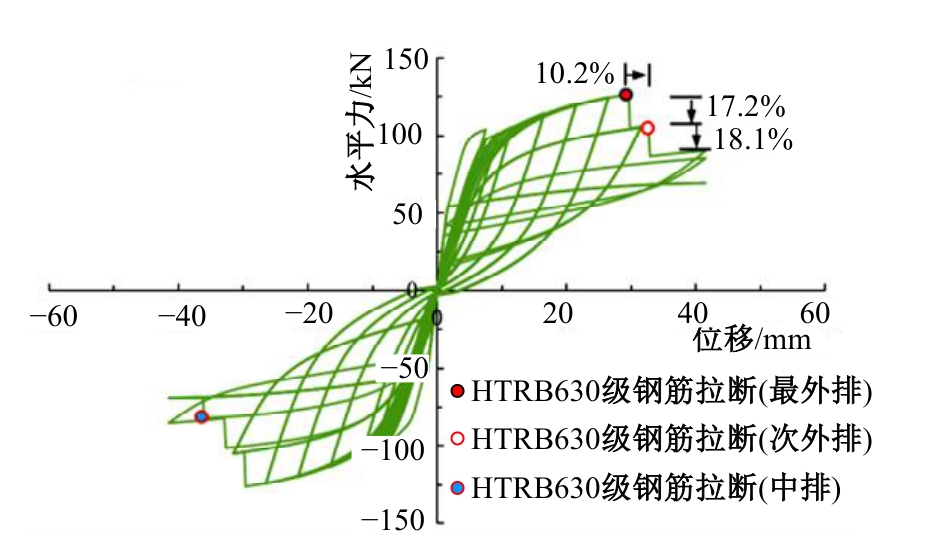
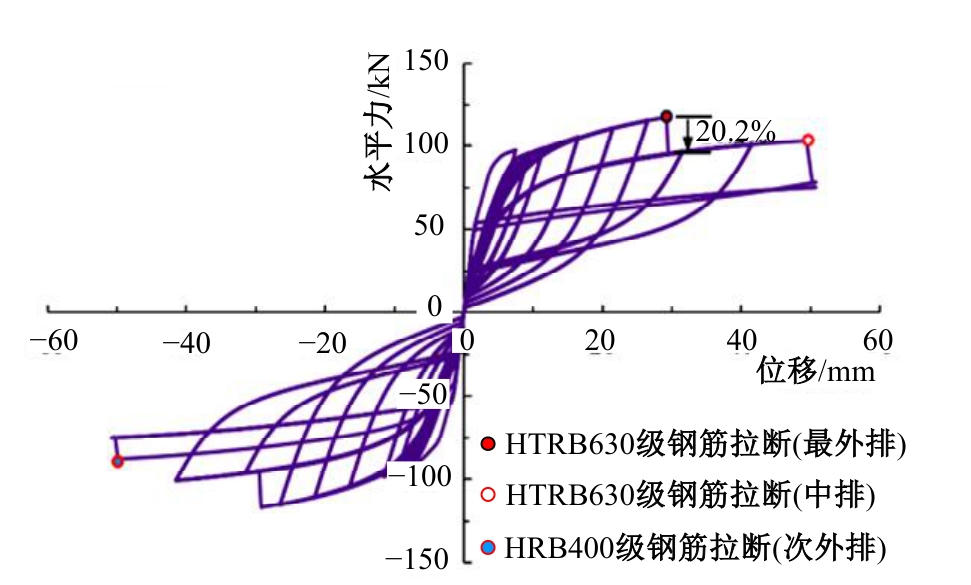
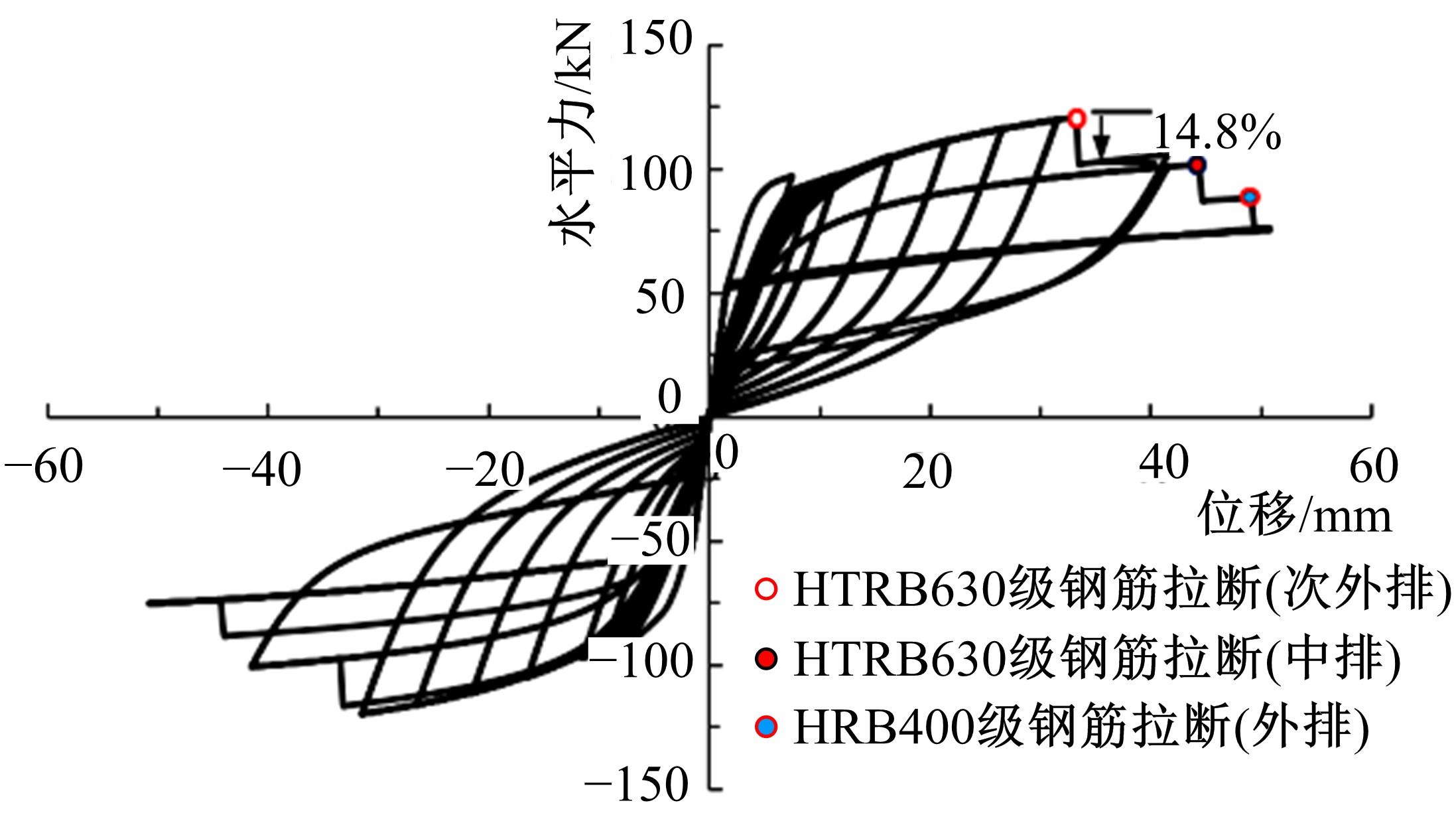
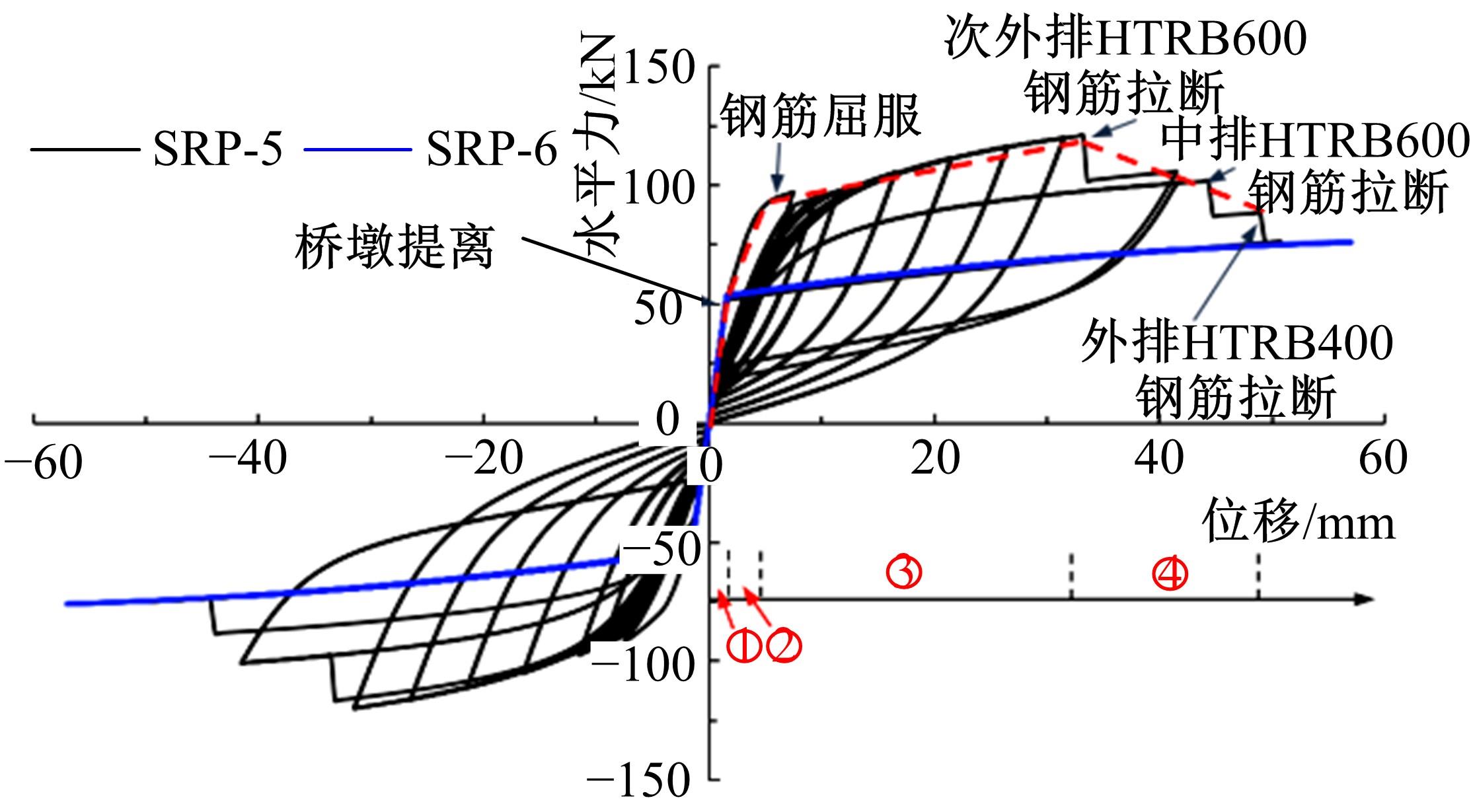
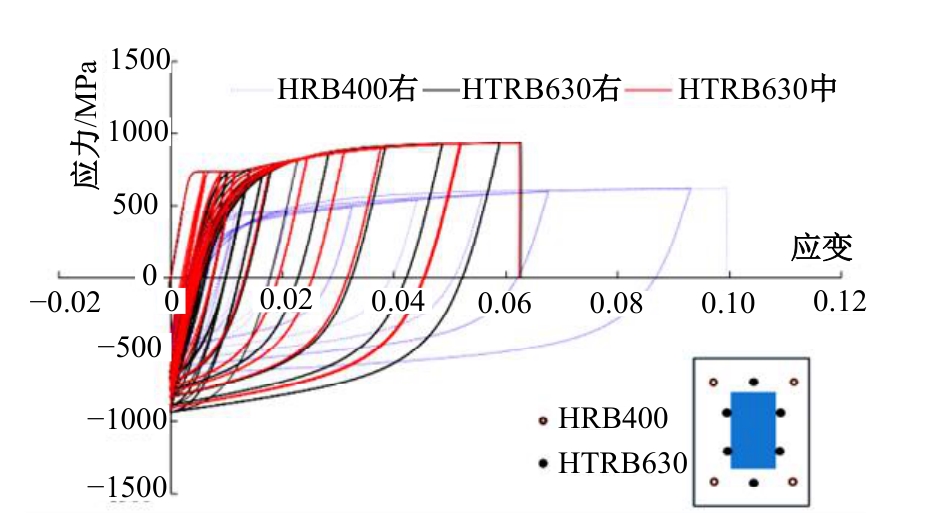
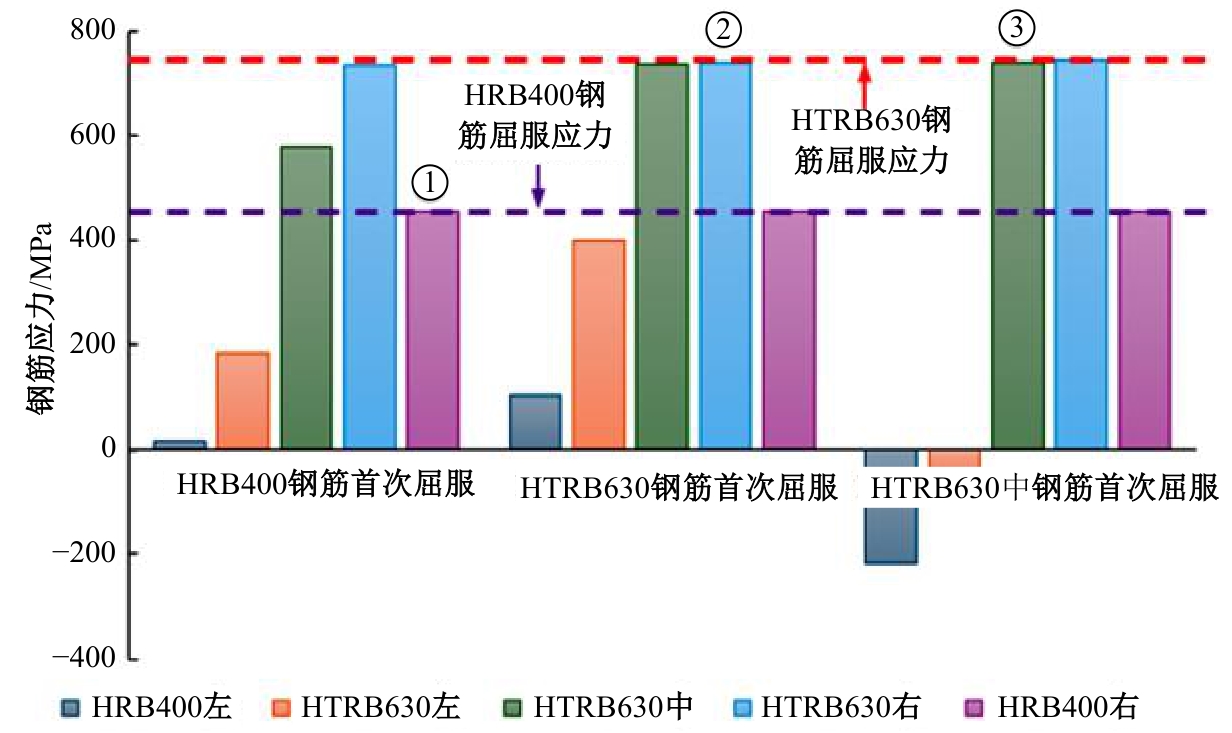
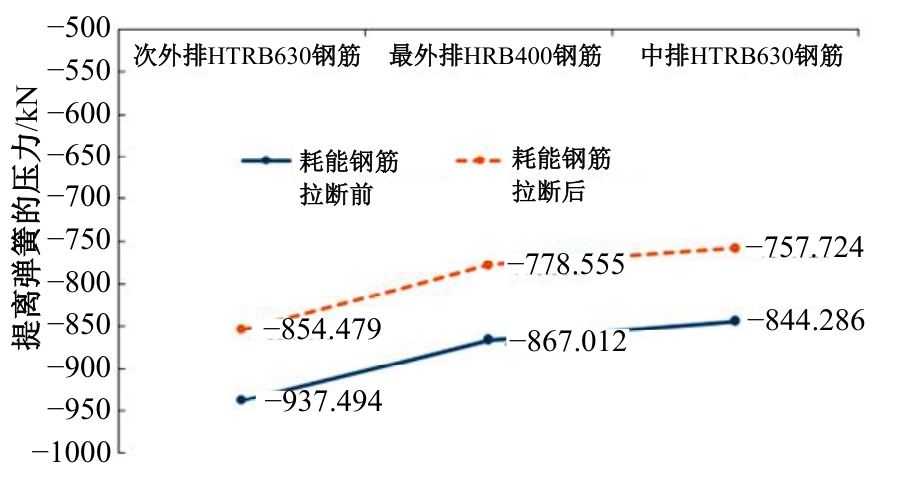
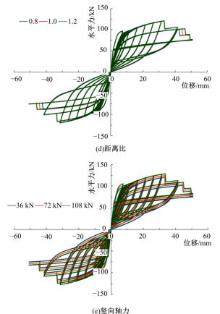
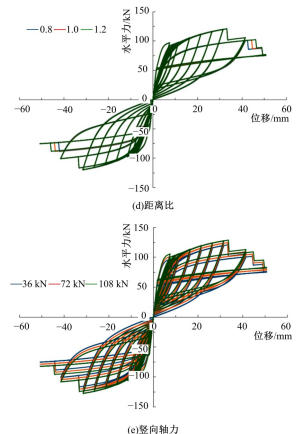
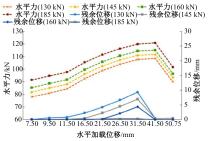
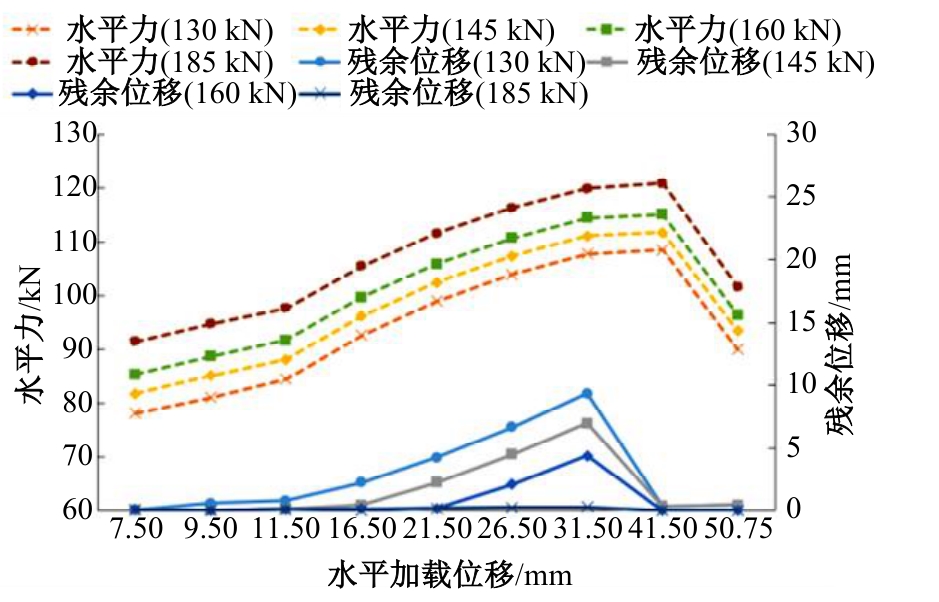
结合铁路自复位桥墩对抗侧刚度要求严格而需采用墩底加台构造的特点,开展了加台布设无粘结耗能钢筋、墩身内设无粘结预应力钢筋,具备有序牺牲机制的铁路自复位桥墩力学行为研究。通过讨论无粘结耗能钢筋在加台的配置形式对抗震性能的影响,提出了一种提升自复位桥墩抗震性能的耗能钢筋混合配置形式,开展了往复荷载作用下自复位桥墩的力学行为分析;研究了自复位桥墩的滞回特征影响因素与关键抗震性能指标之间的关系。结果表明:高强钢筋单排配置时,因钢筋断裂造成的承载力突降会使桥墩失效;依据不同等级耗能钢筋极限应变差异性,将低等级钢筋(HRB400)与高强钢筋(HTRB630)错排混合布置,可以实现不同等级耗能钢筋的有序牺牲及加台受压区域的不断调控,提升桥墩的变形能力和承载能力。预应力钢筋的配筋率会影响自复位桥墩的屈后刚度和抗侧强度,初始预应力值、配筋比、竖向轴力影响抗侧强度,耗能钢筋的距离比影响桥墩失效位移。自复位桥墩的三项主要抗震性能指标具有显著的正相关性,即承载能力减小、耗能能力及残余位移也随之减小;而最大位移与残余位移并未呈现出正相关性。
中图分类号:
- U443.22

| [1] | 鲁锦华, 陈兴冲, 丁明波, 等. 少筋混凝土重力式桥墩抗震研究现状[J]. 世界地震工程, 2020, 36(1): 125-136. |
| Lu Jin-hua, Chen Xing-chong, Ding Ming-bo, et al. State-of-the-art review on research for the seismic behavior of concrete gravity piers with low longitudinal reinforcement ratios[J]. World Earthquake Engineering, 2020, 36(1): 125-136. | |
| [2] | 胡章亮, 魏标, 蒋丽忠, 等. 高速铁路桥墩损伤量化研究[J]. 土木工程学报, 2023, 56(5): 60-68. |
| Hu Zhang-liang, Wei Biao, Jiang Li-zhong, et al. Research on damage quantification of high-speed railway bridge piers[J]. China Civil Engineering Journal, 2023, 56(5): 60-68. | |
| [3] | 沈林白, 洪彧, 周志达, 等. 基于性能的铁路桥墩地震损伤量化指标研究[J]. 铁道学报, 2024, 46(11): 155-162. |
| Shen Lin-bai, Hong Yu, Zhou Zhi-da, et al. Research on quantification index for seismic damage of railway bridge piers based on performance[J]. Journal of the China Railway Society, 2024, 46(11): 155-162. | |
| [4] | 蔡丽雯, 黄勇, 何静, 等. 2022年青海门源6.9级地震交通系统震害与启示[J]. 地震工程与工程振动, 2022, 42(4): 8-16. |
| Cai Li-wen, Huang Yong, He Jing, et al. Earthquake damage and enlightenment from traffic system in 2022 Qinghai Menyuan Ms6.9 earthquake[J]. Earthquake Engineering and Engineering Dynamics, 2022, 42(4): 8-16. | |
| [5] | 韩强, 贾振雷, 周雨龙, 等. 震后可恢复功能桥梁结构之摇摆桥梁研究综述[J]. 中国公路学报, 2021, 34(2): 118-133. |
| Han Qiang, Jia Zhen-lei, Zhou Yu-long, et al. Review of seismic resilient bridge structures: rocking bridge[J]. China Journal of Highway and Transport, 2021, 34(2): 118-133. | |
| [6] | Xia X, Wu S, Wei X, et al. Experimental and numerical study on seismic behavior of a self-centering railway bridge pier[J]. Earthquakes and Structures, 2021, 21(2): 173-183. |
| [7] | Roh H, Ou Y C, Kim J, et al. Effect of yielding level and post-yielding stiffness ratio of ED bars on seismic performance of PT rocking bridge piers[J]. Engineering Structures, 2014, 81: 454-463. |
| [8] | 孙治国, 赵泰儀, 王东升, 等. 基于RSC体系的双层桥梁排架墩地震损伤控制设计[J]. 中国公路学报, 2020, 33(3): 97-106. |
| Sun Zhi-guo, Zhao Tai-yi, Wang Dong-sheng, et al. Seismic damage control design for double-deck bridge bents based on rocking self-centering system[J]. China Journal of Highway and Transport, 2020, 33(3): 97-106. | |
| [9] | 贾俊峰, 边嘉琛, 白玉磊, 等. 自复位摇摆双柱式桥墩抗震能力数值仿真分析[J]. 振动与冲击, 2023, 42(1): 89-97, 122. |
| Jia Jun-feng, Bian Jia-chen, Bai Yu-lei, et al. Numerical simulation and parametric analysis for aseismic capacity of self-resetting swing double-column pier[J]. Journal of Vibration and Shock, 2023, 42(1): 89-97, 122. | |
| [10] | Fang C, Liang D, Zheng Y, et al. Rocking bridge piers equipped with shape memory alloy(SMA) washer springs[J]. Engineering Structures, 2020, 214: No.110651. |
| [11] | 钟学琦, 李建中, 高浩原, 等. 基于摇摆机械铰连接的自复位桥墩抗震性能研究[J]. 桥梁建设, 2023, 53(2): 52-59. |
| Zhong Xue-qi, Li Jian-zhong, Gao Hao-yuan, et al. Research on seismic performance of self-centering bridge pier based on rocking mechanical hinge connection[J]. Bridge Construction, 2023, 53(2): 52-59. | |
| [12] | 董慧慧, 胡潇, 韩强, 等. 新型自复位变摩擦耗能支撑及其在桥墩抗震中的应用[J]. 中国公路学报, 2024, 37(1): 66-80. |
| Dong Hui-hui, Hu Xiao, Han Qiang, et al. Novel self-centering variable friction energy dissipation brace and its application in seismic resistance of bridge piers[J]. China Journal of Highway and Transport, 2024, 37(1): 66-80. | |
| [13] | 石岩, 钟正午, 秦洪果, 等. 装配铅挤压阻尼器的摇摆-自复位双柱墩抗震性能及设计方法[J]. 工程力学, 2021, 38(8): 166-177, 203. |
| Shi Yan, Zhong Zheng-wu, Qin Hong-guo, et al. Seismic performance and corresponding design method of rocking self-centering bridge bents equipped with lead-extrusion dampers[J]. Engineering Mechanics, 2021, 38(8): 166-177, 203. | |
| [14] | Shen Y, Freddi F, Li Y, et al. Parametric experimental investigation of unbonded post-tensioned reinforced concrete bridge piers under cyclic loading[J]. Earthquake Engineering & Structural Dynamics, 2022, 51(15): 3479-3504. |
| [15] | Li Y, Li J, Shen Y. Quasi-static and nonlinear time-history analyses of post-tensioned bridge rocking piers with internal ED bars[J]. Structures, 2021, 32: 1455-1468. |
| [16] | Dicleli M, Mansour M Y, Constantinou M C. Efficiency of seismic isolation for seismic retrofitting of heavy substructured bridges[J]. Journal of Bridge Engineering, 2005, 10(4): 429-441. |
| [17] | Ou Y C, Chiewanichakorn M, Aref A J, et al. Seismic performance of segmental precast unbonded posttensioned concrete bridge columns[J]. Journal of Structural Engineering, 2007, 133(11): 1636-1647. |
| [18] | 鲍泽华, 李建中, 李永兴, 等. 自复位桥墩耗能钢筋合理配筋率的设计方法研究[J]. 工程力学, 2022, 39(10): 88-98, 119. |
| Bao Ze-hua, Li Jian-zhong, Li Yong-xing, et al. Research on the design method of reasonable reinforcement ratio of energy-dissipation bars in self-centering columns[J]. Engineering Mechanics, 2022, 39(10): 88-98, 119. | |
| [19] | 王军文, 张伟光, 李建中. 摇摆式预应力混凝土桥墩基于位移的抗震设计方法研究[J]. 振动与冲击, 2014, 33(24): 106-111. |
| Wang Jun-wen, Zhang Wei-guang, Li Jian-zhong. Displacement-based aseismic design method for rocking bridge piers with posttensioned tendons[J]. Journal of Vibration and Shock, 2014, 33(24): 106-111. | |
| [20] | Tong T, Zhuo W, Jiang X, et al. Research on seismic resilience of prestressed precast segmental bridge piers reinforced with high-strength bars through experimental testing and numerical modelling[J]. Engineering Structures, 2019, 197: No.109335. |
| [21] | 马华军. 铁路桩基础桥墩墩底摇摆隔震机理及抗震设计方法研究[D]. 兰州: 兰州交通大学土木工程学院, 2019. |
| Ma Hua-jun. Research on rocking isolated mechanism of the railway bridge pier with pile foundation and its seismic design method[D]. Lanzhou:School of Civil Engineering,Lanzhou Jiaotong University, 2019. | |
| [22] | 张耀庭, 赵璧归, 李瑞鸽, 等. HRB400钢筋单调拉伸及低周疲劳性能试验研究[J]. 工程力学, 2016, 33(4): 121-129. |
| Zhang Yao-ting, Zhao Bi-gui, Li Rui-ge, et al. Monotonic and low cycle fatigue testing and research for HRB400 steel[J]. Engineering Mechanics, 2016, 33(4): 121-129. | |
| [23] | 高立, 左工. 基于Reinforcing Steel本构的高强钢筋混凝土柱纤维模型研究[J]. 世界地震工程, 2021, 37(3): 129-137. |
| Gao Li, Zuo Gong. Research on fiber model of high strength reinforced concrete column based on the constitutive model of reinforcing steel[J]. World Earthquake Engineering, 2021, 37(3): 129-137. | |
| [24] | Fu P, Li X, Xu L, et al. Life-cycle seismic damage identification and components damage sequences prediction for cable-stayed bridge based on fragility analyses[J]. Bulletin of Earthquake Engineering, 2021, 19(15): 6669-6692. |
| [25] | Zhuang M L, Sun C, Dong B. Experimental and numerical investigations on seismic performance of HTRB630 high-strength steel bars reinforced concrete columns[J]. Case Studies in Construction Materials, 2022, 17: No.e01185. |
| [26] | 夏修身, 陈兴冲. 桩基础高墩摇摆隔震分析模型研究[J]. 铁道学报, 2013, 35(11): 86-91. |
| Xia Xiu-shen, Chen Xing-chong. Study on analytical model for rocking isolation of tall piers with pile foundations[J]. Journal of the China Railway Society, 2013, 35(11): 86-91. |
| [1] | 吴红林,张航,季振明,宋谋,蒋峰,孙中华. 钢箱梁横隔板刚度设计理论与试验[J]. 吉林大学学报(工学版), 2026, 56(7): 1845-1859. |
| [2] | 金双双,周诗妤,万孝,周建庭. 可更换耗能波纹钢板拼装桥墩抗震性能试验[J]. 吉林大学学报(工学版), 2026, 56(3): 746-757. |
| [3] | 张皓,陈宜言,叶俊宇,董桔灿,赵秋. 波形钢腹板预应力组合箱梁纯扭全过程分析[J]. 吉林大学学报(工学版), 2026, 56(3): 689-699. |
| [4] | 鲁亮,颜浩天. 基于耐震时程法的耗能自复位铰节点RC框架抗震性能[J]. 吉林大学学报(工学版), 2026, 56(3): 700-710. |
| [5] | 刘正楠,唐佳伟,张维科,陈兴冲,马华军. 钢筒内置可更换橡胶穿心式摩擦阻尼器滞回特性及其在自复位桥墩中的应用[J]. 吉林大学学报(工学版), 2026, 56(2): 407-415. |
| [6] | 张皓,陈宜言,叶俊宇,董桔灿,赵秋. 超大跨波形钢腹板箱梁弯扭耦合性能试验[J]. 吉林大学学报(工学版), 2026, 56(1): 209-218. |
| [7] | 王方旭,刘世忠,杨霞林,姜宁,刘欣益,马驰. 考虑腹杆变形的钢桁腹组合箱梁挠度计算方法[J]. 吉林大学学报(工学版), 2025, 55(8): 2619-2629. |
| [8] | 周福成,张元海,魏彦红. 考虑钢腹板畸变翘曲应力分布范围影响的横向弯矩分析[J]. 吉林大学学报(工学版), 2025, 55(11): 3498-3506. |
| [9] | 史俊,徐略勤,金双双,贺洪滔,周建庭,柳杨青. 梭形双重约束防屈曲支撑的整体稳定性设计方法[J]. 吉林大学学报(工学版), 2025, 55(11): 3521-3533. |
| [10] | 张朝,赵峥嵘,许有俊,聂绪致. 地基对预制综合管廊接头剪切变形及破坏特征的影响[J]. 吉林大学学报(工学版), 2025, 55(10): 3262-3273. |
| [11] | 韦芳芳,李丽萍,徐庆鹏,赵有正,杨晶晶. 受火双钢板-混凝土组合剪力墙加固后抗震性能试验[J]. 吉林大学学报(工学版), 2025, 55(1): 230-244. |
| [12] | 何华飞,李兆平,符瑞安,马绍麟,黄明利. 考虑地层约束效应的预制侧墙节点抗震性能试验[J]. 吉林大学学报(工学版), 2024, 54(6): 1601-1611. |
| [13] | 刁延松,任义建,杨元强,赵凌云,刘秀丽,刘芸. 带有摩擦耗能组件的可更换钢梁柱拼接节点抗震性能试验[J]. 吉林大学学报(工学版), 2024, 54(6): 1643-1656. |
| [14] | 秦拥军,陈奇,张驰,王建虎. 含起波钢筋预制梁柱节点抗震性能试验[J]. 吉林大学学报(工学版), 2024, 54(6): 1677-1687. |
| [15] | 雷鸣,尹思阳,王德玲,张继承,路世伟. 基于静力推覆分析算法的高层建筑混凝土核心筒抗震性能模拟[J]. 吉林大学学报(工学版), 2023, 53(9): 2573-2580. |
|