吉林大学学报(工学版) ›› 2026, Vol. 56 ›› Issue (10): 2684-2694.doi: 10.13229/j.cnki.jdxbgxb.20250375
• 计算机科学与技术 • 上一篇
基于点通道注意力与坐标残差网络的3D目标检测
但远宏( ),冯广旭,黄彬彬
- 重庆理工大学 计算机科学与工程学院,重庆 401135
Sparse point cloud 3D target detection based on point channel attention and coordinate residual network
Yuan-hong DAN(),Guang-xu FENG,Bin-bin HUANG
- College of Computer Science and Engineering,Chongqing University of Technology,Chongqing 401135,China
摘要:
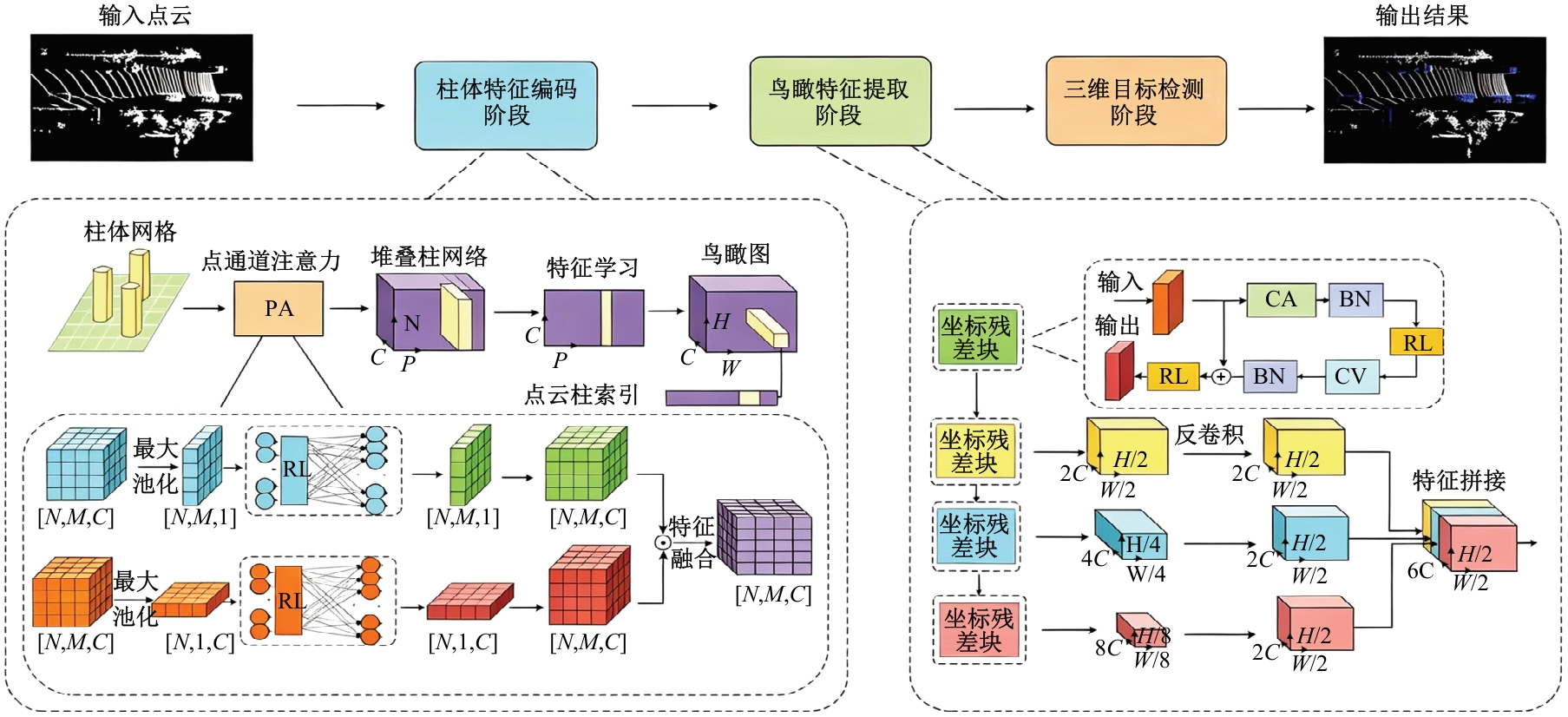
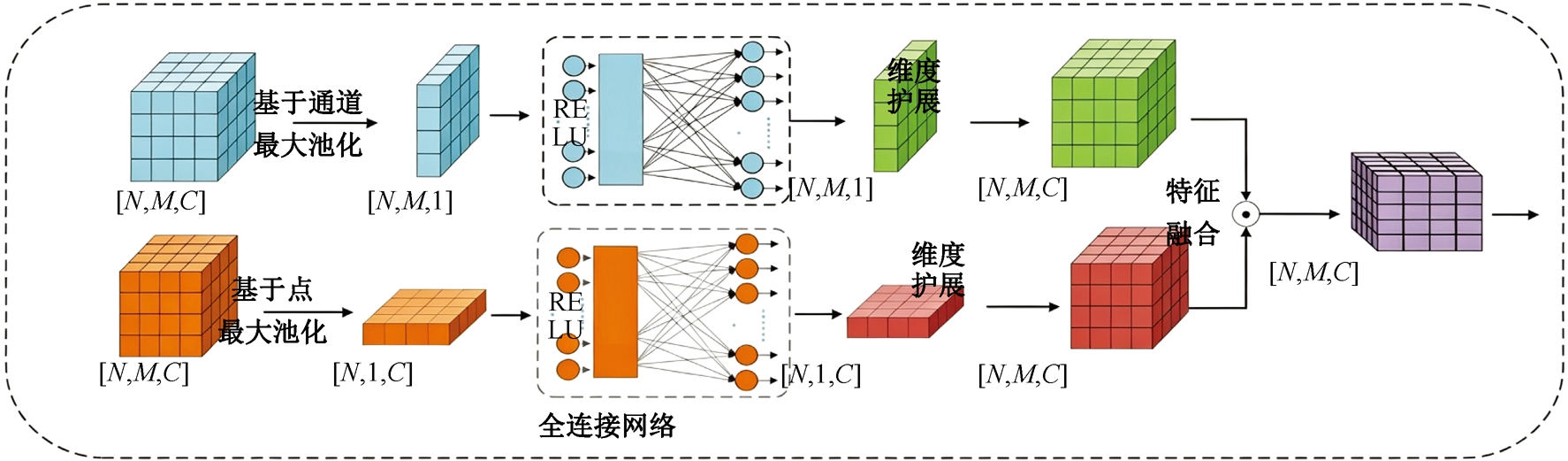
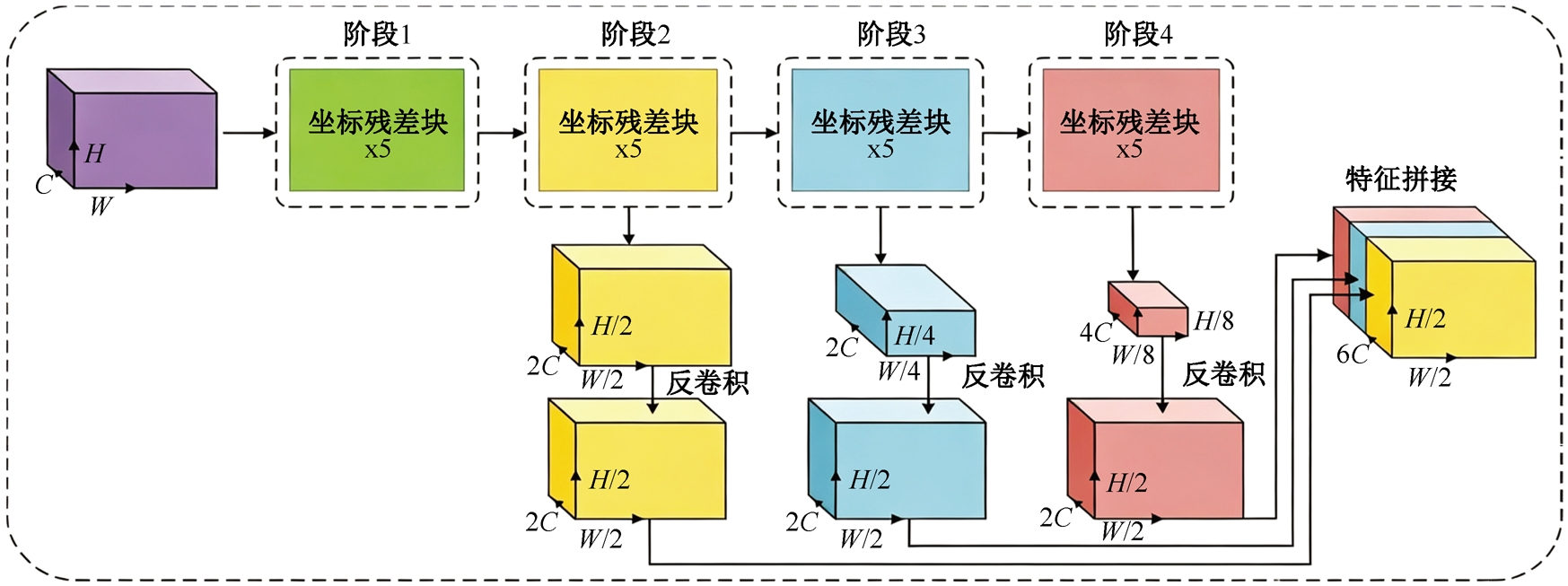
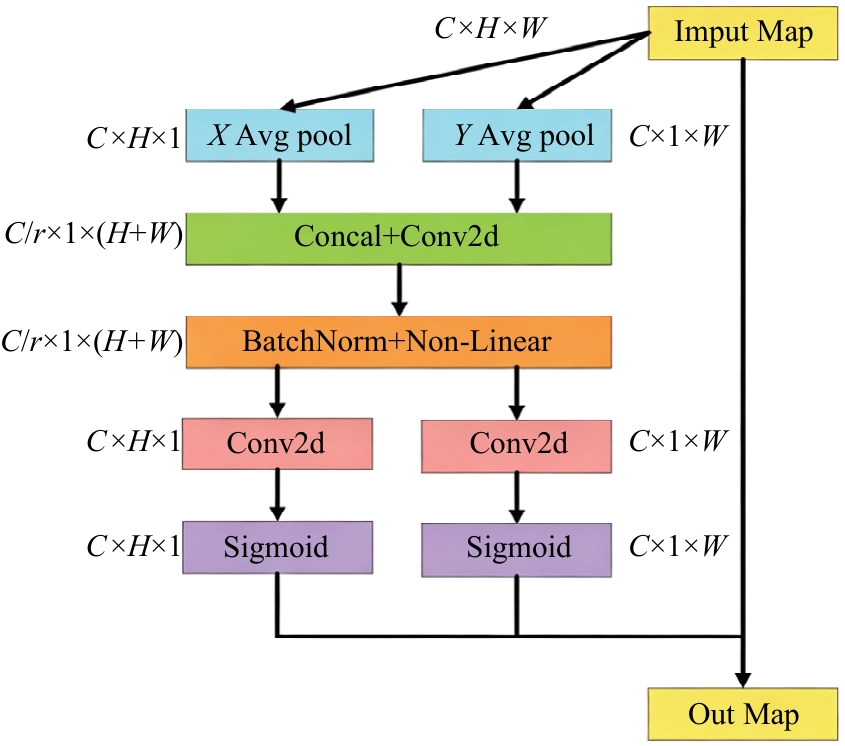
针对当前3D目标检测在稀疏点云环境下存在的远距离小尺度目标因特征提取能力受限 而导致检测精度下降的问题,提出了基于多重注意力机制和深层残差网络的CAResPillars。以 PointPillars 为基准算法,在点云特征编码阶段引入点通道注意力机制PC-Attention,通过建立点级和通道级的双重注意力权重,自适应增强关键几何特征,缓解稀疏点云信息的不足;在BEV特征提取阶段,采用集成坐标注意力机制的深层残差网络CAResNet42作为主干网络,以强化模型对远距离与小目标的特征建模能力,并减轻梯度消失的问题。在KITTI数据集实验中,改进算法显著提升检测性能,尤其是在目标相对较小的行人3D检测的平均精度提升6.39%,车辆3D检测精度也得到2.06%提高。消融实验验证了各模块的有效性,实车部署进一步证明了算法的鲁棒性和实用性,为实际应用提供了有效的解决方案。
中图分类号:
- TP391.4

| [1] | 李佳男, 王泽, 许挺发. 基于点云数据的三维目标检测技术研究进展[J]. 光学学报,2023,43(15):296-312. |
| Li Jia-nan, Wang Ze, Xu Ting-fa. Research progress of 3D object detection technology based on point cloud data[J]. Acta Optica Sinica, 2023, 43(15): 296-312. | |
| [2] | Wu C Y, Johnson J, Malik J, et al. Multiview compressive coding for 3D reconstruction[C]∥2023 IEEE Conference on Computer Vision and Pattern Recognition, Vancouver, Canada, 2023: 9065-9075. |
| [3] | Li H Y, Sima C H, Dai J F, et al. Delving into the devils of bird's-eye-view perception: a review, evaluation and recipe[J]. IEEE Transactions on Pattern Analysis and Machine Intelligence, 2024, 46(4): 2151-2170. |
| [4] | 曹捷, 彭忆强, 樊利康, 等.基于多注意力机制的激光雷达三维目标检测[J]. 激光与光电子学进展, 2025, 62(4): 87-96. |
| Cao Jie, Peng Yi-qiang, Fan Li-kang, et al. 3D object detection with lidar based on multi-attention mechanism[J]. Laser & Optoelectronics Progress, 2025,62(4): 87-96. | |
| [5] | Shi S S, Wang X G, Li H S. PointRCNN: 3D object proposal generation and detection from point cloud[C]∥IEEE/CVF Conference on Computer Vision and Pattern Recognition, Long Beach, CA, USA,2020: 770-779. |
| [6] | Zhang W B, Chen G, Wang H Y, et al. EFMF-pillars: 3D object detection based on enhanced features and multi-scale fusion[J]. EURASIP Journal on Advances in Signal Processing, 2024(1): 1-18. |
| [7] | Yan Y, Mao Y X, Li B. SECOND: sparsely embedded convolutional detection[J]. Sensors, 2018, 18(10): 1-17. |
| [8] | Lang A H, Vora S, Caesar H, et al. PointPillars: fast encoders for object detection from point clouds[C]∥IEEE/CVF Conference on Computer Vision and Pattern Recognition, Long Beach, USA, 2019: 12689-12697. |
| [9] | Jin X, Liu K, Cong M, et al. S-wiftPillars: high-efficiency pillar encoder for lidar-based 3D detection[C]∥Proceedings of the AAAI Conference on Artificial Intelligence, 2024: 2625-2633. |
| [10] | Vora S, Lang A H, Helou B, et al. Pointpainting: Sequential fusion for 3D object detection[C]∥Proceedings of the IEEE/CVF Conference on Computer Vision and Pattern Recognition, USA, 2020: 4604-4612. |
| [11] | Wang Y, Chao W L, Garg D, et al. Pseudo-Lidar from visual depth estimation: bridging the gap in 3D object detection for autonomous driving[C]∥IEEE/CVF Conference on Computer Vision and Pattern Recognition, Long Beach, USA, 2019: 8437-8445. |
| [12] | 陈德江, 余文俊, 高永彬. 基于改进PointPillar的激光雷达三维目标检测[J]. 激光与光电子学进展, 2023, 60 (10): 447-453. |
| Chen De-jiang, Yu Wen-jun, Gao Yong-bin. Lidar 3D target detection based on improved PointPillars[J]. Laser & Optoelectronics Progress, 2023, 60(10): 447-453. | |
| [13] | Liu Z, Zhao X, Huang T T, et al. TANet: robust 3D object detection from point clouds with triple attention[C]∥Proceedings of the AAAI Conference on Artificial Intelligence, 2020: 11677-11684. |
| [14] | Zheng Z H, Wang P, Liu W, et al. Distance-IoU loss: faster and better learning for bounding box regression[C]∥Proceedings of the AAAI Conference on Artificial Intelligence, New York, USA, 2020: 12993-13000. |
| [15] | Zhang Y F, Hu Q Y, Xu G Q, et al. Not all points are equal: learning highly efficient point-based detectors for 3D LiDAR point clouds[C]∥2022 IEEE/CVF Conference on Computer Vision and Pattern Recognition, New Orleans, USA, 2022: 18931-18940. |
| [16] | Zhou Y, Tuzel O. VoxelNet: end-to-end learning for point cloud based 3D object detection[C]∥2018 IEEE/CVF Conference on Computer Vision and Pattern Recognition, Salt Lake City, USA, 2017: 4490-4499. |
| [17] | Shu X, Zhang L. Research on PointPillars algorithm based on feature-enhanced backbone network[J]. Electronics, 2024; 13(7): 13071233. |
| [18] | Shi S S, Wang Z, Shi J P, et al. From points to parts:3D object detection from point cloud with part-aware and part-aggregation network[J]. IEEE Transactions on Pattern Analysis and Machine Intelligence, 2021, 43(8): 2647-2664. |
| [19] | 才华, 寇婷婷, 杨依宁, 等. 基于轨迹优化的三维车辆多目标跟踪[J]. 吉林大学学报: 工学版, 2024, 54(8): 2338-2347. |
| Cai Hua, Kou Ting-ting, Yang Yi-ning, et al. Three- dimensional vehicle multiple target tracking based on trajectory optimization[J]. Journal of Jilin University(Engineering and Technology Edition), 2024, 54(8): 2338-2347 | |
| [20] | Shi S S, Guo C X, Jiang L, et al. PV-RCNN: point voxel feature set abstraction for 3D object detection[C]∥IEEE/CVF Conference on Computer Vision and Pattern Recognition, Seattle, USA, 2020: 10526-10535. |
| [1] | 郭洪艳,谢鸿楠,孟庆瑜. 单车智能条件下综合车辆运动状态的轨迹预测方法[J]. 吉林大学学报(工学版), 2026, 56(10): 2535-2545. |
| [2] | 李立,鲍宇健,杨文臣,楚庆玲,汪贵平. 路侧多源感知数据集规范化构建方法[J]. 吉林大学学报(工学版), 2025, 55(2): 529-536. |
| [3] | 程鑫,刘升贤,周经美,周洲,赵祥模. 融合密集连接和高斯距离的三维目标检测算法[J]. 吉林大学学报(工学版), 2024, 54(12): 3589-3600. |
| [4] | 时小虎,吴佳琦,吴春国,程石,翁小辉,常志勇. 基于残差网络的弯道增强车道线检测方法[J]. 吉林大学学报(工学版), 2023, 53(2): 584-592. |
| [5] | 高海龙,徐一博,侯德藻,王雪松. 基于深度异步残差网络的路网短时交通流预测算法[J]. 吉林大学学报(工学版), 2023, 53(12): 3458-3464. |
| [6] | 曾春艳,严康,王志锋,王正辉. 多尺度生成对抗网络下图像压缩感知重建算法[J]. 吉林大学学报(工学版), 2023, 53(10): 2923-2931. |
| [7] | 杨怀江,王二帅,隋永新,闫丰,周跃. 简化型残差结构和快速深度残差网络[J]. 吉林大学学报(工学版), 2022, 52(6): 1413-1421. |
| [8] | 李雪梅,王春阳,刘雪莲,谢达. 基于SESTH的线性调频连续波激光雷达信号时延估计[J]. 吉林大学学报(工学版), 2022, 52(4): 950-958. |
| [9] | 董绍江,朱朋,裴雪武,李洋,胡小林. 基于子领域自适应的变工况下滚动轴承故障诊断[J]. 吉林大学学报(工学版), 2022, 52(2): 288-295. |
| [10] | 王生生,李晨旭,王翔宇,姚志林,刘一申,吴佳倩,杨晴然. 基于改进残差胶囊网络和麻雀搜索的脑瘤图像分类[J]. 吉林大学学报(工学版), 2022, 52(11): 2653-2661. |
| [11] | 宗长富,文龙,何磊. 基于欧几里得聚类算法的三维激光雷达障碍物检测技术[J]. 吉林大学学报(工学版), 2020, 50(1): 107-113. |
| [12] | 马子骥,卢浩,董艳茹. 双通道单图像超分辨率卷积神经网络[J]. 吉林大学学报(工学版), 2019, 49(6): 2089-2097. |
| [13] | 潘海阳, 刘顺安, 姚永明. 基于深度信息的自主空中加油技术[J]. 吉林大学学报(工学版), 2014, 44(6): 1750-1756. |
| [14] | 尚涛, 贺会超, 王昕, 宫文斌, 戴永强. 二维激光雷达实现三维成像的算法[J]. 吉林大学学报(工学版), 2012, 42(增刊1): 91-95. |
|
||