吉林大学学报(工学版) ›› 2026, Vol. 56 ›› Issue (7): 1780-1786.doi: 10.13229/j.cnki.jdxbgxb.20241290
• 车辆工程·机械工程 • 上一篇
负压气动造型对DrivAer车空气阻力的影响
李铭1,2,3( ),赵尚义2,徐海军2,高青3,陈鑫3,秦国锋1
- 1.广西师范大学 农林智能装备技术广西高校工程研究中心,广西 桂林 541006
2.广西汽车集团有限公司 博士后与外部专家工作站,广西 柳州 545027
3.吉林大学 汽车仿真与控制国家重点实验室,长春 130022
Effect of negative⁃pressure design on aerodynamic drag of DrivAer car model
Ming LI1,2,3(),Shang-yi ZHAO2,Hai-jun XU2,Qing GAO3,Xin CHEN3,Guo-feng QIN1
- 1.Engineering Research Center for Intelligent Agriculture & Forestry Equipment Technology of Guangxi Universities,Guangxi Normal University,Guilin 541006,China
2.Postdoctoral and External Expert Workstation,Guangxi Automobile Group Co. ,Ltd. ,Liuzhou 545027,China
3.State Key Laboratory of Automobile Simulation and Control,Jilin University,Changchun 130022,China
摘要:
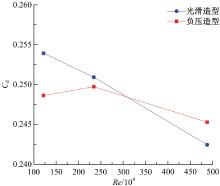
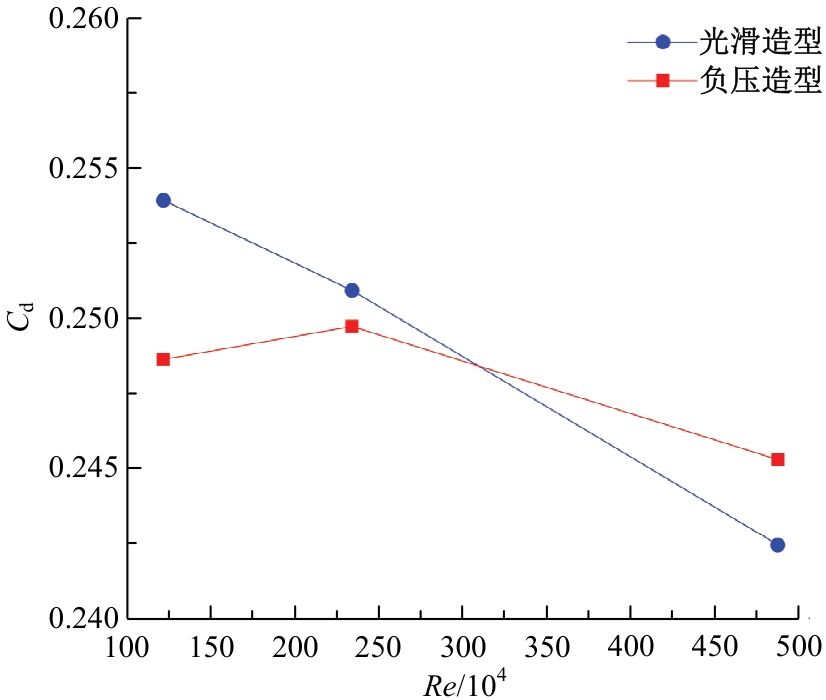
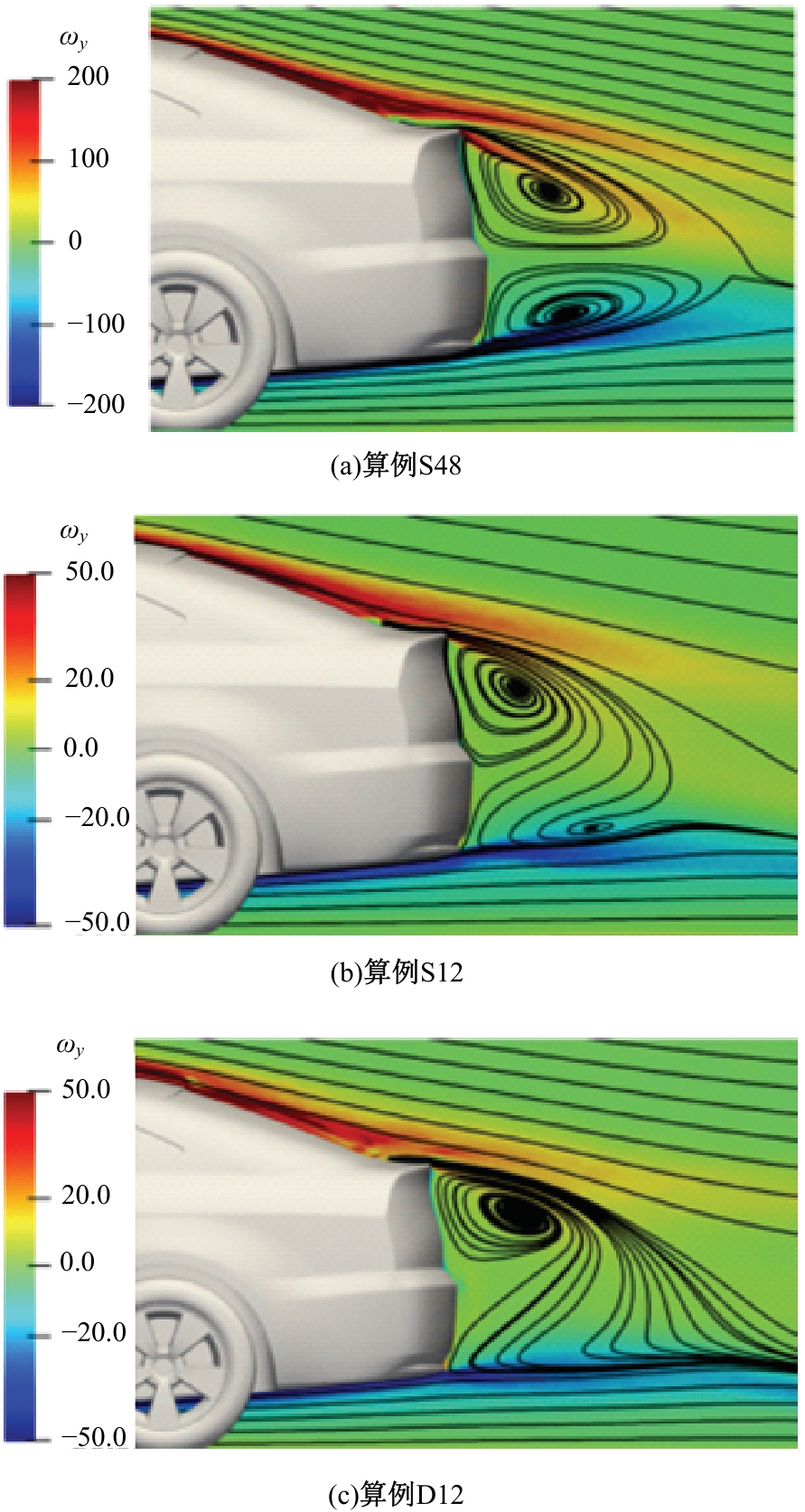
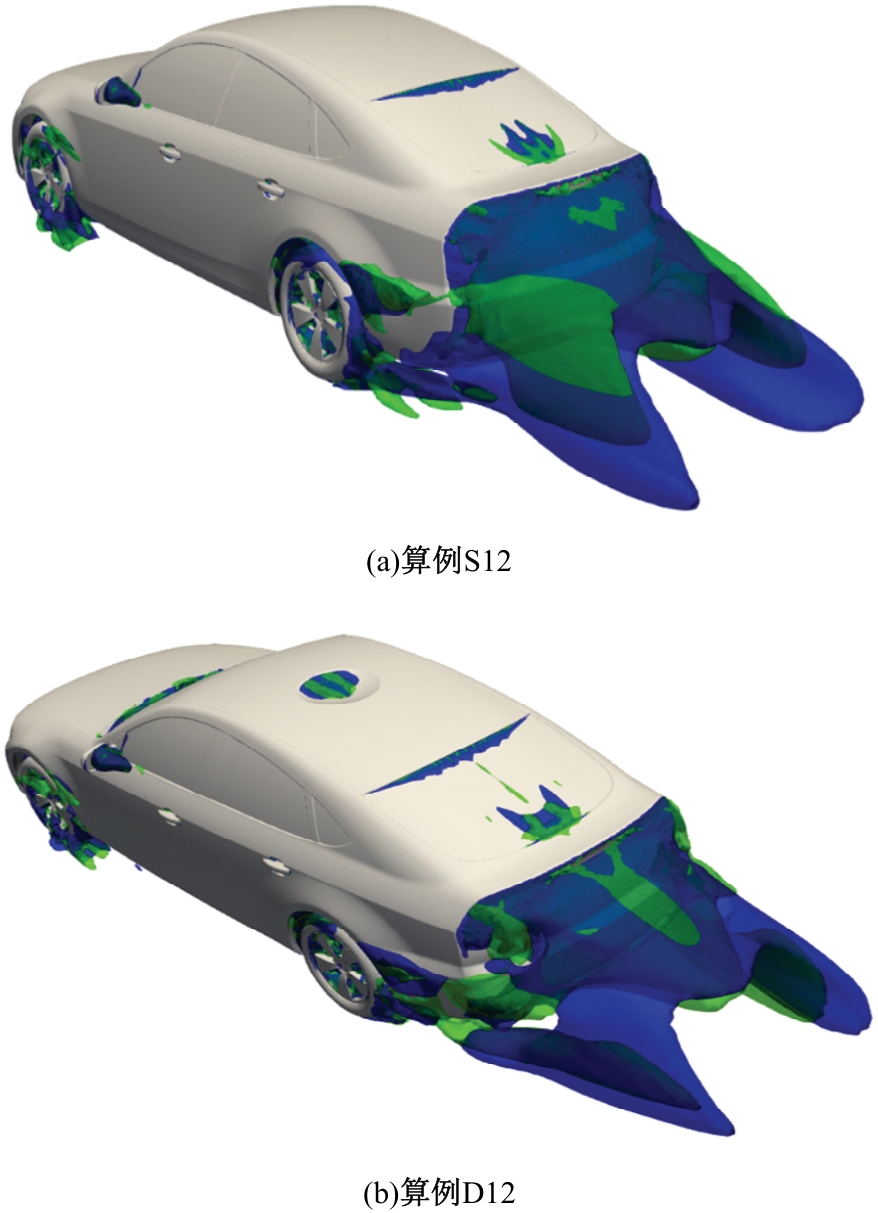
为了研究负压表面对真车的实际减阻效果,基于DrivAer车模型,利用RANS仿真对比研究了负压造型和光滑造型两种模型的气动阻力特性和流场特性,并基于对回流区三维结构和回流涡旋的分析揭示了负压造型气动减阻的内在机理。结果表明,负压造型无法在全雷诺数区间实现减阻效应:在低雷诺数时,负压造型实现2.1%以上的减阻;但在高雷诺数时,负压造型弱化车尾回流涡旋的效果已经无法抵消由其自身引起的气动阻力,进而引起整车阻力系数的提高。
中图分类号:
- U461.1

| [1] | Heft A I, Indinger T, Adams N A. Experimental and numerical investigation of the DrivAer model[C]∥ASME 2012 Fluids Engineering Division Summer Meeting, New York, USA, 2012: 41-51. |
| [2] | Qin P, Ricci A, Blocken B. CFD simulation of aerodynamic forces on the DrivAer car model: impact of computational parameters[J]. Journal of Wind Engineering and Industrial Aerodynamics, 2024, 248: No.105711. |
| [3] | Rüttgers M, Park J, You D. Large-eddy simulation of turbulent flow over the DrivAer fastback vehicle model[J]. Journal of Wind Engineering and Industrial Aerodynamics, 2019, 186: 123-138. |
| [4] | Liu J, Zhang Z, Wang Y, et al. Experimental study on the three-dimensional wake structure of the DrivAer standard model[J]. Journal of Visualization, 2021, 24(3): 443-460. |
| [5] | Wittmeier F, Kuthada T. Open grille DrivAer model-first results[J]. SAE International Journal of Passenger Cars—Mechanical Systems, 2015, 8(1): 252-260. |
| [6] | John M, Buga S D, Monti I, et al. Experimental and numerical study of the DrivAer model aerodynamics[C]∥SAE Technical Paper, 2018-01-0741. |
| [7] | Hupertz B, Chalupa K, Krueger L, et al. On the aerodynamics of the notchback open cooling DrivAer: a detailed investigation of wind tunnel data for improved correlation and reference[C]∥SAE Technical Paper, 2021-01-0958. |
| [8] | 张英朝, 杜冠茂, 田思, 等. 35°Ahmed模型气动射流减阻主动控制[J]. 吉林大学学报: 工学版, 2019,49(2): 351-358. |
| Zhang Ying-chao, Du Guan-mao, Tian Si, et al. Active flow control of 35°Ahmed model to reduce aerodynamic drag with steady jet[J]. Journal of Jilin University (Engineering and Technology Edition),2019, 49(2): 351-358. | |
| [9] | Cho J, Park J, Yee K, et al. Comparison of various drag reduction devices and their aerodynamic effects on the DrivAer model[J]. SAE International Journal of Passenger Cars—Mechanical Systems, 2018, 11(3): 225-238. |
| [10] | He P, Mader C A, Martins J R R A, et al. An aerodynamic design optimization framework using a discrete adjoint approach with OpenFOAM[J]. Computers & Fluids, 2018, 168: 285-303. |
| [11] | Grandemange M, Cadot O, Courbois A, et al. A study of wake effects on the drag of Ahmed׳s squareback model at the industrial scale[J]. Journal of Wind Engineering and Industrial Aerodynamics, 2015, 145: 282-291. |
| [12] | 胡兴军, 郭鹏, 惠政, 等. 多孔介质对厢式货车气动特性的影响[J]. 吉林大学学报: 工学版, 2019,49(2):345-350. |
| Hu Xing-jun, Guo Peng, Hui Zheng, et al. Effect of porous media on the aerodynamic characteristics of van-body truck[J]. Journal of Jilin University (Engineering and Technology Edition),2019, 49(2): 345-350. | |
| [13] | Wang Y, Wu C, Tan G, et al. Reduction in the aerodynamic drag around a generic vehicle by using a non-smooth surface[J]. Journal of Automobile Engineering, 2017, 231(1): 130-144. |
| [14] | Ballerstein N, Horst P. Manipulation of the aerodynamic behavior of the DrivAer model using dimple patterns[J]. Journal of Wind Engineering and Industrial Aerodynamics, 2023, 233: No.105216. |
| [15] | 杨易,郑萌,黄剑锋,等.基于非光滑表面与涡流干扰的车身气动减阻方法[J].中国机械工程, 2016, 27(7): 982-988. |
| Yang Yi, Zheng Meng, Huang Jian-feng, et al. Aerodynamic drag reduction method of vehicle body based on non-smooth surface and vortex interference[J]. China Mechanical Engineering, 2016, 27(7): 982-988. | |
| [16] | Strangfeld C, Wieser D, Schmidt H J, et al. Experimental study of baseline flow characteristics for the realistic car model DrivAer[C]∥SAE Technical Paper, 2013-01-1251. |
| [1] | 赵洪乾,李海岩,张城铭,崔世海,贺丽娟,吕文乐. 面向智能安全的中国50th百分位男性体征行人数字模型开发及应用[J]. 吉林大学学报(工学版), 2026, 56(3): 779-792. |
| [2] | 付尧,战椿水,刘科. 考虑通信延时的智能汽车非线性路径跟踪控制[J]. 吉林大学学报(工学版), 2026, 56(3): 851-859. |
| [3] | 李军,杨飞帆,龚胜,周科宇. 基于视觉的轻量化路面异常检测算法[J]. 吉林大学学报(工学版), 2026, 56(2): 488-496. |
| [4] | 高镇海,鲍明喜,赵睿,唐明弘,高菲. 基于目标锚点驱动的多模态轨迹预测方法[J]. 吉林大学学报(工学版), 2026, 56(1): 21-30. |
| [5] | 张向文,王子豪. 电动汽车制动模式切换过程电液协调控制策略[J]. 吉林大学学报(工学版), 2026, 56(1): 31-43. |
| [6] | 孙天骏,杨惠喆,蔡荣贵,冯嘉仪,冉锐,刘斌. 面向纯电动汽车自适应巡航系统的人性化起停控制策略[J]. 吉林大学学报(工学版), 2025, 55(9): 2847-2857. |
| [7] | 兰巍,周政,王冠宇,王伟,张苗苗. 基于机器学习的汽车设计智能拟合方法[J]. 吉林大学学报(工学版), 2025, 55(9): 2858-2863. |
| [8] | 朱冰,孟鹏翔,刘斌,韩嘉懿,赵健,陈志成,宋东鉴,陶晓文. 基于交通环境信息的虚拟车道线拟合方法[J]. 吉林大学学报(工学版), 2025, 55(9): 2935-2945. |
| [9] | 李寿涛,贾湘怡,朱军,郭洪艳,于丁力. 基于Level-K的智能驾驶汽车无信控交叉路口决策方法[J]. 吉林大学学报(工学版), 2025, 55(9): 3069-3078. |
| [10] | 高金武,孙少龙,王舜尧,高炳钊. 基于电机转矩补偿的增程器转速波动抑制策略[J]. 吉林大学学报(工学版), 2025, 55(8): 2475-2486. |
| [11] | 于贵申,陈鑫,唐悦,赵春晖,牛艾佳,柴辉,那景新. 激光表面处理对铝-铝粘接接头剪切强度的影响[J]. 吉林大学学报(工学版), 2025, 55(8): 2555-2569. |
| [12] | 赵俊武,曲婷,胡云峰. 基于自适应采样的智能车辆轨迹规划方法[J]. 吉林大学学报(工学版), 2025, 55(8): 2802-2816. |
| [13] | 宋学伟,于泽平,肖阳,王德平,袁泉,李欣卓,郑迦文. 锂离子电池老化后性能变化研究进展[J]. 吉林大学学报(工学版), 2025, 55(6): 1817-1833. |
| [14] | 贾美霞,胡建军,肖凤. 基于多软件联合的车用电机变工况多物理场仿真方法[J]. 吉林大学学报(工学版), 2025, 55(6): 1862-1872. |
| [15] | 肖纯,易子淳,周炳寅,张少睿. 基于改进鸽群优化算法的燃料电池汽车模糊能量管理策略[J]. 吉林大学学报(工学版), 2025, 55(6): 1873-1882. |
|
||