吉林大学学报(工学版) ›› 2026, Vol. 56 ›› Issue (7): 1860-1869.doi: 10.13229/j.cnki.jdxbgxb.20241345
• 交通运输工程·土木工程 • 上一篇
玄武岩纤维砒砂岩水泥土抗压强度预测模型
董伟1,2( ),李佳轩1,刘鑫3(),薛刚1
- 1.内蒙古科技大学 土木工程学院,内蒙古 包头 014010
2.内蒙古自治区土木工程安全与耐久性重点实验室,内蒙古 包头 014010
3.鄂尔多斯应用技术学院 土木工程系,内蒙古 鄂尔多斯 017010
Prediction model for compressive strength of basalt fiber pisha sandstone cement-soil
Wei DONG1,2(),Jia-xuan LI1,Xin LIU3(),Gang XUE1
- 1.College of Civil Engineering,Inner Mongolia University of Science and Technology,Baotou 014010,China
2.Inner Mongolia Autonomous Region Key Laboratory of Civil Engineering Safety and Durability,Baotou 014010,China
3.Department of Civil Engineering,Ordos Institute of Technology,Ordos 017010,China
摘要:
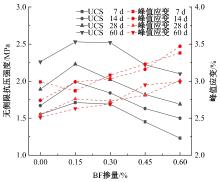
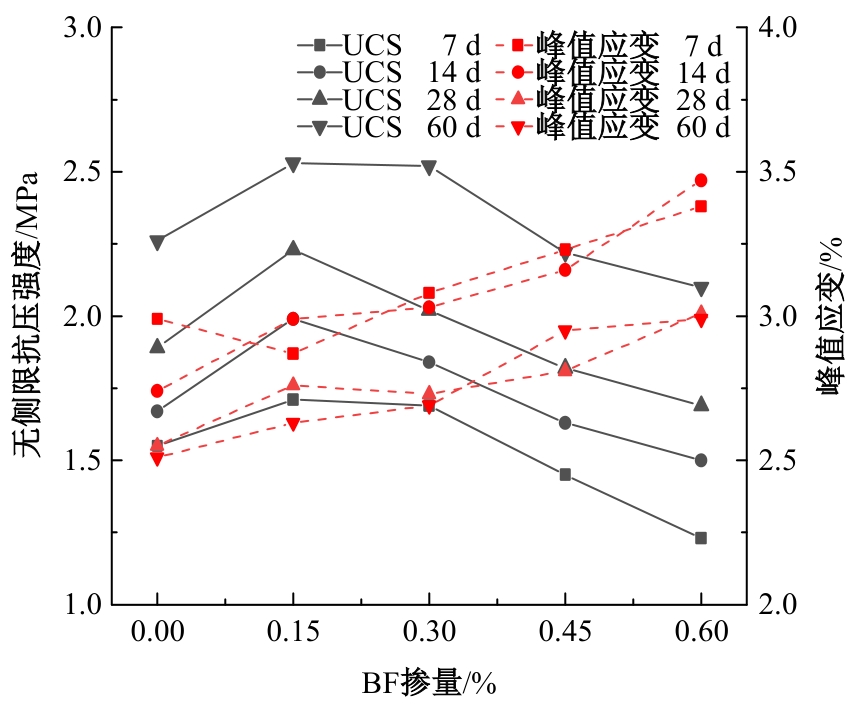
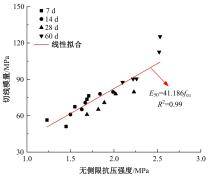
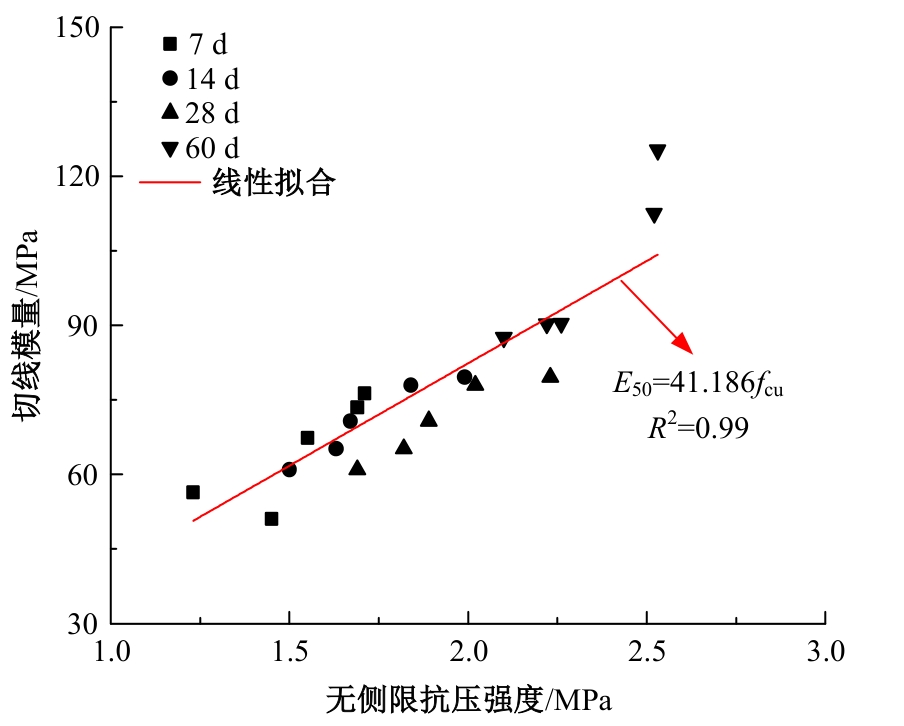
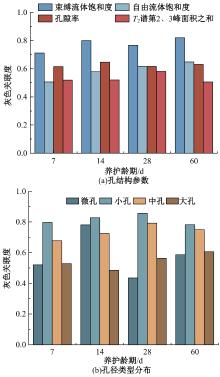
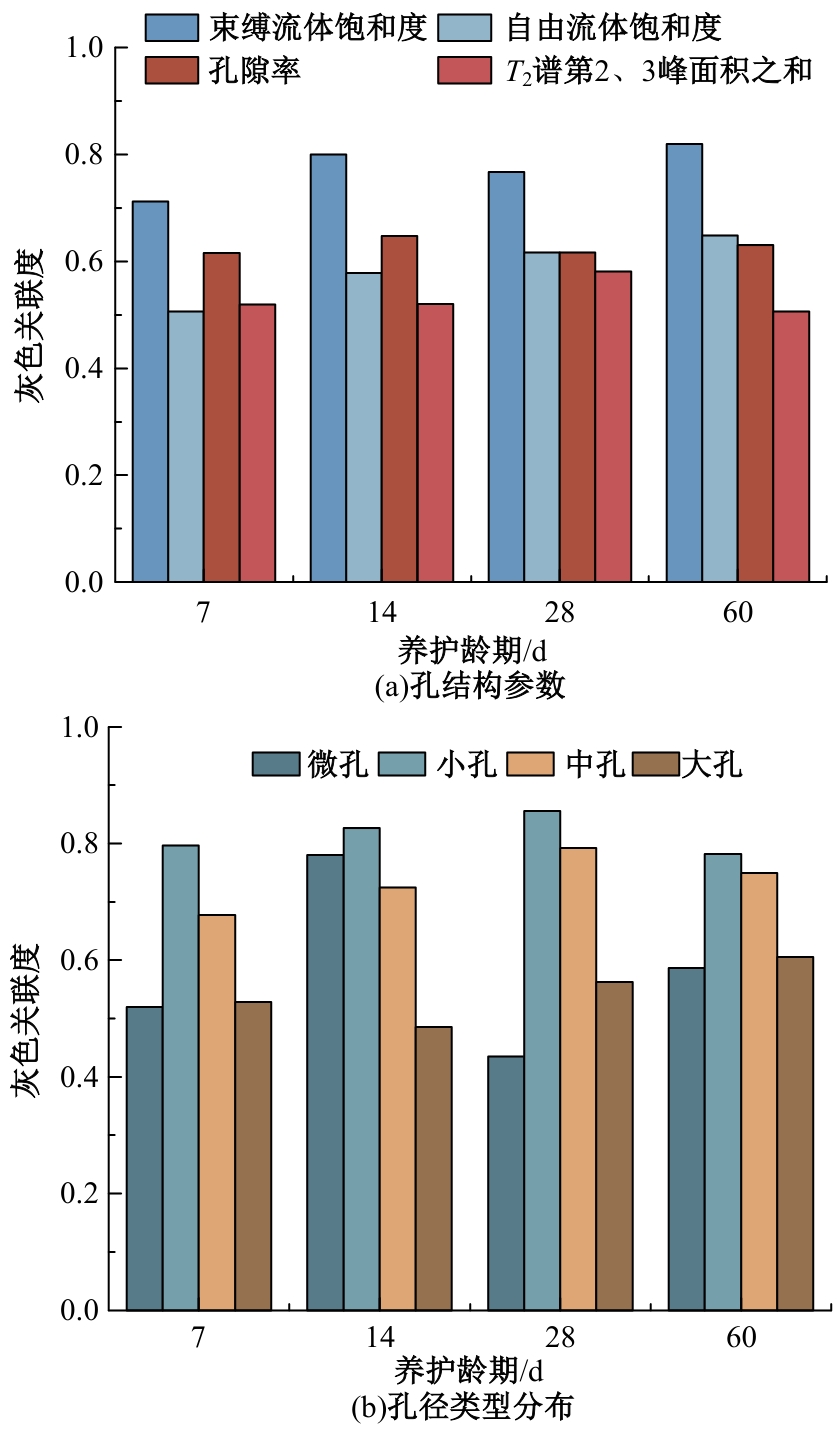
为预测不同龄期、不同玄武岩纤维掺量下砒砂岩水泥土的无侧限抗压强度,制备了掺有不同质量分数(0%~0.6%)玄武岩纤维的玄武岩纤维砒砂岩水泥土,并进行了无侧限抗压强度试验和核磁共振试验。研究表明,纤维掺量0.15%~0.3%可显著提高无侧限抗压强度,最优掺量为0.15%,且无侧限抗压强度与割线模量呈线性关系。随养护龄期增加,无侧限抗压强度增加,孔隙率降低;随纤维掺量增加,无侧限抗压强度先增后降,孔隙率先降后升。灰色关联分析表明,束缚流体饱和度和小孔占比与无侧限抗压强度相关性较高。基于此,建立了GM(1,N)灰色模型预测无侧限抗压强度,估算值平均相对误差小于9.27%。研究结果可为砒砂岩在路基工程中的应用提供参考。
中图分类号:
- TU441

| [1] | 李晓丽. 砒砂岩抗蚀性力学机理研究[M]. 北京: 中国水利水电出版社, 2018. |
| [2] | Dong J, Li C, Liu H, et al. Investigating the mechanical property and reaction mechanism of geopolymers cement with red pisha sandstone[J]. Construction and Building Materials, 2019, 201: 641-650. |
| [3] | 王辉, 李晓丽, 杨健, 等. 玄武岩纤维-砒砂岩水泥土力学特性试验研究[J]. 排灌机械工程学报, 2021, 39(12): 1264-1269, 1290. |
| Wang Hui, Li Xiao-li, Yang Jian, et al. Experimental study on mechanical properties of basalt fiber-pisha sandstone cement soil[J]. Journal of Drainage and Irrigation Machinery Engineering, 2021, 39(12): 1264-1269, 1290. | |
| [4] | Geng K, Chai J, Qin Y, et al. Collapse inhibition mechanism analysis and durability properties of cement-stabilized pisha sandstone[J]. Bulletin of Engineering Geology and the Environment, 2022, 81(144): 1-18. |
| [5] | 郑刚, 龚晓南, 谢永利, 等. 地基处理技术发展综述[J]. 土木工程学报, 2012, 45(2): 127-146. |
| Zheng Gang, Gong Xiao-nan, Xie Yong-li, et al. State-of-the-art techniques for ground improvement in China[J]. China Civil Engineering Journal, 2012, 45(2): 127-146. | |
| [6] | 牛雷, 徐丽娜, 郑俊杰. 纤维对水泥土加固效果影响的试验研究[J]. 土木与环境工程学报, 2021, 43(2): 35-40. |
| Niu Lei, Xu Li-na, Zheng Jun-jie. Experimental study on the reinforcement effect of fiber on cement soil[J]. Journal of Civil and Environmental Engineering, 2021, 43(2): 35-40. | |
| [7] | 徐文彬, 李乾龙, 田明明. 聚丙烯纤维加筋固化尾砂强度及变形特性[J]. 工程科学学报, 2019, 41(12): 1618-1626. |
| Xu Wen-bin, Li Qian-long, Tian Ming-ming. Strength and deformation properties of polypropylene fiber-reinforced cemented tailings backfill[J]. Journal of Engineering Science, 2019, 41(12): 1618-1626. | |
| [8] | Xue C, Wang X, Lian B, et al. Research on the mechanism of composite improvement of loess based on quantitative analysis of microstructure and mechanical strength[J]. Construction and Building Materials, 2023, 379: No.131215. |
| [9] | Chen J, Mu J, Chen A, et al. Experimental study on the properties of basalt fiber-cement-stabilized expansive soil[J]. Sustainability, 2024, 16(17): No.7579. |
| [10] | Seyed S H, Meysam B, Mohsen M, et al. Freeze-thaw durability of cement-stabilized soil reinforced with polypropylene/basalt fibers[J]. Journal of Materials in Civil Engineering, 2021, 33(9):No. 04021232. |
| [11] | 刘鑫, 申向东, 薛慧君, 等. 水泥固化砒砂岩强度与孔隙结构演变的灰熵关联分析[J]. 农业工程学报, 2020, 36(24): 125-133. |
| Liu Xin, Shen Xiang-dong, Xue Hui-jun, et al. Grey entropy analysis of strength and pore structure evolution of cement-solidified Pisha sandstone[J]. Transactions of the Chinese Society of Agricultural Engineering, 2020, 36(24): 125-133. | |
| [12] | 涂义亮, 张瑞, 任思雨, 等. 玄武岩纤维提升水泥土抗压性能试验研究[J]. 中国铁道科学, 2024, 45(1): 36-46. |
| Tu Yi-liang, Zhang Rui, Ren Si-yu, et al. Experimental study on the compressive performance of hydraulic soil enhanced by basalt fiber[J]. China Railway Science, 2024, 45(1): 36-46. | |
| [13] | 马芹永, 高常辉. 玄武岩纤维和砂对水泥土微观结构及拉压强度的影响[J]. 应用基础与工程科学学报, 2020, 28(1): 148-159. |
| Ma Qin-yong, Gao Chang-hui. Effects of basalt fiber and sand on microstructure and tensile strength of hydraulic soil[J]. Journal of Applied Basic Science and Engineering, 2020, 28(1): 148-159. | |
| [14] | 鹿群, 郭少龙, 王闵闵, 等. 纤维水泥土力学性能的试验研究[J]. 岩土力学, 2016, 37(): 421-426. |
| Lu Qun, Guo Shao-long, Wang Min-min, et al. Experimental study of mechanical properties of fiber cement soil[J]. Rock and Soil Mechanics, 2016, 37(Sup.2): 421-426. | |
| [15] | 王闵闵, 鹿群, 郭少龙, 等. 循环荷载作用下纤维水泥土动力特性[J]. 岩土力学, 2018, 39(5): 1753-1760. |
| Wang Min-min, Lu Qun, Guo Shao-long, et al. Dynamic behavior of soil with fiber and cement under cyclic loading[J]. Rock and Soil Mechanics, 2018, 39(5): 1753-1760. | |
| [16] | Xu J, Zhao X, Chen Z, et al. Novel prediction models for composite elastic modulus of circular recycled aggregate concrete-filled steel tubes[J]. Thin-Walled Structures, 2019, 144: No.106317. |
| [17] | 张铖, 王玲, 姚燕, 等. 碳化混凝土孔隙结构与Autoclam气体渗透性能的关联性研究[J]. 材料导报, 2023, 37(8): 50-54. |
| Zhang Cheng, Wang Ling, Yao Yan, et al. On the relationship between pore structure and gas permeability from Autoclam test in carbonated concrete[J]. Materials Reports, 2023, 37(8): 50-54. | |
| [18] | Jiang Q, Liu W, Wu S. Analysis on factors affecting moisture stability of steel slag asphalt concrete using grey correlation method[J]. Journal of Cleaner Production, 2023, 397, No.136490. |
| [19] | 周翱翔, 张云升, 钱如胜, 等. 花岗岩石粉对机制砂混凝土基本性能及气体渗透特性的影响[J]. 复合材料学报,2024, 41(7): 3704-3715. |
| Zhou Ao-xiang, Zhang Yun-sheng, Qian Ru-sheng, et al. Influence of granite stone powder on the basic properties and gas permeability characteristics of mechanism sand concrete[J]. Acta Materiae Compositae Sinica, 2024, 41(7): 3704-3715. | |
| [20] | 范凌燕. 水泥土无侧限抗压强度影响因素的灰色关联度分析[J]. 铁道科学与工程学报, 2016, 13(3): 476-479. |
| Fan Ling-yan. Influence factors of unconfined compressive strength of cement-treated soil based on grey relevant degree theory[J]. Journal of Railway Science and Engineering, 2016, 13(3): 476-479. | |
| [21] | Geng K, Li X. Performance analysis of sulfate pisha-sandstone cement soil based on the grey entropy theory[J]. KSCE Journal of Civil Engineering, 2022, 26(2): 584-595. |
| [22] | . 土工试验方法标准 [S]. |
| [23] | 涂义亮, 任思雨, 赵林, 等. 玄武岩纤维-粉煤灰提升水泥土抗剪性能试验研究[J]. 材料导报, 2025, 39(16):133-140. |
| Tu Yi-liang, Ren Si-yu, Zhao Lin, et al. Experimental study of basalt fiber-fly ash to enhance the shear properties of cement soil[J]. Materials Reports, 2025, 39(16):133-140. | |
| [24] | . 建筑地基处理技术规范 [S]. |
| [25] | 周华, 李英亮, 高峰, 等. 低场单边核磁对砖石材料加固效果的评价[J]. 建筑材料学报, 2013, 16(6):1097-1102. |
| Zhou Hua, Li Ying-liang, Gao Feng, et al. Evaluation of consolidation of the brick materials by mobile single-side NMR[J]. Journal of Building Materials, 2013, 16(6): 1097-1102. | |
| [26] | Deng Y, Yue X, Liu S, et al. Hydraulic conductivity of cement-stabilized marine clay with metakaolin and its correlation with pore size distribution[J]. Engineering Geology, 2015, 193: 146-152. |
| [27] | Horpibulsuk S, Rachan R, Raksachon Y. Role of fly ash on strength and microstructure development in blended cement stabilized silty clay[J]. Soils and Foundations, 2009, 49(1): 85-98. |
| [1] | 火久元,窦瑞翔,常琛,陈峰,张耀南. 基于预测与重构的桥梁异常状态检测模型[J]. 吉林大学学报(工学版), 2026, 56(2): 497-508. |
| [2] | 卢荡,索艳茹,孙宇航,吴海东. 基于无量纲格式的轮胎侧倾侧偏力学特性预测[J]. 吉林大学学报(工学版), 2025, 55(5): 1516-1524. |
| [3] | 卢晓红,洛家庆,丛晨,徐凯. 铝合金LF21微铣削顶端毛刺尺寸预测与工艺优化[J]. 吉林大学学报(工学版), 2025, 55(1): 125-131. |
| [4] | 马洁,刘智丽,王书灵,董皓. 轨道交通车站出入口客流预测——以北京市为例[J]. 吉林大学学报(工学版), 2024, 54(8): 2197-2205. |
| [5] | 朱国庆,刘显成,田从祥. 基于长短期记忆网络的公共建筑短期能耗预测模型[J]. 吉林大学学报(工学版), 2024, 54(7): 2009-2014. |
| [6] | 杨海吉,何佳龙,李国发,王立鼎,王思远. 改进失效模式和影响分析方法在加工中心主轴系统风险分析中的应用[J]. 吉林大学学报(工学版), 2022, 52(2): 345-352. |
| [7] | 姜屏,周琳,毛天豪,袁俊平,王伟,李娜. 水泥改性废弃泥浆损伤模型及时间效应[J]. 吉林大学学报(工学版), 2022, 52(12): 2874-2882. |
| [8] | 方宇,孙立军. 基于生存分析的城市桥梁使用性能衰变模型[J]. 吉林大学学报(工学版), 2020, 50(2): 557-564. |
| [9] | 戴文亭,司泽华,王振,王琦. 剑麻纤维水泥加固土的路用性能试验[J]. 吉林大学学报(工学版), 2020, 50(2): 589-593. |
| [10] | 王鹏辉,乔宏霞,冯琼,曹辉,温少勇. 氯氧镁涂层钢筋混凝土两重因素耦合作用下的耐久性模型[J]. 吉林大学学报(工学版), 2020, 50(1): 191-201. |
| [11] | 徐戊矫,刘承尚,鲁鑫垚. 喷丸处理后6061铝合金工件表面粗糙度的模拟计算及预测[J]. 吉林大学学报(工学版), 2019, 49(4): 1280-1287. |
| [12] | 宫亚峰, 申杨凡, 谭国金, 韩春鹏, 何钰龙. 不同孔隙率下纤维土无侧限抗压强度[J]. 吉林大学学报(工学版), 2018, 48(3): 712-719. |
| [13] | 马知行, 赵琦, 张浩. 基于傅立叶分析的持家基因预测模型[J]. 吉林大学学报(工学版), 2016, 46(5): 1639-1643. |
| [14] | 郭洪强, 何洪文, 卢兵. 电动汽车复合制动预测模型[J]. 吉林大学学报(工学版), 2015, 45(3): 696-702. |
| [15] | 高振海, 吴涛, 赵会. 车辆虚拟跟随避撞中驾驶人制动时刻模型[J]. 吉林大学学报(工学版), 2014, 44(5): 1233-1239. |
|
||