吉林大学学报(工学版) ›› 2026, Vol. 56 ›› Issue (9): 2361-2372.doi: 10.13229/j.cnki.jdxbgxb.20250170
• 交通运输工程·土木工程 • 上一篇
基于生存分析的山区公路借道超车风险暴露时间模型
卢梦媛1,2( ),戢晓峰1,2(),徐迎豪3,覃文文1,2
- 1.昆明理工大学 交通工程学院,昆明 650500
2.云南省现代物流工程研究中心,昆明 650500
3.重庆市铁路(集团)有限公司,重庆 401121
Overtaking risk exposure duration model of two⁃lane mountainous highways based on survival analysis
Meng-yuan LU1,2(),Xiao-feng JI1,2(),Ying-hao XU3,Wen-wen QIN1,2
- 1.Faculty of Transportation Engineering,Kunming University of Science and Technology,Kunming 650500,China
2.Yunnan Modern Logistics Engineering Research Center,Kunming 650500,China
3.Chongqing Railway Group Co. ,Ltd. ,Chongqing 401121,China
摘要:
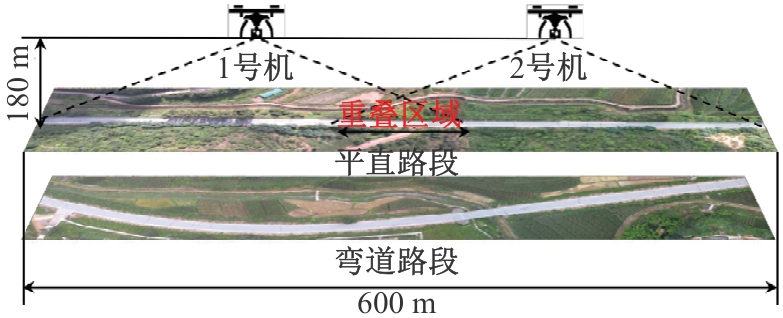
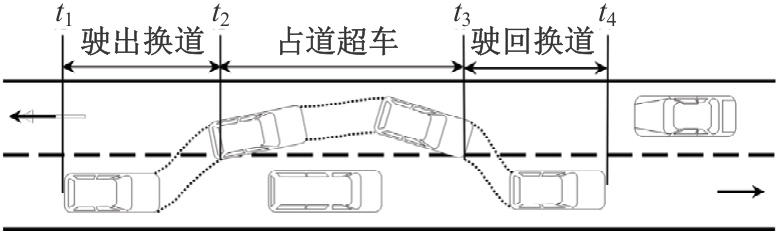
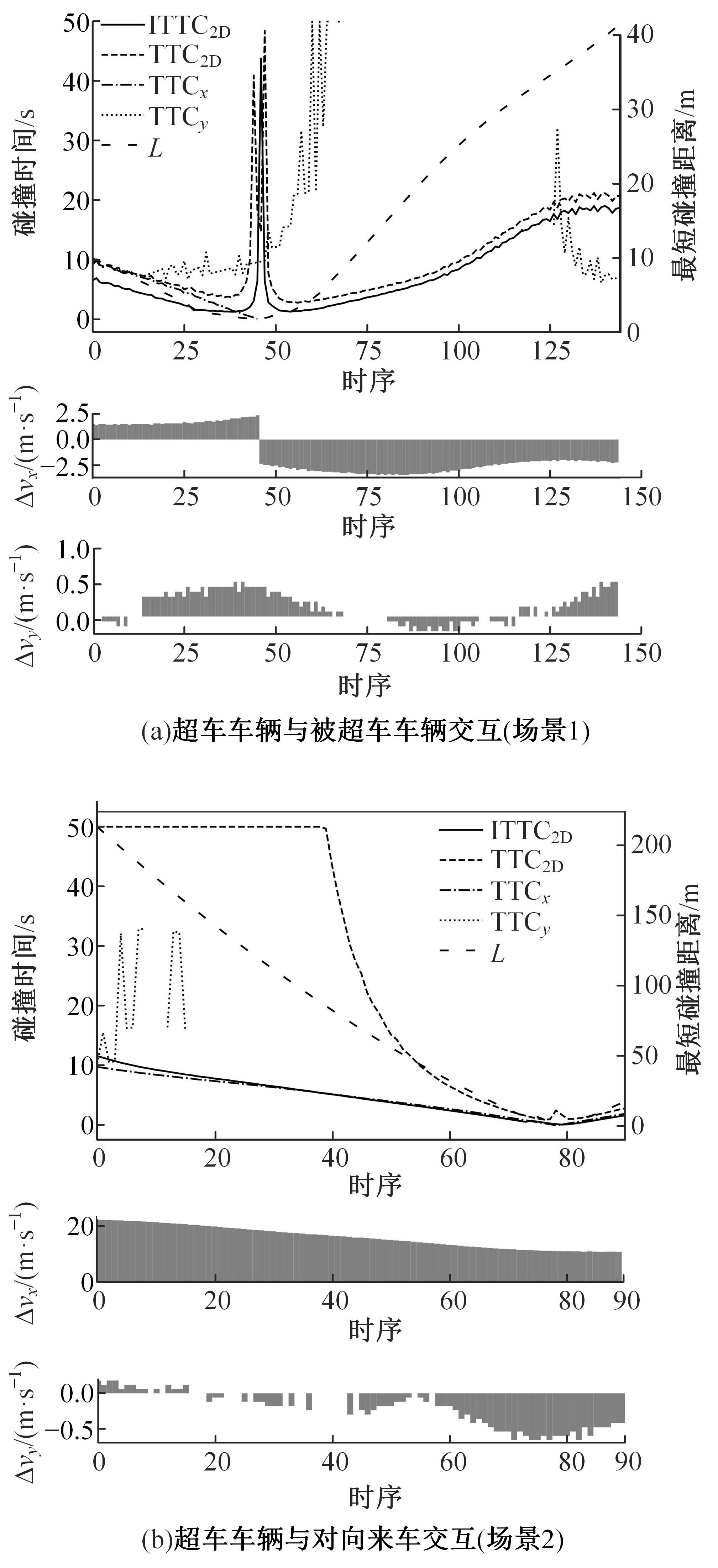
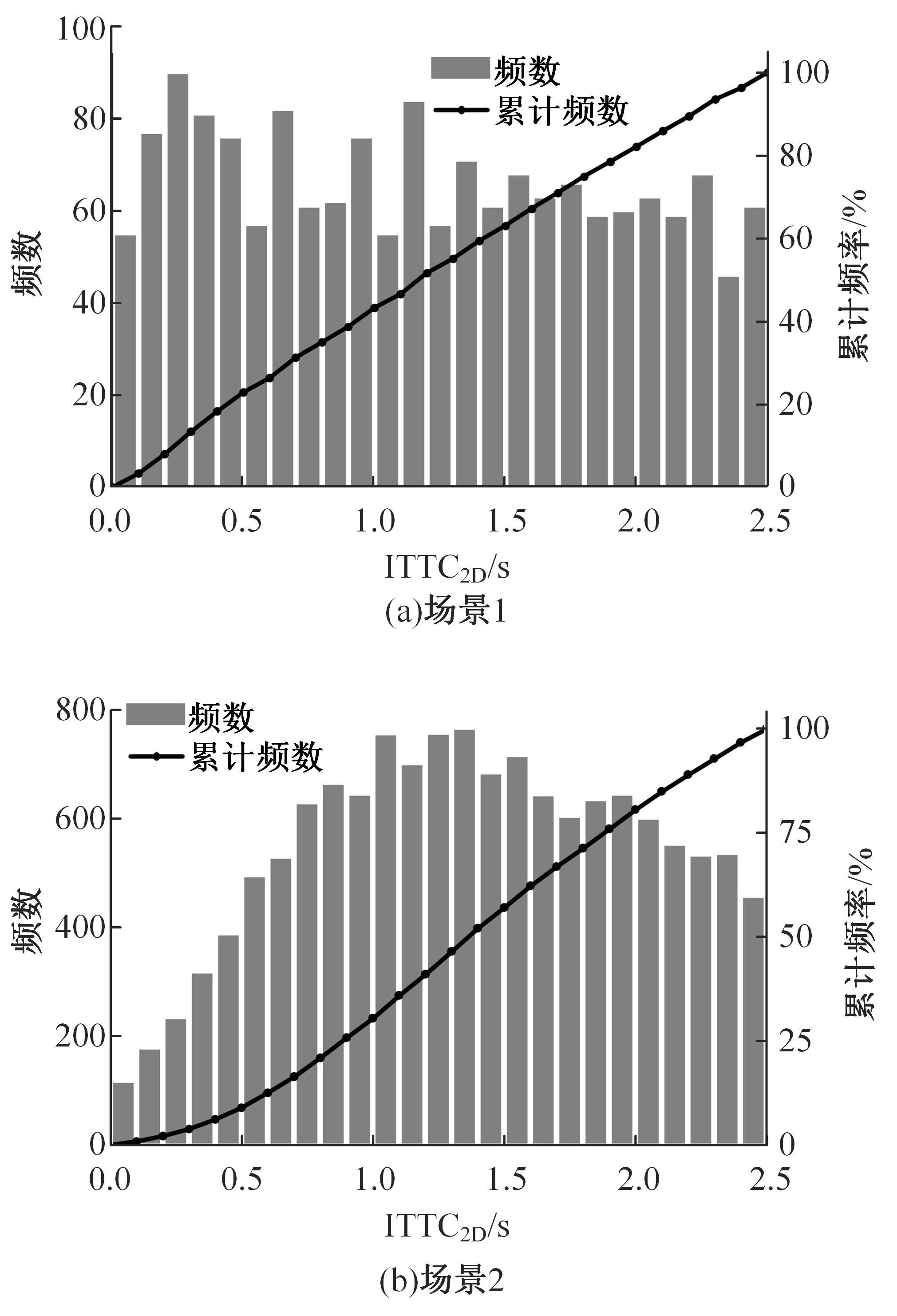
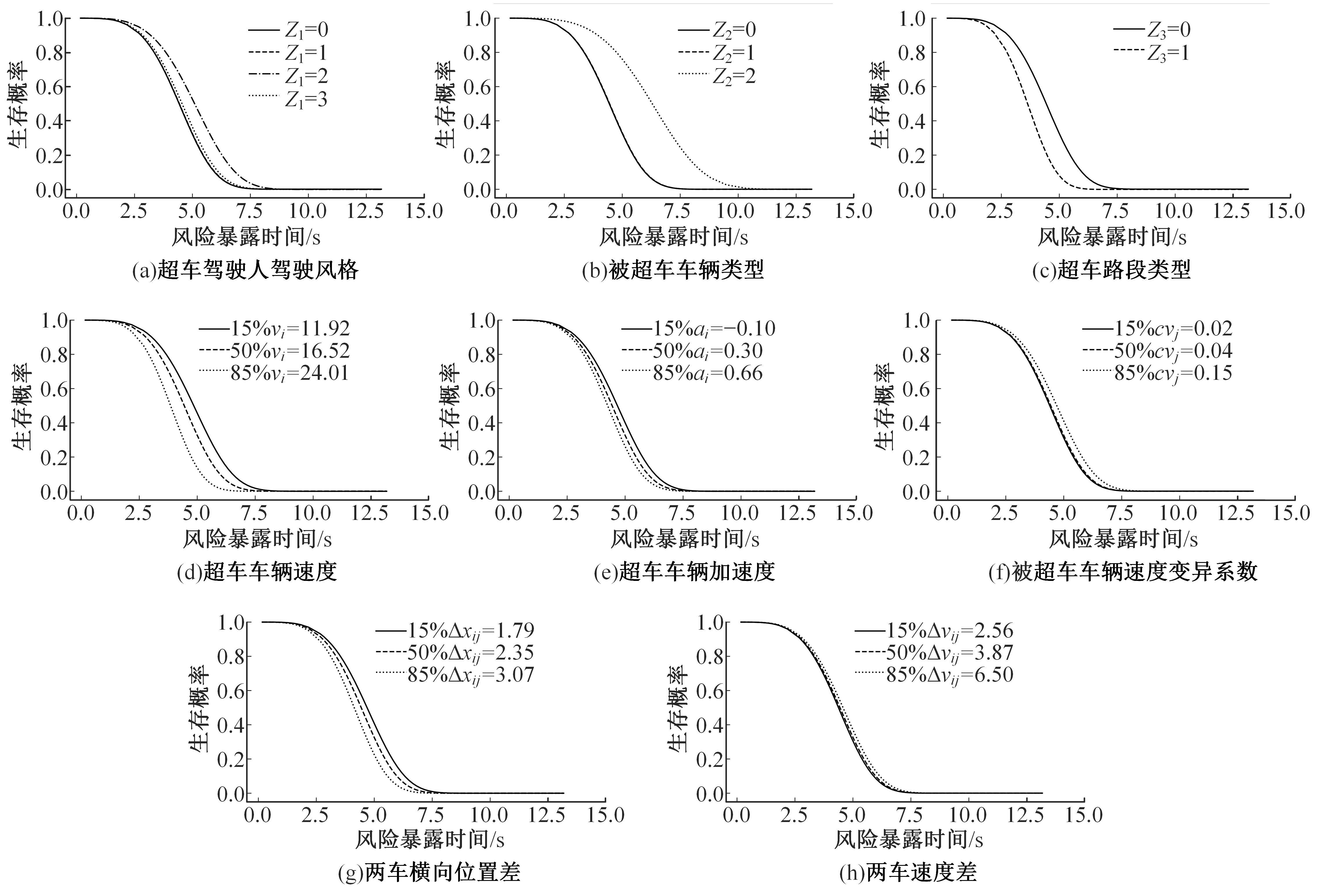
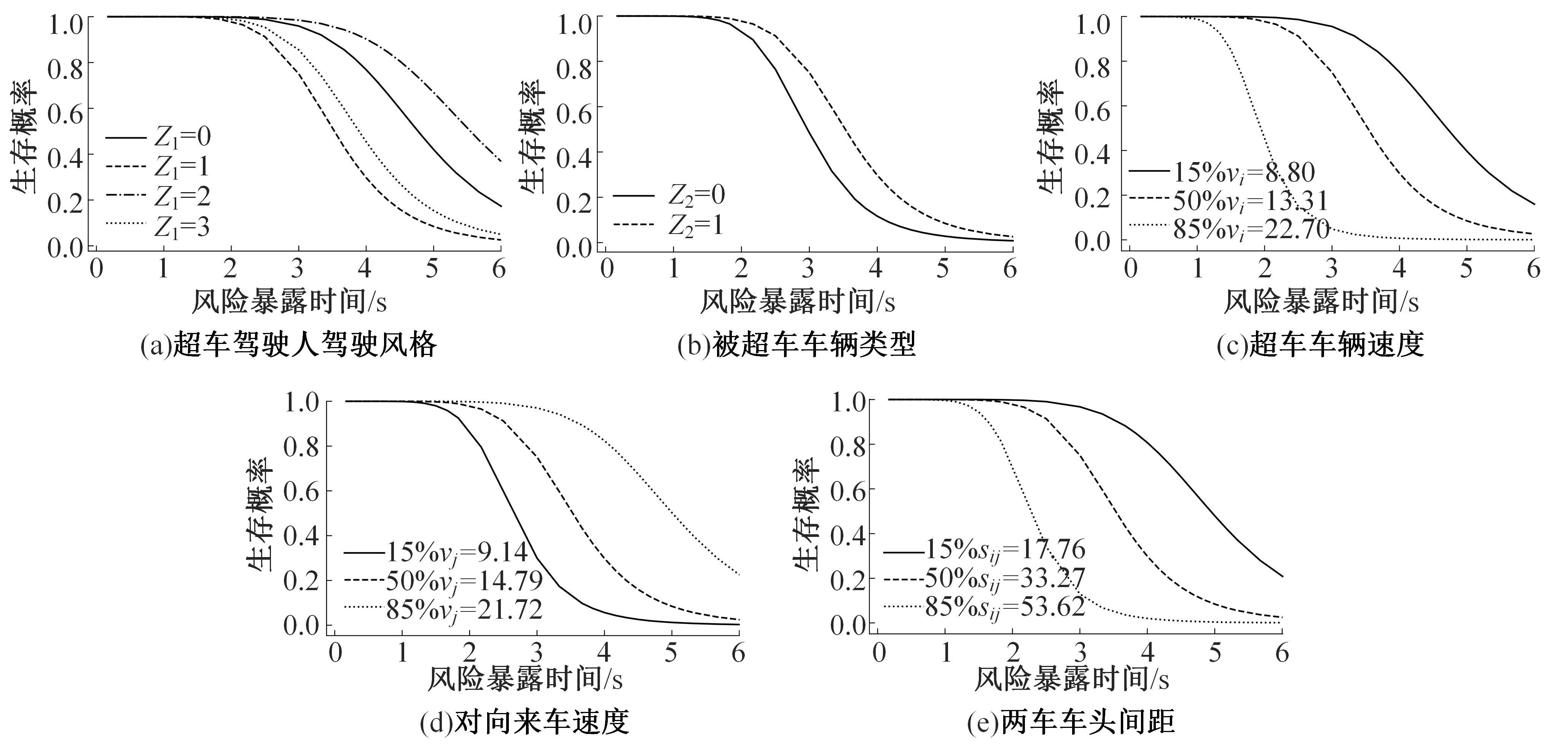
针对山区双车道公路超车车辆与被超车车辆交互、与对向来车交互两种场景,利用两台无人机同步采集借道超车行为视频,通过改进二维碰撞时间(TTC)计算方法量化借道超车风险;基于生存分析理论构建了考虑驾驶风格的借道超车风险暴露时间模型,解析了超车车辆与不同交互车辆间的风险持续性影响机制。结果表明:相较于与对向来车交互,超车车辆与被超车车辆交互的平均风险暴露时间更长(5.19 s);超速型风格驾驶人的风险暴露时间较保守型增加15%,超越货车时的风险暴露时间较超越摩托车和小客车分别增加19%和42%;除超车车辆速度外,两车横向位置差、对向来车速度分别对两种借道超车交互场景风险暴露时间的平均影响程度最大。
中图分类号:
- U491.31

| [1] | Mwesige G, Farah H, Koutsopoulos H N. Risk appraisal of passing zones on two-lane rural highways and policy applications[J]. Accident Analysis & Prevention, 2016, 90: 1-12. |
| [2] | Choudhari T, Budhkar A, Maji A. Modeling overtaking distance and time along two-lane undivided rural highways in mixed traffic condition[J]. Transportation Letters, 2022, 14(2): 75-83. |
| [3] | Branzi V, Meocci M, Domenichini L, et al. A combined simulation approach to evaluate overtaking behaviour on two-lane two-way rural roads[J]. Journal of Advanced Transportation, 2021(2): 1-18. |
| [4] | 刘照霞, 付锐, 牛世峰. 基于极值理论与智能网联信息的超车风险评估[J]. 吉林大学学报: 工学版, 2025, 55(3): 925‑937. |
| Liu Zhao-xia, Fu Rui, Niu Shi-feng,Risk assessment in overtaking scenarios using extreme value theory and intelligent and connected information[J]. Journal of Jilin University(Engineering and Technology Edition), 2025, 55(3): 925‑937. | |
| [5] | Mahmud S M S, Ferreira L, Hoque Md S, et al. Overtaking risk modeling in two-lane two-way highway with heterogeneous traffic environment of a low-income country using naturalistic driving dataset[J]. Journal of Safety Research, 2022, 80: 380-390. |
| [6] | Li D, Pan H. Two-lane two-way overtaking decision model with driving style awareness based on a game-theoretic framework[J]. Transportmetrica A: Transport Science, 2023, 19(3): No.2076755. |
| [7] | Figueira A C, Larocca A P C. Analysis of the factors influencing overtaking in two-lane highways: a driving simulator study[J]. Transportation Research Part F: Traffic Psychology and Behaviour, 2020, 69: 38-48. |
| [8] | Pawar N M, Velaga N R. Investigating the influence of time pressure on overtaking maneuvers and crash risk[J]. Transportation Research Part F: Traffic Psychology and Behaviour, 2021, 82: 268-284. |
| [9] | Karimi A, Boroujerdian A M, Catani L, et al. Who overtakes more? Explanatory analysis of the characteristics of drivers from low/middle and high-income countries on passing frequency[J]. Transportation Research Part F: Traffic Psychology and Behaviour, 2021, 76: 167-177. |
| [10] | Papakostopoulos V, Nathanael D, Portouli E, et al. The effects of changes in the traffic scene during overtaking[J]. Accident Analysis & Prevention, 2015, 79: 126-132. |
| [11] | Song Y. Integrated overtaking model and safety analysis for truck platooning requirements on two-lane undivided highways[J]. Transportation Research Record, 2024, 2678(8): 1-18. |
| [12] | 戢晓峰, 戴秉佑, 普永明, 等. 基于生存分析的山区双车道公路超车持续时间模型[J]. 交通运输系统工程与信息, 2022, 22(6): 183-190. |
| Ji Xiao-feng, Dai Bing-you, Pu Yong-ming, et al. Overtaking duration model of two-lane mountainous highways based on survival analysis[J]. Journal of Transportation Systems Engineering and Information Technology, 2022, 22(6): 183-190. | |
| [13] | Venthuruthiyil S P, Chunchu M. Anticipated collision time (ACT): a two-dimensional surrogate safety indicator for trajectory-based proactive safety assessment[J]. Transportation Research Part C: Emerging Technologies, 2022, 139: No.103655. |
| [14] | Cheng H, Jiang Y, Zhang H, et al. Emergency index (EI): a two-dimensional surrogate safety measure considering vehicles' interaction depth[J]. Transportation Research Part C: Emerging Technologies, 2025, 171: No.104981. |
| [15] | Zang Y, Wen L, Cai P, et al. How drivers perform under different scenarios: ability-related driving style extraction for large-scale dataset[J]. Accident Analysis & Prevention, 2024, 196: No.107445. |
| [16] | Espinoza J, Delpiano R. Statistical models of interactions between vehicles during overtaking maneuvers[J]. Transportation Research Record: Journal of the Transportation Research Board, 2023,678(4):323-333. |
| [17] | Sabek B, Srour F J, El Mendelek M, et al. Are you in the mood to pass? A study on the interplay of psychological traits and traffic on young drivers' overtaking behavior on two-lane, two-way highways[J]. Transportation Research Part F: Traffic Psychology and Behaviour, 2024, 101: 59-77. |
| [18] | Ye S, Chen T, Oviedo-Trespalacios O, et al. Investigating work-related distraction's impact on male taxi driver safety: a hazard-based duration model[J]. Analytic Methods in Accident Research, 2024, 44: No.100350. |
| [19] | 戢晓峰, 李金, 普永明, 等. 穿村镇公路车辆跟驰冲突暴露时间生存分析[J]. 交通运输系统工程与信息, 2025, 25(2): 349‑360. |
| Ji Xiao-feng, Li Jin, Pu Yong-ming, et al. Survival analysis of car-following conflict exposure time on through-village highway[J]. Journal of Transportation Systems Engineering and Information Technology, 2025, 25(2): 349‑360. |
| [1] | 冯天军,郝延铭,李飞燕,高赫遥,刘一贤,刘楠,李金凤. 考虑驾驶风格的网联自动驾驶车辆集聚换道模型[J]. 吉林大学学报(工学版), 2026, 56(7): 1834-1844. |
| [2] | 刘照霞,付锐,牛世峰. 基于极值理论与智能网联信息的超车风险评估[J]. 吉林大学学报(工学版), 2025, 55(3): 925-937. |
| [3] | 张兰芳,李根泽,刘婷宇,余博. 局部多车影响下跟驰行为机理及建模[J]. 吉林大学学报(工学版), 2025, 55(3): 963-973. |
| [4] | 潘义勇,尤逸文,吴静婷. 换道事故严重程度影响因素异质性和可转移性分析[J]. 吉林大学学报(工学版), 2025, 55(2): 520-528. |
| [5] | 郭昕刚,王嵩,程超,范珍. 联合博弈论与驾驶风格的混合交通流变道决策模型[J]. 吉林大学学报(工学版), 2025, 55(12): 3875-3884. |
| [6] | 王宏志,宋明轩,程超,解东旋. 基于改进YOLOv5算法的道路目标检测方法[J]. 吉林大学学报(工学版), 2024, 54(9): 2658-2667. |
| [7] | 戢晓峰,徐迎豪,普永明,郝京京,覃文文. 山区双车道公路货车移动遮断小客车跟驰风险预测模型[J]. 吉林大学学报(工学版), 2024, 54(5): 1323-1331. |
| [8] | 邬岚,赵乐,李根. 基于方差异质性随机参数模型的汇合行为分析[J]. 吉林大学学报(工学版), 2024, 54(4): 883-889. |
| [9] | 王宏志,宋明轩,程超,解东旋. 基于改进YOLOv4-tiny算法的车距预警方法[J]. 吉林大学学报(工学版), 2024, 54(3): 741-748. |
| [10] | 何杰,张长健,严欣彤,王琛玮,叶云涛. 基于微观动力学参数的高速公路特征路段事故风险分析[J]. 吉林大学学报(工学版), 2024, 54(1): 162-172. |
| [11] | 张雅丽,付锐,袁伟,郭应时. 考虑能耗的进出站驾驶风格分类及识别模型[J]. 吉林大学学报(工学版), 2023, 53(7): 2029-2042. |
| [12] | 贺宜,孙昌鑫,彭建华,吴超仲,江亮,马明. 电动载货三轮车风险行为及影响因素分析[J]. 吉林大学学报(工学版), 2023, 53(2): 413-420. |
| [13] | 潘恒彦,张文会,梁婷婷,彭志鹏,高维,王永岗. 基于MIMIC与机器学习的出租车驾驶员交通事故诱因分析[J]. 吉林大学学报(工学版), 2023, 53(2): 457-467. |
| [14] | 朱洁玉,马艳丽. 合流区域多车交互风险实时评估方法[J]. 吉林大学学报(工学版), 2022, 52(7): 1574-1581. |
| [15] | 彭涛,方锐,刘兴亮,王海玮,庞彦伟,许洪国,刘福聚,王涛. 基于典型事故场景的雪天高速换道自动驾驶策略[J]. 吉林大学学报(工学版), 2022, 52(11): 2558-2567. |
|
||