吉林大学学报(工学版) ›› 2026, Vol. 56 ›› Issue (7): 1834-1844.doi: 10.13229/j.cnki.jdxbgxb.20250552
• 交通运输工程·土木工程 • 上一篇
考虑驾驶风格的网联自动驾驶车辆集聚换道模型
冯天军1( ),郝延铭1,李飞燕1,高赫遥1,刘一贤1,刘楠1,李金凤2
- 1.吉林建筑大学 交通科学与工程学院,长春 130118
2.长春建筑学院 交通学院,长春 130607
Lane⁃changing model for connected and automated vehicle aggregation considering driving styles
Tian-jun FENG1(),Yan-ming HAO1,Fei-yan LI1,He-yao GAO1,Yi-xian LIU1,Nan LIU1,Jin-feng LI2
- 1.School of Transportation Science and Engineering,Jilin Architecture University,Changchun 130018,China
2.School of Transportation,Changchun Architecture College,Changchun 130607,China
摘要:
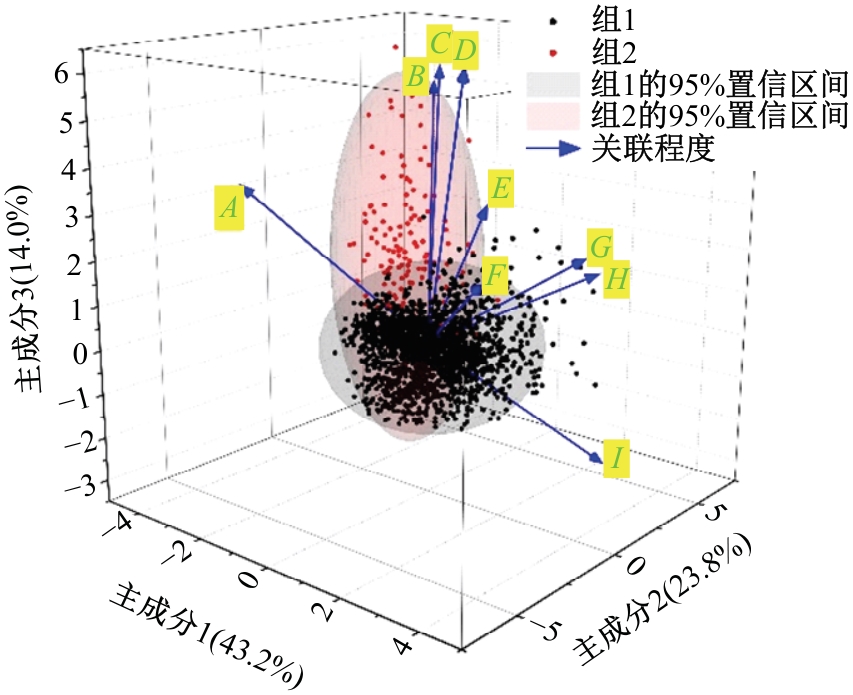
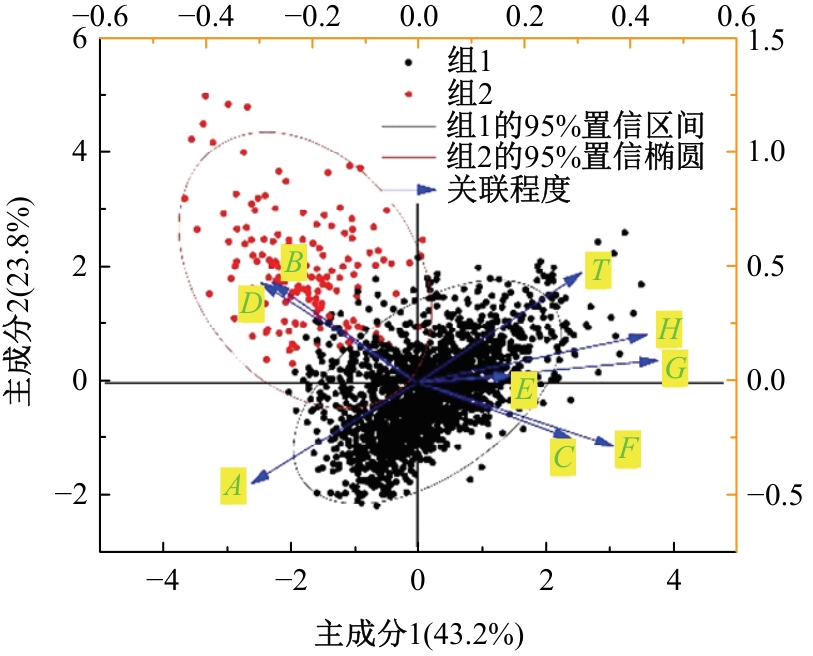
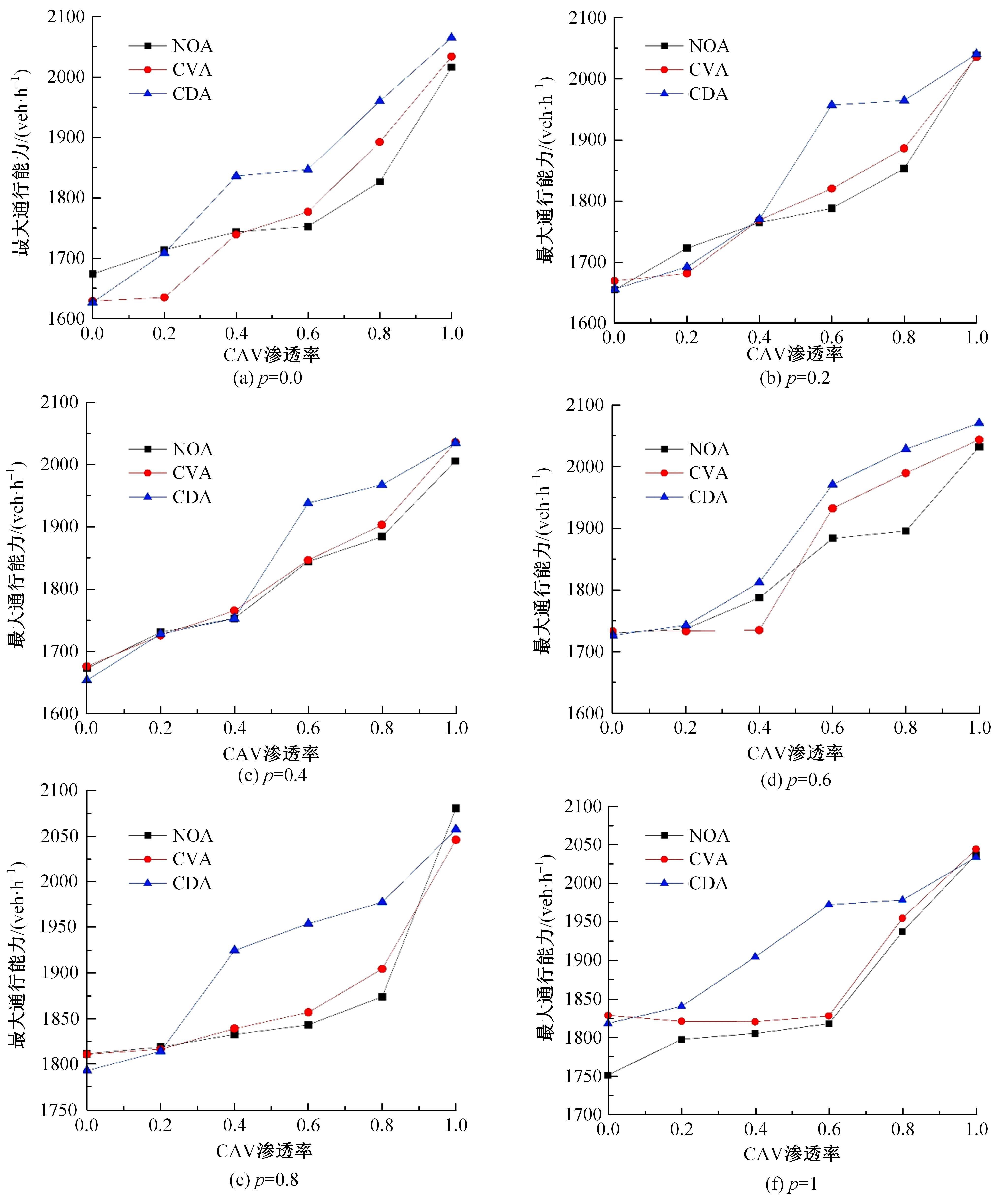
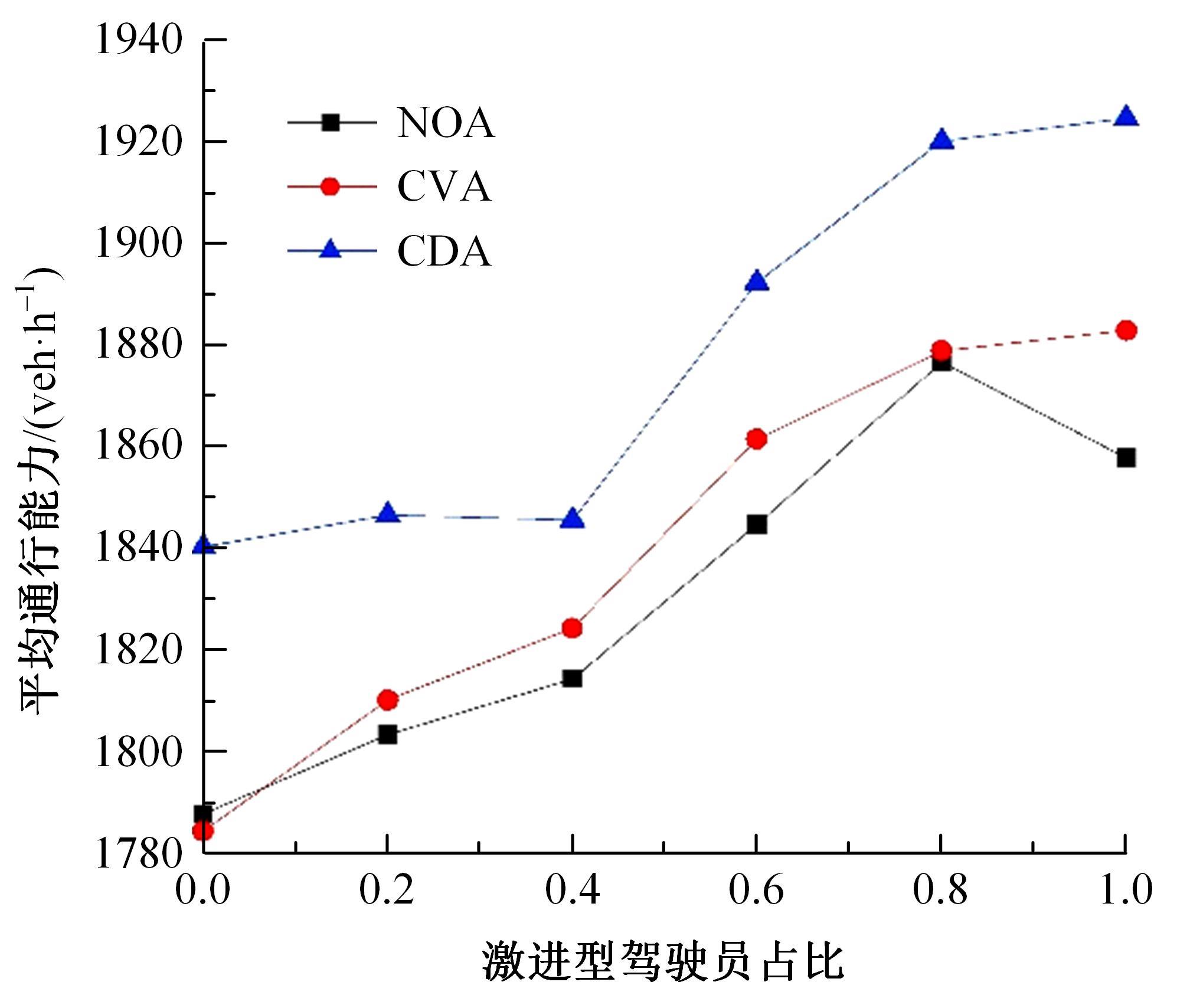
考虑到未来会出现大量网联自动驾驶车辆(CAV)和人工驾驶车辆(HV)混行的情况,提出了一种考虑驾驶员驾驶风格的集聚换道模型,使CAV实现局部聚集,促进交通流同质化,从而提升交通运行效率。研究驾驶风格在集聚中的影响,定量分析激进、保守以及自动驾驶车辆行驶风格对目标队列集聚(CDA)换道策略、常规集聚(CVA)换道策略、无集聚(NOA)换道策略3种集聚换道模型的影响。基于NGSIM数据库,利用主成分分析法和K-means分析法对车辆驾驶风格进行分类,最后利用Matlab进行仿真模拟,分析3种换道模型下的道路通行能力。研究结果表明,集聚换道模型的应用和激进型驾驶员渗透率的增加有效提高了道路通行能力,所研究的两条道路通行能力最大提升了7%以上,提高保守型驾驶员占比能够提高道路交通流稳定性和安全水平,提高CAV渗透率能够在提高道路通行能力的同时显著提高道路交通流稳定性和安全性。
中图分类号:
- U491.112

| [1] | Nagel K, Schreckenberg M. A cellular automaton model for freeway traffic[J]. Journal de Physique I, 1992, 2(12): 2221-2229. |
| [2] | Li X, Wu Q, Jiang R. Cellular automaton model considering the velocity effect of a car on the successive car[J]. Physical Review E, 2001, 64(6): No.066128. |
| [3] | Chowdhury D, Wolf D E, Schreckenberg M. Particle hopping models for two-lane traffic with two kinds of vehicles: effects of lane-changing rules[J]. Physica A: Statistical Mechanics and its Applications, 1997, 235(3/4): 417-439. |
| [4] | 邱小平, 马丽娜, 周小霞, 杨达. 基于安全距离的手动—自动驾驶混合交通流研究[J]. 交通运输系统工程与信息, 2016, 16(4): 101-108, 124. |
| Qiu Xiao-ping, Ma Li-na, Zhou Xiao-xia, Yang Da. The Mixed Traffic Flow of Manual-automated Driving Based on Safety Distance [J]. Journal of Transportation Systems Engineering and Information Technology, 2016, 16(4): 101-108, 124. | |
| [5] | 李硕, 夏运达. 改进的考虑前车速度效应的交通流元胞自动机模型[J]. 公路工程, 2019, 44(1): 120-124, 170. |
| Li Shuo, Xia Yun-da. Modified cellular automaton models of traffic flow considering the velocity effect of the front vehicle[J]. Highway Engineering, 2019, 44(1): 120-124, 170. | |
| [6] | 张治中, 曾俊伟, 钱勇生, 等. 考虑前车安全速度效应的自动驾驶车辆异质交通流特性分析[J]. 交通科技, 2024(1): 96-101. |
| Zhang Zhi-zhong, Zeng Jun-wei, Qian Yong-sheng, et al. Heterogeneous traffic flow characterization of autonomous vehicles considering the safe speed effect of the vehicle in front[J]. Transportation Science and Technology, 2024(1): 96-101. | |
| [7] | Wei L, Li W, Liang H, et al. Traffic flow characteristics of speed limited roads based on cellular automata NaSch traffic flow model[C]∥Proceedings of the 4th International Symposium on Computer Science, Digital Economy and Intelligent Systems, Wuhan, China, 2023: 629-638. |
| [8] | Yan Z, Wang X, Lan B, et al. Improved NS cellular automaton model for simulating traffic flows of two-lane[C]∥IEEE 20th International Conference on Trust, Security and Privacy in Computing and Communications, Shenyang, China, 2021: 1312-1317. |
| [9] | Kerner B S, Klenov S L, Hermanns G, et al. Effect of driver over-acceleration on traffic breakdown in three-phase cellular automaton traffic flow models[J]. Physica A: Statistical Mechanics and its Applications, 2013, 392(18): 4083-4105. |
| [10] | 武毅. 基于三相交通流理论的元胞自动机模型研究[D]. 长春: 吉林大学交通学院, 2018. |
| Wu Yi. Research on a cellular automata traffic flow model for three-phase theory[D] . Changchun: College of Transportation, Jilin University, 2018. | |
| [11] | Feng T, Liu K, Liang C. An improved cellular automata traffic flow model considering driving styles[J]. Sustainability, 2023, 15(2): No.952. |
| [12] | Liu K, Feng T. Heterogeneous traffic flow cellular automata model mixed with intelligent controlled vehicles[J]. Physica A: Statistical Mechanics and its Applications, 2023, 632: No.129316. |
| [[13] Vranken T, Sliwa B, Wietfeld C, et al. Adapting a cellular automata model to describe heterogeneous traffic with human-driven, automated, and communicating automated vehicles[J]. Physica A: Statistical Mechanics and its Applications, 2021, 570: No.125792. | |
| [14] | Shang X-C, Li X-G, Xie D-F, et al. A data-driven two-lane traffic flow model based on cellular automata[J]. Physica A: Statistical Mechanics and its Applications, 2022, 588: No.126531. |
| [15] | Zheng W, Cheng Y, Ma X, et al. On cellular automata model of traffic flow with Lennard-Jones potential[J]. Nondestructive Testing and Evaluation, 2024, 39(1): 90-101. |
| [16] | 李燕青. 智能网联环境下CAV混行车流集聚控制策略研究[D].镇江:江苏大学汽车与交通工程学院, 2023. |
| Li Yan-qing. research on agglomeration control strategy for cav mixed traffic flow in intelligent and connected environment [D]. Zhenjiang: School of Automotive and Transportation Engineering, Jiangsu University, 2023. | |
| [17] | 吴德华, 彭锐, 陈荣峰. 异质流网联车的不同换道集聚策略[J]. 西南交通大学学报, 2023, 58(2): 348-356. |
| Wu De-hua, Peng Rui, Chen Rong-feng. Hybrid characteristics of heterogeneous traffic flow under different aggregating lane-change strategies in intelligent network[J]. Journal of Southwest Jiaotong University, 2023, 58(2): 348-356. | |
| [18] | 蒋阳升, 王思琛, 高宽, 等. 混入智能网联车队的混合交通流元胞自动机模型[J]. 系统仿真学报, 2022, 34(5): No.1025. |
| Jiang Yang-sheng, Wang Si-chen, Gao Kuan, et al. Cellular automata model of mixed traffic flow composed of intelligent connected vehicles' platoon[J]. Journal of System Simulation, 2022, 34(5): No.1025. | |
| [19] | 商学成. 基于元胞自动机的车辆变道行为建模与交通流特性分析[D] .北京:北京交通大学理学院, 2023. |
| Shang Xue-sheng. Lane-changing behavior modeling and traffic flow characteristics analysis based on cellular automaton[D]. Beijing: School of Science, Beijing Jiaotong University, 2023. | |
| [20] | 吴德华, 陈荣峰. 智能网联客货混合交通流特性及集聚换道策略[J]. 吉林大学学报: 工学版, 2025, 55 (8): 2588-2596. |
| Wu De-hua, Chen Rong-feng. Characteristics of passenger-cargo mixed traffic flow in intelligent network and agglomeration lane-change strategy[J]. Journal of Jilin University(Engineering and Technology Edition), 2025, 55(8): 2588-2596. | |
| [21] | 梁军, 李燕青, 王文飒, 等. 智能网联环境下CAV混行车流集聚策略及分析[J]. 华中科技大学学报: 自然科学版, 2024, 52(1): 118-125. |
| Liang Jun, Li Yan-qing, Wang Wen-sa, et al. Agglomeration strategy and analysis of CAV mixed traffic flow in intelligent and connected environment[J]. Journal of Huazhong University of Science and Technology(Natural Science Edition), 2024, 52(1): 118-125. | |
| [22] | 黄崇钧, 冯天军, 刘福生,等. 基于手机信令数据的公交客流识别[J]. 吉林建筑大学学报, 2025, 42(2): 69-75. |
| Huang Chong-jun, Feng Tian-jun, Liu Fu-sheng, et al. Bus passenger flow identification based on mobile signaling data[J]. Journal of Jilin Jianzhu University, 2025, 42(2): 69-75. |
| [1] | 张玉召,丁欣茹,侯长啸,陈虎林. 交通运输网络韧性研究现状及展望[J]. 吉林大学学报(工学版), 2026, 56(3): 585-602. |
| [2] | 慈玉生,黄轶康. 基于文献计量的交叉口车路协同研究综述[J]. 吉林大学学报(工学版), 2026, 56(2): 313-332. |
| [3] | 赵红星,刘书英,聂江龙,梁瑞艳,何瑞春. 考虑弯道条件的同质与异质交通流稳定性分析[J]. 吉林大学学报(工学版), 2026, 56(2): 393-406. |
| [4] | 张文会,叶梅茹,席聪,宋子文. 混合交通流环境下车辆编队与碳排放特性[J]. 吉林大学学报(工学版), 2026, 56(2): 416-430. |
| [5] | 马健霄,怀硕,赵顗,李铭浩,陈雨欣,赵思雨. 快速路互通交织区超车换道行为控制方法[J]. 吉林大学学报(工学版), 2026, 56(2): 431-442. |
| [6] | 潘义勇,曹天宇,刘宇. 随机交通网络约束最可靠路径乘子交替方向法[J]. 吉林大学学报(工学版), 2026, 56(2): 455-463. |
| [7] | 孙宇,李世武,郭梦竹,金桐彤,宋会军,刘德志,高雯. 多模态数据在驾驶疲劳监测中的有效性分析[J]. 吉林大学学报(工学版), 2026, 56(2): 473-479. |
| [8] | 李坤宸,袁伟,王畅,张会明,穆雨薇. 基于驾驶风险和驾驶能力的人机控制权分配[J]. 吉林大学学报(工学版), 2026, 56(2): 575-584. |
| [9] | 马壮林,毕宇明,周备,邓亚娟,兆雪. 公交换乘优惠政策下居民换乘意向的异质性分析[J]. 吉林大学学报(工学版), 2026, 56(1): 158-169. |
| [10] | 贾洪飞,庄博,罗清玉,刘玲,黄秋阳. 积水条件下城市路网性能恢复决策优化[J]. 吉林大学学报(工学版), 2025, 55(9): 2969-2977. |
| [11] | 王琳虹,刘宇阳,刘子昱,鹿应佳,张宇恒,黄桂树. 基于YOLOv5的轻量化桥梁缺陷识别[J]. 吉林大学学报(工学版), 2025, 55(9): 2958-2968. |
| [12] | 曲昭伟,王铭阳,王喆,宋现敏,张云翔,黄镜尘. 基于自动驾驶模块化车辆主辅功能分配的公交自适应调度方法[J]. 吉林大学学报(工学版), 2025, 55(9): 2946-2957. |
| [13] | 张云翔,宋现敏,谢渝,湛天舒. 基于用户满意度的停车预约服务智能体行为仿真[J]. 吉林大学学报(工学版), 2025, 55(9): 2978-2984. |
| [14] | 穆长儒,徐亮,程国柱. 基于能量合理分配的外包U型钢-混凝土组合护栏防撞性能[J]. 吉林大学学报(工学版), 2025, 55(8): 2669-2680. |
| [15] | 柴树山,周志强,李海涛,徐炅旸. 基于图时空模式学习网络的路网实时交通事件自动检测方法[J]. 吉林大学学报(工学版), 2025, 55(7): 2145-2161. |
|
||