吉林大学学报(医学版) ›› 2026, Vol. 52 ›› Issue (3): 651-662.doi: 10.13481/j.1671-587X.20260308

• 基础研究 • 上一篇    下一篇

基于葡萄籽原花青素对口腔鳞状细胞癌抗癌作用的网络药理学分析和体外实验验证

周肖,代海涛,丁云杉,张林杰,仵楠()   

  1. 石河子大学第一附属医院口腔科,新疆 石河子 832000
  • 收稿日期:2025-09-08 接受日期:2025-11-02 出版日期:2026-05-28 发布日期:2026-06-08
  • 通讯作者: 仵楠 E-mail:195773220@qq.com
  • 作者简介:周 肖(1998-),女,新疆维吾尔自治区阿克苏市人,在读硕士研究生,主要从事颌面外科肿瘤基础方面的研究。
  • 基金资助:
    新疆生产建设兵团科技局指导性科技计划项目(2024ZD067);石河子大学第一附属医院科技计划项目(ZP2024003);石河子大学第一附属医院科技计划项目(ZP2024005)

Network pharmacology analysis and in vitro experimental validation of anticancer effect of grape seed proanthocyanidins against oral squamous cell carcinoma

Xiao ZHOU,Haitao DAI,Yunshan DING,Linjie ZHANG,Nan WU()   

  1. Department of Stomatology,First Affiliated Hospital,Shihezi University,Shihezi 832000,China
  • Received:2025-09-08 Accepted:2025-11-02 Online:2026-05-28 Published:2026-06-08
  • Contact: Nan WU E-mail:195773220@qq.com

摘要:

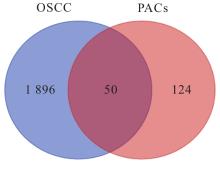
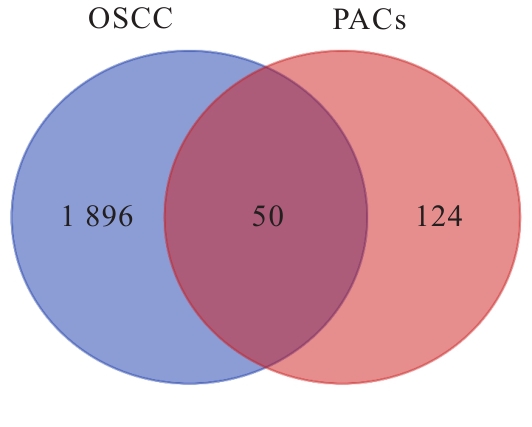
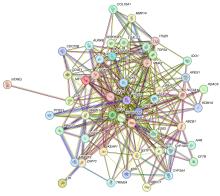
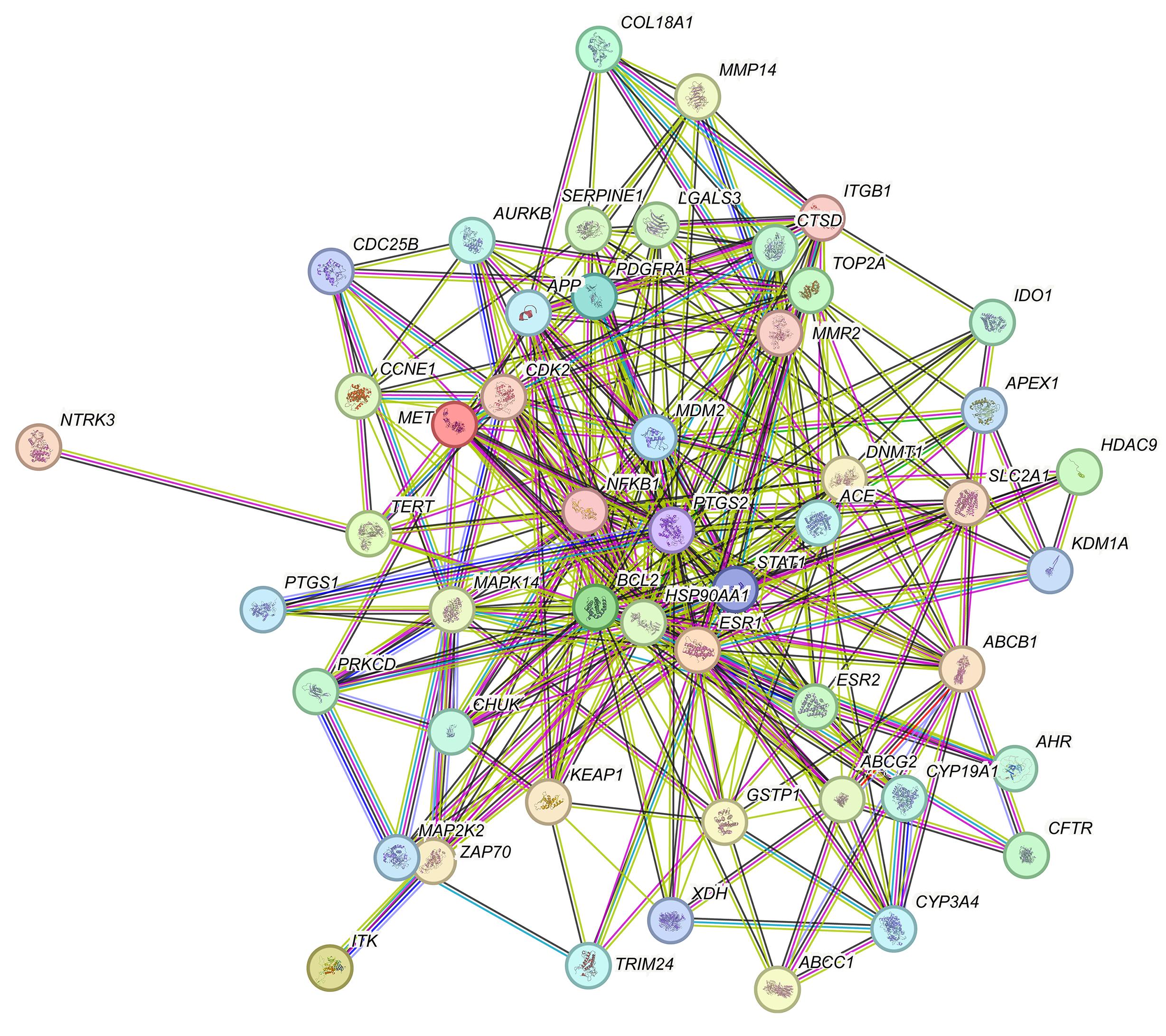
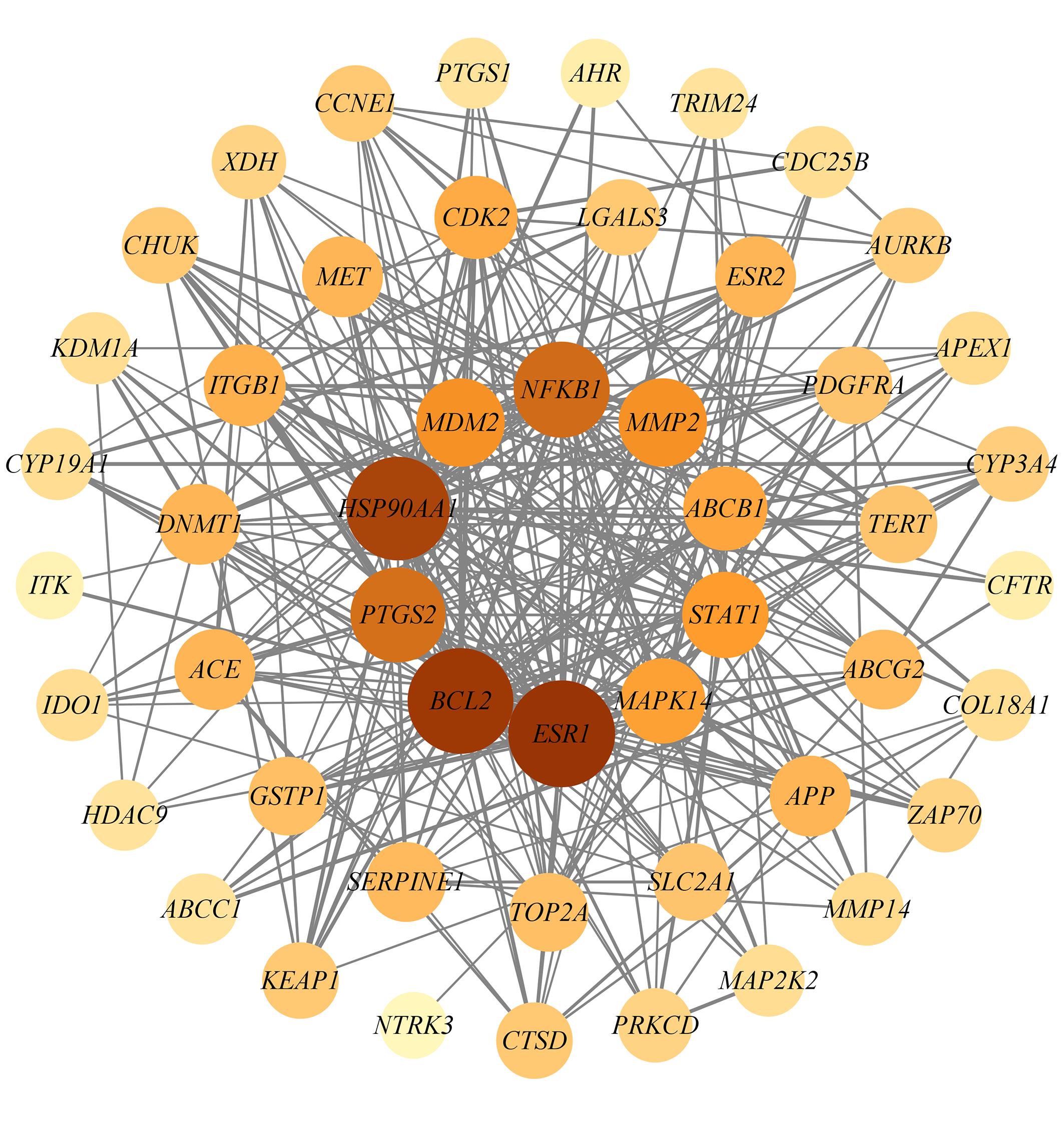
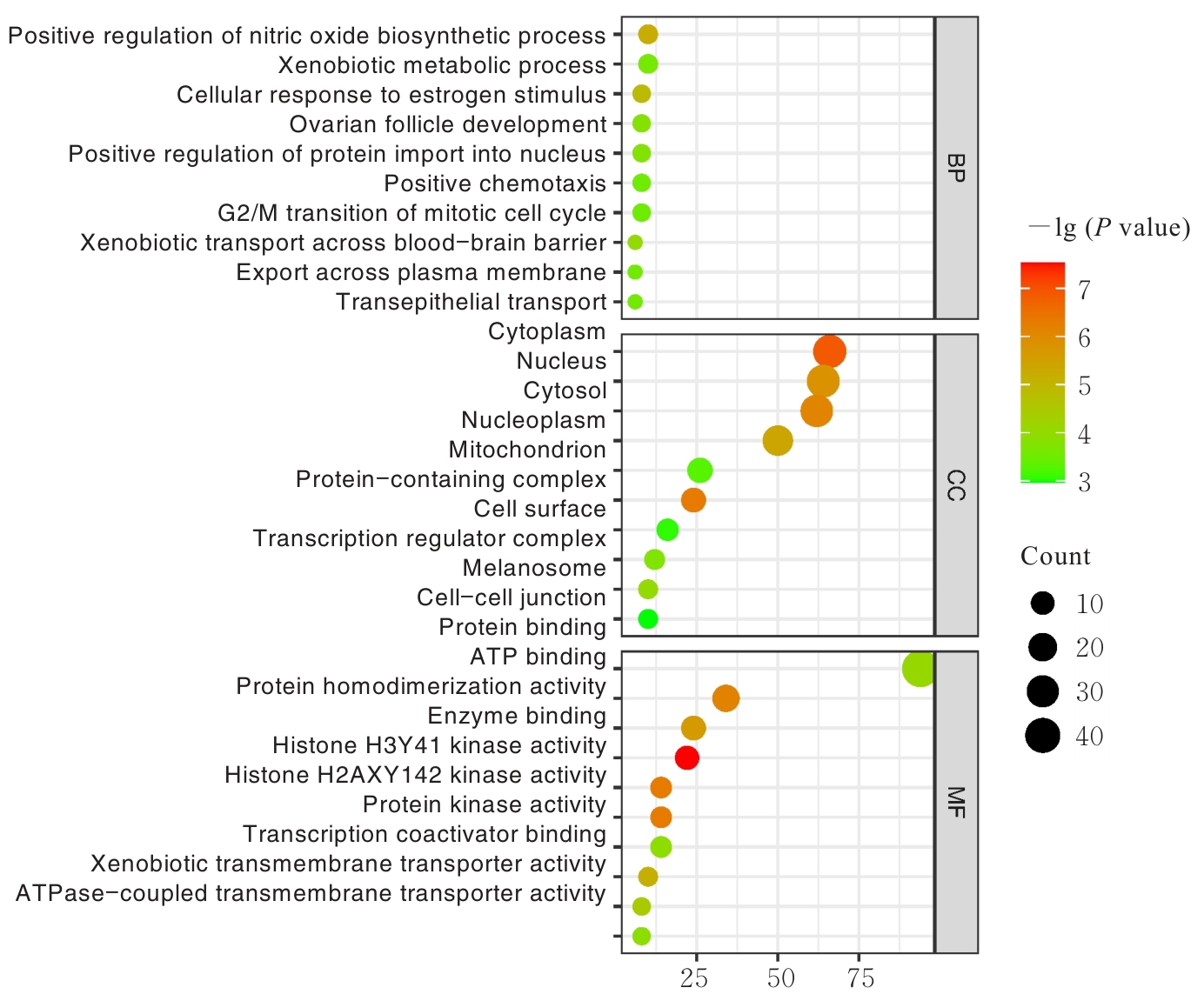
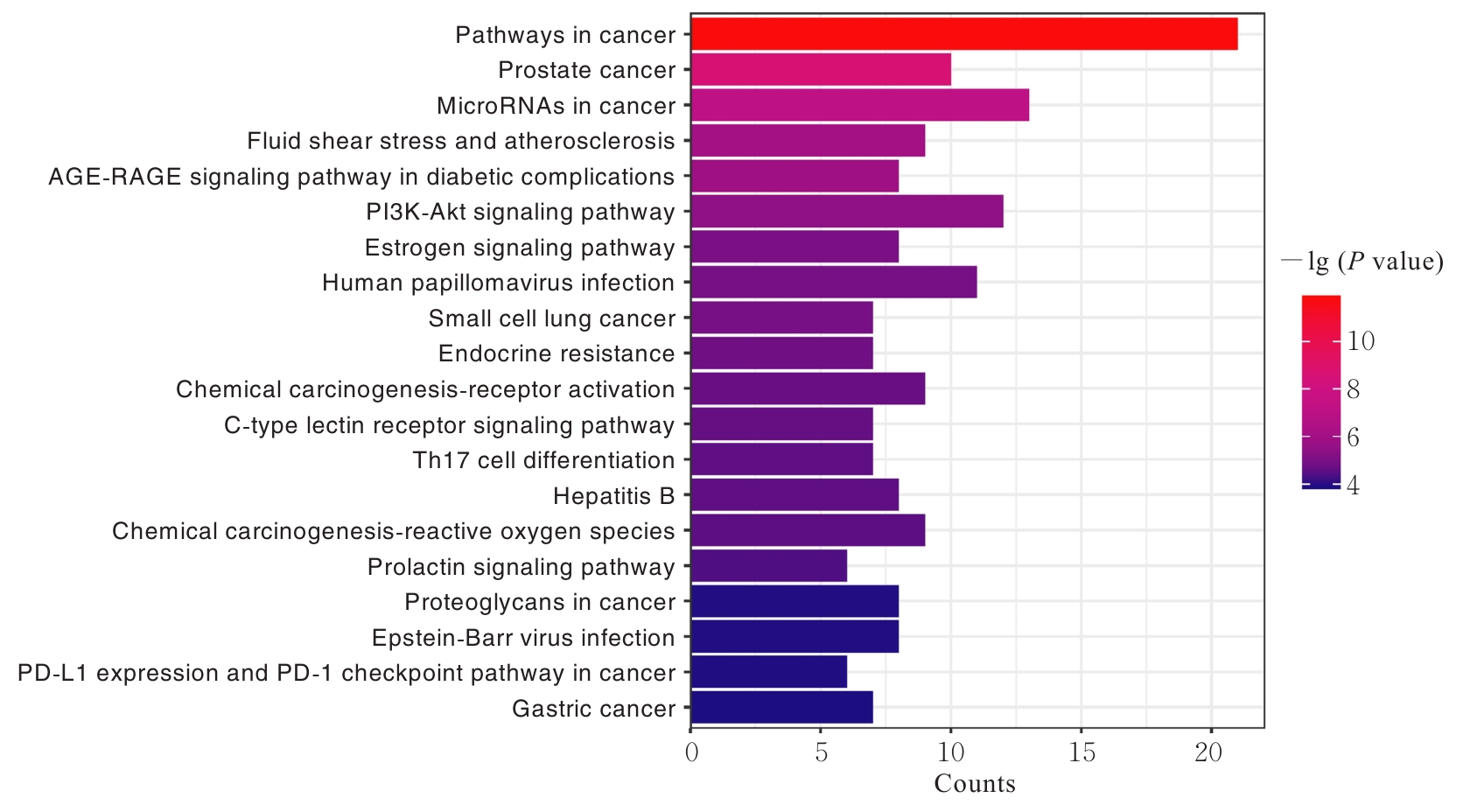
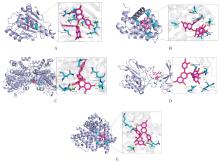
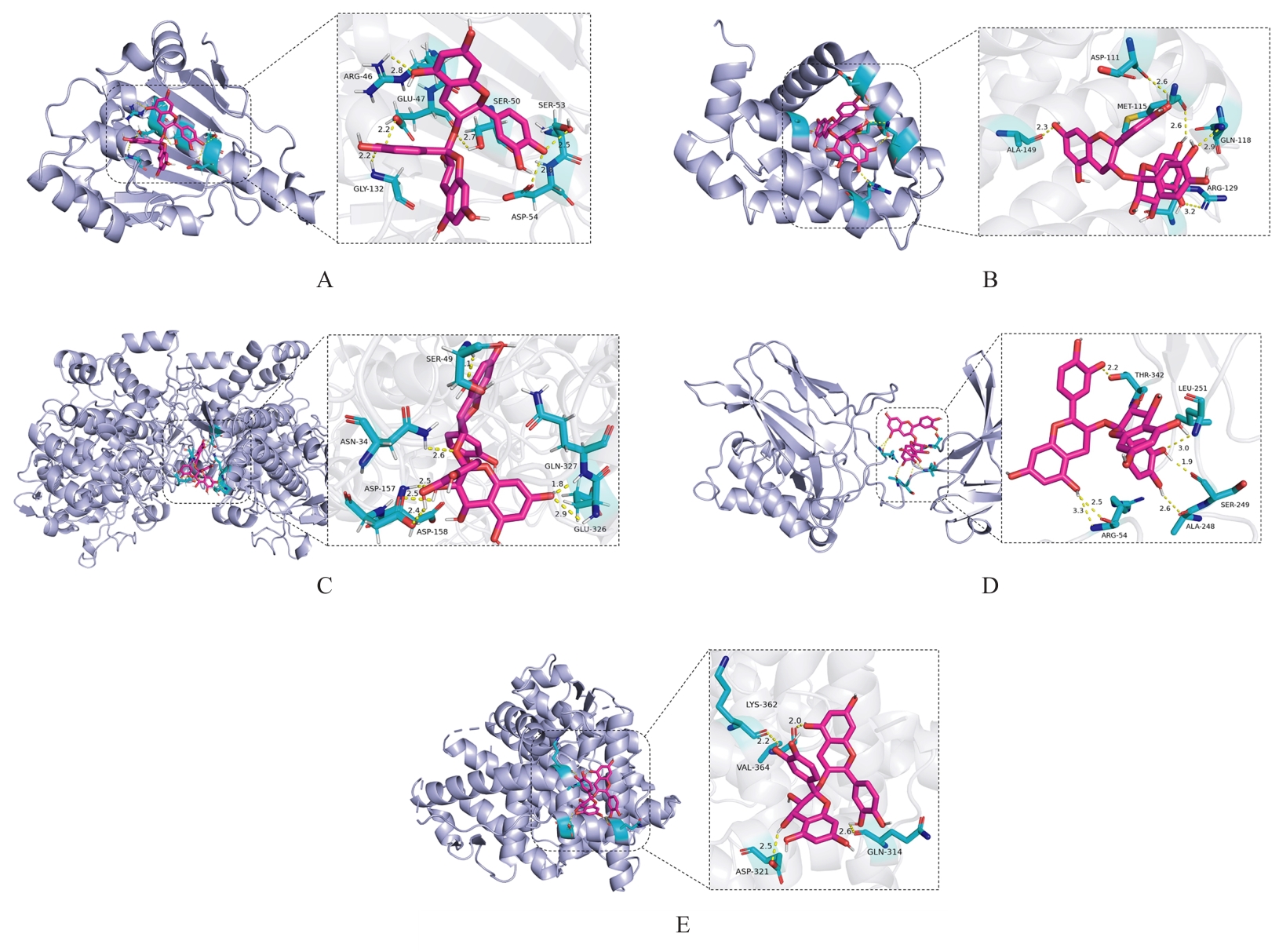
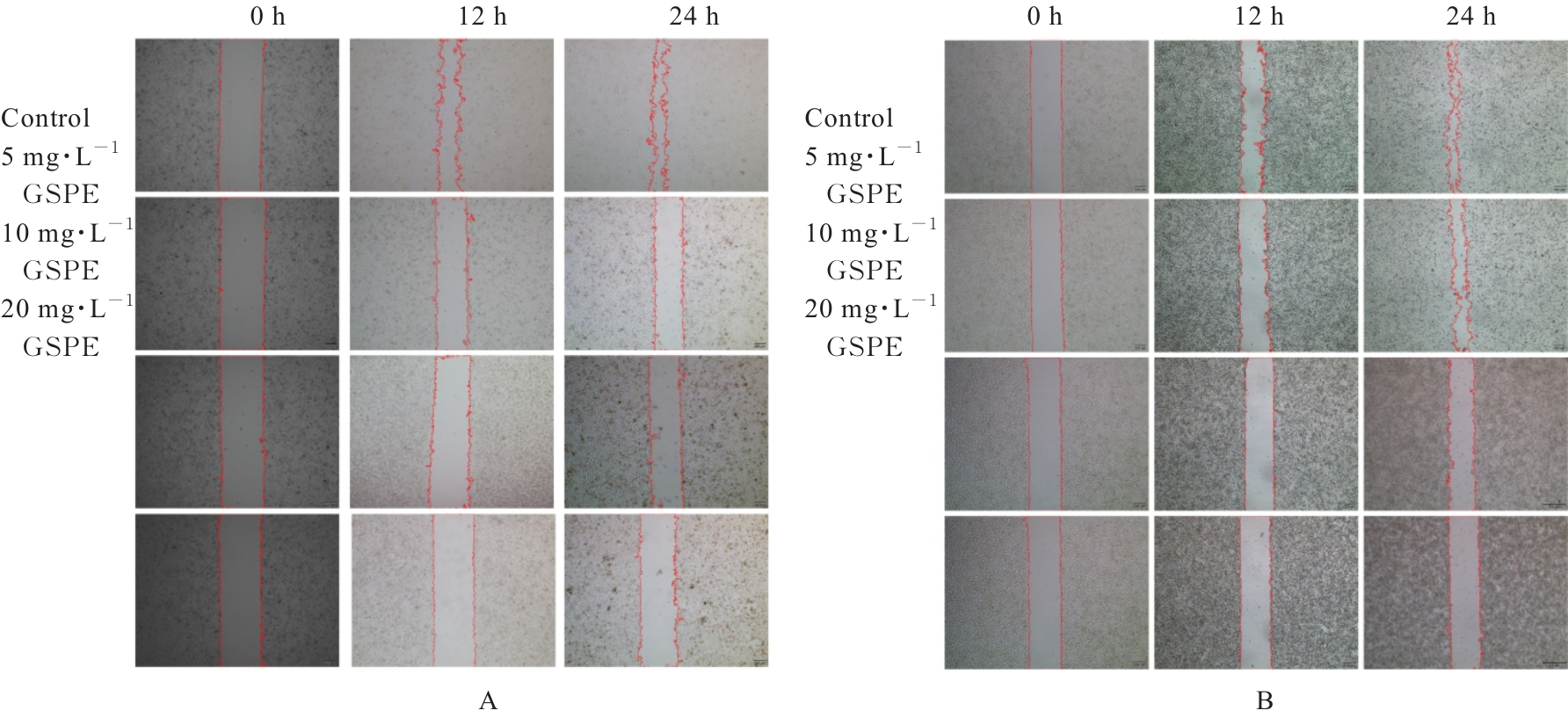
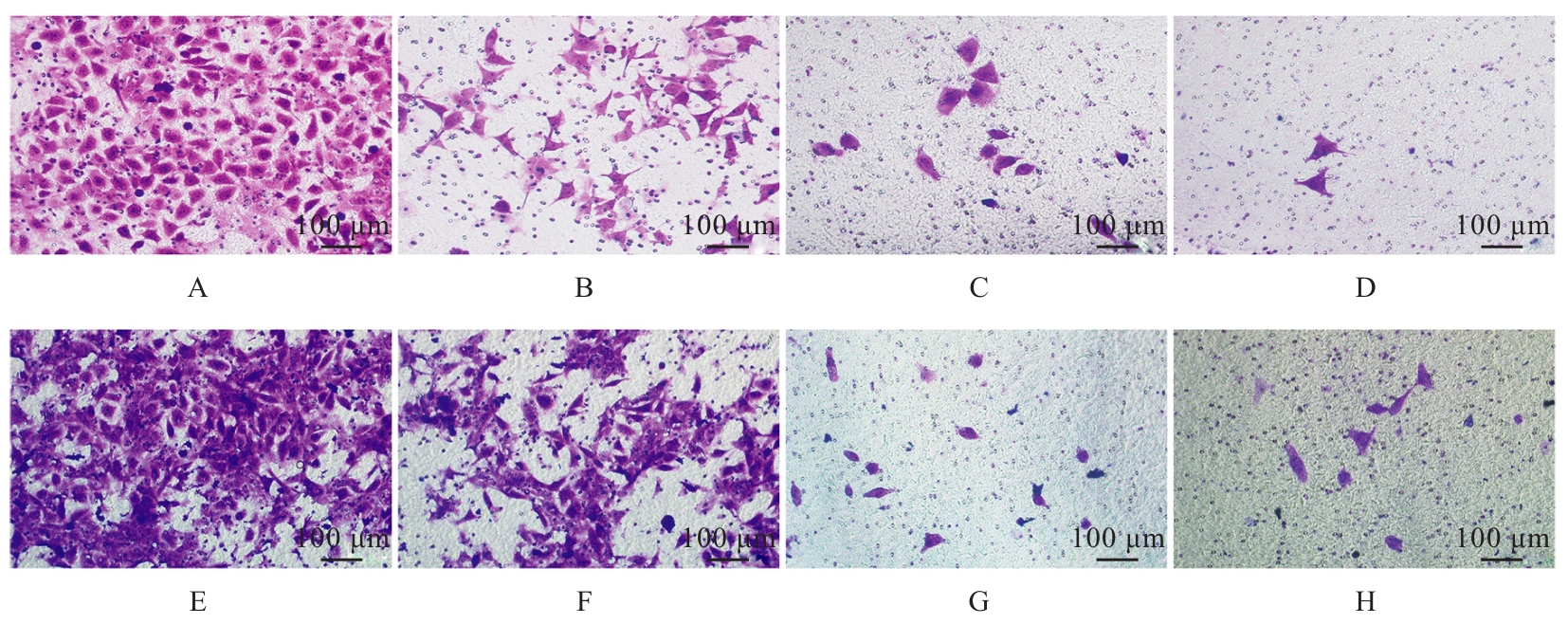
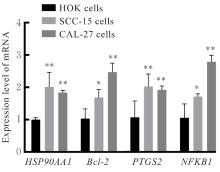
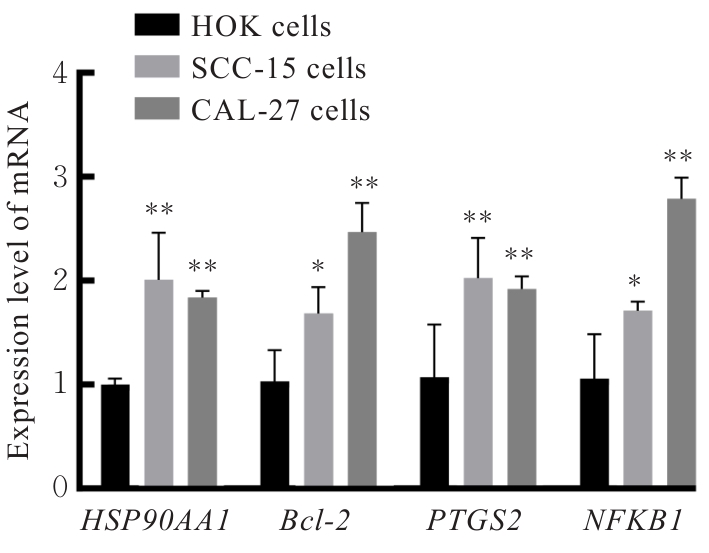
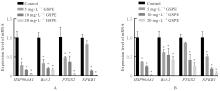
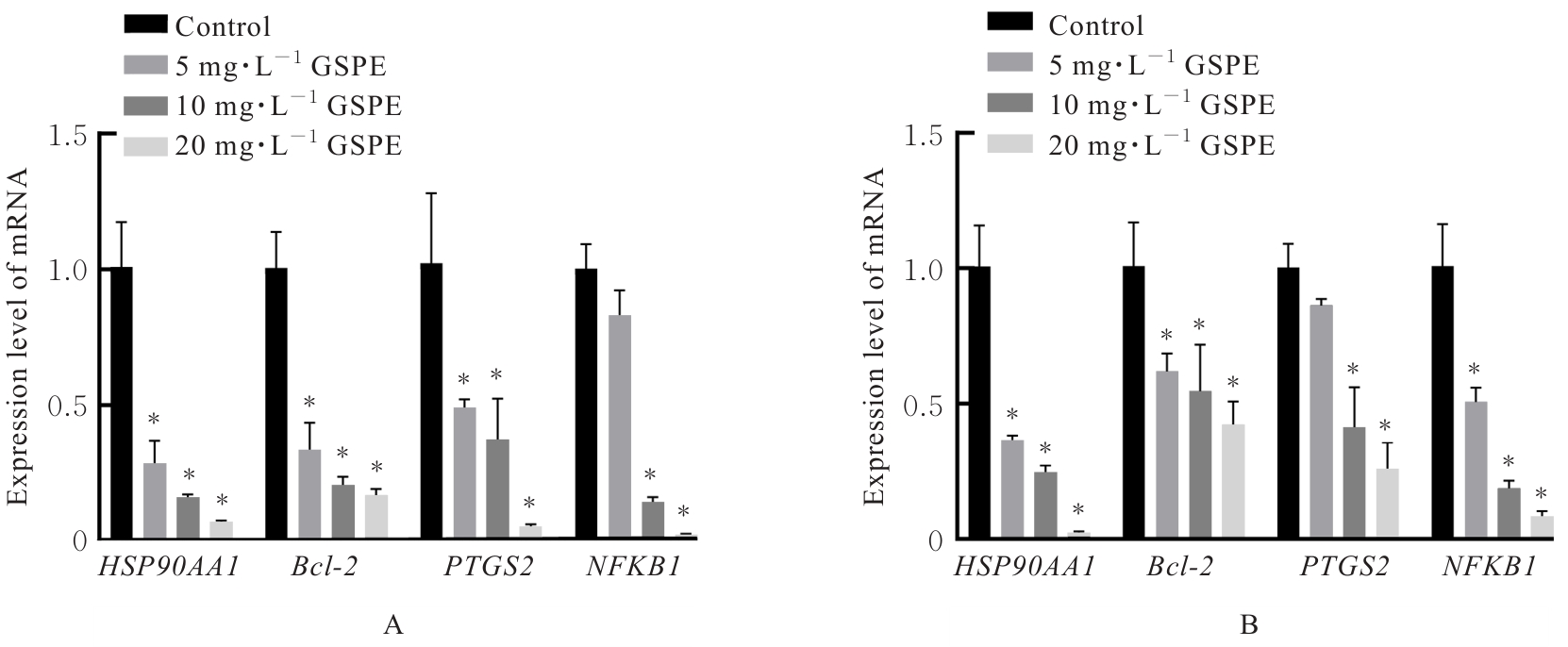
目的 采用网络药理学、分子对接技术和体外细胞实验阐明葡萄籽原花青素(GSPE)对口腔鳞状细胞癌(OSCC)潜在的抗癌分子靶点及其机制,并探讨其对OSCC细胞增殖、迁移和侵袭的影响。 方法 通过Pubchem、Swisstarget Prediction、SuperPred、TargetNet、Genecards和在线人类孟德尔遗传(OMIM)数据库分别获取原花青素(PACs)和OSCC的预测靶点,韦恩图筛选PACs抗OSCC的潜在靶基因,根据David 6.8数据库进行基因本体论(GO)功能富集分析和京都基因与基因组百科全书(KEGG)信号通路富集分析预测其作用机制,应用String 12.0构建蛋白质-蛋白质相互作用(PPI)网络,采用Cytoscape软件和分子对接筛选并初步验证PACs与核心靶点的结合能力。体外培养人舌鳞状细胞癌SCC-15和CAL-27细胞,不同浓度GSPE处理并分为对照组(完全培养基)和5、10及20 mg·L-1 GSPE组。通过细胞计数试剂盒8(CCK-8)法检测各组细胞存活率,细胞划痕实验检测各组细胞划痕愈合率,Transwell小室实验检测各组侵袭细胞数,实时荧光定量PCR(RT-qPCR)法检测各组细胞中核心靶点mRNA表达水平。 结果 网络药理学预测GSPE抗OSCC的潜在作用靶点50个,经筛选和分子对接初步验证后得到热休克蛋白90α家庭A类成员1(HSP90AA1)、B细胞淋巴瘤2(Bcl-2)、前列腺素内过氧化物合酶2(PTGS2)和核因子κB1(NFKB1)是GSPE抗OSCC的核心靶点,GO功能富集分析和KEGG信号通路富集分析主要涉及癌症相关通路和癌症中的微小RNA(miRNA)等。CCK-8法,与对照组比较,5、10和20 mg·L-1 GSPE组处理12、24、48及72 h后细胞存活率均明显降低(P<0.05或P<0.01)。细胞划痕实验,与对照组比较,5、10和20 mg·L-1 GSPE组处理12及24 h后细胞划痕愈合率均明显降低(P<0.05或P<0.01)。Transwell小室实验,与对照组比较,5、10和20 mg·L-1 GSPE组侵袭细胞数明显降低(P<0.01)。RT-qPCR法,与HOK细胞比较,SCC-15和CAL-27细胞中HSP90AA1、Bcl-2、PTGS2NFKB1 mRNA表达水平均明显升高(P<0.05或P<0.01);与对照组比较,5、10和20 mg·L-1 GSPE组SCC-15细胞中HSP90AA1、Bcl-2PTGS2 mRNA表达水平明显降低(P<0.01),10和20 mg·L-1 GSPE组SCC-15细胞中NFKB1 mRNA表达水平均明显降低(P<0.01),5、10和20 mg·L-1 GSPE组CAL-27细胞中HSP90AA1、Bcl-2NFKB1 mRNA表达水平均明显降低(P<0.01),10和20 mg·L-1 GSPE组CAL-27细胞中PTGS2 mRNA表达水平明显降低(P<0.01)。 结论 GSPE通过HSP90AA1、Bcl-2、PTGS2NFKB1等靶点调控癌症相关通路及癌症中miRNA等发挥抗OSCC作用,体外细胞实验验证研究表明GSPE可抑制OSCC细胞的增殖、迁移和侵袭。

关键词: 葡萄籽原花青素, 口腔鳞状细胞癌, 细胞增殖, 细胞迁移, 细胞侵袭

Abstract:

Objective To clarify the potential anti-cancer molecular targets and mechanism of grape seed proanthocyanidin extract (GSPE) on oral squamous cell carcinoma (OSCC) with network pharmacology, molecular docking technology and in vitro cell experiments, and to discuss its effects on proliferation, migration and invasion of OSCC cells. Methods Pubchem, Swisstarget Prediction, SuperPred, TargetNet, Genecards and Online Mendelian Inheriatance in Man (OMIM) databases were used to obtain the predicted targets of proanthocyanidins (PACs) and OSCC, respectively; Venn diagram was used to screen the potential target genes of PACs against OSCC; Gene Ontology (GO) functional enrichment analysis and Kyoto Encyclopedia of Genes and Genomes (KEGG) signaling pathway enrichment analysis were performed according to David 6.8 database to predict the mechanism of action; String 12.0 was used to construct the protein-protein interaction(PPI) network; Cytoscape software and molecular docking were used to screen and preliminarily verify the binding ability of PACs with the core targets. Human tongue squamous cell carcinoma SCC-15 and CAL-27 cells were cultured in vitro, treated with different concentrations of GSPE, and divided into control group (complete medium) and 5, 10 and 20 mg·L-1 GSPE groups. CCK-8 method was used to detect the survival rates of the cells in various groups; cell scratch assay was used to detect the scratch healing rates of the cells in various groups; Transwell chamber assay was used to detect the number of invasive cells in various groups; real-time fluorescence quantitative PCR (RT-qPCR) was used to detect the mRNA expression levels of the core targets in the cells in various groups. Results Network pharmacology predicted 50 potential targets of GSPE against OSCC. After screening and preliminary verification by molecular docking, heat shock protein 90 alpha family class A member 1(HSP90AA1), B-cell lymphoma-2(Bcl-2), prostaglandin-endoperoxide synthase 2(PTGS2) and nuclear factor kappa B1(NFKB1) were identified as the core targets of GSPE against OSCC. GO function enrichment analysis and KEGG signaling pathway enrichment analysis mainly involved pathways in cancer and microRNAs (miRNAs) in cancer, etc. The CCK-8 assay results showed that compared with control group, the survival rates of the cells in 5, 10 and 20 mg·L-1 GSPE groups were significantly decreased after treatment for 12, 24, 48 and 72 h (P<0.05 or P<0.01). The cell scratch assay results showed that compared with control group, the scratch assay rates of the cells in 5, 10 and 20 mg·L-1 GSPE groups were significantly decreased after treatment for 12 and 24 h (P<0.05 or P<0.01). The Transwell chamber assay results showed that compared with control group, the numbers of invasion cells in 5, 10 and 20 mg·L?1 GSPE groups were significantly decreased (P<0.01). The RT-qPCR results showed that compared with HOK cells, the expression levels of HSP90AA1Bcl-2PTGS2 and NFKB1 mRNA in SCC-15 and CAL-27 cells were significantly increased (P<0.05 or P<0.01); compared with control group, the expression levels of HSP90AA1Bcl-2 and PTGS2 mRNA in SCC-15 cells in 5, 10 and 20 mg·L?1 GSPE groups were significantly decreased (P<0.01), the expression levels of NFKB1 mRNA in SCC-15 cells in 10 and 20 mg·L?1 GSPE groups were significantly decreased (P<0.01), the expression levels of HSP90AA1Bcl-2 and NFKB1 in CAL-27 cells in 5, 10 and 20 mg·L?1 GSPE groups were significantly decreased (P<0.01), the expression levels of PTGS2 mRNA in CAL-27 cells in 10 and 20 mg·L?1 GSPE groups were significantly decreased (P<0.01). Conclusion GSPE exerts anti-OSCC effects by regulating pathways in cancer and miRNAs in cancer, etc. through targets such as HSP90AA1Bcl-2PTGS2 and NFKB1. In vitro cell experiment validation study shows that GSPE can inhibit the proliferation, migration and invasion of OSCC cells.

Key words: Grape seed proanthocyanidin extract, Oral squamous cell carcinoma, Cell proliferation, Cell migration, Cell invasion

中图分类号: 

  • R739.8