吉林大学学报(医学版) ›› 2026, Vol. 52 ›› Issue (5): 1291-1301.doi: 10.13481/j.1671-587X.20260511

• 基础研究 • 上一篇    

人参-紫草提取液对人瘢痕疙瘩成纤维细胞增殖和侵袭抑制作用的网络药理学分析及其体外实验验证

杨东雨1,苑美琪1,洪嘉婧2()   

  1. 1.长春中医药大学附属第三临床医院治未病中心,吉林 长春 130117
    2.长春中医药大学针灸推拿 学院针灸基础教研室,吉林 长春 130117
  • 收稿日期:2026-01-10 接受日期:2026-04-30 出版日期:2026-09-28 发布日期:2026-10-15
  • 通讯作者: 洪嘉婧 E-mail:1011943881@qq.com
  • 作者简介:杨东雨(1981-),男,吉林省长春市人,主任医师,医学硕士,主要从事中医药防治常见病的效应机制与临床应用方面的研究。
  • 基金资助:
    吉林省科技厅自然科学基金面上项目(YDZJ20251ZYTS151);吉林省教育厅科学技术研究重点项目(JJKH20250633KJ)

Network pharmacology analysis and in vitro experimental validation of inhibitory effect of ginseng-lithospermum erythrorhizon extract on proliferation and invasion of human keloid fibroblasts

Dongyu YANG1,Meiqi YUAN1,Jiajing HONG2()   

  1. 1.Department of Preventive Treatment of Disease,Third Affiliated Clinical Hospital,Changchun University of Chinese Medicine,Changchun 130117,China
    2.Department of Acupuncture Basic Teaching and Research,College of Acupuncture and Tuina,Changchun University of Chinese Medicine,Changchun 130117,China
  • Received:2026-01-10 Accepted:2026-04-30 Online:2026-09-28 Published:2026-10-15
  • Contact: Jiajing HONG E-mail:1011943881@qq.com

摘要:

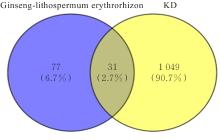
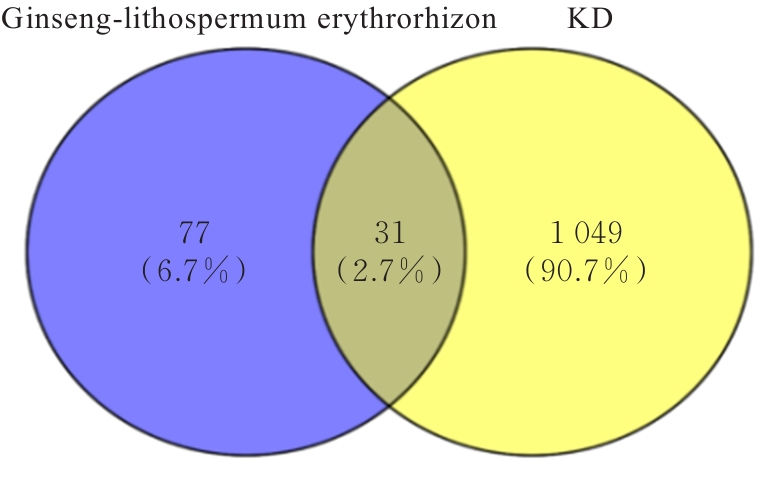
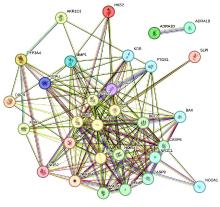
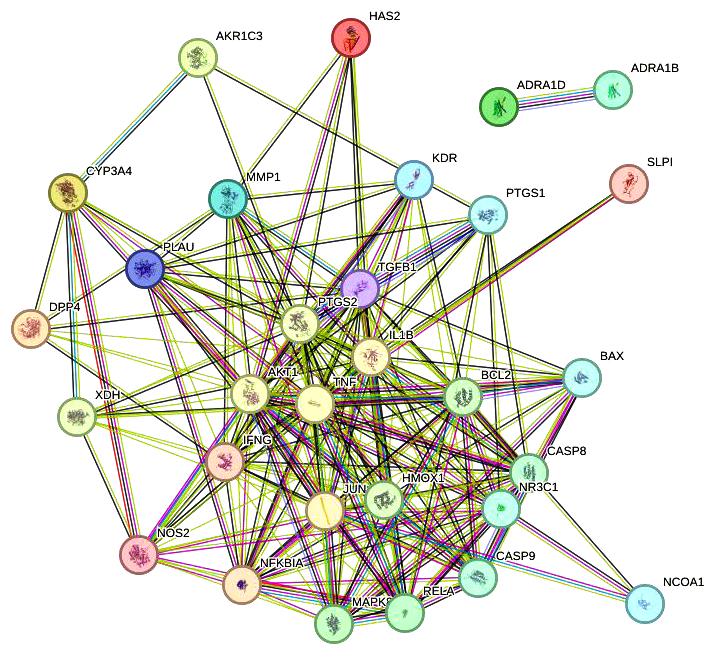
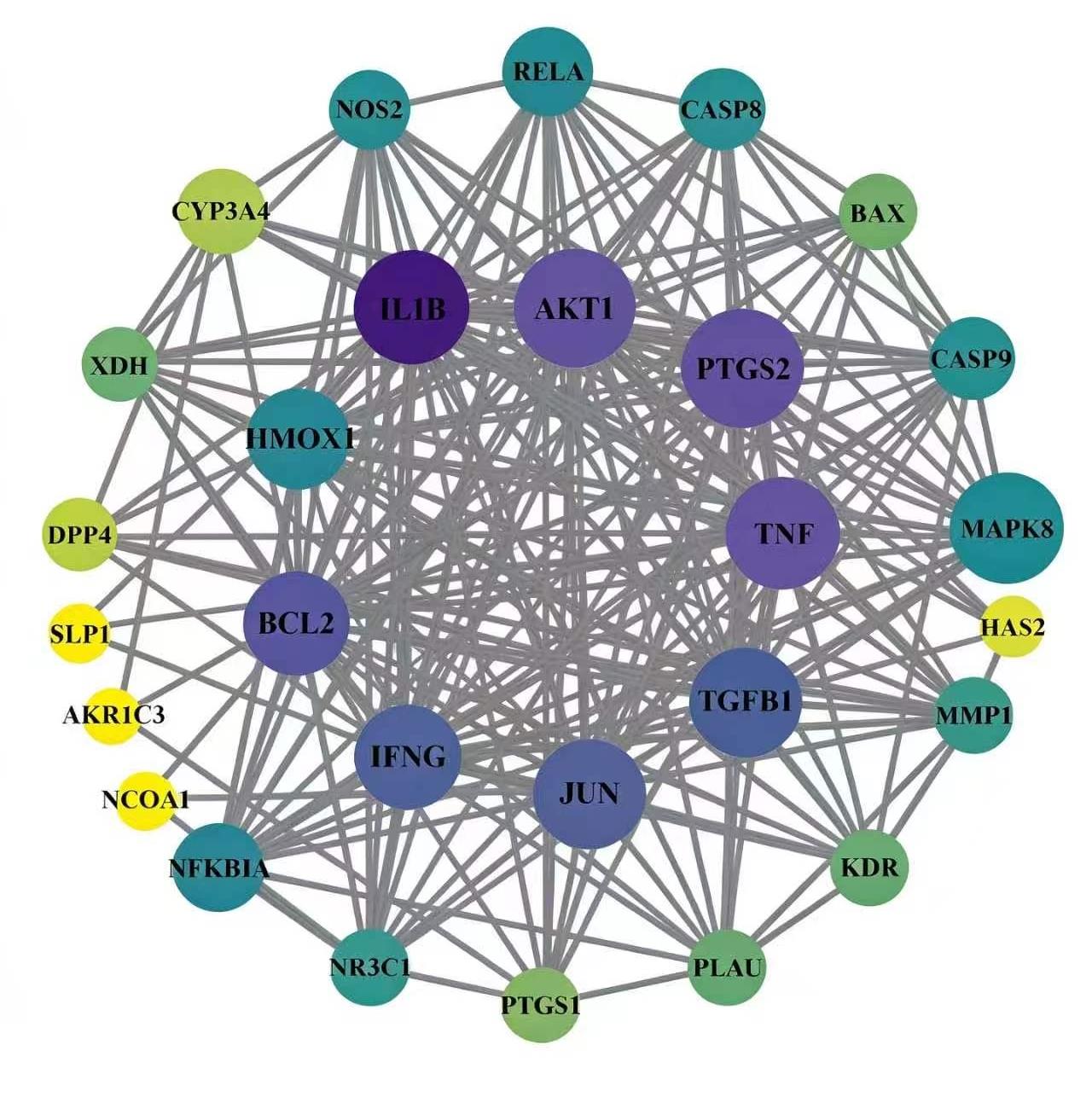
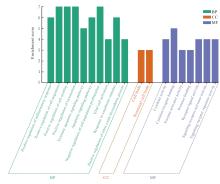
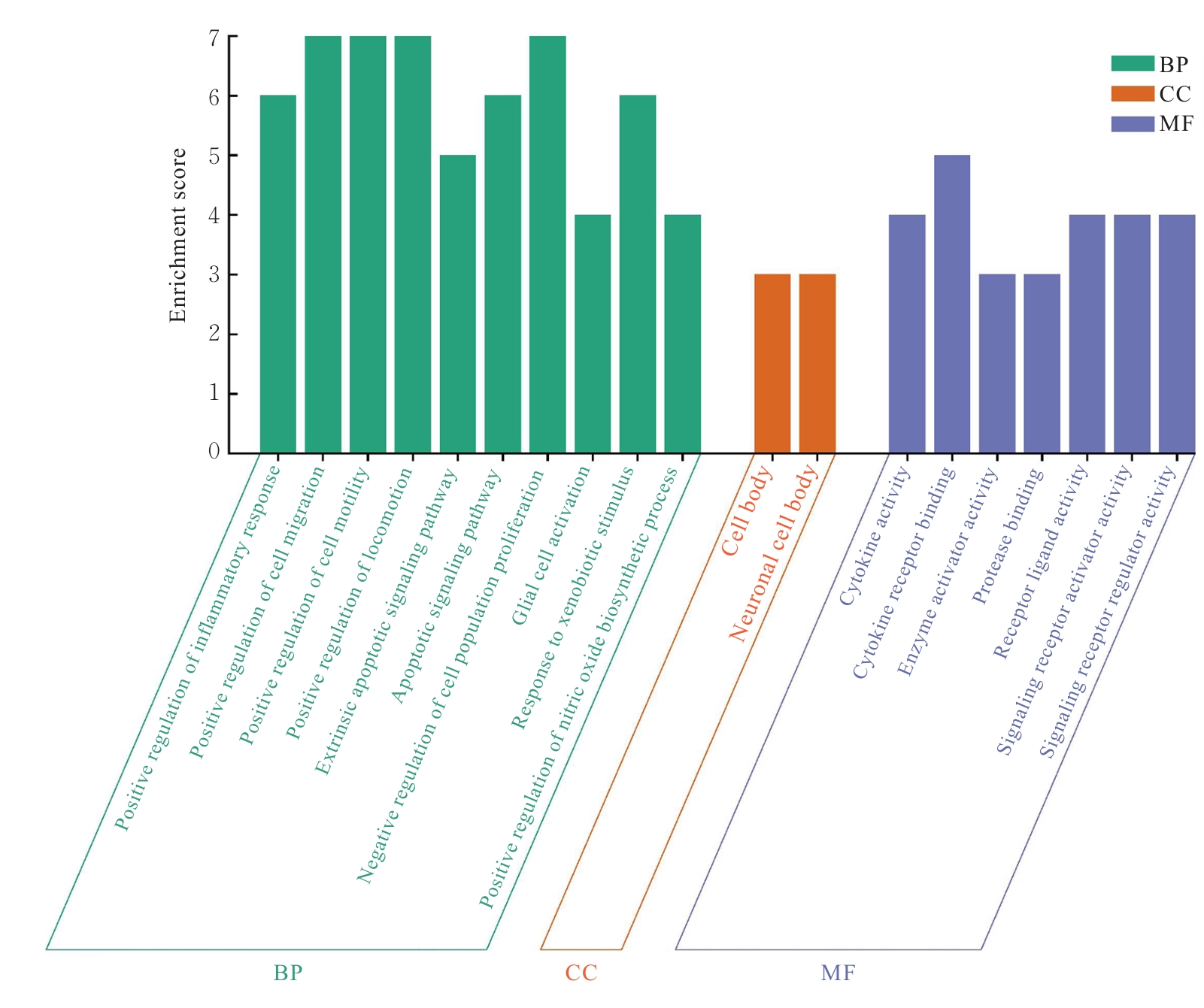
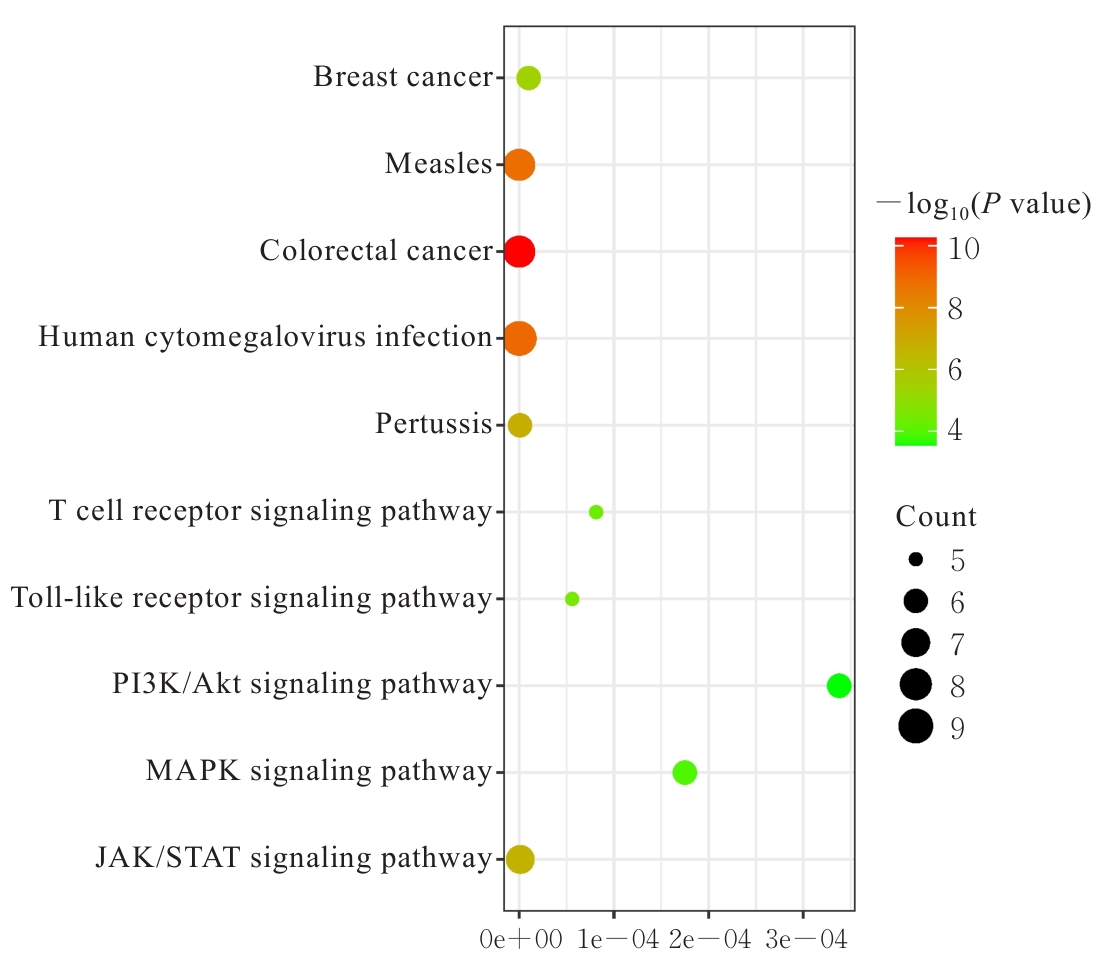
目的 基于网络药理学、分子对接分析和体外细胞实验探讨人参-紫草提取液对人瘢痕疙瘩(KD)成纤维细胞(HKF)增殖及侵袭的抑制作用,并阐明其机制。 方法 采用中药系统药理学(TCMSP)数据库、中医药综合数据库(TCMID)、Swiss Target Prediction数据库和UniProt数据库获得人参-紫草的活性成分及相关靶基因。采用GeneCards数据库和在线人类孟德尔遗传(OMIM)数据库筛选KD相关靶点。采用STRING在线平台和Cytoscape 3.10.3软件获得蛋白-蛋白相互作用(PPI)网络并获取核心靶点。采用Metascape数据库对上述核心靶点进行基因本体论(GO)功能富集分析和京都基因与基因组百科全书(KEGG)信号通路富集分析。采用CB-Dock2网站进行分子对接分析及结果可视化。将HKF细胞分为空白组(100 μL完全培养基)、对照组(100 μL含等体积溶媒的完全培养基)和低、中及高剂量人参-紫草提取液组(100 μL含终浓度为10、20和40 mg·L-1人参-紫草提取液的完全培养基)。采用细胞计数试剂盒8(CCK-8)法检测各组HKF细胞存活率,流式细胞术检测各组细胞周期百分比,Transwell小室实验检测各组侵袭细胞数,实时荧光定量PCR(RT-qPCR)法检测各组细胞中丝氨酸/苏氨酸蛋白激酶1(AKT1)、白细胞介素1β(IL-1β)和前列腺素内过氧化物合酶2(PTGS2)mRNA表达水平。 结果 共筛选出人参-紫草活性成分27种,药物-KD疾病交集靶点31个;其中核心靶点9个,包括AKT1、IL-1β和PTGS2等。GO功能富集分析,核心靶点主要涉及细胞增殖、凋亡及氧化应激反应等生物过程;KEGG信号通路富集分析,核心靶点主要涉及磷脂酰肌醇3-激酶/蛋白激酶B(PI3K/Akt)信号通路、丝裂原活化蛋白激酶(MAPK)信号通路、Janus激酶/信号转导及转录激活因子(JAK/STAT)信号通路和癌症相关信号通路等。PTGS2与5种活性成分的结合能均低于-7 kcal·mol-1。与对照组比较,低、中和高剂量人参-紫草提取液组HKF细胞存活率明显降低(P<0.05),G0/G1期HKF细胞百分率明显升高(P<0.05),侵袭细胞数明显减少(P<0.05)。与对照组比较,低、中和高剂量人参-紫草提取液组HKF细胞中AKT1及IL-1β mRNA表达水平均明显降低(P<0.05),PTGS2 mRNA表达水平均明显升高(P<0.05或P<0.01)。 结论 人参-紫草提取液可抑制HKF细胞增殖和侵袭,诱导细胞周期阻滞,其作用机制可能与调控核心靶点AKT1、IL-1β和PTGS2及介导PI3K-Akt、MAPK和JAK/STAT等信号通路有关。

关键词: 瘢痕疙瘩, 人参, 紫草, 网络药理学, 分子对接, 人瘢痕疙瘩成纤维细胞

Abstract:

Objective To investigate the inhibitory effect of ginseng-lithospermum erythrorhizon extract on the proliferation and invasion of human keloid fibroblasts (HKF) based on network pharmacology, molecular docking technology and in vitro cell experiments, and to clarify its mechanism. Methods Traditional Chinese Medicine Systems Pharmacology (TCMSP) database, Traditional Chinese Medicine Integrated Database (TCMID), Swiss Target Prediction database, and UniProt database were used to retrieve the active components of ginseng-lithospermum extract and their corresponding target genes. GeneCards database and Online Mendelian Inheritance in Man (OMIM) database were used to screen keloid (KD)-related targets. STRING online platform and Cytoscape 3.10.3 software were used to construct the protein-protein interaction (PPI) network and identify core targets. Metascape database was used to perform Gene Ontology (GO) functional enrichment analysis and Kyoto Encyclopedia of Genes and Genomes (KEGG) signaling pathway enrichment analysis on the above core targets. CB-Dock2 website was used to conduct molecular docking analysis and visualize the results. HKF cells were divided into blank group (100 μL complete medium), control group (100 μL complete medium supplemented with equal volume of solvent), and low dose, medium dose, and high dose of ginseng-lithospermum erythrorhizon extract groups (100 μL complete medium supplemented with ginseng-lithospermum extract at final concentrations of 10, 20, and 40 mg·L-1, respectively). Cell counting kit-8 (CCK-8) method was used to detect the survival rates of HKF cells in various groups. Flow cytometry method was used to detect the percentages of cells in different cell cycle phases in various groups. Transwell chamber assay was used to detect the numbers of invasion cells in HKF cells in various groups. Real-time fluorescence quantitative PCR (RT-qPCR) method was used to detect the expression levels of serine/threonine protein kinase 1 (AKT1), interleukin-1β(IL-1β), and prostaglandin-endoperoxide synthase 2 (PTGS2) mRNA in HKF cells in various groups. Results A total of 27 active components of ginseng-lithospermum extract and 31 intersection targets between the drug and KD were screened out, among which 9 core targets were identified, including IL-1β, AKT1 and PTGS2. GO functional enrichment analysis mainly involved biological processes including cell proliferation, apoptosis, and oxidative stress response. KEGG signaling pathway enrichment analysis mainly involved phosphatidylinositol 3-kinase/protein kinase B (PI3K-Akt) signaling pathway, mitogen-activated protein kinase (MAPK) signaling pathway, Janus kinase/signal transducer and activator of transcription (JAK/STAT) signaling pathway, and cancer-related pathways. The binding energies between PTGS2 and the five active components were all lower than -7 kcal·mol-1. Compared with control group, the survival rates of HKF cells in low dose, medium dose, and high dose of ginseng-lithospermum erythrorhizon extract groups were significantly decreased (P<0.05), the percentages of cells in G0/G1 phase were significantly increased (P<0.05), and the numbers of invasion cells were significantly decreased (P<0.05). Compared with control group, the expression levels of AKT1 and IL-1β mRNA in HKF cells in low dose, medium dose, and high dose of ginseng-lithospermum erythrorhizon extract groups were significantly decreased (P<0.05), while the expression levels of PTGS2 mRNA were significantly increased (P<0.05 or P<0.01). Conclusion Ginseng-lithospermum erythrorhizon extract inhibited the proliferation and invasion of HKF cells and induced cell cycle arrest. Its mechanism may be associated with regulating the core targets AKT1, IL-1β, and PTGS2, and mediating PI3K-Akt, MAPK, and JAK/STAT signaling pathways.

Key words: Keloid, Ginseng, Lithospermum erythrorhizon, Network pharmacology, Molecular docking, Human keloid fibroblast

中图分类号: 

  • R285.5