吉林大学学报(工学版) ›› 2026, Vol. 56 ›› Issue (9): 2279-2291.doi: 10.13229/j.cnki.jdxbgxb.20250187
• 车辆工程·机械工程 •
基于机电惯容的车辆乘坐舒适性与侧向稳定性协同提升
沈钰杰1( ),李昭威1,刘雁玲2(),李艺苑3,杨晓峰2,陈龙1
- 1.江苏大学 汽车工程研究院,江苏 镇江 221013
2.江苏大学 汽车与交通工程学院,江苏 镇江 221013
3.英国克兰菲尔德大学 先进车辆工程中心,英国 克兰菲尔德 MK430 AL
Synergistic enhancement of vehicle ride comfort and lateral stability using mechatronic inerter
Yu-jie SHEN1(),Zhao-wei LI1,Yan-ling LIU2(),Yi-yuan LI3,Xiao-feng YANG2,Long CHEN1
- 1.Research Institute of Automotive Engineering,Jiangsu University,Zhenjiang 221013,China
2.School of Automotive and Traffic Engineering,Jiangsu University,Zhenjiang 221013,China
3.Advanced Vehicle Engineering Centre,Cranfield University,Cranfield MK430AL,Britain
摘要:
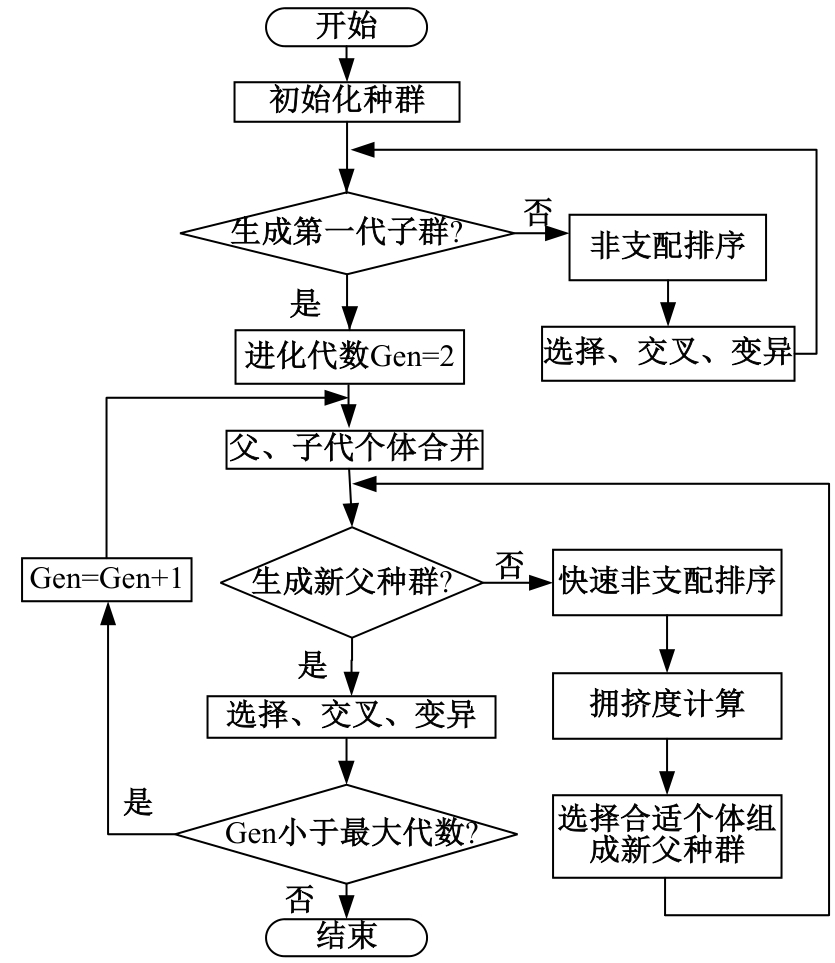
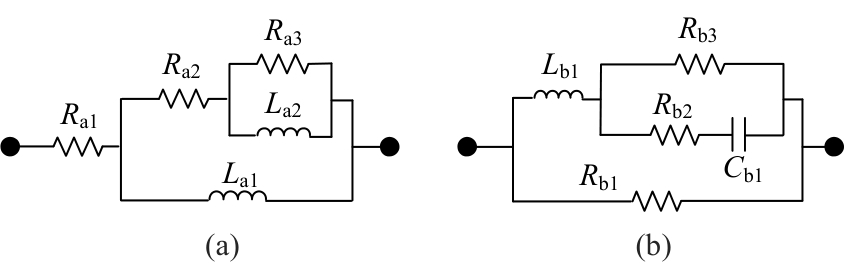
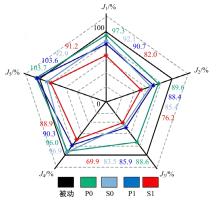
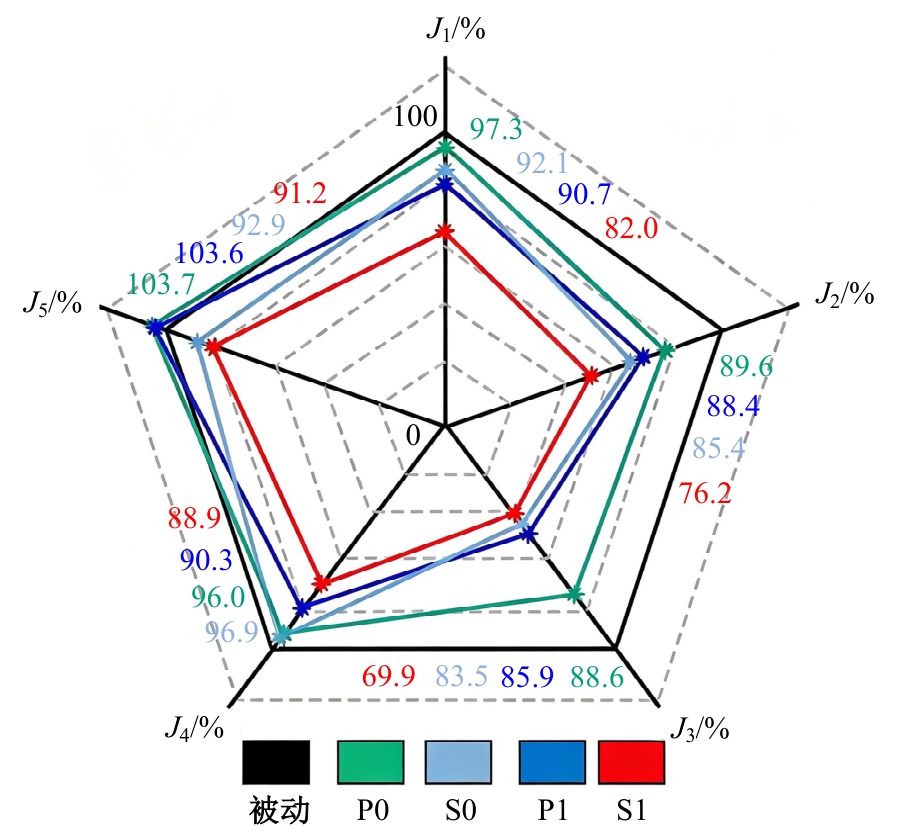
为研究车辆机电“惯容-弹簧-阻尼”(ISD)悬架对车辆乘坐舒适性和侧向稳定性的协同提升效果,探索切换外端电网络对机电惯容的性能影响,本文建立了考虑转向工况的三自由度车辆动力学模型,并利用NSGA-Ⅱ算法在不同行驶工况下对车辆机电ISD悬架的外端电网络优化求解。结果表明:无外端电网络的车辆机电ISD悬架性能提升微弱,而依据工况切换外端电网络的车辆机电ISD悬架可使车身加速度和车身侧倾角均方根值降低12.7%和25.9%,显著提升车辆乘适性与侧向稳定性。
中图分类号:
- U463.33

| [1] | NHTSA. Traffic safety facts 2010: a compilation of motor vehicle crash data from the fatality analysis reporting system and general estimates system[R].2012. |
| [2] | 金智林, 严正华. 基于二次预测型横向载荷转移率的汽车侧翻预警研究[J]. 中国机械工程, 2019, 30(15): 1790-1795. |
| Jin Zhi-lin, Yan Zheng-hua. Research on vehicle rollover warning based on secondary predicted lateral load transfer rate[J]. China Mechanical Engineering, 2019, 30(15): 1790-1795. | |
| [3] | 邹梓杰, 严运兵. 转向制动联合的线控转向汽车防侧翻控制研究[J]. 机械设计与制造, 2023 (1):145-149. |
| Zou Zi-jie, Yan Yun-bing. Research on anti-rolover control of steering-by-wire vehicle with combined steering and braking[J]. Machinery Design & Manufacture, 2023 (1): 145-149. | |
| [4] | 孙帅. 基于主动脉冲转向的SUV防侧翻控制研究[D].福州: 福州大学车辆工程, 2017. |
| Sun Shuai. Research on anti-rollover control of SUV based on active pulse steering[D]. Fuzhou: Department of Automotive Engineering, Fuzhou University, 2017. | |
| [5] | 卢少波, 李以农, 郑玲. 基于制动与悬架系统的车辆主动侧翻控制的研究[J]. 汽车工程, 2011, 33(8): 669-675. |
| Lu Shao-bo, Li Yi-nong, Zheng Ling. Research on vehicle active rolover control based on brake and suspension system[J]. Automotive Engineering, 2011, 33(8): 669-675. | |
| [6] | Shim T, Velusamy P C. Improvement of vehicle roll stability by varying suspension properties[J]. Vehicle System Dynamics, 2011, 49(1/2): 129-152. |
| [7] | Zhong S R, Zhao Y, Ge L H, et al. Vehicle state and bias estimation based on unscented Kalman filter with vehicle hybrid kinematics and dynamics models[J]. Automotive Innovation, 2023, 6(4): 571-585. |
| [8] | Anubi O M, Crane III C D. Roll stabilisation of road vehicles using a variable stiffness suspension system[J]. Vehicle System Dynamics, 2013, 51(12): 1894-1917. |
| [9] | Yao J L, Lv G W, Qv M Y, et al. Lateral stability control based on the roll moment distribution using a semiactive suspension[J]. Journal of Automobile Engineering, 2017,231(12): 1627-1639. |
| [10] | Zhang H Z, Liang J S, Yuan C C, et al. Application of explicit model predictive control to a vehicle semi-active suspension system[J]. Journal of Low Frequency Noise, Vibration and Active Control, 2019, 39(3):772-786. |
| [11] | Xiao L J, Wang M, Zhang B J, et al. Vehicle roll stability control with active roll-resistant electro-hydraulic suspension[J]. Frontiers of Mechanical Engineering, 2020,15: 43-54. |
| [12] | Hu Z M, Liao Y S, Liu J J, et al. Investigation of vehicle stability by integration of active suspension, torque vectoring, and direct yaw control[J]. SAE International Journal of Vehicle Dynamics, Stability, and NVH, 2022,6(4): 441-459. |
| [13] | Konieczny J, Sibielak M, Rączka W. Active vehicle suspension with anti-roll system based on advanced sliding mode controller[J]. Energies, 2020, 13(21): 5560. |
| [14] | Cui L F, Xue X Y, Le F X, et al. Design and experiment of electro hydraulic active suspension for controlling the rolling motion of spray boom[J]. International Journal of Agricultural and Biological Engineering, 2019, 12(4): 72-81. |
| [15] | Yang L, Wang R C, Meng X P, et al. Performance analysis of a new hydropneumatic inerter-based suspension system with semi-active control effect[J]. Proceedings of the Institution of Mechanical Engineers, Part D: Journal of Automobile Engineering, 2020, 234(7): 1883-1896. |
| [16] | Yin Y M, Li S. E, Tang K M,et al. Approximate optimal filter design for vehicle system through actor-critic reinforcement learning[J]. Automotive Innovation, 2022, 5(4): 415-426. |
| [17] | Li K, Cheng G Y, Sun X D, et al. Direct torque and suspension force control for bearing ess induction motors based on active disturbance rejection control scheme[J]. IEEE Access, 2019, 7:86989-87001. |
| [18] | Ding R K, Wang R C, Meng X P, et al. Energy consumption sensitivity analysis and energy-reduction control of hybrid electromagnetic active suspension[J]. Mechanical Systems and Signal Processing, 2019, 134: 106301. |
| [19] | Smith M C. Synthesis of mechanical networks: the inerter[J]. IEEE Transactions on Automatic Control, 2002, 47(10): 1648-1662. |
| [20] | Smith M C, Wang F C. Performance benefits in passive vehicle suspensions employing inerters[J]. Vehicle System Dynamics, 2004, 42(4): 235-57. |
| [21] | Wang R C, Meng X P, Shi D H, et al. Design and test of vehicle suspension system with inerters[J]. Journal of Mechanical Engineering Science, 2014,228(15): 2684-2689. |
| [22] | 花杰, 沈钰杰, 陈龙, 等. 基于机电惯容的车辆ISD悬架的分数阶控制系统[J]. 汽车安全与节能学报, 2022, 13(1): 63-69. |
| Hua Jie, Shen Yu-jie, Chen Long, et al. Fractional order control system of vehicle ISD suspension based on mechanical and electrical habitual capacity[J]. Journal of Automobile Safety and Energy Efficiency, 2022, 13(1): 63-69. | |
| [23] | Shen Y J, Chen A, Du F, et al. Performance enhancements of semi-active vehicle air ISD suspension[J]. Proceedings of the Institution of Mechanical Engineers, Part D: Journal of Automobile Engineering, 2025, 239(7): 2952-2963. |
| [24] | 杨所, 韩世昌, 李茜. 含惯容器的仿生X形悬架设计与减振性能分析[J]. 兵器装备工程学报, 2024, 45(6): 260-266. |
| Yang Suo, Han Shi-chang, Li Qian. Design and vibration damping performance analysis of bionic X-shaped suspension with inertial vessel [J]. Journal of Military Equipment Engineering, 2024, 45(6):260-266. | |
| [25] | Wang F C, Chan H A. Vehicle suspensions with a mechatronic network strut[J]. Vehicle System Dynamics, 2011, 49(5): 811-830. |
| [26] | Shen Y J, Hua J, Fan W, et al. Optimal design and dynamic performance analysis of a fractional-order electrical network-based vehicle mechatronic ISD suspension[J]. Mechanical Systems and Signal Processing, 2023, 184: 109718. |
| [27] | Wang F C, Chen H J, Yu C H. Performance benefits of a full-car model with mechatronic inerter networks[C]∥The SICE Annual Conference 2013, Nagoya, Japan, 2013: 1927-1932. |
| [28] | Yuan H, Li Y, Jiang J Z, et al. A design methodology for passive mechatronic vibration absorbers[J]. Mechanism and Machine Theory, 2022, 167: 104523. |
| [29] | Shen Y J, Shi D H, Chen L, et al. Modeling and experimental tests of hydraulic electric inerter[J]. Science China Technological Sciences, 2019, 62(12): 2161-2169. |
| [30] | Kolta M M, Mansour N A, Lashin M,et al. Optimal layout of suspension system employing mechatronic inerter for comfort enhancement based on structure-immittance approach[J]. SAE International Journal of Vehicle Dynamics, Stability, and NVH, 2024, 8(3): 409-425. |
| [31] | 余志生. 汽车理论[M]. 5版. 北京: 机械工业出版, 2009. |
| [32] | 江和耀, 王永海, 吴幼冬, 等. 四轮毂驱动电动车辆横向稳定与侧倾预防协同控制策略[J]. 吉林大学学报: 工学版, 2024, 54(2): 540-549. |
| Jiang He-yao, Wang Yong-hai, Wu You-dong, et al. Coordinated lateral stability and rollover prevention control for four-wheel independent motor drive electric vehicles[J]. Journal of Jilin University (Engineering and Technology Edition), 2024, 54(2):540-549. | |
| [33] | 陈双, 宗长富, 张立军, 等. 主动悬架平顺性和侧倾姿态综合控制策略[J]. 吉林大学学报: 工学版, 2011, 41(): 59-64. |
| Chen Shuang, Zong Chang-fu, Zhang Li-jun, et al. Research on integrated control strategy of ride and roll attitude via active suspension[J]. Journal of Jilin University (Engineering and Technology Edition), 2011, 41(Sup.1): 59-64. | |
| [34] | Jiang J Z, Smith M C. Series-parallel six-element synthesis of biquadratic impedances[J]. IEEE Transactions on Circuits and Systems I: Regular Papers, 2012, 59(11): 2543-2554. |
| [35] | Sseifi A, Hassannejad R, Hamed M A. Optimum design for passive suspension system of a vehicle to prevent rollover and improve ride comfort under random road excitations[J]. Journal of Multi-body Dynamics, 2016, 230(4): 426-441. |
| [36] | 齐琦, 毋涛. 基于改进NSGA-II算法的多目标生产智能调度[J]. 计算机技术与发展, 2021, 31(8): 162-168. |
| Qi Qi, Wu Tao. Multi-objective production intelligent scheduling based on improved NSGA-II algorithm[J]. Journal of Computer Technology and Development, 2021, 31(8): 162-168. |
| [1] | 乔雪涛,郭铸锋,徐航,赵增效,段天航,田晓中. 基于最佳速度区间的纯电动汽车AMT自适应换挡控制策略[J]. 吉林大学学报(工学版), 2026, 56(8): 2059-2066. |
| [2] | 李铭,赵尚义,徐海军,高青,陈鑫,秦国锋. 负压气动造型对DrivAer车空气阻力的影响[J]. 吉林大学学报(工学版), 2026, 56(7): 1780-1786. |
| [3] | 宣熔,郭亮,李德刚,张浩,王会,韩家明. 壁面润湿性对附壁油膜铺展和蒸发特性的影响[J]. 吉林大学学报(工学版), 2026, 56(7): 2048-2058. |
| [4] | 赵洪乾,李海岩,张城铭,崔世海,贺丽娟,吕文乐. 面向智能安全的中国50th百分位男性体征行人数字模型开发及应用[J]. 吉林大学学报(工学版), 2026, 56(3): 779-792. |
| [5] | 付尧,战椿水,刘科. 考虑通信延时的智能汽车非线性路径跟踪控制[J]. 吉林大学学报(工学版), 2026, 56(3): 851-859. |
| [6] | 李军,杨飞帆,龚胜,周科宇. 基于视觉的轻量化路面异常检测算法[J]. 吉林大学学报(工学版), 2026, 56(2): 488-496. |
| [7] | 高镇海,鲍明喜,赵睿,唐明弘,高菲. 基于目标锚点驱动的多模态轨迹预测方法[J]. 吉林大学学报(工学版), 2026, 56(1): 21-30. |
| [8] | 张向文,王子豪. 电动汽车制动模式切换过程电液协调控制策略[J]. 吉林大学学报(工学版), 2026, 56(1): 31-43. |
| [9] | 孙天骏,杨惠喆,蔡荣贵,冯嘉仪,冉锐,刘斌. 面向纯电动汽车自适应巡航系统的人性化起停控制策略[J]. 吉林大学学报(工学版), 2025, 55(9): 2847-2857. |
| [10] | 兰巍,周政,王冠宇,王伟,张苗苗. 基于机器学习的汽车设计智能拟合方法[J]. 吉林大学学报(工学版), 2025, 55(9): 2858-2863. |
| [11] | 朱冰,孟鹏翔,刘斌,韩嘉懿,赵健,陈志成,宋东鉴,陶晓文. 基于交通环境信息的虚拟车道线拟合方法[J]. 吉林大学学报(工学版), 2025, 55(9): 2935-2945. |
| [12] | 李寿涛,贾湘怡,朱军,郭洪艳,于丁力. 基于Level-K的智能驾驶汽车无信控交叉路口决策方法[J]. 吉林大学学报(工学版), 2025, 55(9): 3069-3078. |
| [13] | 高金武,孙少龙,王舜尧,高炳钊. 基于电机转矩补偿的增程器转速波动抑制策略[J]. 吉林大学学报(工学版), 2025, 55(8): 2475-2486. |
| [14] | 于贵申,陈鑫,唐悦,赵春晖,牛艾佳,柴辉,那景新. 激光表面处理对铝-铝粘接接头剪切强度的影响[J]. 吉林大学学报(工学版), 2025, 55(8): 2555-2569. |
| [15] | 赵俊武,曲婷,胡云峰. 基于自适应采样的智能车辆轨迹规划方法[J]. 吉林大学学报(工学版), 2025, 55(8): 2802-2816. |
|
||