Journal of Jilin University(Medicine Edition) ›› 2026, Vol. 52 ›› Issue (5): 1390-1407.doi: 10.13481/j.1671-587X.20260520
• Research in clinical medicine • Previous Articles
Meta-analysis of efficacy and safety of traditional Chinese medicine external therapy in treating malignant pleural effusion
Geer A,Qin WANG,Lijing JIAO,Yabin GONG( )
- First Department of Oncology,Yueyang Hospital of Integrated Traditional Chinese and Western Medicine,Shanghai University of Traditional Chinese Medicine,Shanghai 200437,China
-
Received:2026-05-22Accepted:2026-07-13Online:2026-09-28Published:2026-10-15 -
Contact:Yabin GONG E-mail:gongyabin@hotmail.com

CLC Number:
- R273
Cite this article
Geer A,Qin WANG,Lijing JIAO,Yabin GONG. Meta-analysis of efficacy and safety of traditional Chinese medicine external therapy in treating malignant pleural effusion[J].Journal of Jilin University(Medicine Edition), 2026, 52(5): 1390-1407.
share this article
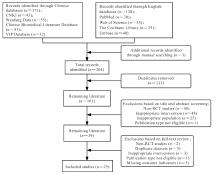
Fig. 1
Flow chart of literature screening process"
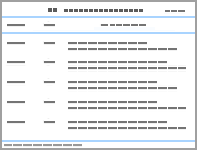
Tab.1
Basic characteristics of included studies"
| Study | Samplesize | Age(year) | Intervention | Duration | Outcome | Assessment timeof pleural effusionresponse | |||
|---|---|---|---|---|---|---|---|---|---|
| E | C | E | C | E | C | ||||
| LAN,et al.2019[ | 30 | 30 | 50.12±12.48 | 52.14±11.56 | External application of TCM+pleural drainage+intrapleural CDDP | Pleural drainage+intrapleural CDDP | 15 d | ①②④ | 30 days after treatment |
| WU,et al.2006[ | 38 | 36 | 65±3 | 63±4 | External application of TCM+conventional treatment | Conventionaltreatment | 2 months | ① | 2 months after treatment |
| LUO,et al.2014[ | 24 | 20 | 61.2±5.1 | 59.6±7.8 | External application of TCM+pleural drainage+intrapleural CDDP | Pleural drainage+intrapleural CDDP | 28 d | ①④ | 4 weeks after treatment |
| HUANG,et al.2012[ | 30 | 30 | 33-75 | 36-71 | External application of TCM+pleural drainage+intrapleural CDDP | Pleural drainage+intrapleural CDDP | 3 weeks | ①④ | 1 month after treatment |
YANG,et al. 2021[ | 30 | 30 | 63.16±2.85 | 72.86±3.01 | External application of TCM+pleural drainage+intrapleural CDDP | Pleural drainage+intrapleural CDDP | 4 weeks | ①②④ | 4 weeks after treatment |
YANG,et al. 2017[ | 24 | 24 | 63.26±2.38 | 64.86±2.38 | External application of TCM+pleural drainage+intrapleural CDDP | Pleural drainage+intrapleural CDDP | 4 weeks | ① | 4 weeks after treatment |
LIU,et al. 2014[ | 25 | 25 | 51±13 | 53±15 | External application of TCM+pleural drainage+intrapleural CDDP | Pleural drainage+intrapleural CDDP | 15 d | ①④ | 1 month after treatment |
| LI,et al.2016[ | 30 | 30 | 38-70 | 40-70 | External application of TCM+pleural drainage+intrapleural elemene | Pleural drainage+intrapleural elemene | 2 weeks | ①④ | 4 weeks after treatment |
| LI,et al.2018[ | 22 | 22 | - | - | External application of TCM+pleural drainage+intrapleural CDDP | Pleural drainage+intrapleural CDDP | 4 weeks | ①④ | 4 weeks after treatment |
| HE,et al.2015[ | 30 | 30 | - | - | External application of TCM+pleural drainage+intrapleural CDDP+hyperthermia | Pleural drainage+intrapleural CDDP+hyperthermia | 4 weeks | ①③④ | 4 weeks after treatment |
| DIAO,et al.2011[ | 36 | 34 | 65±3 | 63±4 | External application of TCM+pleural drainage+intrapleural CDDP | Pleural drainage+intrapleural CDDP | 2 months | ①④ | 30 days after treatment |
| KAO,et al.2017[ | 25 | 25 | 57.5±4.2 | 56.3±4.7 | External application of TCM+pleural drainage+intrapleural CDDP | Pleural drainage+intrapleural CDDP | 14 d | ② | - |
| HUO,et al.2013[ | 25 | 25 | 35-75 | 36-78 | External application of TCM+pleural drainage+intrapleural CDDP | Pleural drainage+intrapleural CDDP | 4 weeks | ①③④ | 4 weeks after treatment |
| LEI,et al.2012[ | 32 | 32 | 35-70 | 38-69 | External application of TCM+pleural drainage+intrapleural BLM+IL-2 | Pleural drainage+intrapleural BLM+IL-2 | 28 d | ①③④ | 4 weeks after treatment |
| LUO,et al.2025[ | 40 | 20 | 58.53±6.71 | 58.44±6.83 | External application of TCM+pleural drainage | Pleural drainage | 2 weeks | ①②④ | 2 weeks after treatment |
| LIU,et al.2019[ | 60 | 60 | 61.18±3.32 | 61.15± 3.28 | External application of TCM+pleural drainage+intrapleural CDDP | Pleural drainage+intrapleural CDDP | 4 weeks | ① | 4 weeks after treatment |
| XIONG,et al.2019[ | 33 | 33 | - | - | External application of TCM+intrapleural CDDP | Intrapleural CDDP | 4 weeks | ①④ | 4 weeks after treatment |
| YU,et al.2023[ | 33 | 32 | 56.8±6.9 | 58.2±7.5 | External application of TCM+pleural drainage+intrapleural CDDP | Pleural drainage+intrapleural CDDP | 8 weeks | ①② | 4 weeks after treatment |
| SHAN,et al.2024[ | 45 | 45 | 65.47±11.28 | 63.26±10.25 | External application of TCM+pleural drainage+intrapleural CDDP | Pleural drainage + intrapleural CDDP | 4 weeks | ①③ | 4 weeks after treatment |
| HU,et al.2023[ | 30 | 30 | 52.33±9.12 | 52.18±8.55 | External application of TCM+pleural drainage+intrapleural CDDP+5-FU hyperthermic perfusion | Pleural drainage+intrapleural CDDP+5-FU hyperthermic perfusion | 2 weeks | ①②④ | 1 month after treatment |
| JIA,et al.2002[ | 25 | 25 | 35-75 | 37-73 | External application of TCM | Pleural drainage+intrapleural IFN | 4 weeks | ①③ | 1 month after treatment |
| WANG,et al.2018[ | 30 | 30 | 50(39-66) | 49(40-62) | External application of TCM+pleural drainage+intrapleural recombinant human adenovirus type 5 | Pleural drainage+intrapleural recombinant human adenovirus type 5 | 10 d | ① | 4 weeks after treatment |
| WU,et al.2017[ | 33 | 32 | - | - | External application of TCM | Placebo external application | 2 weeks | ①②④ | Immediateafter treatment |
| ZHANG,et al.2021[ | 42 | 42 | 63.7(41-80) | 62.5 (38-79) | External application of TCM+pleural drainage+intrapleural CDDP | Pleural drainage+intrapleural CDDP | 28 d | ① | 4 weeks after treatment |
| TIAN,et al.2019[ | 52 | 50 | 55(31-72) | 53(33-70) | External application of TCM+pleural drainage+intrapleural IL-2 | Pleural drainage+intrapleural IL-2 | 2 weeks | ①④ | 4 weeks after treatment |
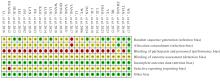
Fig. 2
Summary graph of bias risk of included studies"
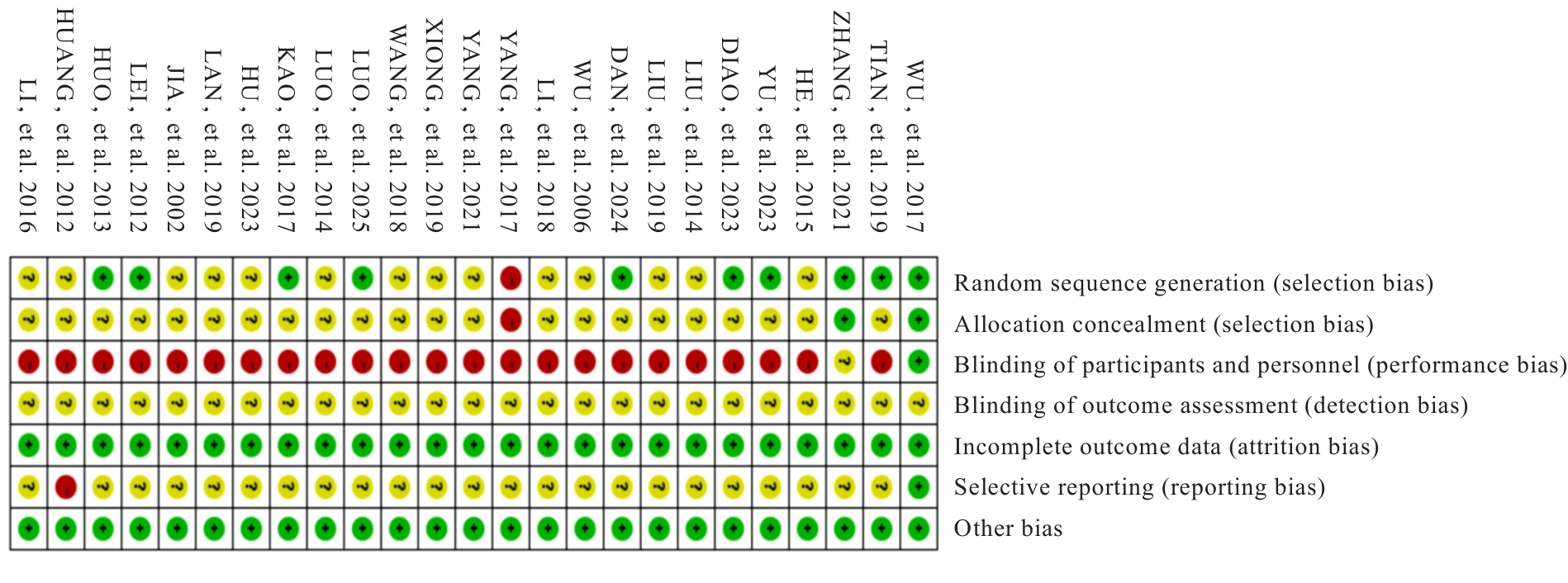
Fig. 3
Proportion plot of bias risk of included studies"
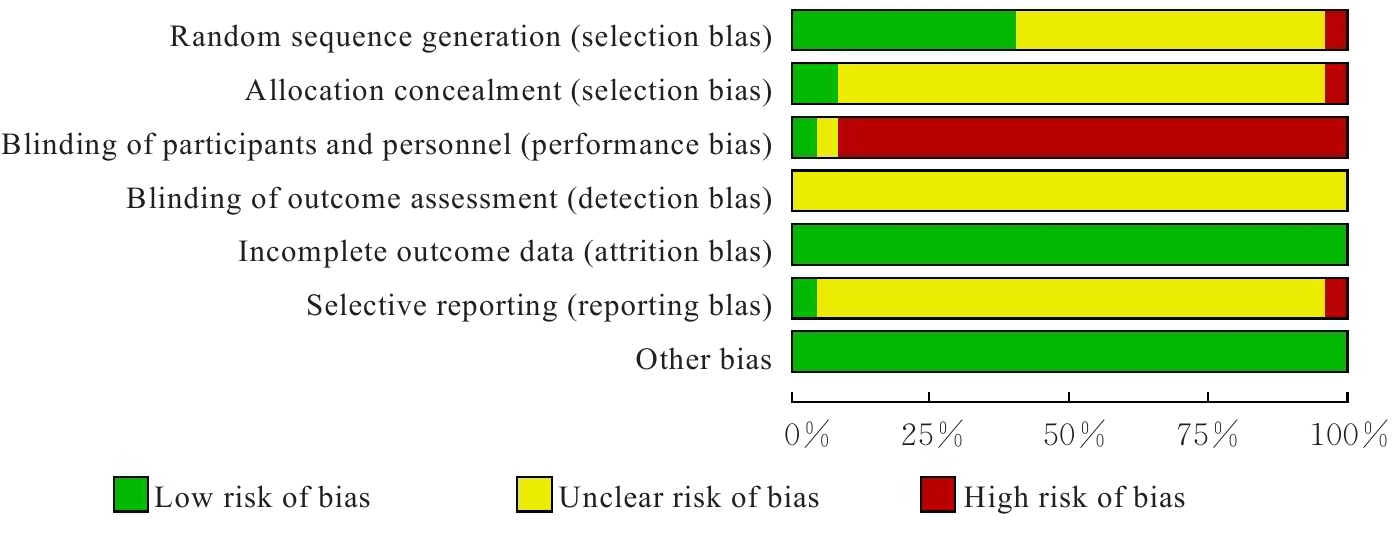
Fig. 4
Forest plot of pleural effusion response rates of patients in two groups"
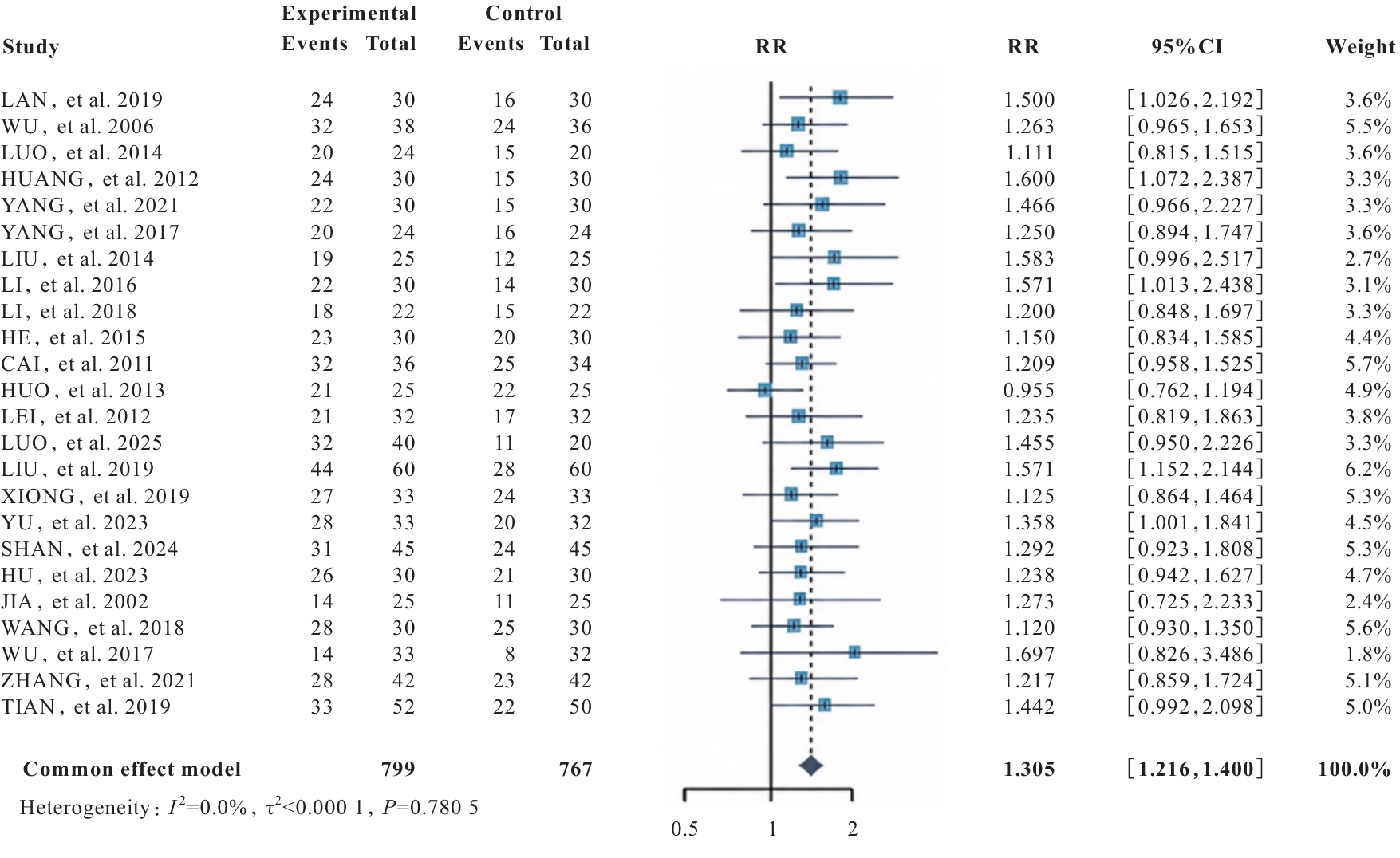
Fig. 5
Forest plot of subgroup analysis for pleural effusion response rates of patients with different treatment durations"
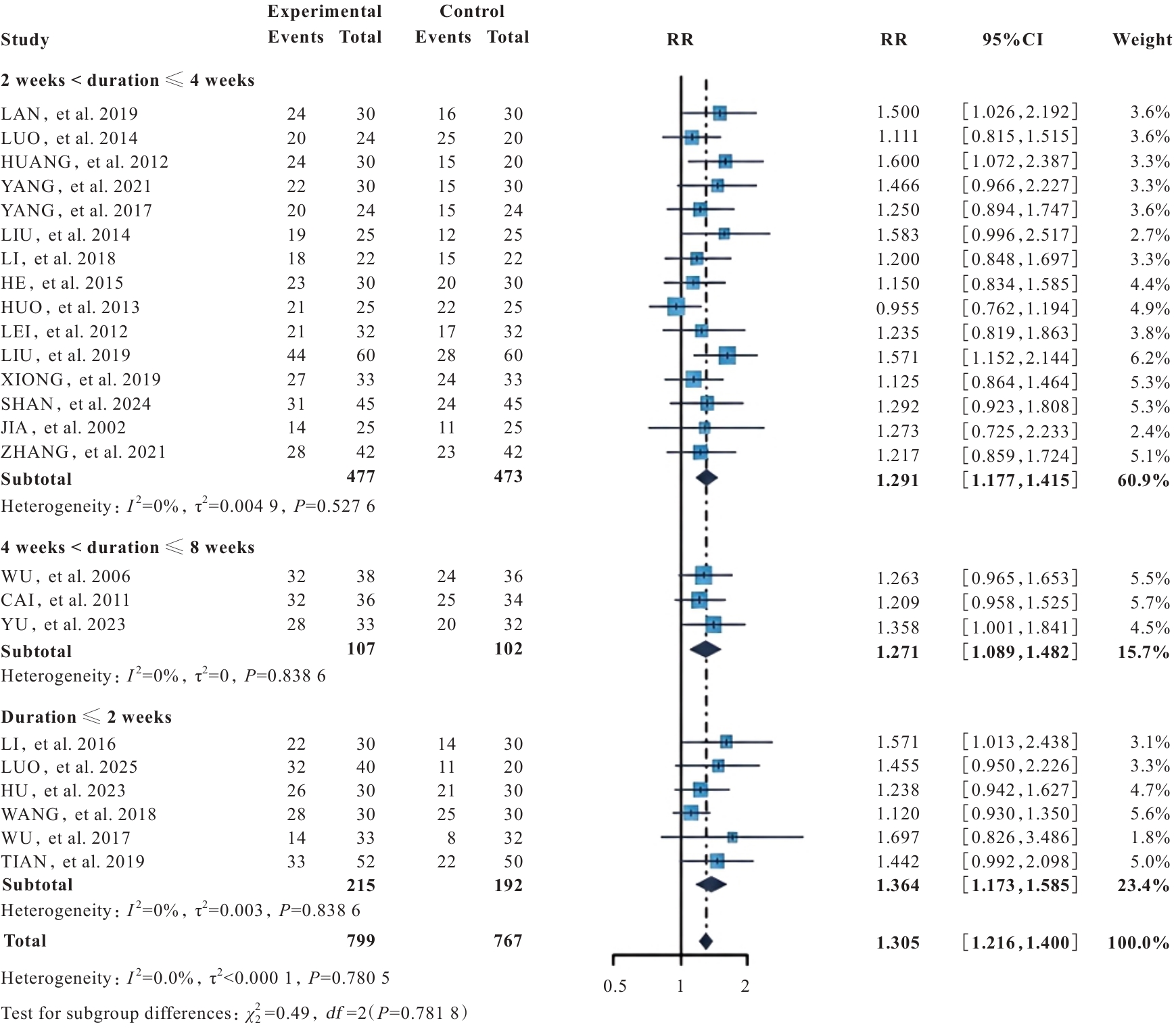
Fig. 6
Forest plot of subgroup analysis for pleural effusion response rates of patients with different dosage forms"
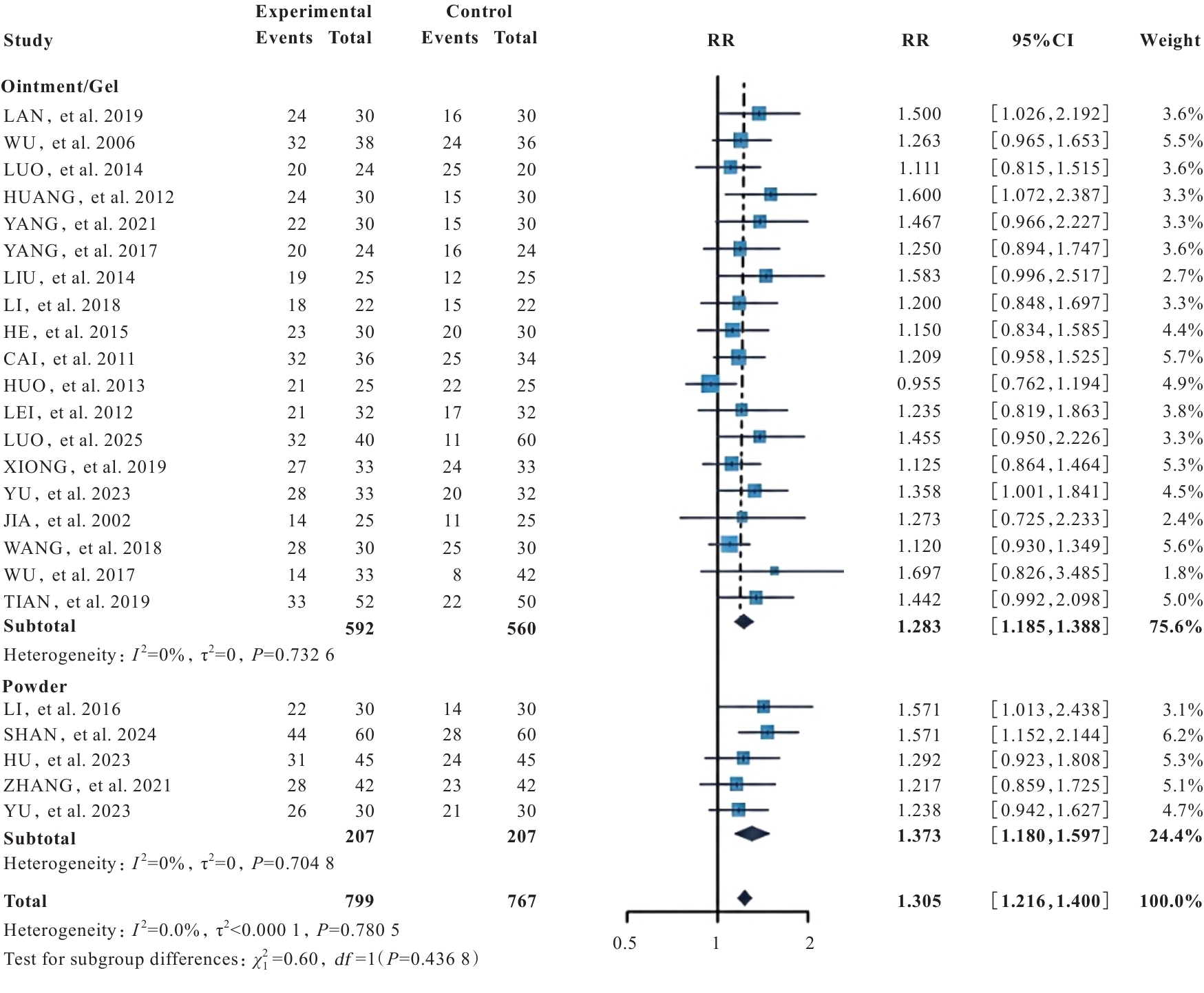
Fig. 7
Forest plot of subgroup analysis for pleural effusion response rates of patients with different interventions in control group"
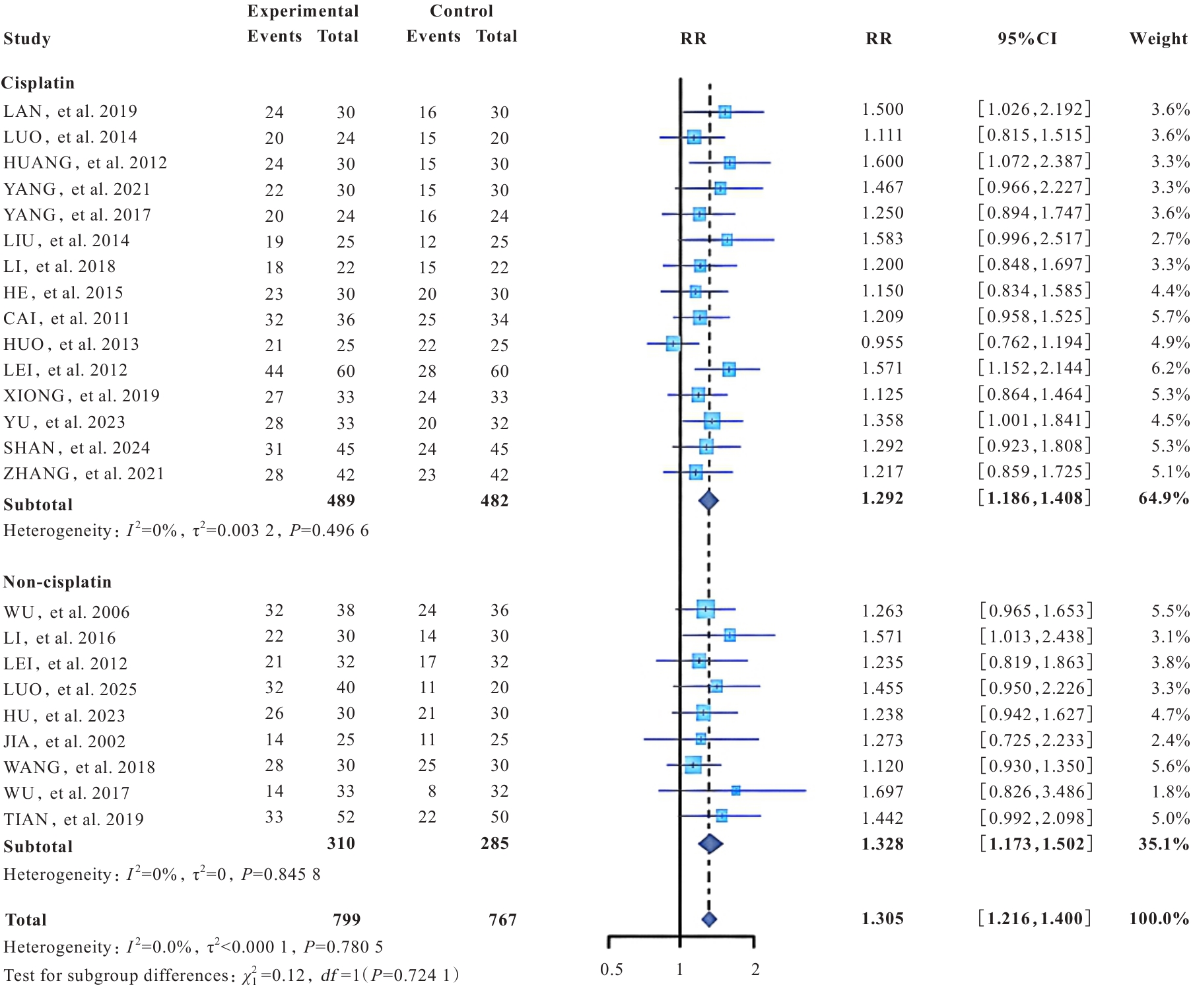
Fig. 8
Forest plot of subgroup analysis for pleural effusion response rates of patients with different cancer types"
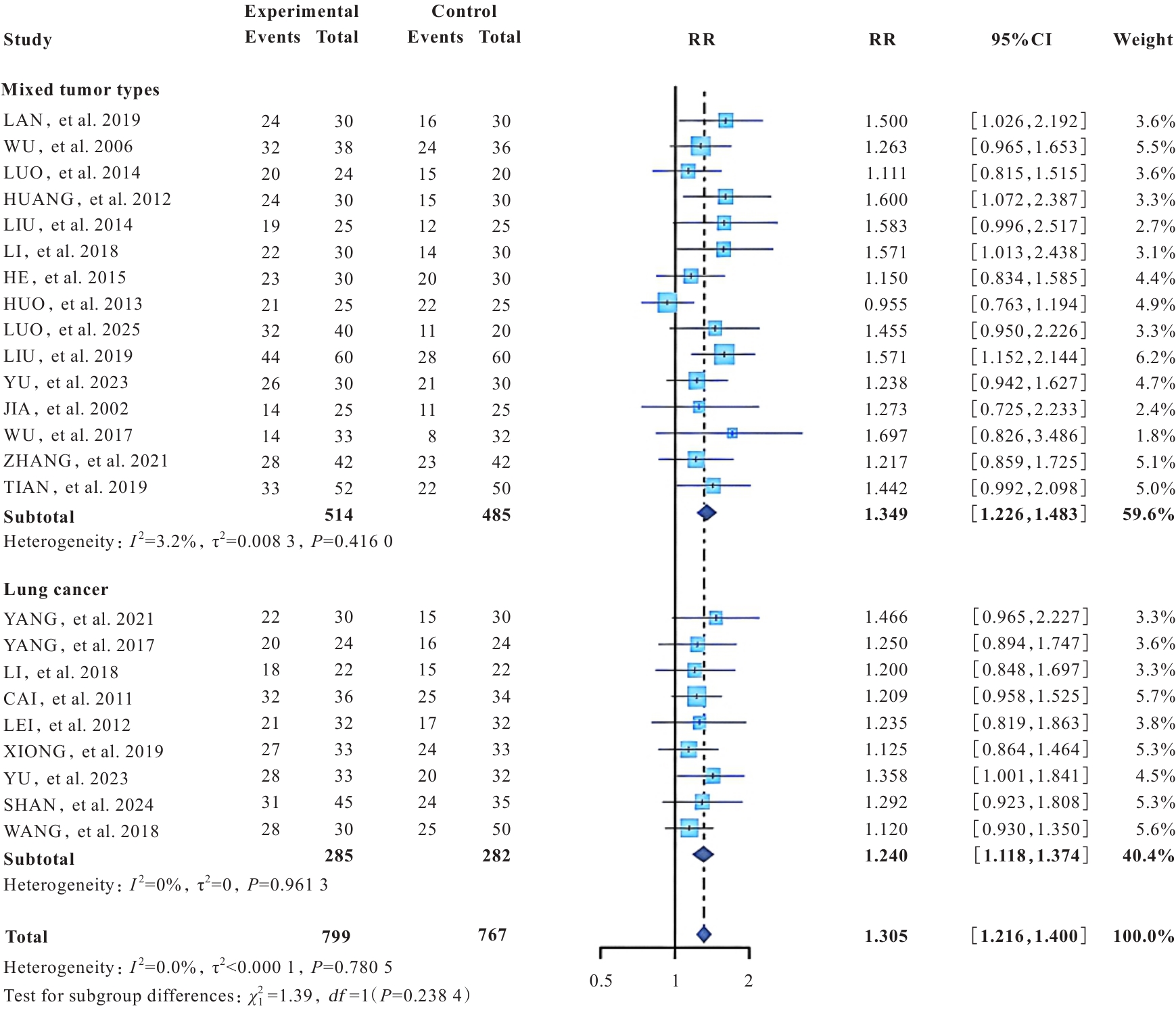
Fig. 9
Forest plot of KPS scores of patients in two groups"
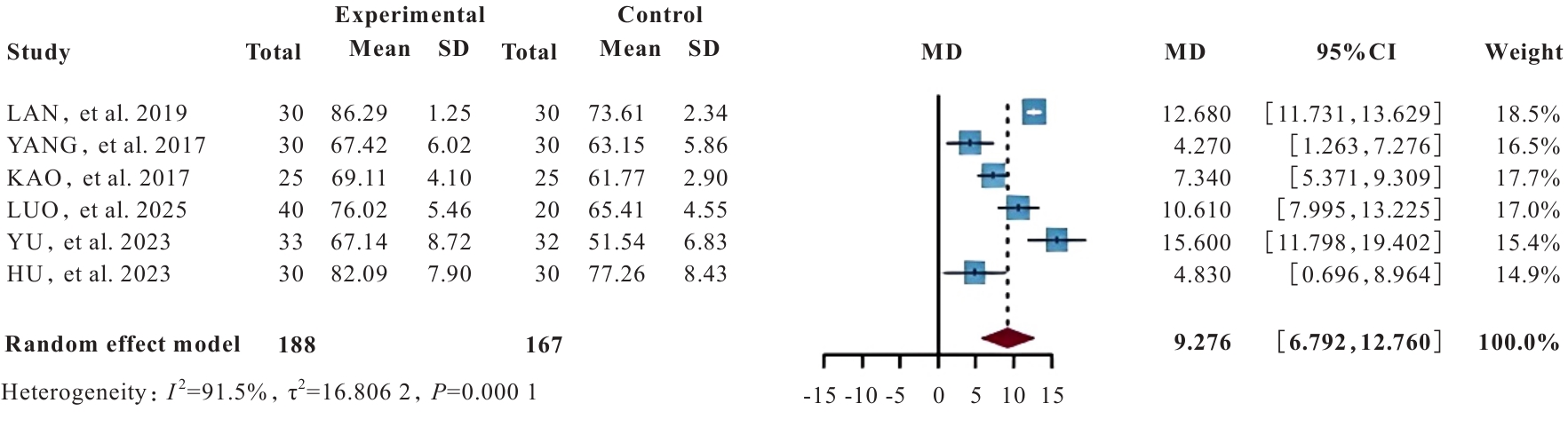
Fig. 10
Forest plot of subgroup analysis for KPS scores of patients with different treatment durations"
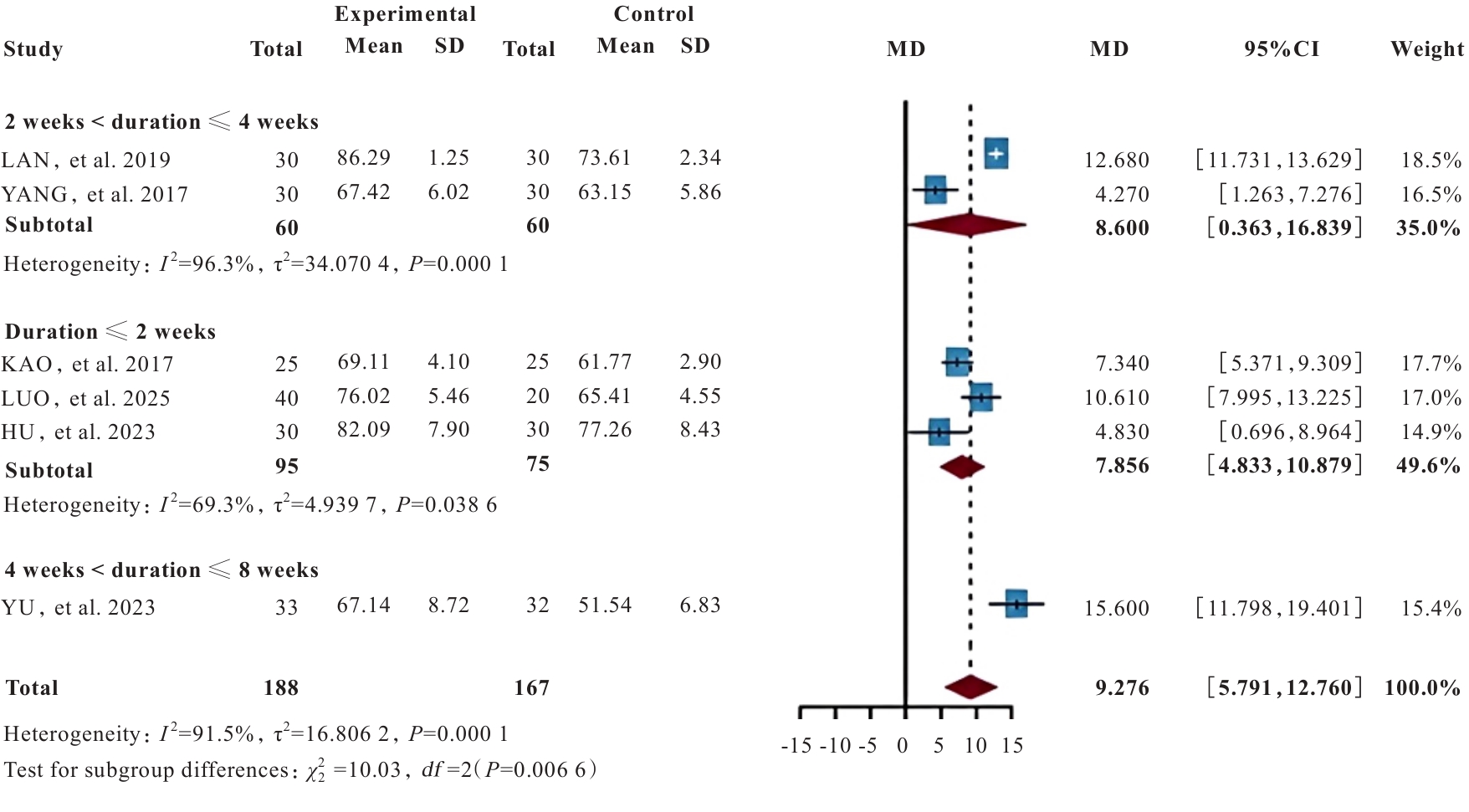
Fig. 11
Forest plot of subgroup analysis for KPS scores of patients with different dosage forms"
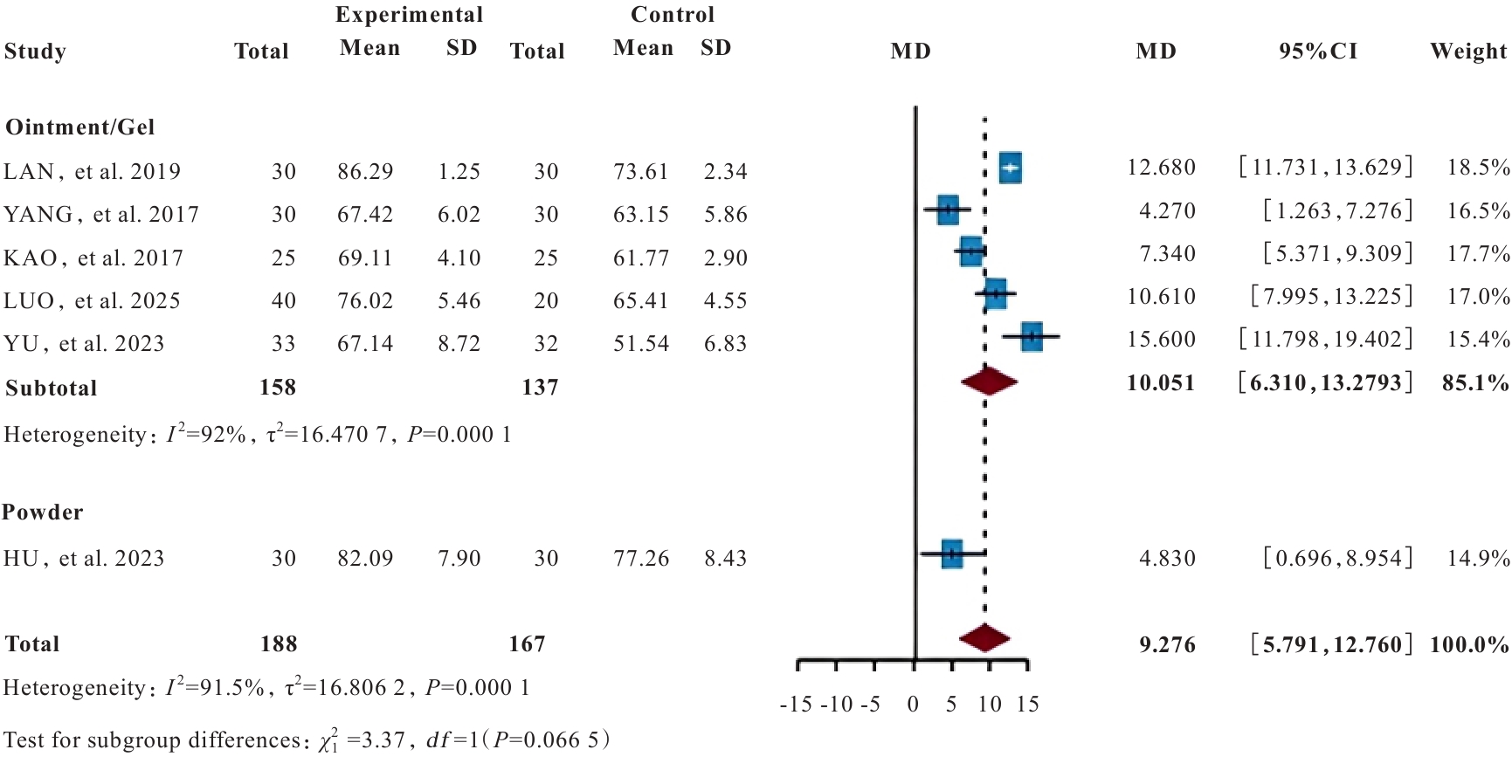
Fig. 12
Forest plot of subgroup analysis for KPS scores of patients with different interventions in control group"
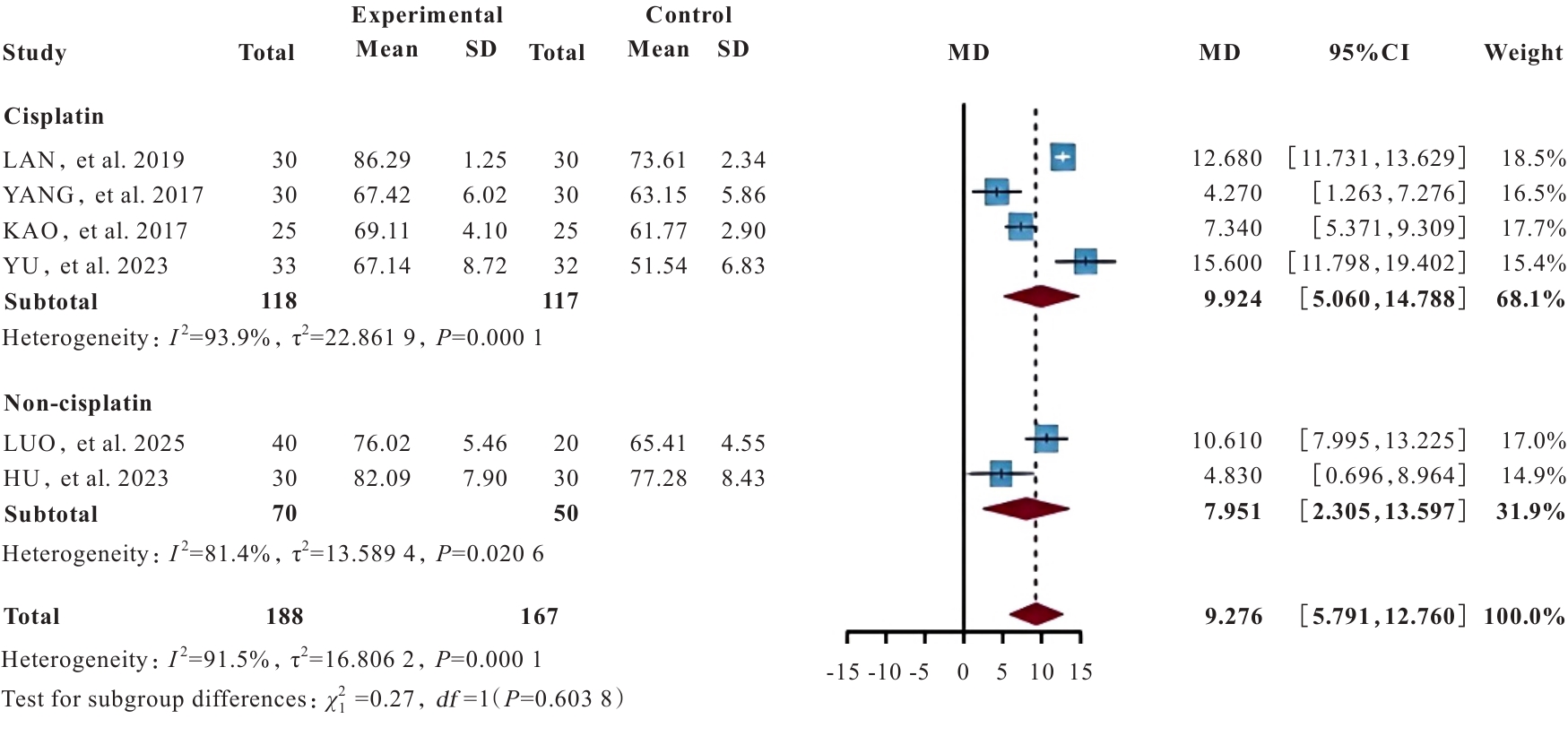
Fig. 13
Forest plot of subgroup analysis for KPS scores of patients with different cancer types"
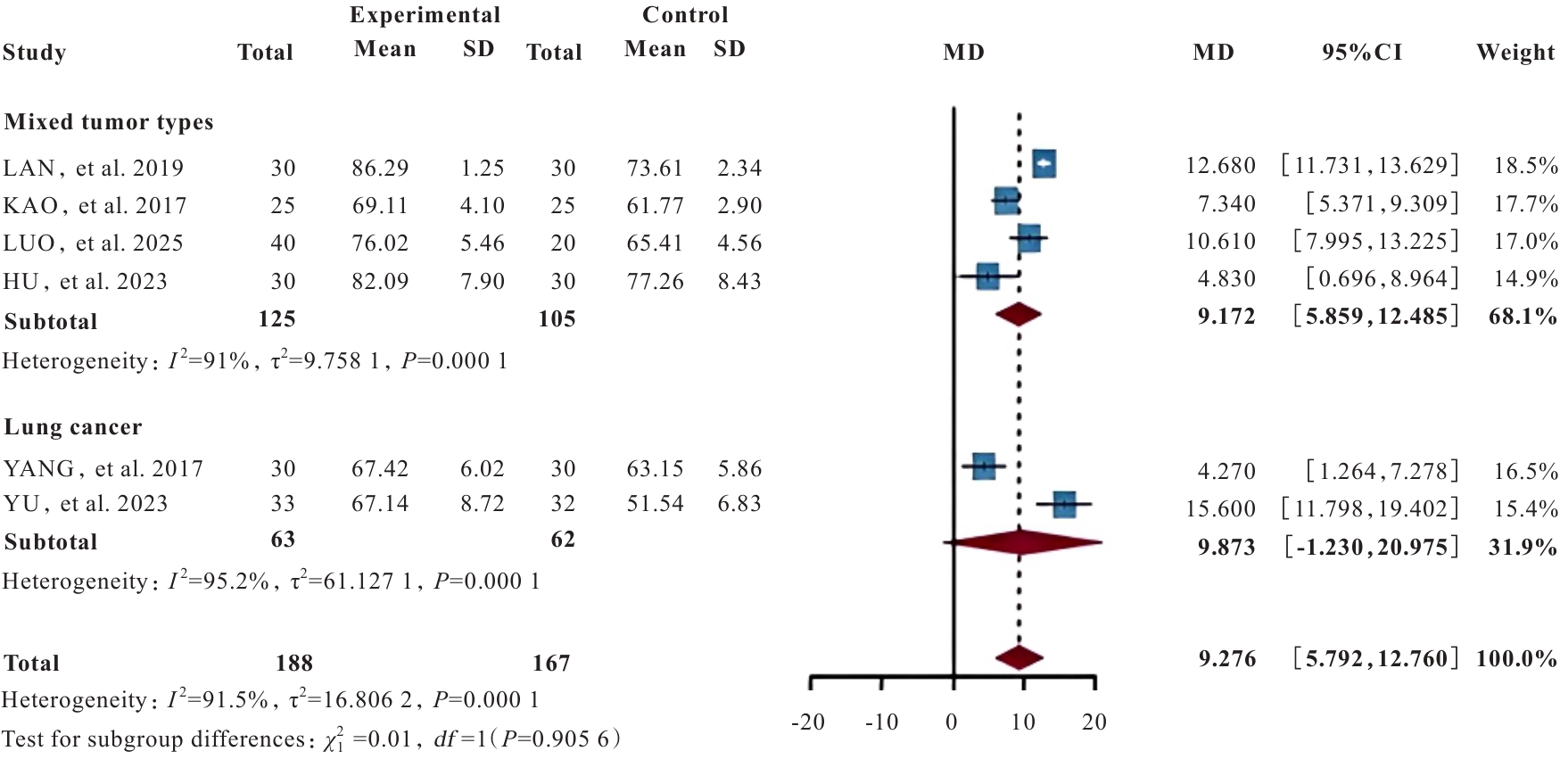
Fig. 14
Forest plot of KPS score improvement rates of patients in two groups"
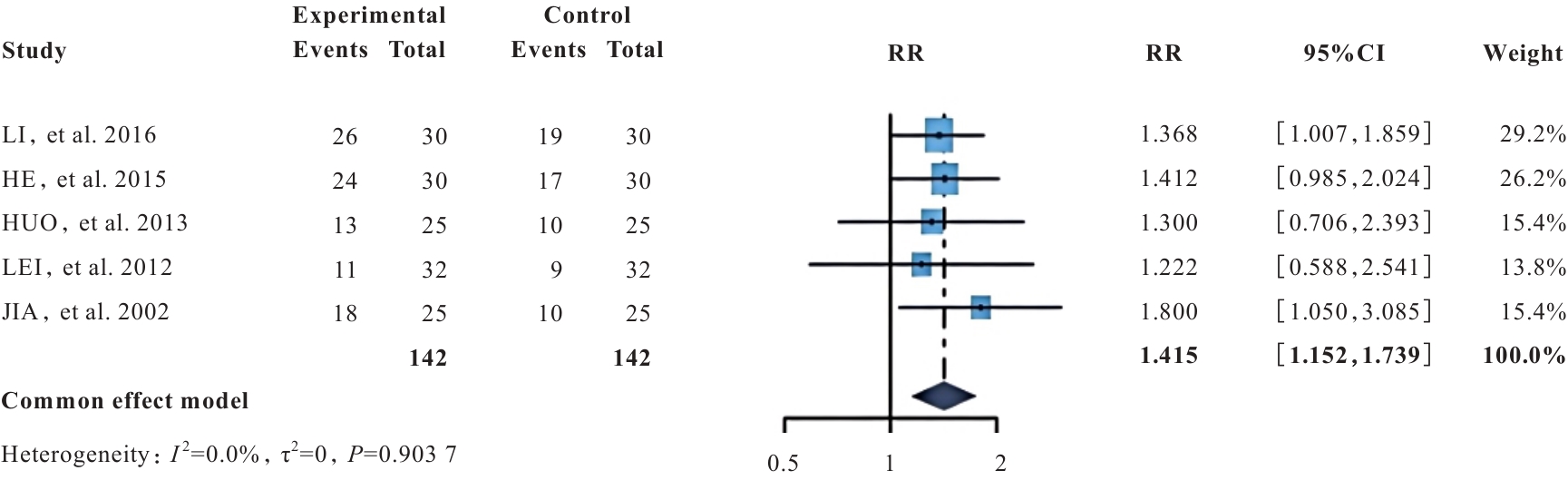
Fig. 15
Forest plot of incidence of skin reaction of patients"
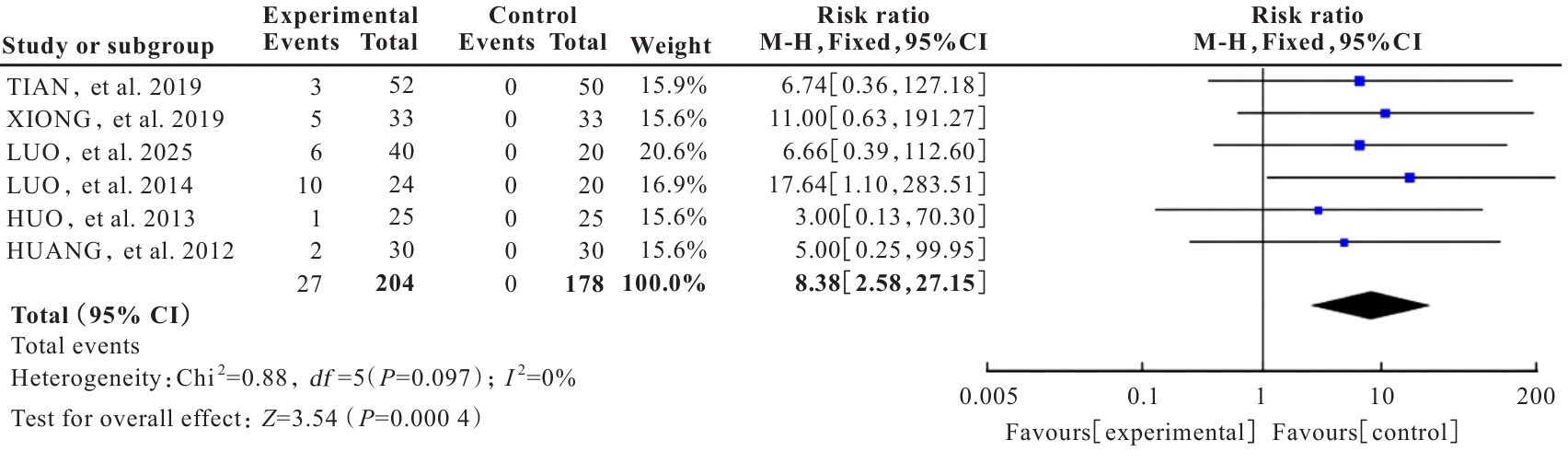
Fig. 16
Forest plot of incidence of gastrointestinal reaction of patients"
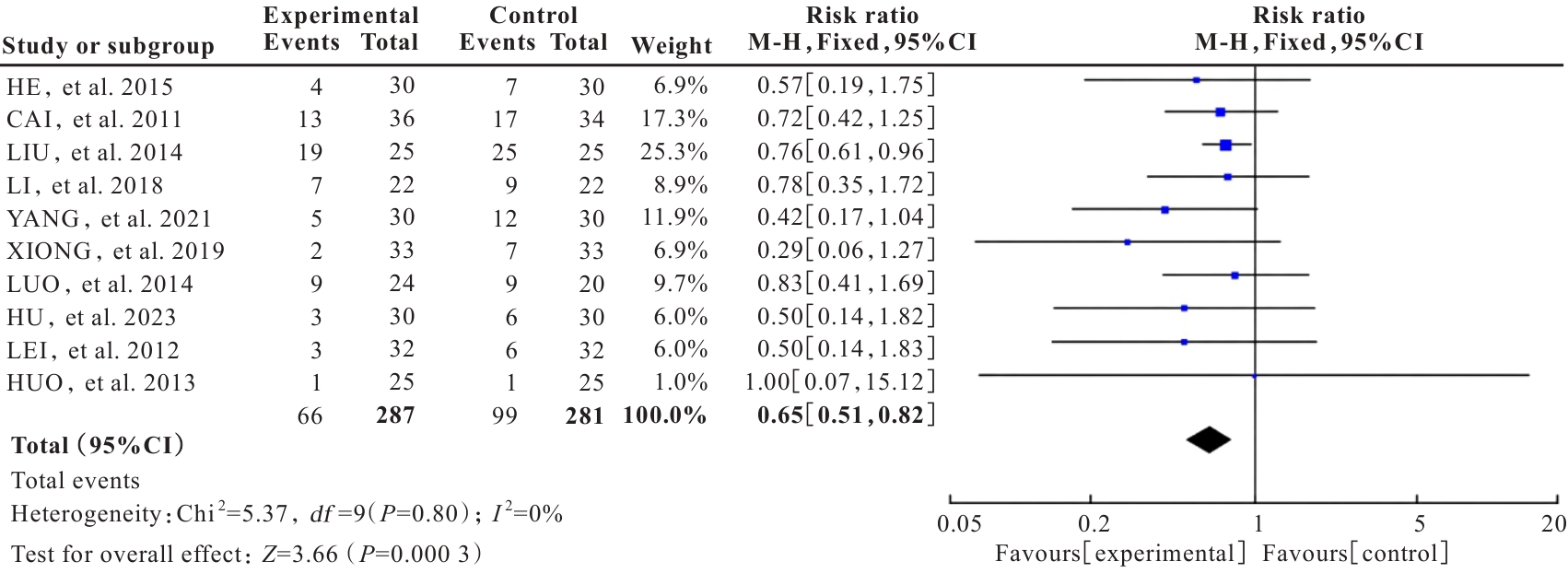
Fig. 17
Forest plot of incidence of leukopenia of patients"
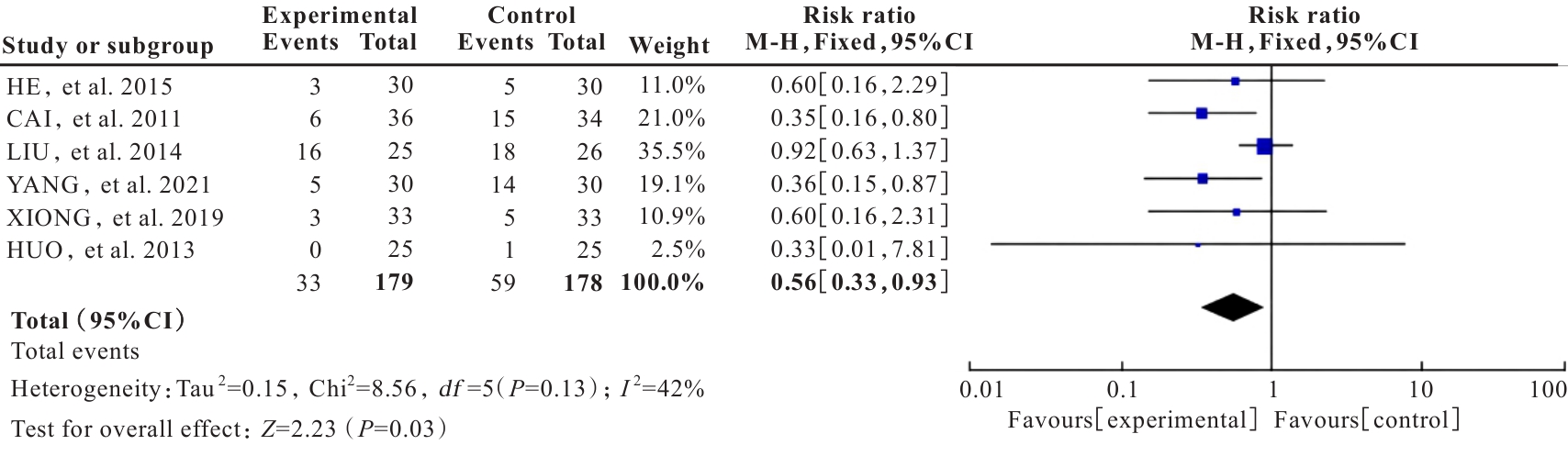
Fig. 18
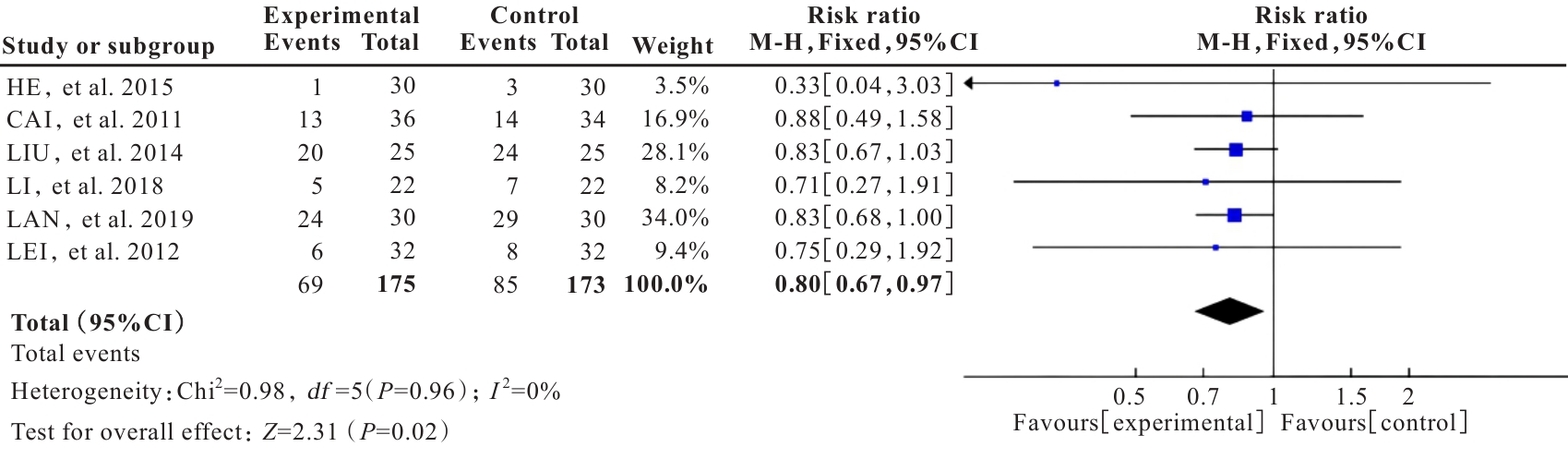
Forest plot of incidence of chest pain of patients"
Tab.2
Meta-analysis results of adverse reaction incidence of patients in two groups"
| Adverse reaction | Studies | Heterogeneity | Effect model | RR(95%CI) | P |
|---|---|---|---|---|---|
| Gastrointestinal reaction | I2=0%, P=0.80 | Fixed-effect model | 0.65(0.51,0.82) | 0.000 3 | |
| Leukopenia | I2=42%, P=0.13 | Random-effect model | 0.56(0.33,0.93) | 0.03 | |
| Chest pain | I2=0%, P=0.96 | Fixed-effect model | 0.80(0.67,0.97) | 0.02 | |
| Fever | I2=0%, P=0.61 | Fixed-effect model | 0.77(0.59,1.00) | 0.05 | |
| Skin reactions | I2=0%, P=0.97 | Fixed-effect model | 8.38(2.58,27.15) | 0.000 4 | |
| Abnormal liver and renal function | I2=0%, P=0.89 | Fixed-effect model | 0.38(0.10,1.35) | 0.13 |
Fig. 19
Sensitivity analysis of pleural effusion response rates of patients"
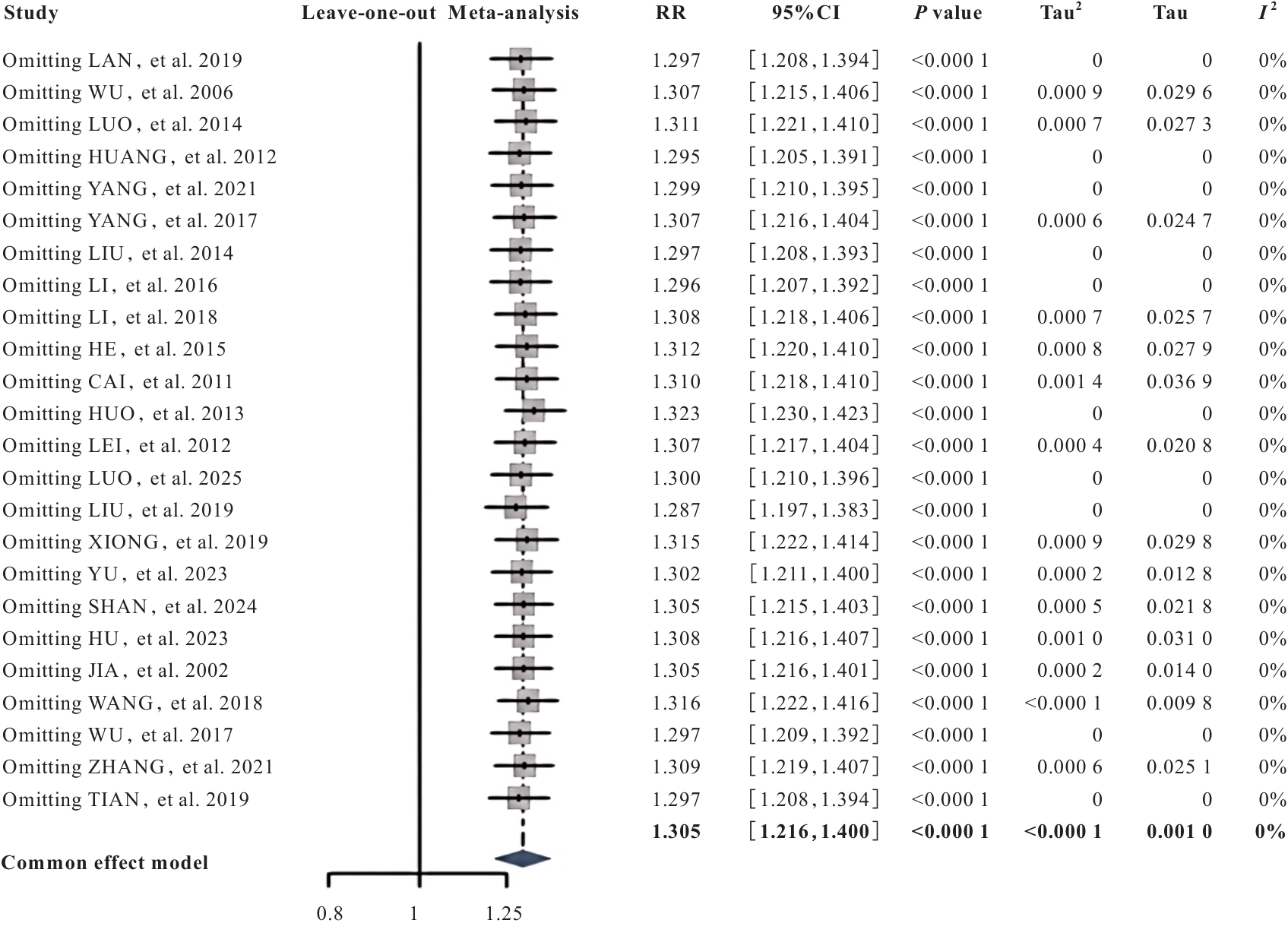
Fig. 20
Sensitivity analysis of KPS scores of patients"
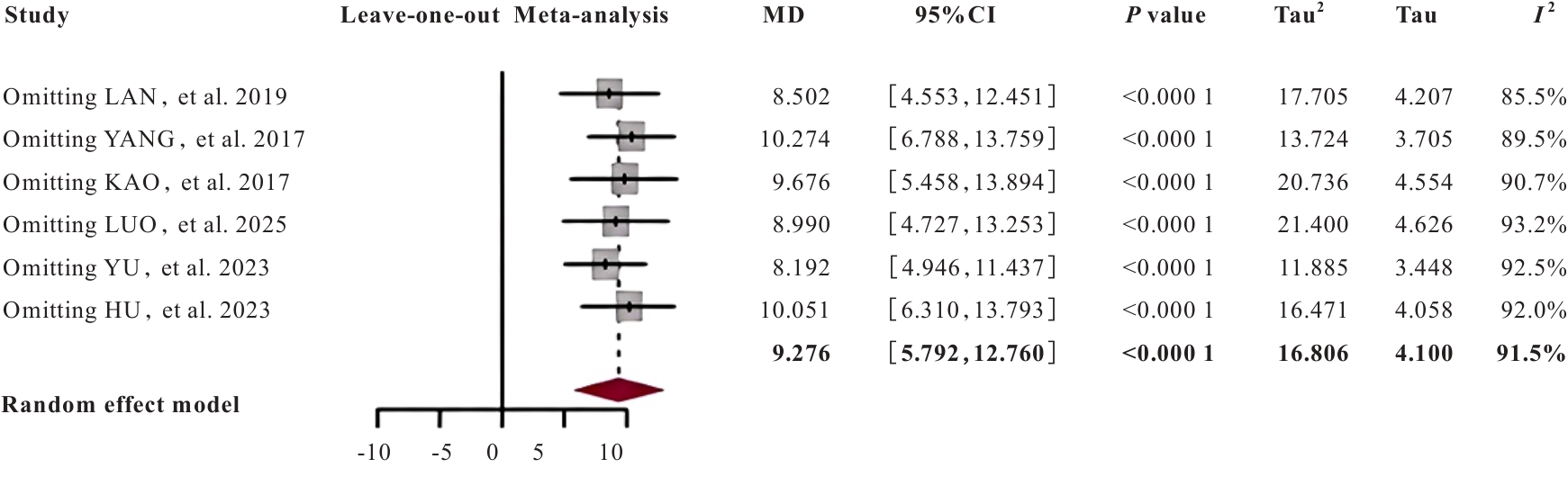
Fig. 21
Sensitivity analysis of KPS score improvement rates of patients"
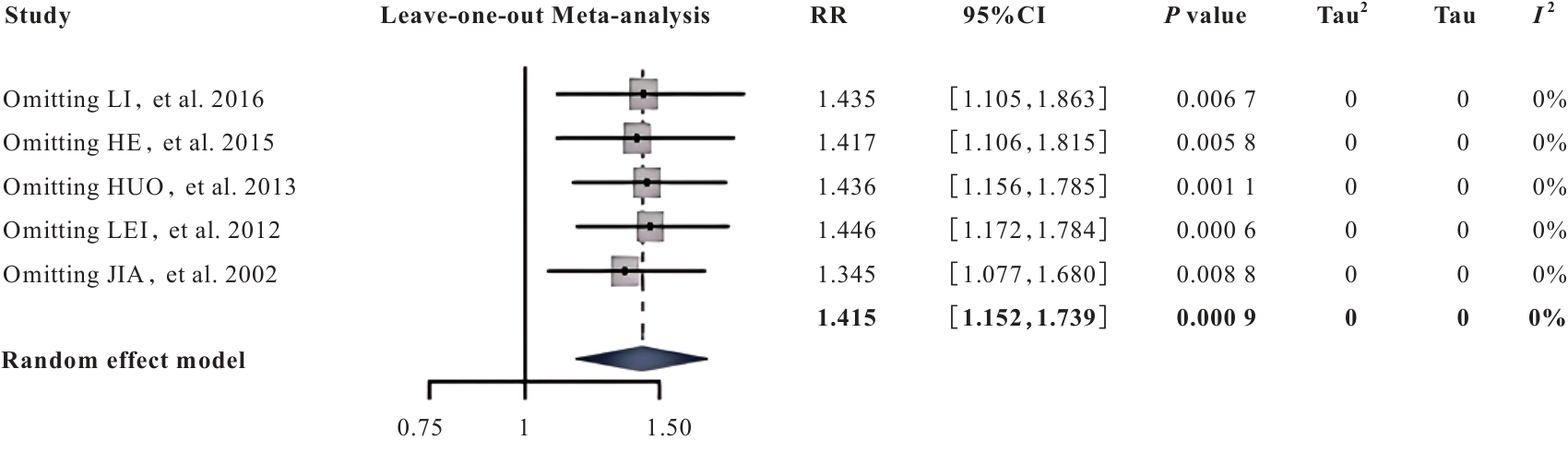
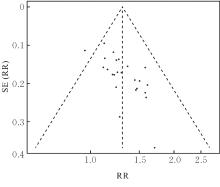
Fig. 22
Funnel plot of publication bias risk of studies on pleural effusion response rate"
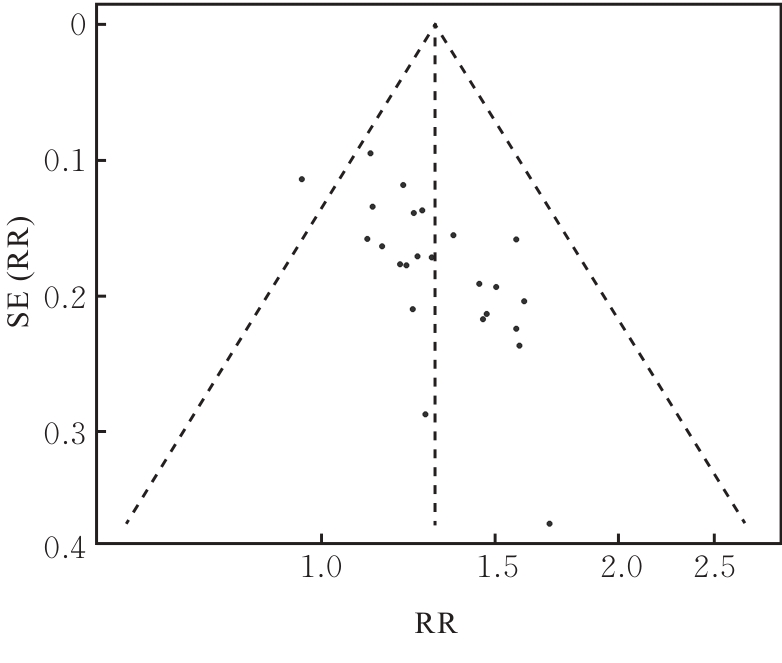
Fig. 23
Publication bias assessment of pleural effusion remission rates"
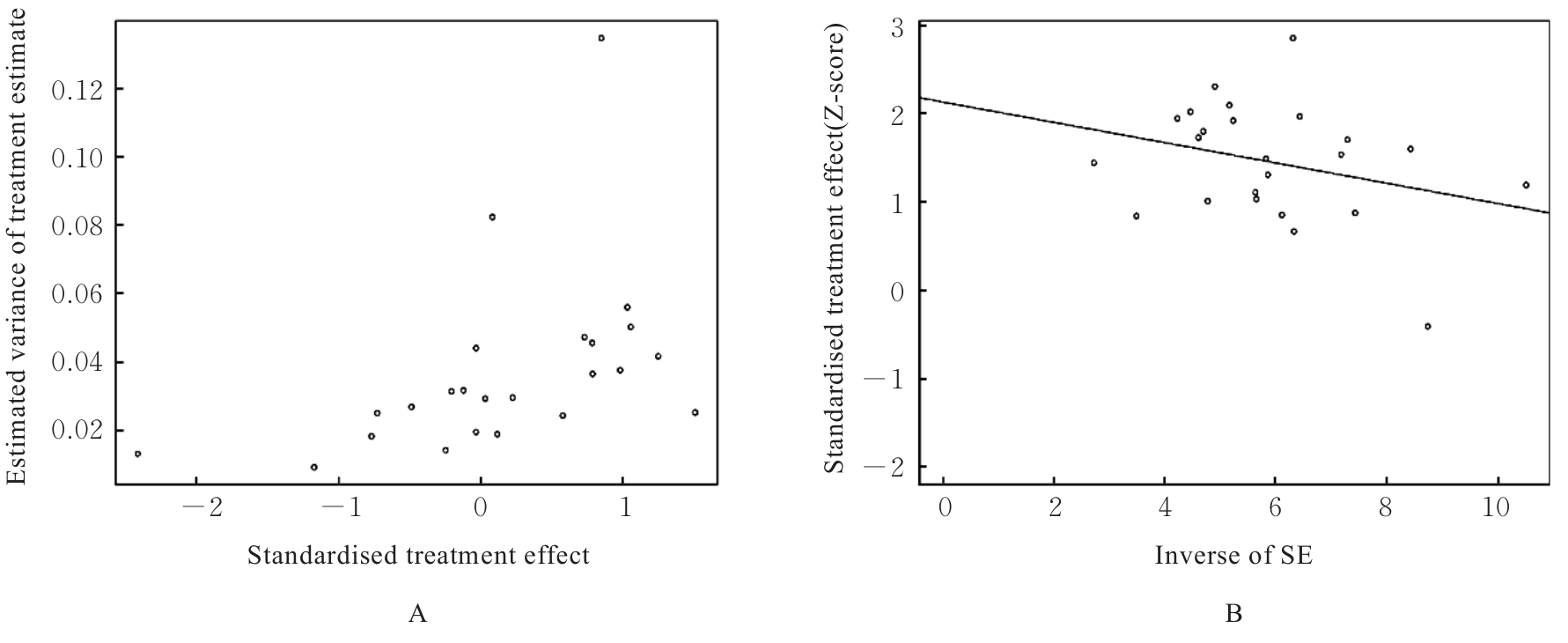
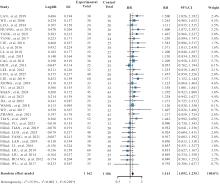
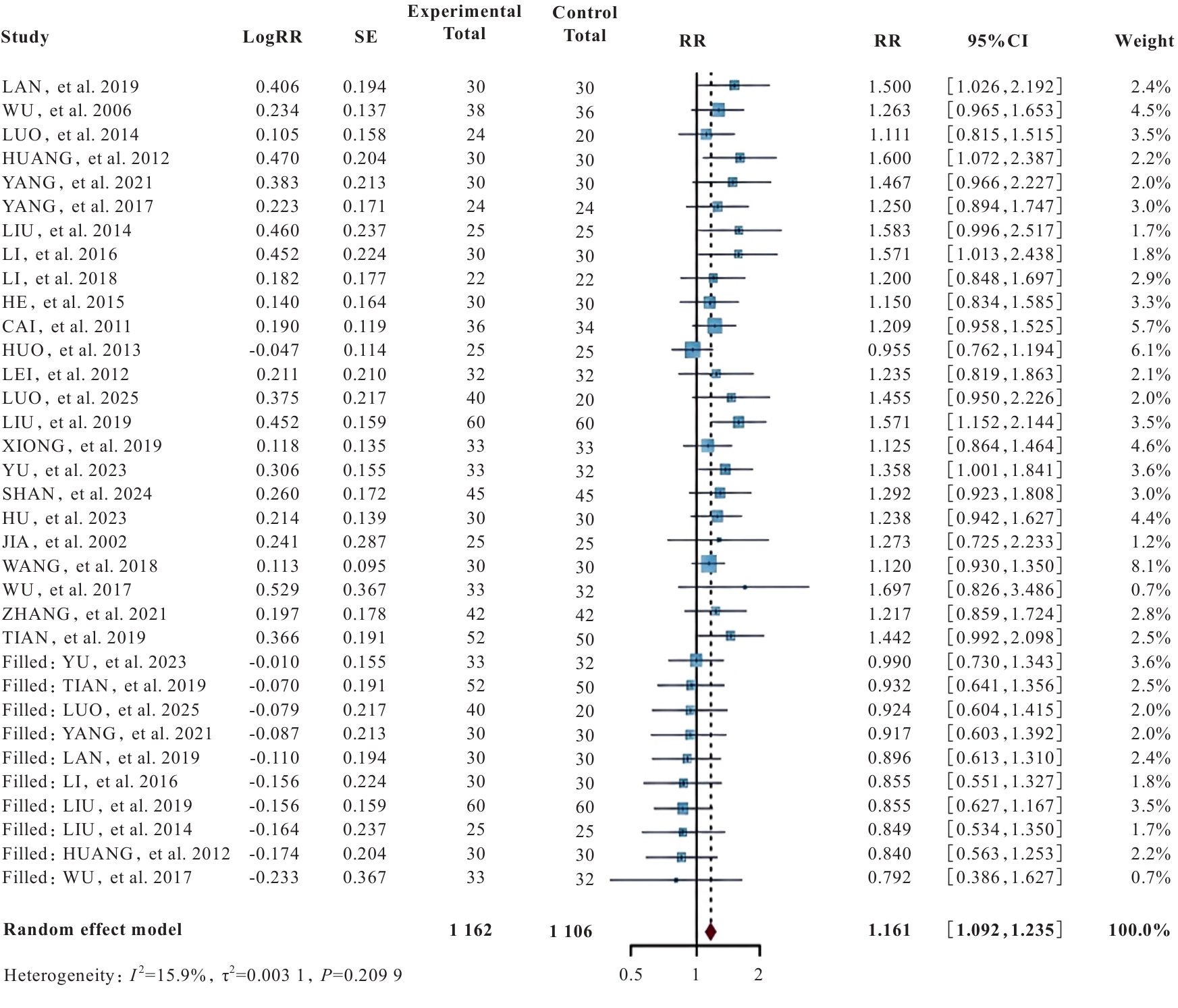
Fig. 24
Forest plot of pleural effusion response rates of patients after Trim-and-Fill imputation"
| [1] | BIBBY A C, DORN P, PSALLIDAS I, et al. ERS/EACTS statement on the management of malignant pleural effusions[J]. Eur J Cardiothorac Surg, 2019, 55(1): 116-132. |
| [2] | 中国恶性胸腔积液诊断与治疗专家共识组. 恶性胸腔积液诊断与治疗专家共识[J]. 中华内科杂志, 2014, 53(3): 252-256. |
| [3] | 阿格尔, 焦丽静, 周海伦, 等. 中医药治疗恶性胸腔积液的思考和实践[J]. 内蒙古医科大学学报, 2024, 46(1): 32-35. |
| [4] | 袁逸帆, 朱 睿, 龚亚斌, 等. 苓桂术甘汤加减内服联合消水贴外敷治疗肺癌合并胸腔积液的临床研究[J]. 上海中医药杂志, 2022, 56(2): 45-48. |
| [5] | 蓝 轶. 自拟中药方剂外敷治疗恶性胸腔积液临床疗效观察[J]. 临床合理用药杂志, 2019, 12(25): 45-46. |
| [6] | 吴孝田. 中药油膏外敷辅佐治疗恶性胸腔积液38例[J]. 陕西中医, 2006, 27(5): 546-547. |
| [7] | 罗银星, 张 影, 蔡小平. 中药穴位贴敷联合顺铂胸腔灌注治疗恶性胸腔积液随机平行对照研究[J]. 实用中医内科杂志, 2014, 28(7): 97-99. |
| [8] | 黄 琼. 中药外敷联合胸腔内化疗治疗肺癌恶性胸腔积液30例[J]. 浙江中医杂志, 2012, 47(2): 102. |
| [9] | 杨胜利, 赵家亮. 中药外敷联合顺铂胸腔注射治疗肺癌合并癌性胸水患者临床疗效及对生活质量的影响[J]. 湖北中医杂志, 2021, 43(10): 23-27. |
| [10] | 杨胜利, 颜昭君, 赵家亮. 中药外敷联合顺铂胸腔注射治疗癌性胸水临床观察[J]. 湖北中医杂志, 2017, 39(6): 35-36. |
| [11] | 刘匡飞, 刘 昆, 张 晶, 等. 中药外敷联合顺铂胸腔灌注治疗恶性胸腔积液临床观察[J]. 中国药业, 2014, 23(6): 71-72. |
| [12] | 黎壮伟, 邓 力, 周海平. 中药外敷联合榄香烯注射液胸腔灌注治疗恶性胸腔积液的临床研究[J]. 湖北中医杂志, 2016, 38(8): 10-11. |
| [13] | 李思旋, 唐洪屈, 夏 徐, 等. 中药外敷辅治非小细胞肺癌胸水临床研究[J]. 实用中医药杂志, 2018, 34(11): 1355-1356. |
| [14] | 何宁一, 洪月光. 中西医结合三位一体治疗恶性胸腔积液疗效观察[J]. 四川中医, 2015, 33(5): 96-97. |
| [15] | 刁哲欣, 胡永进, 刘进满. 中药悬饮贴膏佐治恶性胸腔积液的疗效观察[J]. 河北医药, 2011, 33(3): 449-450. |
| [16] | 考重燕. 胸腔灌注化疗联合中药外敷治疗恶性胸腔积液的观察和护理[J]. 中国医药指南, 2017, 15(22): 28-29. |
| [17] | 霍志刚, 武纪生, 魏玉芳, 等. 消水散外敷改善恶性胸腔积液患者生活质量的临床观察[J]. 环球中医药, 2013, 6(8): 615-617. |
| [18] | 雷秋娥, 熊忠太, 黄崇政. 消水扶正膏联合胸腔灌注治疗肺癌恶性胸水64例临床观察[J]. 成都医学院学报, 2012, 7(3S): 78-79. |
| [19] | 罗苑园, 徐 倩. 消水Ⅰ号方外敷治疗恶性胸腔积液的临床效果观察[J]. 现代医学与健康研究电子杂志, 2025, 9(16): 96-99. |
| [20] | 刘宝义. 消积逐水方外敷治疗恶性胸腔积液的临床疗效观察[J]. 中国医药指南, 2019, 17(6): 162. |
| [21] | 熊绍权, 李亚玲, 杨 扬, 等. 温阳逐水方外敷联合顺铂腔内灌注治疗恶性胸水的临床研究[J]. 辽宁中医杂志, 2019, 46(1): 90-92. |
| [22] | 余旭彪, 徐海虹, 赵佳丽, 等. 温阳通络逐水散穴位贴敷联合顺铂治疗肺癌并发恶性胸腔积液的临床观察及其对VEGF、 HIF-1α的影响[J]. 中国中医药科技, 2023(3): 488-490. |
| [23] | 单 兰, 宋芳蕾, 陈媛媛. 纳子法指导下金龙硝黄散择时外敷联合胸腔灌注治疗恶性胸腔积液的临床研究[J]. 中华养生保健, 2024, 42(17): 9-13. |
| [24] | 胡景春, 江小锋, 陈克秀, 等. 芒硝外敷联合体腔热灌注化疗治疗恶性胸腔积液的疗效观察[J]. 现代诊断与治疗, 2023, 34(7): 986-988. |
| [25] | 贾立群, 李佩文, 谭煌英, 等. 抗癌消水膏治疗恶性胸腔积液的临床研究[J]. 北京中医药大学学报, 2002, 25(4): 63-65. |
| [26] | 王 维, 李枋霏, 肖彩芝, 等. 攻癌利水散外敷联合重组人5型腺病毒注射液胸腔内灌注治疗肺癌恶性胸水的临床疗效[J]. 中国老年学杂志, 2018, 38(21): 5184-5186. |
| [27] | WU F Z, LIU M, LOU Y N, et al. A randomized controlled study to observe the efficacy of external treatment with a traditional Chinese medicine herbal ointment on malignant plural effusion: outcome report and design review[J]. Integr Cancer Ther, 2017, 16(4): 473-478. |
| [28] | ZHANG H C, JIANG M Y, GAO L R, et al. The clinical efficacy of external application of mirabilite and rhubarb combined with intrathoracic chemotherapy in treating malignant pleural effusion: a prospective, randomized, controlled clinical trial[J]. Medicine, 2021, 100(7): e24758. |
| [29] | TIAN A P, YIN Y K, YU L, et al. Low-frequency sonophoresis of Chinese medicine formula improves efficacy of malignant pleural effusion treatment[J]. Chin J Integr Med, 2020, 26(4): 263-269. |
| [30] | 中国健康促进与教育协会, 中国抗癌协会癌症康复与姑息治疗专业委员会. 肺癌合并恶性胸腔积液诊疗专家共识[J]. 中华肿瘤杂志, 2024, 46(1): 40-47. |
| [31] | 中华医学会呼吸病学分会. 恶性胸腔积液治疗的中国专家共识(2023年版)[J]. 中华结核和呼吸杂志, 2023, 46(12): 1189-1203. |
| [32] | 周鸿飞, 范涛点校. 黄帝内经素问[M]. 郑州: 河南科学技术出版社, 2017: 42. |
| [33] | 徐成贺. 金匮要略[M]. 郑州: 河南科学技术出版社, 2019: 221-222. |
| [34] | 石 岩. 中医内科学[M]. 2版. 北京: 科学出版社, 2022: 334. |
| [35] | 杨 君, 周立江, 高 宏, 等. 中医外治法治疗恶性肿瘤胸腔积液的疗效及安全性系统评价[J]. 天津中医药大学学报, 2018, 37(6): 483-487. |
| [1] | Zhongyu GAO,Dan DANG,Chuan ZHANG,Bingbing ZOU,Chenghao WU,Jiaxu YANG,Hui WU. Effect of oral DHA and ARA supplementation on necrotizing enterocolitis in preterm infants: A Meta-analysis [J]. Journal of Jilin University(Medicine Edition), 2026, 52(4): 1077-1085. |
| [2] | Boya ZHAO,Yaojian WANG,Yaxin GUO,Luying CHEN,Yingzi TAN,Yuerong JIANG. Meta-analysis on efficacy and safety of sacubitril/valsartan combined with dapagliflozin in treatment of heart failure with preserved ejection fraction [J]. Journal of Jilin University(Medicine Edition), 2026, 52(4): 1096-1107. |
| [3] | Geer A,Qin WANG,Lijing JIAO,Hailun ZHOU,Shanshan GAN,Yang HAN,Ruichao LIU,Yabin GONG. Research progress in effects of CD4+T cell-mediated immune tolerance on occurrence and development of malignant pleural effusion [J]. Journal of Jilin University(Medicine Edition), 2025, 51(4): 1121-1128. |
| [4] | Yinxia TAI,Han ZHANG,Lei YU,Xianchun ZHU. Changes in levels of inflammatory factors in gingival crevicular fluid of patients with periodontal disease before and after invisible appliance:A Meta-analysis [J]. Journal of Jilin University(Medicine Edition), 2025, 51(1): 182-190. |
| [5] | Peng QI,Xianying MENG,Meihua PIAO,Qiang ZHANG. Network Meta-analysis on risk factors of recurrence of papillary thyroid microcarcinoma [J]. Journal of Jilin University(Medicine Edition), 2023, 49(6): 1504-1512. |
| [6] | Guangcai WAN,Hongshuai SUN,Hua ZHU,Xiuyan YU. Effect of NLR and PLR on prognosis of small-cell lung cancer patients received platinum-based first-line chemotherapy: A Meta-analysis [J]. Journal of Jilin University(Medicine Edition), 2021, 47(5): 1264-1272. |
| [7] | Yuan ZHAO, Dayong LIU, Yong TIAN, Dabing BAI. Effect of Carisolv chemomechanical method in treatment of deciduous tooth caries: A Meta-analysis [J]. Journal of Jilin University(Medicine Edition), 2021, 47(3): 694-700. |
| [8] | Guangcai WAN,Hongshuai SUN,Hua ZHU,Xiuyan YU. Meta-analysis on relationship between neutrophil/lymphocyte ratio and prognosis of patients with non-small cell lung cancer treated with EGFR-TKIs [J]. Journal of Jilin University(Medicine Edition), 2020, 46(6): 1267-1273. |
| [9] | YU Xiuyan, WAN Guangcai, SUN Hongshuai, ZHU Hua, GAO Haiyan, WU Xuefeng. Relationship between fibrinogen and prognosis of breast cancer patients:A Meta-analysis [J]. Journal of Jilin University(Medicine Edition), 2019, 45(05): 1092-1097. |
| [10] | ZHENG Taijing, BAI Yuanliang, ZHENG Jiawen, LIU Honghong, GUO Zijun, WANG Ping. Efficacies of clarithromycin and metronidazole in treatment of chronic periodontitis: A Meta-analysis [J]. Journal of Jilin University(Medicine Edition), 2019, 45(01): 130-136. |
| [11] | LU Mingyue, LI Jing. Relationships between expression of IGF-1 in cancer tissue of gastric cancer patients and clinicopathological parameters in China: A Meta-analysis [J]. Journal of Jilin University(Medicine Edition), 2019, 45(01): 137-142. |
| [12] | QI Lu, BAI Wei, YU Weiying, LI Yuanyuan, HUA Wanqing, KOU Changgui. Randomized controlled trials for curative effect of saxagliptin combined with insulin in treatment of patients with type 2 diabetes mellitus: Meta-analysis [J]. Journal of Jilin University(Medicine Edition), 2018, 44(06): 1235-1242. |
| [13] | NIU Huikun, QU Yangming, LI Meiqi, LI Lu, LYU Xin, SONG Yuanyuan, GAO Chunshi, LI Bo. Meta-analysis on efficacy and adverse effects of neoadjuvant chemotherapy combined with capecitabine in treatment of breast cancer [J]. Journal of Jilin University Medicine Edition, 2017, 43(06): 1171-1176. |
| [14] | YAO Yanan, YAO Hua, YAN Duoduo, LYU Kejia, GONG Lijun, WANG Guohua. Meta-analysis on correlation between oral lichen planus and Candida albicans infection [J]. Journal of Jilin University Medicine Edition, 2017, 43(05): 967-974. |
| [15] | NIU Meng, DENG Dayong, LI Yunpengfei, LIU Shuo, DING Jun. Values of MRE in diagnosis of stages of hepatic fibrosis:A Meta-analysis [J]. Journal of Jilin University Medicine Edition, 2017, 43(04): 787-793. |
|
||