吉林大学学报(工学版) ›› 2026, Vol. 56 ›› Issue (2): 431-442.doi: 10.13229/j.cnki.jdxbgxb.20240783
• 交通运输工程·土木工程 • 上一篇
快速路互通交织区超车换道行为控制方法
马健霄( ),怀硕,赵顗(),李铭浩,陈雨欣,赵思雨
- 南京林业大学 汽车与交通工程学院,南京 210037
Behavior control method of overtaking lane-changing in expressway interchanging weaving area
Jian-xiao MA(),Shuo HUAI,Yi ZHAO(),Ming-hao LI,Yu-xin CHEN,Si-yu ZHAO
- College of Automobile and Traffic Engineering,Nanjing Forestry University,Nanjing 210037,China
摘要:
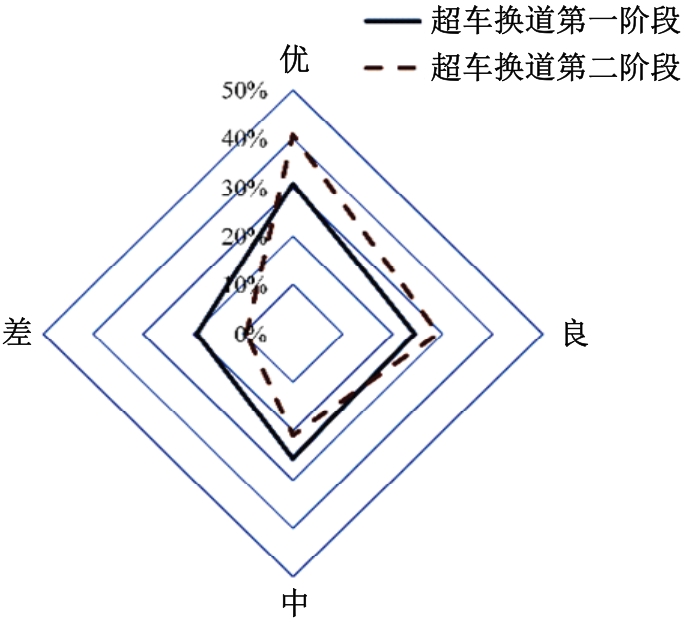
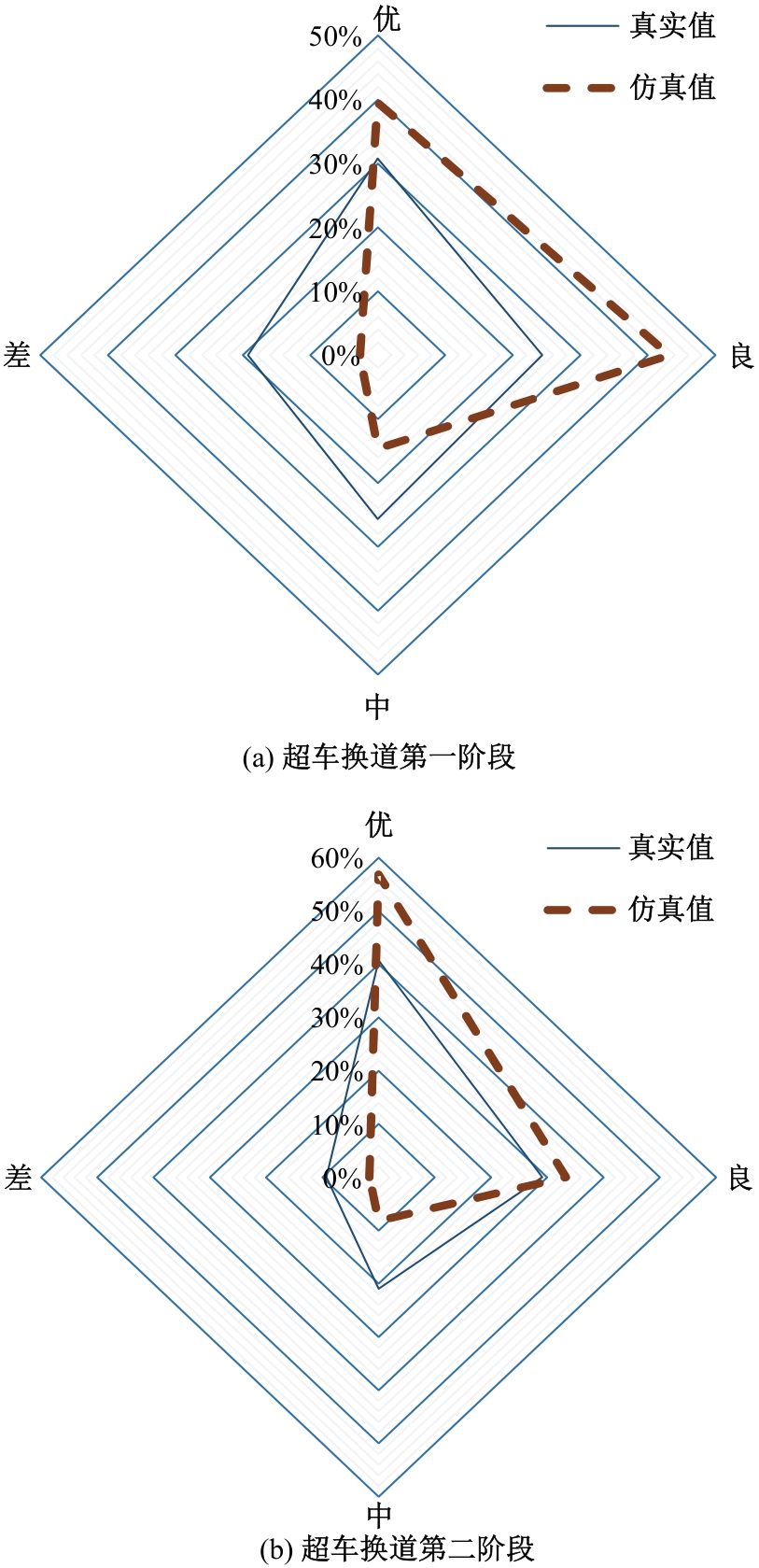
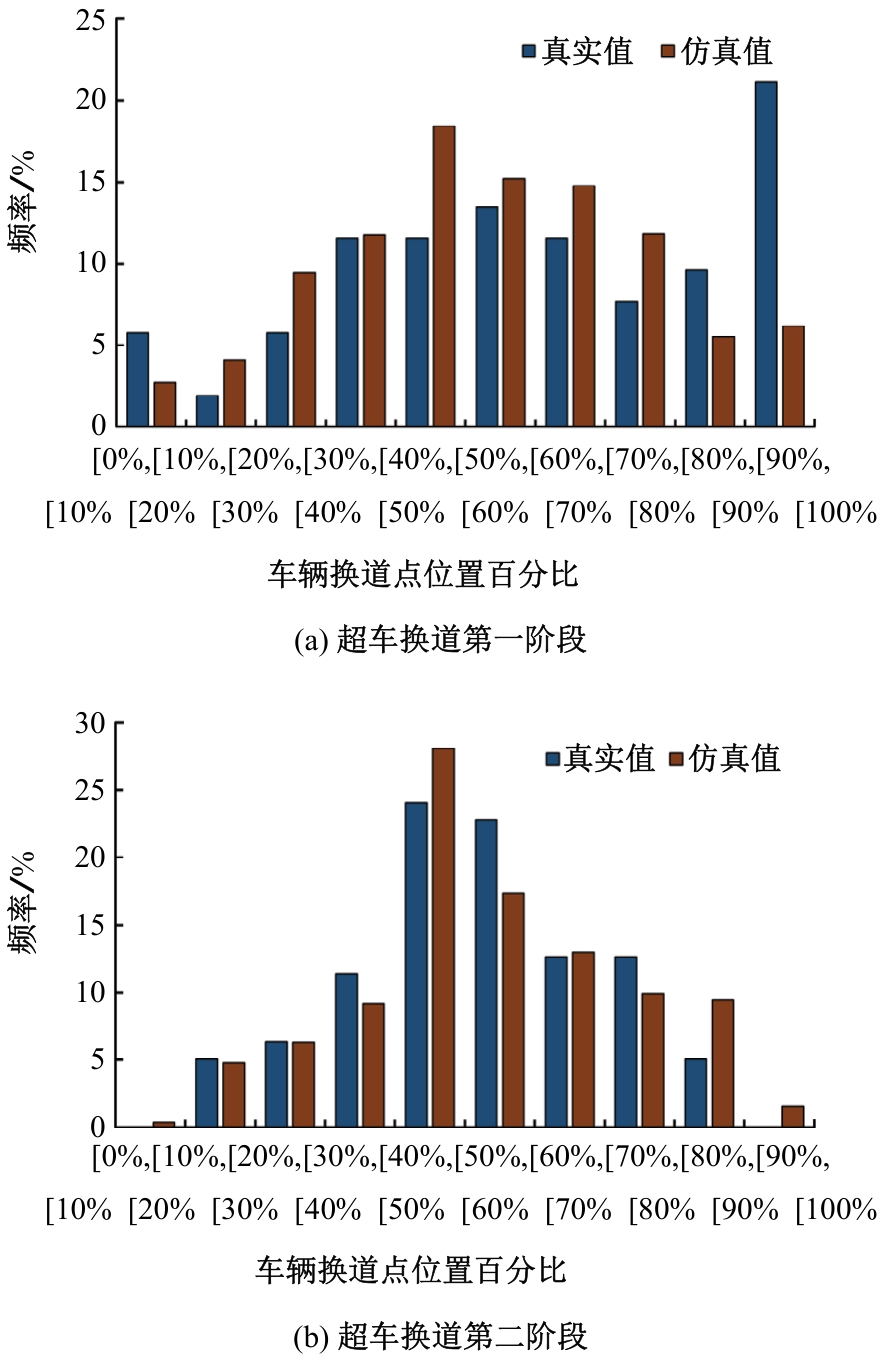
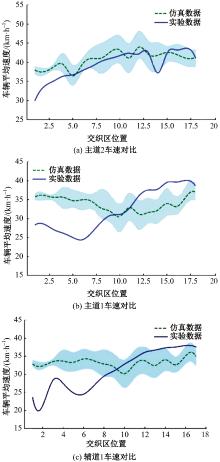
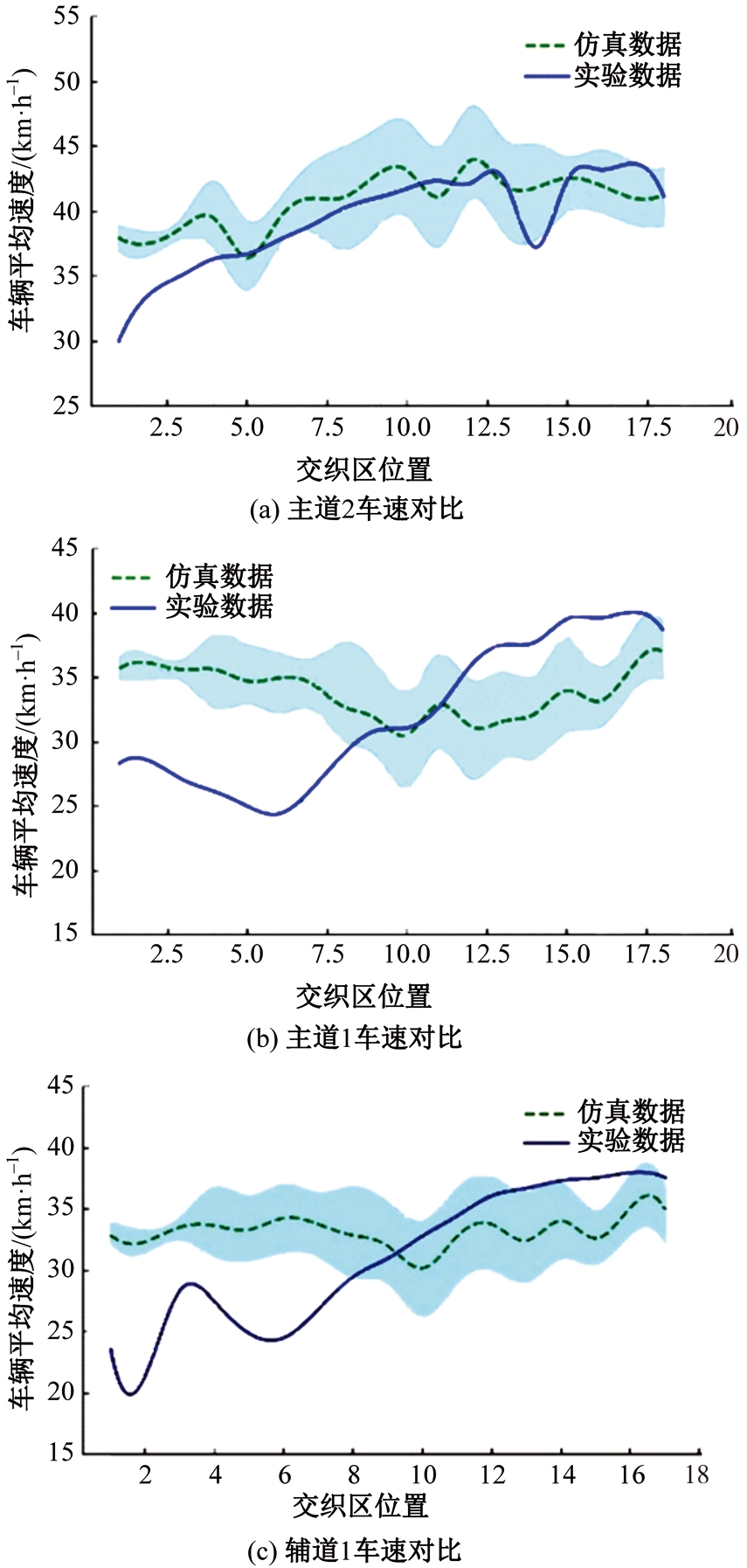
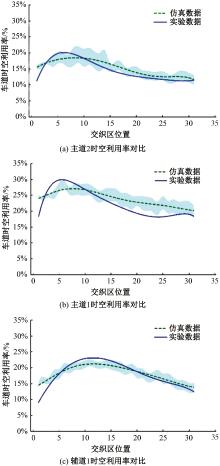
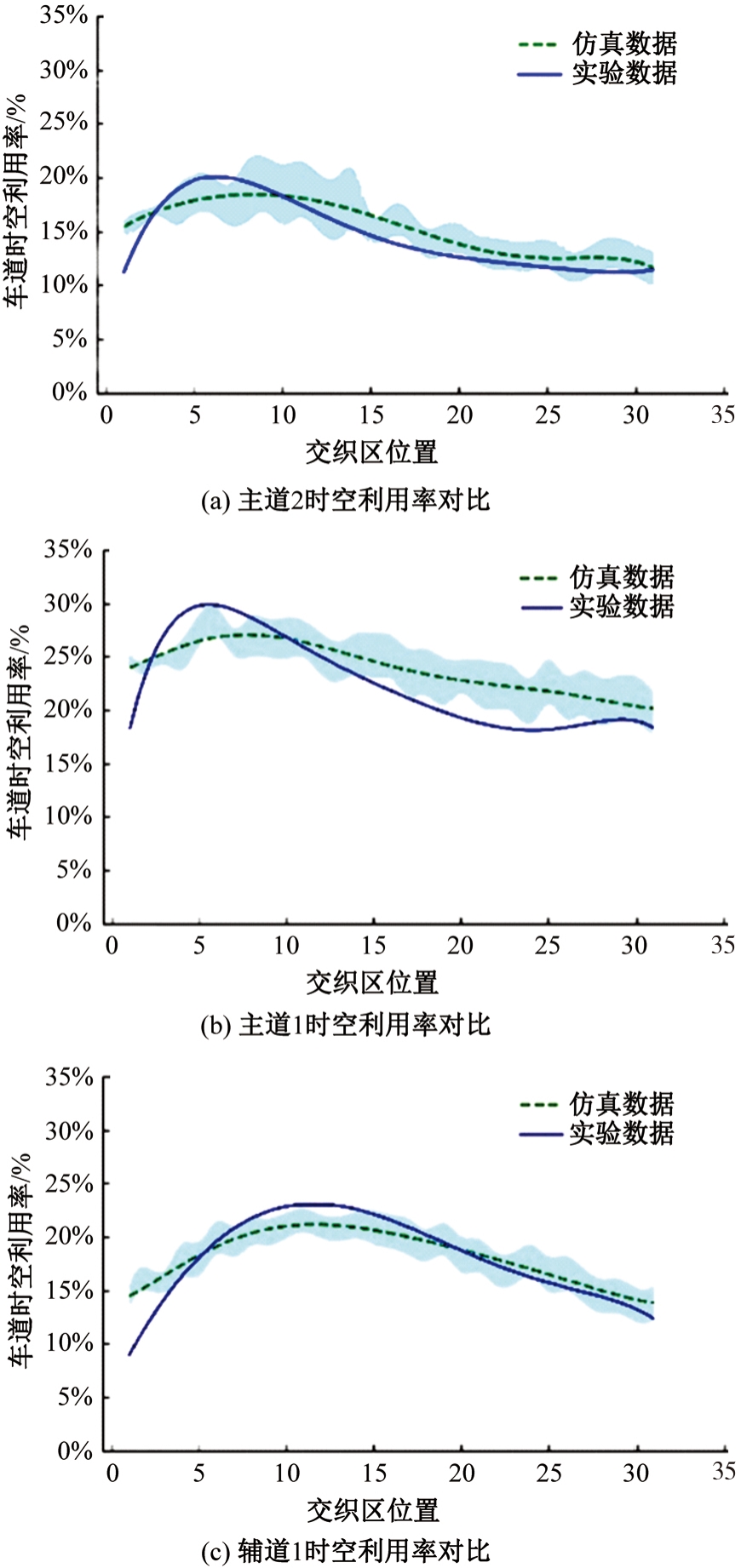
本文聚焦快速路互通交织区的超车换道行为,旨在分析超车换道车辆对换道空间的选择特征并探索超车换道行为的控制方法。通过实时的轨迹数据提取,分析超车换道车辆不同阶段的间隙选择和换道点选择的差异性。依托机器学习的方法对换道持续时间和换道空间选择变化进行了预测,并基于预测结果建立了超车换道行为速度优化控制模型,利用元胞自动机仿真环境对模型控制效果进行了检验。结果表明:控制模型下车辆选择“优”“良”等级换道间隙和最佳换道点位置的比例相比实际值最高可分别提升18.86和6.89个百分点。同时,控制模型下交织区三条车道的运行速度可分别提升6.91%、1.71%和3.85%,且各车道的时空利用率也具有更好的均衡性。
中图分类号:
- U491

| [1] | Moridpour S, Sarvi M, Rose G. Lane changing models: a critical review[J]. Transportation Letters, 2010, 2(3): 157-173. |
| [2] | 耿新力. 城区不确定环境下无人驾驶车辆行为决策方法研究[D]. 合肥: 中国科学技术大学信息科学技术学院,2017. |
| Geng Xin-li. Research on behavior decision-making approaches for autonomous vehicle in urban uncertainty environments[D]. Hefei: School of Information Science and Technology,University of Science and Technology of China, 2017. | |
| [3] | 张航, 段和柱, 储泽宇. 城市快速路互通立交交织区长度可靠性设计[J]. 重庆交通大学学报: 自然科学版, 2023, 42(3): 98-104. |
| Zhang Hang, Duan He-zhu, Chu Ze-yu. Reliability design of weaving segment length of urban expressway interchange[J]. Journal of Chongqing Jiaotong University (Natural Science),2013, 42(3): 98-104. | |
| [4] | 陈亮, 何志超, 李巧茹, 等. 多车道城市快速路交织区拥堵形成机制[J]. 中国安全科学学报, 2018, 28(6): 73-78. |
| Chen Liang, He Zhi-chao, Li Qiao-ru, et al. Study on congestion mechanism in multi-lane weaving section of urban expressway[J]. China Safety Science Journal, 2018, 28(6): 73-78. | |
| [5] | 李岩, 陈姜会, 曾明哲, 等. 考虑天气影响的高速公路交织区交通运行状态识别[J]. 交通运输系统工程与信息, 2023, 23(6): 111-119. |
| Li Yan, Chen Jiang-hui, Zeng Ming-zhe, et al. Identification of traffic operation status in freeway weaving segments considering weather effects[J]. Journal of Transportation Systems Engineering and Information Technology, 2023, 23(6): 111-119. | |
| [6] | 张卫华, 刘嘉茗, 解立鹏, 等. 混合网联环境快速路交织区交通流特性分析[J]. 东南大学学报: 自然科学版, 2023, 53(1): 156-164. |
| Zhang Wei-hua, Liu Jia-ming, Xie Li-peng, et al. Analysis on the characteristics of traffic flow in expressway weaving area under mixed connected and autonomous environment[J]. Journal of Southeast University (Natural Science Edition), 2023, 53(1): 156-164. | |
| [7] | Wang L, Abdel-Aty M, Shi Q, et al. Real-time crash prediction for expressway weaving segments[J]. Transportation Research Part C: Emerging Technologies, 2015, 61: 1-10. |
| [8] | 谢济铭, 夏玉兰, 钱正富, 等. 考虑智能网联近邻车辆信息的交织区换道风险预警[J]. 交通运输工程学报, 2023, 23(2): 287-300. |
| Xie Ji-ming, Xia Yu-lan, Qian Zheng-fu, et al. Lane-change risk warning in interweaving area considering information from intelligent connected near-neighboring vehicles[J]. Journal of Traffic and Transportation Engineering, 2023, 23(2):287-300. | |
| [9] | 彭博, 王玉婷, 谢济铭, 等. 城市干线短交织区元胞自动机多级换道决策模型[J]. 交通运输系统工程与信息,2020,20(4):41-48. |
| Peng Bo, Wang Yu-ting, Xie Ji-ming, et al. Multi-stage lane changing decision model of urban trunk road's short weaving area based on cellular automata[J]. Journal of Transportation Systems Engineering and Information Technology, 2020, 20(4): 41-48. | |
| [10] | Zhao C W, Zhao Y, Wang Z Q, et al. Choice of lane-changing point in an urban intertunnel weaving section based on random forest and support vector machine[J]. Promet-Traffic & Transportation, 2023, 35(2): 161-174. |
| [11] | Li M H, Zhao Y, Ma J X, et al. A study on the impact of overtaking lane-changing behavior in expressway interchange weaving areas[J]. Promet-Traffic & Transportation, 2024, 36(5): 973-987. |
| [12] | 李珣, 马文哲, 赵征凡, 等. 车路协同下基于行车指引的改进STCA双车道换道模型[J]. 东南大学学报:自然科学版, 2020, 50(6): 1134-1142. |
| Li Xun, Ma Wen-zhe, Zhao Zheng-fan, et al. Improved STCA lane changing model for two-lane road based on driving guidance under CVIS[J]. Journal of Southeast University (Natural Science Edition), 2020, 50(6): 1134-1142. | |
| [13] | Zhou Z, Zhao Y, Li M H, et al. A causal inference-based speed control framework for discretionary lane-changing processes[J]. Journal of Transportation Engineering Part A—Systems, 2023, 49(8): 1-26. |
| [14] | Yang D, Zheng S, Wen C, et al. A dynamic lane-changing trajectory planning model for automated vehicles[J]. Transportation Research Part C: Emerging Technologies, 2018, 95: 228-247. |
| [15] | 吕伟, 黄广琛, 汪京辉. 基于元胞自动机的高速公路瓶颈交通演化仿真[J]. 交通运输系统工程与信息, 2022, 22(3): 293-302. |
| Lv Wei, Huang Guang-chen, Wang Jing-hui. Simulation of highway traffic bottleneck via cellular automata[J]. Journal of Transportation Systems Engineering and Information Technology, 2022, 22(3): 293-302. | |
| [16] | 张毅, 姚丹亚, 李力, 等. 智能车路协同系统关键技术与应用[J]. 交通运输系统工程与信息, 2021, 21(5): 40-51. |
| Zhang Yi, Yao Dan-ya, Li Li, et al. Technologies and applications for intelligent vehicle-infrastructure cooperation systems[J]. Journal of Transportation Systems Engineering and Information Technology, 2021, 21(5): 40-51. | |
| [17] | 黄玲, 郭亨聪, 张荣辉, 等. 人机混驾环境下基于LSTM的无人驾驶车辆换道行为模型[J]. 中国公路学报, 2020, 33(7): 156-166. |
| Huang Ling, Guo Heng-cong, Zhang Rong-hui, et al. LSTM-based lane changing behavior model for unmanned vehicle under environment of heterogeneous human-driven and autonomous vehicles[J]. China Journal of Highway and Transport, 2020, 33(7): 156-166. | |
| [18] | Luo Y, Xiang Y, Cao K, et al. A dynamic automated lane change maneuver based on vehicle-to-vehicle communication[J]. Transportation Research Part C: Emerging Technologies, 2016, 62: 87-102. |
| [19] | 曲大义, 黑凯先, 郭海兵, 等. 车联网环境下车辆换道博弈行为及模型[J]. 吉林大学学报: 工学版, 2022, 52(1): 101-109. |
| Qu Da-yi, Kai-xian Hei, Guo Hai-bing, et al. Game behavior and model of lane-changing on the internet of vehicles environment[J]. Journal of Jilin University (Engineering and Technology Edition), 2022,52(1): 101-109. | |
| [20] | Wu Y, Abdel-Aty M, Zheng O, et al. Automated safety diagnosis based on unmanned aerial vehicle video and deep learning algorithm[J]. Transportation Research Record, 2020, 2674(8): 350-359. |
| [21] | 王祺, 谢娜, 侯德藻, 等. 自适应巡航及协同式巡航对交通流的影响分析[J].中国公路学报, 2019, 32(6): 188-197. |
| Wang Qi, Xie Na, Hou De-zao, et al. Effects of adaptive cruise control and cooperative adaptive cruise control on traffic flow[J]. China Journal of Highway and Transport, 2019, 32(6): 188-197. |
| [1] | 贾洪飞,庄博,罗清玉,刘玲,黄秋阳. 积水条件下城市路网性能恢复决策优化[J]. 吉林大学学报(工学版), 2025, 55(9): 2969-2977. |
| [2] | 姚荣涵,祁文彦,胡宏宇,杜筱婧,乔延峰,王立冰. 考虑公交-合乘车道的多车道元胞自动机模型[J]. 吉林大学学报(工学版), 2025, 55(1): 162-174. |
| [3] | 杨秀建,贾晓寒,张生斌. 考虑汽车队列动态特性的混合交通流特性[J]. 吉林大学学报(工学版), 2024, 54(4): 947-958. |
| [4] | 邝先验,陈自如. 基于CA的无信号灯控制路段行人过街横道处动态博弈礼让行为[J]. 吉林大学学报(工学版), 2022, 52(4): 837-846. |
| [5] | 王金国,黄恺,闫瑞芳,任帅,王志强,郭劲. 元胞自动机-有限元法模拟碳当量元素对亚共晶球墨铸铁流动性的影响[J]. 吉林大学学报(工学版), 2021, 51(3): 855-865. |
| [6] | 苏书杰, 何露. 步行交通规划交叉路口行人瞬时动态拥塞疏散模型[J]. 吉林大学学报(工学版), 2018, 48(2): 440-447. |
| [7] | 魏丽英, 崔裕枫, 魏家蓉. 基于局部最大熵换道规则的电动自行车流元胞自动机仿真模型[J]. 吉林大学学报(工学版), 2017, 47(5): 1436-1445. |
| [8] | 魏丽英, 吴荣华, 王志龙, 朱建辉. 基于混合交通流的车辆换道行为[J]. 吉林大学学报(工学版), 2014, 44(5): 1321-1326. |
| [9] | 敬明, 邓卫, 季彦婕, 王昊. 更新步长和元胞尺寸对元胞自动机模型的影响[J]. 吉林大学学报(工学版), 2013, 43(02): 310-316. |
| [10] | 刘小明, 王力. 考虑路内停车的元胞自动机交通流模型[J]. 吉林大学学报(工学版), 2012, 42(02): 327-333. |
| [11] | 魏丽英,应力天. 基于元胞自动机的自行车交通流仿真建模[J]. 吉林大学学报(工学版), 2011, 41(01): 51-0055. |
| [12] | 庄倩,贾斌,李新刚. 考虑从众效应的入匝道系统建模与模拟[J]. 吉林大学学报(工学版), 2009, 39(增刊2): 52-0057. |
| [13] | 丁建勋,黄海军,唐铁桥. 交通流元胞自动机模型中慢化行为[J]. 吉林大学学报(工学版), 2009, 39(增刊2): 66-0070. |
| [14] | 丁中俊,汪秉宏. 有无信号灯控制的T形交叉口元胞自动机模型比较[J]. 吉林大学学报(工学版), 2009, 39(增刊2): 83-0086. |
|
||