吉林大学学报(工学版) ›› 2025, Vol. 55 ›› Issue (4): 1232-1240.doi: 10.13229/j.cnki.jdxbgxb.20230673
城市公共汽车全生命周期碳排放测算
张文会( ),付博,周舸,乔晓田
- 东北林业大学 土木与交通学院,哈尔滨 150040
Carbon emissions calculation for urban buses throughout lifecycles
Wen-hui ZHANG(),Bo FU,Ge ZHOU,Xiao-tian QIAO
- School of Civil Engineering and Transportation,Northeast Forestry University,Harbin 150040,China
摘要:
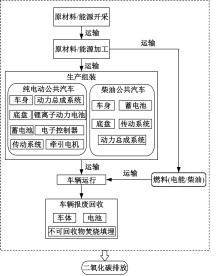
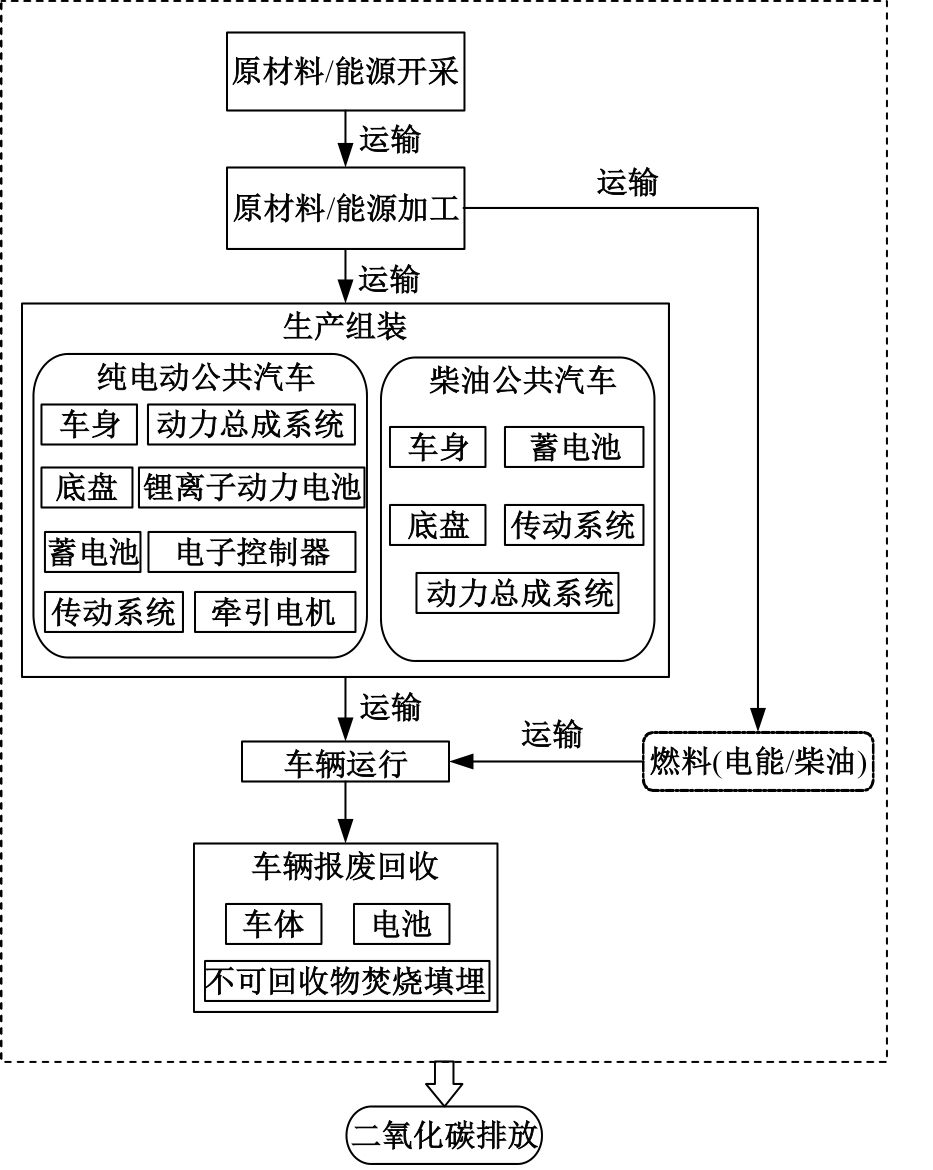
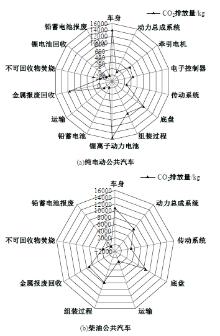
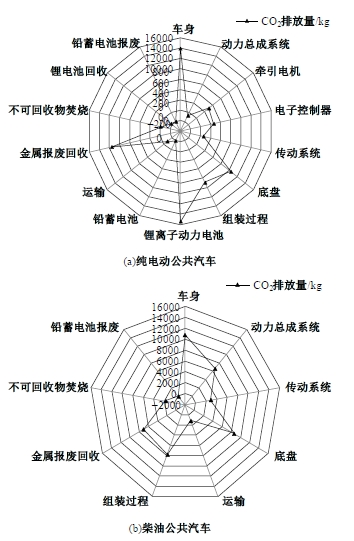
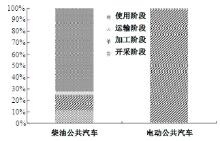
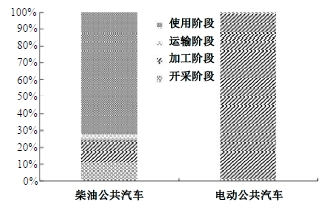
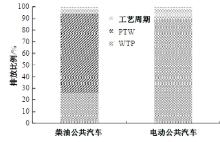
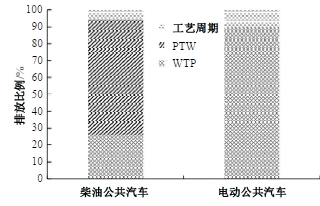
为了测算城市公共汽车生命周期中各阶段的碳排放量,将公共汽车的生命周期划分为工艺周期与能源周期。考虑各系统生产制造、组装、运输、报废回收阶段,调研获取城市公共汽车的结构参数,综合公交企业提供的运营数据,使用GREET内部数据和Gabi软件对工艺周期CO2排放量进行测算。构建包含能源开采、生产加工、运输、使用阶段的CO2排放测算模型,分别对纯电动公共汽车和柴油公共汽车的能源周期CO2排放量进行测算。结果表明:在工艺周期,纯电动公共汽车CO2排放量比柴油公共汽车高39.2%;在能源周期,纯电动公共汽车CO2排放量比柴油公共汽车低14.2%;综合全生命周期,纯电动公共汽车CO2排放比柴油公共汽车低9.73%。
中图分类号:
- U491

| [1] | 肖红, 邓梓浩, 任艳娟, 等. 城市交通运输碳排放预测模型及碳减排策略[J]. 重庆交通大学学报: 自然科学版, 2023, 42(9): 85-92, 98. |
| Xiao Hong, Deng Zi-hao, Ren Yan-juan, et al. Urban transportation carbon emission prediction model strategies[J]. Journal of Chongqing Jiaotong University (Natural Science), 2023, 42(9): 85-92, 98. | |
| [2] | Bieker G. A global comparison of the life-cycle greenhouse gas emissions of combustion engine and electric passenger cars[J]. Washington D.C.: Communications, 2021, 49(30): 847129-102. |
| [3] | Wong E Y C, Ho D C K, So S, et al. Life cycle assessment of electric vehicles and hydrogen fuel cell vehicles using the greet model—a comparative study[J]. Sustainability, 2021, 13(9): 4872. |
| [4] | 王雪然, 刘文峰, 张龙文, 等. 基于能源链的纯电动公交车全生命周期CO2减排效果研究[J]. 交通运输系统工程与信息, 2019, 19(1): 19-25. |
| Wang Xue-ran, Liu Wen-feng, Zhang Long-wen, et al. CO2 emission reduction effect of electric bus based on energy chain in life cycle[J]. Journal of Transportation Systems Engineering and Information Technology,2019(1): 19-25. | |
| [5] | 宋大凤, 吴西涛, 曾小华, 等. 基于理论油耗模型的轻混重卡全生命周期成本分析[J]. 吉林大学学报: 工学版, 2018, 48(5): 1313-1323. |
| Song Da-feng, Wu Xi-tao, Zeng Xiao-hua, et al. Life cycle cost analysis of mild hybrid heavy truck based on theoretical fuel consumption mode[J]. Journal of Jilin University (Engineering and Technology Edition), 2018, 48(5): 1313-1323. | |
| [6] | 王童, 杜轶群, 陈轶嵩, 等. 基于结构轻量化的城市客车车身生命周期评价[J]. 汽车工程, 2022, 44(5):778-788. |
| Wang Tong, Du Yi-qun, Chen Yi-song, et al. Life cycle assessment of city bus body based on structural lightweighting[J]. Automotive Engineering, 2022(5): 778-788. | |
| [7] | 田成诗, 张诗雅. 中国行业供应链碳足迹的来源分解分析——基于投入产出的生命周期评价模型[J]. 环境经济研究, 2019, 4(2): 58-75. |
| Tian Cheng-shi, Zhang Shi-ya. Source decomposition analysis of carbon footprint in China's industry supply chain: based on IO-LCA model[J]. Journal of Environmental Economics, 2019, 4(2): 58-75. | |
| [8] | Harris A, Soban D, Smyth B M, et al. Assessing life cycle impacts and the risk and uncertainty of alternative bus technologies[J]. Renewable and Sustainable Energy Reviews, 2018, 97: 569-579. |
| [9] | Chang C C, Liao Y T, Chang Y W. Life cycle assessment of alternative energy types-including hydrogen-for public city buses in Taiwan[J]. International Journal of Hydrogen Energy, 2019, 44(33): 18472-18482. |
| [10] | Ferrao P, Nhambiu J. A comparison between conventional LCA and hybrid EIO-LCA: analyzing crystal giftware contribution to global warming potential[M]∥Handbook of Input-Output Economics in Industrial Ecology,Dordrecht: Springer Netherlands, 2009: 219-230. |
| [11] | 余大立, 张洪申. 纯电动与柴油货车全生命周期能耗及排放分析[J]. 环境科学学报, 2019, 39(6): 2043-2052. |
| Yu Da-li, Zhang Hong-shen, The life cycle analysis of energy consumption and emission of pure electric van and diesel van[J]. Acta Scientiae Circumstantiae, 2019(6): 2043-2052. | |
| [12] | 丁舟波, 李彬, 牛继高, 等. 电动汽车燃料生命周期评价研究[J]. 森林工程, 2017, 33(6): 56-59, 66. |
| Ding Zhou-bo, Li Bin, Niu Ji-gao, et al. Research on life cycle assessment of electric vehicle fuel[J]. Forest Engineering, 2017, 33(6): 56-59, 66. | |
| [13] | 施羽, 张华, 于智涵. 电动汽车全生命周期节能减排效益分析及环境影响评价[J]. 资源与产业, 2021,23(2): 100-109. |
| Shi Yu, Zhang Hua, Yu Zhi-han. Energy-saving benefits and environment impacts of electric vehicles lifecycle[J]. Resources & Industries, 2021(2): 100-109. | |
| [14] | 李娟, 杨沿平, 陈轶嵩. 铝合金与铸铁缸盖的生命周期评价对比分析[J]. 环境工程学报, 2015, 9(11):5642-5648. |
| Li Juan, Yang Yan-ping, Chen Yi-song. Comparative analysis on life cycle assessment between aluminum alloy and cast iron cylinder cover[J]. Chinese Journal of Environmental Engineering, 2015(11): 5642-5648. | |
| [15] | 张雷, 刘志峰, 王进京. 电动与内燃机汽车的动力系统生命周期环境影响对比分析[J]. 环境科学学报,2013, 33(3): 931-940. |
| Zhang Lei, Liu Zhi-feng, Wang Jin-jing. Comparative analysis of life cycle environmental impact between power system of electric and internal combustion engine vehicles[J]. Acta Scientiae Circumstantiae. 2013(3): 931-940. | |
| [16] | 程冬茹. 汽柴油全生命周期碳排放计算[D]. 北京: 中国石油大学化学工程与环境学院, 2016. |
| Cheng Dong-ru. Carbon emissions calculation of gasoline and diesel fuel based on life cycle assessment[D]. Beijing: College of Chemical Engineering and Environment, China University of Petroleum, 2016. | |
| [17] | 欧训民, 张希良. 中国终端能源的全生命周期化石能耗及碳强度分析[J]. 中国软科学, 2009(): 208-214. |
| Xun-min Ou, Zhang Xi-liang. Fossil energy consumption and GHG emissions of final energy by LCA in China[J]. China Soft Science,2009(Sup.2): 208-214. | |
| [18] | Ou X M, Yan X Y, Zhang X L. Life-cycle energy consumption and greenhouse gas emissions for electricity generation and supply in China[J]. Applied Energy, 2011, 88(1): 289-297. |
| [19] | 井晓燕. 天然气净化系统能耗分析及其节能优化研究[D]. 西安: 西安石油大学化学化工学院, 2019. |
| Jing Xiao-yan. Research on energy consumption analysis and energy saving optimization of natural gas purification system[D]. Xi´an: College of Chemistry and Chemical Engineering, Xi´an Shiyou University,2019. |
| [1] | 李振江,万利,周世睿,陶楚青,魏巍. 基于时空Transformer网络的隧道交通运行风险动态辨识方法[J]. 吉林大学学报(工学版), 2025, 55(4): 1336-1345. |
| [2] | 涂辉招,鹿畅,陆淼嘉,李浩. 基于避险脱离的自动驾驶路测安全影响因素[J]. 吉林大学学报(工学版), 2024, 54(7): 1935-1943. |
| [3] | 胡钊政,孙勋培,张佳楠,黄戈,柳雨婷. 基于时空图模型的车-路-图协同定位方法[J]. 吉林大学学报(工学版), 2024, 54(5): 1246-1257. |
| [4] | 李津,孙雨彤,魏小忠,焦玉玲. 考虑柔性车道设置的公交优先信号设计[J]. 吉林大学学报(工学版), 2023, 53(2): 448-456. |
| [5] | 张惠臻,高正凯,李建强,王晨曦,潘玉彪,王成,王靖. 基于循环神经网络的城市轨道交通短时客流预测[J]. 吉林大学学报(工学版), 2023, 53(2): 430-438. |
| [6] | 李文勇,马从若,胡清玮,刘承堃,廉冠,顾国斌,周旦. 基于站台容量限制和路段绿波控制的公交速度引导模型[J]. 吉林大学学报(工学版), 2023, 53(11): 3088-3103. |
| [7] | 宋大凤, 吴西涛, 曾小华, 杨南南, 李文远. 基于理论油耗模型的轻混重卡全生命周期成本分析[J]. 吉林大学学报(工学版), 2018, 48(5): 1313-1323. |
| [8] | 徐洪峰, 高霜霜, 郑启明, 章琨. 信号控制交叉口的复合动态车道管理方法[J]. 吉林大学学报(工学版), 2018, 48(2): 430-439. |
| [9] | 王海玮, 温惠英, 刘敏. 夜间环境驾驶员精神负荷的生理特性评估与实验[J]. 吉林大学学报(工学版), 2017, 47(2): 420-428. |
| [10] | 姜桂艳, 刘彬, 隋晓艳, 马明芳. 基于IC卡收费系统的公交客流信息实时采集方法[J]. 吉林大学学报(工学版), 2016, 46(4): 1076-1082. |
| [11] | 宗芳, 王占中, 贾洪飞, 焦玉玲, 吴杨. 基于支持向量机的通勤日活动-出行持续时间预测[J]. 吉林大学学报(工学版), 2016, 46(2): 406-411. |
| [12] | 李世武, 徐艺, 孙文财, 王琳虹, 郭梦竹, 柴萌. 基于瞳孔直径的撞固定物冲突自反馈识别方法[J]. 吉林大学学报(工学版), 2016, 46(2): 418-425. |
| [13] | 潘义勇, 马健霄, 孙璐. 基于可靠度的动态随机交通网络耗时最优路径[J]. 吉林大学学报(工学版), 2016, 46(2): 412-417. |
| [14] | 赵淑芝, 梁士栋, 马明辉, 刘华胜, 朱永刚. 信号交叉口实时排队长度估计[J]. 吉林大学学报(工学版), 2016, 46(1): 85-91. |
| [15] | 刘华胜,赵淑芝,朱永刚,李晓玉. 基于有效路径的轨道交通接运线路设计模型[J]. 吉林大学学报(工学版), 2015, 45(2): 371-378. |
|