吉林大学学报(工学版) ›› 2026, Vol. 56 ›› Issue (9): 2340-2349.doi: 10.13229/j.cnki.jdxbgxb.20250150
• 交通运输工程·土木工程 • 上一篇
面向地铁运营中断的多模式疏散策略
赖元文( ),巫扬帆,梁健鸿,蔡元臣,王书易()
- 福州大学 土木工程学院,福州 350116
Multi⁃modal evacuation strategies for metro operational disruptions
Yuan-wen LAI(),Yang-fan WU,Jian-hong LIANG,Yuan-chen CAI,Shu-yi WANG()
- College of Civil Engineering,Fuzhou University,Fuzhou 350116,China
摘要:
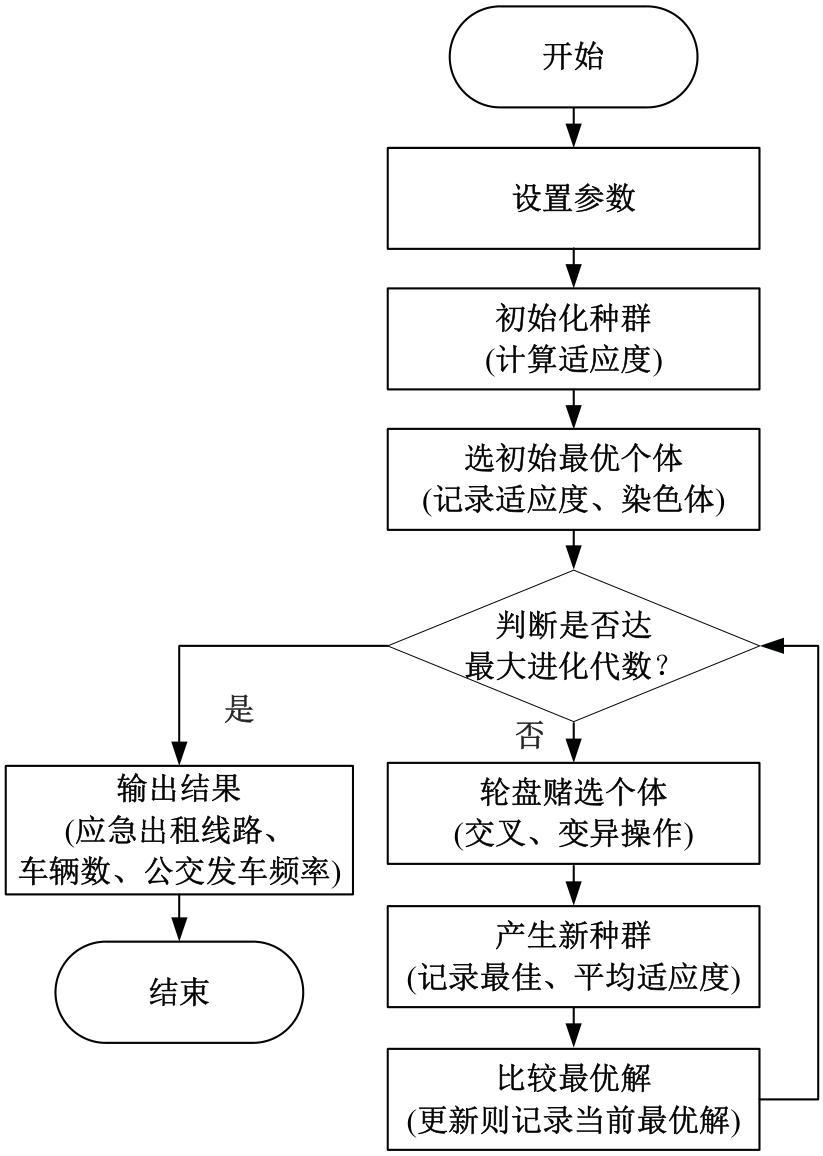
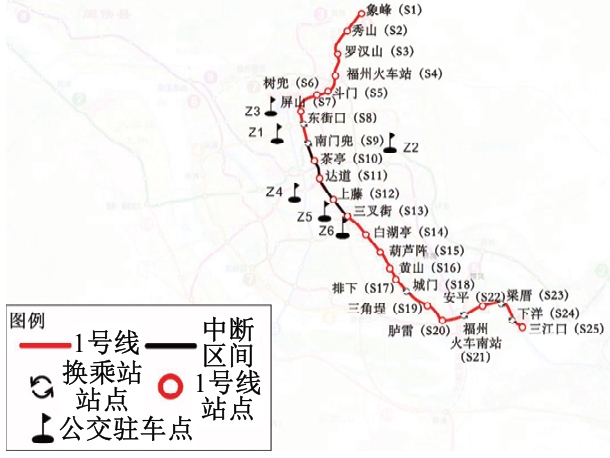
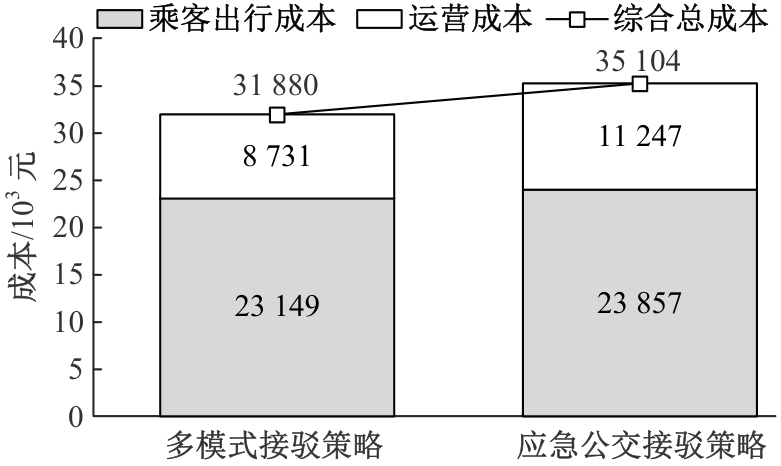
针对地铁运营中断场景下,现有研究多仅依靠应急接驳公交开展客流疏散,较少考虑多模式出行协同疏散的问题,提出了一种结合应急公交与应急出租车的多模式应急疏散策略。首先,构建多模式应急接驳模型,旨在最小化乘客出行延误及应急疏散成本;然后,设计遗传算法进行求解;最后,以福州市地铁1号线早高峰区间双向运营中断为案例,验证本文模型及算法的有效性。结果表明,相较于单一的应急公交策略,多模式疏散策略使综合成本和乘客出行时间成本分别降低了9.2%和22.4%。
中图分类号:
- U491

| [1] | 邓亚娟, 茹小磊, 梁国华, 等. 城市轨道交通应急接驳公交蓄车点选址[J]. 交通运输工程学报, 2018, 18(4): 143-150. |
| Deng Ya-juan, Ru Xiao-lei, Liang Guo-hua, et al. Depot locations for emergency bridging buses in urban rail transit[J]. Journal of Traffic and Transportation Engineering, 2018, 18(4): 143-150. | |
| [2] | 姚加林, 齐弦. 城轨运营中断条件下公交应急线路开行方案研究[J]. 铁道科学与工程学报, 2018, 15(7): 1863-1870. |
| Yao Jia-lin, Qi Xian. Research on bus emergency route plan in the operation interruption of urban rail transit[J]. Journal of Railway Science and Engineering, 2018, 15(7): 1863-1870. | |
| [3] | Wang Y, Huang Y, Tian L, et al. Shuttle bus line planning in response to unexpected disruption in urban rail transit networks[J]. IEEE Access, 2023, 11: 54398-54407. |
| [4] | 王佳冬, 袁振洲, 宁尚彬. 城轨运营中断下应急公交车辆调度模型[J]. 交通运输系统工程与信息, 2019, 19(4): 149-154, 163. |
| Wang Jia-dong, Yuan Zhen-zhou, Ning Shang-bin. Optimization model of emergency bus dispatching in response to operational disruptions of urban rail transit[J]. Journal of Transportation Systems Engineering and Information Technology, 2019, 19(4): 149-154, 163. | |
| [5] | 吴炜光. 多模式交通网络环境下典型多方式组合出行效用分析[D]. 南京: 东南大学交通学院, 2018. |
| Wu Wei-guang. Utility analysis of representative combined travel mode in multi-modal traffic network[D]. Nanjing: School of Transportation, Southeast University, 2018. | |
| [6] | Qiu F, Li W, Haghani A. A methodology for choosing between fixed-route and flex-route policies for transit services[J]. Journal of Advanced Transportation, 2015, 49(3): 496-509. |
| [7] | Pnevmatikou A M, Karlaftis M G, Kepaptsoglou K. Metro service disruptions: how do people choose to travel?[J]. Transportation, 2015, 42(6): 933-949. |
| [8] | Fang Y, Jiang Y. Replacement service decisions for disruption recovery in light rail systems[J]. Management of Environmental Quality, 2019, 30(2): 286-306. |
| [9] | 刘莎莎, 姚恩建, 张永生. 轨道交通乘客个性化出行路径规划算法[J]. 交通运输系统工程与信息, 2014, 14(5): 100-104, 132. |
| Liu Sha-sha, Yao En-jian, Zhang Yong-sheng. Personalized route planning algorithm for urban rail transit passengers[J]. Journal of Transportation Systems Engineering and Information Technology, 2014, 14(5): 100-104, 132. | |
| [10] | Tversky A, Kahneman D. Advances in prospect theory-cumulative characterization of uncertainty[J]. Journal of Risk and Uncertainty, 1992, 5(4): 297-323. |
| [11] | 苏娟. 城市轨道交通客流分配研究[D]. 北京: 北京交通大学交通运输学院, 2009. |
| Su Juan. Research on flow assignment of urban rail transit[D]. Beijing: School of Traffic and Transportation, Beijing Jiaotong University, 2009. | |
| [12] | 鲁鸣鸣, 郑林. 交通大数据驱动的地铁和出租车接驳出行规划[J]. 计算机工程与应用, 2018, 54(15): 262-270. |
| Lu Ming-ming, Zheng Lin. Traffic big data based subway and taxi connection travel planning[J]. Computer Engineering and Applications, 2018, 54(15): 262-270. | |
| [13] | 潘述亮, 卢小林, 邹难. 灵活型接驳公交路径优化及协同调度模型[J]. 吉林大学学报: 工学版, 2016, 46(6): 1827-1835. |
| Pan Shu-liang, Lu Xiao-lin, Zou Nan. Route planning and coordinated scheduling model for flexible feeder transit service[J]. Journal of Jilin University (Engineering and Technology Edition), 2016, 46(6): 1827-1835. | |
| [14] | 钱蕾. 双向中断下城市轨道交通网络列车运行调整研究[D]. 北京: 北京交通大学交通运输学院, 2021. |
| Qian Lei. Research on train operation adjustment of urban rail transit network under bidirectional interruption[D]. Beijing: School of Traffic and Transportation, Beijing Jiaotong University, 2021. | |
| [15] | 何祖勇, 郭茜, 吴刚. 考虑时间容忍度的轨道交通应急接驳公交蓄车点选址研究[J]. 交通运输工程与信息学报, 2022, 20(1): 80-88. |
| He Zu-yong, Guo Qian, Wu Gang. Depot locations of emergency bridging buses for urban rail transit considering time tolerance[J]. Journal of Transportation Engineering and Information, 2022, 20(1): 80-88. | |
| [16] | 王菁. 基于出租车GPS数据的城市交通时空特征分析及路网关键点段识别建模[D]. 北京: 北京交通大学交通运输学院, 2020. |
| Wang Jing. Analysis of temporal and spatial characteristics of urban traffic and identification modeling of key nodes and sections of road network based on taxi GPS data[D]. Beijing: School of Traffic and Transportation, Beijing Jiaotong University, 2020. | |
| [17] | 张擎. 公交车辆应急救援服务点布局研究[D]. 成都: 西南交通大学交通运输与物流学院, 2017. |
| Zhang Qing. Research on emergency rescue service site layout of public bus[D]. Chengdu: School of Transportation and Logistics, Southwest Jiaotong University, 2017. |
| [1] | 王君悦,董春娇,王菁,王明智. 轨迹数据驱动的出租车出行特征分析与时空分布建模[J]. 吉林大学学报(工学版), 2026, 56(8): 2106-2115. |
| [2] | 刘铭,陈思危,王俊杰,梁雨萱,于晓东. 基于模块化A*寻优算法的地铁货车快递联运系统[J]. 吉林大学学报(工学版), 2026, 56(7): 1937-1949. |
| [3] | 程国柱,吕岩峰,冯天军. 地铁站周边常规公交换乘站点布局多目标优化模型[J]. 吉林大学学报(工学版), 2026, 56(3): 711-724. |
| [4] | 刘琼昕,王甜甜,王亚男. 非支配排序粒子群遗传算法解决车辆位置路由问题[J]. 吉林大学学报(工学版), 2025, 55(7): 2464-2474. |
| [5] | 赖元文,陈艳生,王书易,张宇龙,朱新运. 考虑公交与地铁换乘需求的公交时刻表优化[J]. 吉林大学学报(工学版), 2025, 55(6): 2030-2037. |
| [6] | 岳昊,常笑,刘建业,曲秋莳. 引入车辆窗的定制公交线路优化[J]. 吉林大学学报(工学版), 2025, 55(4): 1266-1274. |
| [7] | 周成栋,宋菲,赵小梅,姚俊杰. 基于多模式双动态演化的拥堵收费模型[J]. 吉林大学学报(工学版), 2025, 55(4): 1319-1327. |
| [8] | 高天洋,胡大伟,姜瑞森,吴雪,刘慧甜. 基于模块化车辆的区域灵活接驳公交线路优化[J]. 吉林大学学报(工学版), 2025, 55(2): 537-545. |
| [9] | 孙峣,姚宝珍,白子建. 基于随机森林模型的交通拥堵疏导效果评估[J]. 吉林大学学报(工学版), 2025, 55(2): 512-519. |
| [10] | 曾小华,李凯旋,韩凯,宫铭遥,宋大凤. 融合遗传算法和递推最小二乘法的半挂车稳定性参数估计[J]. 吉林大学学报(工学版), 2025, 55(12): 3793-3803. |
| [11] | 田佩宁,童瑞咏,王海鹏,毛保华,张皓翔,卢霞. 城市轨道交通跨环线的跨线列车开行方案优化[J]. 吉林大学学报(工学版), 2025, 55(1): 132-140. |
| [12] | 年光跃,潘海啸,孙健. 城市建成环境与道路交通运行关系[J]. 吉林大学学报(工学版), 2025, 55(1): 141-149. |
| [13] | 董春娇,陆育霄,马社强,李鹏辉. 考虑等待忍耐时间的电动自行车违规行为研判[J]. 吉林大学学报(工学版), 2024, 54(9): 2540-2546. |
| [14] | 朱瑾,黄琦. 路网资源分配下自动化码头水平运输调度与路径规划[J]. 吉林大学学报(工学版), 2024, 54(8): 2245-2255. |
| [15] | 张良力,马晓凤. 基于改进粒子群算法的新能源汽车充电站选址方法[J]. 吉林大学学报(工学版), 2024, 54(8): 2275-2281. |
|
||