吉林大学学报(工学版) ›› 2026, Vol. 56 ›› Issue (9): 2408-2420.doi: 10.13229/j.cnki.jdxbgxb.20250231
• 交通运输工程·土木工程 • 上一篇
碱激发凝灰岩石粉⁃粉煤灰⁃矿渣复合胶凝体系力学性能
于本田1( ),刘志斌1,冯元2,王彦鹏3,初庆妍1,李建强1
- 1.兰州交通大学 土木工程学院,兰州 730070
2.兰州新区融合发展建设工程有限公司,兰州 730207
3.甘肃建投绿色建材产业发展集团有限公司,兰州 730000
Mechanical properties of alkali-activated tuff powder-fly ash-slag composite cementitious system
Ben-tian YU1(),Zhi-bin LIU1,Yuan FENG2,Yan-peng WANG3,Qing-yan CHU1,Jian-qiang LI1
- 1.School of Civil Engineering,Lanzhou Jiaotong University,Lanzhou 730070,China
2.Lanzhou New Area Integrated Development Construction Engineering Co. ,Ltd. ,Lanzhou 730207,China
3.Gansu Jiantou Green Building Materials Industry Development Group Co. ,Ltd. ,Lanzhou 730000,China
摘要:
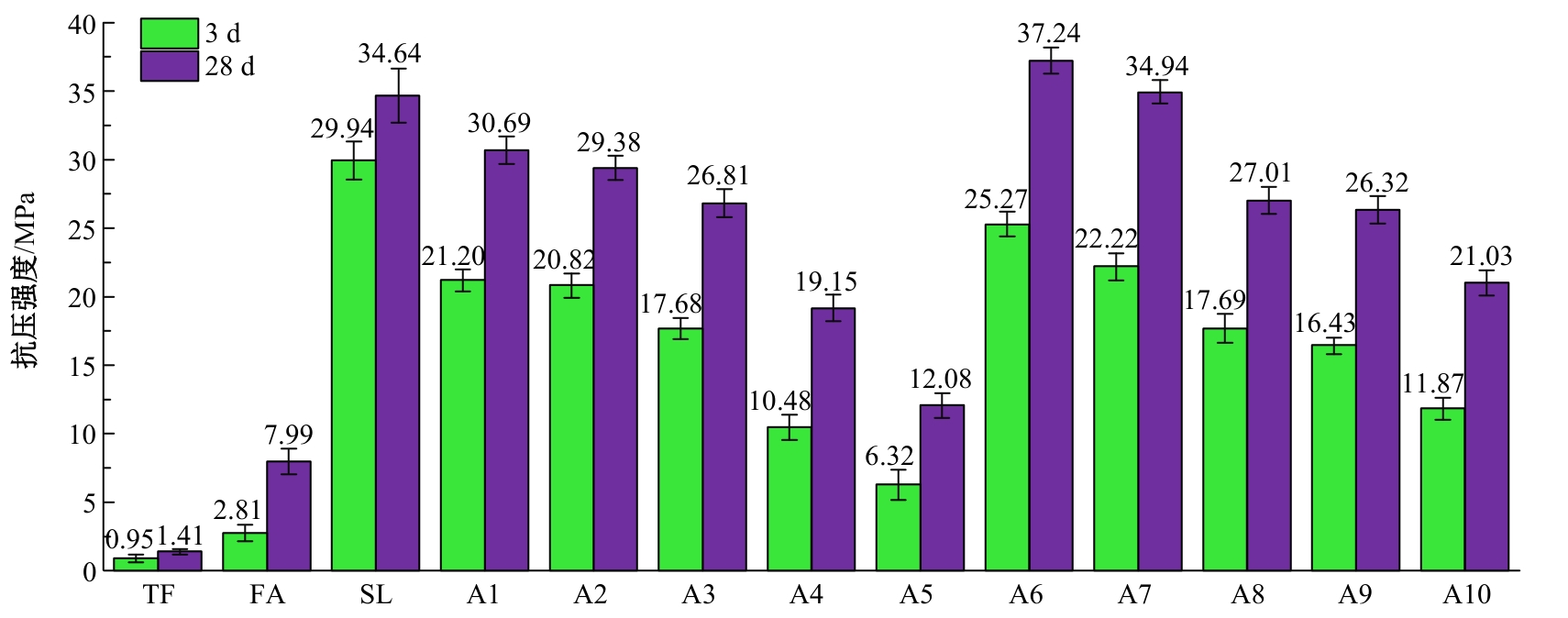
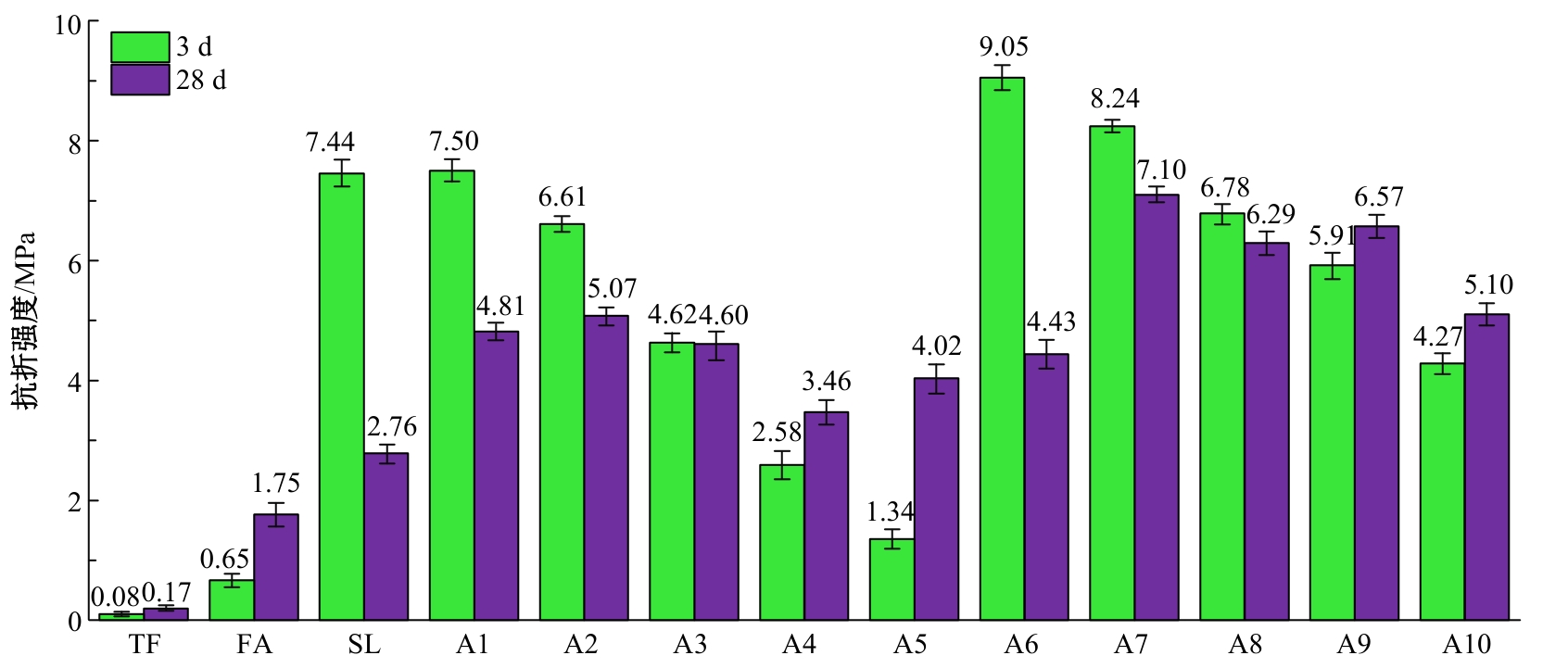
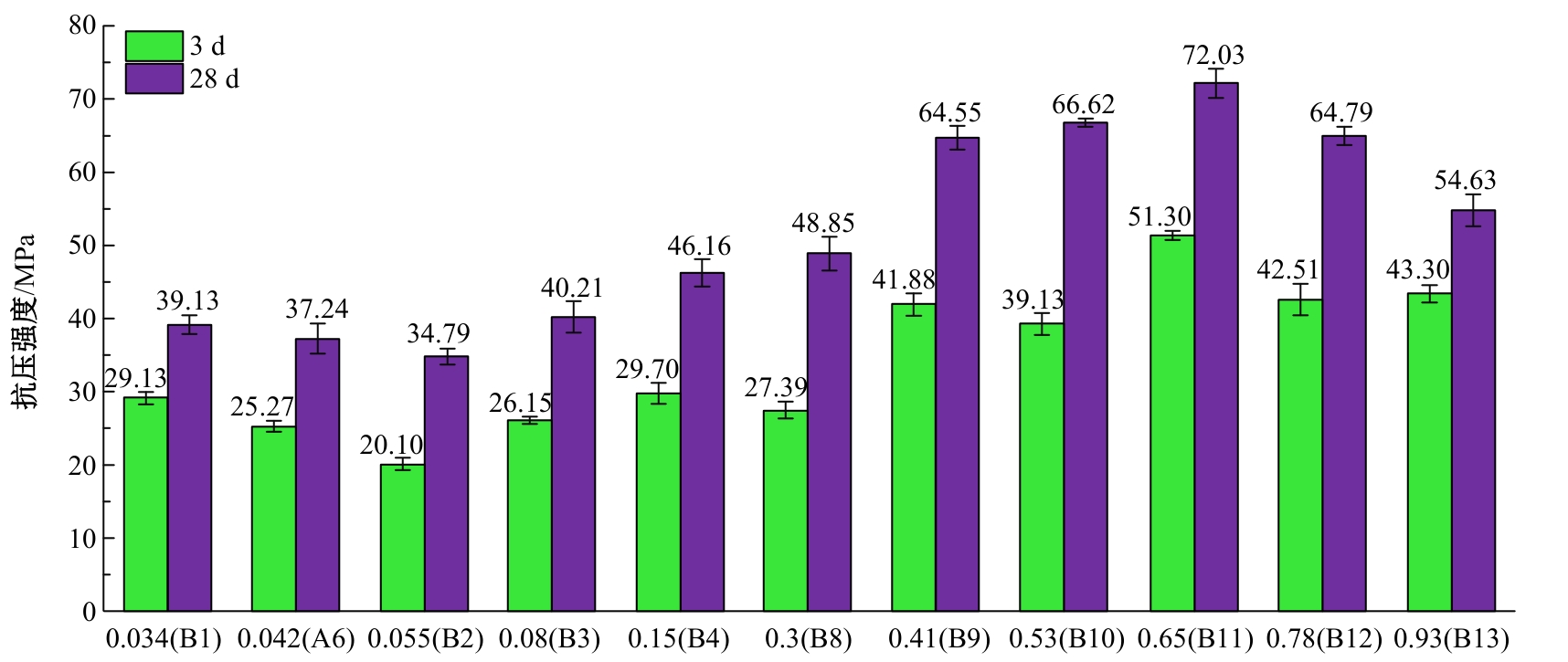
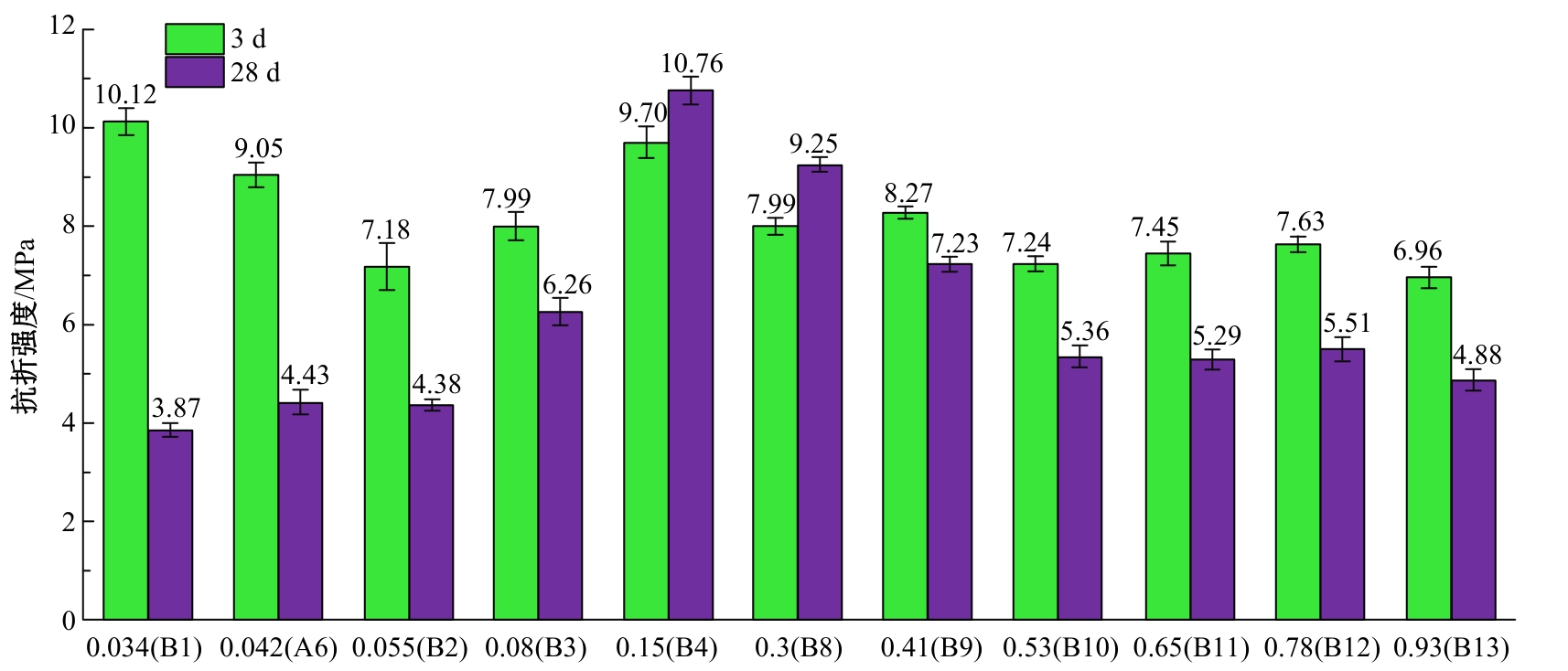
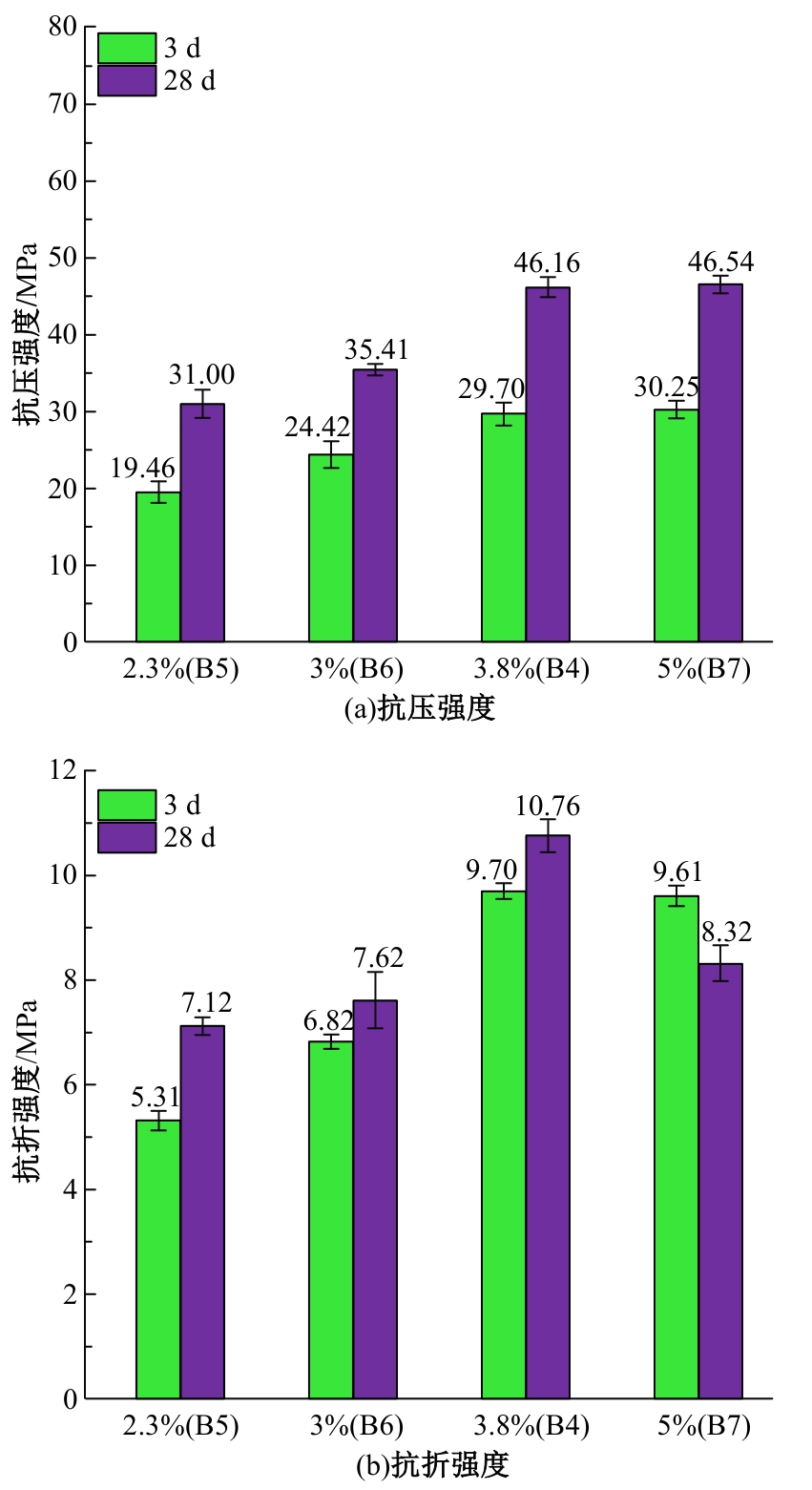
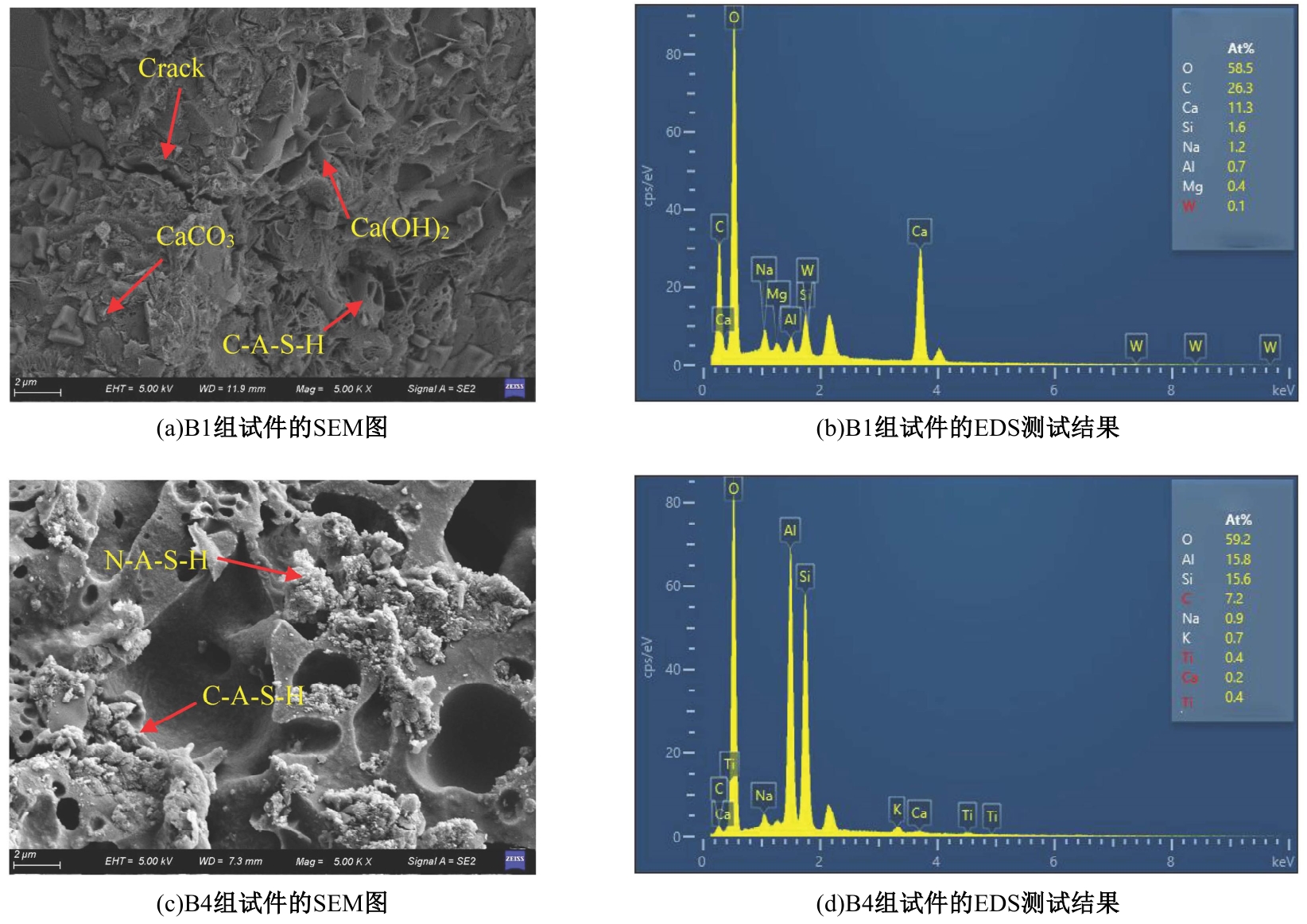
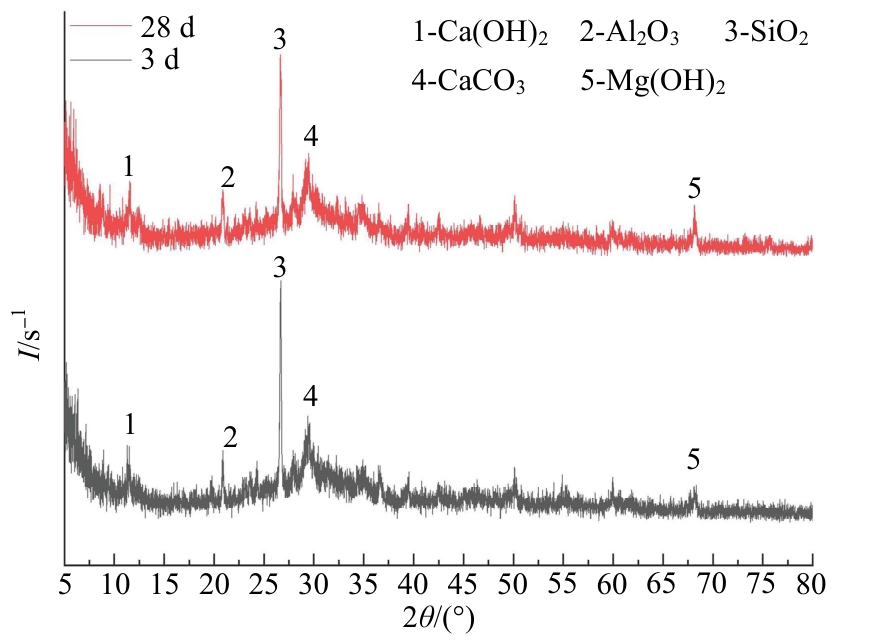
为提升凝灰岩石粉的综合利用率,采用凝灰岩石粉取代部分矿渣和粉煤灰制备了碱激发三元固废胶凝材料。首先,测试了单一激发剂模数下凝灰岩石粉、粉煤灰和矿渣不同掺量的胶凝材料体系抗压、抗折强度,发现抗压强度随矿渣掺量增多而提高,随凝灰岩石粉和粉煤灰掺量的增多而降低。在凝灰岩石粉掺量一定的情况下,随着粉煤灰掺量的增多、矿渣掺量的减少,28 d与3 d抗折强度差值逐渐减小。当凝灰岩石粉、粉煤灰、矿渣掺量比例为1∶1∶3时,三元固废胶凝体系的抗压强度最高。其次,开展了不同激发剂模数和碱当量下该配比力学性能的测试,研究结果表明:激发剂模数较低时,碱性过强,导致聚合反应太快使水化反应不充分,抗压强度较低,随着激发剂模数增大,抗压强度随之增大,但激发剂模数过大会使激发剂中OH―含量降低,聚合反应减弱,导致抗压强度下降;随着碱当量的提高,抗压强度与抗折强度随之提高,达到最优碱当量后,抗压强度基本不变,抗折强度开始降低。最后,采用SEM、EDS、XRD、NMR等微观测试对部分碱激发三元固废胶凝体系抗折强度随龄期降低的原因和机理进行了阐释,研究结果表明:当碱性过高时,OH―与固废快速反应形成的胶体骨架结构提供早期强度,但随着龄期的增长,过量的OH―进入胶体骨架内部与Ca2+反应形成Ca(OH)2,同时高浓度的NaOH溶液与空气中CO2反应生成碳酸根离子,进一步生成CaCO3,造成体积膨胀,形成内部应力和微裂缝,导致28 d抗折强度的下降。
中图分类号:
- TU526

| [1] | 阎培渝. 碱激发胶凝材料发展瓶颈在哪里[J]. 硅酸盐学报, 2022, 50(8): 2067-2069. |
| Yan Pei-yu. What is the development bottleneck of alkali-activated binder[J]. Journal of the Chinese Ceramic Society, 2022, 50(8): 2067-2069. | |
| [2] | 梁健俊. 水玻璃模数与矿渣掺量对碱激发粉煤灰/矿渣复合体系的影响[D]. 广州: 广州大学土木工程学院, 2017. |
| Liang Jian-jun. Effect of the activator modulus and slag content on alkali activated fly ash/slag blended system[D]. Guangzhou: School of Civil Engineering, Guangzhou University, 2017. | |
| [3] | 王东平, 陈佩圆, 王亮, 等. 粉煤灰掺量对碱激发矿渣砂浆减缩特性研究[J]. 硅酸盐通报, 2018, 37(2): 701-705. |
| Wang Dong-ping, Chen Pei-yuan, Wang Liang, et al. Reducing the shrinkage of alkali-activated slag mortar by adding fly ash[J]. Bulletin of the Chinese Ceramic Society, 2018, 37(2): 701-705. | |
| [4] | Fang G H, Ho W K, Tu W L, et al. Workability and mechanical properties of alkali-activated fly ash-slag concrete cured at ambient temperature[J]. Construction and Building Materials, 2018, 172: 476-487. |
| [5] | 詹疆淮, 李宏波, 傅博, 等. 不同碱当量、粉煤灰和矿渣掺量对碱激发粉煤灰-矿渣地聚物力学性能及微观结构的影响[J]. 科学技术与工程, 2021, 21(28): 12218-12224. |
| Zhan Jiang-huai, Li Hong-bo, Fu Bo, et al. Effect of different alkali equivalent, fly ash and slag content on the mechanical properties and microstructure of alkali-activated fly ash-slag geopolymer[J]. Science Technology and Engineering, 2021, 21(28): 12218-12224. | |
| [6] | Chi M C, Huang R. Binding mechanism and properties of alkali-activated fly ash/slag mortars[J]. Construction and Building Materials, 2013, 40: 291-298. |
| [7] | 刘数华, 阎培渝. 石粉作为碾压混凝土掺合料的利用和研究综述[J]. 水力发电, 2007, 33(1): 69-71. |
| Liu Shu-hua, Yan Pei-yu. Summarization of utilization and researches on stone powder used as mineral admixtures in roller compacted concrete[J]. Water Power, 2007, 33(1): 69-71. | |
| [8] | Tomás Archer de Carvalho, Gaspar Florindo, Mateus Artur, et al. Geopolymer cement for sustainable construction: a review[M]∥Florindo Gaspar, Artur Mateus: Sustainable and Digital Building:Proceedings of the International Conference, Beilin:Springer Cham,2023: 149-166. |
| [9] | 龚木联. 粉煤灰-矿渣-偏高岭土地聚合物注浆材料性能研究[D]. 抚州: 东华理工大学土木与建筑工程学院, 2023. |
| Gong Mu-lian. Study on properties of geopolymer grouting material of fly ash-slag-metakaolin[D]. Fuzhou: School of Civil and Architecture Engineering, East China University of Technology, 2023. | |
| [10] | 刘剑平, 胡子扬, 刘朋, 等. 掺硅灰和碱渣的碱激发矿渣/钢渣胶凝材料性能[J]. 沈阳工业大学学报, 2023, 45(5): 594-600. |
| Liu Jian-ping, Hu Zi-yang, Liu Peng, et al. Properties of alkali-activated furnace slag/ steel slag cementitious materials mixed with silica fume and soda residue[J]. Journal of Shenyang University of Technology, 2023, 45(5): 594-600. | |
| [11] | 安强, 潘慧敏, 赵庆新, 等. 碱激发赤泥-粉煤灰-电石渣复合材料性能研究[J]. 建筑材料学报, 2023, 26(1): 14-20. |
| An Qiang, Pan Hui-min, Zhao Qing-xin, et al. Properties of alkali-activated red mud-fly ash-carbide slag composites[J]. Journal of Building Materials, 2023, 26(1): 14-20. | |
| [12] | 张爱, 袁浩然, 葛勇. 碱激发硅藻土/铝矾土胶凝材料的制备与性能研究[J]. 材料导报, 2025, 39(20): No.24100122. |
| Zhang Ai, Yuan Hao-ran, Ge Yong. Preparation and properties of alkali-activated diatomite/bauxite cementitious materials[J] Materials Reports, 2025, 39(20): No.24100122. | |
| [13] | 夏益健, 张宇, 张云升, 等. 磨细凝灰岩制备机制砂混凝土力学性能研究[J]. 材料导报, 2025, 39(9): 71-77. |
| Xia Yi-jian, Zhang Yu, Zhang Yun-sheng, et al. Mechanical properties of machine-made sand concrete prepared from finely ground tuff[J]. Materials Reports, 2025, 39(9): 71-77. | |
| [14] | 魏泽慧, 徐倩, 张鹤, 等. 凝灰岩石粉基调理剂对滨海盐碱地改良效果研究[J]. 浙江大学学报: 理学版, 2024, 51(6): 692-701, 711. |
| Wei Ze-hui, Xu Qian, Zhang He, et al. Feasibility of waste tuff powder as a soil conditioner for coastal saline soil[J]. Journal of Zhejiang University (Science Edition), 2024, 51(6): 692⁃701, 711. | |
| [15] | Li H J, Wang Z H, Sun R R, et al. Effect of different lithological stone powders on properties of cementitious materials[J]. Journal of Cleaner Production, 2021, 289: No.125820. |
| [16] | Ruiz-Sánchez A, Sánchez-Polo M, Rozalen M. Waste marble dust: an interesting residue to produce cement[J]. Construction and Building Materials, 2019, 224: 99-108. |
| [17] | 于本田, 刘晓林, 王彦鹏, 等. 凝灰岩石粉对水泥基材料性能影响的研究进展[J]. 硅酸盐学报, 2023, 51(8): 2090-2097. |
| Yu Ben-tian, Liu Xiao-lin, Wang Yan-peng, et al. Review on effect of tuff powder on properties of cement-based materials[J]. Journal of the Chinese Ceramic Society, 2023, 51(8): 2090-2097. | |
| [18] | 王振, 李化建, 黄法礼, 等. 不同岩性石粉-水泥胶砂流动性和力学性能研究[J]. 硅酸盐通报, 2019, 38(5):1585-1590. |
| Wang Zhen, Li Hua-jian, Huang Fa-li, et al. Fluidity and mechanical properties of cement mortar with different lithological powders[J]. Bulletin of the Chinese Ceramic Society, 2019, 38(5): 1585-1590. | |
| [19] | Bartolomeo C, Jean-Marc T, Paola A, et al. Role of natural stone wastes and minerals in the alkali activation process: a review[J]. Materials, 2020, 13: No.2284. |
| [20] | 于子豪, 张彤炜, 张彤文, 等. 凝灰岩石粉制备胶凝材料及激发剂模数对抗压强度的影响[J]. 工程科学学报, 2022, 44(12): 2100-2110. |
| Yu Zi-hao, Zhang Tong-wei, Zhang Tong-wen, et al. Preparation of a tuff polymer and the mechanism of alkaline solution influences on compressive strengths[J]. Chinese Journal of Engineering, 2022, 44(12): 2100-2110. | |
| [21] | 于子豪. 凝灰岩基地聚合物的物理力学性能与活性激发机理[D]. 兰州: 兰州大学土木工程与力学院, 2022. |
| Yu Zi-hao. Physical and mechanical properties and activation mechanism of tuff-based geopolymers[D]. Lanzhou: School of Civil Engineering and Mechanics, Lanzhou University, 2022. | |
| [22] | 宋维龙, 朱志铎, 浦少云, 等. 碱激发二元/三元复合工业废渣胶凝材料的力学性能与微观机制[J]. 材料导报, 2020, 34(11): 22070-22077. |
| Song Wei-long, Zhu Zhi-duo, Pu Shao-yun, et al. Mechanical performance and micro-mechanism of alkali-activated binary/ternary composite industrial waste residues cementitious materials[J]. Materials Reports, 2020, 34(11): 22070-22077. | |
| [23] | Li J, Yu Q J, Huang H L, et al. Effects of Ca/Si ratio, aluminum and magnesium on the carbonation behavior of calcium silicate hydrate[J]. Materials, 2019, 12: No.1268. |
| [24] | 孙开强, 刘琳, 郑蕻陈, 等. 碱激发矿渣-粉煤灰胶凝材料力学性能影响因素分析[J]. 硅酸盐通报,2024, 43(9): 3313-3319. |
| Sun Kai-qiang, Liu Lin, Zheng Hong-chen, et al. Analysis of influencing factors on mechanical properties of alkali-activated slag-fly ash binder materials[J]. Bulletin of the Chinese Ceramic Society, 2024, 43(9): 3313-3319. | |
| [25] | 王旭昊, 侯鑫, 甘珑, 等. 凝灰岩石粉在复合胶凝材料中的火山灰活性及水化性能评估[J]. 材料导报,2020, 36(16): No.22040394. |
| Wang Xu-hao, Hou Xin, Gan Long, et al. Pozzolanic reactivity and hydration properties assessment of tuff powder in composite cementitious materials[J]. Materials Reports, 2020, 36(16): No.22040394. | |
| [26] | 叶家元, 张文生, 史迪, 等. 钙对碱激发胶凝材料的促凝增强作用[J]. 硅酸盐学报, 2017, 45(8): 1101-1112. |
| Ye Jia-yuan, Zhang Wen-sheng, Shi Di, et al. Setting acceleration and strength enhancement derived from calcium species for alkali-activated cementitious materials[J]. Journal of the Chinese Ceramic Society,2017, 45(8): 1101-1112. | |
| [27] | 张思. 凝灰岩粉掺和料对水工混凝土性能影响研究[D]. 武汉: 长江科学院, 2016. |
| Zhang Si. Study on the influence of tuff power admixture on the performance of hydraulic concrete[D]. Wuhan: Changjiang River Scientific Research Institute, 2016. | |
| [28] | 高英力, 刘伟祥, 朱俊材, 等. Na2SiO3/NaAlO2协同电石渣激发矿渣的增强机理[J]. 吉林大学学报: 工学版, 2026, 56(7): 1915-1925. |
| Gao Ying-li, Liu Wei-xiang, Zhu Jun-cai, et al. Study on the strengthening mechanism of Na2SiO3/NaAlO2 synergistic carbide slag to activate slag[J]. Journal of Jilin University (Engineering and Technology Edition), 2026, 56(7): 1915-1925. | |
| [29] | 富文权. 混凝土快速硬化[M]. 北京: 中国铁道出版社, 1990. |
| [30] | 何娟, 杨长辉. 水玻璃激发碱-矿渣水泥的水 化放热和凝结性能[J]. 土木建筑与环境工程, 2011, 33(3): 147-152. |
| He Juan, Yang Chang-hui. Hydration heat evolution and setting performance of alkali-slag cement activated with water glass[J]. Journal of Civil Architectura &Environmental Engineering, 2011, 33(3): 147-152. | |
| [31] | 马倩敏, 黄丽萍, 牛治亮, 等. 碱激发剂浓度及模数对碱矿渣胶凝材料抗压性能及水化产物的影响研究[J]. 硅酸盐通报, 2018, 37(6): 2002-2007. |
| Ma Qian-min, Huang Li-ping, Niu Zhi-liang, et al. Effect of alkali concentration and modulus of alkaline activator on the compressive properties and hydration products of alkali activated slag cementitious materials[J]. Bulletin of the Chinese Ceramic Society, 2018, 37(6): 2002-2007. | |
| [32] | 苏壮飞, 程尧, 刘泽. 矿渣改性碱激发硅锰渣胶凝材料的宏观性能与微观特性研究[J]. 硅酸盐通报, 2025, 44(4): 1276-1287. |
| Su Zhuang-fei, Cheng Yao, Liu Ze. Macroscopic properties and microscopic properties of slag-modified alkali-activated silicon-manganese slag cementitious materials[J]. Bulletin of the Chinese Ceramic Society, 2025, 44(4): 1276-1287. | |
| [33] | 郑文忠, 邹梦娜, 王英. 碱激发胶凝材料研究进展[J]. 建筑结构学报, 2019, 40(1): 28-39. |
| Zheng Wen-zhong, Zou Meng-na, Wang Ying. Literature review of alkali-activated cementitious materials[J]. Journal of Building Structures, 2019, 40(1): 28-39. | |
| [34] | 顾泽宇, 孙大全, 隋玉武, 等. 碱激发矿粉胶凝材料的力学性能及微观研究[J]. 粉煤灰综合利用, 2019(6): 36-39. |
| Gu Ze-yu, Sun Da-quan, Sui Yu-wu, et al. Mechanical properties and microstructure of alkali-activated cementitious materials from ground blast furnaced slag[J]. Fly Ash Comprehensive Utilization, 2019(6): 36-39. | |
| [35] | Aydın Serdar, Baradan Bülent. Effect of activator type and content on properties of alkali-activated slag mortars[J]. Composites: Part B, 2014, 57: 166-172. |
| [36] | 宋少民. 混凝土学[M]. 北京: 武汉理工大学出版社, 2023. |
| [1] | 高英力,刘伟祥,朱俊材,祝张煌,陈腾飞,熊浩宇. Na2SiO3/NaAlO2协同电石渣激发矿渣的增强机理[J]. 吉林大学学报(工学版), 2026, 56(7): 1915-1925. |
| [2] | 刘玉梅,陈洪鹏,庄娇娇,陈熔,王梦雨. 基于双滑模面的变轨距列车悬挂系统控制方法[J]. 吉林大学学报(工学版), 2025, 55(9): 2902-2912. |
| [3] | 宫文彪,苗梓琪,崔恒,王秀英,刘威. SA516Gr.70钢搅拌摩擦焊接头的热循环及组织性能[J]. 吉林大学学报(工学版), 2025, 55(8): 2530-2538. |
| [4] | 郑道友,杨依帆,程煜刚,赵葵,王坤,王文权. 复合细化变质处理ADC12铝合金的微观组织与力学性能[J]. 吉林大学学报(工学版), 2025, 55(8): 2570-2578. |
| [5] | 安金岚,王澜斌,周松,黄研清. 激光沉积修复钛合金热影响区异质结构及后续热处理的性能[J]. 吉林大学学报(工学版), 2025, 55(6): 1931-1939. |
| [6] | 颜建煌,王志勇,汤恩宏,韩雪,李海锋,姜子钦. 奥氏体不锈钢在单调和循环加载下的力学性能[J]. 吉林大学学报(工学版), 2025, 55(3): 912-924. |
| [7] | 娄淑梅,周乐,陈鹏,杜安博,赵豪,苗雨. 挤压温度对石墨烯/7075Al复合材料分流模挤压制品纵向焊缝微观组织和力学性能的影响[J]. 吉林大学学报(工学版), 2025, 55(11): 3575-3582. |
| [8] | 刘一凡,缪志伟,申晨,耿祥东. 基于蒙特卡罗法的不均匀锈蚀钢筋力学性能评估[J]. 吉林大学学报(工学版), 2024, 54(4): 1007-1015. |
| [9] | 许良,边钰博,周松,肖景厚. 高温水浸对T800/环氧树脂基复合材料性能的影响[J]. 吉林大学学报(工学版), 2023, 53(7): 1943-1950. |
| [10] | 魏丽丽,胡明玉. 砂浆碱集料反应细观数值模拟[J]. 吉林大学学报(工学版), 2023, 53(12): 3501-3507. |
| [11] | 匡亚川,宋哲轩,刘胤虎,莫小飞,伏亮明,罗时权. 新型装配式双舱综合管廊力学性能试验[J]. 吉林大学学报(工学版), 2022, 52(3): 596-603. |
| [12] | 魏海斌,王相焱,王富玉,张勇. 基于振动成型AC-25沥青混合料力学性能及细观分析[J]. 吉林大学学报(工学版), 2021, 51(4): 1269-1276. |
| [13] | 程永春,李赫,李立顶,王海涛,白云硕,柴潮. 基于灰色关联度的矿料对沥青混合料力学性能的影响分析[J]. 吉林大学学报(工学版), 2021, 51(3): 925-935. |
| [14] | 刘寒冰,高鑫,宫亚峰,刘诗琪,李文俊. 表面处理对玄武岩纤维活性粉末混凝土力学性能的影响及断裂特性[J]. 吉林大学学报(工学版), 2021, 51(3): 936-945. |
| [15] | 向红亮,陈盛涛,邓丽萍,张伟,詹土生. 微合金化2205双相不锈钢组织及性能[J]. 吉林大学学报(工学版), 2020, 50(5): 1645-1652. |
|
||