吉林大学学报(医学版) ›› 2026, Vol. 52 ›› Issue (5): 1334-1344.doi: 10.13481/j.1671-587X.20260515

• 基础研究 • 上一篇    

颈康胶囊有效成分对大鼠脑缺血的保护作用及其机制

于美一1,郭妍1,张乐宜1,亢泽伦1,洪晨怡1,宋潼潼2(),陈霞1()   

  1. 1.吉林大学基础医学院药理教研室,吉林 长春 130021
    2.吉林大学基础医学院人体解剖教研室,吉林 长春 130021
  • 收稿日期:2025-12-19 接受日期:2026-01-24 出版日期:2026-09-28 发布日期:2026-10-15
  • 通讯作者: 宋潼潼,陈霞 E-mail:songtongtong@jlu.edu.cn;chenx@jlu.edu.cn
  • 作者简介:于美一(1999-),女,黑龙江省七台河市人,在读硕士研究生,主要从事心脑血管药理学方面的研究。
  • 基金资助:
    吉林省科技厅医药健康产业发展专项项目(20230401082YY)

Protective effect of active ingredients in Jingkang Capsule on cerebral ischemia in rats and its mechanism

Meiyi YU1,Yan GUO1,Leyi ZHANG1,Zelun KANG1,Chenyi HONG1,Tongtong SONG2(),Xia CHEN1()   

  1. 1.Department of Pharmacology,College of Basic Medical Sciences,Jilin University,Changchun 130021,China
    2.Department of Anatomy,College of Basic Medical Sciences,Jilin University,Changchun 130021,China
  • Received:2025-12-19 Accepted:2026-01-24 Online:2026-09-28 Published:2026-10-15
  • Contact: Tongtong SONG,Xia CHEN E-mail:songtongtong@jlu.edu.cn;chenx@jlu.edu.cn

摘要:

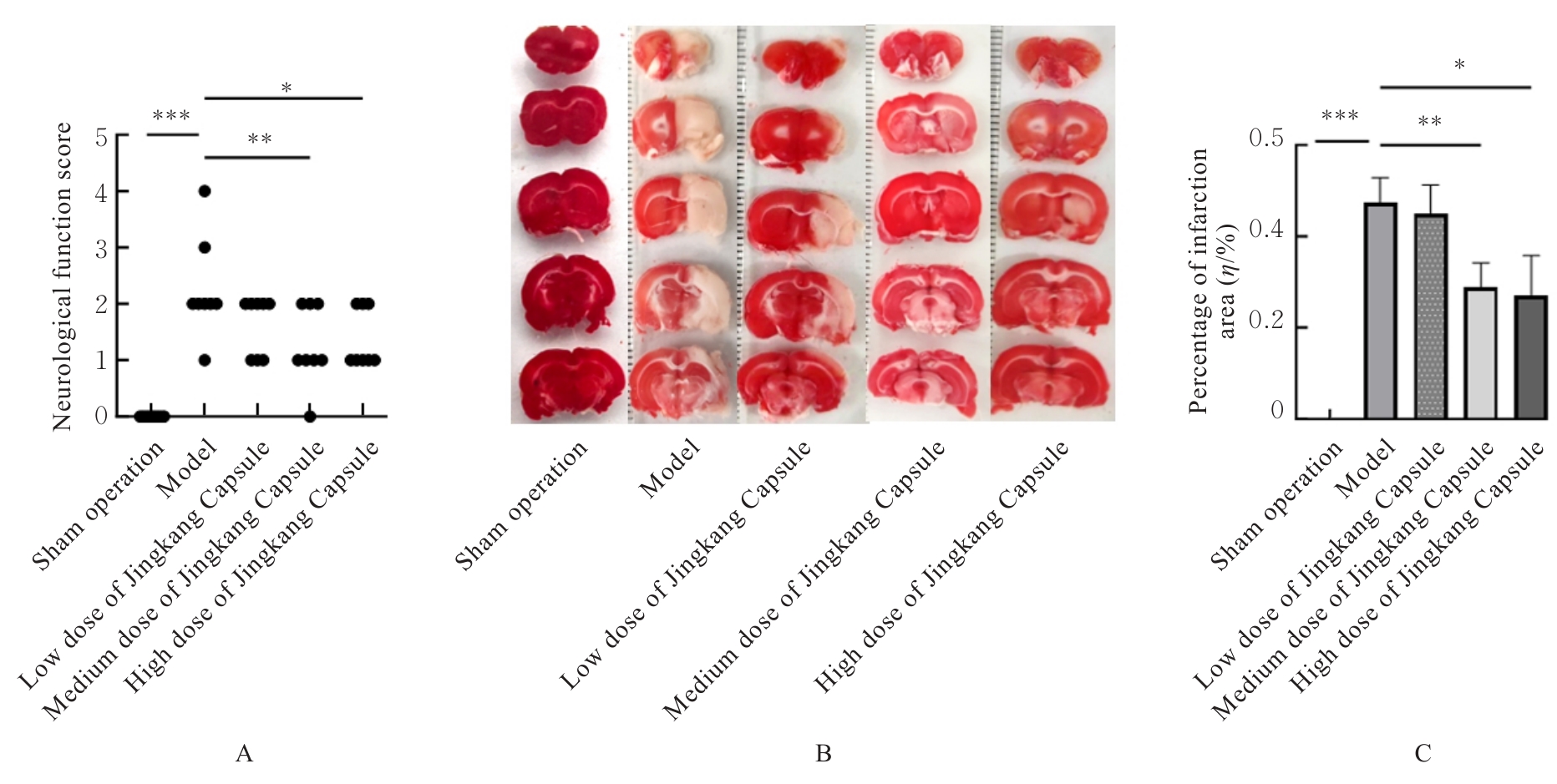
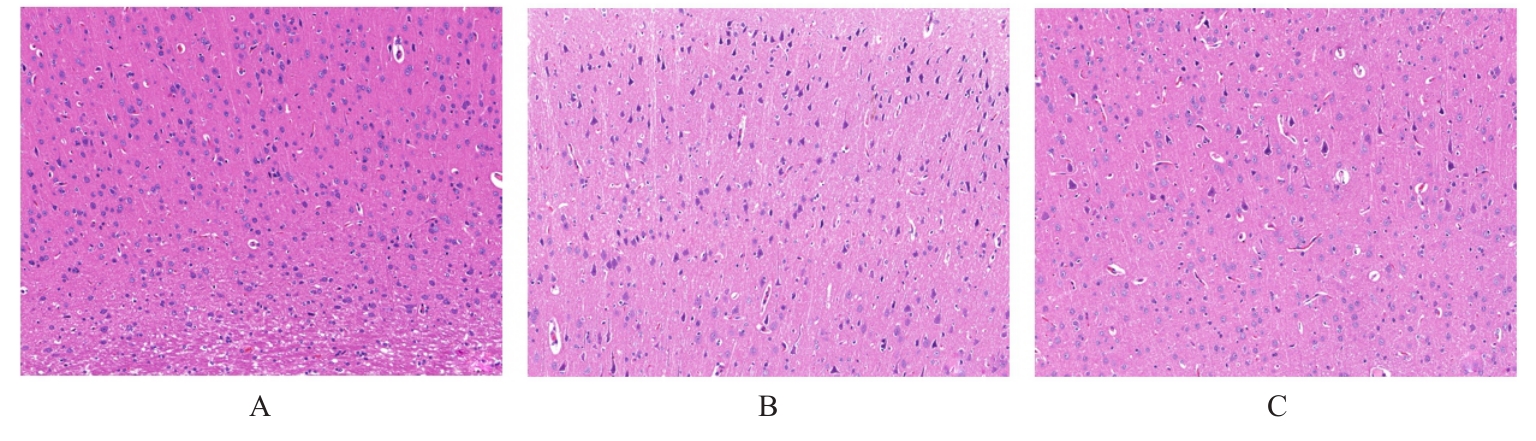
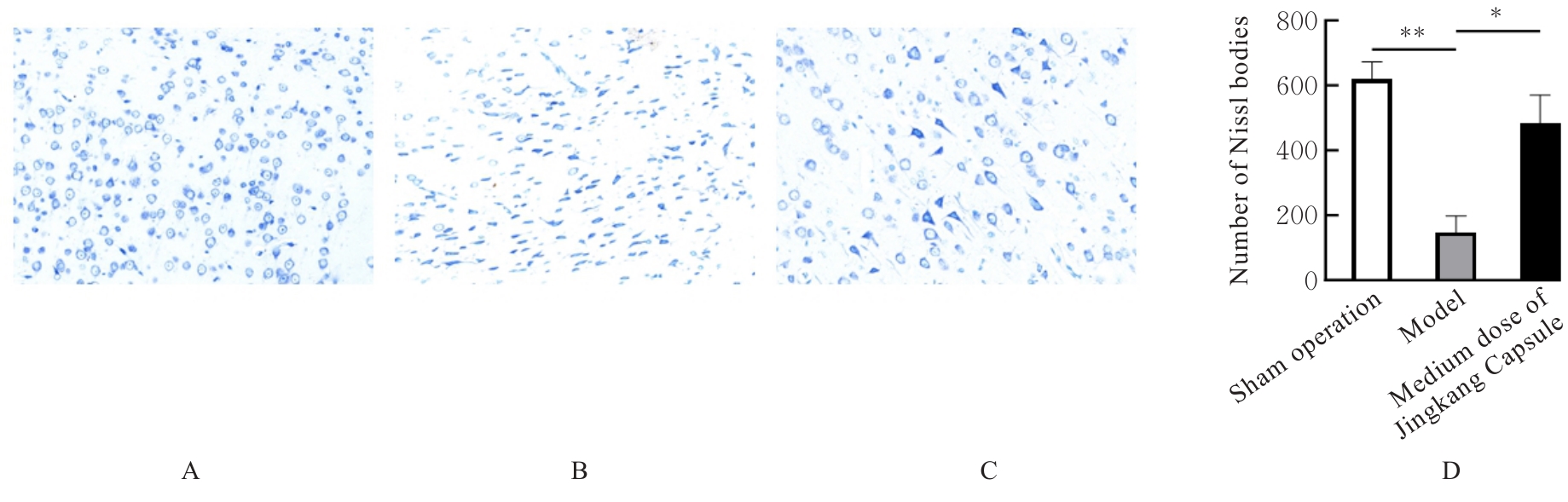
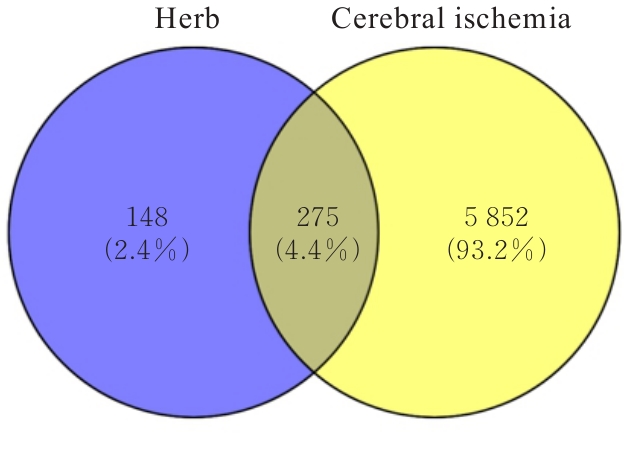
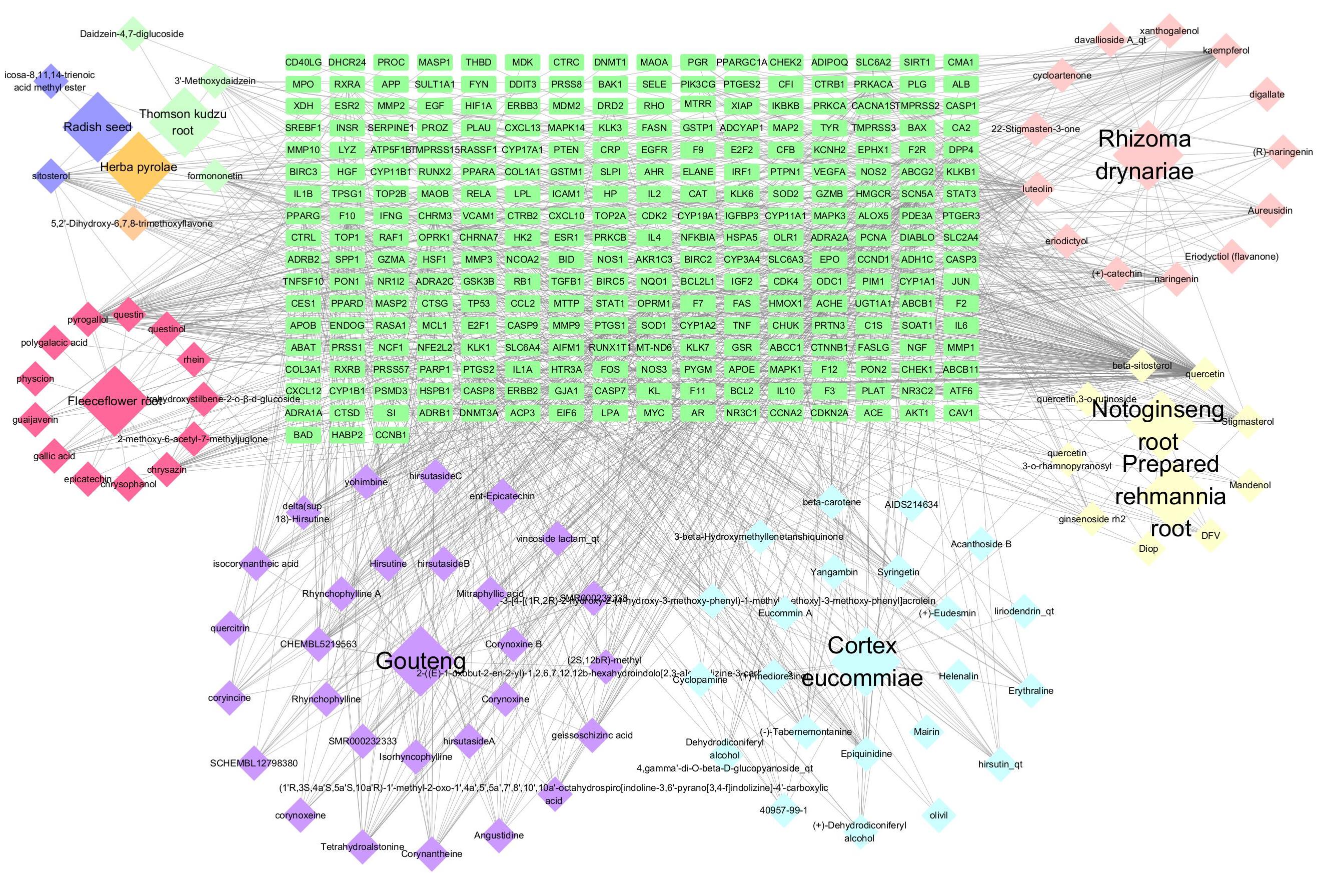
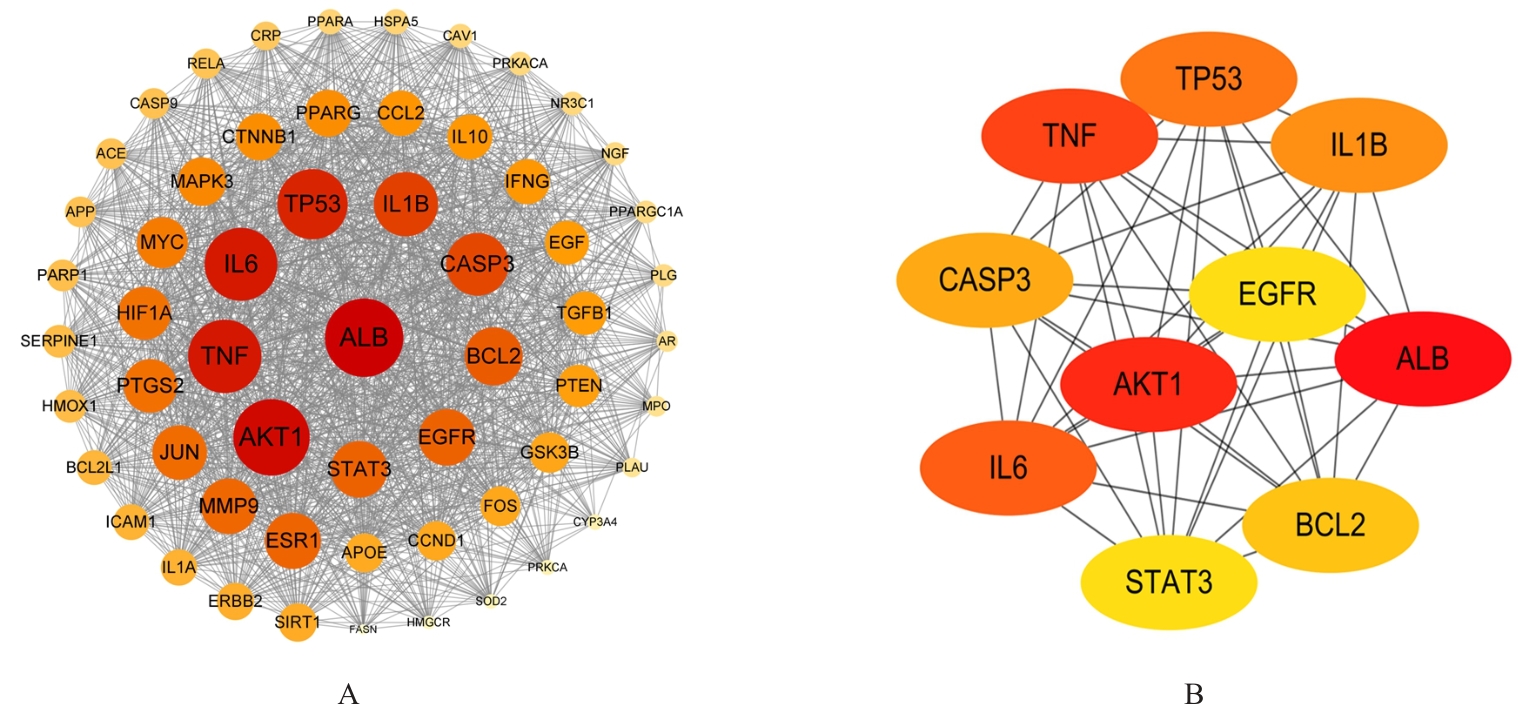
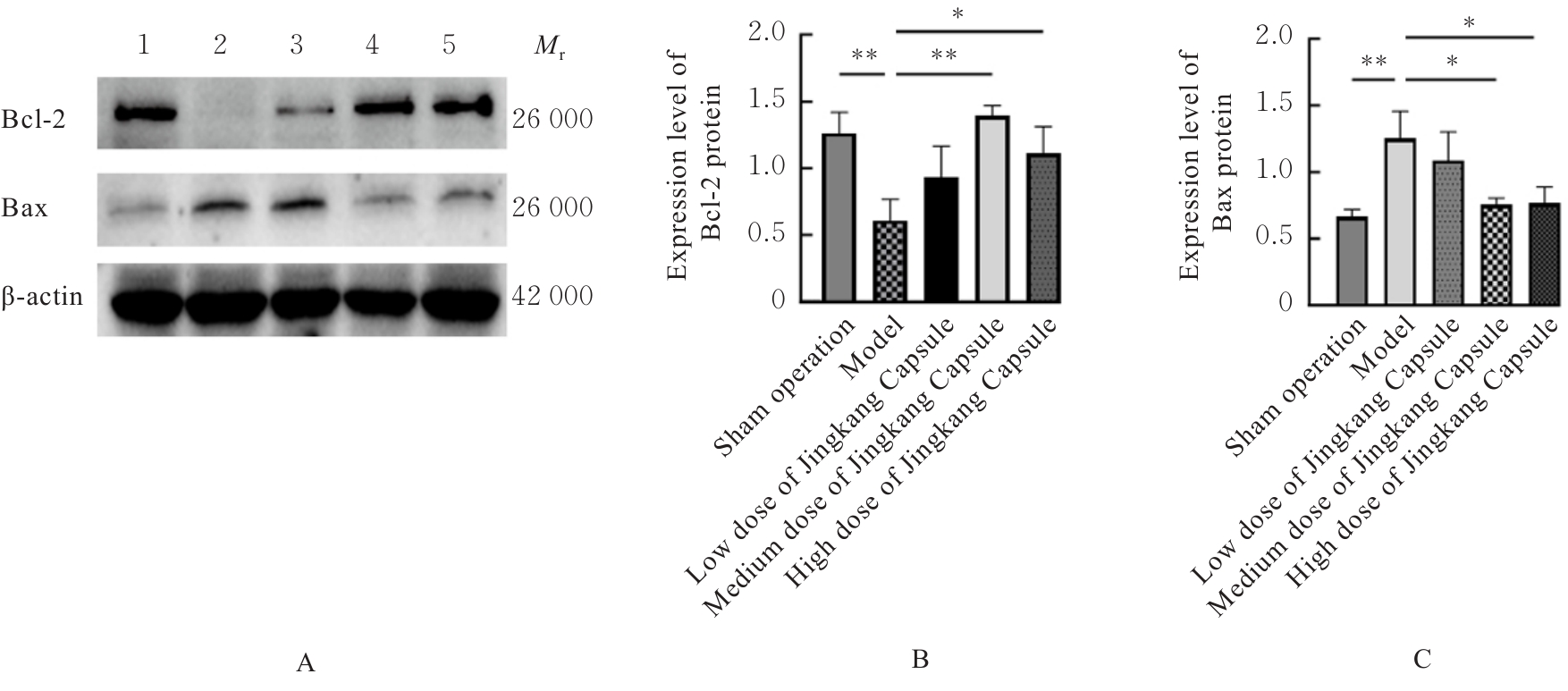
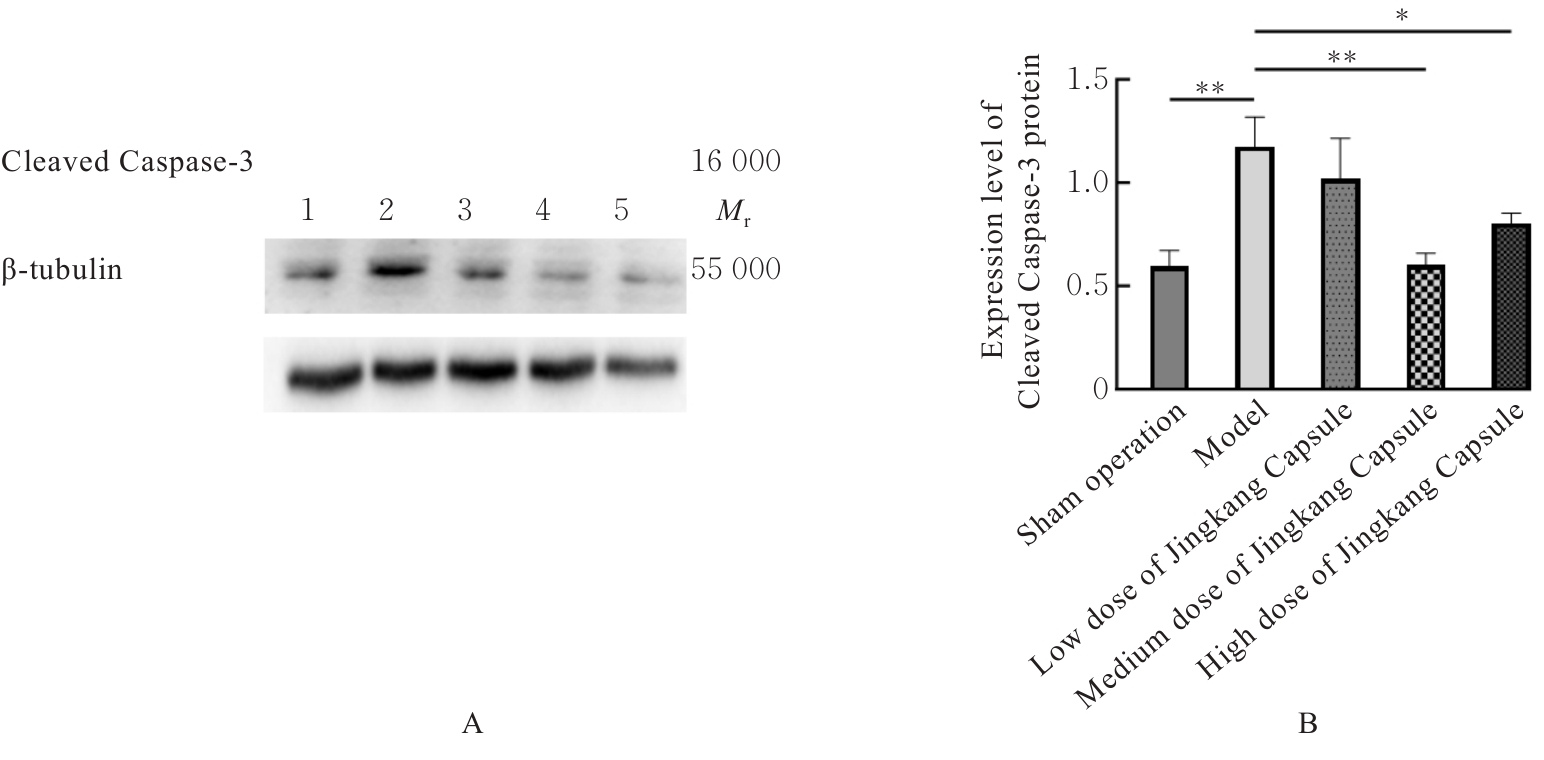
目的 探讨颈康胶囊有效成分对大鼠脑缺血损伤的保护作用,并阐明其可能的作用机制。 方法 选取70只SD大鼠,随机分为假手术组、模型组和低剂量颈康胶囊组(252 mg·kg-1)、中剂量颈康胶囊组(630 mg·kg-1)及高剂量颈康胶囊组(1 260 mg·kg-1),药物用生理盐水配制,各组大鼠每日灌胃给药1次,持续预防给药14 d,假手术组和模型组大鼠给予等体积生理盐水。14 d后假手术组大鼠仅分离血管,不作其他处理,其余组大鼠以线栓法构建脑缺血模型。采用Longa评分法评估各组大鼠神经功能损伤情况,氯化三苯基四氮唑(TTC)染色法检测各组大鼠脑梗死面积,HE染色和尼氏染色观察各组大鼠脑组织病理形态表现。构建“药物-成分-作用靶点”网络,结合生物信息学筛选颈康胶囊的作用靶点。采用Western blotting法检测各组大鼠皮层组织中蛋白激酶B(Akt)和凋亡相关蛋白表达水平。 结果 Longa评分法,与假手术组比较,模型组大鼠出现明显的神经功能缺损,神经功能缺损评分明显升高(P<0.001);与模型组比较,中和高剂量颈康胶囊组大鼠神经功能缺损评分均明显降低(P<0.05或P<0.01)。TTC染色,与假手术组比较,模型组大鼠脑组织中可见明显梗死区域,脑梗死面积百分比明显升高(P<0.001);与模型组比较,中和高剂量颈康胶囊组大鼠脑梗死面积百分比均明显降低(P<0.05或P<0.01)。HE染色和尼氏染色,与假手术组比较,模型组大鼠缺血侧脑组织结构疏松,可见神经元核固缩,神经元中尼氏小体数量明显减少(P<0.001);与模型组比较,中剂量颈康胶囊组大鼠神经元变形减少、排列整齐、结构较完整,神经元中尼氏小体数量明显增加(P<0.01)。利用药物-成分-交集靶点数据构建了“药物-成分-作用靶点”网络,利用cytoHubba插件筛选了排名前10的靶点作为核心靶点。基因本体论(GO)和京都基因与基因组百科全书(KEGG)富集分析,药物-疾病交集靶点主要富集通路大部分与凋亡和炎症等信号通路有关联。Western blotting法,与假手术组比较,模型组大鼠脑组织中磷酸化Akt(p-Akt)/Akt比值明显降低(P<0.01),B细胞淋巴瘤2(Bcl-2)蛋白表达水平明显降低(P<0.01),Bcl-2相关X蛋白(Bax)和裂解的含半胱氨酸的天冬氨酸蛋白酶3(Cleaved Caspase-3)蛋白表达水平均明显升高(P<0.01);与模型组比较,中和高剂量颈康胶囊组大鼠脑组织中p-Akt/Akt比值明显升高(P<0.01或P<0.001),Bcl-2蛋白表达水平明显升高(P<0.05或P<0.01),Bax和Cleaved Caspase-3蛋白表达水平均明显降低(P<0.05或P<0.01)。 结论 颈康胶囊对脑缺血大鼠脑组织具有保护作用,且其保护作用可能与Akt和凋亡相关蛋白表达有关。

关键词: 颈康胶囊, 脑缺血, 网络药理学, Longa神经行为学评分, 蛋白激酶B

Abstract:

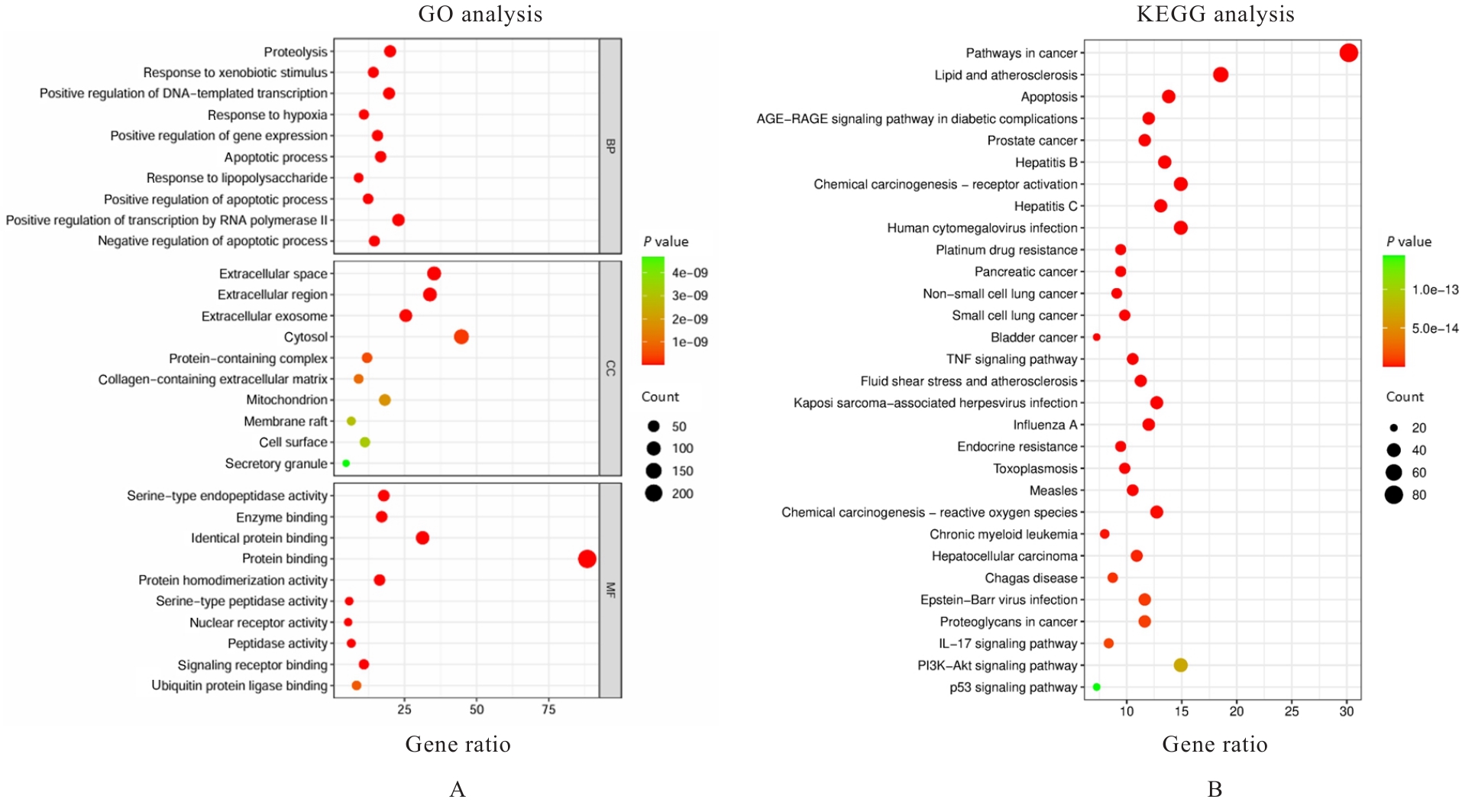
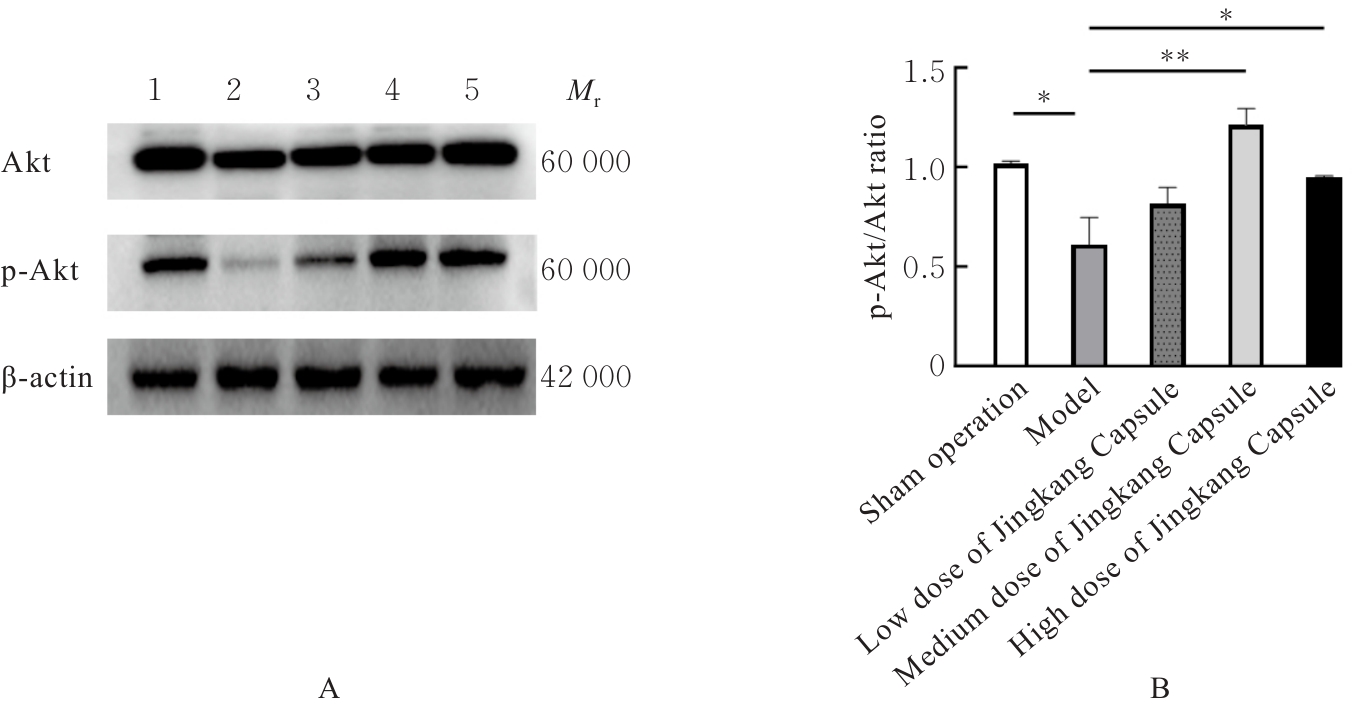
Objective To investigate the protective effect of active components of Jingkang Capsule on cerebral ischemia injury in rats,and to elucidate its possible mechanism. Methods Seventy SD rats were randomly divided into sham operation group, model group, and low dose (252 mg·kg?1), medium dose (630 mg·kg?1), and high dose of Jingkang Capsule (1 260 mg·kg?1) groups. The drugs were prepared with normal saline and administered to the rats via daily oral gavage for 14 consecutive days as preventive treatment. The rats in sham operation group and model group were given equal volumes of normal saline. After 14 days of treatment, the rats in sham operation group underwent only vessel separation without any further treatment, while the rats in other groups were subjected to cerebral ischemia model establishment using the suture occlusion method. Longa scoring method was used to assess neurological deficit in the rats in various groups. Triphenyltetrazolium chloride (TTC) staining was used to detect the cerebral infarction area in the rats in various groups. Hematoxylin-eosin (HE) staining and Nissl staining were used to observe pathomorphological changes in the brain tissues of rats in various groups. A “drug-component-target” network was constructed, and bioinformatics was used to screen the action targets of Jingkang Capsule. Western blotting method was used to detect the expression levels of protein kinase B (Akt) and apoptosis-related proteins in the cortical tissue of the rats in various groups. Results The Longa scoring method results showed that compared with sham operation group, the rats in model group showed significant neurological deficits, and the neurological deficit score was significantly increased (P<0.001). Compared with model group, the neurological deficit scores in medium and high doses of Jingkang Capsule groups were significantly decreased (P<0.05 or P<0.01). The TTC staining results showed that compared with sham operation group, obvious cerebral infarction areas were observed in the brain tissue of the rats in model group, and the percentage of cerebral infarction area was significantly increased (P<0.001). Compared with model group, the percentages of cerebral infarction area of the rats in medium dose and high dose of Jingkang Capsule groups were significantly decreased (P<0.05 or P<0.01). HE staining and Nissl staining results showed that compared with sham operation group, the brain tissue on the ischemic side of the rats in model group had looser structure with visible neuronal pyknosis, and the number of Nissl bodies in neurons was significantly decreased (P<0.001). Compared with model group, the brain tissue on the ischemic side of rats in medium dose of Jingkang Capsule group showed reduced neuronal deformation, orderly arrangement, and relatively intact structure, and the number of Nissl bodies in neurons was significantly increased (P<0.01). A “drug-component-target” network was constructed using drug-component-intersection target data, and the top 10 targets were screened as core targets using the cytoHubba plugin. The Gene Ontology (GO) and Kyoto Encyclopedia of Genes and Genomes (KEGG) enrichment analyses results showed that most enriched pathways of drug-disease intersection targets were related to apoptosis and inflammation signaling pathways. The Western blotting method results showed that compared with sham operation group, the ratio of phosphorylated Akt (p-Akt)/Akt in the brain tissue of the rats in model group was significantly decreased (P<0.01), the expression level of B-cell lymphoma 2 (Bcl-2) protein was significantly decreased (P<0.01), and the expression levels of Bcl-2-associated X protein (Bax) and cleaved cysteinyl aspartate-specific proteinase 3 (Cleaved Caspase-3) proteins were significantly increased (P<0.01). Compared with model group, the p-Akt/Akt ratios in the brain tissue of the rats in medium dose and high dose of Jingkang Capsule groups were significantly increased (P<0.01 or P<0.001), the expression levels of Bcl-2 protein were significantly increased (P<0.05 or P<0.01), and the expression levels of Bax and Cleaved Caspase-3 proteins were significantly decreased (P<0.05 or P<0.01). Conclusion Jingkang Capsule exerts a protective effect on the brain tissue in rats with cerebral ischemia, and its protective effect may be related to the regulation of Akt and apoptosis-related protein expression.

Key words: Jingkang Capsule, Cerebral ischemia, Network pharmacology, Longa neurological behavior score, Protein kinase B

中图分类号: 

  • R285.5