Journal of Jilin University(Engineering and Technology Edition) ›› 2026, Vol. 56 ›› Issue (3): 621-638.doi: 10.13229/j.cnki.jdxbgxb.20241305
Advances in properties of solid waste⁃based controlled low strength material:a review
Hai-hu ZHANG( ),Jin-song QIAN()
- The Key Laboratory of Road and Traffic Engineering,Ministry of Education,Tongji University,Shanghai 201804,China
CLC Number:
- TU528

| [1] | Schandl H, Miatto A. Data on the domestic processed output, balancing items, and solid waste potential for five major world economies[J]. Data in Brief, 2019, 22: 662-675. |
| [2] | Yang S Z, Yao X L, Li J W, et al. Preparation and properties of ready-to-use low-density foamed concrete derived from industrial solid wastes[J]. Construction and Building Materials, 2021, 287: No.122946. |
| [3] | 中华人民共和国生态环境部. 2020年全国大、中城市固体废物污染环境防治年报[R]. 北京: 中华人民共和国生态环境部, 2020. |
| [4] | Nai C X, Tang M Q, Liu Y Q, et al. Potentially contamination and health risk to shallow groundwater caused by closed industrial solid waste landfills: site reclamation evaluation strategies[J]. Journal of Cleaner Production, 2021, 286: No.125402. |
| [5] | Song Q B, Li J H, Zeng X L. Minimizing the increasing solid waste through zero waste strategy[J]. Journal of Cleaner Production, 2015, 104: 199-210. |
| [6] | Zhao D Q, Zhang B L, Shen W G, et al. High industrial solid waste road base course binder: performance regulation, hydration characteristics and practical application[J]. Journal of Cleaner Production, 2021, 313: No.127879. |
| [7] | Islam K M N. Municipal solid waste to energy generation: an approach for enhancing climate co-benefits in the urban areas of Bangladesh[J]. Renewable and Sustainable Energy Reviews, 2018, 81: 2472-2486. |
| [8] | Hoa N T, Matsuoka Y. The analysis of greenhouse gas emissions/reductions in waste sector in Vietnam[J]. Mitigation and Adaptation Strategies for Global Change, 2017, 22(3): 427-446. |
| [9] | Abdoli M A, Rezaei M, Hasanian H. Integrated solid waste management in megacities[J]. Global Journal of Environmental Science and Management, 2016, 2: 289-298. |
| [10] | Chen C, Zhai M Y, Wang X, et al. Development of an industrial solid waste ecological analysis model in Shanghai, China[J]. Environmental Science and Pollution Research, 2024, 31(5): 7396-7407. |
| [11] | Gu J R, Liu X M, Zhang Z Q. Road base materials prepared by multi-industrial solid wastes in China: a review[J]. Construction and Building Materials, 2023, 373: No.130860. |
| [12] | ACI Committee. 229R-13: Report on controlled low-strength materials[R]. Farmington Hills: American Concrete Institute, 2013. |
| [13] | Liu Y L, Su Y P, Xu G Q, et al. Research progress on controlled low-strength materials: metallurgical waste slag as cementitious materials[J]. Materials, 2022, 15(3):No. 727. |
| [14] | Raghavendra T, Udayashankar B. Flow and strength characteristics of CLSM using ground granulated blast furnace slag[J]. Journal of Materials in Civil Engineering, 2014, 26: No.04014050. |
| [15] | Ling T C, Kaliyavaradhan S K, Poon C S. Global perspective on application of controlled low-strength material(CLSM) for trench backfilling-an overview[J]. Construction and Building Materials, 2018, 158: 535-548. |
| [16] | Alizadeh V. Finite element analysis of controlled low strength materials[J]. Frontiers of Structural and Civil Engineering, 2019, 13: 1243-1250. |
| [17] | Mahamaya M, Das S K. Characterization of ferrochrome slag as a controlled low-strength structural fill material[J]. International Journal of Geotechnical Engineering, 2018, 14(3): 312-321. |
| [18] | Riviera P P, Bertagnoli G, Choorackal E, et al. Controlled low-strength materials for pavement foundations in road tunnels: feasibility study and recommendations[J]. Materials and Structures, 2019, 52(4):No. 72. |
| [19] | Farrag K. Controlled low-strength material used around buried pipelines[J]. Transportation Research Record, 2011, 2251(1): 157-164. |
| [20] | Do T M, Kim H K, Kim M J, et al. Utilization of controlled low strength material(CLSM) as a novel grout for geothermal systems: laboratory and field experiments[J]. Journal of Building Engineering, 2020, 29: No.101110. |
| [21] | Do T M, Kang G O, Kim Y S. Thermal conductivity of controlled low strength material(CLSM) under various degrees of saturation using a modified pressure plate extractor apparatus—a case study for geothermal systems[J]. Applied Thermal Engineering, 2018, 143: 607-613. |
| [22] | Parhi S K, Dwibedy S, Panda S, et al. A comprehensive study on controlled low strength material[J]. Journal of Building Engineering, 2023, 76: No.107086. |
| [23] | Li Y C, Liu L, Deng Y F, et al. Unlocking the potential of iron ore tailings in controlled low-strength material: feasibility, performance, and evaluation[J]. Journal of Cleaner Production, 2023, 423: No.138772. |
| [24] | Dev L, Kumar A, Singh C K. Controlled low-strength materials(CLSM) as backfill: experimental investigation on CLSM properties and numerical evaluation of stresses and strains using PLAXIS 2D[J]. Geomechanics and Geoengineering, 2023, 18(6): 577-592. |
| [25] | Zhen G Y, Lu X Q, Zhao Y C, et al. Characterization of controlled low-strength material obtained from dewatered sludge and refuse incineration bottom ash: mechanical and microstructural perspectives[J]. Journal of Environmental Management, 2013, 129: 183-189. |
| [26] | Aggarwal J, Goyal S, Kumar M. Sustainable utilization of industrial by-products spent foundry sand and cement kiln dust in controlled low strength materials (CLSM)[J]. Construction and Building Materials, 2023, 404: No.133315. |
| [27] | Kim Y S, Do T M, Kim M J, et al. Utilization of by-product in controlled low-strength material for geothermal systems: engineering performances, environmental impact, and cost analysis[J]. Journal of Cleaner Production, 2018, 172: 909-920. |
| [28] | Devaraj V, Mangottiri V, Balu S. Prospects of sustainable geotechnical applications of manufactured sand slurry as controlled low strength material[J]. Construction and Building Materials, 2023, 400: No.132747. |
| [29] | Chen H J, Lin H C, Tang C W. Application of the Taguchi method for optimizing the process parameters of producing controlled low-strength materials by using dimension stone sludge and lightweight aggregates[J]. Sustainability, 2021, 13(10): No. 5576. |
| [30] | Dalal P H, Patil M, Iyer K R, et al. Sustainable controlled low strength material from waste materials for infrastructure applications: state-of-the-art[J]. Journal of environmental management, 2023, 342: No.118284. |
| [31] | Mistri A, Illikainen M, Perumal P. Mine tailings and bottom ash from waste incineration as alternative fine aggregates for controlled low-strength materials[J]. Journal of Materials in Civil Engineering, 2024, 36(5): No.04024096. |
| [32] | Wan X, Ding J W, Jiao N, et al. Preparing controlled low strength materials(CLSM) using excavated waste soils with polycarboxylate superplasticizer[J]. Environmental Earth Sciences, 2023, 82(9): No.214. |
| [33] | Guo Q Q, Chen Y H, Xu J, et al. Investigation on mechanical parameters and microstructure of soil-based controlled low-strength materials with polycarboxylate superplasticizer[J]. Applied Sciences, 2024, 14(3): No.1029. |
| [34] | Sheen Y N, Zhang L H, Le D H. Engineering properties of soil-based controlled low-strength materials as slag partially substitutes to Portland cement[J]. Construction and Building Materials, 2013, 48: 822-829. |
| [35] | Huang L J, Wang H Y, Wei C T. Engineering properties of controlled low strength desulfurization slags (CLSDS)[J]. Construction and Building Materials, 2016, 115: 6-12. |
| [36] | Liu Y, Yuan N, Wang S H, et al. Evaluation of the applicability of gasification coarse slag as a fine aggregate in controlled low-strength material: preparation, performance, and environmental effect[J]. Environmental Science and Pollution Research, 2024, 31(10): 14927-14937. |
| [37] | Lachemi M, Hossain K M A, Shehata M, et al. Characteristics of controlled low-strength materials incorporating cement kiln dust[J]. Canadian Journal of Civil Engineering, 2007, 34(4): 485-495. |
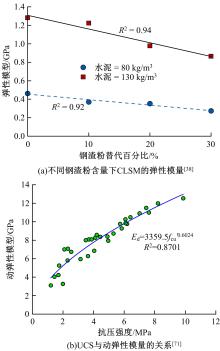
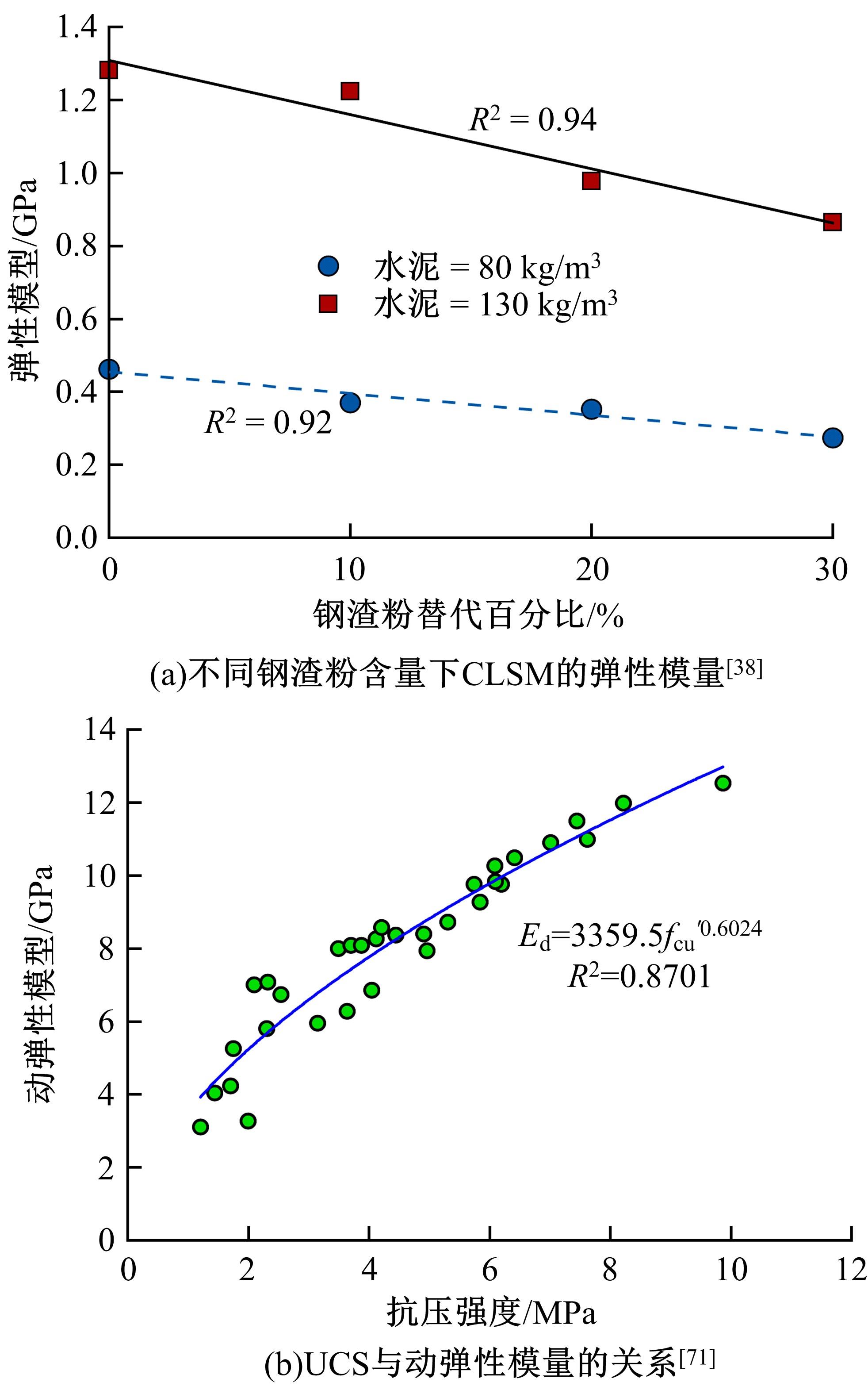
| [38] | Le D H, Nguyen K H. An assessment of eco-friendly controlled low-strength material[J]. Procedia Engineering, 2016, 142: 260-267. |
| [39] | Wang L, You W J, Li C. Effect of steel slag powder on the performance of controlled low-strength materials mixed with recycled aggregates[J]. Indian Geotechnical Journal, 2023, 53(6): 1338-1346. |
| [40] | Kim Y S, Dinh B H, Do T M, et al. Development of thermally enhanced controlled low-strength material incorporating different types of steel-making slag for ground-source heat pump system[J]. Renewable Energy, 2020, 150: 116-127. |
| [41] | Lim S, Lee W, Choo H, et al. Utilization of high carbon fly ash and copper slag in electrically conductive controlled low strength material[J]. Construction and Building Materials, 2017, 157: 42-50. |
| [42] | Wu H, Huang B, Shu X, et al. Utilization of solid wastes/byproducts from paper mills in controlled low strength material(CLSM)[J]. Construction and Building Materials, 2016, 118: 155-163. |
| [43] | Do T, Kim Y S. Engineering properties of controlled low strength material(CLSM) incorporating red mud[J]. International Journal of Geo-Engineering, 2016, 7: 1-17. |
| [44] | Shon C S, Mukhopadhyay A K, Saylak D, et al. Potential use of stockpiled circulating fluidized bed combustion ashes in controlled low strength material (CLSM) mixture[J]. Construction and Building Materials, 2010, 24(5): 839-847. |
| [45] | Kuo W T, Gao Z C. Engineering properties of controlled low-strength materials containing bottom ash of municipal solid waste incinerator and water filter silt[J]. Applied Sciences, 2018, 8(8): No.1377. |
| [46] | Etxeberria M, Ainchil J, Pérez M E, et al. Use of recycled fine aggregates for control low strength materials(CLSMs) production[J]. Construction and Building Materials, 2013, 44: 142-148. |
| [47] | Wang H Y, Chen B T, Wu Y W. A study of the fresh properties of controlled low-strength rubber lightweight aggregate concrete(CLSRLC)[J]. Construction and Building Materials, 2013, 41: 526-531. |
| [48] | Wang H Y. A study of the engineering properties of waste LCD glass applied to controlled low strength materials concrete[J]. Construction and Building Materials, 2009, 23(6): 2127-2131. |
| [49] | Qian J S, Hu Y Y, Zhang J K, et al. Evaluation the performance of controlled low strength material made of excess excavated soil[J]. Journal of Cleaner Production, 2019, 214: 79-88. |
| [50] | Mneina A, Soliman A M, Ahmed A, et al. Engineering properties of controlled low-strength materials containing treated oil sand waste[J]. Construction and Building Materials, 2018, 159: 277-285. |
| [51] | Ho L S, Jhang B J, Hwang C L, et al. Development and characterization of a controlled low-strength material produced using a ternary mixture of Portland cement, fly ash, and waste water treatment sludge[J]. Journal of Cleaner Production, 2022, 356: No.131899. |
| [52] | Shin Y, Jang J G, Choi J, et al. Utilization of artificial interior stone sludge as fine aggregate in controlled low-strength material(CLSM)[J]. Journal of Building Engineering, 2023, 71: No.106441. |
| [53] | Gabr M A, Bowders J J. Controlled low-strength material using fly ash and AMD sludge[J]. Journal of Hazardous Materials, 2000, 76(2): 251-263. |
| [54] | Wang W C, Xue J C, Huang C Y, et al. Incineration bottom ash as aggregate for controlled low strength materials: implications and coping strategies[J]. Journal of Advanced Concrete Technology, 2023, 21: 837-850. |
| [55] | Lachemi M, Hossain K M A, Shehata M, et al. Controlled low strength materials incorporating cement kiln dust from various sources[J]. Cement and Concrete Composites, 2008, 30(5): 381-392. |
| [56] | Wang L, Zou F L, Fang X L, et al. A novel type of controlled low strength material derived from alum sludge and green materials[J]. Construction and Building Materials, 2018, 165: 792-800. |
| [57] | Khadka S D, Okuyucu O, Jayawickrama P W, et al. Controlled low strength materials(CLSM) activated with alkaline solution: flowability, setting time and microstructural characteristics[J]. Case Studies in Construction Materials, 2023, 18: No.e01892. |
| [58] | Zhang S, Jiao N, Ding J W, et al. Utilization of waste marine dredged clay in preparing controlled low strength materials with polycarboxylate superplasticizer and ground granulated blast furnace slag[J]. Journal of Building Engineering, 2023, 76: No. 107351. |
| [59] | Elaqra H A, Haloub M A A, Rustom R N. Effect of new mixing method of glass powder as cement replacement on mechanical behavior of concrete[J]. Construction and Building Materials, 2019, 203: 75-82. |
| [60] | Dinh B H, Kim Y S, Kang G O. Thermal conductivity of steelmaking slag-based controlled low-strength materials over entire range of degree of saturation: a study for ground source heat pump systems[J]. Geothermics, 2020, 88: No. 101910. |
| [61] | Lan W T, Wu A X, Yu P. Development of a new controlled low strength filling material from the activation of copper slag: influencing factors and mechanism analysis[J]. Journal of Cleaner Production, 2020, 246: No.119060. |
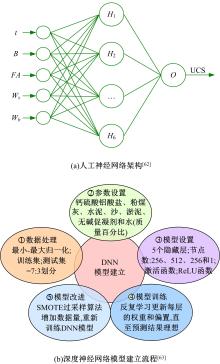
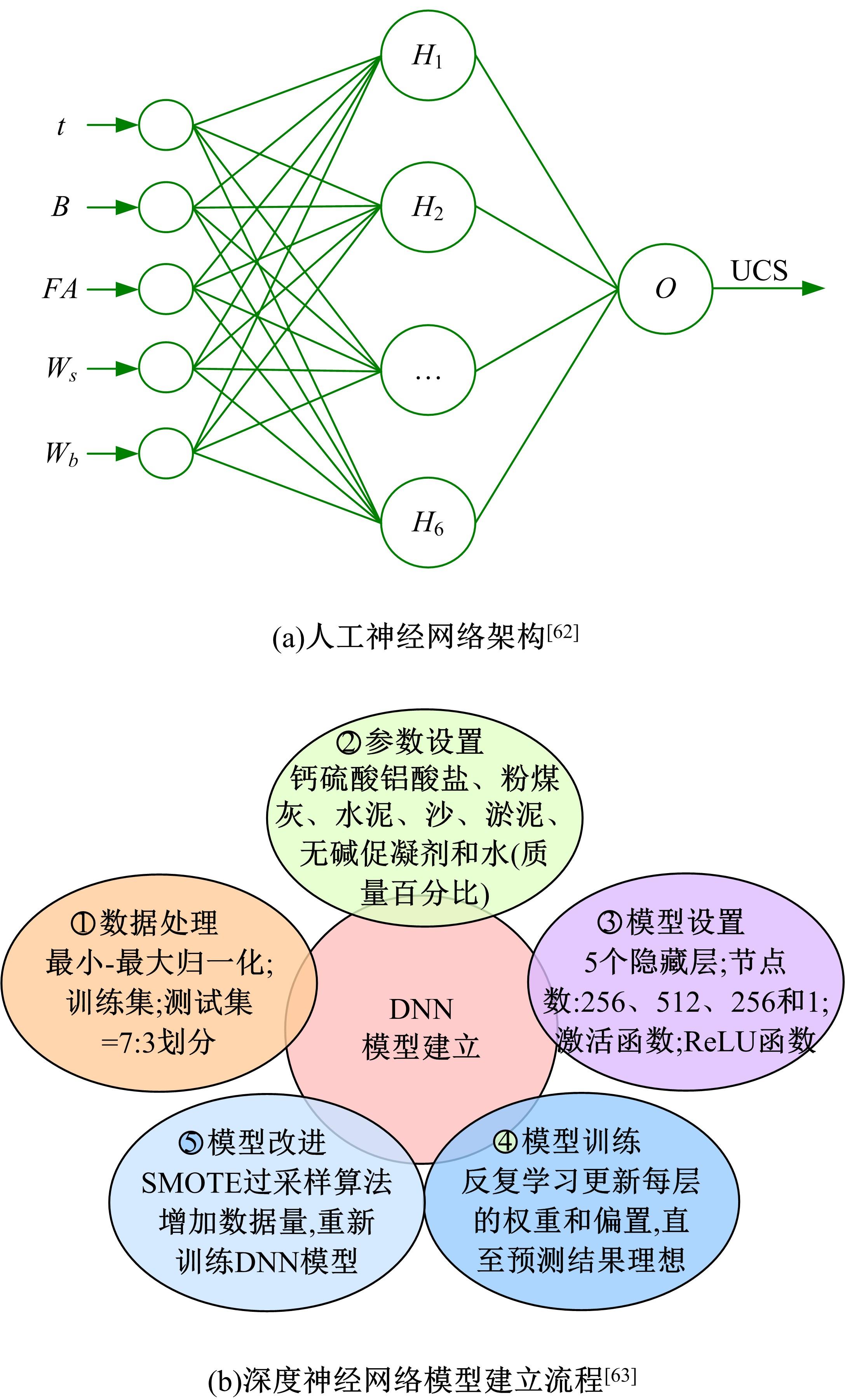
| [62] | Huang L J, Sheen Y N, Le D H. On the multiple linear regression and artificial neural networks for strength prediction of soil-based controlled low-strength material[C]∥The 3rd International Conference on Advanced Materials Design and Mechanics (ICAMDM), Singapore,2014: 349-352. |
| [63] | Han W J, Lee D S, Lee J S, et al. Prediction of flowability and strength in controlled low-strength material through regression and oversampling algorithm with deep neural network[J]. Case Studies in Construction Materials, 2024, 20: No.e03192. |
| [64] | Zhao G, Pan X, Yan H, et al. Predicting engineering properties of controlled low-strength material made from waste soil using optimized SVR models[J]. Case Studies in Construction Materials, 2024, 20: No.e03325. |
| [65] | Türkel S. Long-term compressive strength and some other properties of controlled low strength materials made with pozzolanic cement and Class C fly ash[J]. Journal of Hazardous Materials, 2006, 137(1): 261-266. |
| [66] | Du L X, Folliard Kevin J, Trejo D. Effects of constituent materials and quantities on water demand and compressive strength of controlled low-strength material[J]. Journal of Materials in Civil Engineering, 2002, 14(6): 485-495. |
| [67] | Rahmati M, Toufigh V. Evaluation of geopolymer concrete at high temperatures: an experimental study using machine learning[J]. Journal of Cleaner Production, 2022, 372: No.133608. |
| [68] | Okuyucu O, Jayawickrama P, Senadheera S. The relationship between curing regime and mechanical properties of controlled low-strength material[J]. Construction and Building Materials, 2022, 315: No.125460. |
| [69] | Qian Y F, Jiang M Y. The influence of fiber on the mechanical properties of controllable low-strength materials[J]. Materials, 2023, 16(15): No.5287. |
| [70] | Okuyucu O, Jayawickrama P, Senadheera S. Mechanical properties of steel fiber-reinforced self-consolidating controlled low-strength material for pavement base layers[J]. Journal of Materials in Civil Engineering, 2019, 31(9): No. 04019177. |
| [71] | Zhang J X, Wang J G, Li X H, et al. Rapid-hardening controlled low strength materials made of recycled fine aggregate from construction and demolition waste[J]. Construction and Building Materials, 2018, 173: 81-89. |
| [72] | Kim S C, Kim D J, Byun Y H. Effect of fly ash on strength and stiffness characteristics of controlled low-strength material in shear wave monitoring[J]. Materials, 2021, 14(11): No.3022. |
| [73] | Dev K L, Robinson R G. Pond ash-based controlled low-strength materials for pavement applications[J]. Advances in Civil Engineering Materials, 2019, 8(1): 101-116. |
| [74] | Chompoorat T, Thepumong T, Nuaklong P, et al. Alkali-activated controlled low-strength material utilizing high-calcium fly ash and steel slag for use as pavement materials[J]. Journal of Materials in Civil Engineering, 2021, 33(8): No.0003798. |
| [75] | Chompoorat T, Likitlersuang S, Jongvivatsakul P. The performance of controlled low-strength material base supporting a high-volume asphalt pavement[J]. Journal of Civil Engineering, 2018, 22(6): 2055-2063. |
| [76] | 王帅. 利用地铁盾构渣土制备可控低强度材料的研究[D]. 郑州: 郑州大学土木工程学院, 2020. |
| Wang Shuai. Study on controllable low-strength materials made from subway shield muck[D]. Zhengzhou: School of Civil Engineering, Zhengzhou University, 2020. | |
| [77] | Chiou I J, Chiang C C, Ho C L. Utilization of waste printed circuit board resin in controlled low-strength materials[J]. Advanced Materials Research, 2013, 699: 630-636. |
| [78] | Hunag L J, Wang H Y, Wu Y W. Properties of the mechanical in controlled low-strength rubber lightweight aggregate concrete(CLSRLC)[J]. Construction and Building Materials, 2016, 112: 1054-1058. |
| [79] | Katz A, Kovler K. Utilization of industrial by-products for the production of controlled low strength materials(CLSM)[J]. Waste Management, 2004, 24(5): 501-512. |
| [80] | Kuo W T, Wang H Y, Shu C Y, et al. Engineering properties of controlled low-strength materials containing waste oyster shells[J]. Construction and Building Materials, 2013, 46: 128-133. |
| [81] | Naik T R, Kraus R N, Chun Y, et al. Properties of flowable slurry containing wood ash[J]. Recycling Concrete and Other Materials for Sustainable Development, 2004, 219: 85-98. |
| [82] | Lini D K, Robinson R G. Pond ash based controlled low strength flowable fills for geotechnical engineering applications[J]. International Journal of Geosynthetics and Ground Engineering, 2015, 1(4): 32. |
| [83] | Zhu Y P, Liu D R, Fang G W, et al. Utilization of excavated loess and gravel soil in controlled low strength material: laboratory and field tests[J]. Construction and Building Materials, 2022, 360: No.129604. |
| [84] | Won J P, Lee Y S, Park C G, et al. Durability characteristics of controlled low-strength materials containing recycled bottom ash[J]. Magazine of Concrete Research, 2004, 56(7): 429-436. |
| [85] | Naik T R, Singh S S, Ramme B W. Performance and leaching assessment of flowable sslurry[J]. Journal of Environmental Engineering, 2001, 127(4): 359-368. |
| [86] | Tikalsky P J, Bahia H U, Deng A, et al. Excess foundry sand characterization and experimental investigation in controlled low-strength material and hot-mixing asphalt[R]. United States: Pennsylvania Transportation Institute, Pennsylvania State University, 2004. |
| [87] | Sousa V, Bogas J A, Real S, et al. Industrial production of recycled cement: energy consumption and carbon dioxide emission estimation[J]. Environmental Science and Pollution Research, 2023, 30(4): 8778-8789. |
| [88] | Andrew R M. Global CO2 emissions from cement production, 1928-2018[J]. Earth Syst Sci Data, 2019, 11(4): 1675-1710. |
| [89] | Lee N K, Kim H K, Park I S, et al. Alkali-activated, cementless, controlled low-strength materials(CLSM) utilizing industrial by-products[J]. Construction and Building Materials, 2013, 49: 738-746. |
| [90] | Do Tan M, Kang Gyeong O, Go G H, et al. Evaluation of coal ash-based CLSM made with cementless binder as a thermal grout for borehole heat exchangers[J]. Journal of Materials in Civil Engineering, 2019, 31(6): No.04019072. |
| [91] | Mahamaya M, Jain S, Das S K, et al. Engineering properties of cementless alkali activated CLSM using ferrochrome slag[J]. Journal of Materials in Civil Engineering, 2022, 35(3): No.0004620. |
| [92] | Park S M, Lee N K, Lee H K. Circulating fluidized bed combustion ash as controlled low-strength material(CLSM) by alkaline activation[J]. Construction and Building Materials, 2017, 156: 728-738. |
| [93] | Halmen C, Shah H. Controlled low-strength materials composed solely of by-products[J]. ACI Materials Journal, 2015, 112: 239-246. |
| [94] | Hwang C L, Chiang C H, Huynh T P, et al. Properties of alkali-activated controlled low-strength material produced with waste water treatment sludge, fly ash, and slag[J]. Construction and Building Materials, 2017, 135: 459-471. |
| [95] | Jamali S, Naganathan S. Performance assessment of cementless controlled low-strength material(CLSM) utilizing coal ashes[J]. Jordan Journal of Civil Engineering, 2015, 9: 102-116. |
| [96] | Jiang M Y, Qian Y F, Sun Q. Preparation of controlled low-strength materials from alkali-excited red mud-slag-iron tailings sand and a study of the reaction mechanism[J]. Environmental Science and Pollution Research, 2023, 30(9): 22232-22248. |
| [97] | Jang J G, Park S M, Chung S, et al. Utilization of circulating fluidized bed combustion ash in producing controlled low-strength materials with cement or sodium carbonate as activator[J]. Construction and Building Materials, 2018, 159: 642-651. |
| [98] | Manh Do T, Kang G O, Kim Y S. Development of a new cementless binder for controlled low strength material(CLSM) using entirely by-products[J]. Construction and Building Materials, 2019, 206: 576-589. |
| [99] | Do Tan M, Kang Gyeong O, Go G H, et al. Evaluation of coal ash-based CLSM made with cementless binder as a thermal grout for borehole heat exchangers[J]. Journal of Materials in Civil Engineering, 2019, 31(6): No.04019072. |
| [100] | Achtemichuk S, Hubbard J, Sluce R, et al. The utilization of recycled concrete aggregate to produce controlled low-strength materials without using Portland cement[J]. Cement and Concrete Composites, 2009, 31(8): 564-569. |
| [101] | Lachemi M, Şahmaran M, Hossain K M A, et al. Properties of controlled low-strength materials incorporating cement kiln dust and slag[J]. Cement and Concrete Composites, 2010, 32(8): 623-629. |
| [102] | Xiao R, Polaczyk P, Jiang X, et al. Cementless controlled low-strength material(CLSM) based on waste glass powder and hydrated lime: synthesis, characterization and thermodynamic simulation[J]. Construction and Building Materials, 2021, 275: No.122157. |
| [103] | Chindaprasirt P, Jaturapitakkul C, Chalee W, et al. Comparative study on the characteristics of fly ash and bottom ash geopolymers[J]. Waste Management, 2009, 29(2): 539-543. |
| [104] | Wang A G, Zheng Y, Zhang Z H, et al. The durability of alkali-activated materials in comparison with ordinary portland cements and concretes: a review[J]. Engineering, 2020, 6(6): 695-706. |
| [1] | Ling XU,Xiao-bing WANG,Jie YUAN,Hua-ping REN,Yi-feng HAN,Xi-yong XU. Controlled low strength materials based on silty sand and its properties in narrow backfill zone [J]. Journal of Jilin University(Engineering and Technology Edition), 2025, 55(8): 2657-2668. |
| [2] | Qiong FENG,Xiao-yang XIE,Peng-hui WANG,Hong-xia QIAO,Yun-xia MA. Prediction of reinforced concrete durability based on whale optimization algorithm-back propagation neural network [J]. Journal of Jilin University(Engineering and Technology Edition), 2025, 55(7): 2276-2285. |
| [3] | Wen-yuan XU,Wei LI,Da-yang WANG,Yong-cheng JI. Damage mechanism of FRP reinforced concrete under alkali freezing coupling effect [J]. Journal of Jilin University(Engineering and Technology Edition), 2025, 55(6): 2050-2062. |
| [4] | Kai-xiang CHEN,He-nian ZHANG,Pei-sheng XI,Chang-dan WANG,Tao YU,Bing-xin ZHANG. Influence of carbonization humidity on mechanics and durability of carbonization block [J]. Journal of Jilin University(Engineering and Technology Edition), 2024, 54(2): 445-452. |
| [5] | Xu-dong LI,Xin-yu WANG,Cheng TIAN,Xin-feng ZHANG,Zhi-hui NIU,Zhi-qiang ZHAO. Compiling vehicle durability load spectrum based on customer usage correlation [J]. Journal of Jilin University(Engineering and Technology Edition), 2024, 54(1): 66-75. |
| [6] | Kong-hui GUO,Shi-qing HUANG,Hai-dong WU,Dang LU. UniTire tire model including in⁃plane dynamic characteristics [J]. Journal of Jilin University(Engineering and Technology Edition), 2023, 53(12): 3305-3313. |
| [7] | Nai-jie CHAI,Wen-liang ZHOU. Durability assessment model of reinforced concrete bridges based on improved positive and negative clouts decision theory [J]. Journal of Jilin University(Engineering and Technology Edition), 2023, 53(12): 3481-3491. |
| [8] | Kai CUI,Peng-fei XU,Jing-jing HUANG,Xiang-peng YU,Xiao-hai WANG. Comparison of bond performance between grouting slurry and soil interface in soil sites and durability in arid environment [J]. Journal of Jilin University(Engineering and Technology Edition), 2023, 53(10): 2856-2868. |
| [9] | Chang-kai WEN,Bin XIE,Zheng-he SONG,Jian-gang HAN,Qian-wen YANG. Design method of tractor durability accelerated structure test [J]. Journal of Jilin University(Engineering and Technology Edition), 2022, 52(3): 703-715. |
| [10] | Dong TANG,Yu-bin HAN,Lun HUA,Jin-chong PAN,Sheng LIU. Effect of lubricating oil ash on performance of gasoline particle filter in direct injection gasoline engine [J]. Journal of Jilin University(Engineering and Technology Edition), 2022, 52(11): 2501-2507. |
| [11] | Wen-long MU,Jing-xin NA,Wei TAN,Guang-bin WANG,Hao SHEN,Jian-ze LUAN. Residual strength prediction of adhesive CFRP-aluminum alloy adhesively bonded joint based on FTIR analysis [J]. Journal of Jilin University(Engineering and Technology Edition), 2021, 51(1): 139-146. |
| [12] | Jie YUAN,Xin CHEN,Hong-lin HE,Bo YANG,Xiao-jun ZHU. Repair and rejuvenation of cracked concrete by microbiologically⁃induced calcite⁃precipitation [J]. Journal of Jilin University(Engineering and Technology Edition), 2020, 50(2): 641-647. |
| [13] | Zhe WANG,Yi XIE,Peng-fei ZANG,Yao WANG. Energy management strategy of fuel cell bus based on Pontryagin′s minimum principle [J]. Journal of Jilin University(Engineering and Technology Edition), 2020, 50(1): 36-43. |
| [14] | NA Jing-xin, PU Lei-xin, FAN Yi-sa, SHEN Chuan-liang. Effect of temperature and humidity on the failure strength of Sikaflex-265 aluminum adhesive joints [J]. Journal of Jilin University(Engineering and Technology Edition), 2018, 48(5): 1331-1338. |
| [15] | LAN Feng-chong, LI Zhong-chao, ZHOU Yun-jiao, CHEN Ji-qing. Stress distribution and strength prediction of aluminum-magnesium alloy adhesive-bonded single-lap joints [J]. 吉林大学学报(工学版), 2015, 45(3): 726-732. |
|
||