吉林大学学报(医学版) ›› 2026, Vol. 52 ›› Issue (1): 211-218.doi: 10.13481/j.1671-587X.20260122

• 临床研究 • 上一篇    下一篇

滑动内收过程中下前牙不同转矩控制对牙齿移动影响的三维有限元分析

杨雪桐,杨雨坤,马玲,张馨元,侯建华()   

  1. 吉林大学口腔医院正畸科,吉林 长春 130021
  • 收稿日期:2025-01-21 接受日期:2025-03-10 出版日期:2026-01-28 发布日期:2026-02-24
  • 通讯作者: 侯建华 E-mail:houjh@jlu.edu.cn
  • 作者简介:杨雪桐(1997-),女,海南省三亚市人,在读硕士研究生,主要从事口腔正畸生物力学方面的研究。
  • 基金资助:
    吉林省科技厅科技发展计划项目(20190303156SF);吉林省财政厅骨干人才项目(jcsz2023481-18)

Three-dimensional finite element analysis on effects of different anterior torque controls on mandibular teeth movement in sliding mechanics

Xuetong YANG,Yukun YANG,Ling MA,Xinyuan ZHANG,Jianhua HOU()   

  1. Department of Orthodontics,Stomatology Hospital,Jilin University,Changchun 130021,China
  • Received:2025-01-21 Accepted:2025-03-10 Online:2026-01-28 Published:2026-02-24
  • Contact: Jianhua HOU E-mail:houjh@jlu.edu.cn

摘要:

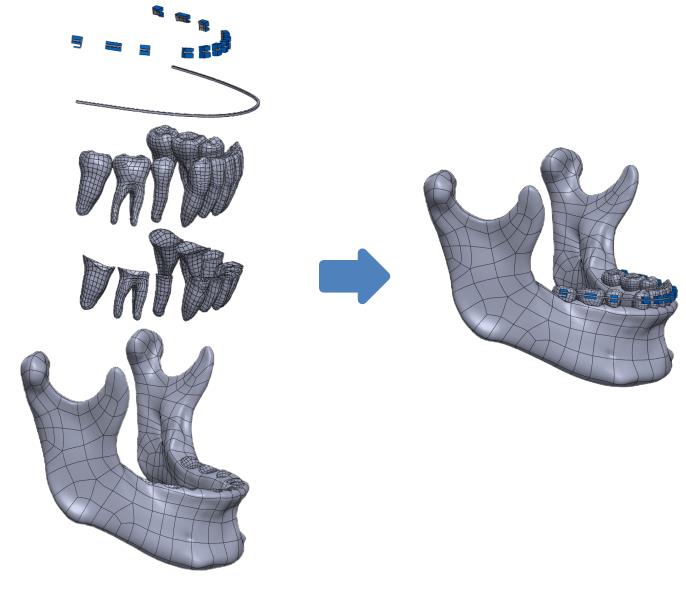
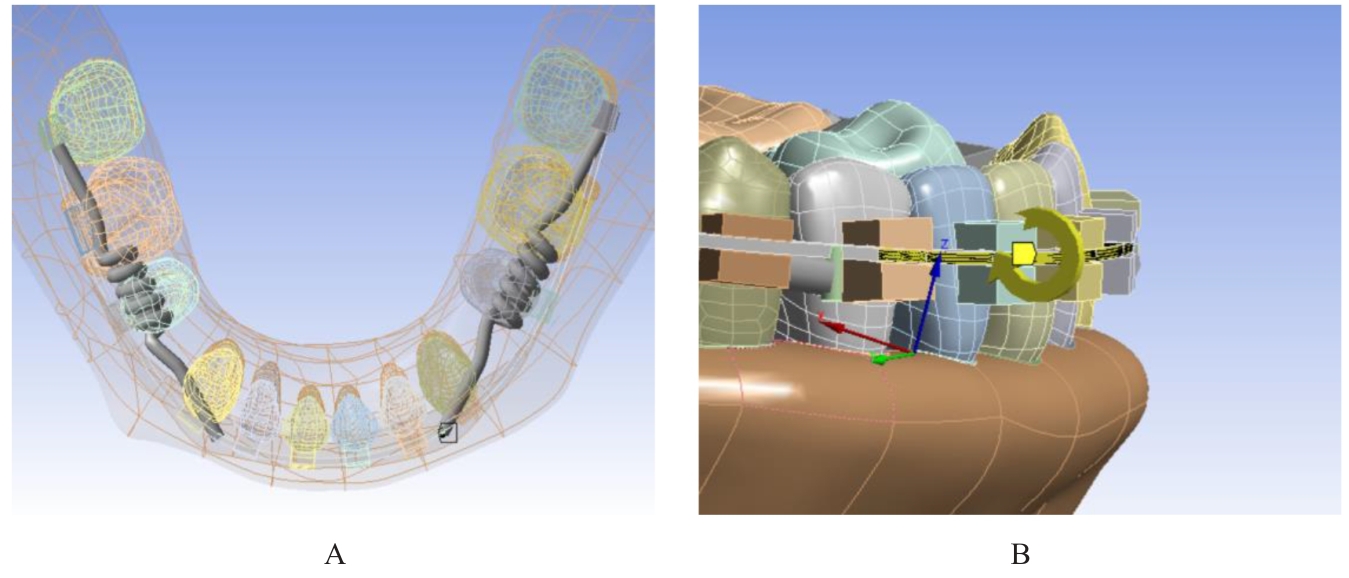
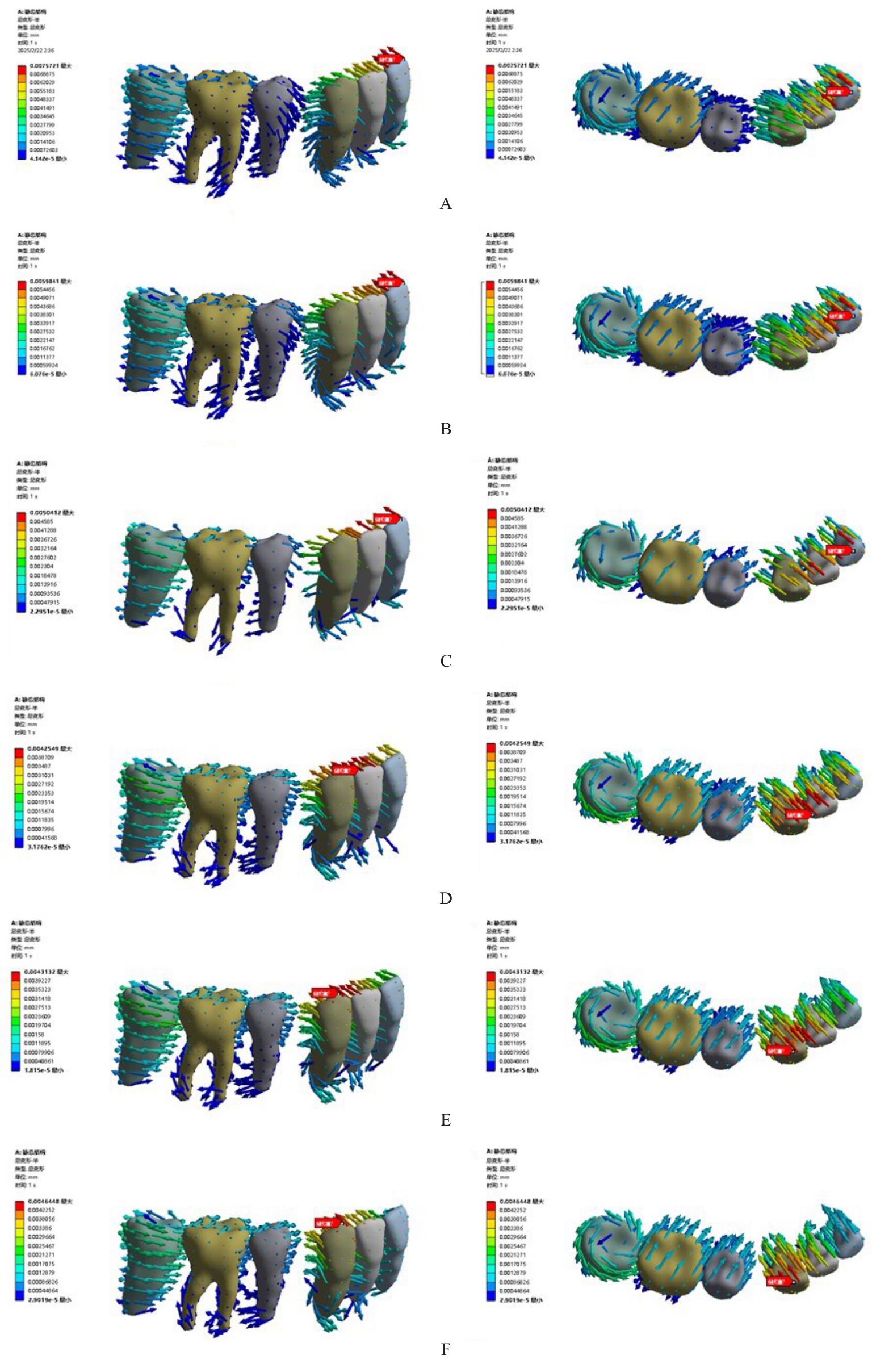
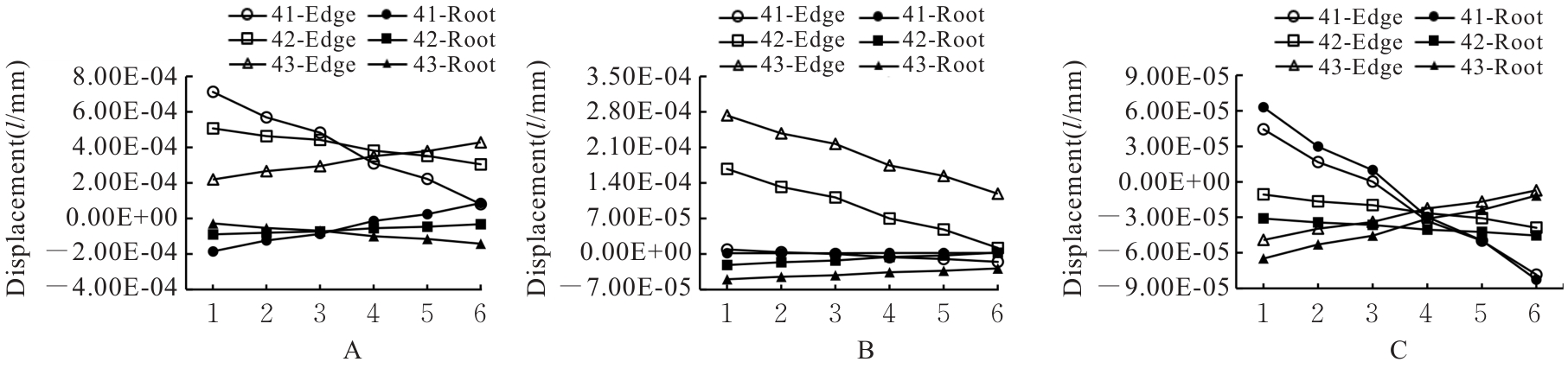
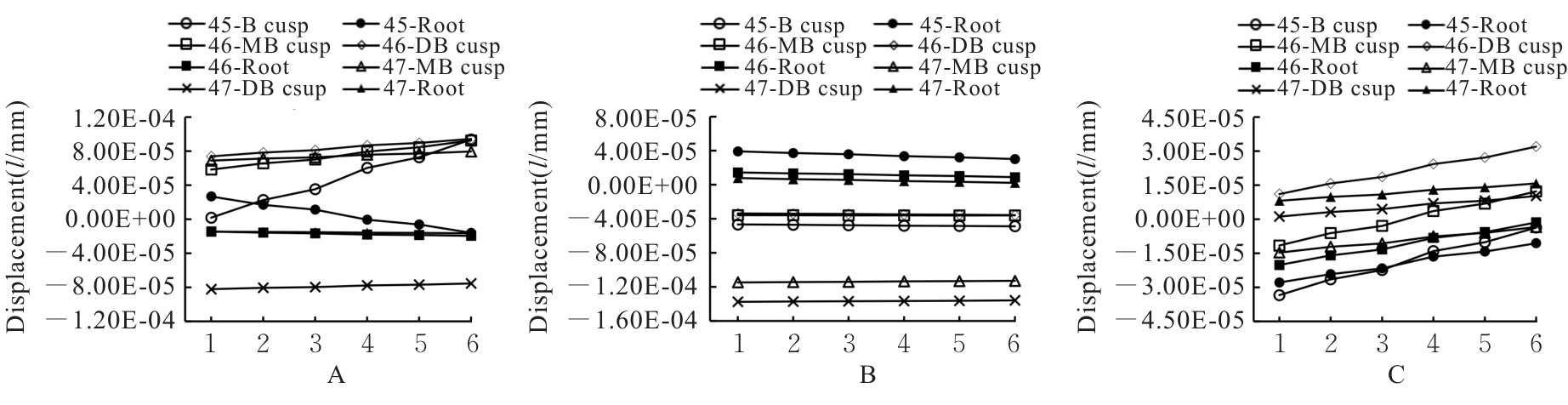
目的 建立拔牙矫治直丝弓滑动内收下前牙的三维有限元模型,通过在下颌前牙模拟使用不同转矩控制前牙内收,阐明前牙不同转矩控制在滑动内收过程中对下颌牙齿移动产生的影响。 方法 选取1例拟拔除下颌第一前磨牙进行矫治的恒牙列患者的锥形束计算机断层扫描(CBCT)数据,通过建模软件Mimics 21.0、Geomagic Wrap 2021和Solidworks 2022建立直丝弓滑动内收下前牙的三维有限元模型,在有限元分析软件Ansys Workbench 2021R1中,分别建立下前牙施加-11°、-6°、-3°、+3°、+6°和+11° 6种转矩的工况,并加载1.5 N的内收力整体内收下颌前牙,分析不同工况下下颌牙齿在唇(颊)舌方向、近远中方向和垂直方向上的初始位移趋势。 结果 在唇(颊)舌向和垂直方向上,前牙转矩对中切牙与侧切牙产生唇倾和压低的趋势,且该趋势随转矩增加逐渐明显;对牙弓中其他牙齿则产生舌倾和伸长的趋势,其中以尖牙和第二前磨牙受转矩变化影响最大,其次为第一磨牙,第二磨牙主要受内收力影响,整体表现为近中舌侧扭转的位移趋势,受转矩变化影响较小。近远中方向上,前牙转矩变化对后牙近中移动量影响不显著。 结论 前牙的不同转矩对牙弓中其他牙齿会产生伸长和舌向倾斜移动的影响,程度取决于牙齿在牙弓中的位置,靠后的牙齿受转矩变化影响较小,受内收力影响较大,在临床上对前牙进行不同转矩控制时应对施加转矩以外的其他牙齿移动给予关注。

关键词: 转矩, 三维有限元分析, 滑动直丝弓, 牙齿移动, 拔牙矫治

Abstract:

Objective To establish a three-dimensional finite element model of mandibular teeth during retraction in sliding mechanics, by simulating the application of different torque controls of anterior teeth, and to clarify the impact of different torque controls on the movement of mandibular teeth during the retraction process. Methods Using cone beam computed tomography (CBCT) data from a permanent dentition patient scheduled for mandibular first premolar extraction in orthodontic treatment, a three-dimensional finite element model of straight-wire sliding retraction of mandibular teeth was constructed via Mimics, Geomagic Wrap, and Solidworks software. In Ansys Workbench software, six conditions with different torques of -11°, -6°, -3°, +3°, +6° and+11° were applied to the mandibular anterior teeth, with a 1.5 N retraction force loaded. The initial displacement trends of each mandibular teeth in the labiolingual, mesiodistal, and vertical directions were analyzed under these conditions. Results In the buccolingual directions, different anterior torques exerted a tendency to procline and intrude the central and lateral incisors, with this tendency becoming increasingly evident as the torque increased. For other teeth in the lower arch, it induced a lingual tip and extrusion trend, with the canines and second premolars being the most affected by torque changes, followed by the first molars. The second molars were primarily influenced by the retraction force, exhibiting a displacement trend of mesiallingual rotation and were less affected by torque changes. In the mesialdistal direction, the changes in anterior torques had no significant impact on the posterior teeth. Conclusion Different anterior torques lead to extrusion and lingual tipping movements of other teeth in the mandibular arch, with this influence also depending on the position of the teeth within the arch. Teeth located more posteriorly are less affected by torque changes but are more influenced by the retraction force. When applying different torques to control anterior teeth clinically, the clinicans should pay more attention to the movements of other teeth.

Key words: Torque, Three-dimersional finite element analysis, Sliding straight wire, Tooth movement, Extraction treatment

中图分类号: 

  • R783.5