吉林大学学报(医学版) ›› 2025, Vol. 51 ›› Issue (4): 1115-1120.doi: 10.13481/j.1671-587X.20250428

• 临床医学 • 上一篇    

卵巢硬化性间质瘤误诊恶性肿瘤1例报告及文献复习

杨佳1,佟玲玲2,马金姝3,耿华锋2()   

  1. 1.吉林省长春市中心医院妇产科,吉林 长春 130051
    2.吉林大学中日联谊医院妇产科,吉林 长春 130033
    3.吉林大学中日联谊医院病理科,吉林 长春 130033
  • 收稿日期:2025-01-07 接受日期:2025-04-28 出版日期:2025-07-28 发布日期:2025-08-25
  • 通讯作者: 耿华锋 E-mail:530600199@qq.com
  • 作者简介:杨 佳(1984-),女,吉林省延吉市人,副主任医师,医学硕士,主要从事妇科肿瘤基础和临床方面的研究。
  • 基金资助:
    吉林省卫健委卫生健康科技能力提升项目(2022LC120);吉林省科技厅科技发展计划项目(20240401053YY)

Misdiagnosis of ovarian sclerosing stromal tumor as malignant tumor: A case report and literature review

Jia YANG1,Lingling TONG2,Jinshu MA3,Huafeng GENG2()   

  1. 1.Department of Obstetrics and Gynecology,Central Hospital,Changchun City,Jilin Province,Changchun 130051,China
    2.Department of Obstetrics and Gynecology,China-Japan Union Hospital,Jilin University,Changchun 130033,China
    3.Department of Pathology,China-Japan Union Hospital,Jilin University,Changchun 130033,China
  • Received:2025-01-07 Accepted:2025-04-28 Online:2025-07-28 Published:2025-08-25
  • Contact: Huafeng GENG E-mail:530600199@qq.com

摘要:

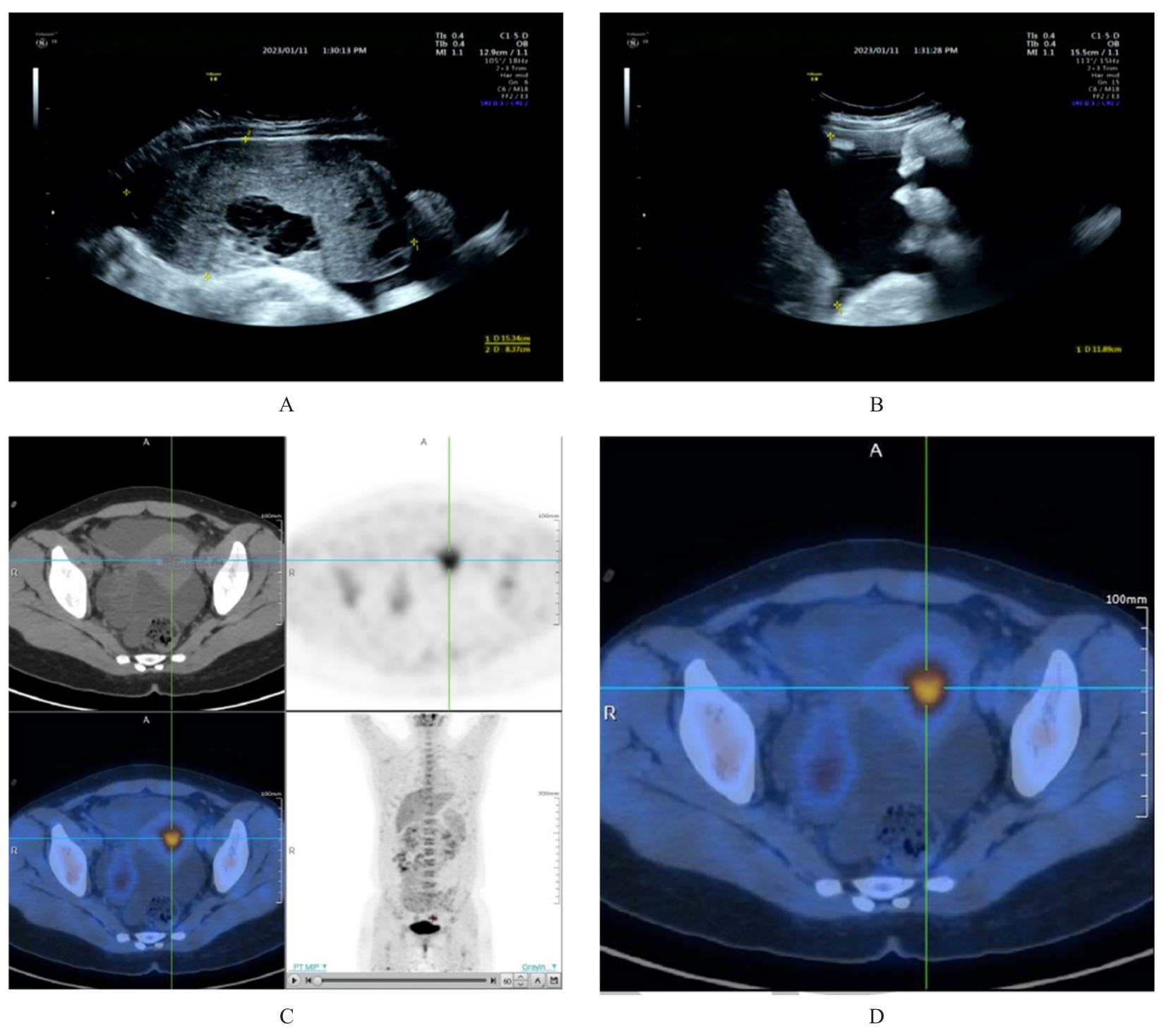
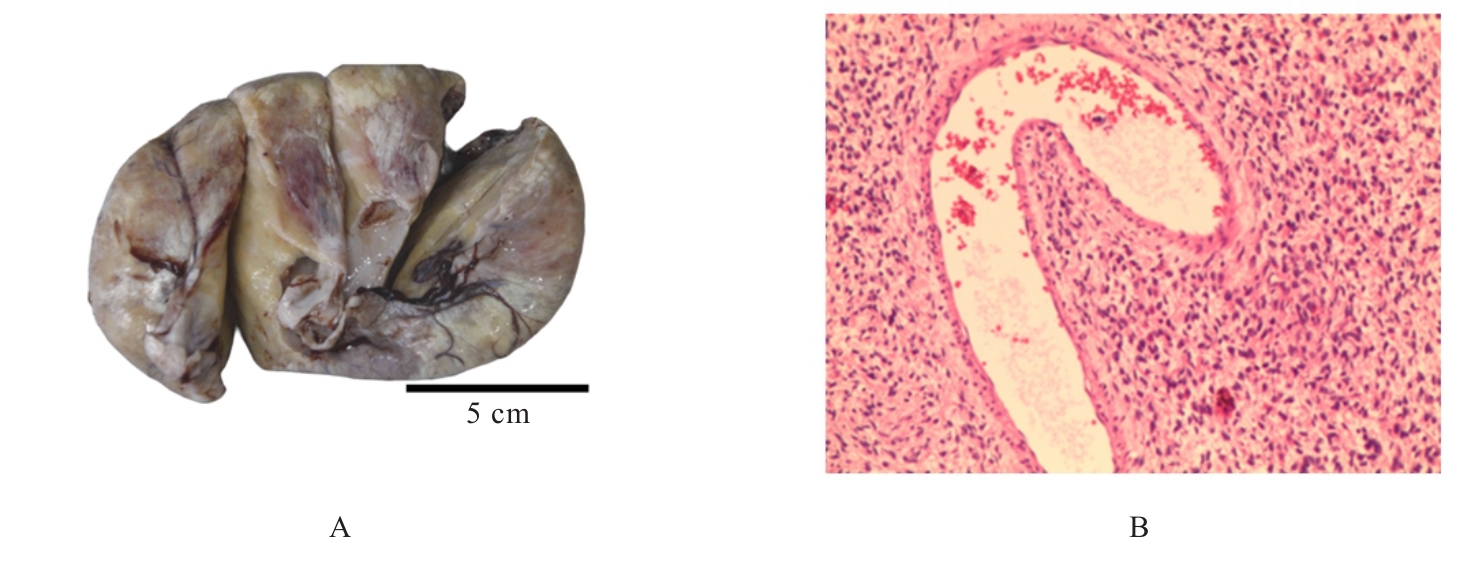
卵巢硬化性间质瘤(OSST)是一种起源于卵巢性索-间质的良性肿瘤,仅占卵巢间质肿瘤的2%~6%,好发于年轻女性,同时并发Meigs综合征的OSST极为罕见。本研究报道1例OSST患者,对其临床表现进行总结,并结合相关文献进行复习。患者,女性,22岁,因腹胀2个月,加重1周入院。查体腹部膨隆,移动性浊音阳性,轻压痛,无肌紧张及反跳痛。盆腹腔内触及大小为16.0 cm×14.0 cm×8.0 cm包块,质韧,活动性尚可,无压痛。妇科彩超显示子宫左上方探及大小为15.3 cm×14.0 cm×8.4 cm囊实混合回声,边界清晰,盆腹腔内可见液性暗区,最大前后径约为11.9 cm。CT显示下腹部及右附件区团块状囊实混合密度影,考虑为肿瘤性病变,实性部分伴糖代谢增高,倾向恶性。糖类抗原125(CA125)>800 U·mL-1,盆腔穿刺脱离细胞提示未见癌细胞。考虑为卵巢良性或交界性肿瘤可能性大,需与卵巢恶性肿瘤相鉴别。根据术中所见及快速病理结果行左侧卵巢瘤核出术,术后病理结果回报为卵巢硬化性间质瘤。术后随访2年,未见异常。OSST作为一种卵巢良性肿瘤,其临床表现常与恶性肿瘤相混淆,极易造成误诊,应提高早期诊断准确性,为患者制订最佳治疗方案。

关键词: 卵巢硬化性间质瘤, 卵巢恶性肿瘤, Meigs综合征, 糖代谢, 误诊

Abstract:

Ovarian sclerosing stromal tumor (OSST) is a benign tumor originating from the ovarian sex cord-stroma, accounting for only 2%-6% of ovarian stromal tumors. It predominantly occurs in young women, and cases of OSST concurrently presenting with Meigs syndrome are extremely rare. This study reports a case of OSST, summarizes its clinical manifestations, and reviews relevant literature. The patient, a 22-year-old female, was admitted due to abdominal distension for 2 months, worsening over the past week. The physical examination results revealed abdominal distension, shifting dullness, mild tenderness, and no muscle tension or rebound tenderness. A mass measuring approximately 16.0 cm×14.0 cm×8.0 cm was palpated in the pelvic and abdominal cavity, with a firm texture, moderate mobility, and no tenderness. The gynecological ultrasound results showed a mixed cystic-solid echo of about 15.3 cm×14.0 cm×8.4 cm above the left side of the uterus, with clear boundaries, and fluid-filled dark areas in the pelvic and abdominal cavity, with a maximum anteroposterior diameter of about 11.9 cm. The-CT results revealed a cystic-solid mixed-density mass in the lower abdomen and right adnexal area, suggestive of a neoplastic lesion, with increased glucose metabolism in the solid portion, leaning toward malignancy. Carbohydrate antigen 125 (CA125) was >800 U·mL-1, and pelvic puncture cytology indicated no cancer cells. The findings suggested a benign or borderline ovarian tumor, requiring differentiation from ovarian malignant tumors. Based on intraoperative observations and rapid pathological results, a left ovarian tumor enucleation was performed. Postoperative pathology confirmed ovarian sclerosing stromal tumor. Follow-up over 2 years showed no abnormalities. As a benign ovarian tumor, the clinical manifestations of OSST often mimic those of malignant tumors, leading to frequent misdiagnosis. Early diagnostic accuracy should be improved to develop the optimal treatment plan for patients.

Key words: Ovarian sclerosing stromal tumor, Ovarian malignant tumor, Meigs syndrome, Glucose metabolism, Misdiagnosis

中图分类号: 

  • R713.6