吉林大学学报(医学版) ›› 2025, Vol. 51 ›› Issue (3): 680-690.doi: 10.13481/j.1671-587X.20250313

• 基础研究 • 上一篇    

赤芍活性成分联合应用对粪肠球菌的抑制作用及其机制

张加妮,赛杰,周玉,杨淼,孙淑芬()   

  1. 吉林大学口腔医院牙体牙髓科,吉林 长春 130021
  • 收稿日期:2024-10-21 接受日期:2024-12-15 出版日期:2025-05-28 发布日期:2025-07-18
  • 通讯作者: 孙淑芬 E-mail:gzwssf@163.com
  • 作者简介:张加妮(1993-),女,吉林省长春市人,在读硕士研究生,主要从事牙体牙髓疾病方面的研究。
  • 基金资助:
    吉林省教育厅“十三五”科学技术项目(JJKH20190092KJ)

Inhibitory effect of combined application of active components of Paeoniae Rubra Radix on Enterococcus faecalis and its mechanism

Jiani ZHANG,Jie SAI,Yu ZHOU,Miao YANG,Shufen SUN()   

  1. Department of Endodontics,Stomatology Hospital,Jilin University,Changchun 130021,China
  • Received:2024-10-21 Accepted:2024-12-15 Online:2025-05-28 Published:2025-07-18
  • Contact: Shufen SUN E-mail:gzwssf@163.com

摘要:

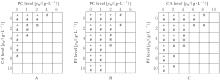
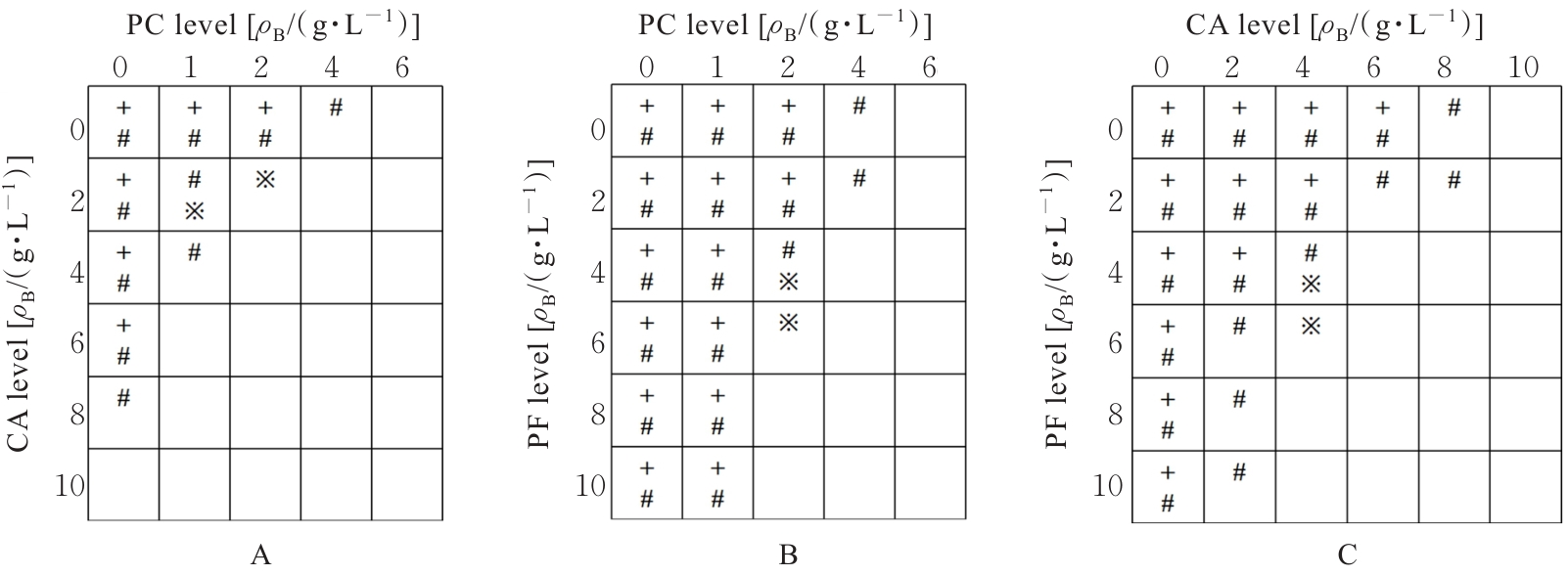
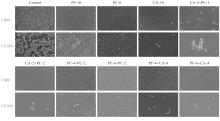
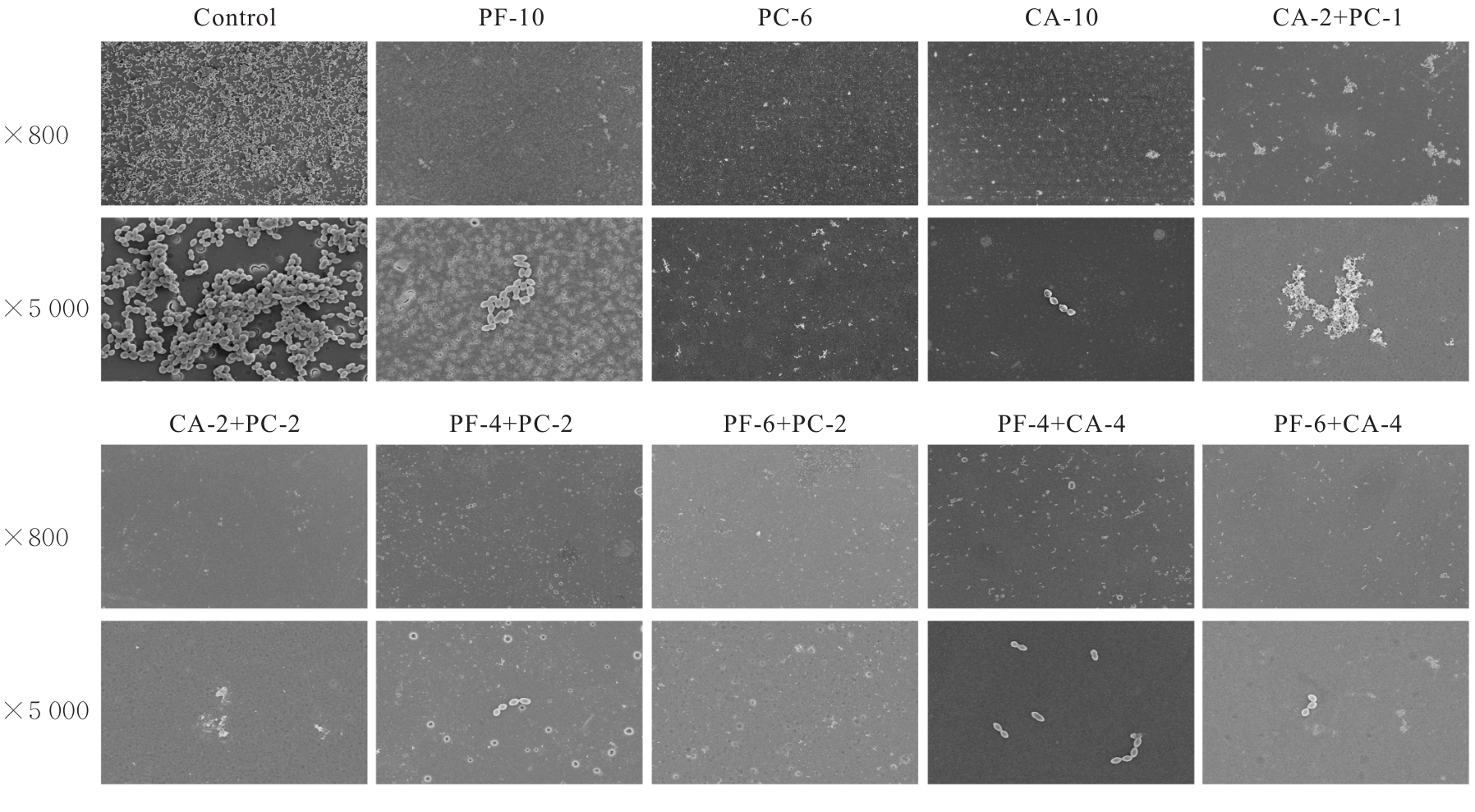
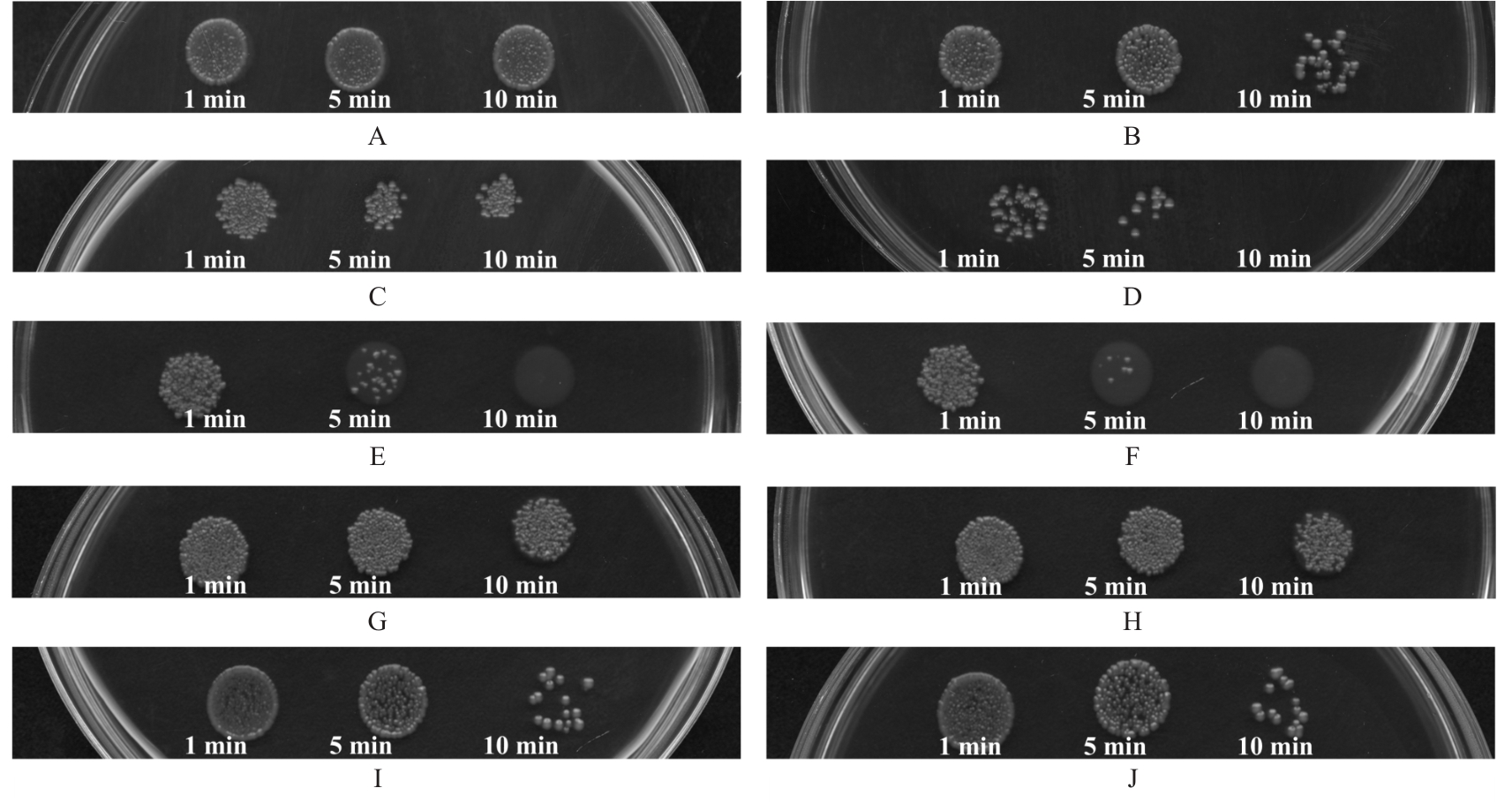
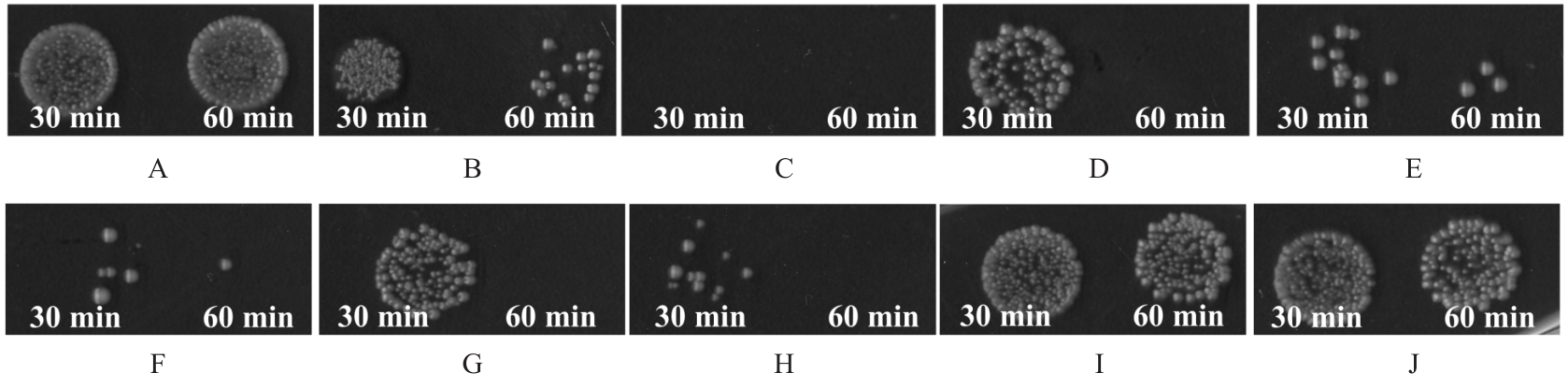
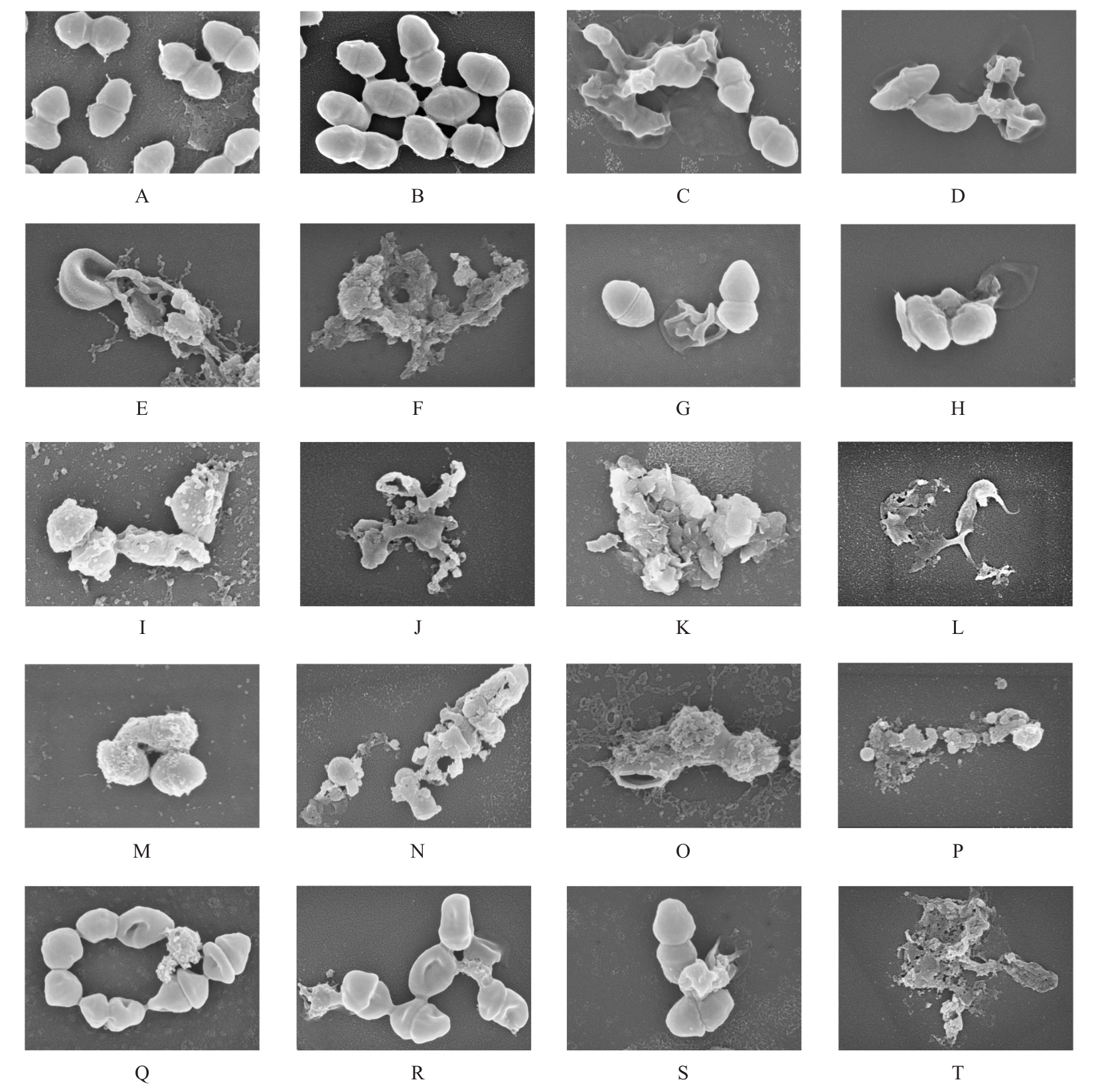
目的 探讨赤芍活性成分芍药苷(PF)、原花青素(PC)和绿原酸(CA),联合应用对粪肠球菌(E.faecalis)及生物膜的抑制作用,并阐明其作用机制。 方法 采用微量稀释法检测CA、PC和PF对E.faecalis的最小抑菌浓度(MIC)及最小杀菌浓度(MBC),棋盘稀释法检测赤芍3种活性成分联合应用部分抑菌浓度指数(FICI)和部分杀菌浓度指数(FBCI)。实验分为对照组、高浓度单药组(PF-10组、PC-6组和CA-10组)及药物联合应用组(CA-2+PC-1组、CA-2+PC-2组、PF-4+PC-2组、PF-6+PC-2组、PF-4+CA-4组和PF-6+CA-4组)。结晶紫染色检测3种活性成分联合应用各组E.faecalis生物膜形成情况,扫描电镜(SEM)观察赤芍3种活性成分联合应用各组E.faecalis生物膜形态表现,点板试验检测赤芍3种活性成分联合应用对各组E.faecalis浮游菌和生物膜的抑制作用,SEM观察赤芍3种活性成分联合应用各组E.faecalis胞膜损伤情况,试剂盒检测赤芍3种活性成分联合应用各组E.faecalis浮游菌和生物膜中腺嘌呤核苷三磷酸(ATP)水平。 结果 赤芍3种活性成分中PC的MIC为4 g·L-1,MBC为6 g·L-1;CA的MIC为8 g·L-1,MBC为10 g·L-1;PF的MIC和MBC均>10 g·L-1,选取PF浓度为10 g·L-1。PC与CA联合应用具有协同作用,PC与PF联合应用具有相加作用,CA与PF联合应用具有相加作用。结晶紫染色,与对照组比较,PF-10组、PC-6组、CA-10组和各药物联合应用组E.faecalis生物膜形成量均明显降低(P<0.01);与PF-10组比较,PC-6组、CA-10组CA-2+PC-1组、CA-2+PC-2组、PF-4+PC-2组、PF-6+PC-2组和PF-6+CA-4组E.faecalis生物膜形成量均明显降低(P<0.05或P<0.01)。扫描电镜观察,对照组E.faecalis生物膜较厚,细菌之间紧密连接,形态规则,且细胞膜完整;PF-10组、PC-6组和CA-10组E.faecalis生物膜厚度明显降低,细菌间的排列变得相对疏松;各药物联合应用组可见E.faecalis生物膜均明显减少乃至完全消失,高倍镜下可见生物膜结构完全消失,细菌碎片相互黏附聚集,失去原有的细菌形态。点板试验,与对照组比较,作用5、10和30 min后PF-10组、PC-6组及CA-10组E.faecalis浮游菌菌落明显减少,提示其对E.faecalis的杀伤作用逐渐增强;各药物联合应用组中,PC与CA联合应用在5 min内可见E.faecalis浮游菌菌落明显减少,对E.faecalis浮游菌菌落的杀伤作用较强。与PC组和CA组比较,作用5、10和30 min后各药物联合应用组E.faecalis浮游菌菌落未见明显减少;与对照组比较,作用30和60 min后PF-10组、PC-6组及CA-10组E.faecalis生物膜菌落逐渐减少,提示高浓度单药组对E.faecalis生物膜中细菌表现出逐渐增强的杀伤作用。其中PC-6组生物膜杀伤效果最为明显,在处理30 min后未见菌落形成;在各药物联合应用组中,作用30 min后CA-2+PC-2组E.faecalis生物膜仅见少许菌落,提示其可有效杀伤生物膜中的细菌;与PC-6组和CA-10组比较,各药物联合应用组在低浓度即可达到高浓度单药组的杀伤效果。扫描电镜观察,对照组E.faecalis呈椭圆形,且细胞膜完整;PF组E.faecalis形态改变,细胞膜完整性受损;CA组大部分E.faecalis细胞膜相对完整,但E.faecalis表面出现皱缩和凹陷现象,少数E.faecalis细胞膜完整性遭到破坏;PC组E.faecalis细胞膜的完整性破坏最为严重,导致内容物外泄,细胞碎片相互聚集形成絮状结构;各药物联合应用组E.faecalis细胞膜破裂、内容物外泄和细菌残片聚集,尤其是PC与CA联合应用时,可观察到E.faecalis细胞膜的完整性破坏最为明显,内容物完全外泄;PF与CA联合应用时,可观察到细菌表面凹坑和皱缩,偶见细胞膜破裂。试剂盒检测,与对照组比较,各组E.faecalis浮游菌及生物膜中ATP水平均明显降低(P<0.01);与PF-10组比较,CA-10组、CA-2+PC-2组、PF-4+CA-4组和PF-6+CA-4组E.faecalis浮游菌中ATP水平均明显降低(P<0.05或P<0.01),CA-10组和CA-2+PC-2组E.faecalis生物膜中ATP水平均明显降低(P<0.05或P<0.01)。 结论 赤芍活性成分PF、PC和CA联合应用对E.faecalis及生物膜形成具有明显抑制作用,3种活性成分两两联合应用均有一定的协同或相加作用,其中PC与CA联合应用协同作用最为明显,作用机制可能与破坏E.faecalis胞膜完整性和抑制细菌中ATP水平有关。

关键词: 赤芍活性成分, 粪肠球菌, 绿原酸, 原花青素, 芍药苷

Abstract:

Objective To discuss the inhibitory effects of combined application of chlorogenic acid (CA), procyanidin (PC), and paeoniflorin (PF), the active components of Paeoniae Radix Rubra, on Enterococcus faecalisE.faecalis) and its biofilm, and to clarify the mechanism. Methods The minimal inhibitory concentration (MIC) and minimal bactericidal concentration (MBC) of CA, PC, and PF against E.faecalis were detected by microdilution method; the fractional inhibitory concentration index (FICI) and fractional bactericidal concentration index (FBCI) of the three active components of Paeoniae Radix Rubra in combination were detected by checkerboard dilution method. The experiment was divided into control group, high concentration of single-drug groups (PF-10 group, PC-6 group, and CA-10 group), and drug combination groups (CA-2+PC-1 group, CA-2+PC-2 group, PF-4+PC-2 group, PF-6+PC-2 group, PF-4+CA-4 group, and PF-6+CA-4 group). Crystal violet staining was used to detect the biofilm formation of E.faecalis in various groups after treated with three active components in combination; scanning electron microscope (SEM) was used to observe the morphology of E.faecalis biofilm in various groups after treated with three active components in combination; spot assay was used to detect the inhibitory effects of three active components in combination on E.faecalis planktonic bacteria and biofilm in various groups; SEM was used to observe the damage to E.faecalis cell membrane in various groups after treated with three active components in combination; kit was used to detect the adenosine triphosphate (ATP) levels in E.faecalis planktonic bacteria and biofilm in various groups after treated with three active components in combination. Results Among the three active components of Paeoniae Radix Rubra, the MIC of PC was 4 g·L?1 and the MBC was 6 g·L?1; the MIC of CA was 8 g·L?1 and the MBC was 10 g·L?1; the MIC and MBC of PF were both >10 g·L?1, and the concentration of PF was selected as 10 g·L?1. The combination of PC and CA showed synergistic effects, the combination of PC and PF showed additive effects, and the combination of CA and PF showed additive effects. The crystal violet staining results showed that compared with control group, the biofilm formations of E.faecalis in PF-10 group, PC-6 group, CA-10 group, and drug combination groups were significantly decreased (P<0.05); compared with PF-10 group, the biofilm formations of E.faecalis in PC-6 group, CA-10 group, CA-2+PC-1 group, CA-2+PC-2 group, PF-4+PC-2 group, PF-6+PC-2 group, and PF-6+CA-4 group were significantly decreased (P<0.05 or P<0.01). The SEM results showed that in control group, the E.faecalis biofilm was thick, with tightly connected bacteria, regular morphology, and intact cell membranes; in PF-10 group, PC-6 group, and CA-10 group, the thickness of E.faecalis biofilm was significantly reduced, and the arrangement of bacteria became relatively loose; in all drug combination groups, the E.faecalis biofilm was significantly reduced or even completely disappeared, and under high magnification, the biofilm structure was completely absent, with bacterial fragments adhering and aggregating, losing their original bacterial morphology. The spot assay results showed that compared with control group, the colonies of E.faecalis planktonic bacteria in PF-10 group, PC-6 group, and CA-10 group were significantly reduced after treated for 5, 10, and 30 min, indicating gradually enhanced bactericidal effects; among drug combination groups, the combination of CA and PC significantly reduced the colonies of E.faecalis planktonic bacteria within 5 min, showing strong bactericidal effects. Compared with CA group and PC group, the colonies of E.faecalis planktonic bacteria in all drug combination groups showed no significant reduction after treated for 5, 10, and 30 min; compared with control group, the colonies of E.faecalis biofilm in PF-10 group, PC-6 group, and CA-10 group were gradually decreased after the treated for 30 and 60 min, suggesting that the high concentration of single-drug groups exhibited gradually enhanced bactericidal effects on E.faecalis in biofilm. Among them, the biofilm-killing effect of PC-6 group was the most significant, with no colony formation observed after treated for 30 min; in drug combination groups, only a few colonies of E.faecalis biofilm were observed in CA-2+PC-2 group after treated for 30 min, indicating effective killing of bacteria in biofilm; compared with PC-6 group and CA-10 group, all drug combination groups achieved the bactericidal effects of high concentration of single-drug groups at low concentrations. The SEM results showed that in control group, E.faecalis exhibited an oval shape with intact cell membranes; in PF group, bacterial morphology was altered, and cell membrane integrity was damaged; in CA group, most bacterial cell membranes remained relatively intact, but the bacterial surface showed shrinkage and depression, with a few bacteria exhibiting disrupted cell membrane integrity; in PC group, the integrity of bacterial cell membranes was most severely damaged, leading to leakage of cellular contents and aggregation of cell fragments into flocculent structures; in all drug combination groups, E.faecalis exhibited ruptured cell membranes, leakage of contents, and aggregation of bacterial debris, especially in the combination of CA and PC, where the most severe disruption of bacterial cell membrane integrity and complete leakage of contents were observed; in the combination of PF and CA, bacterial surface pits and shrinkage were observed, with occasional cell membrane rupture. The kit results showed that compared with control group, the ATP levels in E.faecalis planktonic bacteria and biofilm in various groups were significantly decreased (P<0.01); compared with PF-10 group, the ATP levels in E.faecalis planktonic bacteria in CA-10 group, CA-2+PC-2 group, PF-4+CA-4 group, and PF-6+CA-4 group were significantly decreased (P<0.05 or P<0.01), and the ATP levels in E.faecalis biofilm in CA-10 group and CA-2+PC-2 group were significantly decreased (P<0.05 or P<0.01). Conclusion The combined application of PF, PC, and CA, the active components of Paeoniae Radix Rubra, exhibits significant inhibitory effects on E.faecalis and its biofilm formation. The pairwise combinations of three active components show synergistic or additive effects, with the combination of CA and PC demonstrating the most significant synergistic effect. The underlying mechanism may be related to the disruption of E.faecalis cell membrane integrity and inhibition of bacterial ATP levels.

Key words: Active components of Paeoniae Radix Rubra, Enterococcus faecalis, Chlorogenic acid, Procyanidin, Paeoniflorin

中图分类号: 

  • R378.12