吉林大学学报(医学版) ›› 2025, Vol. 51 ›› Issue (4): 929-938.doi: 10.13481/j.1671-587X.20250409

• 基础研究 • 上一篇    下一篇

玉米须总黄酮对大鼠尿酸性肾病的改善作用及其机制

路静1,刘萌萌1,韩跃威2,黄晓巍1,3,王雨辰1,林贺1,张天柱1(),林喆1,律广富1,4()   

  1. 1.长春中医药大学药学院中药资源重点研究室,吉林 长春 130117
    2.长春赛斯医疗生物工程 有限公司技术部,吉林 长春 130021
    3.长春中医药大学东北亚中医药研究院基础研究所,吉林 长春 130117
    4.长春中医药大学吉林省人参科学研究院药理组,吉林 长春 130117
  • 收稿日期:2024-10-06 接受日期:2024-12-15 出版日期:2025-07-28 发布日期:2025-08-25
  • 通讯作者: 张天柱,律广富 E-mail:183277264@qq.com;message219@163.com
  • 作者简介:路 静(1984-),女,吉林省长春市人,在读硕士研究生,主要从事中药资源与开发方面的研究。
  • 基金资助:
    吉林省科技厅科技发展计划项目(20240602036RC)

Ameliorative effect of total flavonoids from corn silk on urate nephropathy in rats and its mechanism

Jing LU1,Mengmeng LIU1,Yuewei HAN2,Xiaowei HUANG1,3,Yuchen WANG1,He LIN1,Tianzhu ZHANG1(),Zhe LIN1,Guangfu LYU1,4()   

  1. 1.Key Laboratory of Chinese Medicine Resource Science,School of Pharmacy,Changchun University of Chinese Medicine,Changchun 130117,China
    2.Technical Department,Changchun Seth Medical & Biological Engineering Co. ,Changchun 130021,China
    3.Basic Research Institute,Northeast Asia Institute of Chinese Medicine,Changchun University of Chinese Medicine,Changchun 130117,China
    4.Department of Pharmacology,Jilin Ginseng Academy,Changchun University of Chinese Medicine,Changchun 130117,China
  • Received:2024-10-06 Accepted:2024-12-15 Online:2025-07-28 Published:2025-08-25
  • Contact: Tianzhu ZHANG,Guangfu LYU E-mail:183277264@qq.com;message219@163.com

摘要:

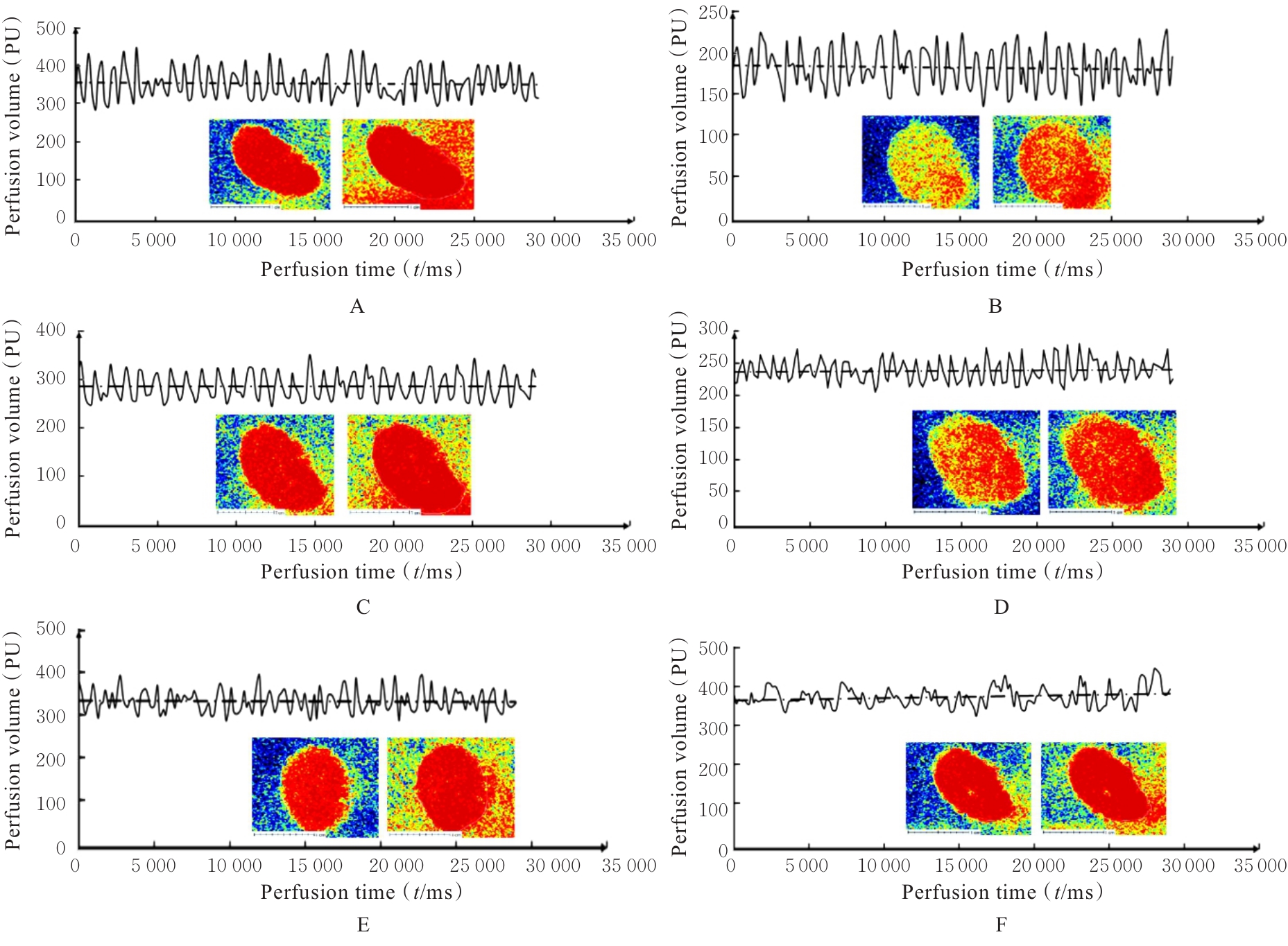
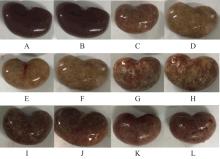
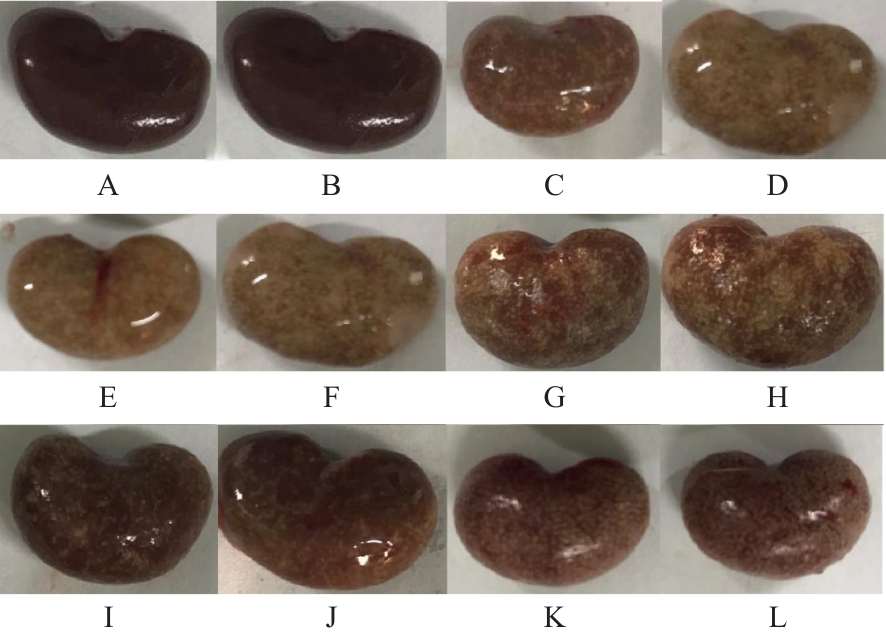
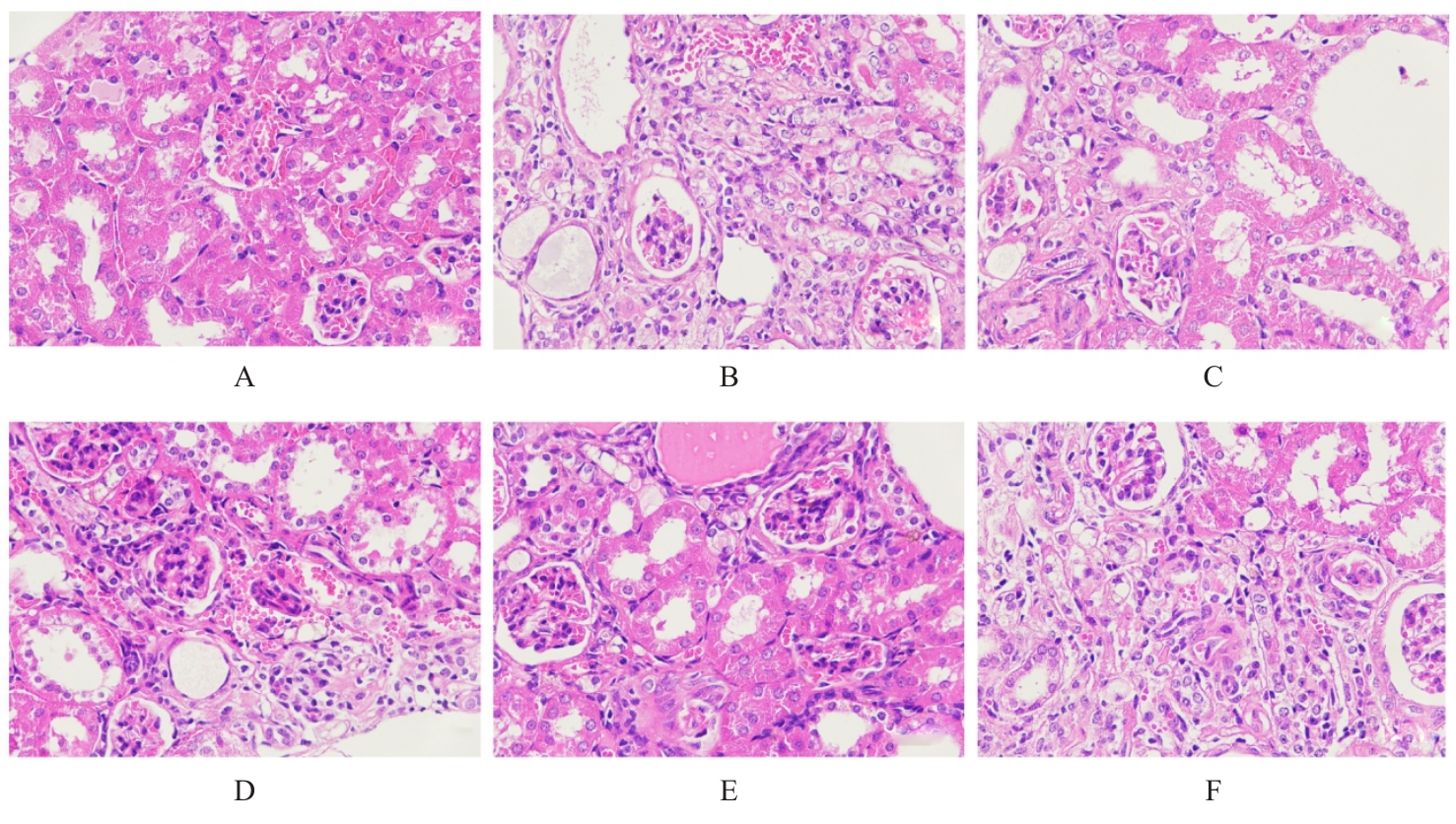
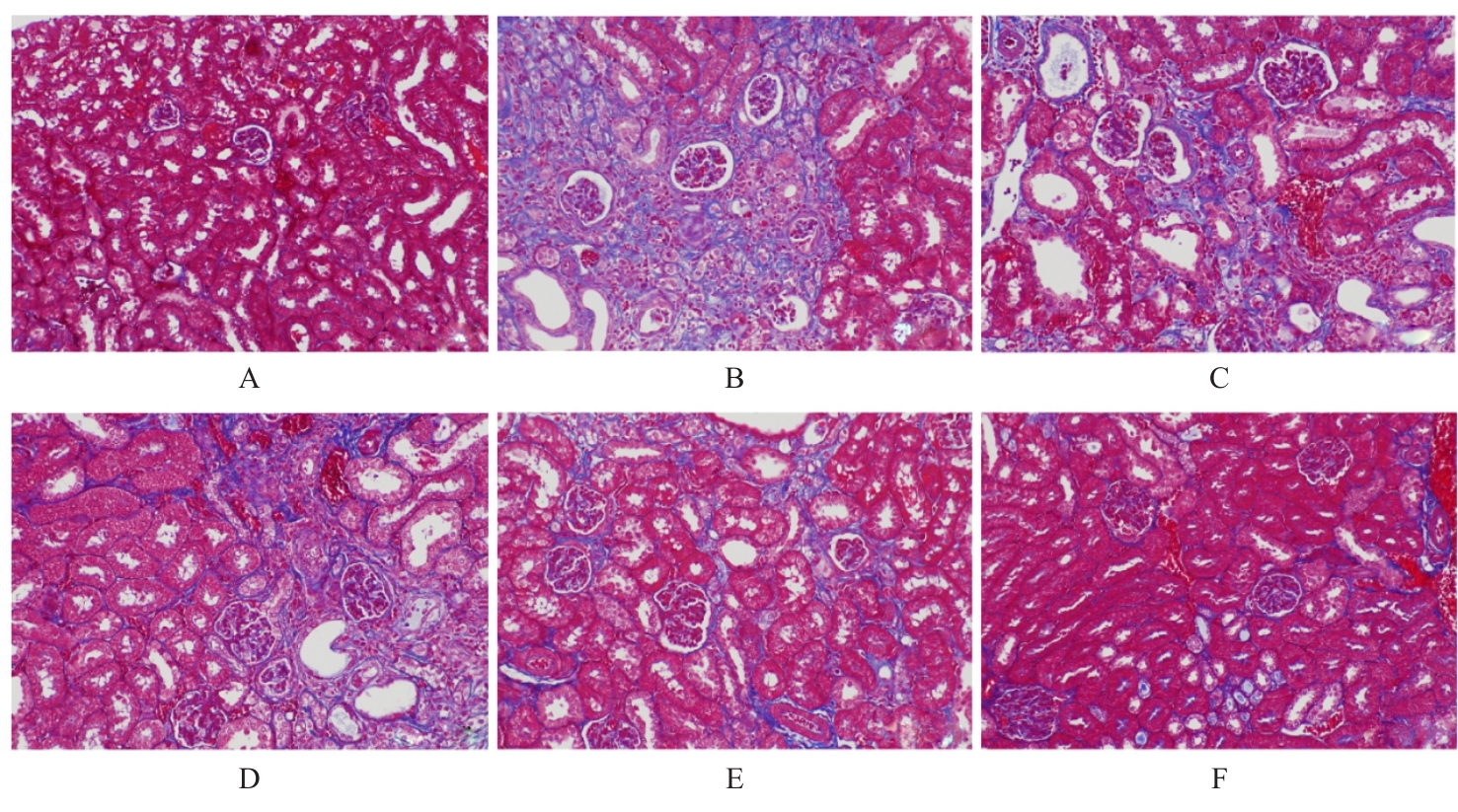
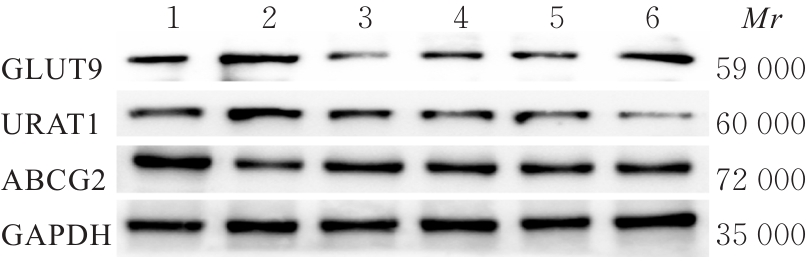
目的 探讨玉米须总黄酮(TFCS)对尿酸性肾病模型大鼠肾脏损伤的改善作用,并阐明其可能的机制。 方法 60只Wistar雄性大鼠随机分为对照组、模型组、阳性对照组[苯溴马隆(BZM)组,5 mg·kg-1·d-1]、低剂量TFCS组(20 mg·kg-1·d-1)、中剂量TFCS组(40 mg·kg-1·d-1)和高剂量TFCS组(80 mg·kg-1·d-1),每组10只。除对照组外,其余各组大鼠灌服350 mg·kg-1氧嗪酸钾+ 70 mg·kg-1腺嘌呤4周,建立尿酸性肾病大鼠模型,不同剂量TFCS组大鼠连续灌服TFCS 2周。散斑血流成像仪检测各组大鼠肾脏血液灌注情况并计算各组大鼠肾脏系数,HE染色法和Masson染色法检测各组大鼠肾组织病理形态表现及纤维化程度,酶联免疫吸附试验(ELISA)法检测各组大鼠血清中尿酸(UA)、肌酐(Cr)、血尿素氮(BUN)、白细胞介素6(IL-6)和肿瘤坏死因子α(TNF-α)水平以及尿液中β2-微球蛋白(β2-MG)和微量白蛋白(ALB)水平,Western blotting法检测各组大鼠肾组织中尿酸盐转运蛋白1(URAT1)、葡萄糖转运蛋白9(GLUT9)和ATP结合转运蛋白G2(ABCG2)蛋白表达水平。 结果 与对照组比较,模型组大鼠肾脏血流灌注量明显降低(P<0.01);与模型组比较,BZM组和低、中及高剂量TFCS组大鼠肾脏血流灌注量均升高(P<0.05或P<0.01)。与对照组比较,模型组大鼠肾脏质量增加,肉眼可观察到肾脏表面有白色颗粒状斑点,无血色,体积增加;与模型组比较,BZM组和中及高剂量TFCS组大鼠肾脏体积减小,颜色趋于对照组,表面白色颗粒状斑点明显减少。与模型组比较, BZM组和中及高剂量TFCS组大鼠肾脏系数降低(P<0.01)。HE染色法,对照组大鼠肾组织结构无异常;模型组大鼠肾组织可见少量棕黄色尿酸结晶沉积,间质结缔组织增生;与模型组比较,BZM组和不同剂量TFCS组大鼠肾组织损伤均有不同程度减轻,炎症浸润减轻。Masson染色法,对照组大鼠肾组织未见明显胶原纤维沉积;模型组大鼠肾组织可见大量蓝色胶原纤维沉积,胶原容积分数(CVF)较对照组升高(P<0.01);与模型组比较,BZM组和不同剂量TFCS组大鼠CVF降低(P<0.01)。ELISA法,与对照组比较,模型组大鼠血清中UA、Cr、BUN、IL-6和TNF-α水平升高(P<0.01);与模型组比较,BZM组和中及高剂量TFCS组大鼠血清中UA、Cr、BUN、IL-6和TNF-α水平降低(P<0.01)。与对照组比较,模型组大鼠尿液中β2-MG和ALB水平升高(P<0.01);与模型组比较,BZM组和不同剂量TFCS组大鼠尿液中β2-MG和ALB水平降低(P<0.05或P<0.01)。Western blotting法,与对照组比较,模型组大鼠肾组织中URAT1和GLUT9蛋白表达水平升高(P<0.01),ABCG2蛋白表达水平降低(P<0.01);与模型组比较,BZM组和不同剂量TFCS组大鼠肾组织中URAT1和GLUT9蛋白表达水平均降低(P<0.05或P<0.01),ABCG2蛋白表达水平均升高(P<0.01)。 结论 TFCS能明显减轻尿酸性肾病模型大鼠的肾脏损伤,其机制可能与TFCS降低肾组织中URAT1和GLUT9蛋白表达水平及升高ABCG2蛋白表达水平有关联。

关键词: 玉米须黄酮提取物, 尿酸性肾病, 血液灌注, 尿酸转运体, 肾脏损伤

Abstract:

Objective To discuss the ameliorative effect of total flavonoids from corn silk (TFCS) on kidney injury in the rats with urate nephropathy, and to clarify the possible mechanism. Methods Sixty male Wistar rats were randomly divided into control group, model group, positive control group [benzbromarone(BZM) group, 5 mg·kg-1·d-1], low dose of TFCS group (20 mg·kg-1·d-1), medium dose of TFCS group (40 mg·kg-1·d-1), and high dose of TFCS group (80 mg·kg-1·d-1), and there were 10 rats in each group. Except for control group, the rats in the other groups were administered potassium oxonate (350 mg·kg-1) and adenine (70 mg·kg-1) by gavage for 4 weeks to establish the hyperuricemic nephropthy models. The rats in different doses of TFCS groups were treated with TFCS for 2 weeks. Speckle blood flow imager was used to detect the renal blood perfusion of the rats in various groups and the kidney coefficients of the rats in various groups were caculated; HE staining and Masson staining were used to observe the pathomorphology and fibrosis degrees of kidney tissue of the rats in various groups and enzyme-linked immunosorbent assay(ELISA) method was used to detect the levels of uric acid (UA), creatinine (Cr), blood urea nitrogen (BUN), interleukin-6 (IL-6), and tumor necrosis factor-α (TNF-α) in the serum and levels of β2-microglobulin (β2-MG) and microalbumin (ALB) in the urine of the rats in various groups; Western blotting method was used to detect the expression levels of urate transporter 1 (URAT1), glucose transporter 9 (GLUT9), and ATP-binding cassette transporter G2 (ABCG2) proteins in kidney tissue of the rats in various groups. Results Compared with control group, the renal blood perfusion volume of the rats in model group was significantly decreased (P<0.01). Compared with model group, the renal blood perfusion volumes of the rats in BZM group and low, medium, and high doses of TFCS groups were significantly increased (P<0.05 or P<0.01). Compared with control group, the kidney weight of the rats in model group was increased, with visible white granular spots on the surface, absence of blood color, and kidney volume was increased. Compared with model group, the kidney volumes of the rats in BZM group and medium and high doses of TFCS groups were decreased, with color tending toward that in control group, and the white granular spots on the surface were significantly reduced. Compared with model group, the kidney coefficients of the rats in BZM group and medium and high doses of TFCS groups were decreased (P<0.01). The HE staining results showed there were no abnormalities in kidney tissue structure in control group, while there were a small amount of brown-yellow urate crystal deposition and interstitial connective tissue hyperplasia in model group; compared with model group, the kidney tissue damage and inflammatory infiltration were alleviated to varying degrees in BZM group and different doses of TFCS groups. The Masson staining results revealed no obvious collagen fiber deposition in control group, whereas significant blue collagen fiber deposition in kidney tissue of the rats was found in model group, and the collagen volume fraction (CVF) was increased compared with control group (P<0.01); compared with model group, the CVFs of the rats in BZM group and different doses of TFCS groups were decreased (P<0.01). The ELISA results showed that compared with control group, the levels of UA, Cr, BUN, IL-6, and TNF-α in serum of the rats in model group were increased (P<0.01); compared with model group, the levels of UA, Cr, BUN, IL-6, and TNF-α in serum of the rats in BZM group and medium and high doses of TFCS groups were decreased (P<0.01). Compared with control group, the levels of β2-MG and ALB in urinary in model group were increased (P<0.01); compared with model group, the levels of β2-MG and ALB in urinary of the rats in different doses of TFCS groups were decreased (P<0.05 or P<0.01). The Western blotting results showed that compared with control group, the expression levels of URAT1 and GLUT9 proteins in kidney tissue of the rats in BZM group and model group were increased (P<0.01), while the expression level of ABCG2 protein was decreased (P<0.01). Compared with model group, the expression levels of URAT1 and GLUT9 proteins in kidney tissue of the rats in different doses of TFCS groups were decreased (P<0.05 or P<0.01), and the expression level of ABCG2 protein was increased (P<0.01). Conclusion TFCS can significantly alleviate the kidney injury in the rats with urate nephropathy model, and its mechanism may be related to the downregulation of expression of URAT1 and GLUT9 proteins and upregulation of ABCG2 protein expression in kidney tissue.

Key words: Extract of total flavonoids from corn silk, Urate nephropathy, Blood perfusion, Uric acid transporter, Kidney injury

中图分类号: 

  • R96