吉林大学学报(医学版) ›› 2026, Vol. 52 ›› Issue (1): 81-92.doi: 10.13481/j.1671-587X.20260109

• 基础研究 • 上一篇    下一篇

抑制miR-17-5p通过靶向调控Mfn2表达对划痕损伤引起大鼠脊髓星形胶质细胞增殖的抑制作用

赵焱,吴华伟()   

  1. 湖北省武汉市第四医院神经外科,湖北 武汉 430030
  • 收稿日期:2025-04-08 接受日期:2025-05-24 出版日期:2026-01-28 发布日期:2026-02-24
  • 通讯作者: 吴华伟 E-mail:coordinate999@163.com
  • 作者简介:赵 焱(1976-),男,湖北省武汉市人,副主任医师,医学硕士,主要从事脊柱脊髓损伤及修复方面的研究。
  • 基金资助:
    湖北省科技厅自然科学基金项目(2023AFB994)

Inhibitory effect of inhibition of miR-17-5p on proliferation of spinal cord astrocytes of rats induced by scratch injury through targeting Mfn2 expression

Yan ZHAO,Huawei WU()   

  1. Department of Neurosurgery,Fourth Hospital,Wuhan City,Hubei Province,Wuhan 430033,China
  • Received:2025-04-08 Accepted:2025-05-24 Online:2026-01-28 Published:2026-02-24
  • Contact: Huawei WU E-mail:coordinate999@163.com

摘要:

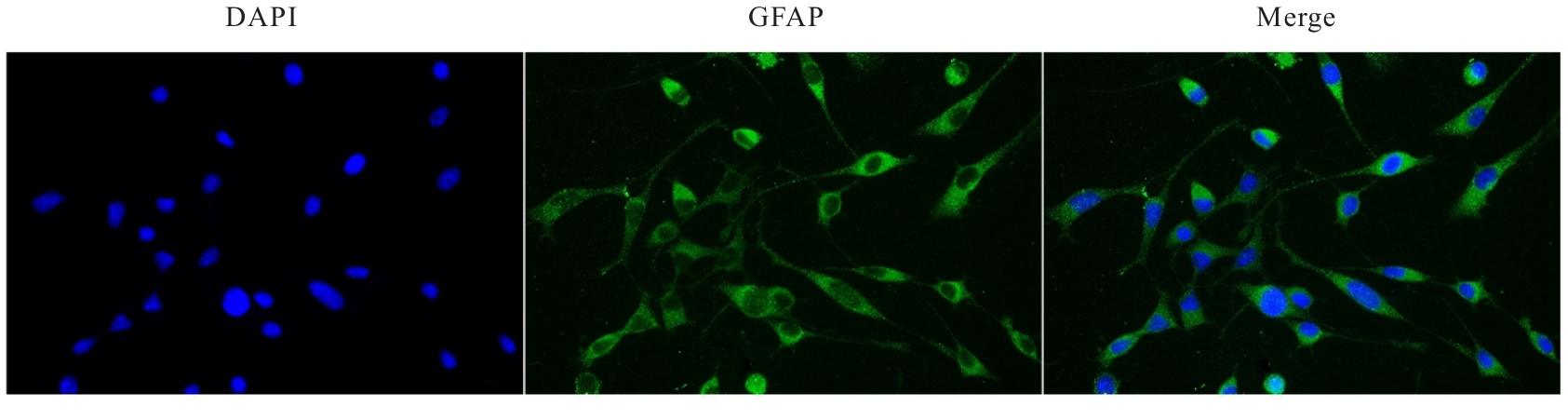
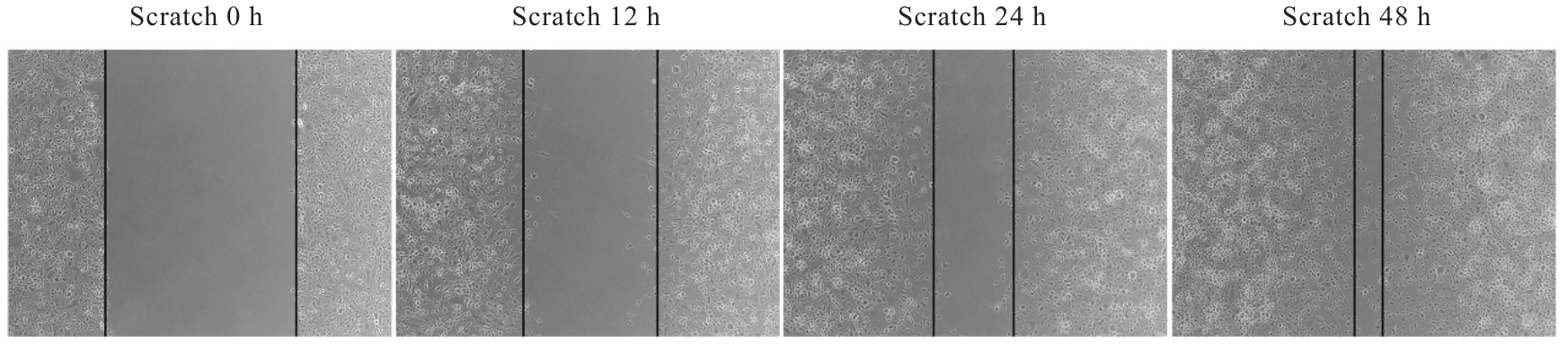
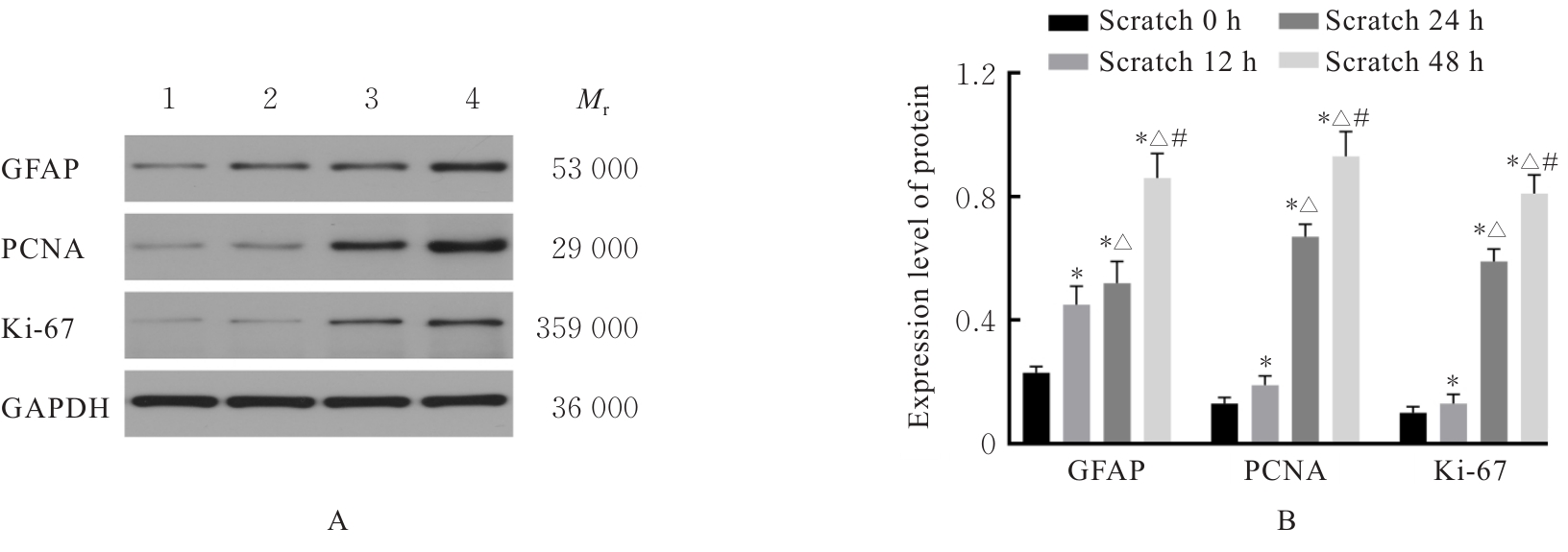
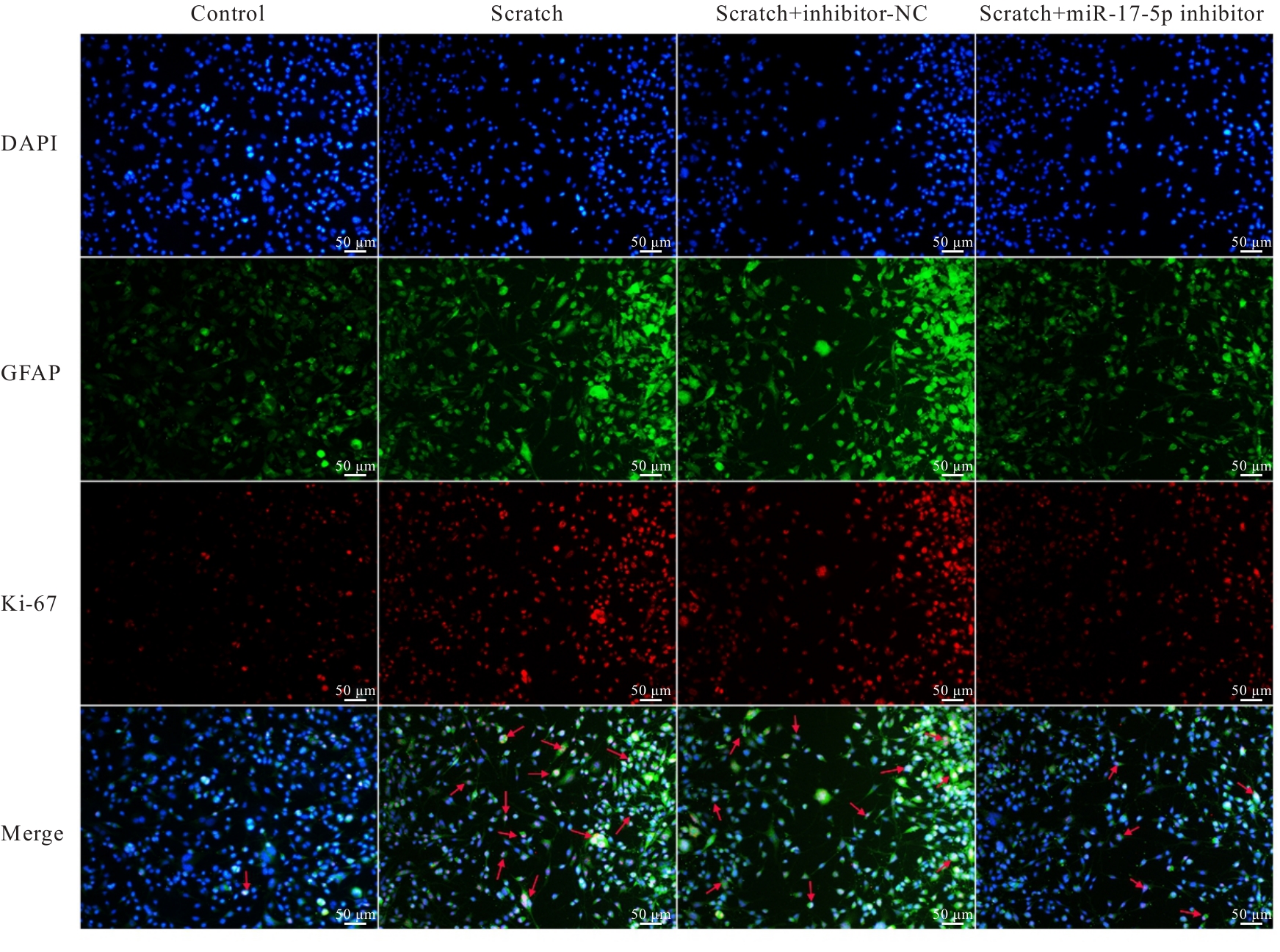
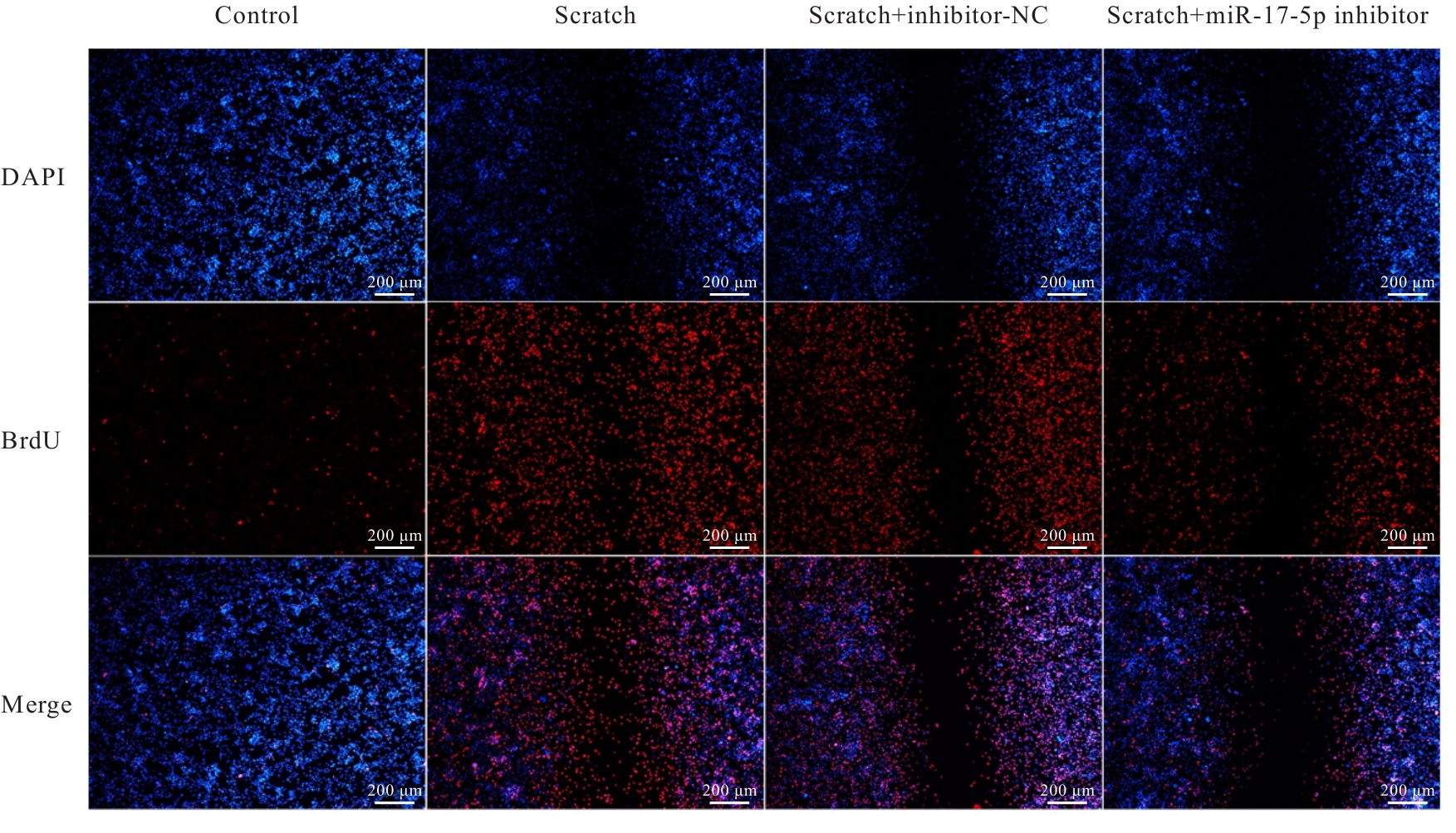
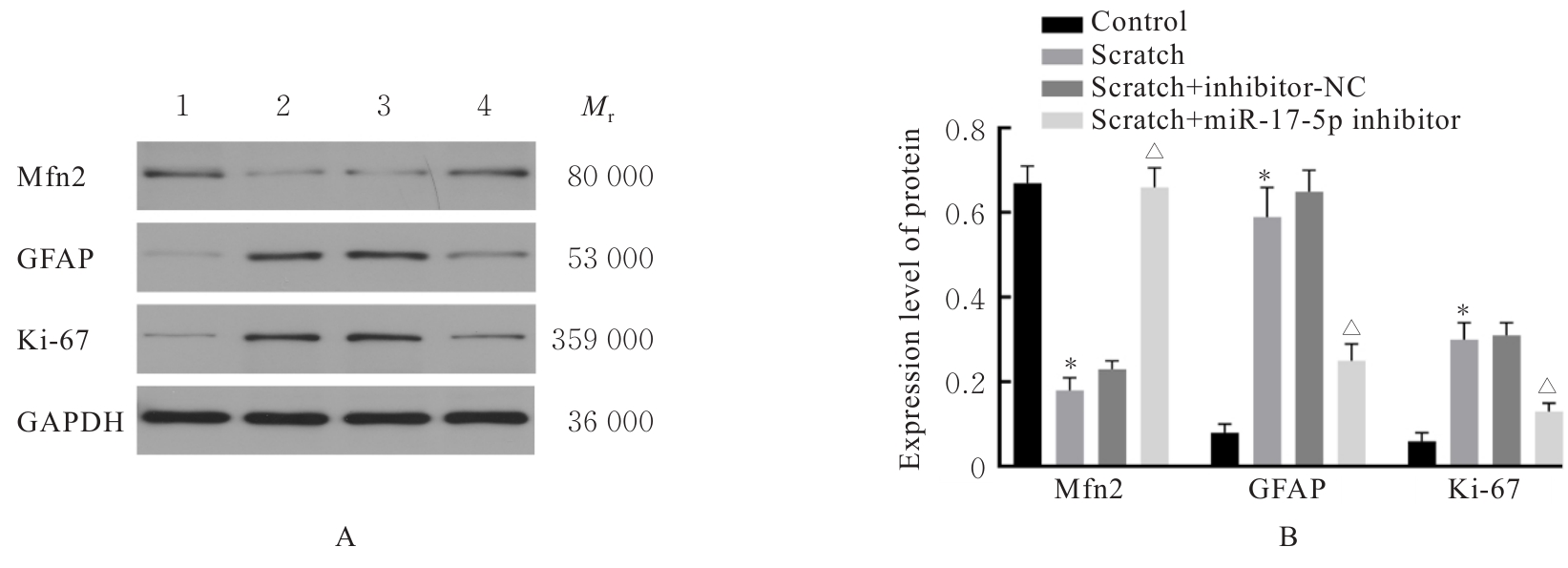
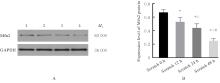
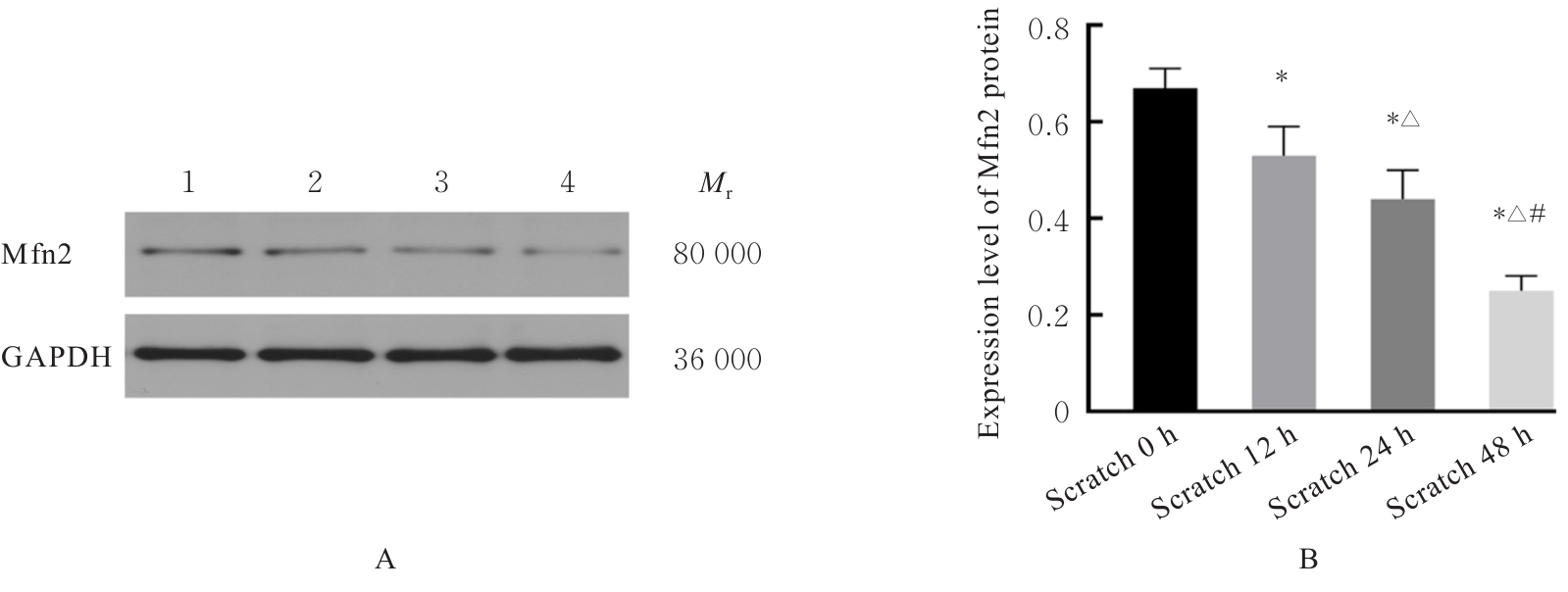
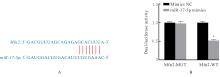
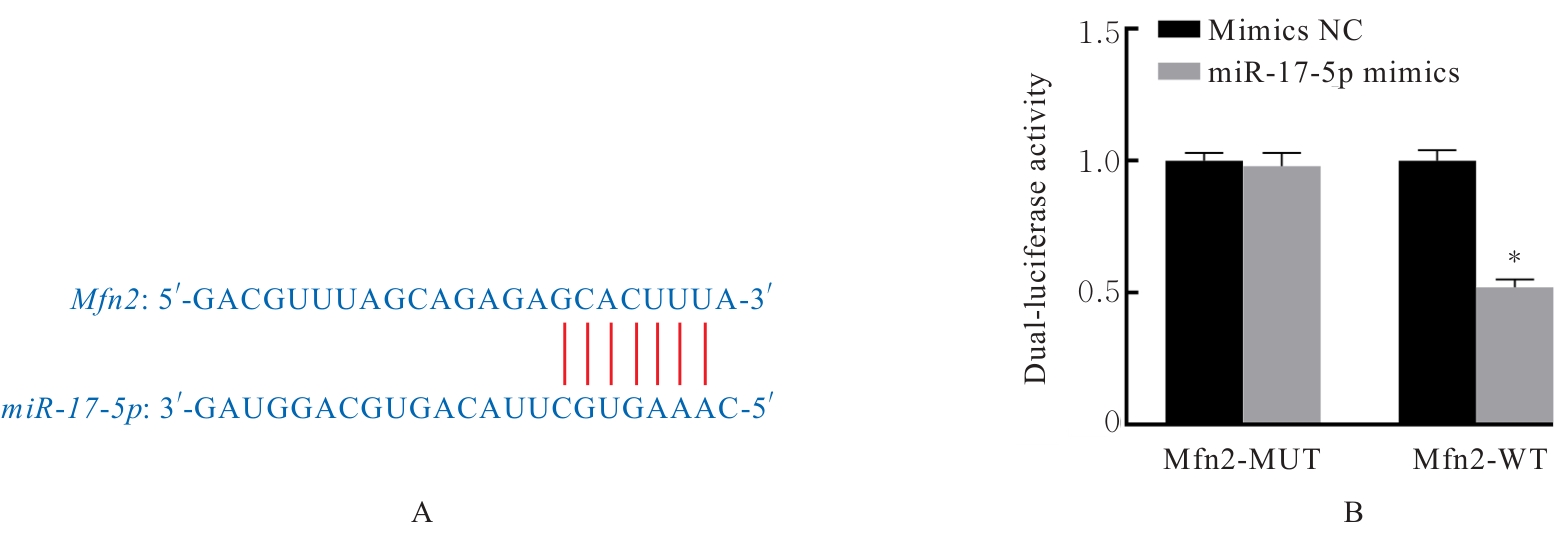
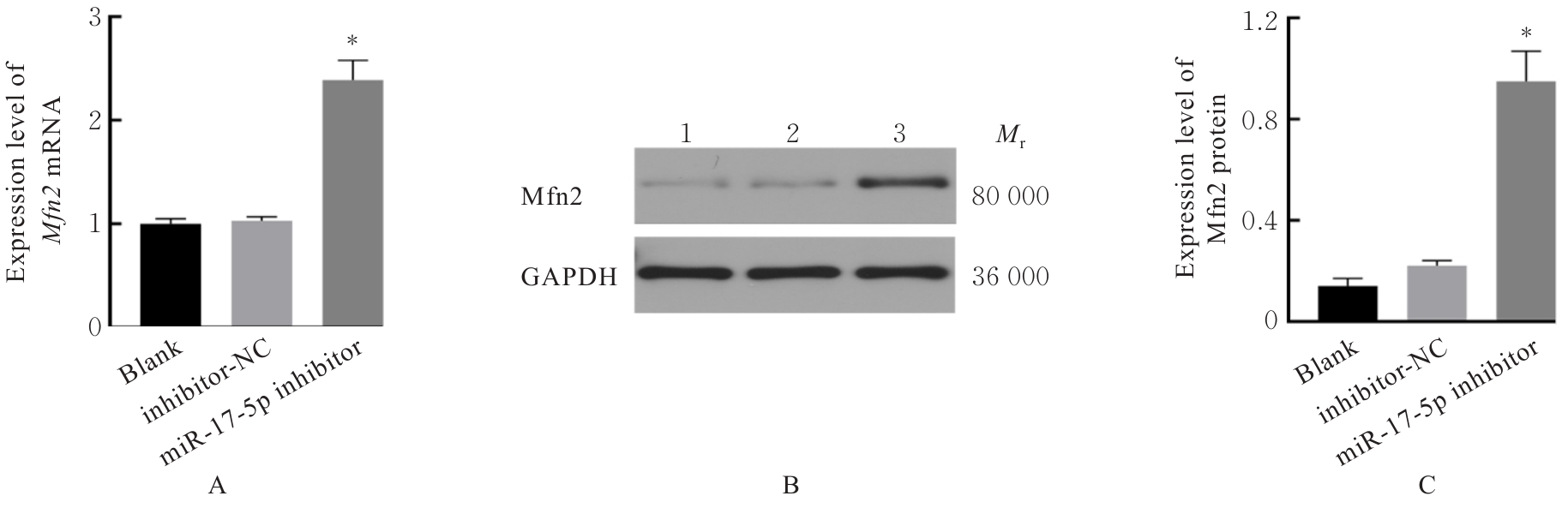
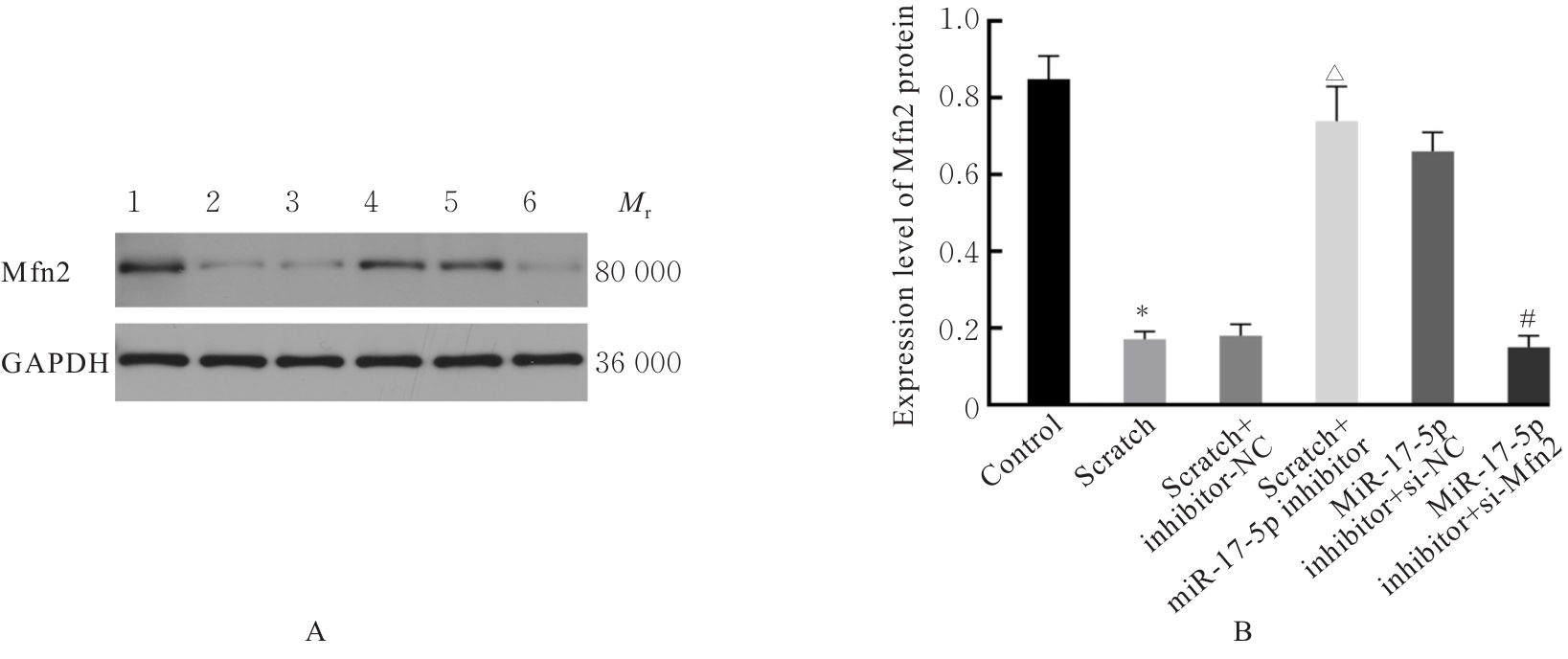
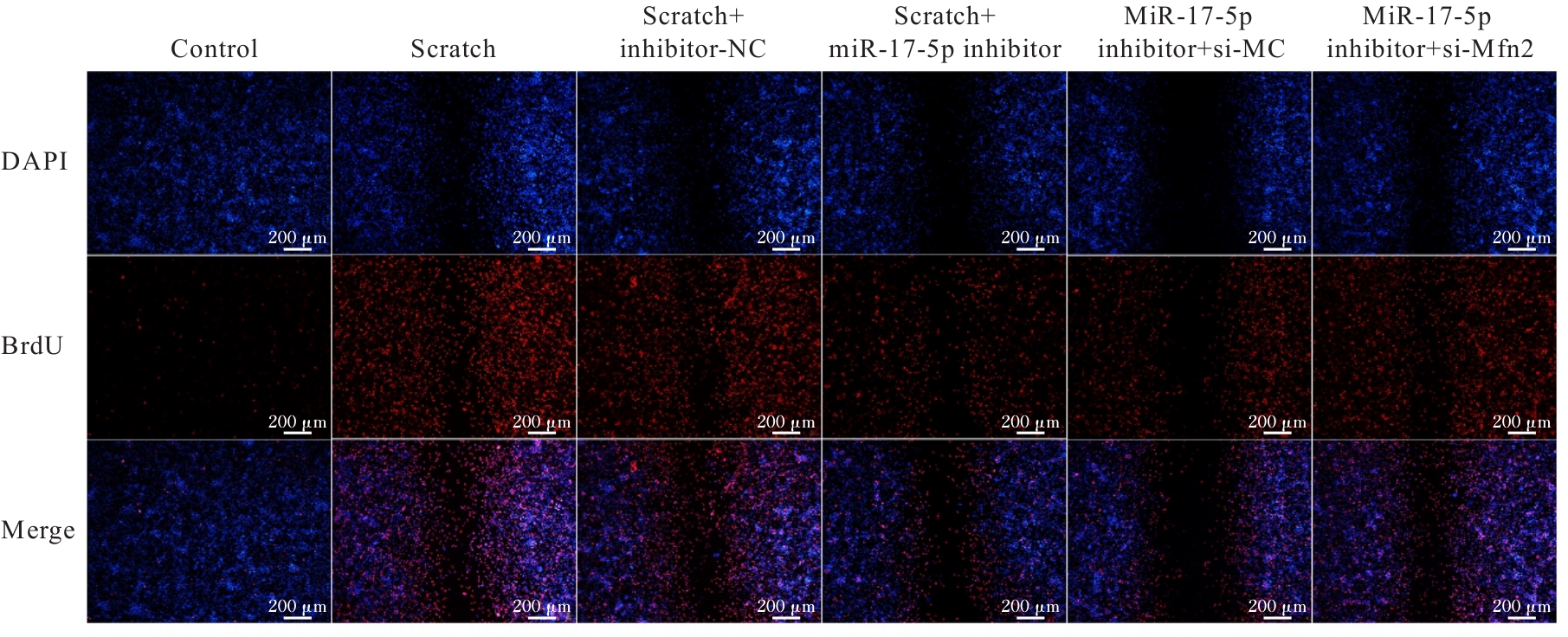
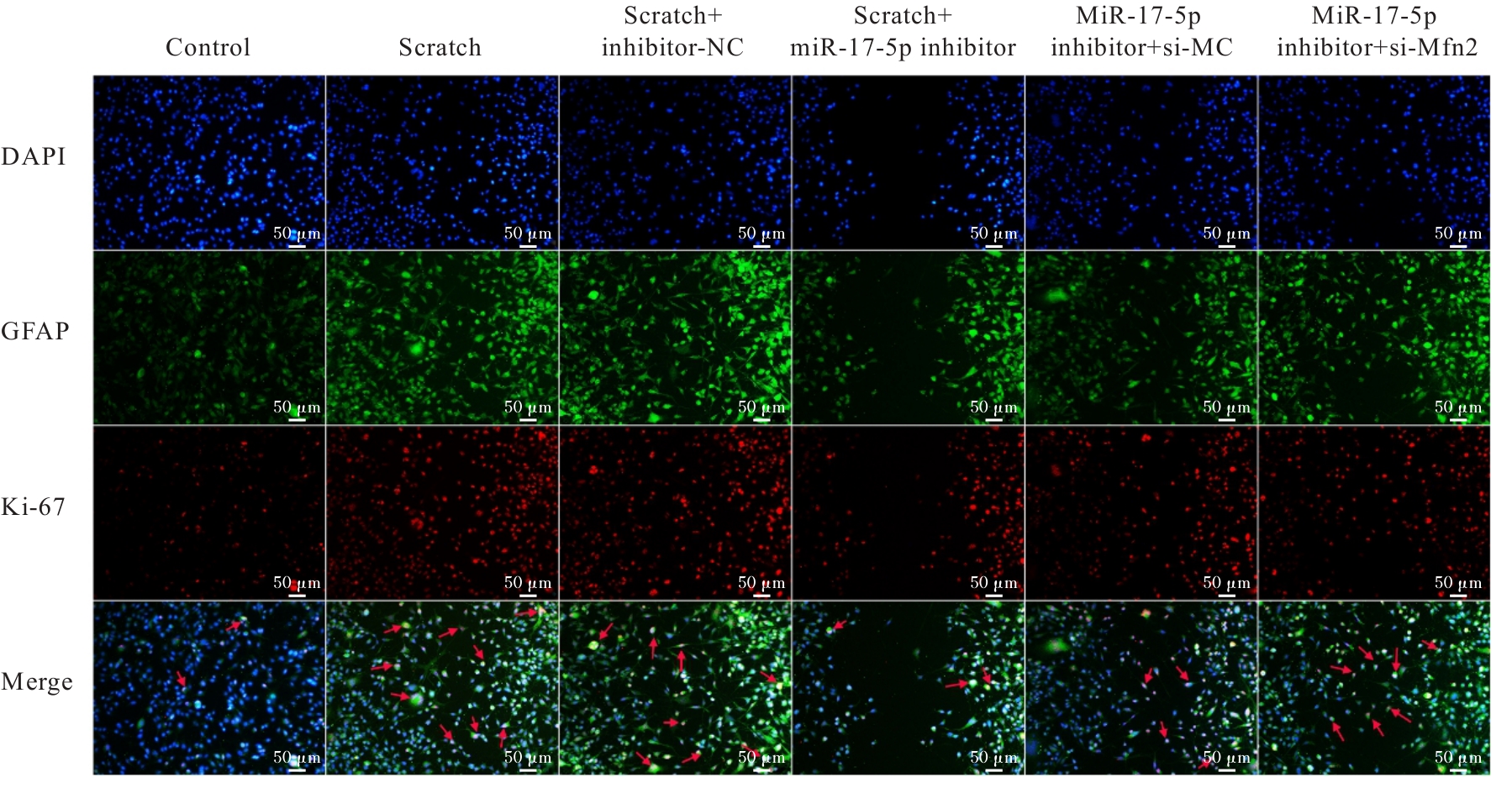
目的 探讨抑制微小RNA(miR)-17-5p对划痕损伤诱导大鼠星形胶质细胞增殖的影响,并阐明其作用机制。 方法 原代分离培养大鼠脊髓组织中的星形胶质细胞,将miR-17-5p抑制剂(miR-17-5p inhibitor)及其阴性对照(inhibitor-NC)和线粒体融合蛋白2(Mfn2)干扰质粒(si-Mfn2)及其阴性对照(si-NC)转染至大鼠脊髓星形胶质细胞中,采用划痕法建立体外机械损伤诱导的星形胶质细胞增殖模型。将星形胶质细胞分为对照组(不进行处理)、Scratch组(划痕处理)、Scratch+inhibitor-NC组(转染inhibitor-NC后划痕处理)和Scratch+miR-17-5p inhibitor组(转染miR-17-5p inhibitor后划痕处理)以及空白组(不进行处理)、inhibitor-NC组(转染inhibitor-NC)、miR-17-5p inhibitor组(转染miR-17-5p inhibitor)、miR-17-5p inhibitor+si-NC组(共转染miR-17-5p inhibitor和si-NC后划痕处理)和miR-17-5p inhibitor+si-Mfn2组(共转染miR-17-5p inhibitor和si-Mfn2后划痕处理)。采用细胞划痕愈合实验检测不同时间点划痕愈合率,实时荧光定量PCR(RT-qPCR)法检测各组细胞中miR-17-5pMfn2 mRNA表达水平,Western blotting法检测各组细胞中Mfn2、胶质纤维酸性蛋白(GFAP)、增殖细胞核抗原(PCNA)和Ki-67蛋白表达水平,免疫荧光法检测各组细胞中GFAP和Ki-67表达情况,5-溴-2'-脱氧尿苷(BrdU)实验检测各组细胞增殖情况,双荧光素酶报告基因实验验证Mfn2miR-17-5p之间的靶向关系。 结果 细胞划痕愈合实验,随着划痕损伤时间(0、12、24和48 h)的延长,大鼠脊髓星形胶质细胞划痕愈合率升高(P<0.05),且呈时间依赖性。RT-qPCR法和Western blotting法,与Scratch 0 h组比较,Scratch 12、24和48 h组大鼠星形胶质细胞中miR-17-5p表达水平以及GFAP、PCNA和Ki-67蛋白表达水平升高(P<0.05),Mfn2蛋白表达水平降低(P<0.05),且呈时间依赖性;与对照组比较,Scratch组星形胶质细胞中GFAP和Ki-67蛋白表达水平升高(P<0.05),Mfn2蛋白表达水平降低(P<0.05);与Scratch组比较,Scratch+miR-17-5p inhibitor组星形胶质细胞中GFAP和Ki-67蛋白表达水平降低(P<0.05),Mfn2蛋白表达水平升高(P<0.05);与空白组比较,miR-17-5p inhibitor组星形胶质细胞中miR-17-5p表达水平降低(P<0.05),Mfn2 mRNA和蛋白表达水平升高(P<0.05);与Scratch+miR-17-5p inhibitor组比较,miR-17-5p inhibitor+si-Mfn2组星形胶质细胞中Mfn2蛋白表达水平降低(P<0.05)。免疫荧光法,与对照组比较,Scratch组GFAP和Ki-67共定位星形胶质细胞数量增加(P<0.05);与Scratch组比较,Scratch+miR-17-5p inhibitor组GFAP和Ki-67共定位星形胶质细胞数量减少(P<0.05);与Scratch+miR-17-5p inhibitor组比较,miR-17-5p inhibitor+si-Mfn2组GFAP和Ki-67共定位星形胶质细胞数量增加(P<0.05)。BrdU实验,与对照组比较,Scratch组星形胶质细胞BrdU阳性表达率升高(P<0.05);与Scratch组比较,Scratch+miR-17-5p inhibitor组星形胶质细胞BrdU阳性表达率降低(P<0.05);与Scratch+miR-17-5p inhibitor组比较,miR-17-5p inhibitor+si-Mfn2组星形胶质细胞BrdU阳性表达率升高(P<0.05)。双荧光素酶报告基因实验,miR-17-5pMfn2 mRNA的3'UTR区存在结合位点,Mfn2miR-17-5p下游靶基因。 结论 大鼠脊髓星形胶质细胞划痕损伤后细胞中miR-17-5p表达水平明显升高,细胞增殖活性增加,抑制miR-17-5p通过靶向上调Mfn2表达抑制划痕损伤所致星形胶质细胞的增殖。

关键词: 星形胶质细胞, 划痕损伤, 细胞增殖, 微小RNA-17-5p, 线粒体融合蛋白2

Abstract:

Objective To discuss the effect of inhibiting micro RNA(miR)-17-5p on scratch injury-induced proliferation of rat astrocytes and to clarify its mechanism. Methods The astrocytes were isolated and cultured primarily from rat spinal cord tissue. MiR-17-5p inhibitor and its negative control (inhibitor-NC), and mitofusin 2 (Mfn2) interfering plasmid (si-Mfn2) and its negative control (si-NC) were transfected into rat spinal cord astrocytes. An in vitro mechanical injury-induced astrocyte proliferation model was established using the scratch method. Astrocytes were divided into control group (no treatment), Scratch group (scratch treatment), Scratch+inhibitor-NC group (transfected with inhibitor-NC then scratch treatment), and Scratch+miR-17-5p inhibitor group (transfected with miR-17-5p inhibitor then scratch treatment); and also into blank group (no treatment), inhibitor-NC group (transfected with inhibitor-NC), miR-17-5p inhibitor group (transfected with miR-17-5p inhibitor), miR-17-5p inhibitor+si-NC group (co-transfected with miR-17-5p inhibitor and si-NC then scratch treatment), and miR-17-5p inhibitor+si-Mfn2 group (co-transfected with miR-17-5p inhibitor and si-Mfn2 then scratch treatment). Cell scratch healing assay was used to detect the scratch healing rates at different time points; real-time fluorescence quantitative PCR (RT-qPCR) method was used to detect the miR-17-5p and Mfn2 mRNA expression levels in the cells in various groups; Western blotting method was used to detect the protein expression levels of Mfn2, glial fibrillary acidic protein (GFAP), proliferating cell nuclear antigen (PCNA), and proliferation marker protein Ki-67 in the cells in various groups; immunofluorescence method was used to detect the expression of GFAP and Ki-67 in the cells in various groups; 5-bromo-2'-deoxyuridine (BrdU) assay was used to detect the proliferation of cells in various groups; the dual-luciferase reporter gene assay were used to verify the targeted regulatory relationship between Mfn2 and miR-17-5p. Results The cell scratch healing assay results showed that as the scratch injury time (0, 12, 24, and 48 h) increased, the scratch healing rate of spinal cord astrocytes of the rats was was increased (P<0.05) in a time-dependent manner. The RT-qPCR and Western blotting results showed that compared with Scratch 0 h group, the miR-17-5p expression level and the protein expression levels of GFAP, PCNA, and Ki-67 in astrocytes in Scratch 12, 24, and 48 h groups were increased (P<0.05), while the Mfn2 protein expression level was decreased (P<0.05) in a time-dependent manner; compared with Control group, the GFAP and Ki-67 protein expression levels in astrocytes in Scratch group were increased (P<0.05), while the Mfn2 protein expression level was decreased (P<0.05); compared with Scratch group, the GFAP and Ki-67 protein expression levels in astrocytes in Scratch+miR-17-5p inhibitor group were decreased (P<0.05), while the Mfn2 protein expression level was increased (P<0.05); compared with blank group, the miR-17-5p expression level in astrocytes in miR-17-5p inhibitor group was decreased (P<0.05), while the Mfn2 mRNA and protein expression levels were increased (P<0.05); compared with Scratch+miR-17-5p inhibitor group, the Mfn2 protein expression level in astrocytes in miR-17-5p inhibitor+si-Mfn2 group was decreased (P<0.05). The immunofluorescence assay results showed that compared with control group, the numbers of GFAP and Ki-67 co-localized astrocytes in Scratch group was increased (P<0.05); compared with Scratch group, the number of GFAP and Ki-67 co-localized astrocytes in scratch+miR-17-5p inhibitor group was decreased (P<0.05); compared with Scratch+miR-17-5p inhibitor group, the number of GFAP and Ki-67 co-localized astrocytes in miR-17-5p inhibitor+si-Mfn2 group was increased (P<0.05). The BrdU assay results showed that compared with control group, the BrdU positive expression rate in the astrocytes in Scratch group was increased (P<0.05); compared with scratch group, the BrdU positive expression rate in astrocytes in Scratch+miR-17-5p inhibitor group was decreased (P<0.05); compared with scratch+miR-17-5p inhibitor group, the BrdU positive expression rate in astrocytes in miR-17-5p inhibitor+si-Mfn2 group was increased (P<0.05). The dual-luciferase reporter gene assay results showed that there was a binding site between miR-17-5p and the 3'UTR region of Mfn2 mRNA, and Mfn2 is a downstream target gene of miR-17-5p. Conclusion The miR-17-5p expression level in rat spinal cord astrocytes is significantly increased after scratch injury, and cell proliferation activity is increased. Inhibition of miR-17-5p suppresses the proliferation of astrocytes induced by scratch injury by targeting and upregulating Mfn2 expression.

Key words: Astrocyte, Scratch injury, Cell proliferation, MicroRNA-17-5p, Mitofusin 2

中图分类号: 

  • R681.5