Journal of Jilin University(Medicine Edition) ›› 2025, Vol. 51 ›› Issue (3): 680-690.doi: 10.13481/j.1671-587X.20250313

• Research in basic medicine • Previous Articles    

Inhibitory effect of combined application of active components of Paeoniae Rubra Radix on Enterococcus faecalis and its mechanism

Jiani ZHANG,Jie SAI,Yu ZHOU,Miao YANG,Shufen SUN()   

  1. Department of Endodontics,Stomatology Hospital,Jilin University,Changchun 130021,China
  • Received:2024-10-21 Accepted:2024-12-15 Online:2025-05-28 Published:2025-07-18
  • Contact: Shufen SUN E-mail:gzwssf@163.com

Abstract:

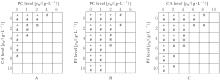
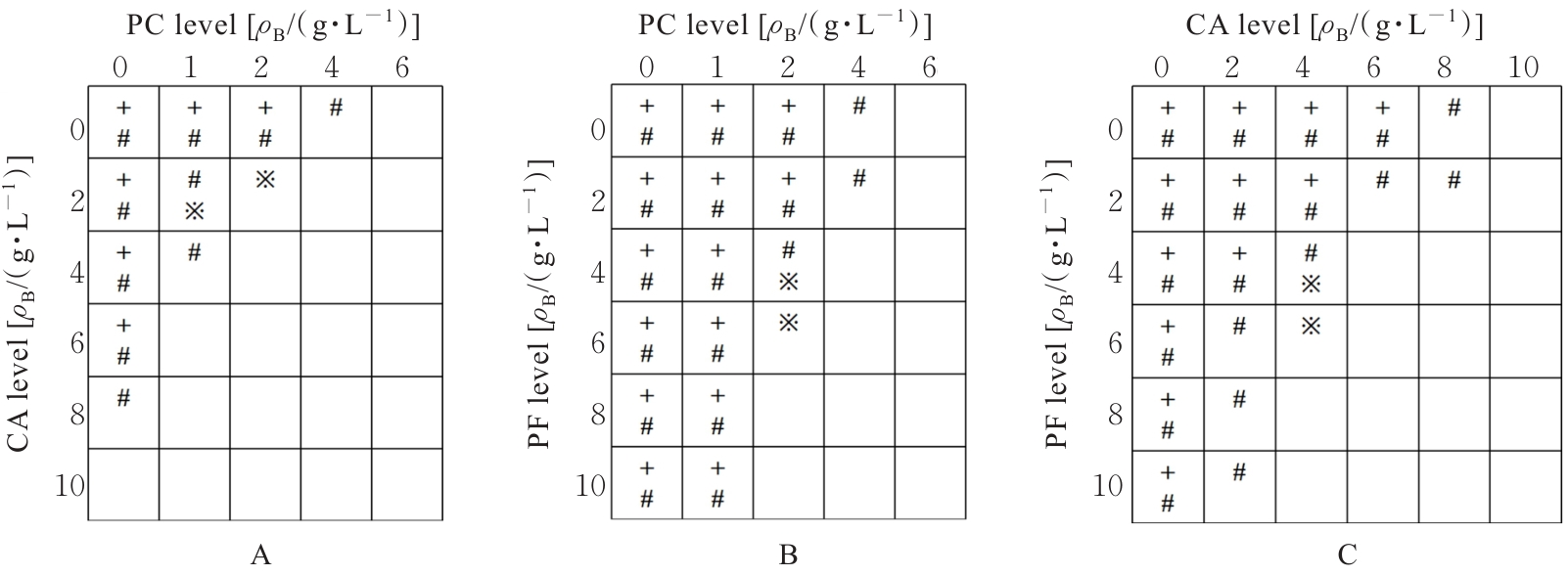
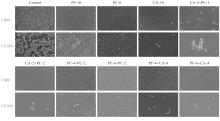
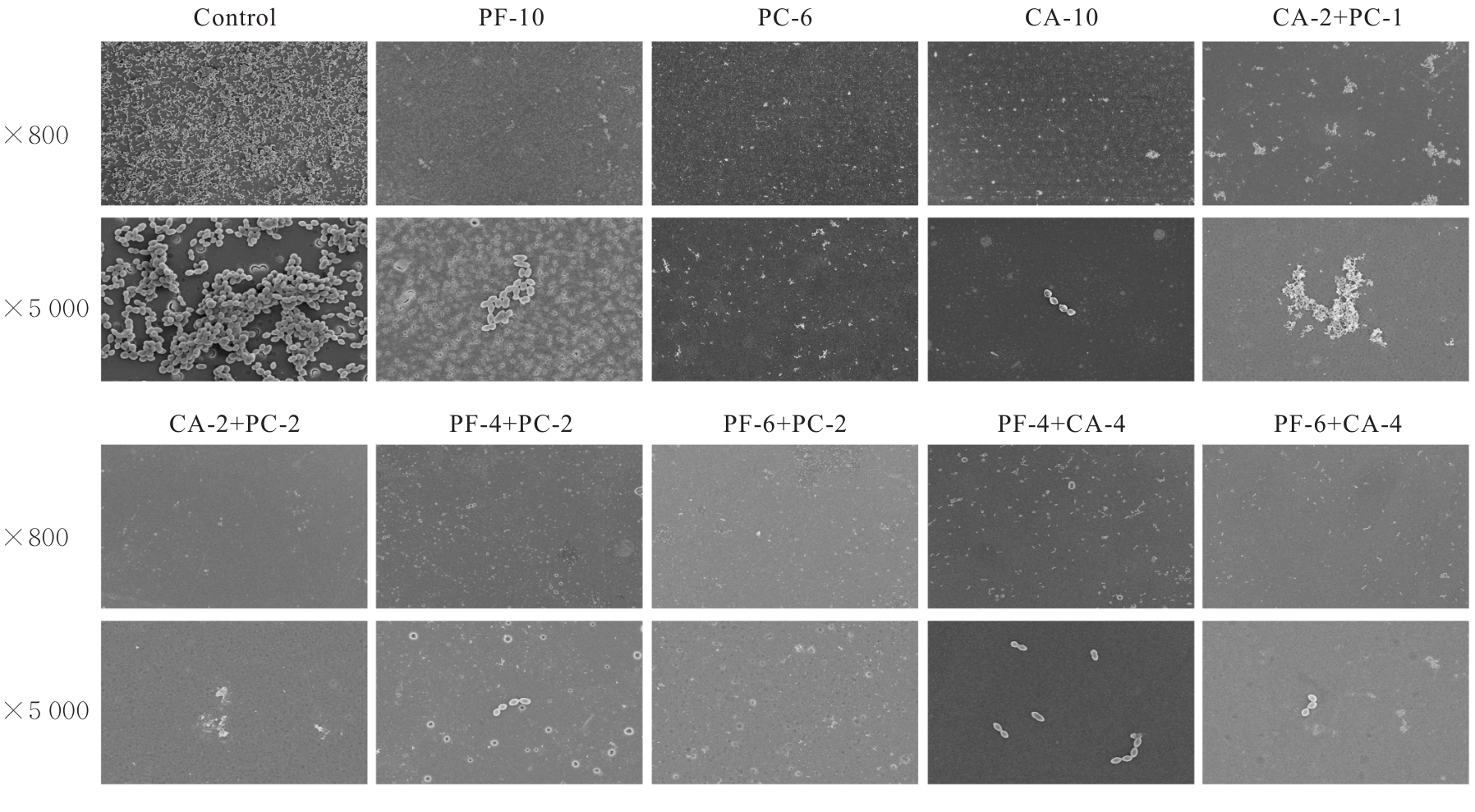
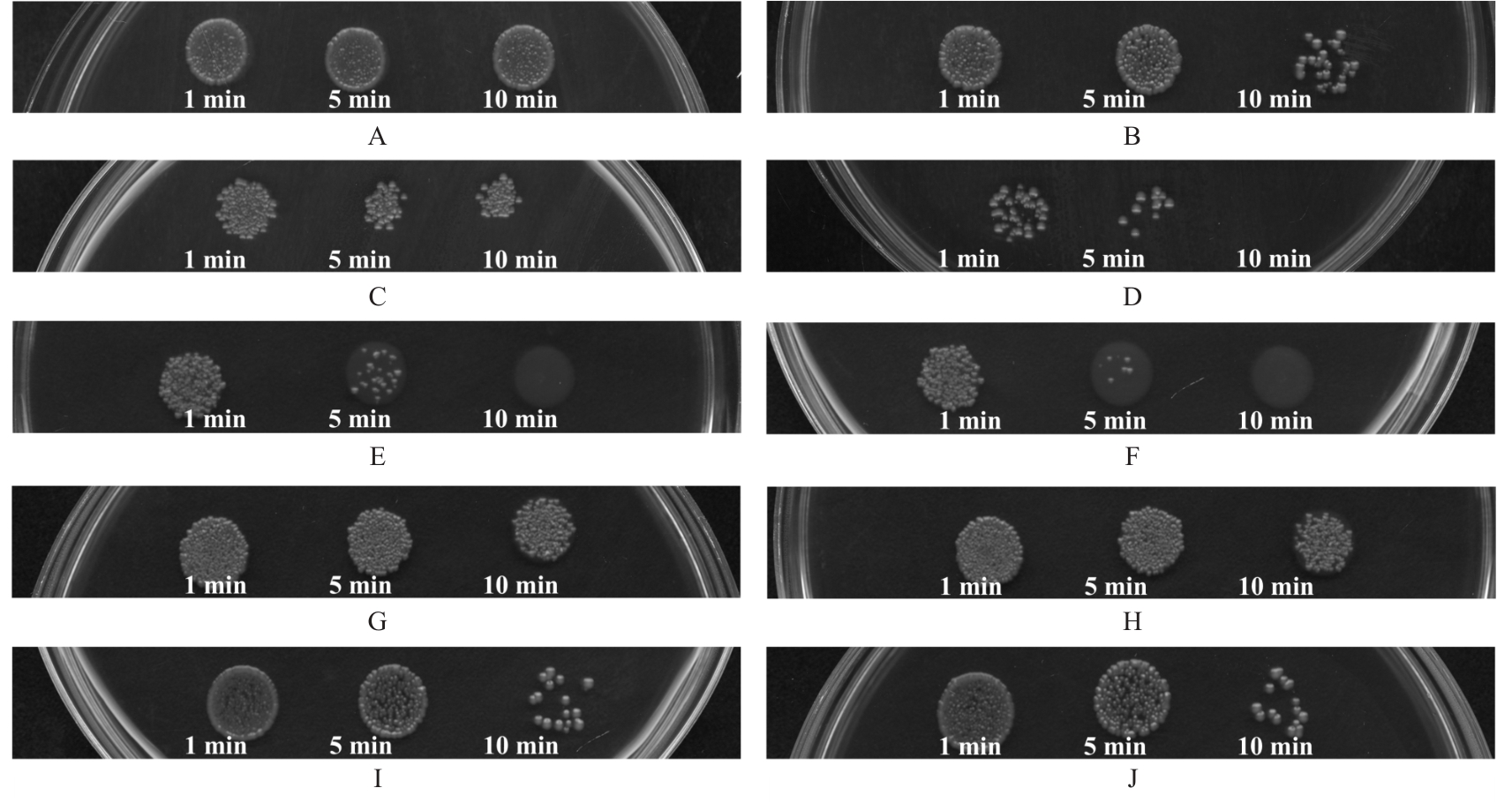
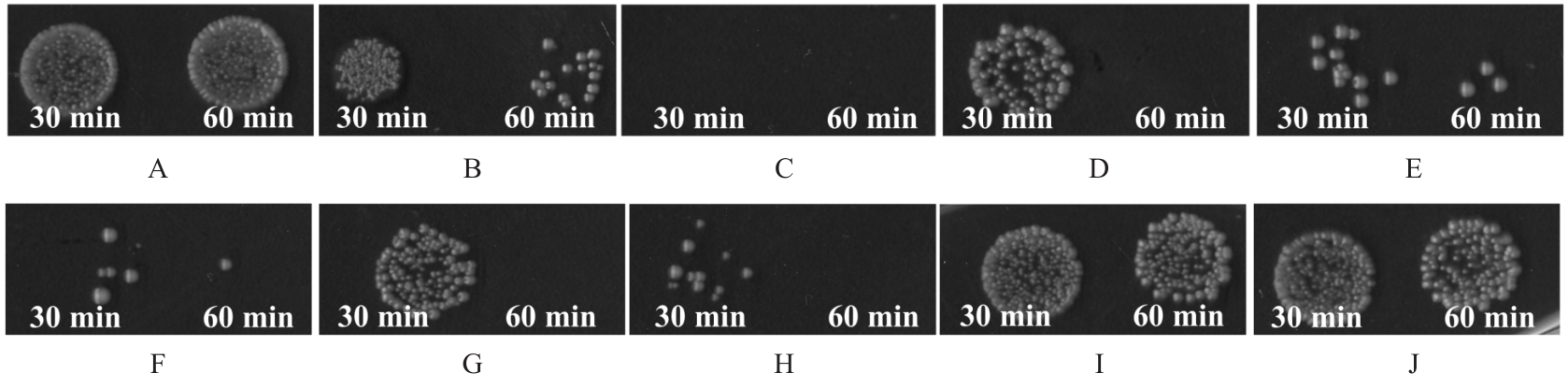
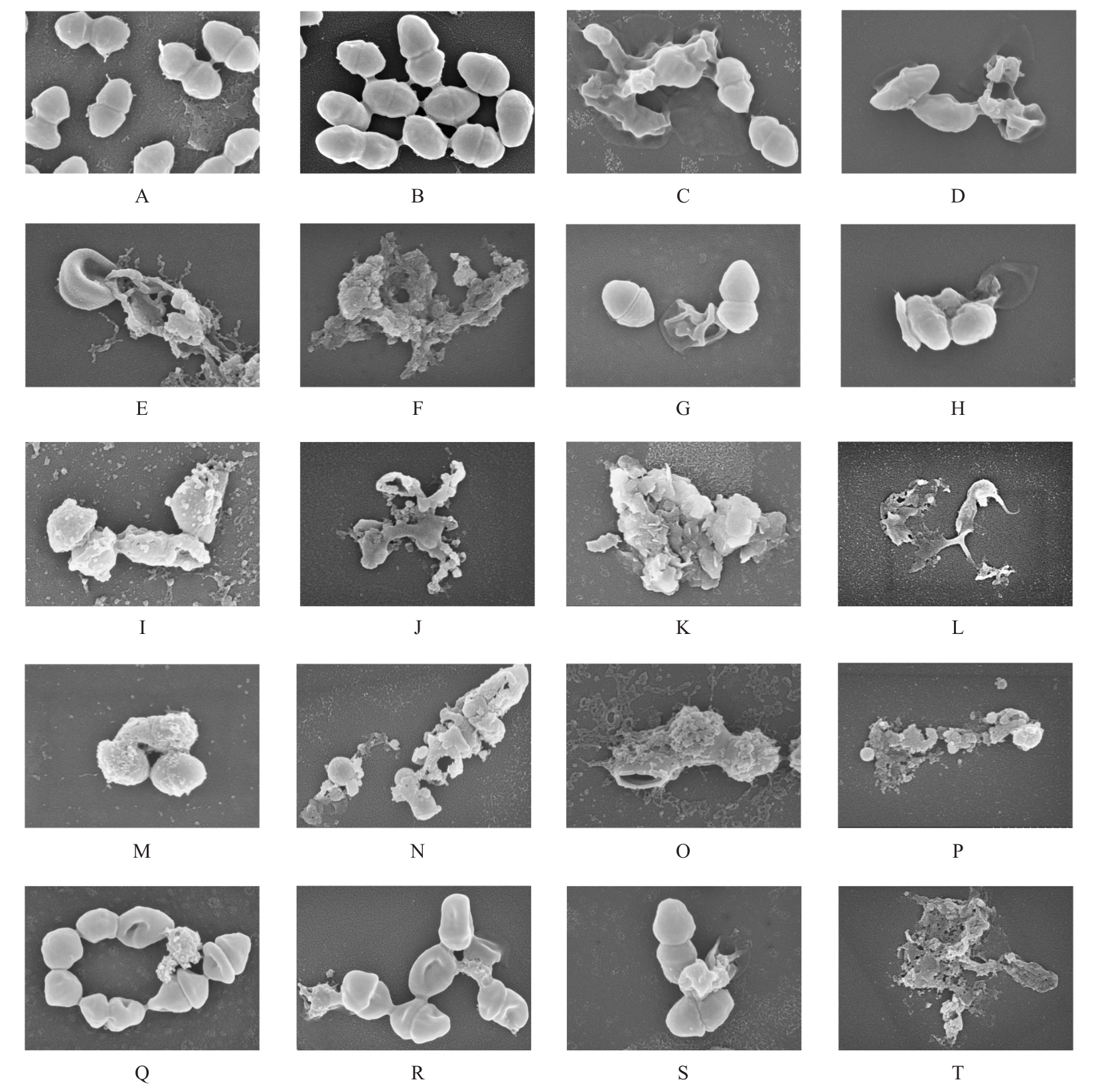
Objective To discuss the inhibitory effects of combined application of chlorogenic acid (CA), procyanidin (PC), and paeoniflorin (PF), the active components of Paeoniae Radix Rubra, on Enterococcus faecalisE.faecalis) and its biofilm, and to clarify the mechanism. Methods The minimal inhibitory concentration (MIC) and minimal bactericidal concentration (MBC) of CA, PC, and PF against E.faecalis were detected by microdilution method; the fractional inhibitory concentration index (FICI) and fractional bactericidal concentration index (FBCI) of the three active components of Paeoniae Radix Rubra in combination were detected by checkerboard dilution method. The experiment was divided into control group, high concentration of single-drug groups (PF-10 group, PC-6 group, and CA-10 group), and drug combination groups (CA-2+PC-1 group, CA-2+PC-2 group, PF-4+PC-2 group, PF-6+PC-2 group, PF-4+CA-4 group, and PF-6+CA-4 group). Crystal violet staining was used to detect the biofilm formation of E.faecalis in various groups after treated with three active components in combination; scanning electron microscope (SEM) was used to observe the morphology of E.faecalis biofilm in various groups after treated with three active components in combination; spot assay was used to detect the inhibitory effects of three active components in combination on E.faecalis planktonic bacteria and biofilm in various groups; SEM was used to observe the damage to E.faecalis cell membrane in various groups after treated with three active components in combination; kit was used to detect the adenosine triphosphate (ATP) levels in E.faecalis planktonic bacteria and biofilm in various groups after treated with three active components in combination. Results Among the three active components of Paeoniae Radix Rubra, the MIC of PC was 4 g·L?1 and the MBC was 6 g·L?1; the MIC of CA was 8 g·L?1 and the MBC was 10 g·L?1; the MIC and MBC of PF were both >10 g·L?1, and the concentration of PF was selected as 10 g·L?1. The combination of PC and CA showed synergistic effects, the combination of PC and PF showed additive effects, and the combination of CA and PF showed additive effects. The crystal violet staining results showed that compared with control group, the biofilm formations of E.faecalis in PF-10 group, PC-6 group, CA-10 group, and drug combination groups were significantly decreased (P<0.05); compared with PF-10 group, the biofilm formations of E.faecalis in PC-6 group, CA-10 group, CA-2+PC-1 group, CA-2+PC-2 group, PF-4+PC-2 group, PF-6+PC-2 group, and PF-6+CA-4 group were significantly decreased (P<0.05 or P<0.01). The SEM results showed that in control group, the E.faecalis biofilm was thick, with tightly connected bacteria, regular morphology, and intact cell membranes; in PF-10 group, PC-6 group, and CA-10 group, the thickness of E.faecalis biofilm was significantly reduced, and the arrangement of bacteria became relatively loose; in all drug combination groups, the E.faecalis biofilm was significantly reduced or even completely disappeared, and under high magnification, the biofilm structure was completely absent, with bacterial fragments adhering and aggregating, losing their original bacterial morphology. The spot assay results showed that compared with control group, the colonies of E.faecalis planktonic bacteria in PF-10 group, PC-6 group, and CA-10 group were significantly reduced after treated for 5, 10, and 30 min, indicating gradually enhanced bactericidal effects; among drug combination groups, the combination of CA and PC significantly reduced the colonies of E.faecalis planktonic bacteria within 5 min, showing strong bactericidal effects. Compared with CA group and PC group, the colonies of E.faecalis planktonic bacteria in all drug combination groups showed no significant reduction after treated for 5, 10, and 30 min; compared with control group, the colonies of E.faecalis biofilm in PF-10 group, PC-6 group, and CA-10 group were gradually decreased after the treated for 30 and 60 min, suggesting that the high concentration of single-drug groups exhibited gradually enhanced bactericidal effects on E.faecalis in biofilm. Among them, the biofilm-killing effect of PC-6 group was the most significant, with no colony formation observed after treated for 30 min; in drug combination groups, only a few colonies of E.faecalis biofilm were observed in CA-2+PC-2 group after treated for 30 min, indicating effective killing of bacteria in biofilm; compared with PC-6 group and CA-10 group, all drug combination groups achieved the bactericidal effects of high concentration of single-drug groups at low concentrations. The SEM results showed that in control group, E.faecalis exhibited an oval shape with intact cell membranes; in PF group, bacterial morphology was altered, and cell membrane integrity was damaged; in CA group, most bacterial cell membranes remained relatively intact, but the bacterial surface showed shrinkage and depression, with a few bacteria exhibiting disrupted cell membrane integrity; in PC group, the integrity of bacterial cell membranes was most severely damaged, leading to leakage of cellular contents and aggregation of cell fragments into flocculent structures; in all drug combination groups, E.faecalis exhibited ruptured cell membranes, leakage of contents, and aggregation of bacterial debris, especially in the combination of CA and PC, where the most severe disruption of bacterial cell membrane integrity and complete leakage of contents were observed; in the combination of PF and CA, bacterial surface pits and shrinkage were observed, with occasional cell membrane rupture. The kit results showed that compared with control group, the ATP levels in E.faecalis planktonic bacteria and biofilm in various groups were significantly decreased (P<0.01); compared with PF-10 group, the ATP levels in E.faecalis planktonic bacteria in CA-10 group, CA-2+PC-2 group, PF-4+CA-4 group, and PF-6+CA-4 group were significantly decreased (P<0.05 or P<0.01), and the ATP levels in E.faecalis biofilm in CA-10 group and CA-2+PC-2 group were significantly decreased (P<0.05 or P<0.01). Conclusion The combined application of PF, PC, and CA, the active components of Paeoniae Radix Rubra, exhibits significant inhibitory effects on E.faecalis and its biofilm formation. The pairwise combinations of three active components show synergistic or additive effects, with the combination of CA and PC demonstrating the most significant synergistic effect. The underlying mechanism may be related to the disruption of E.faecalis cell membrane integrity and inhibition of bacterial ATP levels.

Key words: Active components of Paeoniae Radix Rubra, Enterococcus faecalis, Chlorogenic acid, Procyanidin, Paeoniflorin

CLC Number: 

  • R378.12