吉林大学学报(工学版) ›› 2026, Vol. 56 ›› Issue (3): 779-792.doi: 10.13229/j.cnki.jdxbgxb.20250363
• 计算机科学与技术 • 上一篇
面向智能安全的中国50th百分位男性体征行人数字模型开发及应用
赵洪乾1,2( ),李海岩1,2(),张城铭1,2,崔世海1,2,贺丽娟1,2,吕文乐1,2
- 1.天津科技大学 机械工程学院,天津 300457
2.现代汽车安全技术国际联合研究中心,天津 300457
Development and application of pedestrian human body model representing anthropometric characteristics of 50th percentile Chinese male for intelligent safety
Hong-qian ZHAO1,2(),Hai-yan LI1,2(),Cheng-ming ZHANG1,2,Shi-hai CUI1,2,Li-juan HE1,2,Wen-le LYU1,2
- 1.College of Mechanical Engineering,Tianjin University of Science and Technology,Tianjin 300457,China
2.International Research Association on Emerging Automotive Safety Technology,Tianjin 300457,China
摘要:
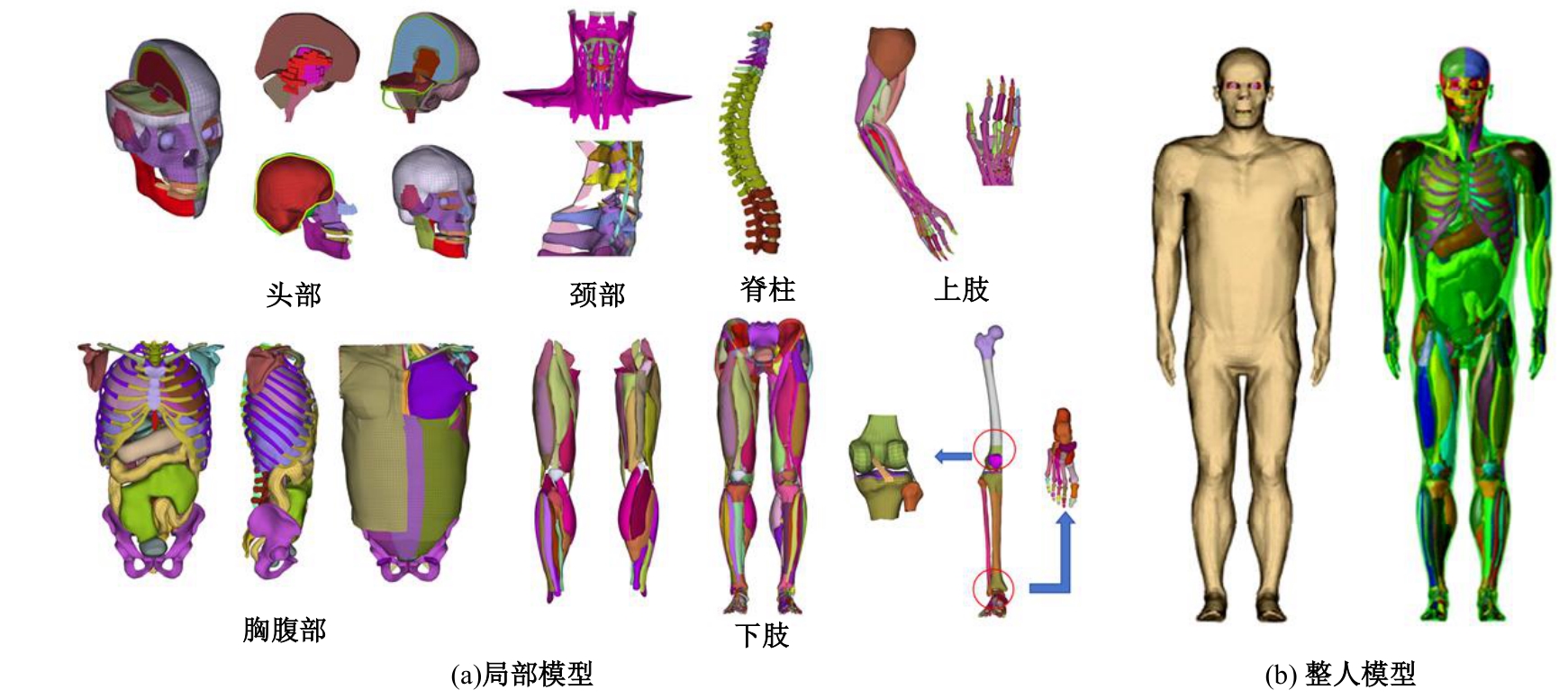
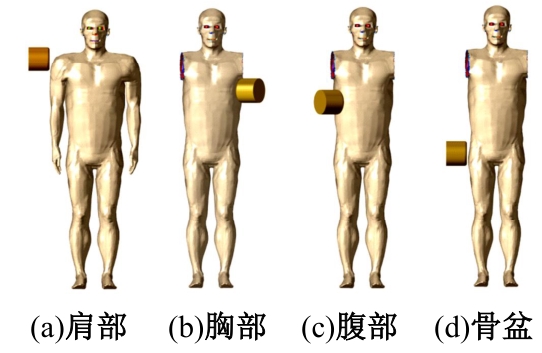
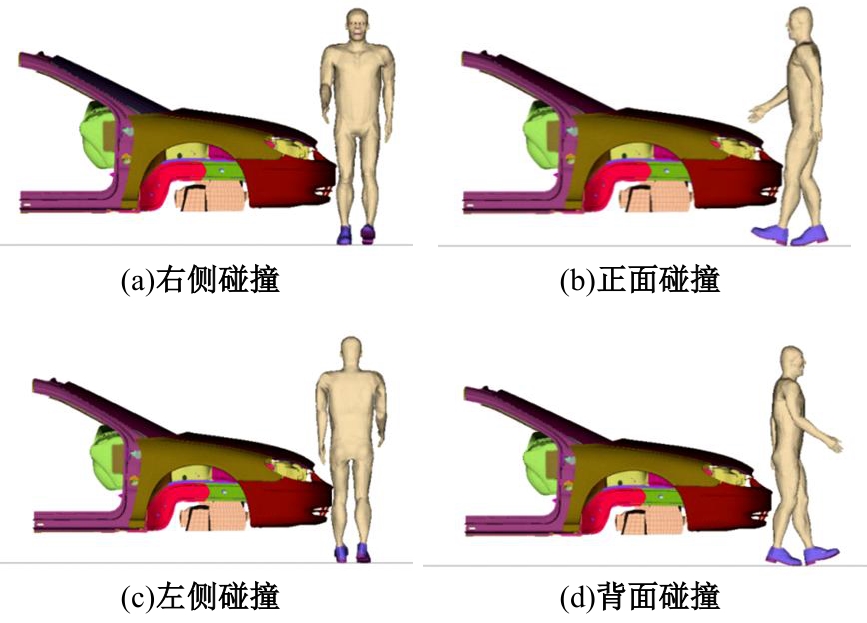
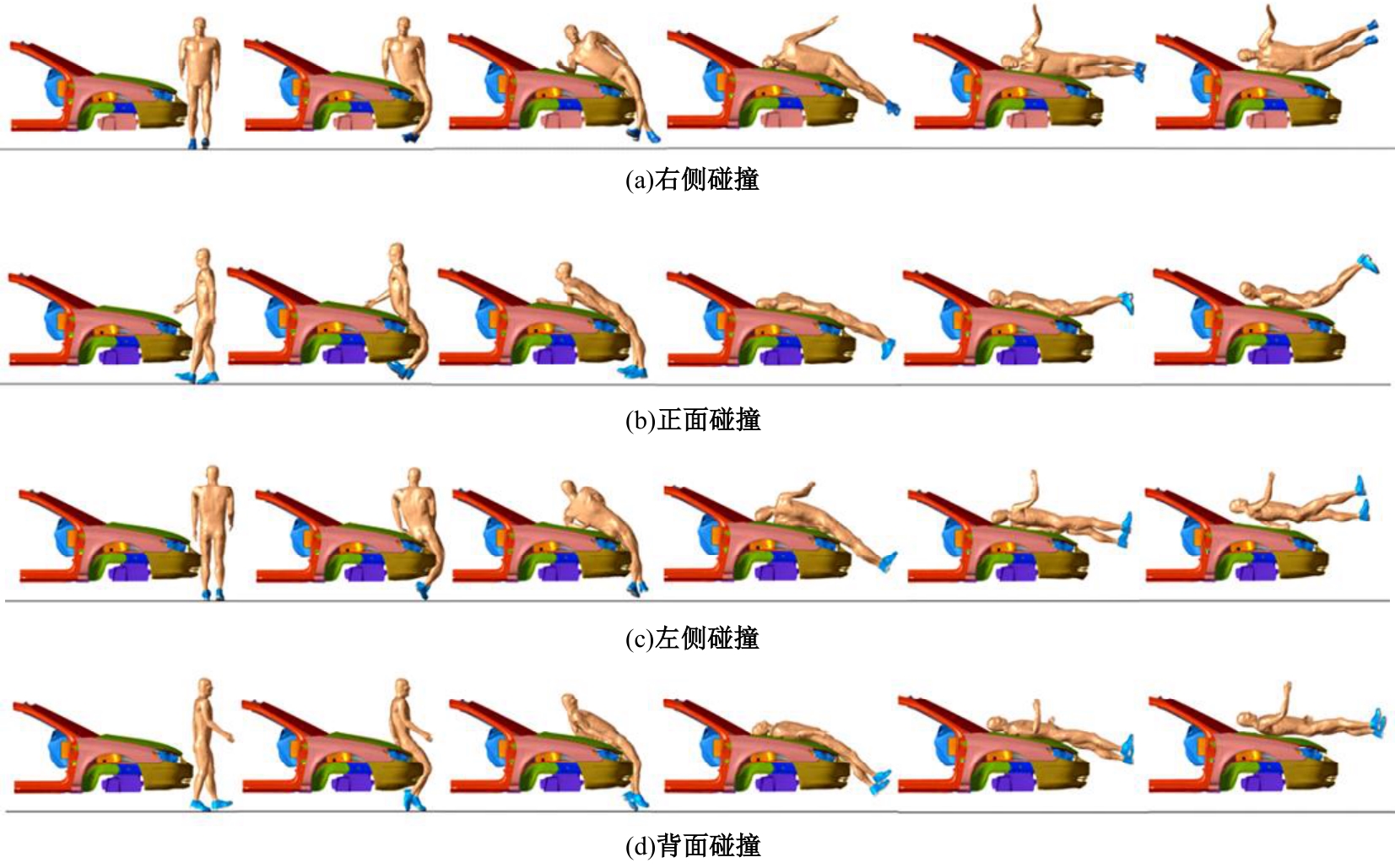
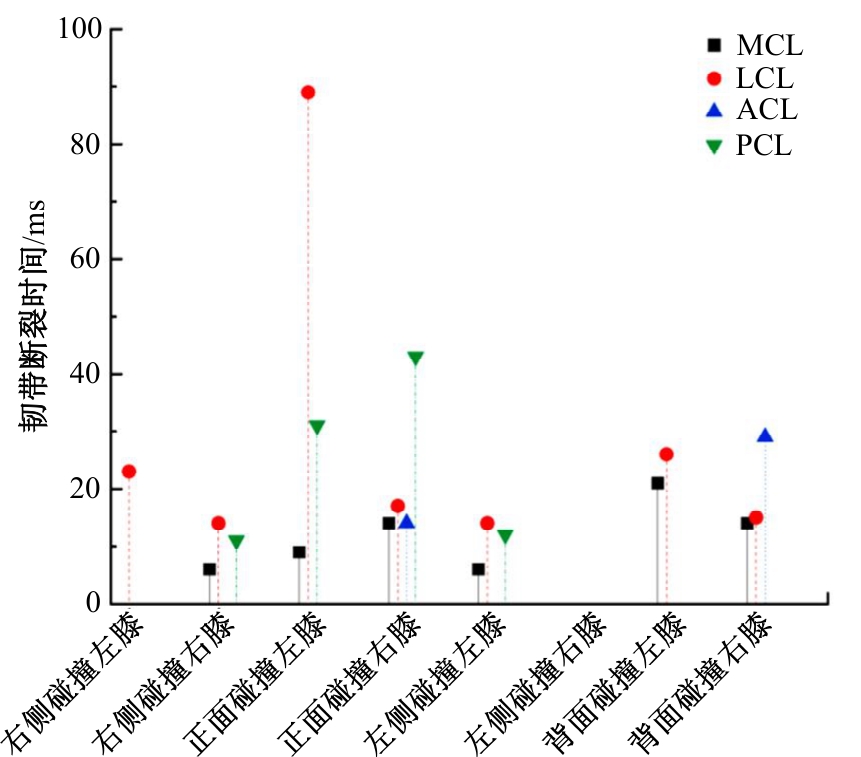
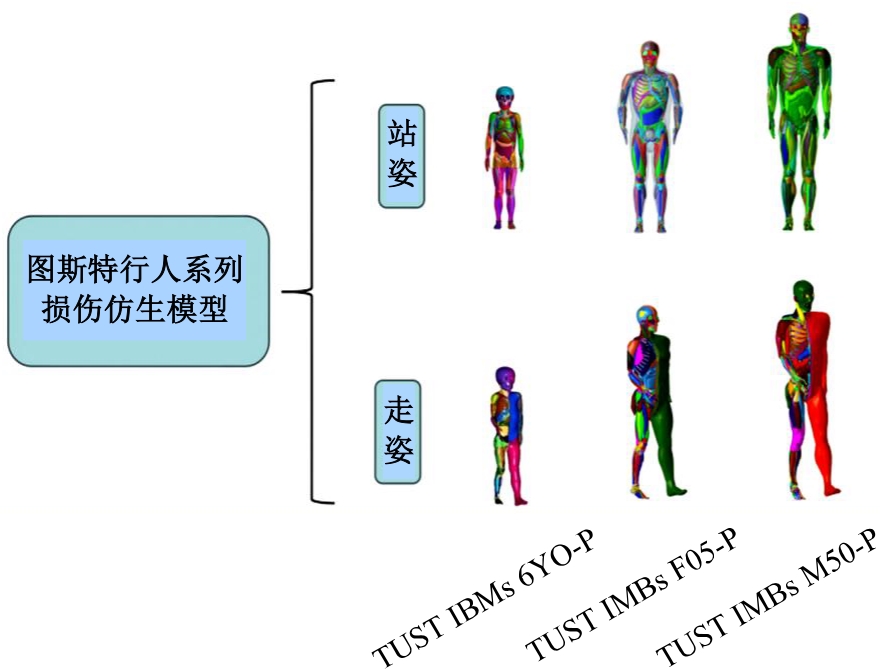
基于中国50th百分位男性体征志愿者CT医学影像数据,本文构建了图斯特50th百分位男性行人损伤仿生模型,并通过重构尸体钝性冲击试验验证其有效性。参考欧洲新车评价规程行人模型认证要求,本文进一步开发了行走姿态模型,并对不同碰撞角度下的行人-车辆碰撞进行仿真分析。结果表明:在行人与车辆侧向碰撞中,头部接触时间比正面和背面碰撞延迟约10 ms,整体损伤程度较轻;背面碰撞导致的头部损伤风险最高,正面碰撞更易引发下肢严重损伤。可见,碰撞角度对行人损伤具有显著影响。因此,在行人保护系统的优化设计及评价中应予以充分考虑。本文开发的图斯特损伤仿生模型可为行人-车辆碰撞损伤机理研究、车辆智能安全系统优化及虚拟测评体系构建提供关键技术支撑。
中图分类号:
- U467.14




| [1] | World Health Organization. Global Status Report on Road Safety 2023[M]. Geneva: World Health Organization Press, 2023. |
| [2] | 李海岩, 杨振, 贺丽娟, 等. 全球NCAP行人保护测评的对比研究及展望[J]. 汽车工程, 2021, 43(5):730-738. |
| Li Hai-yan, Yang Zhen, He Li-juan, et al. Comparative study and prospect of pedestrian protection sssessment in global NCAP[J]. Automotive Engineering, 2021, 43(5): 730-738. | |
| [3] | Lv X J, Xiao Z, Fang J G, et al. On safety design of vehicle for protection of vulnerable road users: A review[J]. Thin-Walled Structures, 2023, 182: No.109990. |
| [4] | 胡林, 谷子逸, 王丹琦, 等. 汽车安全性测评规程现状及趋势展望[J]. 汽车工程, 2024, 46(2):187-200, 240. |
| Hu Lin, Gu Zi-yi, Wang Dan-qi, et al. Current status and trend of automotive safety procedures/programs[J]. Automotive Engineering, 2024, 46(2): 187-200, 240. | |
| [5] | 韩勇, 杨济匡, 李凡, 等. 汽车-行人碰撞中人体下肢骨折的有限元分析[J]. 吉林大学学报: 工学版,2011, 41(1): 6-11. |
| Han Yong, Yang Ji-kuang, Li Fan, et al. Finite element analysis of lower extremity fractures in vehicle-pedestrian collision[J]. Journal of Jilin University (Engineering and Technology Edition), 2011, 41(1): 6-11. | |
| [6] | Chen J Q, Cheng R J, Lan F C, et al. Analysis of lower limb injury mechanism of an average Chinese pedestrian lower limb FE model in lateral impact[J]. International Journal of Vehicle Safety, 2020, 11(4): 330-344. |
| [7] | 龙永程, 郝海舟, 李凡, 等. 行人安全测试现行腿型冲击器的生物逼真度[J]. 汽车安全与节能学报, 2021, 12(4):475-482. |
| Long Yong-cheng, Hao Hai-zhou, Li Fan, et al. Biofidelity of current legform impactor in pedestrian safety test[J]. Journal of Automotive Safety and Energy, 2021, 12(4): 475-482. | |
| [8] | 李海岩, 黄盛一, 李琨, 等. 行人-车辆碰撞中六岁儿童下肢损伤分析及预测[J]. 汽车工程, 2023,45(6):1050-1061. |
| Li Hai-yan, Huang Sheng-yi, Li Kun, et al. Prediction and analysis of lower extremity injuries of six-year-old child pedestrian in car-pedestrian collision[J]. Automotive Engineering, 2023, 45(6): 1050-1061. | |
| [9] | Chen Z W, Huang X, Zou D H, et al. Predicting pedestrian lower limb fractures in real world vehicle crashes using a detailed human body leg model[J]. Acta of Bioengineering and Biomechanics, 2021, 23(4): 33-41. |
| [10] | 李雄, 兰凤崇, 陈吉清, 等. Hybird Ⅲ假人模型与CHUBM人体生物力学模型的正碰损伤对比[J].吉林大学学报: 工学版, 2022, 52(6): 1264-1272. |
| Li Xiong, Lan Feng-chong, Chen Ji-qing, et al. Comparison of injuries in front impact between Hybird III dummy model and CHUBM human biomechanical model[J]. Journal of Jilin University (Engineering and Technology Edition), 2022, 52(6): 1264-1272. | |
| [11] | Chen H P, Poulard D, Forman J, et al. Evaluation of geometrically personalized THUMS pedestrian model response against sedan-pedestrian PMHS impact test data[J]. Traffic Injury Prevention, 2018, 19(5): 542-548. |
| [12] | Pak W, Meng Y Z, Schap J, et al. Development and validation of a finite element model of a small female pedestrian[J]. Computer Methods in Biomechanics and Biomedical Engineering, 2020, 23(16): 1336-1346. |
| [13] | John J, Klug C, Kranjec M, et al. Hello, world! VIVA+: A human body model lineup to evaluate sex-differences in crash protection[J]. Frontiers in Bioengineering and Biotechnology, 2022, 10: No.918904. |
| [14] | Lindgren N, Yuan Q, Pipkorn B, et al. Development of personalizable female and male pedestrian SAFER human body models[J]. Traffic Injury Prevention, 2024, 25(2): 182-193. |
| [15] | . 中国成年人人体尺寸 [S]. |
| [16] | 曹祎帆.头部参数化模型开发及颅脑损伤预测[D].天津:天津科技大学机械工程学院,2024. |
| Cao Yi-fan. Development of head parametric model and prediction of cranial brain injury[D]. Tianjin: College of Mechanical Engineering, Tianjin University of Science and Technology, 2024. | |
| [17] | 王福洋. 颈部主被动肌肉对碰撞损伤影响的研究[D].天津:天津科技大学机械工程学院,2024. |
| Wang Fu-yang. A study on the effect of neck active and passive muscles on collision injuries[D]. Tianjin: College of Mechanical Engineering, Tianjin University of Science and Technology, 2024. | |
| [18] | 慕鹏飞. 中国体征第五十百分位男性乘员损伤仿生模型开发及应用研究[D]. 天津: 天津科技大学机械工程学院,2024. |
| Mu Peng-fei. Development and application of an injury bionic model with Chinese anthropometry of the 50th percentile male occupant[D]. Tianjin: College of Mechanical Engineering, Tianjin University of Science and Technology, 2024. | |
| [19] | 张城铭. 中国体征第五十百分位男性行人损伤仿生模型开发及应用研究[D]. 天津: 天津科技大学机械工程学院,2024. |
| Zhang Cheng-ming. Development and application of an injury bionic model of the 50th percentile Chinese male pedestrian[D]. Tianjin: College of Mechanical Engineering, Tianjin University of Science and Technology, 2024. | |
| [20] | Nahum A, Smith R, Ward C. Intracranial pressure dynamics during head impact[C]∥Proceedings of the 21st Stapp Car Crash Conference, New York, NY, USA, 1977: 339-366. |
| [21] | Yoganandan N, Pintar F A, Sances Jr A, et al. Biomechanics of skull fracture[J]. Journal of Neurotrauma, 1995, 12(4): 659-668. |
| [22] | Trosseille X, Tarriere C, Lavaste F, et al. Development of a FEM of the human head according to a specific test protocol[C]∥ Proceeding of 36th Stapp Car Crash Conference, Seattle, WA, USA, 1992: 235-253. |
| [23] | Hardy W N, Foster C D, Mason M J, et al. Investigation of head injury mechanisms using neutral density technology and high-speed biplanar X-ray[J]. Stapp Car Crash Journal, 2001, 45: 337-368. |
| [24] | Ewing C L, Thomas D J, Lustik L, et al. Dynamic response of the human head and neck to + Gy impact acceleration[C]∥Proceedings of 21st Stapp Car Crash Conference, New York, NY, USA, 1977: No.770928. |
| [25] | Davidsson J, Deutscher C, Hell W, et al. Human volunteer kinematics in rear-end sled collisions[J]. Crash Prevention and Injury Control, 2001, 2(4): 319-333. |
| [26] | Arbogast K B, Balasubramanian S, Seacrist T, et al. Comparison of kinematic responses of the head and spine for children and adults in low-speed frontal sled tests[J]. Stapp Car Crash Journal, 2009(53): 329-372. |
| [27] | Nightingale R W, McElhaney J H, Richardson W J, et al. Dynamic responses of the head and cervical spine to axial impact loading[J]. Journal of Biomechanics, 1996, 29(3): 307-318. |
| [28] | Kroell C K, Schneider D C, Nahum A M, et al. Impact tolerance and response of the human thorax II[J]. Stapp Car Crash Journal, 1974, 18: 383-457. |
| [29] | Shaw J M, Herriott R G, McFadden J D, et al. Oblique and lateral impact response of the PMHS thorax[J]. Stapp Car Crash Journal, 2006, 50: 147-167. |
| [30] | Cavanaugh J M, Nyquist G W, Goldberg S J, et al. Lower abdominal tolerance and response[C]∥Proceedings of 30th Stapp Car Crash Conference, San Diego, CA, USA, 1986: 41-63. |
| [31] | Yamada H. Strength of Biological Materials[M]. Baltimore: The Williams & Wilkins Company, 1970. |
| [32] | Kerrigan J R, Drinkwater D C, Kam C Y, et al. Tolerance of the human leg and thigh in dynamic lateromedial bending[J]. International Journa Crashworthiness, 2004, 9(6): 607-623. |
| [33] | Kajzer J, Schroeder G, Ishikawa H, et al. Shearing and bending effects at the knee joint at highspeed lateral loading[C]∥Proceedings of 41st Stapp Car Crash Conference, Lake Buena Vista, FL, USA, 1997: 151-165. |
| [34] | 李海岩, 慕鹏飞, 王彦鑫, 等. 面向汽车安全的中国体征50th百分位男性乘员生物力学模型开发及验证[J].汽车工程,2024,46(10): 1904-1919. |
| Li Hai-yan, Mu Peng-fei, Wang Yan-xin, et al. Development and validation of a biomechanical model with anthropometry of 50th percentile Chinese male occupant for automobile safety[J]. Automotive Engineering, 2024, 46(10): 1904-1919. | |
| [35] | Marth D R. Biomechanics of the shoulder in lateral impact [D]. Detroit: Wayne State University, 2002. |
| [36] | Koh S W, Cavanaugh J M, Mason M J, et al. Shoulder injury and response due to lateral glenohumeral joint impact: an analysis of combined data[J]. Stapp Car Crash Journal, 2005, 49: 291-322. |
| [37] | Viano D C, Lau I V, Asbury C, et al. Biomechanics of the human chest, abdomen, and pelvis in lateral impact[J]. Accident Analysis & Prevention, 1989, 21(6): 553-574. |
| [38] | Euro NCAP. Technical bulletin of pedestrian human model certification[EB/OL].[2024-06-20]. |
| [39] | 李海岩, 李琨, 黄永强, 等. 轿车与6岁儿童行人不同方位碰撞中下肢损伤分析[J]. 汽车工程, 2021, 43(2):262-268. |
| Li Hai-yan, Li Kun, Huang Yong-qiang, et al. Analysis of lower extremity injury of six-year-old child pedestrian in different orientation collisions with car[J]. Automotive Engineering, 2021, 43(2): 262-268. | |
| [40] | Baumgartner D, Willinger R, Shewchenko N, et al. Tolerance limits for mild traumatic brain injury derived from numerical head impact replication[C]∥Proceedings of the International IRCOBI Conference on the Biomechanics of Impacts, Isle of Man, UK, 2001: 353-355. |
| [41] | Zhang L, Yang K H, King A I. A proposed injury threshold for mild traumatic brain injury[J]. Journal of Biomechanical Engineering, 2004, 126(2): 226-236. |
| [42] | 尹彦, 杨洁, 马春生, 等. 东西方人体测量学尺寸差异分析[J]. 标准科学, 2015(7): 10-14. |
| Yin Yan, Yang Jie, Ma Chun-sheng, et al. Analysis on difference in anthropomety dimensions between east and west human bodies[J]. Standard Science, 2015(7): 10-14. | |
| [43] | Li H Y, Li K, Huang Y Q, et al. Validation of a finite element model with six-year-old child anatomical characteristics as specified in Euro NCAP pedestrian human model certification (TB024)[J]. Computer Methods in Biomechanics and Biomedical Engineering, 2021, 24(1): 76-90. |
| [44] | 李海岩, 赵洪乾, 贺丽娟, 等. 轿车与中国小身材女性行人不同角度碰撞中头部及下肢损伤分析[C]∥第十七届国际汽车交通安全学术会议(INFATS2023)论文集. 北京: 中国学术期刊光盘版电子杂志社, 2023: 25-33. |
| [1] | 李军,杨飞帆,龚胜,周科宇. 基于视觉的轻量化路面异常检测算法[J]. 吉林大学学报(工学版), 2026, 56(2): 488-496. |
| [2] | 张向文,王子豪. 电动汽车制动模式切换过程电液协调控制策略[J]. 吉林大学学报(工学版), 2026, 56(1): 31-43. |
| [3] | 高镇海,鲍明喜,赵睿,唐明弘,高菲. 基于目标锚点驱动的多模态轨迹预测方法[J]. 吉林大学学报(工学版), 2026, 56(1): 21-30. |
| [4] | 兰巍,周政,王冠宇,王伟,张苗苗. 基于机器学习的汽车设计智能拟合方法[J]. 吉林大学学报(工学版), 2025, 55(9): 2858-2863. |
| [5] | 孙天骏,杨惠喆,蔡荣贵,冯嘉仪,冉锐,刘斌. 面向纯电动汽车自适应巡航系统的人性化起停控制策略[J]. 吉林大学学报(工学版), 2025, 55(9): 2847-2857. |
| [6] | 李寿涛,贾湘怡,朱军,郭洪艳,于丁力. 基于Level-K的智能驾驶汽车无信控交叉路口决策方法[J]. 吉林大学学报(工学版), 2025, 55(9): 3069-3078. |
| [7] | 朱冰,孟鹏翔,刘斌,韩嘉懿,赵健,陈志成,宋东鉴,陶晓文. 基于交通环境信息的虚拟车道线拟合方法[J]. 吉林大学学报(工学版), 2025, 55(9): 2935-2945. |
| [8] | 赵俊武,曲婷,胡云峰. 基于自适应采样的智能车辆轨迹规划方法[J]. 吉林大学学报(工学版), 2025, 55(8): 2802-2816. |
| [9] | 于贵申,陈鑫,唐悦,赵春晖,牛艾佳,柴辉,那景新. 激光表面处理对铝-铝粘接接头剪切强度的影响[J]. 吉林大学学报(工学版), 2025, 55(8): 2555-2569. |
| [10] | 高金武,孙少龙,王舜尧,高炳钊. 基于电机转矩补偿的增程器转速波动抑制策略[J]. 吉林大学学报(工学版), 2025, 55(8): 2475-2486. |
| [11] | 贾美霞,胡建军,肖凤. 基于多软件联合的车用电机变工况多物理场仿真方法[J]. 吉林大学学报(工学版), 2025, 55(6): 1862-1872. |
| [12] | 宋学伟,于泽平,肖阳,王德平,袁泉,李欣卓,郑迦文. 锂离子电池老化后性能变化研究进展[J]. 吉林大学学报(工学版), 2025, 55(6): 1817-1833. |
| [13] | 肖纯,易子淳,周炳寅,张少睿. 基于改进鸽群优化算法的燃料电池汽车模糊能量管理策略[J]. 吉林大学学报(工学版), 2025, 55(6): 1873-1882. |
| [14] | 李伟东,马草原,史浩,曹衡. 基于分层强化学习的自动驾驶决策控制算法[J]. 吉林大学学报(工学版), 2025, 55(5): 1798-1805. |
| [15] | 卢荡,索艳茹,孙宇航,吴海东. 基于无量纲格式的轮胎侧倾侧偏力学特性预测[J]. 吉林大学学报(工学版), 2025, 55(5): 1516-1524. |
|
||