吉林大学学报(工学版) ›› 2025, Vol. 55 ›› Issue (11): 3614-3622.doi: 10.13229/j.cnki.jdxbgxb.20240125
• 交通运输工程·土木工程 • 上一篇
高原山区重型货车驾驶人驾驶风险评估方法
覃文文1( ),臧津延1,鄢祺阳2,刘云贵1,杨震1(),吴云鹏1
- 1.昆明理工大学 交通工程学院,昆明 650504
2.重庆首讯科技股份有限公司,重庆 400000
Driving risk assessment method of heavy goods vehicle drivers in plateau and mountainous areas
Wen-wen QIN1(),Jin-yan ZANG1,Qi-yang YAN2,Yun-gui LIU1,Zhen YANG1(),Yun-peng WU1
- 1.Faculty of Transportation Engineering,Kunming University of Science and Technology,Kunming 650504,China
2.Chongqing Top-Tech Information Co. ,Ltd. ,Chongqing 400000,China
摘要:
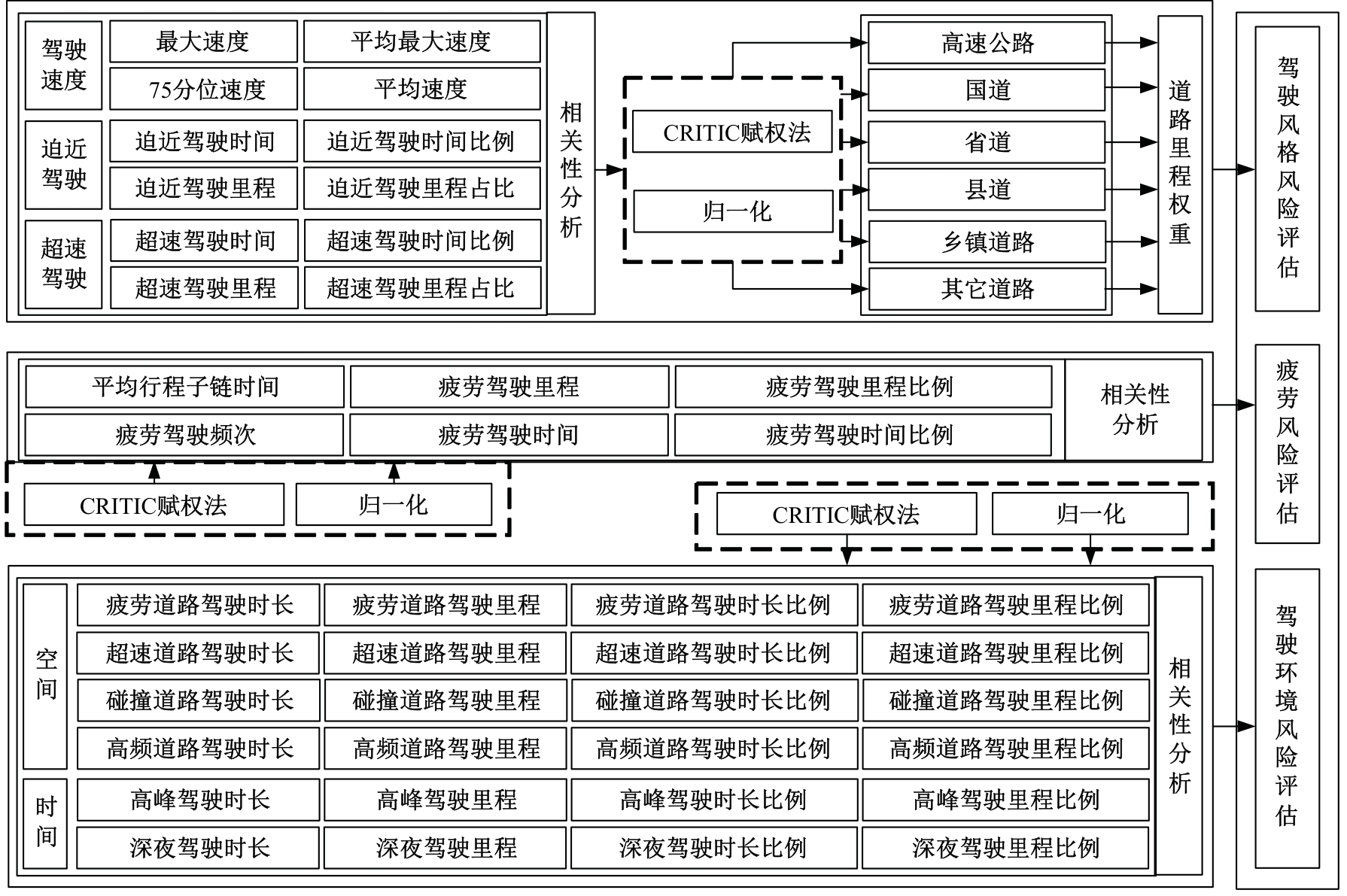
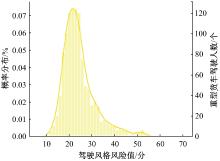
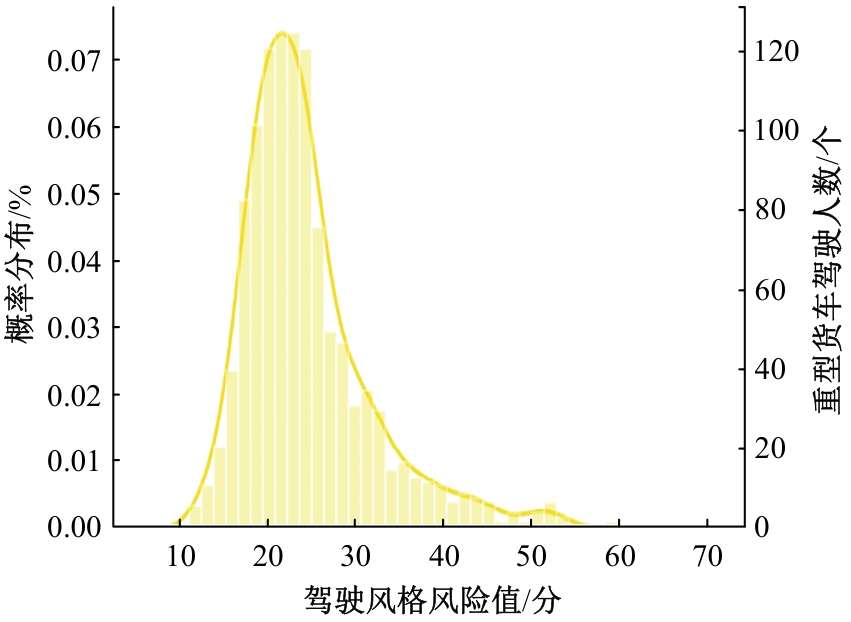
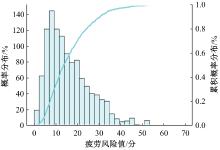
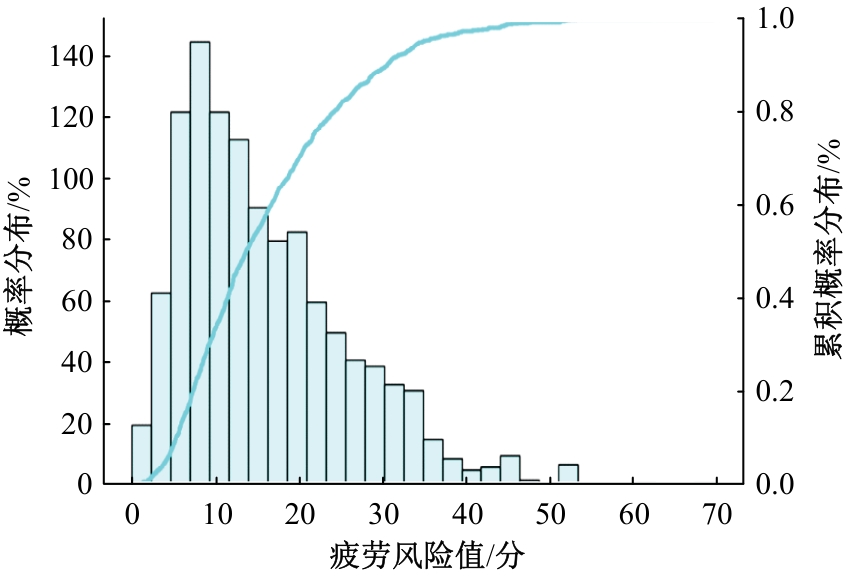
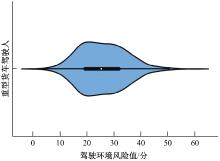
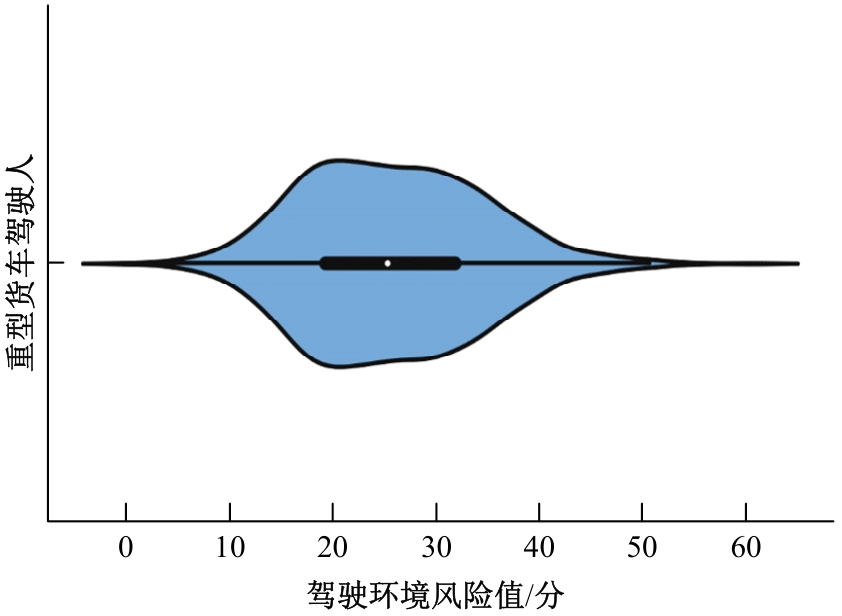
为构建具有良好泛化性和可解释性的重型货车驾驶人驾驶风险评估体系,本文基于云南省重型货车轨迹数据,首先,构建涵盖驾驶风格风险、疲劳风险和驾驶环境风险三个方面的驾驶风险评估指标;其次,采用皮尔逊相关性分析,从初始驾驶风险评估指标中筛选出43个关键指标;最后,基于CRITIC赋权法获取各类指标的特征权重,提出重型货车驾驶人驾驶风险评估方法。结果表明:驾驶风格风险得分在30分以下的占比约82.16%,可见大多数高原山区重型货车驾驶人驾驶风险评估值较低;疲劳风险评估显示42.3%的样本得分低于12分,反映出云南省内重型货车驾驶人较少进行长途运输,连续长时间驾驶的情况较少;驾驶环境风险评估值在15~35分范围内分布最密集,占比为75.46%,表明货物运输主要依赖于风险较高的干线公路。
中图分类号:
- X951

| [1] | 张旭欣, 王雪松, 马勇, 等. 驾驶行为与驾驶风险国际研究进展[J]. 中国公路学报, 2020, 33(6): 1-17. |
| Zhang Xu-xin, Wang Xue-song, Ma Yong, et al. International research progress on driving behavior and driving risks[J]. China Journal of Highway and Transport, 2020, 33(6): 1-17. | |
| [2] | Gsul M, 胡予红, 周旋, 等. 道路交通运输安全发展报告(2017)[J]. 中国应急管理, 2018, 12(2): 48-58. |
| Gsul M, Hu Yu-hong, Zhou Xuan, et al. Road traffic safetydevelopment report(2017)[J]. China Emergency Management, 2018, 12(2): 48-58. | |
| [3] | Petridou E, Moustaki M. Human factors in the causation of road traffic crashes[J]. European Journal of Epidemiology, 2000, 16(9): 819-826. |
| [4] | Cho S H, Kim D K, Kho S Y. Latent factors of severity in truck-involved and non-truck-involved crashes on freeways[J]. International Journal of Transport and Vehicle Engineering, 2017, 11(7): 920-927. |
| [5] | 牛世峰, 李贵强, 张士伟. 卫星定位数据驱动的营运车辆驾驶人驾驶风险评估模型[J]. 中国公路学报, 2020, 33(6): 202-211. |
| Niu Shi-feng, Li Gui-qiang, Zhang Shi-wei. Driving risk assessment model of commercial drivers based on satellite-positioning data[J]. China Journal of Highway and Transport, 2020, 33(6): 202-211. | |
| [6] | 韩万里. 重型货车驾驶员驾驶行为特征及安全风险研究[D]. 西安: 长安大学汽车学院, 2021. |
| Han Wan-li. Study on driving behavior characteristics and safety risk of heavy truck drivers[D]. Xi'an: School of Automobile, Chang'an University, 2021. | |
| [7] | Niu S, Ukkusuri S V. Risk assessment of commercial dangerous-goods truck drivers using geo-location data: a case study in china[J]. Accident Analysis & Prevention, 2020, 137: 1-14. |
| [8] | Hyun K K, Jeong K, Tok A, et al. Assessing crash risk considering vehicle interactions with trucks using point detector data[J]. Accident Analysis & Prevention, 2019, 130: 75-83. |
| [9] | 孙川, 吴超仲, 褚端峰, 等. 基于车联网数据挖掘的营运车辆驾驶速度行为聚类研究[J]. 交通运输系统工程与信息, 2015, 15(6): 82-87. |
| Sun Chuan, Wu Chao-zhong, Chu Duan-feng, et al. Driving speed behavior clustering for commercial vehicle based on connected vehicle data mining[J]. Journal of Transportation Systems Engineering and Information Technology, 2015, 15(6): 82-87. | |
| [10] | 王海星, 王翔宇, 王招贤, 等. 基于数据挖掘的危险货物运输风险驾驶行为聚类分析[J]. 交通运输系统工程与信息, 2020, 20(1): 183-189. |
| Wang Hai-xing, Wang Xiang-yu, Wang Zhao-xian, et al. Dangerous driving behavior clustering analysis for hazardous materials transportation based on data mining[J]. Journal of Transportation Systems Engineering and Information Technology, 2020, 20(1): 183-189. | |
| [11] | Wei C H, Lee Y, Luo Y W, et al. Incorporating personality traits to assess the risk level of aberrant driving behaviors for truck drivers[J]. International Journal of Environmental Research and Public Health, 2021, 18(9): 1-18. |
| [12] | Yuan Y, Yang M, Guo Y, et al. Risk factors associated with truck-involved fatal crash severity: analyzing their impact for different groups of truck drivers[J]. Journal of Safety Research, 2021, 76: 154-165. |
| [13] | Chen F, Zhu Y, Zu J, et al. Appraising road safety attainment by critic-electre-fcm: a policymaking support for southeast asia[J]. Transport policy, 2022, 122: 104-118. |
| [14] | Zhou T, Zhang J. Analysis of commercial truck drivers' potentially dangerous driving behaviors based on 11-month digital tachograph data and multilevel modeling approach[J]. Accident Analysis & Prevention, 2019, 132: 1-11. |
| [15] | Zhu Y, Ma Y, Chen S, et al. Identifying potentially risky intersections for heavy-duty truck drivers based on individual driving styles[J]. Applied Sciences, 2022, 12(9): 1-21. |
| [16] | 徐婷, 张香, 张亚坤, 等. 基于AdaBoost算法的货车驾驶人安全倾向性分类[J]. 安全与环境学报, 2019, 19(4): 1273-1281. |
| Xu Ting, Zhang Xiang, Zhang Ya-kun, et al. Truck driver safety tendency classification based on the AdaBoost algorithm[J]. Journal of Safety and Environment, 2019, 19(4): 1273-1281. | |
| [17] | 郑留洋. 基于车联网数据的货车出行风险画像与影响因素分析[D]. 北京: 北京交通大学交通运输学院, 2019. |
| Zheng Liu-yang. Truck's risk assessment and influencing factors based on vehicular networking data[D]. Beijing: School of Traffic and Transportation, Beijing Jiaotong University, 2019. | |
| [18] | 覃文文, 鄢祺阳, 谷金晶, 等. 重载货车驾驶人驾驶风格识别与量化研究[J]. 交通运输系统工程与信息, 2022, 22(4): 137-148. |
| Qin Wen-wen, Yan Qi-yang, Gu Jin-jing, et al. Driving style recognition and quantification for heavy-duty truck drivers[J]. Journal of Transportation Systems Engineering and Information Technology, 2022, 22(4): 137-148. |
| [1] | 张航,孙煜,马宝林,牛世豪,王星月,吕能超. 高速公路双车道出口辅助车道长度可靠性设计[J]. 吉林大学学报(工学版), 2025, 55(8): 2611-2618. |
| [2] | 刘长钊,宋健,李峥琪,张铁,王磊. 考虑动力学性能的高速薄壁齿轮多目标优化[J]. 吉林大学学报(工学版), 2025, 55(8): 2487-2500. |
| [3] | 秦严严,肖腾飞,罗钦中,王宝杰. 雾天高速公路车辆跟驰安全分析与控制策略[J]. 吉林大学学报(工学版), 2025, 55(4): 1241-1249. |
| [4] | 李振江,万利,周世睿,陶楚青,魏巍. 基于时空Transformer网络的隧道交通运行风险动态辨识方法[J]. 吉林大学学报(工学版), 2025, 55(4): 1336-1345. |
| [5] | 赵慧超,刘耀东,刘铭礼,宫艳峰,李显,赵川,孙平. 基于Spearman相关性和燃烧三维数值计算的汽油机碳氢排放分析[J]. 吉林大学学报(工学版), 2025, 55(3): 829-838. |
| [6] | 杨永正,杜志刚,梅家林. 高速公路隧道线性诱导系统设置方法及效果评估[J]. 吉林大学学报(工学版), 2025, 55(12): 3885-3897. |
| [7] | 徐进,王延鹏,陈海源,张晓波,潘存书. 山区公路回头曲线小客车纵向行驶特性及运行速度模型[J]. 吉林大学学报(工学版), 2023, 53(12): 3432-3445. |
| [8] | 曹倩,李志慧,陶鹏飞,马永建,杨晨曦. 考虑风险异质特性的路网交通事故风险评估方法[J]. 吉林大学学报(工学版), 2023, 53(10): 2817-2825. |
| [9] | 张鑫,张卫华. 快速路合流区主线不同交通状态下的安全性分析[J]. 吉林大学学报(工学版), 2022, 52(6): 1308-1314. |
| [10] | 张姝玮,郭忠印,杨轸,柳本民. 驾驶行为多重分形特征在驾驶疲劳检测中的应用[J]. 吉林大学学报(工学版), 2021, 51(2): 557-564. |
| [11] | 万平,吴超仲,马晓凤. 基于ROC曲线和驾驶行为特征的驾驶愤怒强度判别阈值[J]. 吉林大学学报(工学版), 2020, 50(1): 121-131. |
| [12] | 王海玮, 温惠英, 刘敏. 夜间环境驾驶员精神负荷的生理特性评估与实验[J]. 吉林大学学报(工学版), 2017, 47(2): 420-428. |
| [13] | 陈鑫, 胡翠松, 宁厚于, 吴元强, 汪硕, 杨昌海. SUV白车身隐式参数化建模及多性能优化轻量化[J]. 吉林大学学报(工学版), 2016, 46(6): 1780-1785. |
| [14] | 严利鑫, 黄珍, 朱敦尧, 陈志军, 冉斌. 基于马尔科夫毯和隐朴素贝叶斯的驾驶行为险态辨识[J]. 吉林大学学报(工学版), 2016, 46(6): 1851-1857. |
| [15] | 敬明, 王昊, 王文静. 基于跟驰数据采集分析的各异性跟驰模型[J]. 吉林大学学报(工学版), 2015, 45(3): 761-768. |
|
||