吉林大学学报(医学版) ›› 2025, Vol. 51 ›› Issue (6): 1655-1660.doi: 10.13481/j.1671-587X.20250621

• 临床研究 • 上一篇    

泛免疫炎症指数对老年冠心病患者PCI术后1年内主要心血管不良事件的预测价值

孙涛,戴芝银(),李璇,张朝普,丁澍,赵建伟   

  1. 江苏大学附属医院心内科,江苏 镇江 212001
  • 收稿日期:2024-11-28 接受日期:2025-02-04 出版日期:2025-11-28 发布日期:2025-12-15
  • 通讯作者: 戴芝银 E-mail:15240288403@163.com
  • 作者简介:孙 涛(1976-),男,江苏省镇江市人,副主任医师,医学硕士,主要从事冠心病介入治疗方面的研究。
  • 基金资助:
    江苏省卫健委医学科研立项项目(ZD2022062)

Predictive value of pan-immune-inflammation index for major adverse cardiovascular events within 1 year after PCI in elderly patients with coronary heart disease

Tao SUN,Zhiyin DAI(),Xuan LI,Chaopu ZHANG,Shu DING,Jianwei ZHAO   

  1. Department of Cardiology,Affiliated Hospital,Jiangsu University,Zhenjiang 212001,China
  • Received:2024-11-28 Accepted:2025-02-04 Online:2025-11-28 Published:2025-12-15
  • Contact: Zhiyin DAI E-mail:15240288403@163.com

摘要:

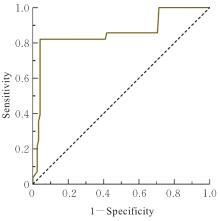
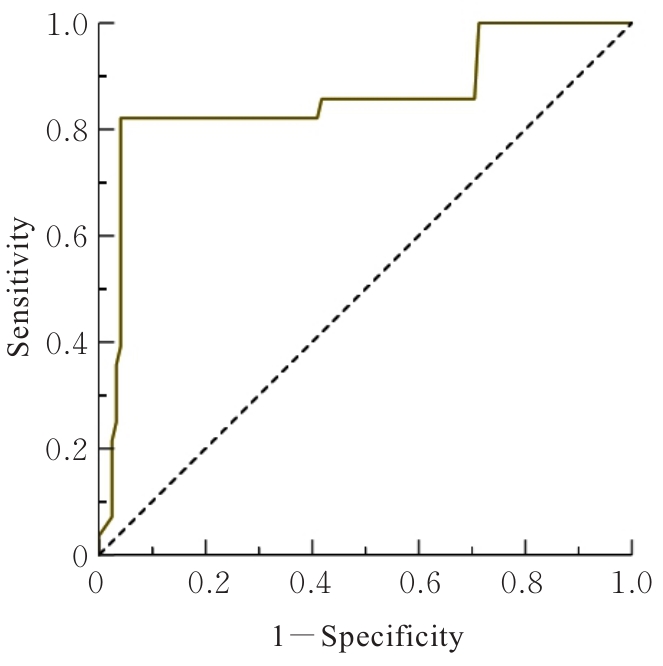
目的 探讨泛免疫炎症指数(PIV)在老年冠心病患者接受经皮冠状动脉介入治疗(PCI)后1年内预测主要心血管不良事件(MACE)的临床价值,阐明炎症反应在冠心病患者术后恢复和预后中的作用。 方法 选取2020年7月—2023年8月接受PCI术治疗的150例老年冠心病患者作为研究对象,依据术后1年是否出现MACE分为MACE组(n=28)和未发生MACE组(n=122),采集患者基线资料和生化指标,并计算PIV,多因素Logistic回归分析老年冠心病患者PCI术后1年内发生MACE的影响因素,受试者工作特征(ROC)曲线分析PIV对老年冠心病患者PCI术后1年内发生MACE的预测价值。 结果 与未发生MACE组比较,MACE组患者总胆固醇(TC)和低密度脂蛋白胆固醇(LDL-C)水平及中性粒细胞(NEUT)、血小板(PLT)计数和PIV均明显升高(P<0.05),2组患者其他资料比较差异均无统计学意义(P>0.05)。多因素Logistic回归分析,TC(OR=1.571,95%CI:1.088~2.270)及LDL-C(OR=32.506,95%CI:8.880~118.994)水平和PIV(OR=1.014,95%CI:1.010~1.019)均为老年冠心病患者PCI术后1年发生MACE的影响因素(P<0.05)。ROC曲线分析,PIV预测MACE的ROC曲线下面积(AUC)值为0.857(95%CI:0.762~0.951),灵敏度为0.821,特异度为0.959,最大约登指数为0.780,最佳阈值为778.805(P<0.01)。 结论 PIV对老年冠心病患者PCI术后1年内发生MACE具有重要的预测价值。

关键词: 冠心病, 泛免疫炎症指数, 主要心血管不良事件, 经皮冠状动脉介入, 老年

Abstract:

Objective To discuss the clinical value of pan-immune inflammation index (PIV) in predicting the major adverse cardiovascular events (MACE) within 1 year after percutaneous coronary intervention (PCI) in the elderly patients with coronary heart disease, and to clarify the role of inflammatory response in postoperative recovery and prognosis of the patients with coronary heart disease. Methods A total of 150 elderly patients with coronary heart disease who underwent PCI from July 2020 to August 2023 were selected as the research subjects; according to the occurrence of MACE within 1 year after operation, they were divided into MACE group (n=28) and non-MACE group (n=122); the baseline data and biochemical indicators of the patients were collected, and PIV was calculated; multivariate Logistic regression was used to analyze the influencing factors of MACE within 1 year after PCI in the elderly patients with coronary heart disease; receiver operating characteristic (ROC) curve was used to analyze the predictive value of PIV for MACE within 1 year after PCI in the elderly patients with coronary heart disease. Results Compared with non-MACE group, the levels of total cholesterol (TC) and low-density lipoprotein cholesterol (LDL-C), neutrophils (NEUT), platelets (PLT) counting and PIV in the patients in MACE group were significantly increased (P<0.05); there were no significant differences in other data between two groups (P>0.05). The multivariate Logistic regression analysis results showed that the levels of TC (OR=1.571, 95%CI: 1.088-2.270) and LDL-C (OR=32.506, 95%CI: 8.880-118.994) and PIV (OR=1.014, 95%CI: 1.010-1.019) were the influencing factors of MACE within 1 year after PCI in the elderly patients with coronary heart disease (P<0.05). The ROC curve analysis results showed that the area under the ROC curve (AUC) of PIV for predicting MACE was 0.857 (95%CI: 0.762-0.951), the sensitivity was 0.821, the specificity was 0.959, the maximum Youden index was 0.780, and the best cut-off value was 778.805 (P<0.01). Conclusion PIV has important predictive value for MACE within 1 year after PCI in elderly patients with coronary heart disease.

Key words: Coronary heart disease, Pan-immune inflammation index, Major adverse cardiovascular events, Percutaneous coronary intervention, Elderly

中图分类号: 

  • R541.4