吉林大学学报(医学版) ›› 2025, Vol. 51 ›› Issue (5): 1240-1250.doi: 10.13481/j.1671-587X.20250510

• 基础研究 • 上一篇    

防脱育发液对毛发生长的促进作用及其机制

牟燕鸿1,2,李英娜1,2,刘建增3,罗春红4,孙立伟2(),姜锐2()   

  1. 1.长春中医药大学药学院中药化学系,吉林 长春 130117
    2.长春中医药大学附属医院中医药研究中心,吉林 长春 130021
    3.长春中医药大学东北亚中医药研究中心,吉林 长春 130117
    4.广州白云美湾检测有限公司,广东 广州 510000
  • 收稿日期:2024-11-12 接受日期:2024-12-23 出版日期:2025-09-28 发布日期:2025-11-05
  • 通讯作者: 孙立伟,姜锐 E-mail:sunnylilwei@163.com;jiangrui800710@163.com
  • 作者简介:牟燕鸿(1999-),女,云南省昭通市人,在读硕士研究生,主要从事中医药传统功效的科学内涵和生物学机制方面的研究。
  • 基金资助:
    吉林省科技厅科技发展计划项目(20220401124YY);吉林省科技厅科技发展计划项目(20210502018ZP)

Promotional effect of CHAaHGS on hair growth and its mechanism

Yanhong MU1,2,Yingna LI1,2,Jianzeng LIU3,Chunhong LUO4,Liwei SUN2(),Rui JIANG2()   

  1. 1.Department of Tradional Chinese Medicine Chemistry,School of Pharmacy,Changchun University of Chinese Medicine,Changchun 130117,China
    2.Research Center of Chinese Medicine,Affiliated Hospital,Changchun University of Chinese Medicine,Changchun 130021,China
    3.North East Asian Center for Traditional Chinese Medicine,Changchun University of Chinese Medicine,Changchun 130117,China
    4.Guangzhou Baiyun Meiyan Inspection Co,Ltd,Guangzhou 510000,China
  • Received:2024-11-12 Accepted:2024-12-23 Online:2025-09-28 Published:2025-11-05
  • Contact: Liwei SUN,Rui JIANG E-mail:sunnylilwei@163.com;jiangrui800710@163.com

摘要:

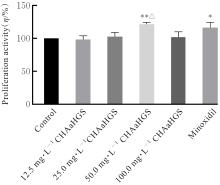
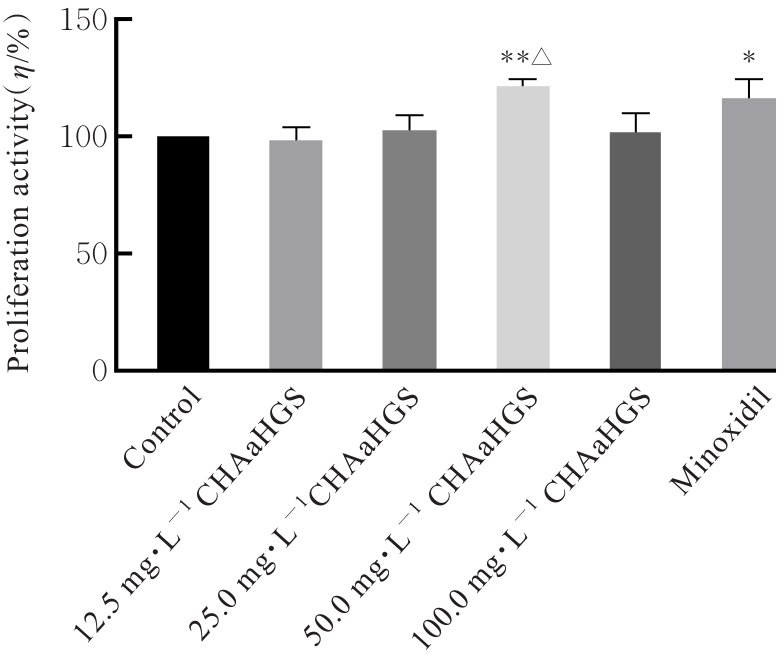
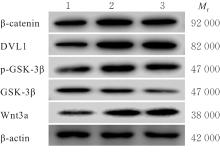
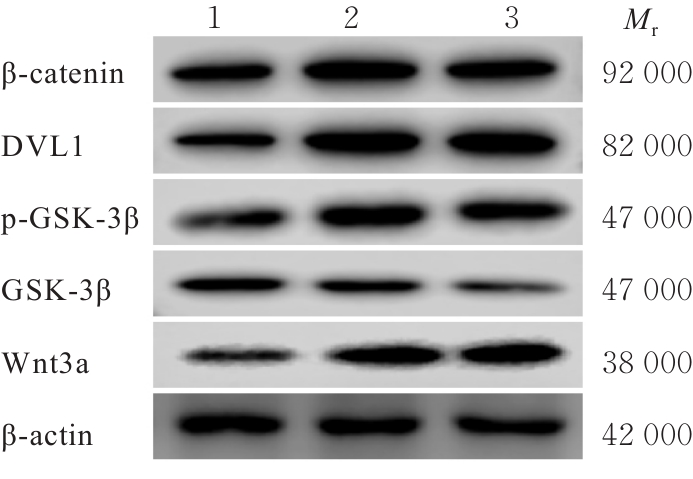
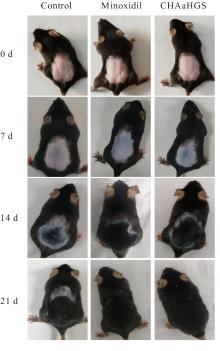
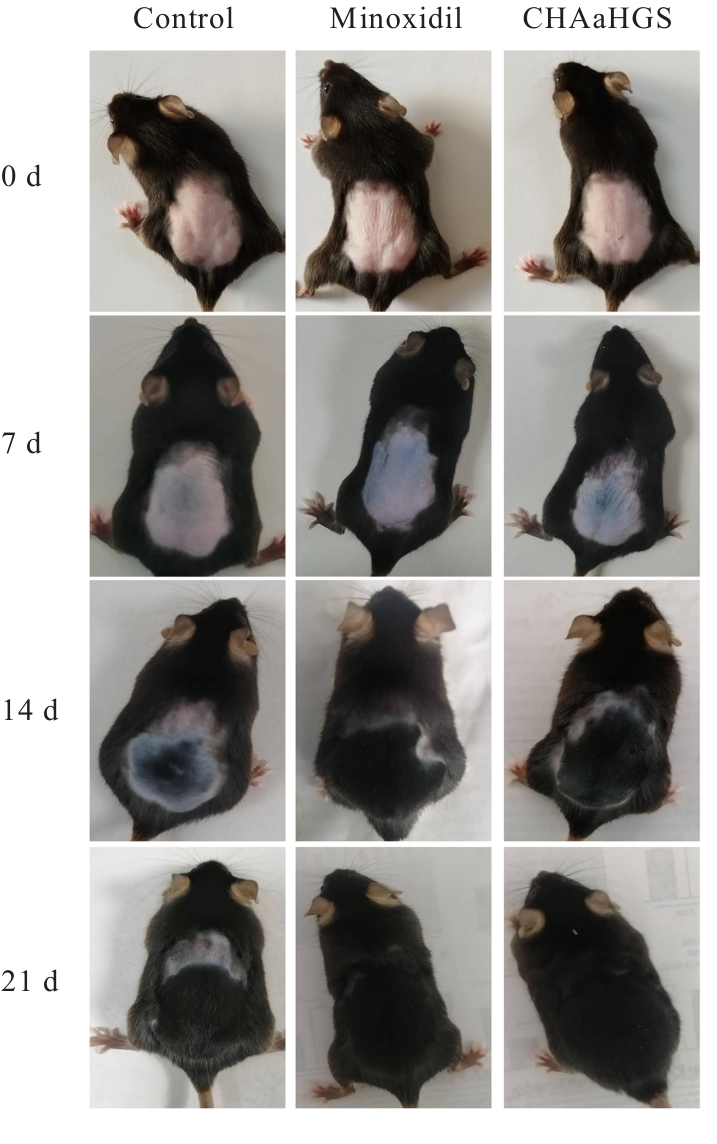
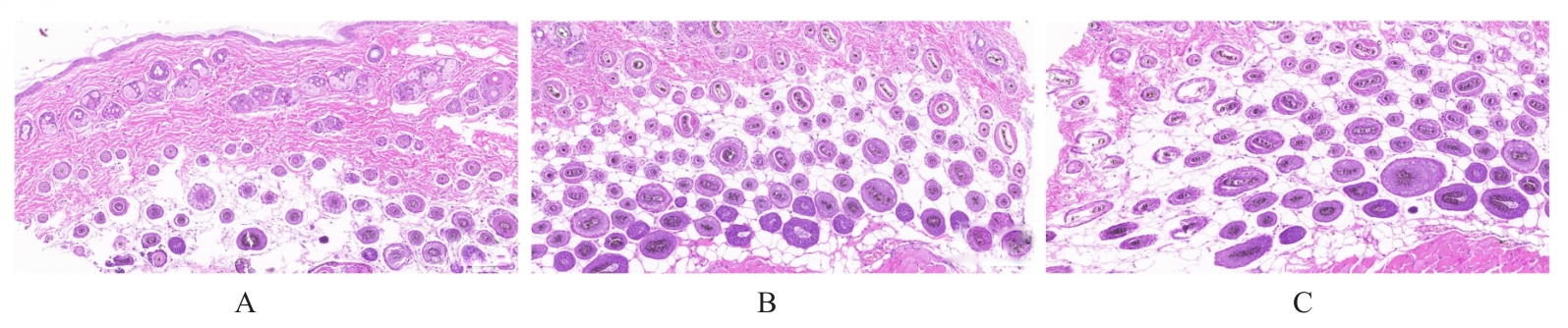
目的 通过人真皮毛乳头细胞(HDPCs)体外实验、C57BL/6小鼠体内实验和人体功效测试,探讨防脱育发液(CHAaHGS)对毛发生长的影响,阐明其潜在作用机制。 方法 将HDPCs分为对照组、CHAaHGS组和米诺地尔组。采用MTT法检测各组HDPCs增殖活性,酶联免疫吸附试验(ELISA)法检测各组HDPCs上清液中血管内皮生长因子(VEGF)、肝细胞生长因子(HGF)、胰岛素样生长因子1(IGF-1)和转化生长因子β1(TGF-β1)水平,实时荧光定量PCR(RT-qPCR)法检测各组HDPCs中VEGF、HGF、IGF-1、TGF-β1和碱性磷酸酶(ALP)mRNA表达水平,Western blotting法检测各组HDPCs中β-连环蛋白(β-catenin)、蓬乱蛋白1(DVL1)、糖原合成酶激酶3β(GSK-3β)、磷酸化GSK-3β(p-GSK-3β)和无翅型MMTV整合位点家族蛋白(Wnt)家族成员3a(Wnt3a)蛋白表达水平。取18只小鼠随机分为对照组、CHAaHGS组和米诺地尔组,每组6只。采用脱毛膏建立小鼠脱毛模型,脱毛后立即给予相应药物处理。检测第21天各组小鼠新生毛发长度和毛发质量,采用HE染色观察各组小鼠第7天背部脱毛区皮肤毛囊形态表现,ELISA法检测各组小鼠背部脱毛区皮肤组织中VEGF、HGF、IGF-1和TGF-β1水平。将60名受试者随机分成对照组和CHAaHGS组,每组30名。检测第0、4、8和12周各组受试者脱发数量和毛发密度。 结果 MTT法,与对照组比较,50 mg·L-1 CHAaHGS组细胞增殖活性明显升高(P<0.01)。ELISA法,与对照组比较,CHAaHGS组细胞上清液中VEGF、HGF和IGF-1水平明显升高(P<0.05或P<0.01),TGF-β1水平明显降低(P<0.01)。RT-qPCR法,与对照组比较,CHAaHGS组细胞中VEGF、HGF、IGF-1和ALP mRNA表达水平明显升高(P<0.05或P<0.01),TGF-β1 mRNA表达水平明显降低(P<0.01);Western blotting法,与对照组比较,CHAaHGS组细胞中β-catenin、DVL1、p-GSK-3β和Wnt3a蛋白表达水平明显升高(P<0.05或P<0.01),GSK-3β蛋白表达水平明显降低(P<0.05)。动物实验,第21天时,与对照组比较,CHAaHGS组小鼠新生毛发长度明显增长(P<0.05),毛发质量明显增加(P<0.01)。第7天时,HE染色,与对照组比较,CHAaHGS组小鼠毛囊间距明显减少(P<0.05),毛囊数量明显增加(P<0.01);ELISA法,与对照组比较,CHAaHGS组小鼠脱毛区皮肤组织中VEGF、HGF和IGF-1水平明显升高(P<0.05或P<0.01),TGF-β1水平明显降低(P<0.05)。人体功效试验测试,与对照组比较,第12周时CHAaHGS组受试者脱发数量明显减少(P<0.01),局部毛发密度增加(P<0.05)。 结论 CHAaHGS对毛发生长具有促进作用,其机制可能与其增加HDPCs增殖活性,诱导VEGF、HGF和IGF-1分泌及激活Wnt/β-Catenin信号通路有关。

关键词: 防脱育发液, 人真皮毛乳头细胞, Wnt/β-连环蛋白信号通路, 毛发生长, 米诺地尔

Abstract:

Objective To investigate the effect of Chinese Herbal Anti-Alopecia and Hair Growth Solution (CHAaHGS) on the hair growth through in vitro experiments on the human dermal papilla cells (HDPCs), in vivo experiments in the C57BL/6 mice, and human efficacy tests, and to clarify its potential mechanism. Methods The HDPCs were divided into control group, CHAaHGS group, and minoxidil group. MTT method was used to detect the proliferation activities of HDPCs in various groups; enzyme-linked immunosorbent assay (ELISA) method was used to detect the levels of vascular endothelial growth factor (VEGF), hepatocyte growth factor (HGF), insulin-like growth factor-1 (IGF-1), and transforming growth factor β1 (TGF-β1) in the supernatant of HDPCs in various groups; real-time fluorescence quantitative PCR (RT-qPCR) method was used to detect the expression levels of VEGF, HGF, IGF-1, TGF-β1, and alkaline phosphatase (ALP) mRNA in the HDPCs in various groups; Western blotting method was used to detect the expression levels of β-catenin, dishevelled segment polarity protein 1 (DVL1), glycogen synthase kinase 3β (GSK-3β), phosphorylated GSK-3β (p-GSK-3β), and wingless-type MMTV integration site family member 3a (Wnt3a) proteins in the HDPCs in various groups. A total of 18 mice were randomly divided into control group, CHAaHGS group, and minoxidil group, with 6 mice in each group. The mouse hair loss model was established using hair removal cream, and corresponding drug treatments were administered immediately after hair removal. The lengths and weights of newly grown hair on day 21 of the mice in various groups were detected; HE staining was used to observe the morphology of hair follicles in the dorsal depilated skin areas of the mice in various groups on day 7; ELISA method was used to detect the levels of VEGF, HGF, IGF-1, and TGF-β1 in the skin tissue of dorsal depilated areas of the mice in various groups. Sixty subjects were randomly divided into control group and CHAaHGS group, with 30 subjects in each group. The numbers of hair loss and hair densities of the subjects in various groups were detected at weeks 0, 4, 8, and 12. Results The MTT assay results showed that compared with control group, the proliferation activity of the cells in 50 mg·L-1 CHAaHGS group was significantly increased (P<0.01). The ELISA assay results showed that compared with control group, the levels of VEGF, HGF, and IGF-1 in the cell supernatant of HDPCs in CHAaHGS group were significantly increased (P<0.05 or P<0.01), and the TGF-β1 level was significantly decreased (P<0.01). The RT-qPCR results showed that compared with control group, the expression levels of VEGF, HGF, IGF-1, and ALP mRNA in the cells in CHAaHGS group were significantly increased (P<0.05 or P<0.01), and the TGF-β1 mRNA expression level was significantly decreased (P<0.01). The Western blotting results showed that compared with control group, the expression levels of β-catenin, DVL1, p-GSK-3β and Wnt3a proteins in the cells in CHAaHGS group were significantly increased (P<0.05 or P<0.01), and the GSK-3β protein expression level was significantly decreased (P<0.05). In animal experiments, on day 21, compared with control group, the length of newly grown hair of the mice in CHAaHGS group was significantly increased (P<0.05), and the hair weight was significantly increased (P<0.01). On day 7, the HE staining results showed that compared with control group, the hair follicle spacing of the mice in CHAaHGS group was significantly decreased (P<0.05), and the number of hair follicles was significantly increased (P<0.01); the ELISA assay results showed that compared with control group, the levels of VEGF, HGF, and IGF-1 in skin tissue of dorsal depilated area of the mice in CHAaHGS group were significantly increased (P<0.05 or P<0.01), and the TGF-β1 level was significantly decreased (P<0.05). In human efficacy test, compared with control group, the number of hair loss of the subjects in CHAaHGS group was significantly decreased at week 12 (P<0.01), and the local hair density was increased (P<0.05). Conclusion CHAaHGS promotes hair growth, and the mechanism may be related to its ability to increase the proliferation activity of HDPCs, induce the secretion of VEGF, HGF, and IGF-1, and activate the Wnt/β-catenin signaling pathway.

Key words: Chinese Herbal Anti-Alopecia and Hair Growth Solution, Human dermal papilla cell, Wnt/β-catenin signaling pathway, Hair growth, Minoxidil

中图分类号: 

  • R285.5