吉林大学学报(工学版) ›› 2025, Vol. 55 ›› Issue (8): 2639-2650.doi: 10.13229/j.cnki.jdxbgxb.20240009
• 交通运输工程·土木工程 • 上一篇
面向地铁站点的共享单车接驳出行特征及影响因素分析
马君泽1( ),郑长江1(),吴非2,汪妍妍1,陆野1,郑树康3
- 1.河海大学 土木与交通学院,南京 210024
2.河海大学 信息学部,南京 211100
3.河海大学 环境学院,南京 210024
Analysis of characteristics and influencing factors of dockless bike sharing connected to metro
Jun-ze MA1(),Chang-jiang ZHENG1(),Fei WU2,Yan-yan WANG1,Ye LU1,Shu-kang ZHENG3
- 1.College of Civil and Transportation Engineering,Hohai University,Nanjing 210024,China
2.Information Department,Hohai University,Nanjing 211100,China
3.College of Environment,Hohai University,Nanjing 210024,China
摘要:
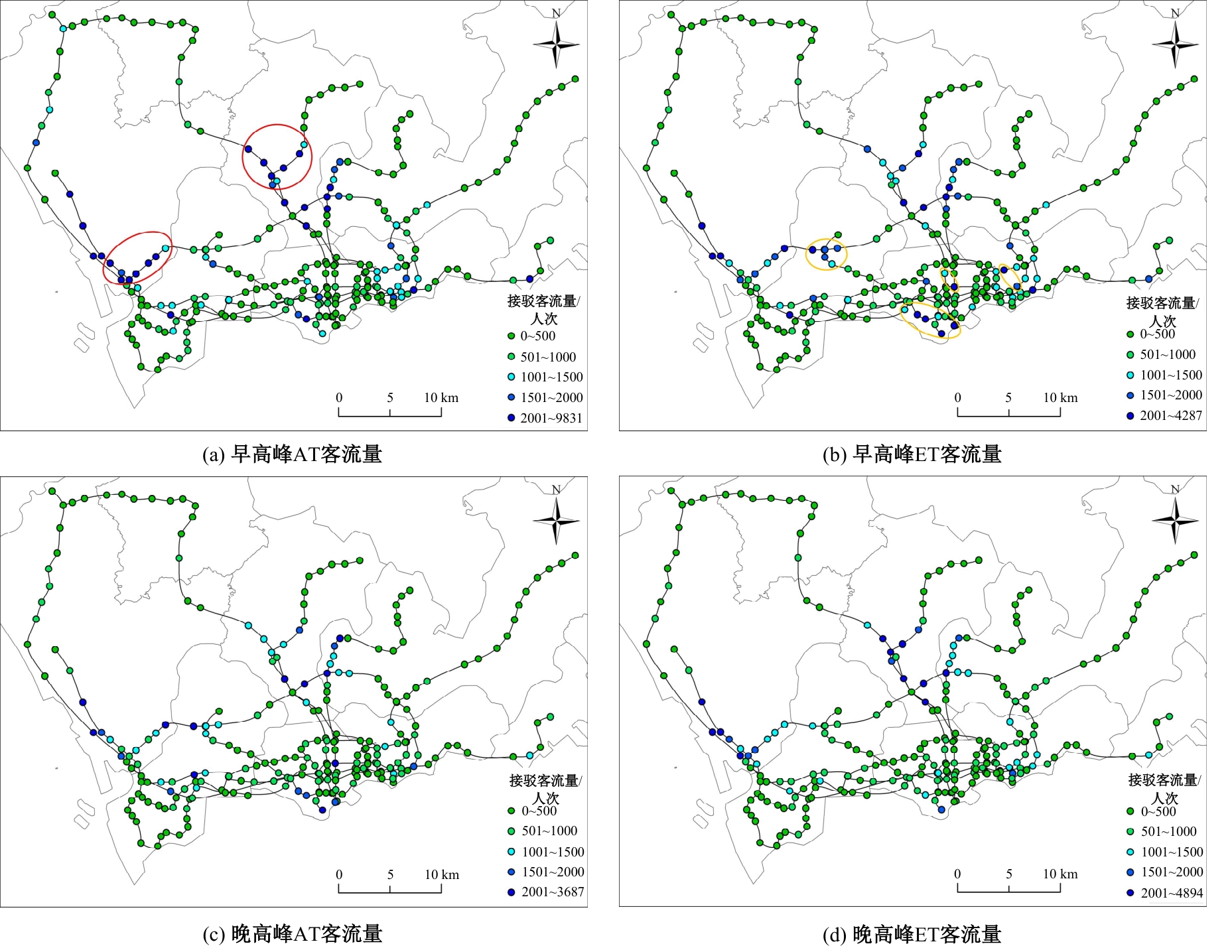
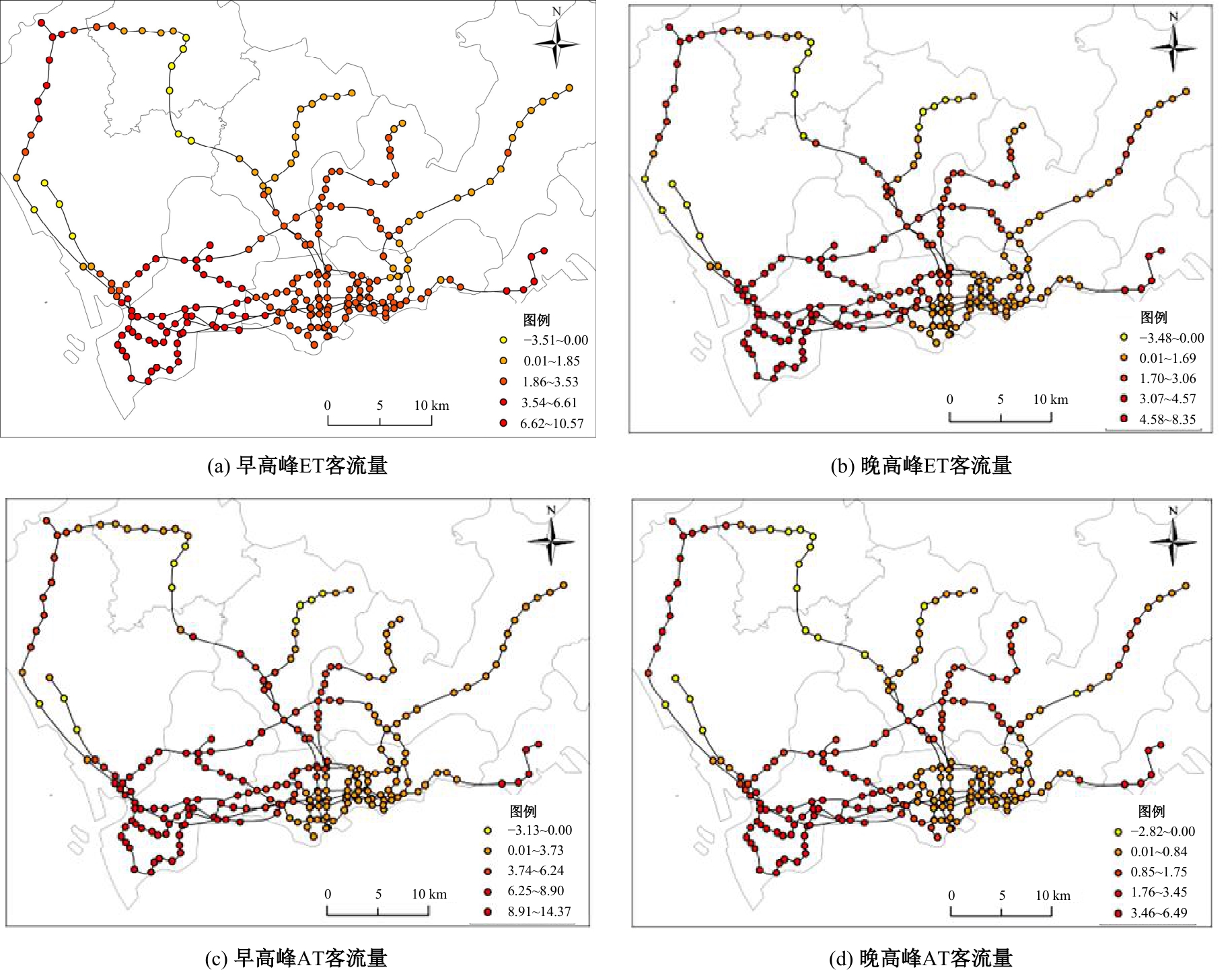
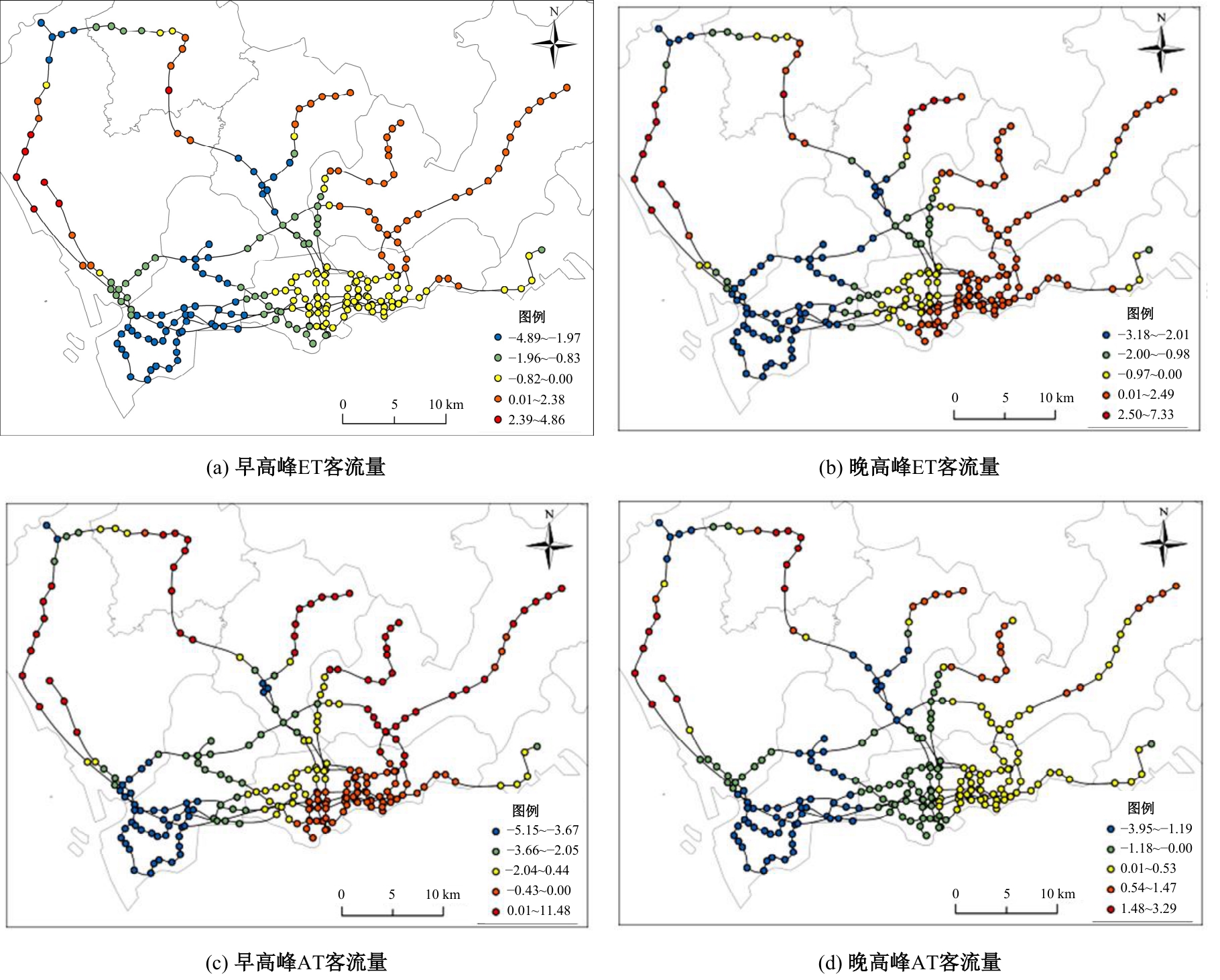
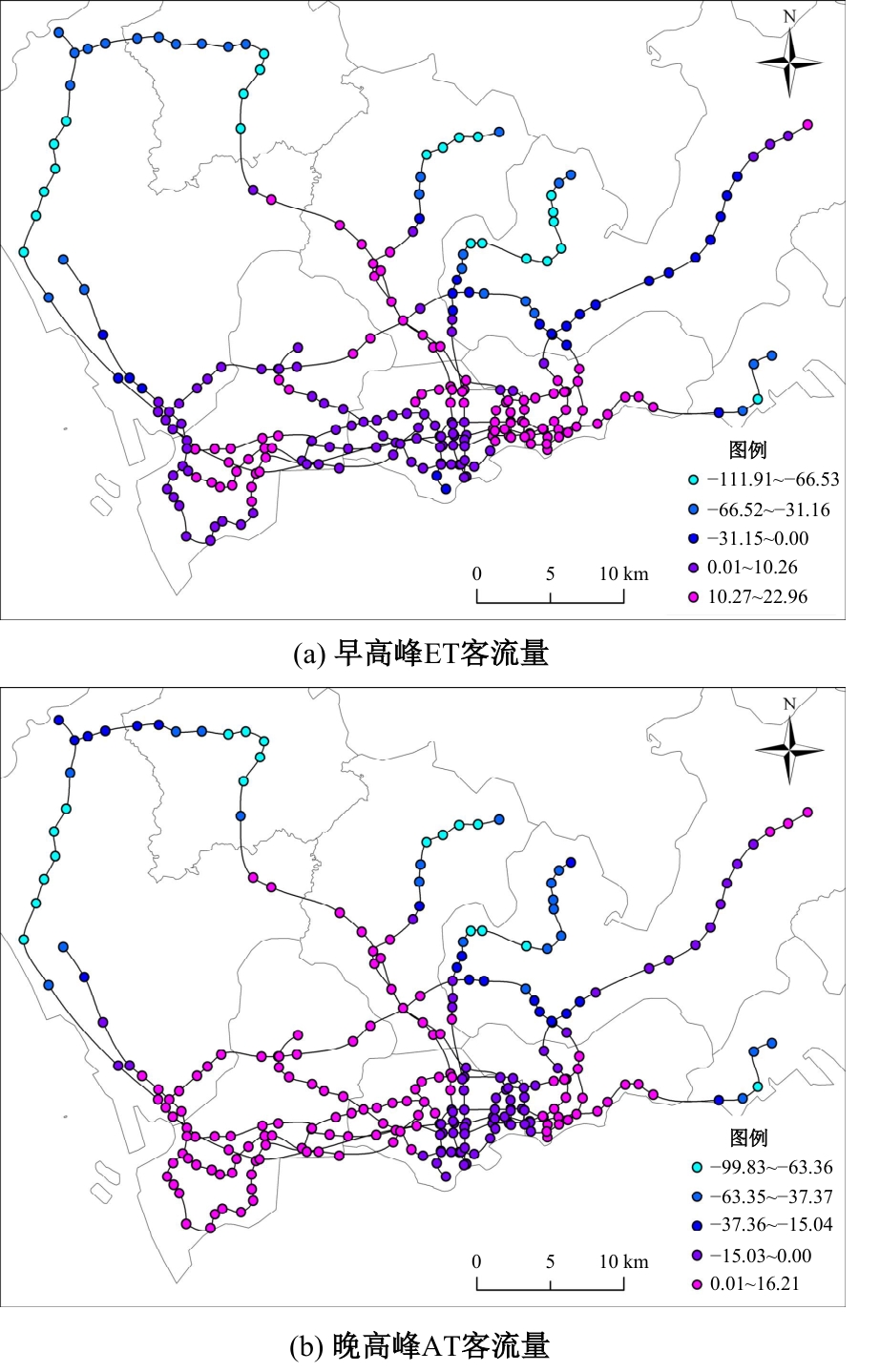
为揭示共享单车接驳地铁出行客流量的时空特征,并分析建成环境因素对接驳需求的影响,本文考虑深圳地铁站出入口周边的建成环境,结合泰森多边形构建接驳出行的识别方法。该方法从时空角度挖掘工作日早、晚高峰进、出站4类接驳客流量的特征,利用时空地理加权回归模型分析4类建成环境因素对接驳需求的影响。结果表明:接驳客流量的分布具有空间异质性,早高峰的接驳需求高于晚高峰;商务住宅类和科教文化服务类兴趣点对城市核心区的接驳客流量的影响呈正相关,对城郊区域的影响呈负相关;然而,交通设施服务类兴趣点对接驳客流量的影响变化则相反;公司企业类兴趣点对城市西部区域接驳客流量的影响呈正相关,而对城市东部区域呈负相关。
中图分类号:
- U491

| [1] | 胡莹, 邵春福, 王书灵, 等. 基于共享单车骑行轨迹的骑行质量识别方法[J]. 吉林大学学报: 工学版, 2023, 53(4): 1040-1046. |
| Hu Ying, Shao Chun-fu, Wang Shu-ling, et al. Identification of road riding quality based on shared bike trajectory data[J]. Journal of Jilin University (Engineering and Technology Edition), 2023, 53(4): 1040-1046. | |
| [2] | 常山, 宋瑞, 何世伟, 等. 共享单车故障车辆回收模型[J]. 吉林大学学报:工学版, 2018, 48(6): 1679-1684. |
| Chang Shan, Song Rui, He Shi-wei, et al. Recycling model of faulty bike sharing[J]. Journal of Jilin University (Engineering and Technology Edition), 2018, 48(6): 1679-1684. | |
| [3] | Yu S B, Liu G H, Yin C R. Understanding spatial-temporal travel demand of free-floating bike sharing connecting with metro stations[J]. Sustainable Cities and Society, 2021,74: No.103162. |
| [4] | Hu S H, Chen M Y, Jiang Y, et al. Examining factors associated with bike-and-ride (BnR) activities around metro stations in large-scale dockless bikesharing systems[J]. Journal of Transport Geography, 2022, 98: No.103271. |
| [5] | Li X F, Du M Y, Yang J Z. Factors influencing the access duration of free-floating bike sharing as a feeder mode to the metro in Shenzhen[J]. Journal of Cleaner Production, 2020, 277: No.123273. |
| [6] | 蒋源, 陈小鸿, 徐晓敏, 等. 公共自行车接驳轨道交通服务范围研究[J]. 交通运输系统工程与信息, 2018, 18(): 94-102. |
| Jiang Yuan, Chen Xiao-hong, Xu Xiao-min, et al. Exploring the catchment area of public bike connecting to subway[J]. Journal of Transportation Systems Engineering and Information Technology, 2018, 18(S1): 94-102. | |
| [7] | Wu X Y, Lu L, Gong Y X, et al. The impacts of the built environment on bicycle-metro transfer trips: A new method to delineate metro catchment area based on people's actual cycling space[J]. Journal of Transport Geography, 2021, 97: No.103215. |
| [8] | Shao H Y, Jin C, Xu J, et al. Identifying metro station types based on transfer purposes: an application of bike-sharing data in Xiamen, China[J]. Canadian Geographies, 2023, 67(4): 550-563. |
| [9] | Fan Y C, Zheng S Q. Dockless bike sharing alleviates road congestion by complementing subway travel: evidence from Beijing[J]. Cities, 2020, 107:No.102895. |
| [10] | Li L L, Li X H, Yu S B, et al. Unbalanced usage of free-floating bike sharing connecting with metro stations[J]. Physica A: Statistical Mechanics and its Applications, 2022, 608: No.128245. |
| [11] | Guo Y Y, He S. Built environment effects on the integration of dockless bike-sharing and the metro[J]. Transportation Research Part D: Transport and Environment, 2020, 83: No.102335. |
| [12] | Guo Y Y, Yang L C, Lu Y, et al. Dockless bike-sharing as a feeder mode of metro commute? The role of the feeder-related built environment: analytical framework and empirical evidence[J]. Sustainable Cities and Society, 2021, 65: No.102594. |
| [13] | Liu X H, Fan J, Li Y, et al. Analysis of integrated uses of dockless bike sharing and ridesourcing with metros: a case study of Shanghai, China[J]. Sustainable Cities and Society, 2022, 82: No.103918. |
| [14] | Zhao P J, Yuan D D, Zhang Y X. The public bicycle as a feeder mode for metro commuters in the megacity Beijing: Travel behavior, route environment, and socioeconomic factors[J]. Journal of Urban Planning and Development, 2022, 148(1): No.04021064. |
| [15] | Li W X, Chen S W, Dong J S, et al. Exploring the spatial variations of transfer distances between dockless bike-sharing systems and metros[J]. Journal of Transport Geography, 2021, 92: No.103032. |
| [16] | 深圳市统计局, 国家统计局深圳调查队. 深圳统计年鉴 2022[M]. 北京:中国统计出版社有限公司, 2022. |
| [17] | Wu B, Li R R, Huang B. A geographically and temporally weighted autoregressive model with application to housing prices[J]. International Journal of Geographical Information Science, 2014, 28(5): 1186-1204. |
| [18] | 马新卫, 季彦婕, 金雨川, 等. 基于时空地理加权回归的共享单车需求影响因素分析[J]. 吉林大学学报: 工学版, 2020, 50(4): 1344-1354. |
| Ma Xin-wei, Ji Yan-jie, Jin Yu-chuan, et al. Geographically and temporally weighted regression for modeling spatio-temporal variation in dockless bikeshare usage demand[J]. Journal of Jilin University (Engineering and Technology Edition), 2020, 50(4): 1344-1354. | |
| [19] | Schimohr K, Scheiner J. Spatial and temporal analysis of bike-sharing use in cologne taking into account a public transit disruption[J]. Journal of Transport Geography, 2021, 92: No.103017. |
| [20] | 深圳市规划和自然资源局. 深圳市国土空间总体规划(2020-2035年)[R]. 深圳: 深圳市规划和自然资源局, 2021. |
| Planning and Natural Resources Bureau of Shenzhen Municipal People's Government. Territorial spatial master planning of Shenzhen (2020-2035)[R]. Shenzhen: Planning and Natural Resources Bureau of Shenzhen Municipal People's Government, 2021. |
| [1] | 戢晓峰,邓若凡,乔新,关昊天. 建成环境对共享单车时间集聚模式的非线性影响[J]. 吉林大学学报(工学版), 2025, 55(7): 2233-2242. |
| [2] | 郭宁,胡小晨,董德存. 基于改进YOLO算法的地铁车厢客流检测方法[J]. 吉林大学学报(工学版), 2025, 55(4): 1258-1265. |
| [3] | 马书红,廖国美,黄岩,张俊杰. 建成环境对交通小区地铁通勤客流的异质性影响[J]. 吉林大学学报(工学版), 2024, 54(7): 1913-1922. |
| [4] | 胡莹,邵春福,王书灵,蒋熙,孙海瑞. 基于共享单车骑行轨迹的骑行质量识别方法[J]. 吉林大学学报(工学版), 2023, 53(4): 1040-1046. |
| [5] | 刘顺,唐小微,栾一晓. 可液化土阻尼系数对地铁结构地震响应的影响[J]. 吉林大学学报(工学版), 2023, 53(1): 159-169. |
| [6] | 李先通,全威,王华,孙鹏程,安鹏进,满永兴. 基于时空特征深度学习模型的路径行程时间预测[J]. 吉林大学学报(工学版), 2022, 52(3): 557-563. |
| [7] | 张龙,徐天鹏,王朝兵,易剑昱,甄灿壮. 基于卷积门控循环网络的齿轮箱故障诊断[J]. 吉林大学学报(工学版), 2022, 52(2): 368-376. |
| [8] | 常山,宋瑞,何世伟,黎浩东,殷玮川. 共享单车故障车辆回收模型[J]. 吉林大学学报(工学版), 2018, 48(6): 1677-1684. |
| [9] | 周继彪, 陈红, 闫彬, 张文, 冯微. 基于云模型的地铁换乘枢纽拥挤度辨识方法[J]. 吉林大学学报(工学版), 2016, 46(1): 100-107. |
| [10] | 王世刚,孙爱朦,赵文婷,惠祥龙. 基于时空兴趣点的单人行为及交互行为识别[J]. 吉林大学学报(工学版), 2015, 45(1): 304-308. |
| [11] | 尹建芹, 王晶晶, 李金屏. 新的时空特征点检测方法 [J]. , 2012, (03): 754-758. |
|
||