吉林大学学报(医学版) ›› 2026, Vol. 52 ›› Issue (1): 56-69.doi: 10.13481/j.1671-587X.20260107

• 基础研究 • 上一篇    下一篇

基于药桑叶抗急性肾损伤潜在活性成分及作用机制的UPLC-Q-TOF/MS和网络药理学分析及其实验验证

梁怀敏1,金家成1,陈文华1,李俞瑶1,王航宇1,张珂1(),王金辉1,2   

  1. 1.石河子大学药学院药学系 新疆植物药资源与利用教育部重点实验室 红花产业研究院,新疆 石河子 832003
    2.哈尔滨医科大学药学院药物化学系,黑龙江 哈尔滨 150081
  • 收稿日期:2025-03-03 接受日期:2025-04-06 出版日期:2026-01-28 发布日期:2026-02-24
  • 通讯作者: 张珂 E-mail:tcm_zk@163.com
  • 作者简介:梁怀敏(1999-),男,新疆维吾尔自治区克拉玛依市人,在读硕士研究生,主要从事天然产物提取分离与活性方面的研究。
  • 基金资助:
    科技部国家重大专项新药创制项目(2018ZX09735-005)

UPLC-Q-TOF/MS and network pharmacology analysis and experimental verification based on potential active ingredients and mechanisms of medicinal Mulberry Leaves in anti-acute kidney injury

Huaimin LIANG1,Jiacheng JIN1,Wenhua CHEN1,Yuyao LI1,Hangyu WANG1,Ke ZHANG1(),Jinhui WANG1,2   

  1. 1.Xinjiang Key Laboratory of Plant Medicine Resources and Utilization,Ministry of Education,Safflower Industry Research Institute,Department of Pharmacy,School of Pharmacy,Shihezi University,Shihezi 832003,China
    2.Department of Medicinal Chemistry,School of Pharmacy,Harbin Medical University,Harbin 150081,China
  • Received:2025-03-03 Accepted:2025-04-06 Online:2026-01-28 Published:2026-02-24
  • Contact: Ke ZHANG E-mail:tcm_zk@163.com

摘要:

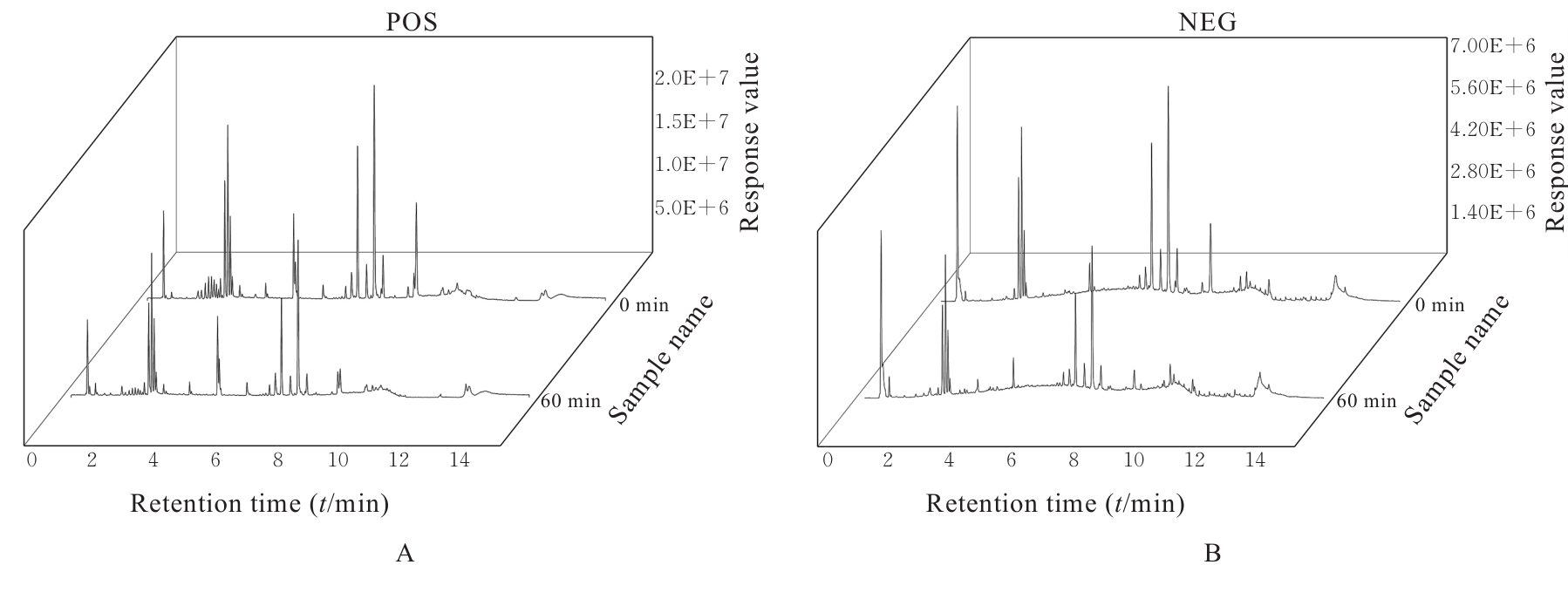
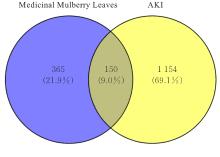
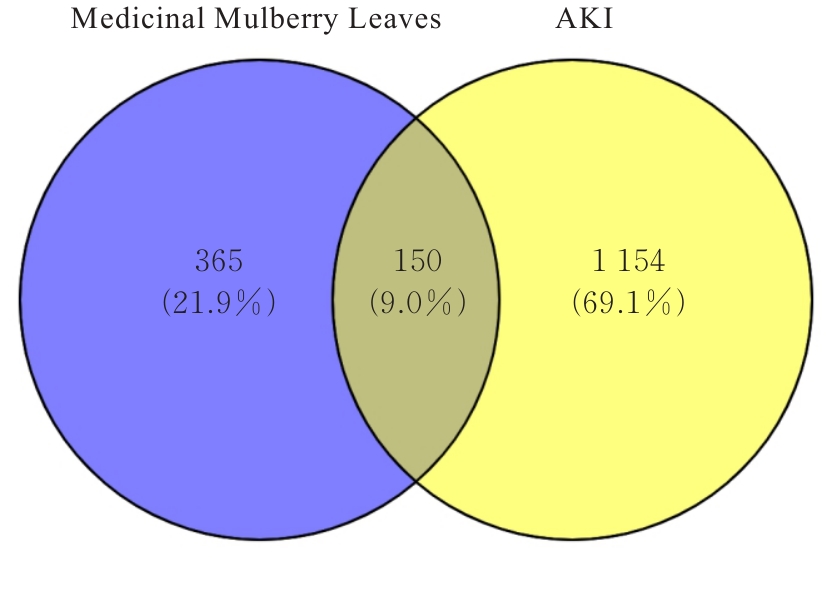
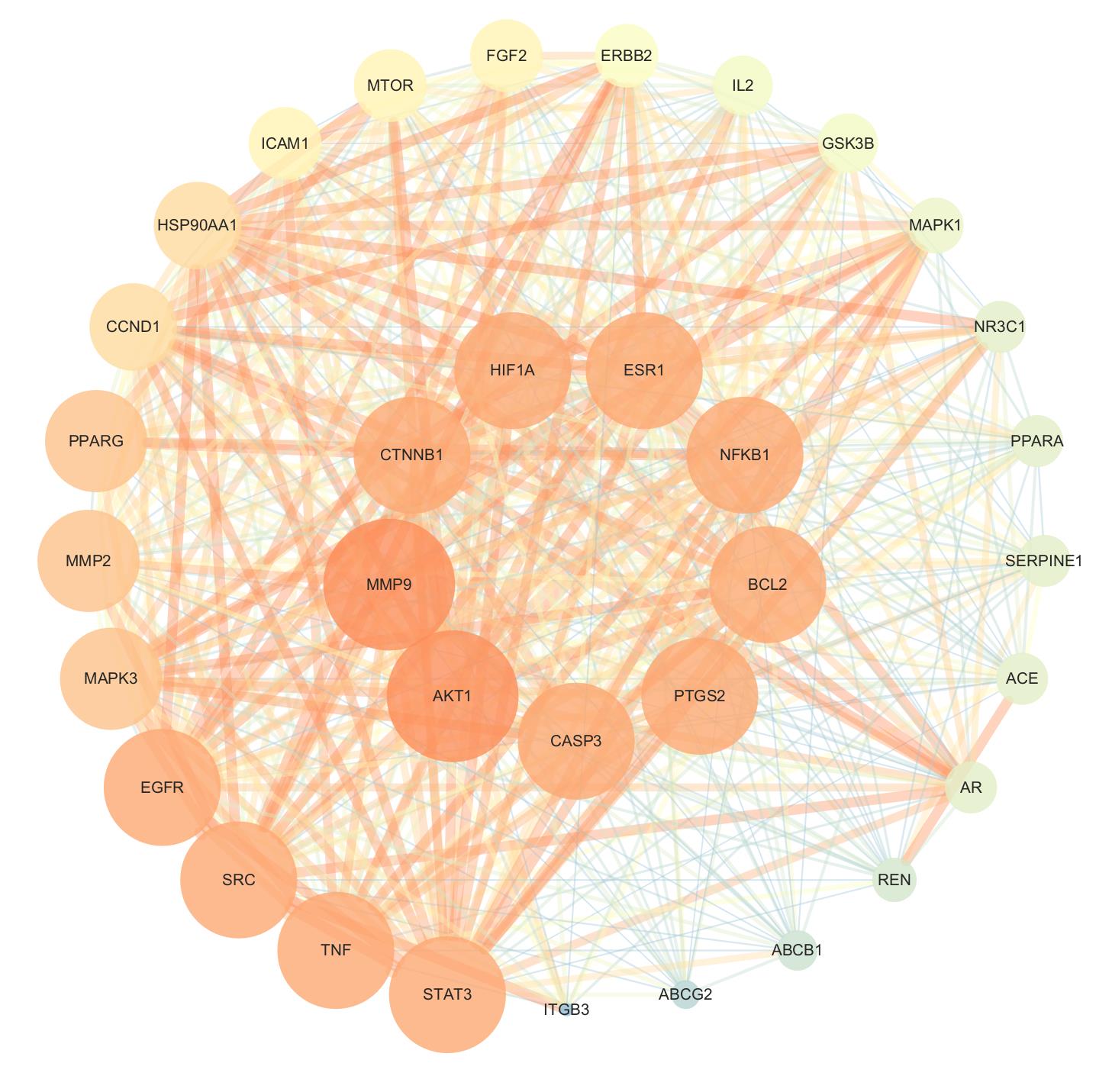
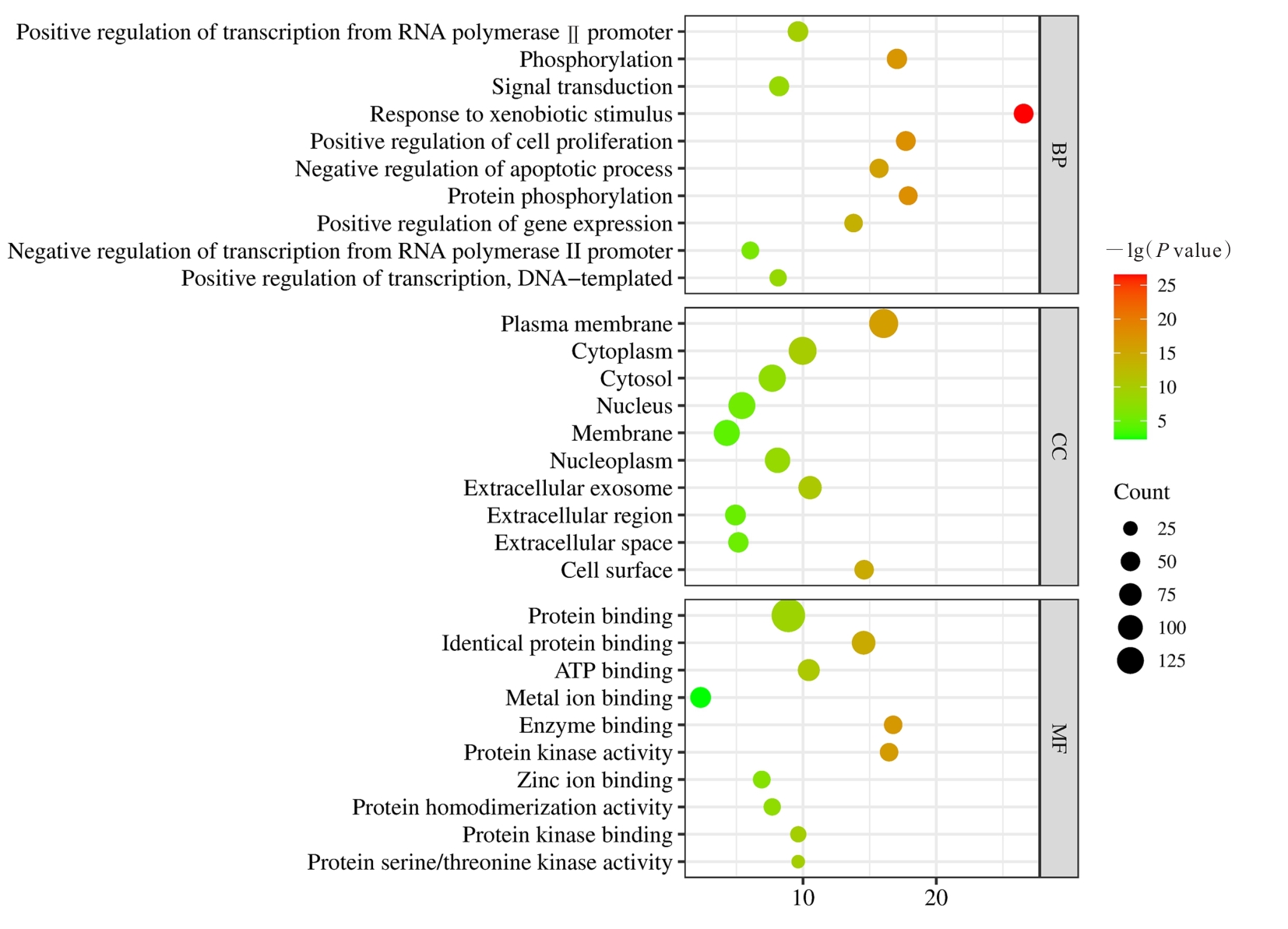
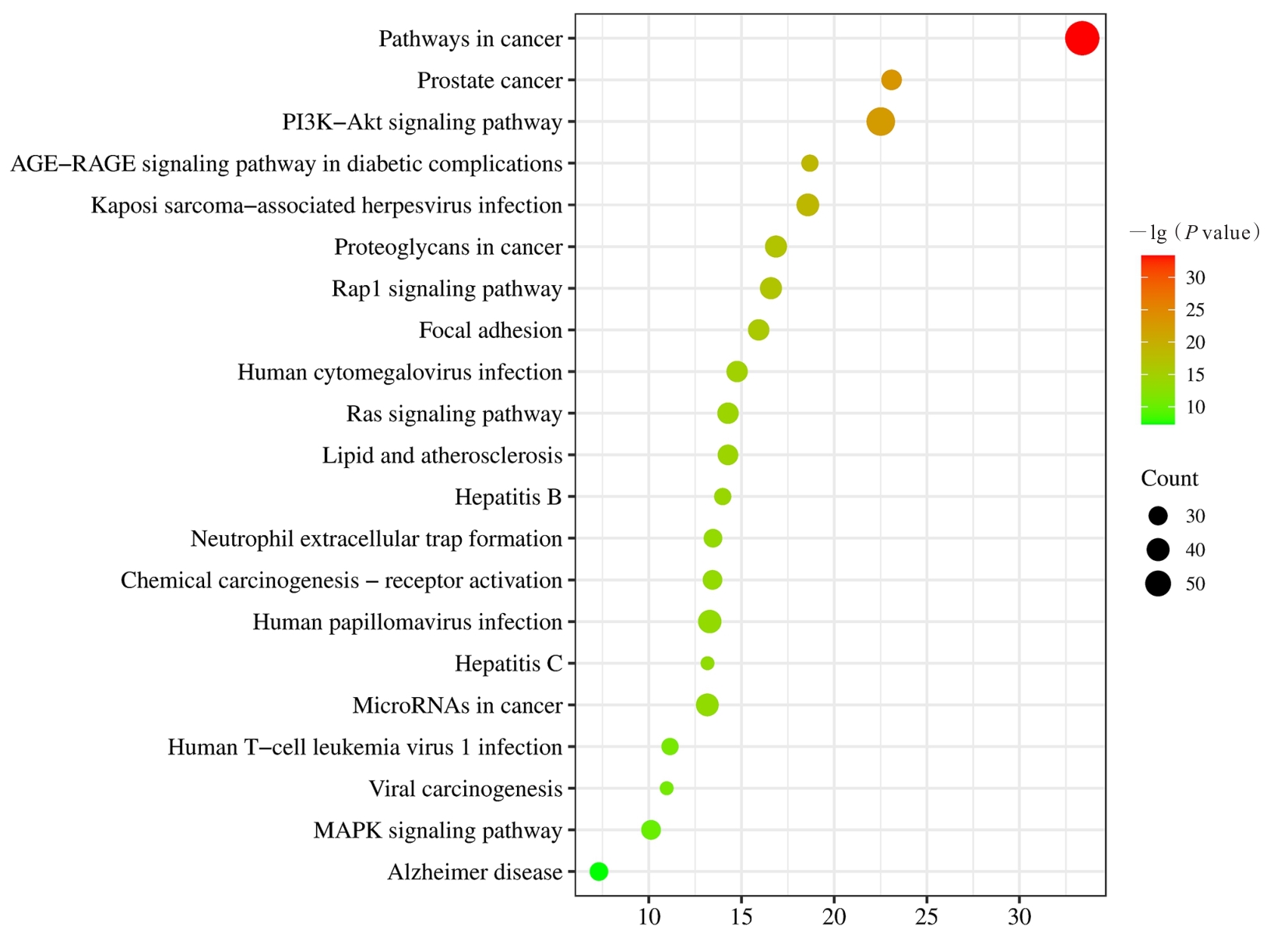
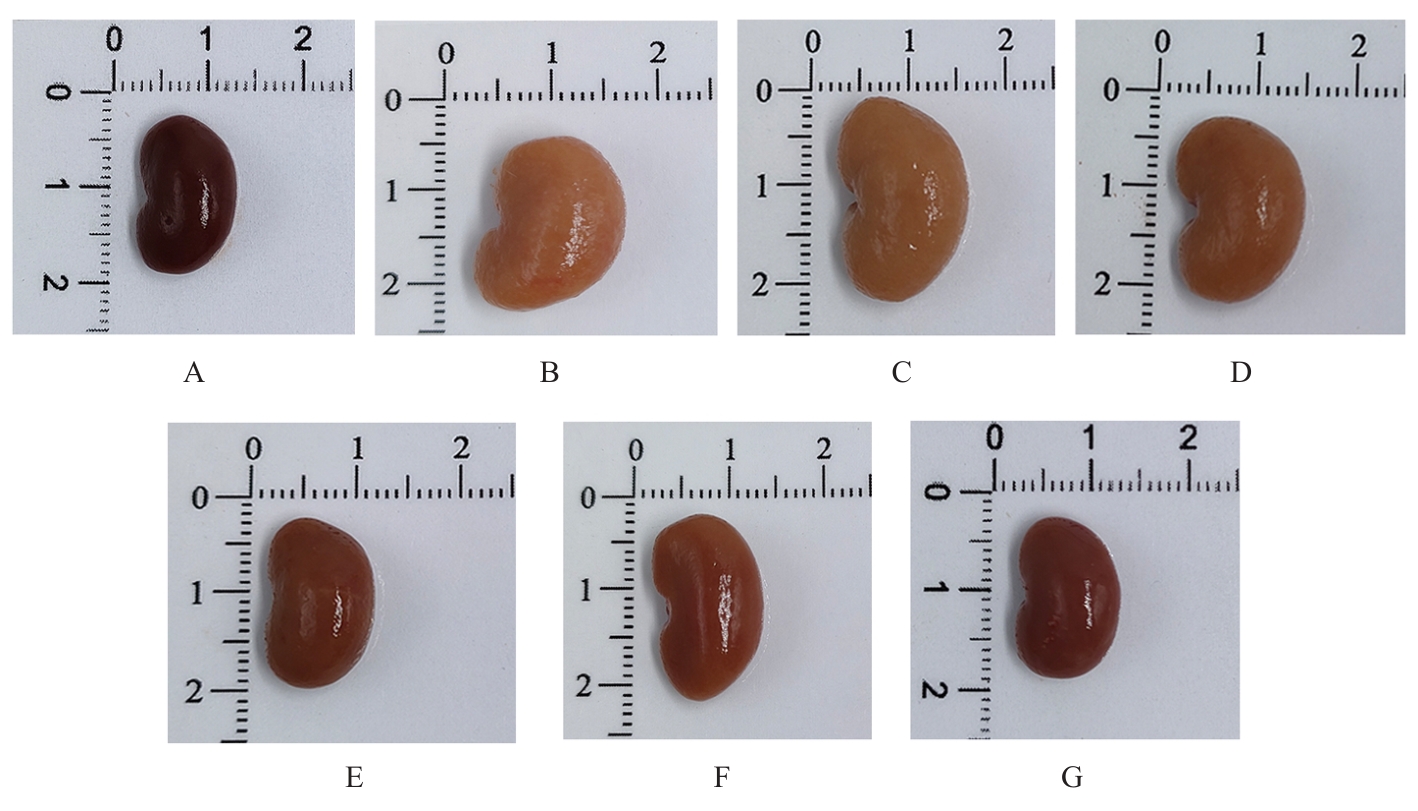
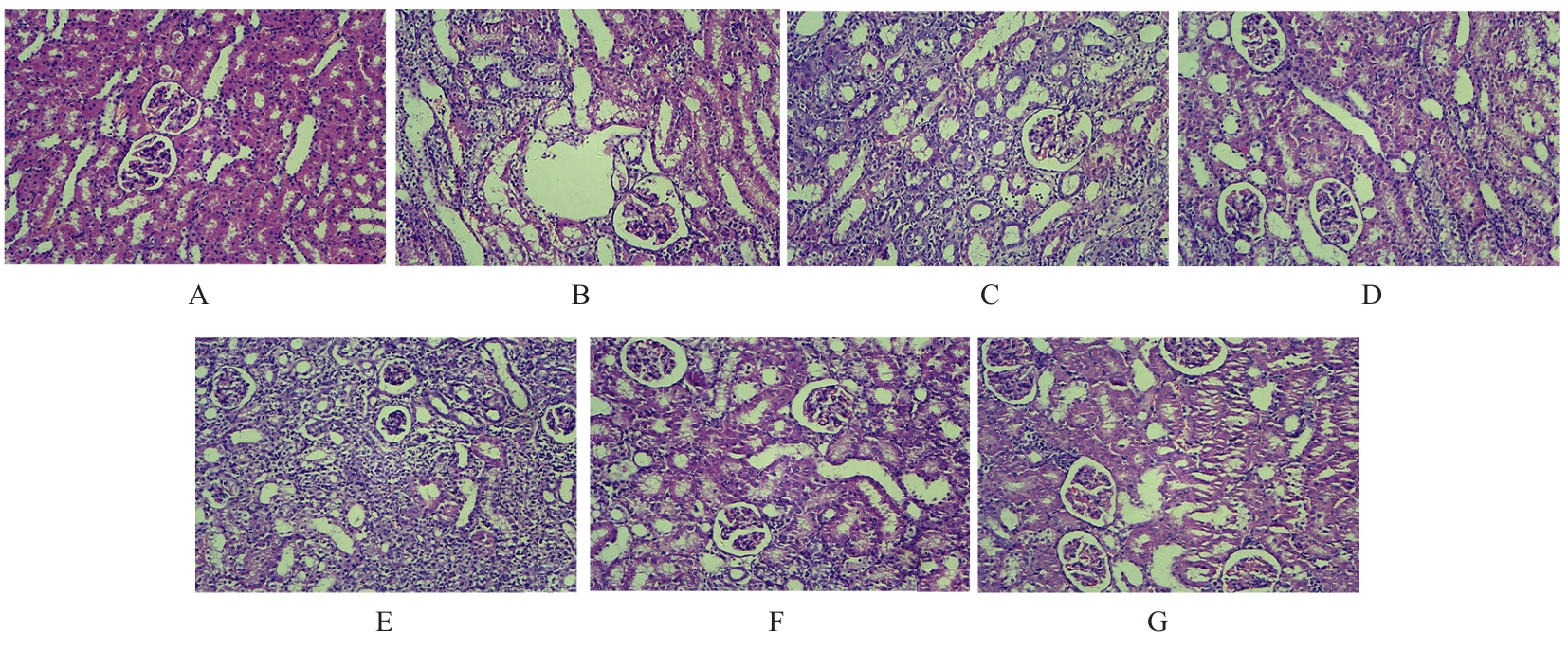
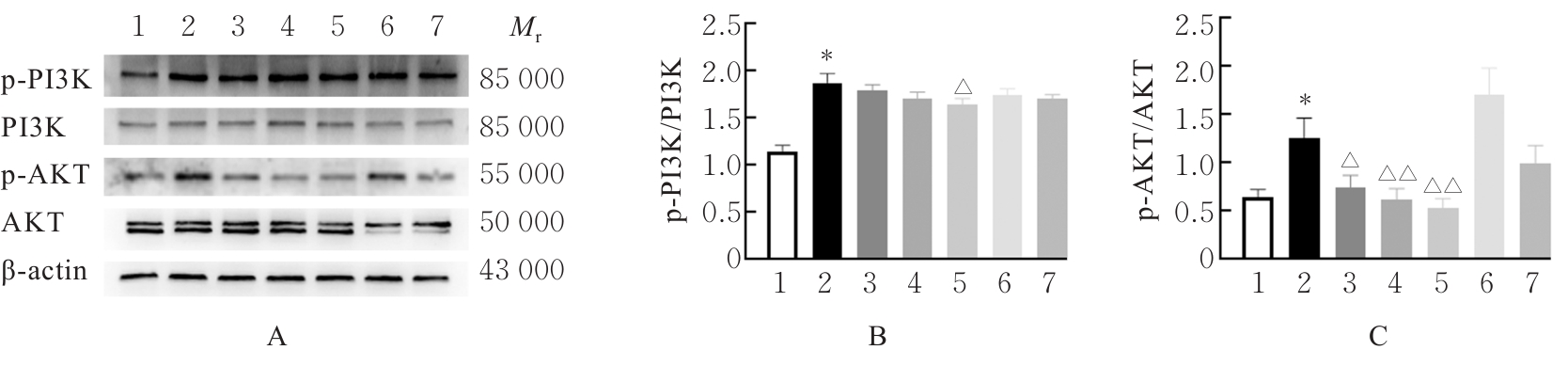
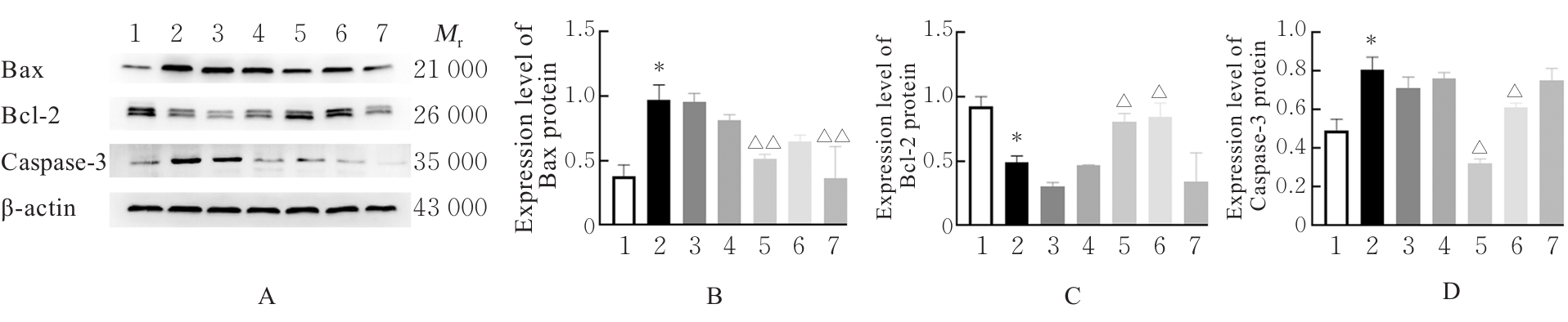
目的 通过超高效液相色谱-四极杆飞行时间质谱(UPLC-Q-TOF/MS)联用技术和网络药理学及动物实验验证,探讨新疆特色植物药桑叶抗急性肾损伤(AKI)的活性成分并阐明作用机制。 方法 采用UPLC-Q-TOF/MS技术对药桑叶70%乙醇渗漉提取物及灌胃给药后0和60 min大鼠血清进行化学成分分析;将药桑叶入血活性成分经PubMed平台查得SMILES号后,于SIB数据库获取其靶点基因,同时以“acute kidney injury”为关键词在人类基因数据库(GeneCards)、疾病基因网络数据库(DisGENET)和在线人类孟德尔遗传数据库(OMIM)等数据库检索AKI相关靶点,对比二者并取交集,从而发现药桑叶治疗AKI的基因靶点。将70只SD大鼠随机分为空白组(10只)和造模组(60只),造模组大鼠腹腔注射庆大霉素造模7 d,空白组大鼠腹腔注射等量生理盐水,造模结束后测量大鼠血清肌酐(CRE)和尿素氮(BUN)指标,判断模型是否制备成功。将造模成功的60只大鼠随机分为模型组、低剂量药桑叶组(120 mg·kg-1药桑叶)、中剂量药桑叶组(300 mg·kg-1药桑叶)、高剂量药桑叶组(750 mg·kg-1药桑叶)、药桑叶富集物组(750 mg·kg-1药桑叶)和阳性药物组(15 mg·kg-1维拉帕米),每组10只,给药治疗14 d,收集各组大鼠24 h尿液,收集大鼠血液以及肾组织用于后期检测。采用苏木精-伊红(HE)染色检测各组大鼠肾组织病理形态表现,比色法检测各组大鼠尿液中尿蛋白(UP)、 尿酸(UA)、β2-微球蛋白(β2-MG)、白蛋白(ALB)、10 kDa干扰素γ诱导蛋白(IP-10)、肾损伤因子1(KIM-1)和中性粒细胞明胶酶相关脂质运载蛋白(NGAL)的水平,微板法检测各组大鼠血清中肌酐(CRE)水平,脲酶法检测各组大鼠血清中尿素氮(BUN)水平,ELISA法检测各组大鼠血清中白细胞介素6(IL-6)和肿瘤坏死因子α(TNF-α)的水平以及肾组织中超氧化物歧化酶(SOD)、一氧化氮合成酶(NOS)、谷胱甘肽过氧化物酶(GSH-Px)活性及丙二醛(MDA)和还原型谷胱甘肽(GSH)水平;Western blotting法检测各组大鼠肾组织中细胞凋亡和磷脂酰肌醇3-激酶(PI3K)/蛋白激酶B(AKT)信号通路相关蛋白表达水平。 结果 采用UPLC-Q-TOF/MS技术共鉴定出159种化学成分,入血成分分析筛选出27种,其中8种原型成分和19种代谢成分,主要为黄酮类、苯并呋喃类和有机酸类。网络药理学结果显示,AKT、B细胞淋巴瘤2(Bcl-2)和含半胱氨酸的天冬氨酸蛋白酶3(Caspase-3)等为药桑叶治疗AKI关键作用靶点,其作用机制主要涉及PI3K/AKT信号通路等多通路联动整合调控。与模型组比较,低、中和高剂量药桑叶组大鼠尿液中UP和NGAL水平明显降低(P<0.01),中和高剂量药桑叶组大鼠尿液中KIM-1和IP-10水平明显降低(P<0.01)。与模型组比较,低、中和高剂量药桑叶组大鼠血清中BUN和TNF-α水平明显降低(P<0.05或P<0.01)。与模型组比较,中和高剂量药桑叶组大鼠肾组织中GSH水平和GSH-Px活性明显升高(P<0.01),中和高剂量药桑叶组大鼠肾组织中MDA水平和NOS活性明显降低(P<0.01)。Western blotting法,与模型组比较,高剂量药桑叶组大鼠肾组织中p-PI3K/PI3K比值明显降低(P<0.01),低、中和高剂量药桑叶组大鼠肾组织中p-AKT/AKT比值降低(P<0.05或P<0.01);与模型组比较,高剂量药桑叶组大鼠肾脏组织中Bcl-2蛋白表达水平明显升高(P<0.05),Caspase-3和Bcl-2相关X蛋白(Bax)表达水平明显降低(P<0.05或P<0.01)。 结论 药桑叶共鉴定出159种化学成分,其中包括27种入血成分,主要为黄酮等;药桑叶对庆大霉素诱导大鼠AKI具有改善作用,其机制可能与药桑叶抑制PI3K/AKT和细胞凋亡信号通路有关。

关键词: 药桑叶, 急性肾损伤, 化学成分, 抗炎, 细胞凋亡, 网络药理学

Abstract:

Objective To discuss the active components of Xinjiang characteristic plant Medicinal Mulberry Leaves against acute kidney injury (AKI) and to clarify the mechanism through ultra-performance liquid chromatography-quadrupole time-of-flight mass spectrometry (UPLC-Q-TOF/MS) technology, network pharmacology, and animal experimental verification. Methods UPLC-Q-TOF/MS technology was used to analyze the chemical components in 70% ethanol percolation extract of Medicinal Mulberry Leaves and in serum of the rats at 0 and 60 min after intragastric administration; the SMILES numbers of the blood-entering active components of Medicinal Mulberry Leaves were obtained from PubMed, and then their target genes were obtained from the SIB database; meanwhile, using “acute kidney injury” as the keyword, the AKI-related targets were retrieved from databases such as the Human Gene database (GeneCards), the Disease Gene Network database (DisGENET), and the Online Mendelian Inheritance in Man (OMIM) disease database; the two were compared and intersected to discover the gene targets of Medicinal Mulberry Leaves for treating AKI. A total of 70 SD rats were randomly divided into blank group (10 rats) and model establishment group (60 rats); the rats in model establishment group were intraperitoneally injected with gentamicin to establish the model for 7 d, the rats in blank group were injected with same amount of normal saline; after modeling, the serum creatinine (CRE) and urea nitrogen (BUN) levels of the rats were measured to determine whether the model was successfully prepared. A total of 60 successfully modeled rats were randomly divided into model group, low dose of Medicinal Mulberry Leaves group (120 mg·kg-1 Medicinal Mulberry Leaves), medium dose of Medicinal Mulberry Leaves group (300 mg·kg-1 Medicinal Mulberry Leaves), high dose of Medicinal Mulberry Leaves group (750 mg·kg-1 Medicinal Mulberry Leaves), Medicinal Mulberry Leaves enrichment substance group (750 mg·kg-1 Medicinal Mulberry Leaves), and positive drug group (15 mg·kg-1 verapamil); after treated for 14 d, the 24 h urine of the rats in various groups was collected, and the blood and kidney tissue of the rats in various groups were collected for later detection. Hematoxylin-eosin (HE) staining was used to detect the pathomorphology of kidney tissue of the rats in various groups; colorimetric method was used to detect the levels of urine protein (UP), uric acid (UA), β2-microglobulin (β2-MG), albumin (ALB), 10 kDa interferon γ-induced protein (IP-10), kidney injury molecule-1 (KIM-1), and neutrophil gelatinase-associated lipocalin (NGAL) in urine of the rats in various groups; microplate method was used to detect the serum creatinine (CRE) level of the rats in various groups; urease method was used to detect the serum urea nitrogen (BUN) level of the rats in various groups; ELISA method was used to detect the serum levels of interleukin-6 (IL-6) and tumor necrosis factor-α (TNF-α) of the rats in various groups and the activities of superoxide dismutase (SOD) and nitric oxide synthase (NOS) and the levels of malondialdehyde (MDA), reduced glutathione (GSH), and glutathione peroxidase (GSH-Px) in kidney tissue of the rats in various groups; Western blotting method was used to detect the expression levels of apoptosis and phosphatidylinositol 3-kinase (PI3K)/protein kinase B (AKT) signaling pathway-related proteins in kidney tissue of the rats in various groups. Results The UPLC-Q-TOF/MS results showed that a total of 159 chemical components were identified, and 27 blood-entering components were screened out, including 8 prototype products and 19 metabolites, mainly flavonoids, benzofurans, and organic acids. The network pharmacology results showed that AKT, B-cell lymphoma-2 (Bcl-2), and cysteinyl aspartate specific proteinase-3 (Caspase-3) were the key targets of Medicinal Mulberry Leaves for treating AKI, and the mechanism mainly involved multi-pathway linkage and integrated regulation including the PI3K/AKT signaling pathway. Compared with model group, the levels of UP and NGAL in urine of the rats in low, medium, and high doses of Medicinal Mulberry Leaves groups were significantly decreased (P<0.01); compared with model group, the levels of KIM-1 and IP-10 in urine of the rats in medium and high doses of Medicinal Mulberry Leaves groups were significantly decreased (P<0.01). Compared with model group, the levels of BUN and TNF-α in blood of the rats in low, medium, and high doses of Medicinal Mulberry Leaves groups were significantly decreased (P<0.05 or P<0.01). Compared with model group, the levels of GSH and GSH-Px in kidney tissue of the rats in medium and high doses of Medicinal Mulberry Leaves groups were significantly increased (P<0.01); compared with model group, the level of MDA and the activity of NOS in kidney tissue of the rats in medium and high doses of Medicinal Mulberry Leaves groups were significantly decreased (P<0.01). The Western blotting results showed that compared with model group, the expression level of PI3K protein in kidney tissue of the rats in high dose of Medicinal Mulberry Leaves group was significantly decreased (P<0.01); compared with model group, the expression levels of AKT protein in kidney tissue of the rats in low, medium, and high doses of Medicinal Mulberry Leaves groups were decreased (P<0.05 or P<0.01); compared with model group, the level of Bcl-2 in kidney tissue of the rats in high dose of Medicinal Mulberry Leaves group was significantly increased (P<0.05), and the levels of Caspase-3 and Bcl-2-associated X protein (Bax) were significantly decreased (P<0.05 or P<0.01). Conclusion Medicinal Mulberry Leaves are identified to contain a total of 159 chemical components, including 27 blood-entering components, mainly flavonoids; Medicinal Mulberry Leaves have an ameliorative effect on gentamicin-induced AKI in rats, and the mechanism may be related to the inhibition of PI3K/AKT and apoptosis signaling pathways by Medicinal Mulberry Leaves.

Key words: Medicinal Mulberry Leaves, Acute kidney injury, Chemical components, Anti-inflammatory, Apoptosis, Network pharmacology

中图分类号: 

  • R692.5