吉林大学学报(工学版) ›› 2025, Vol. 55 ›› Issue (12): 3875-3884.doi: 10.13229/j.cnki.jdxbgxb.20240537
• 交通运输工程·土木工程 • 上一篇
联合博弈论与驾驶风格的混合交通流变道决策模型
郭昕刚1( ),王嵩1,程超1(),范珍2
- 1.长春工业大学 计算机科学与工程学院,长春 130012
2.装甲兵学院士官学校,长春 130033
Combined game theory and driving style hybrid traffic flow lane change decision model
Xin-gang GUO1(),Song WANG1,Chao CHENG1(),Zhen FAN2
- 1.School of Computer Science and Engineering,Changchun University of Technology,Changchun 130012,China
2.Armored Corps Academy Sub-lieutenant school,Changchun 130033,China
摘要:
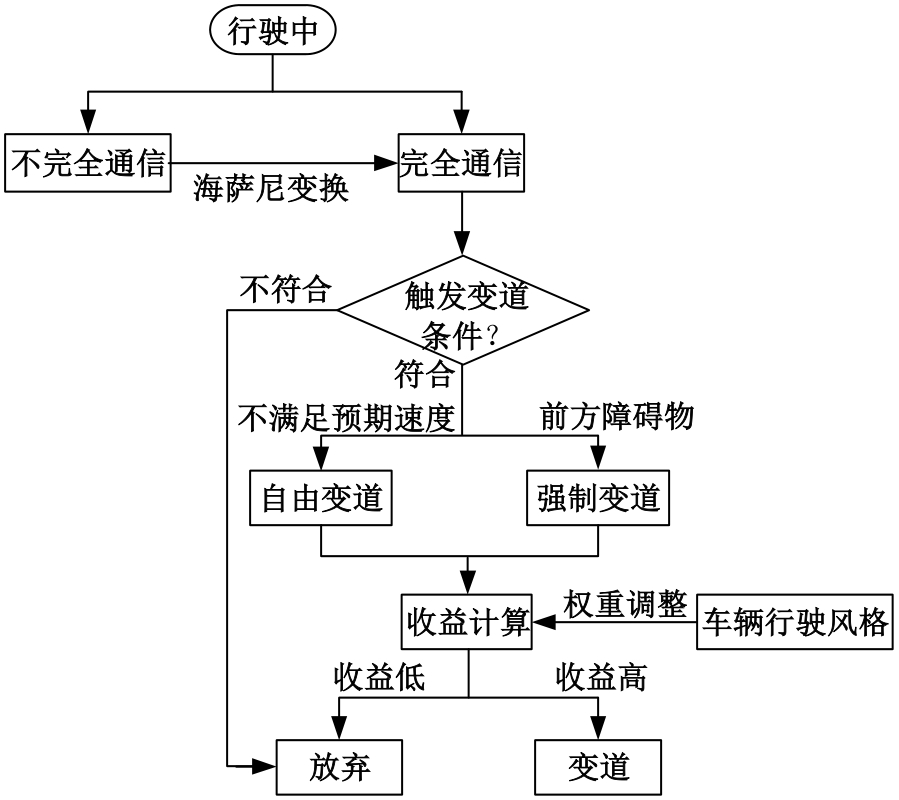
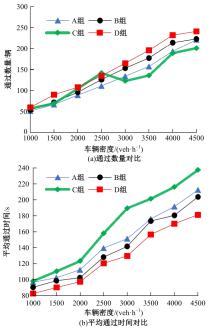
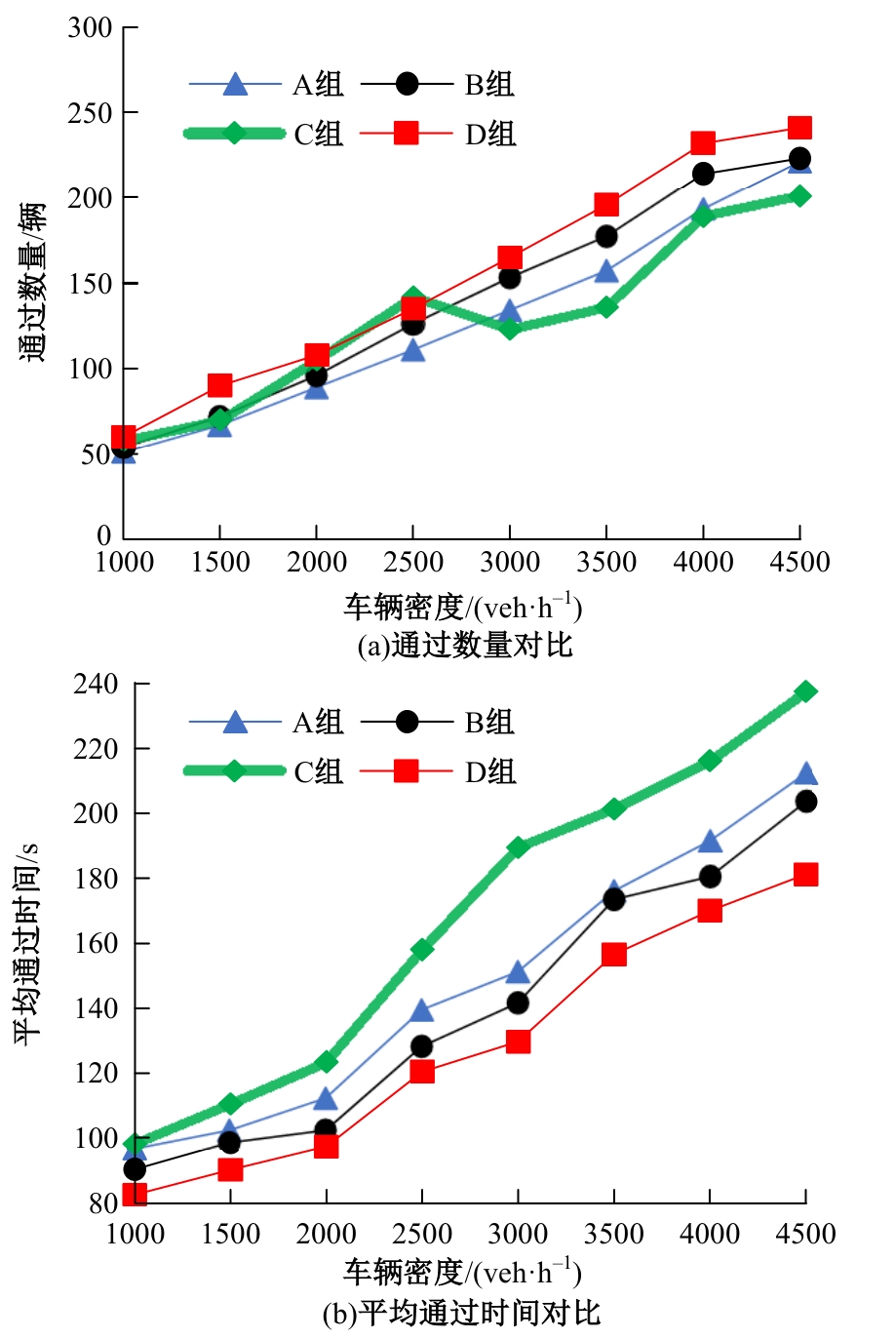
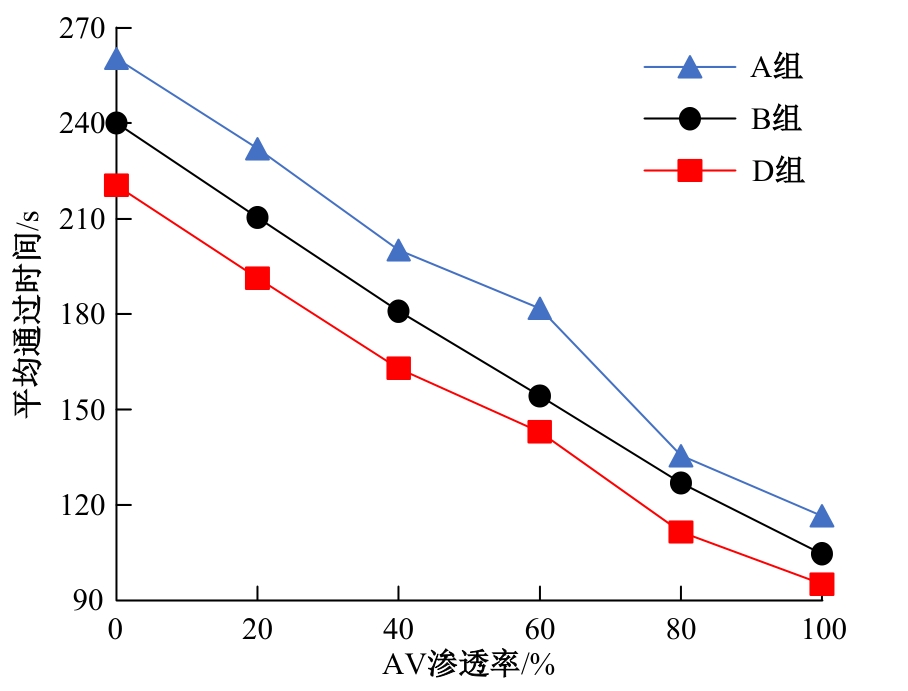
针对人驾车(HV)与自动驾驶车辆(AV)混合交通流场景下车辆变道决策不准确的问题,提出了一种车辆变道决策模型。该模型基于博弈论,针对相邻车辆连续协同变道情形构建多重博弈函数,通过海萨尼变换消除通信不确定性的影响,并结合K-means++聚类区分车辆的驾驶风格,利用风险因子进一步调整博弈收益。运用SUMO仿真平台对变道模型进行验证,实验结果表明:在固定AV渗透率下,应用联合博弈论与驾驶风格的变道模型,车辆平均通过数量得到有效提高,且平均通过时间降低,同时测试中未发生事故,证明了变道模型的稳定性和安全性;在不同AV渗透率下,随着渗透率的升高,车辆的平均通过时间显著降低,表明AV能够有效利用车道。
中图分类号:
- U491

| [1] | Gipps P G. A model for the structure of lane-changing decisions[J]. Transportation Research Part B: Methodological, 1986, 20(5): 403-414. |
| [2] | Kita H. A game theoretic analysis of merging give-way interaction: a joint estimation model[J]. Transportation and Traffic Theory in the 21st Century, 2002(1): 503-518. |
| [3] | Ji K, Han K. Optimal decision-making strategies for self-driving car inspired by game theory[C]∥International Conference on Ubiquitous and Future Networks. Piscataway, NJ: IEEE, 2021: 375-378. |
| [4] | Peng H, Lv C, Huang C, et al. Cooperative decision making of connected automated vehicles at multi-lane merging zone: a coalitional game approach[J]. IEEE Transactions on Intelligent Transportation Systems, 2021, 23(4): 3829-3841. |
| [5] | Peng H, Lv C, Xing X, et al. Human-like decision making for autonomous driving: a noncooperative game theoretic approach[J]. IEEE Transactions on Intelligent Transportation Systems, 2021, 22(4): 2076-2087. |
| [6] | Peng H, Huang C, Hu Z X, et al. Decision making of connected automated vehicles at an unsignalized roundabout considering personalized driving behaviors[J]. IEEE Transactions on Vehicular Technology, 2021, 70(5): 4051-4064. |
| [7] | 曲大义, 张可琨, 王韬, 等. 自动驾驶车辆换道决策行为分析及分子动力学建模[J]. 吉林大学学报: 工学版, 2022, 12(1): 1-13. |
| Qu Da-yi, Zhang Ke-kun, Wang Tao,et al. Analysis of lane change decision behavior and molecular dynamics modeling of autonomous vehicle[J]. Journal of Jilin University (Engineering and Technology Edition), 2022, 12(1): 1-13. | |
| [8] | 董俊一. 考虑驾驶风格的智能驾驶换道决策模型研究[D]. 长春: 吉林大学交通学院, 2022. |
| Dong Jun-yi. Research on lane change decision model of intelligent driving considering driving style[D]. Changchun: College of Transportation, Jilin University, 2022. | |
| [9] | 刘超, 丁菁. 一种基于合作博弈论的自动驾驶车道变更模型[J]. 计算机应用与软件, 2022, 39(1): 236-241. |
| Liu Chao, Ding Jing. An automated driving lane change model based on cooperative game theory[J]. Computers Applications and Software, 2022, 39(1): 236-241. | |
| [10] | 黑凯先, 曲大义, 郭海兵, 等. 网联混合车流车辆换道博弈行为及模型[J]. 科学技术与工程, 2021, 21(6): 2495-2501. |
| Kai-xian Hei, Qu Da-yi, Guo Hai-bing, et al. Game behavior and model of lane changing for networked mixed traffic flow vehicles[J]. Science, Technology and Engineering, 2021, 21(6): 2495-2501. | |
| [11] | Ali Y, Zheng Z D, Haque M, et al. A game theory-based approach for modelling mandatory lane-changing behavior in a connected environment[J]. Transportation Research Part C: Emerging Technologies, 2019, 106(12): 220-242. |
| [12] | Elveve M, Ennana M. Gambit: Software tools for game theory[J]. Modern Healthcare, 2005, 41(5): 36-51. |
| [13] | Krajewski R, Bock J, Kloeker L, et al. The highD dataset: a drone dataset of naturalistic vehicle trajectories on german highways for validation of highly automated driving systems[C]∥International Conference on Intelligent Transportation Systems, Maui, HI, USA, 2018: 2118-2125. |
| [14] | 赵韩,刘浩,邱明明,等. 考虑车流密度影响的驾驶风格识别方法研究[J]. 汽车工程, 2020, 42(12): 1718-1727. |
| Zhao Han, Liu Hao, Qiu Ming-ming, et al. Research on driving style recognition method considering the influence of traffic flow density[J]. Automotive Engineering, 2020, 42(12): 1718-1727. | |
| [15] | 李经纬, 赵治国, 沈沛鸿, 等. 驾驶风格K-mean聚类与识别方法研究[J]. 汽车技术, 2018, 3(12): 8-12. |
| Li Jing-wei, Zhao Zhi-guo, Shen Pei-hong, et al. Research on K-means++ clustering and recognition of driving style[J]. Automotive Technology, 2018, 3(12): 8-12. | |
| [16] | Guo Y, Weng G R. K-means++ clustering-based active contour model for fast image segmentation[J]. Journal of Electronic Imaging, 2018, 27(6): 1-12. |
| [17] | Wang R, Srdjan M L. Review of driving conditions prediction and driving style recognition based control algorithms for hybrid electric vehicles[C]∥Vehicle Power and Propulsion Conference, Chicago, IL, USA, 2011: 1-7. |
| [1] | 张雅丽,付锐,袁伟,郭应时. 考虑能耗的进出站驾驶风格分类及识别模型[J]. 吉林大学学报(工学版), 2023, 53(7): 2029-2042. |
| [2] | 肖雪,李克平,彭博,昌满玮. 基于决策-规划迭代框架的智驾车换道行为建模[J]. 吉林大学学报(工学版), 2023, 53(3): 746-757. |
| [3] | 曲大义,黑凯先,郭海兵,贾彦峰,王韬. 车联网环境下车辆换道博弈行为及模型[J]. 吉林大学学报(工学版), 2022, 52(1): 101-109. |
| [4] | 冯建鑫, 王挺峰, 郭劲. 测量丢失不确定性系统的迭代鲁棒滤波[J]. 吉林大学学报(工学版), 2014, 44(4): 1057-1061. |
| [5] | 丛犁, 张海林, 刘毅, 赵力强, 张国鹏. 基于粒子群优化的协作网络资源分配的博弈策略[J]. 吉林大学学报(工学版), 2012, 42(01): 207-212. |
| [6] | 林赐云1,2,龚勃文1,2,赵丁选1,3,杨兆升1,2. 基于博弈论的突发灾害下区域间交通信号协调控制技术[J]. 吉林大学学报(工学版), 2011, 41(05): 1257-1261. |
| [7] | 于德新,杨兆升,王媛, 孙建平. 基于多智能体的城市道路交通控制[J]. 吉林大学学报(工学版), 2006, 36(01): 113-0118. |
|
||