吉林大学学报(医学版) ›› 2026, Vol. 52 ›› Issue (1): 44-55.doi: 10.13481/j.1671-587X.20260106

• 基础研究 • 上一篇    下一篇

葛根素对高脂饮食诱导小鼠非酒精性脂肪性肝病的改善作用及其机制

陈思童1,2,杨丹1,3,李庆杰1,3,唐晓雷1,3,王汉1,2,刘扬扬1,4(),刘铁军1,2()   

  1. 1.长春中医药大学中医学院中医学系,吉林 长春 130117
    2.长春中医药大学附属医院肝脾胃病科,吉林 长春 130021
    3.长春中医药大学附属医院中医药研究中心,吉林 长春 130021
    4.长春中医药 大学附属医院治未病科,吉林 长春 130021
  • 收稿日期:2025-03-09 接受日期:2025-04-25 出版日期:2026-01-28 发布日期:2026-02-24
  • 通讯作者: 刘扬扬,刘铁军 E-mail:996439299@qq.com;liutiejun699@163.com
  • 作者简介:陈思童(1995-),女,吉林省长春市人,在读博士研究生,主要从事非酒精性脂肪性肝病基础和临床方面的研究。
  • 基金资助:
    科技部国家重点研发计划项目(2018YFC1704100);吉林省科技厅科技发展计划项目(20210101199JC);吉林省科技厅科技发展计划项目(YDZJ202301ZYTS475);吉林省科技厅科技发展计划项目(YDZJ202301ZYTS460);吉林省卫健委卫生健康科技能力提升项目(2022jc049);吉林省教育厅科学技术研究项目(JJKH20230991KJ)

Ameliorative effect of puerarin on non-alcoholic fatty liver disease induced by high-fat diet in mice and its mechanism

Sitong CHEN1,2,Dan YANG1,3,Qingjie LI1,3,Xiaolei TANG1,3,Han WANG1,2,Yangyang LIU1,4(),Tiejun LIU1,2()   

  1. 1.Department of Chinese Medicine,School of Chinese Medicine,Changchun University of Chinese Medicine,Changchun 130117,China
    2.Department of Gastroenterology,Affiliated Hospital,Changchun University of Chinese Medicine,Changchun 130021,China
    3.Research Center of Chinese Traditional Medicine,Affiliated Hospital,Changchun University of Chinese Medicine,Changchun 130021,China
    4.Department of Preventive Treatment,Affiliated Hospital,Changchun University of Chinese Medicine,Changchun 130021,China
  • Received:2025-03-09 Accepted:2025-04-25 Online:2026-01-28 Published:2026-02-24
  • Contact: Yangyang LIU,Tiejun LIU E-mail:996439299@qq.com;liutiejun699@163.com

摘要:

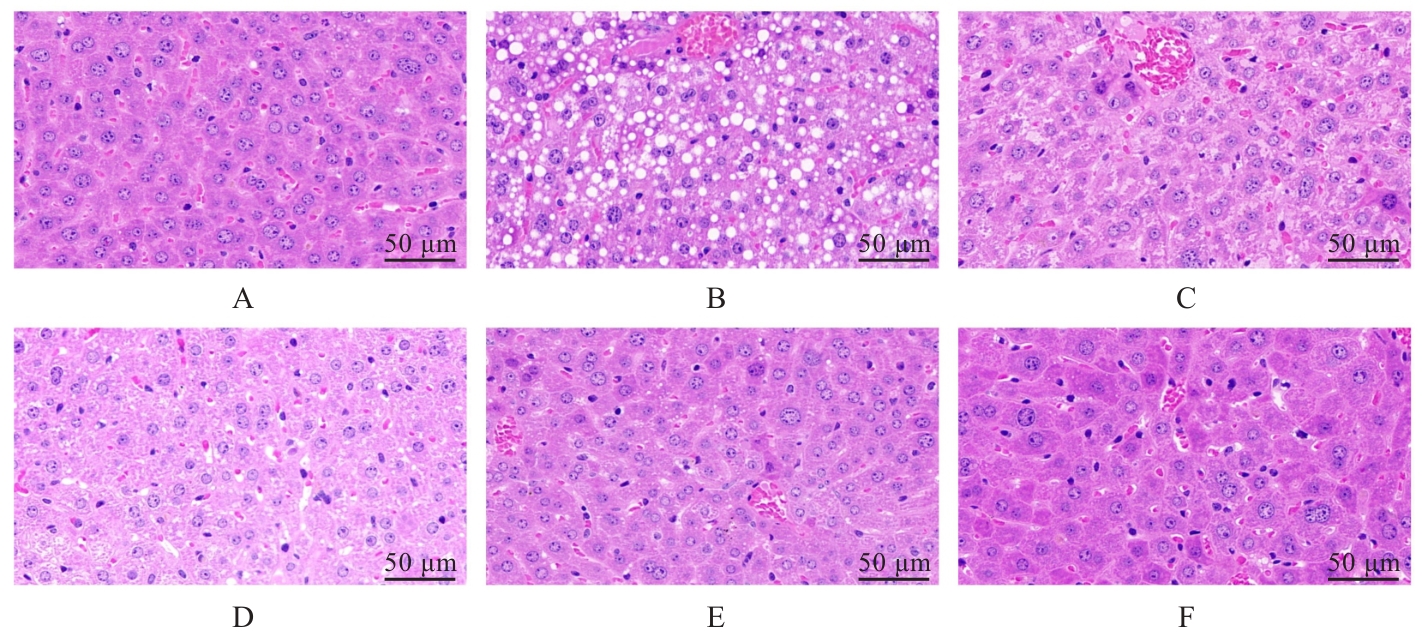
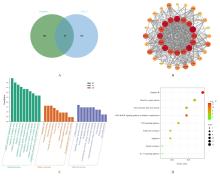
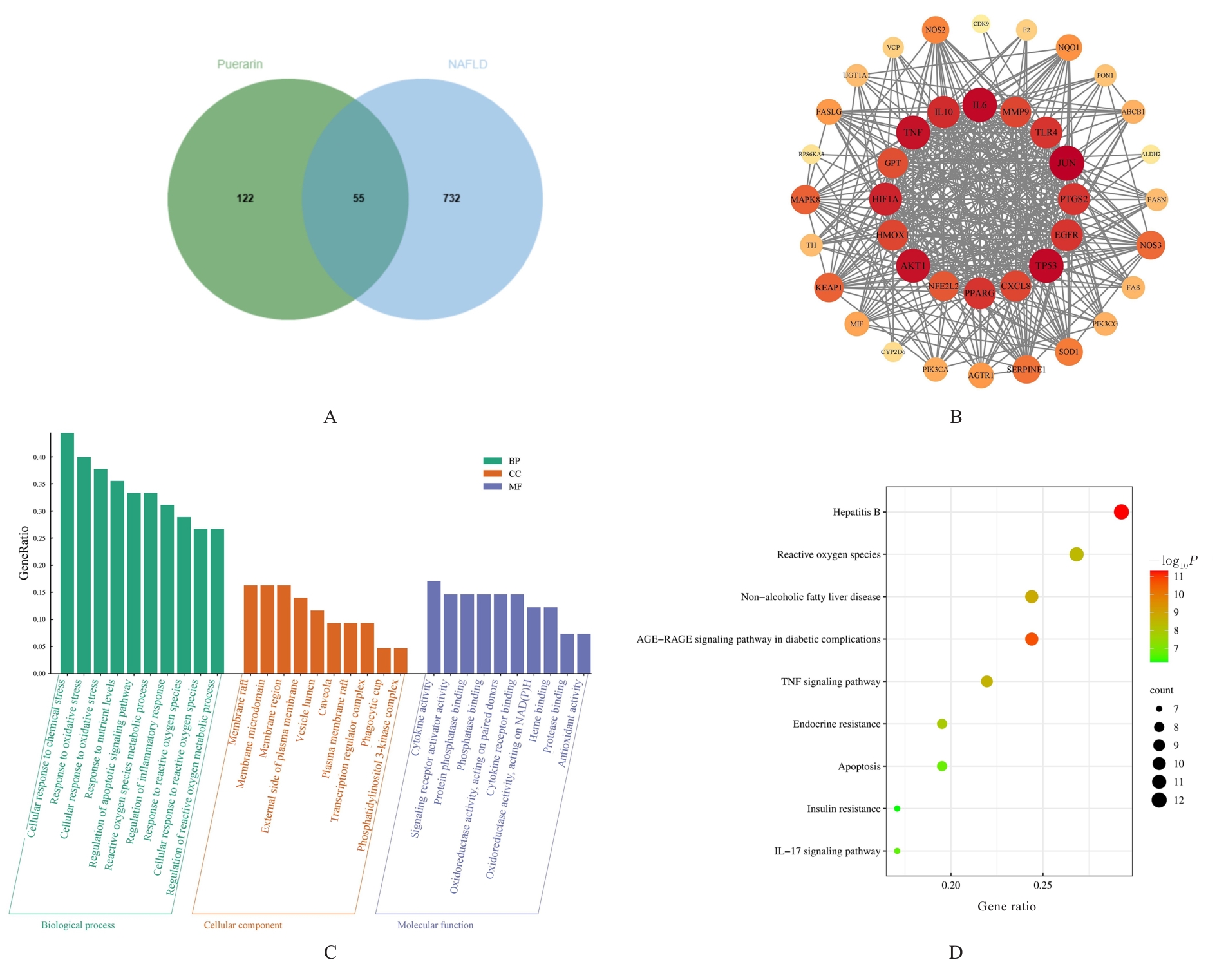
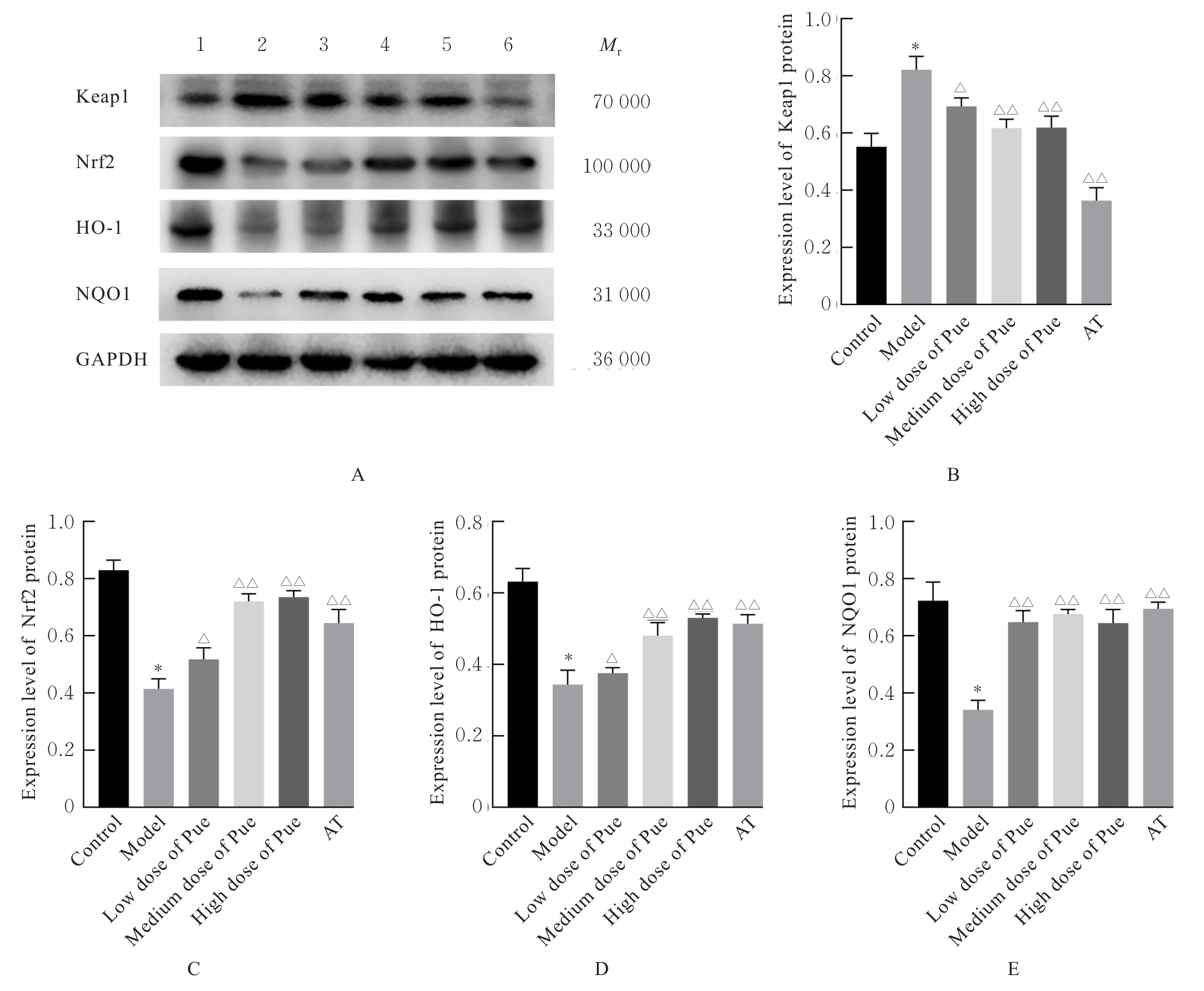
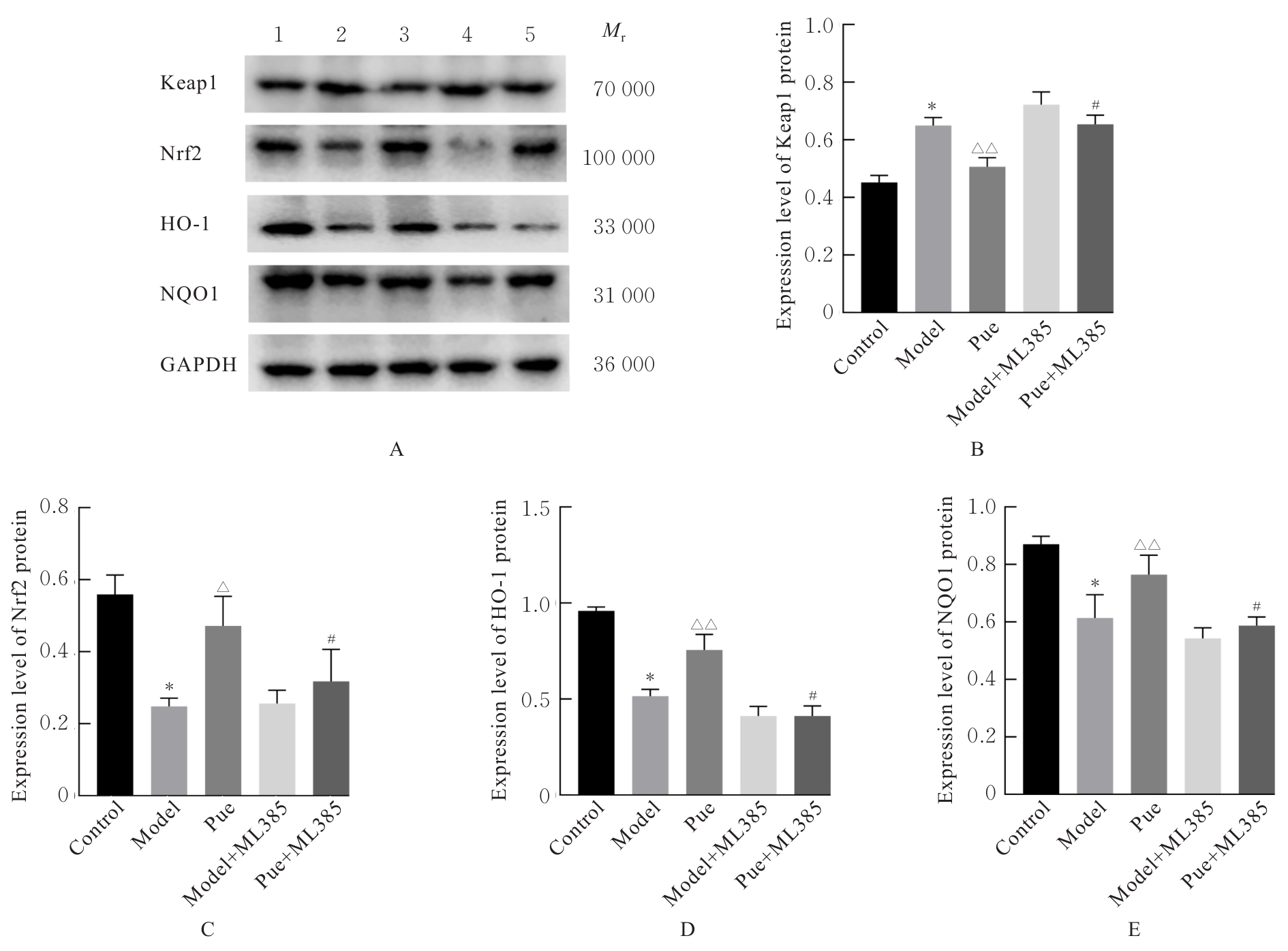
目的 探讨葛根素(Pue)对高脂饮食诱导小鼠非酒精性脂肪性肝病(NAFLD)的改善作用,并阐明其可能的作用机制。 方法 将36只C57BL/6J小鼠随机分为对照组、模型组、低剂量Pue组(20.0 mg·kg-1)、中剂量Pue组(40.0 mg·kg-1)、高剂量Pue组(80.0 mg·kg-1)和阳性药组[阿托伐他汀钙(AT)组](10.0 mg·kg-1 AT),每组6只。除对照组小鼠给予正常饮食外,其余各组小鼠均给予高脂饮食喂养以建立NAFLD模型。测量各组小鼠体质量,并计算肝指数;采用HE染色观察各组小鼠肝组织病理形态表现;采用生化试剂盒测定各组小鼠血清和肝组织中总胆固醇(TC)及甘油三酯(TG)水平,血清丙氨酸氨基转移酶(ALT)和天门冬氨酸氨基转移酶(AST)水平,肝组织中丙二醛(MDA)水平以及超氧化物歧化酶(SOD)和谷胱甘肽过氧化物酶(GSH-Px)活性,并检测肝组织中炎症因子[白细胞介素6(IL-6)、白细胞介素1β(IL-1β)和肿瘤坏死因子α(TNF-α)]水平。基于网络药理学框架,通过整合PubChem和SwissTargetPrediction等数据库预测Pue的潜在治疗靶点,结合GeneCards等平台获取的NAFLD相关疾病靶点构建蛋白质-蛋白质相互作用(PPI)网络,并进行基因本体论(GO)功能和京都基因与基因组百科全书(KEGG)信号通路富集分析。采用Western blotting法检测各组小鼠肝组织中Kelch样ECH关联蛋白1(Keap1)、核因子E2相关因子2(Nrf2)、血红素加氧酶1(HO-1)和醌氧化还原酶1(NQO1)蛋白表达水平。另取30只小鼠分为对照组、模型组、Pue组(80.0 mg·kg-1 Pue灌胃)、模型+Nrf2抑制剂ML385组(30.0 mg·kg-1 ML385腹腔注射)和Pue+Nrf2抑制剂ML385组(80.0 mg·kg-1 Pue灌胃+30 mg·kg-1 ML385腹腔注射),每组6只。再次检测上述氧化应激和炎症指标以及相关蛋白表达情况。 结果 与对照组比较,模型组小鼠体质量和肝指数明显升高(P<0.01);与模型组比较,低、中和高剂量Pue组及AT组小鼠体质量以及肝指数明显降低(P<0.05或P<0.01)。HE染色,与对照组比较,模型组小鼠肝组织出现明显的脂质积累和病理损伤;与模型组比较,低、中和高剂量Pue组及AT组小鼠肝组织的脂滴积累情况以及病理损伤均有不同程度的改善。与对照组比较,模型组小鼠肝组织中TC、TG、IL-6、IL-1β、TNF-α和MDA水平以及血清中TC、TG、ALT和AST水平明显升高(P<0.01),肝组织中SOD和GSH-Px活性明显降低(P<0.01);与模型组比较,低、中和高剂量Pue组及AT组小鼠肝组织中TC、TG、IL-6、IL-1β、TNF-α和MDA水平以及血清中TC、TG、ALT和AST水平明显降低(P<0.05或P<0.01),肝组织中SOD和GSH-Px活性明显升高(P<0.05或P<0.01)。网络药理学分析筛选获得Pue治疗NAFLD的核心靶点包括Nrf2、TNF和IL-6等,预测Pue可能通过调控氧化应激、炎症和凋亡等途径发挥作用。Western blotting法,与对照组比较,模型组小鼠肝组织中Keap1蛋白表达水平升高(P<0.01),Nrf2、HO-1和NQO1蛋白表达水平均降低(P<0.01);与模型组比较,低、中和高剂量Pue组及AT组小鼠肝组织中Keap1蛋白表达水平降低(P<0.05或P<0.01),Nrf2、HO-1和NQO1蛋白表达水平均升高(P<0.05或P<0.01)。Nrf2抑制剂ML385干预后,与Pue组比较,Pue+ML385组小鼠肝组织中IL-6、IL-1β、TNF-α和MDA水平均明显升高(P<0.05),SOD和GSH-Px活性均明显降低(P<0.05或P<0.01),肝组织中Keap1蛋白表达水平升高(P<0.01),Nrf2、HO-1和NQO1蛋白表达水平均明显降低(P<0.01)。 结论 Pue能够改善NAFLD小鼠的脂质代谢和肝功能,减轻肝脏损伤,提高肝组织抗氧化能力,并减少炎症因子释放,其机制可能与激活Keap1/Nrf2/HO-1信号通路有关。

关键词: 葛根素, 非酒精性脂肪性肝病, 氧化应激, 炎症, 核因子E2相关因子2

Abstract:

Objective To explore the ameliorative effect of puerarin (Pue) on non-alcoholic fatty liver disease (NAFLD) induced by high-fat diet in the mice, and to clatrify its possible mechanism. Method A total of 36 C57BL/6J mice were randomly divided into control group, model group, low dose of Pue group (20.0 mg·kg-1), medium dose of Pue group (40.0 mg·kg-1), high dose of Pue group (80.0 mg·kg-1), and positive drug group [atorvastatin calcium (AT) group] (10.0 mg·kg-1 AT), with 6 mice in each group. Except for control group, in which the mice were given normal diet, all of the mice in the other groups were fed with high-fat diet to establish the NAFLD models. The body weights of the mice in various groups were measured, and the liver indexes was calculated; the pathomorphology of liver tissue of the mice in various groups was observed by HE staining method. The total cholesterol (TC) and triglyceride (TG) levels in serum and liver tissue, alanine aminotransferase (ALT) and aspartate aminotransferase (AST) levels in serum, the malondialdehyde (MDA) levels, superoxide dismutase (SOD) and glutathione peroxidase (GSH-Px) activities in liver tissue, as well as interleukin-6 (IL-6), interleukin-1β (IL-1β), and tumor necrosis factor-α (TNF-α) levels in liver tissue of the mice in various groups were detected by commercial biochemical assay kits. Within the framework of network pharmacology, the potential therapeutic targets of Pue were predicted by integrating multiple databases, including PubChem and Swiss Target Prediction, and other publicly available resources. These targets were cross-referenced with NAFLD-associated disease targets retrieved from GeneCards and other platforms, enabling the construction of a high-confidence protein-protein interaction (PPI) network. Subsequently, Gene Ontology (GO) function and Kyoto Encyclopedia of Genes and Genomes (KEGG) signaling pathway enrichment analyses were performed to elucidate the therapeutic mechanisms of Pue in NAFLD intervention; Western blotting method was used to detect the protein expression levels of Kelch-like ECH-associated protein 1 (Keap1), nuclear factor erythroid 2-related factor 2 (Nrf2), heme oxygenase-1 (HO-1), and quinone oxidoreductase 1 (NQO1) in liver tissue of the mice in various groups. Additionally, 30 mice were randomly divided into control group,?model group, Pue group (80.0 mg·kg-1 Pue gavage), model+Nrf2 inhibitor ML385 group (30.0 mg·kg-1 ML385 intraperitoneal administration), and Pue+ML385 group?(80.0 mg·kg-1 Pue gavage, 30 mg·kg-1 ML385 intraperitoneal administration). After treatment, the oxidative stress markers, inflammatory cytokines, and protein expression levels metioned above were detected. Results Compared with control group, the body weight and liver index of the mice in model group were significantly increased (P<0.01); compared with model group, the body weight and liver index of the mice in low, medium, and high doses of Pue groups and AT group were significantly decreased (P<0.05 or P<0.01). The HE staining results showed compared with control group there was significant lipid accumulation and pathological damage in liver tissue of the mice in model group; compared with model group, the accumulation of lipid droplets and pathological damage in liver tissue of the mice in low, medium, and high doses of Pue groups and AT group were improved to varying degrees. Compared with control group, the levels of TC, TG, IL-6, IL-1β, TNF-α, and MDA in liver tissue of the mice in the model group, as well as the serum TC, TG, ALT, and AST levels were significantly increased (P<0.01), while the activities of SOD and GSH-Px in liver tissue were significantly decreased (P<0.01); compared with model group, the levels of TC, TG, IL-6, IL-1β, TNF-α, and MDA in liver tissue, as well as the levels of TC, TG, ALT, and AST in serum of the mice in low, medium, and high doses of Pue groups and AT group were significantly decreased (P<0.05 or P<0.01), while the activities of SOD and GSH-Px in liver tissue were significantly increased (P<0.05 or P<0.01). The Network pharmacology analysis results identified the core targets of Pue in treating NAFLD, including Nrf2, TNF, and IL-6, and predicted that Pue may exert its effects through regulating oxidative stress, inflammation, and apoptosis pathways. The Western blotting results showed that compared with control group, the expression level of Keap1 protein in liver tissue of the mice in model group was increased (P<0.01), while the expression levels of Nrf2, HO-1, and NQO1 proteins were decreased (P<0.01); compared with model group, the expression levels of Keap1 protein in liver tissue of the mice in low, medium, and high doses of Pue groups and AT group were decreased (P<0.05 or P<0.01), while the expression levels of Nrf2, HO-1, and NQO1 proteins were increased (P<0.05 or P<0.01). After intervention with Nrf2 inhibitor ML385, compared with Pue group, the levels of IL-6, IL-1β, TNF-α, and MDA in liver tissue of the mice in Pue+ML385 group were significantly increased (P<0.05), while the activities of SOD and GSH-Px were significantly decreased (P<0.05 or P<0.01), the expression level of Keap1 protein in liver tissue was increased (P<0.01), and the expression levels of Nrf2, HO-1, and NQO1 proteins were decreased (P<0.01). Conclusion Pue can improve the lipid metabolism and liver function in the NAFLD mice, alleviate the liver damage, enhance the liver tissue antioxidant capacity, and reduce the release of inflammatory factors. Its mechanism may be related to the activation of the Keap1/Nrf2/HO-1 signaling pathway.

Key words: Puerarin, Non-alcoholic fatty liver disease, Oxidative stress, Inflammation, Nuclear factor erythroid 2-related factor 2

中图分类号: 

  • R285.5