吉林大学学报(医学版) ›› 2025, Vol. 51 ›› Issue (3): 785-789.doi: 10.13481/j.1671-587X.20250324

• 临床医学 • 上一篇    

Crigler-Najjar综合征型伴胆囊结石1例报告及文献复习

王雪纯1,张萌1,胡起波1,田昕1,邵雪2,车广华1()   

  1. 1.吉林大学第二医院儿科诊疗中心,吉林 长春 130022
    2.吉林大学第二医院肝胆胰内科,吉林 长春 130022
  • 收稿日期:2024-10-19 接受日期:2024-12-06 出版日期:2025-05-28 发布日期:2025-07-18
  • 通讯作者: 车广华 E-mail:chegh@jlu.edu.cn
  • 作者简介:王雪纯(1999-),女,吉林省长春市人,在读硕士研究生,主要从事儿科呼吸系统和变态反应性疾病方面的研究。
  • 基金资助:
    吴阶平医学基金会科研项目(320.6750.2022-22-34)

Crigler-Najjar syndrome type complicated with gallbladder stones:A case report and literature review

Xuechun WANG1,Meng ZHANG1,Qibo HU1,Xin TIAN1,Xue SHAO2,Guanghua CHE1()   

  1. 1.Department of Pediatrics,Second Hospital,Jilin University,Changchun 130022,China
    2.Department of Hepatobiliary and Pancreatic Medicine,Second Hospital,Jilin University,Changchun 130022,China
  • Received:2024-10-19 Accepted:2024-12-06 Online:2025-05-28 Published:2025-07-18
  • Contact: Guanghua CHE E-mail:chegh@jlu.edu.cn

摘要:

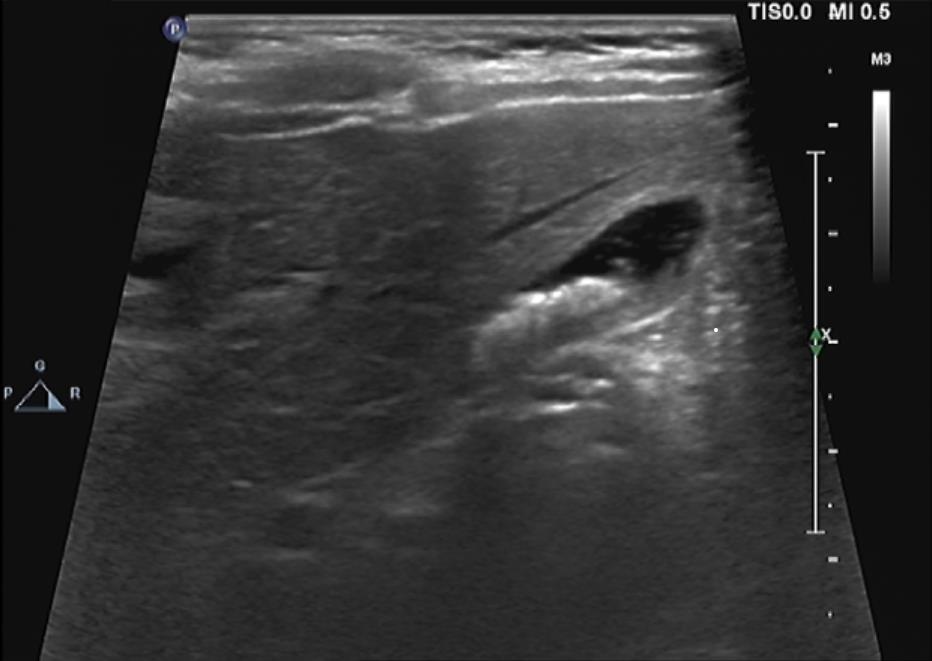
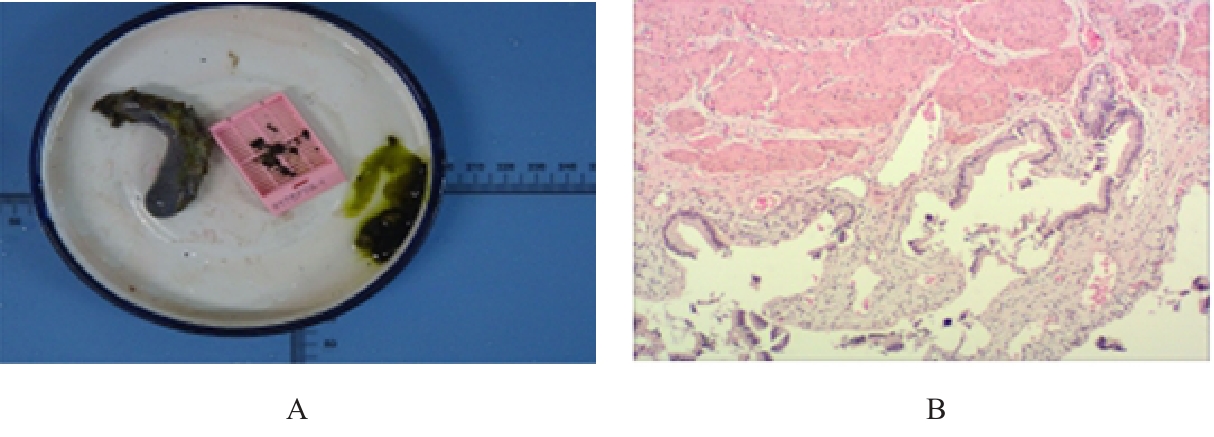
Crigler-Najjar综合征(CNS)是一种常染色体隐性遗传病,由UGT1A1基因突变引起。本文作者回顾性分析1例以出生后胆红素升高为主要临床表现,并经基因检测明确诊断为CNS患儿的临床资料,结合相关资料分析CNS的临床表现、基因特征、诊断和治疗方法,总结诊疗经过,以提高临床医生对该类疾病诊断和治疗的认识。该患儿出生后因胆红素水平升高反复就诊,均未明确病因,在此期间发现胆囊结石并行手术切除,但患儿胆红素水平未见降低。2024年3月于本院就诊并委托第三方机构进行基因检测,结果显示:患儿UGT1A1基因上检测出2个风险位点,给予患儿口服苯巴比妥1周后,患儿非结合胆红素(UCB)水平下降约47%,确诊为CNSⅡ型。目前患儿处于积极随访定时监测胆红素水平变化中。对于临床表现为出生后即发生的间歇性、波动性、无溶血和肝炎等症状的高UCB血症黄疸患儿应尽早进行基因检测明确诊断。

关键词: 儿童, Crigler-Najjar综合征, 胆囊结石, 基因检测, 常染色体隐性遗传病

Abstract:

Crigler-Najjar syndrome (CNS) is an autosomal recessive genetic disorder caused by mutations in the UGT1A1 gene. This author retrospectively analyzes the clinical data of one patient presenting with postnatal hyperbilirubinemia, who was genetically diagnosed with CNS. Her clinical course, genetic characteristics, diagnostic and therapeutic approaches are discussed to enhance clinicians’ understanding of this condition. The patient exhibited recurrent jaundice due to elevated unconjugated bilirubin (UCB) levels since birth. During this period, the gallstones were identified and surgically removed, yet her bilirubin levels did not improve. In March 2024, the patient presented to our hospital and underwent genetic testing via a third-party facility. The results revealed two risk variants in the UGT1A1 gene. After one week of oral phenobarbital administration, her UCB levels decreased by approximately 47%, confirming a diagnosis of CNS type Ⅱ. The patient is currently under active follow-up with regular monitoring of bilirubin levels. For the infants and children presenting with persistent, fluctuating, non-hemolytic, and non-hepatitic hyperbilirubinemia since birth, early genetic testing should be prioritized to establish the definitive diagnosis.

Key words: Child, Crigler-Najjar syndrome, Gallstones, Genetic testing, Autosomal recessive genetic disorder

中图分类号: 

  • R575.6