吉林大学学报(工学版) ›› 2025, Vol. 55 ›› Issue (10): 3119-3130.doi: 10.13229/j.cnki.jdxbgxb.20240617
• 车辆工程·机械工程 • 上一篇
基于RBVS和CBCNN的风机叶片故障检测和分类方法
周求湛1( ),牟岩1,武慧南1,陈霄1,汪锋2,李琛2,张雯2,刘萍萍3,王聪1()
- 1.吉林大学 通信工程学院,长春 130012
2.华锐风电科技(江苏)有限公司,江苏 盐城 224056
3.吉林大学 计算机科学与技术学院,长春 130012
Fault detection and classification of wind turbine blades based on machine learning
Qiu-zhan ZHOU1(),Yan MU1,Hui-nan WU1,Xiao CHEN1,Feng WANG2,Chen LI2,Wen ZHANG2,Ping-ping LIU3,Cong WANG1()
- 1.College of Communication Engineering,Jilin University,Changchun 130012,China
2.Sinovel Wind Power Technology(jiangsu) Co. ,Ltd. ,Yancheng 224056,China
3.College of Computer Science and Technology,Jilin University,Changchun 130012,China
摘要:
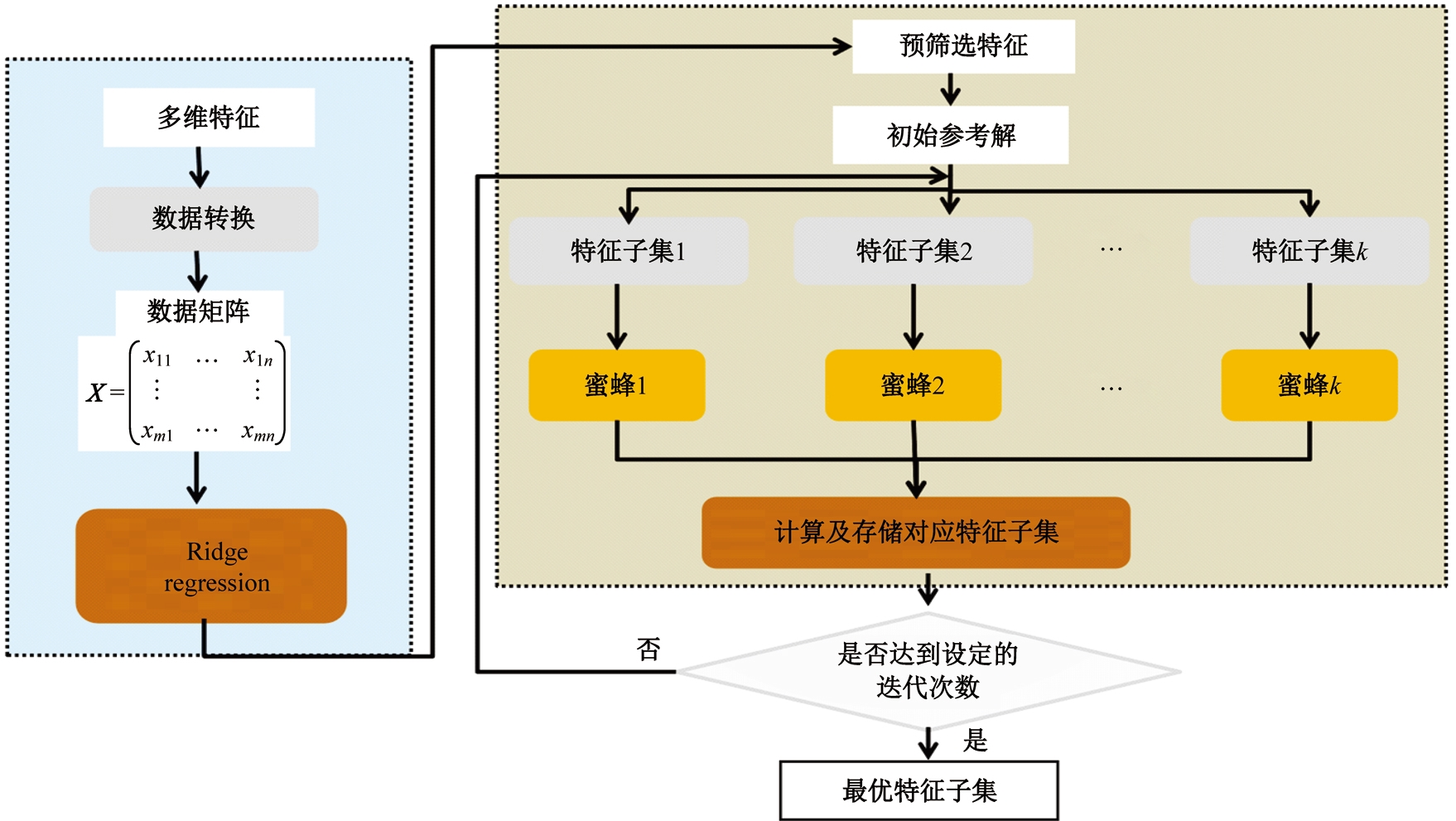
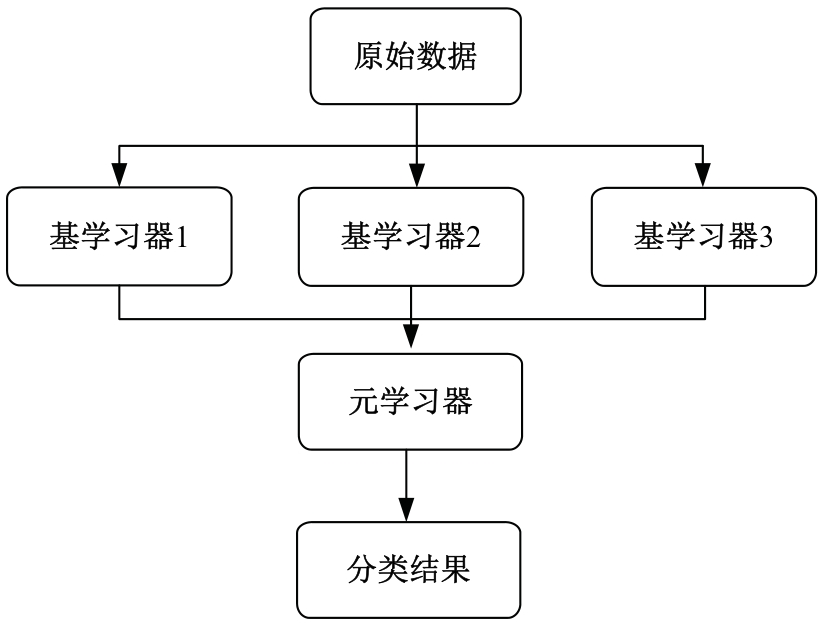
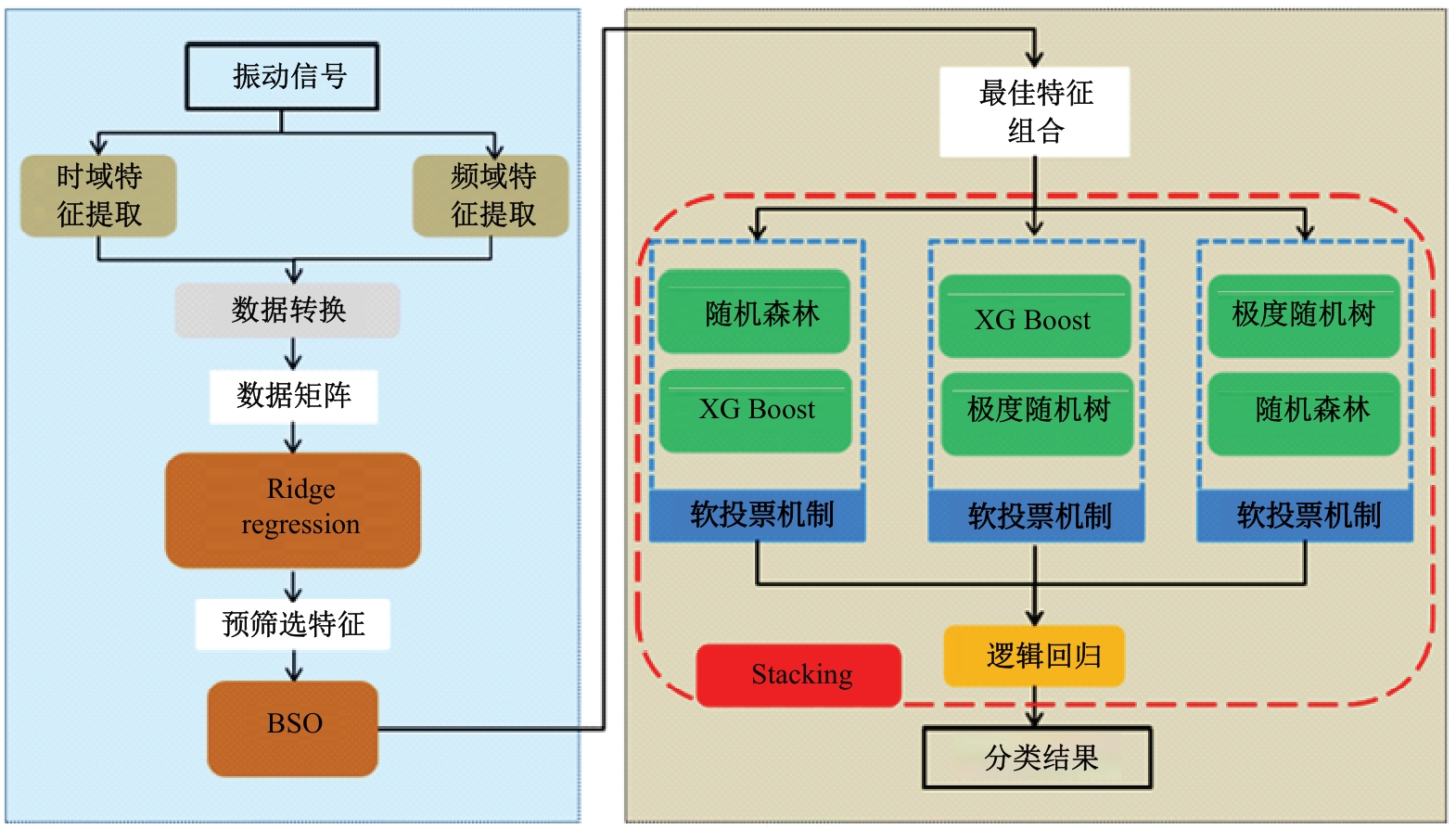
为提高风机叶片故障检测时故障分类精度,提出了一种基于机器学习的风机叶片故障检测和分类方法。首先,将岭回归与蜂群优化算法(BSO)相结合提出了R-BSO特征选择算法,该算法用于筛选出最优特征子集。然后,将由R-BSO算法提取出的最佳特征组合输入基于Stacking策略的分类模型中得出分类结果,完成叶片故障检测RBVS算法的构建。最后,提出了一种基于卷积注意力机制(CBAM)的卷积神经网络(CNN)叶片故障分类算法CBCNN。实验结果表明:本文算法在风机叶片故障检测和分类上具有较好的性能。
中图分类号:
- TP274

| [1] | Anindya G, Sundaresan Mannur J, Schulz Mark J, et al. Structural health monitoring techniques for wind turbine blades[J]. Journal of Wind Engineering and Industrial Aerodynamics, 2000, 85(3): 309-324. |
| [2] | Mayes R L. An experimental algorithm for detecting damage applied to the I-40 bridge over the Rio-grande [C]∥Smart Systems for Bridges, Structures, and Highways Conference on Smart Structures and Materials, Nashville, Tennessee, 1995: 219-225. |
| [3] | Dervilis N, Choi M, Taylor S G, et al. On damage diagnosis for a wind turbine blade using pattern recognition[J]. Journal of Sound and Vibration, 2014, 333(6): 1833-1850. |
| [4] | Sohn H, Worden K, Farrar C R. Novelty detection under changing environmental conditions[C]∥Smart Systems for Bridges, Structures, and Highways Conference on Smart Structures and Materials, Newport Beach, USA, 2001: 108-118. |
| [5] | Scholz M, Vigario R. Nonlinear PCA: a new hierarchical approach[C]∥The 10th European Symposium on Artificial Neural Networks, Bruges, Belgium, 2002:439-444. |
| [6] | Wang M H, Lu S D, Hsieh C C, et al. Fault detection of wind turbine blades using multi-channel CNN[J]. Sustainability (Switzerland), 2022, 14(3): No.1781. |
| [7] | 宋柬霏. 小样本(医疗)数据的群智能特征选择算法研究[D]. 长春: 吉林大学通信工程学院, 2023. |
| Song Jian-fei. Research on swarm intelligence feature selection algorithm for small sample (medical) data[D]. Changchun: College of Communication Engineering, Jilin University, 2023. | |
| [8] | Jia H M, Li J D, Song W L, et al. Spotted hyena optimization algorithm with simulated annealing for feature selection[J]. IEEE Access, 2019, 7: 71943-71962. |
| [9] | Ou Y W, Tatsis K E. Vibration-based monitoring of a small-scale wind turbine blade under varying climate conditions. part Ⅰ: an experimental benchmark[J]. Structural Control & Health Monitoring, 2021,28(6): No.2660. |
| [10] | Philipp G, Lukas L. Non-uniqueness theory in sampled STFT phase retrieval[J]. SIAM Journal on Mathematical Analysis, 2023, 55(5): 4695-4726. |
| [11] | Gai J X, Zhang L H, Wei Z H. Spectrum sensing based on STFT-ImpResNet for cognitive radio[J]. Electronics, 2022, 11(15): No.2437. |
| [12] | 姚欣宜. 地面运动目标振动感知与识别方法研究[D]. 长春: 吉林大学通信工程学院, 2022. |
| Yao Xin-yi. Research on moving ground-target perception and recognition method based on vibration[D]. Changchun: College of Communication Engineering, Jilin University, 2022. | |
| [13] | 李婷, 付德义, 薛扬. 基于AE与STFT的变桨轴承裂纹诊断研究[J]. 振动、测试与诊断, 2021, 41(2): 299-303. |
| Li Ting, Fu De-yi, Xue Yang. Research on crack diagnosis of pitch bearing based on AE and STFT[J]. Journal of Vibration, Measurement & Diagnosis, 2021, 42(2): 299-303. | |
| [14] | Krizhevsky A, Sutskever I, Hinton G E. ImageNet classification with deep convolutional neural networks[C]∥ Advances in Neural Information Processing Systems, Lake Tahoe, USA, 2012: 1097-1105. |
| [15] | Hubel D H, Wiesel T N. Receptive fields, binocular interaction and functional architecture in the cat´s visual cortex[J]. The Journal of Physiology, 1962, 160(1): 106-154. |
| [16] | Zhou Z H, Wu J, Tang W. Ensembling neural networks: many could be better than all[J]. Artificial Intelligence, 2002, 137(1-2): 239-263. |
| [17] | Vinay M B, Rekha K S. A model of saliency-based visual attention for rapid scene analysis[J]. International Journal of Recent Technology and Engineering, 2019, 7(6): 412-415. |
| [18] | 冀泽宇. 分布式轻量化非侵入式电力负荷监测方法研究[D]. 长春: 吉林大学通信工程学院, 2023. |
| Ji Ze-yu. Research on distributed lightweight non-intrusive power load monitoring method[D]. Changchun: College of Communication Engineering, Jilin University, 2023. | |
| [19] | 高广尚. 深度学习推荐模型中的注意力机制研究综述[J]. 计算机工程与应用, 2022, 58(9): 9-18. |
| Gao Guang-shang. Survey on attention mechanisms in deep learning recommendation models[J]. Computer Engineering and Applications, 2022, 58(9): 9-18. | |
| [20] | Hu J, Shen L, Albanie S, et al. Squeeze-and-excitation networks[J]. IEEE Transactions on Pattern Analysis and Machine Intelligence, 2020, 42(8): 2011-2023. |
| [21] | Sanghyun W, Jongchan P, Joon-young L, et al. CBAM: convolutional block attention module[J].Lecture Notes in Computer Science (Including Subseries Lecture Notes in Artificial Intelligence and Lecture Notes in Bioinformatics), 2018, 11211: 3-19. |
| [22] | 王涛. 基于随机森林的机载设备异常振动故障检测方法[J]. 电子设计工程, 2023, 31(8): 119-122, 127. |
| Wang Tao. Abnormal vibration fault detection method of airborne equipment based on random forest[J]. Electronic Design Engineering,2023,31(8): 119-122, 127. | |
| [23] | 马康原, 李忠虎, 王金明, 等. 基于XGBoost模型的风电机组故障检测[J].内蒙古科技大学学报, 2023(4): 349-353. |
| Ma Kang-yuan, Li Zhong-hu, Wang Jin-ming, et al. Wind turbine fault detection based on XGBoost model[J]. Journal of Inner Mongolia University of Science and Technology,2023(4): 349-353. | |
| [24] | 陈宇韬, 唐明珠, 吴华伟, 等.基于极端随机森林的大型风电机组发电机故障检测[J].湖南电力, 2019, 39(6): 45-51. |
| Chen Yu-tao, Tang Ming-zhu, Wu Hua-wei, et al. Fault detection based on extreme random forest for large wind turbine generators[J]. Hunan Electric Power, 2019, 39(6): 45-51. | |
| [25] | 梁川. 基于特征提取和随机森林的风机故障诊断[J].科学技术创新, 2020(26): 55-58. |
| Liang Chuan. Wind turbine fault diagnosis based on feature extraction and random forest[J]. Scientific and Technological Innovation, 2020(26): 55-58. | |
| [26] | 张好雨. 基于SCADA数据的风机叶片覆冰故障检测与预测[D]. 北京: 北京交通大学机械工程学院,2022. |
| Zhang Hao-yu. Detection and prediction of wind turbine blade icing fault based on SCADA data[D]. Beijing: College of Mechanical Engineering, Beijing Jiaotong University, 2022. | |
| [27] | 杨亚男. 基于SCADA数据的风机叶片故障诊断系统研究[D]. 北京: 华北电力大学控制与计算机工程学院, 2020. |
| Yang Ya-nan. Research on fan blade fault diagnosis system based on SCADA data[D]. Beijing: College of Control and Computer Engineering, North China Electric Power University, 2020. | |
| [28] | 刘天奇, 贾明峰, 赵薇. 基于振动信号的风机叶片故障检测[J]. 电力设备管理, 2023(20): 90-92. |
| Liu Tian-qi, Jia Ming-feng, Zhao Wei. Vibration signal-based fault detection of wind turbine blades[J]. Power equipment management, 2023(20): 90-92. | |
| [29] | 于嵩浩. 风力发电机组叶片健康智能声学监测系统[D]. 北京: 北京邮电大学自动化学院, 2020. |
| Yu Song-hao. Intelligent acoustic monitoring system for wind turbine blade health[D]. Beijing: School of Automation, Beijing University of Posts and Telecommunications, 2020. |
| [1] | 侯越,张鑫,武月. 基于时空动态约束图反馈的交通流预测[J]. 吉林大学学报(工学版), 2026, 56(1): 183-198. |
| [2] | 田婧,马社强,宋现敏,赵丹,陈发城. 稀疏数据下的交通状态估计自适应卷积网络[J]. 吉林大学学报(工学版), 2025, 55(8): 2579-2587. |
| [3] | 肖红,刘显德. 基于混合智能的学习状态实时采集与动态分析方法[J]. 吉林大学学报(工学版), 2025, 55(7): 2402-2408. |
| [4] | 冯志刚,王首起,于明月. 基于变分模态提取及轻量级网络的滚动轴承故障诊断[J]. 吉林大学学报(工学版), 2025, 55(6): 1883-1891. |
| [5] | 周丰丰,郭喆,范雨思. 面向不平衡多组学癌症数据的特征表征算法[J]. 吉林大学学报(工学版), 2025, 55(6): 2089-2096. |
| [6] | 杜睿山,王紫珊. 基于时空注意力的多视角人脸表情识别算法[J]. 吉林大学学报(工学版), 2025, 55(6): 2097-2102. |
| [7] | 梅生启,刘晓东,王兴举,李旭峰,武腾,程相旭. 基于参数相关性分析和机器学习算法的高强混凝土徐变预测[J]. 吉林大学学报(工学版), 2025, 55(5): 1595-1603. |
| [8] | 赵秀芝,谢德红. 基于噪声鲁棒性特征提取的普洱茶品种鲁棒判别方法[J]. 吉林大学学报(工学版), 2025, 55(5): 1756-1762. |
| [9] | 金庆良,周鑫森,陈翼,吴承文. 基于群智能增强核极限学习机的创新人才预测模型[J]. 吉林大学学报(工学版), 2025, 55(5): 1763-1771. |
| [10] | 孟祥海,王国锐,张明扬,田毕江. 基于选择集成的山区高速事故预测模型[J]. 吉林大学学报(工学版), 2025, 55(4): 1298-1306. |
| [11] | 戴银飞,周秀贞,刘玉宝,刘志远. 基于CAN总线数据的车载网络入侵检测系统[J]. 吉林大学学报(工学版), 2025, 55(3): 857-865. |
| [12] | 罗维薇,刘长龙,雷琴. 基于预处理层增强和注意力机制的空域图像隐写分析[J]. 吉林大学学报(工学版), 2025, 55(12): 4024-4033. |
| [13] | 胡宏宇,张争光,曲优,蔡沐雨,高菲,高镇海. 基于双分支和可变形卷积网络的驾驶员行为识别方法[J]. 吉林大学学报(工学版), 2025, 55(1): 93-104. |
| [14] | 汪豪,赵彬,刘国华. 基于时间和运动增强的视频动作识别[J]. 吉林大学学报(工学版), 2025, 55(1): 339-346. |
| [15] | 张磊,焦晶,李勃昕,周延杰. 融合机器学习和深度学习的大容量半结构化数据抽取算法[J]. 吉林大学学报(工学版), 2024, 54(9): 2631-2637. |
|
||