吉林大学学报(工学版) ›› 2026, Vol. 56 ›› Issue (2): 473-479.doi: 10.13229/j.cnki.jdxbgxb.20240877
• 交通运输工程·土木工程 • 上一篇
多模态数据在驾驶疲劳监测中的有效性分析
孙宇1( ),李世武1(),郭梦竹1,金桐彤1,宋会军2,刘德志2,高雯3
- 1.吉林大学 交通学院,长春 130022
2.新奥能源物流有限公司,河北 廊坊 065000
3.吉林省运输管理局,长春 130021
Analysis of effectiveness of multimodal data in driving fatigue detection
Yu SUN1(),Shi-wu LI1(),Meng-zhu GUO1,Tong-tong JIN1,Hui-jun SONG2,De-zhi LIU2,Wen GAO3
- 1.College of Transportation,Jilin University,Changchun 130022,China
2.ENN Energy Logistics Co. ,Ltd. ,Langfang 065000,China
3.Jilin Provincial Transportation Administration,Changchun 130021,China
摘要:
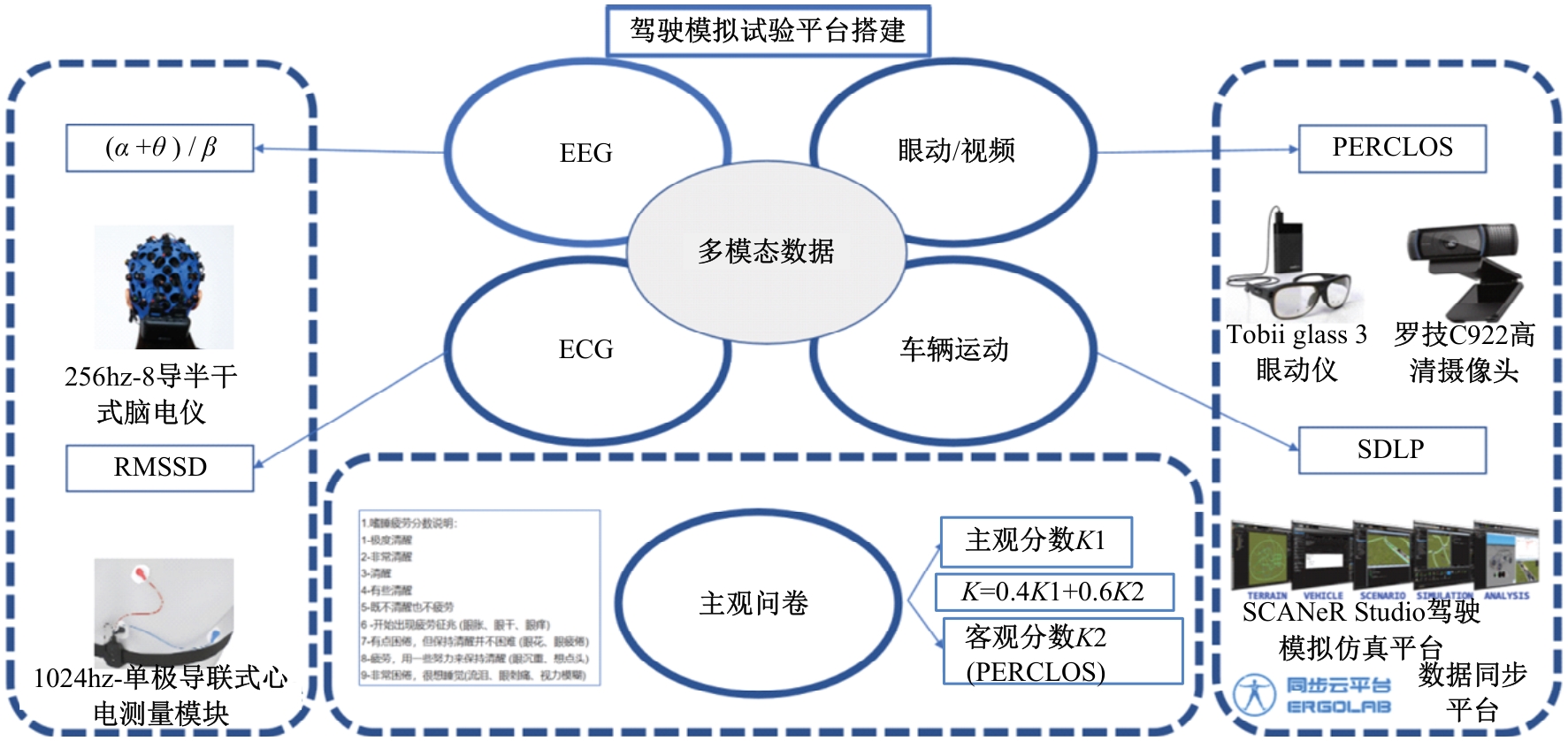
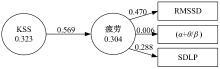
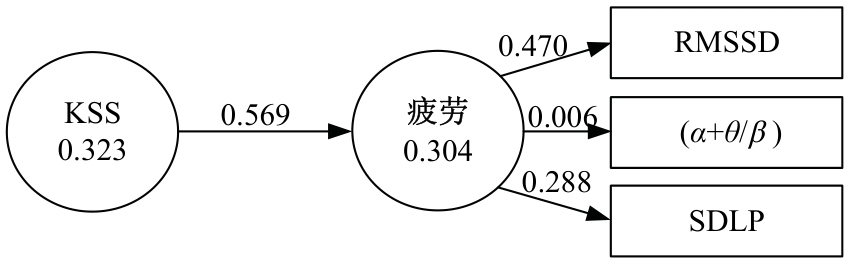
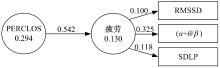
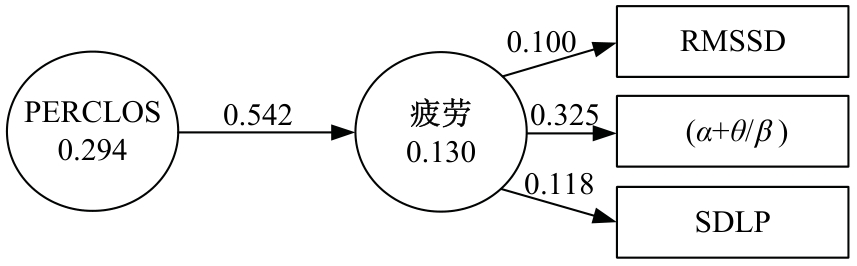
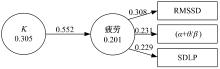
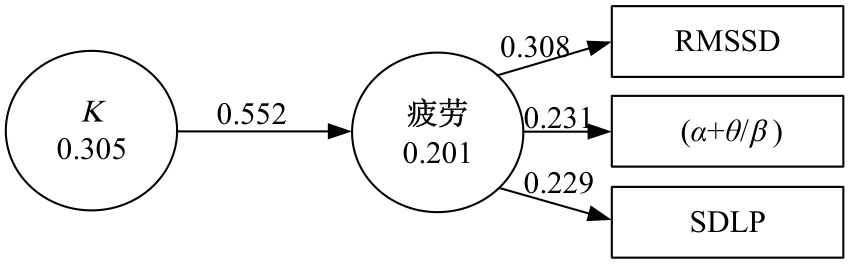
现有的多模态驾驶疲劳研究主要集中于应用层面,缺乏对各模态与驾驶疲劳之间内在机理的深入探讨。本文旨在探究常用数据源(包括脑电图、心电图及车辆运动信息参数)与驾驶疲劳之间的关系,分析这些数据源在驾驶疲劳中的潜在关联性。通过驾驶模拟试验收集了32组数据,并使用卡罗琳斯卡嗜睡量表评估主观疲劳等级,以眼睑闭合度作为客观疲劳等级的指标。3个模态中参与分析的参数分别为心电R峰间期的标准差(RMSSD)、脑电频段功率比(α+θ/β)以及车辆横向偏移的标准差(SDLP)。探索性因子分析结果中,前3个因子的方差解释率超过50%。采用结构方程模型构建了各模态与驾驶疲劳之间的潜在关系模型,分析结果表明:各模态均能在一定程度上解释驾驶疲劳的变异性,其中,RMSSD和SDLP在预测主观疲劳方面具有显著优势,而α+θ/β与客观疲劳表现出密切的关联性。
中图分类号:
- U491

| [1] | 苏瑞芝, 唐巾卜, 阿地力·吐合提, 等. 基于生理参数的驾驶疲劳检测方法综述[J]. 复旦学报: 自然科学版, 2023, 62(4): 419-427. |
| Su Rui-zhi, Tang Jin-bu, Tuheti Adili, et al. Review of driving fatigue detection methods based on physiological parameters[J]. Fudan Journal (Natural Science Edition), 2023, 62(4): 419-427. | |
| [2] | 金立生, 牛清宁, 刘景华, 等. 不同道路线形下驾驶人认知分散状态监测[J]. 吉林大学学报: 工学版, 2014, 44(3): 642-647. |
| Jin Li-sheng, Niu Qing-ning, Liu Jing-hua, et al. Driver cognitive distraction detection in different road lines[J]. Journal of Jilin University(Engineering and Technology Edition),2014,44(3): 642-647. | |
| [3] | 孙一帆, 吴超仲, 张晖, 等. 个体差异对转向指标疲劳辨识能力的影响分析[J]. 中国公路学报, 2020, 33(6): 157-167. |
| Sun Yi-fan, Wu Chao-zhong, Zhang Hui, et al. Analysis of the influence of individual differences on the fatigue identification ability of steering indicators[J]. Chinese Journal of Highways, 2020, 33 (6): 157-167. | |
| [4] | Wang Y, Liu X, Zhang Y, et al. Driving fatigue detection based on EEG signal[C]∥Fifth International Conference on Instrumentation and Measurement, Computer, Communication and Control, Qinhuangdao, China, 2015: 715-718. |
| [5] | Lan Z, Zhao J, Liu P, et al. Driving fatigue detection based on fusion of EEG and vehicle motion information[J]. Biomedical Signal Processing and Control, 2024, 92: 106031. |
| [6] | Wang H, Dragomir A, Abbasi N I, et al. A novel real-time driving fatigue detection system based on wireless dry EEG[J]. Cognitive Neurodynamics, 2018, 12(4): 365-376. |
| [7] | Chen J, Wang H, Wang Q, et al. Exploring the fatigue affecting electroencephalography based functional brain networks during real driving in young males [J]. Neuropsychologia, 2019, 129: 200-211. |
| [8] | Harvy J, Bezerianos A, Li J. Reliability of EEG measures in driving fatigue[J]. IEEE Transactions on Neural Systems and Rehabilitation Engineering, 2022, 30: 2743-2753. |
| [9] | Van R C M, Kollee L A, Hopman J C, et al. Heart rate variability[J]. Annals of Internal Medicine, 1993, 118(6): 436-447. |
| [10] | Bhardwaj R, Natrajan P, Balasubramanian V. Study to determine the effectiveness of deep learning classifiers for ECG based driver fatigue classification[C]∥Proceedings of the IEEE 13th International Conference on Industrial and Information Systems, Rupnagar, India, 2018: 98-102.. |
| [11] | Zhang X, Wang X, Yang X, et al. Driver drowsiness detection using mixed-effect ordered logit model considering time cumulative effect[J]. Analytic Methods in Accident Research, 2020, 26: 100114. |
| [12] | Hu X, Lodewijks G. Exploration of the effects of task-related fatigue on eye-motion features and its value in improving driver fatigue-related technology[J]. Transportation Research Part F: Traffic Psychology and Behaviour, 2021, 80: 150-171. |
| [13] | Zhang H, Ni D, Ding N, et al. Structural analysis of driver fatigue behavior: a systematic review[J]. Transportation Research Interdisciplinary Perspectives, 2023, 21: 100865. |
| [14] | Srinivasan A G, Smith S S, Pattinson C L, et al. Heart rate variability as an indicator of fatigue: a structural equation model approach[J]. Transportation Research Part F: Traffic Psychology and Behaviour, 2024, 103: 420-429. |
| [1] | 张文会,叶梅茹,席聪,宋子文. 混合交通流环境下车辆编队与碳排放特性[J]. 吉林大学学报(工学版), 2026, 56(2): 416-430. |
| [2] | 潘义勇,曹天宇,刘宇. 随机交通网络约束最可靠路径乘子交替方向法[J]. 吉林大学学报(工学版), 2026, 56(2): 455-463. |
| [3] | 慈玉生,黄轶康. 基于文献计量的交叉口车路协同研究综述[J]. 吉林大学学报(工学版), 2026, 56(2): 313-332. |
| [4] | 马壮林,毕宇明,周备,邓亚娟,兆雪. 公交换乘优惠政策下居民换乘意向的异质性分析[J]. 吉林大学学报(工学版), 2026, 56(1): 158-169. |
| [5] | 郭艳萍,高云,周建慧. 基于链路状态的卫星通信多模态动态拥塞控制算法[J]. 吉林大学学报(工学版), 2026, 56(1): 257-264. |
| [6] | 曲昭伟,王铭阳,王喆,宋现敏,张云翔,黄镜尘. 基于自动驾驶模块化车辆主辅功能分配的公交自适应调度方法[J]. 吉林大学学报(工学版), 2025, 55(9): 2946-2957. |
| [7] | 王琳虹,刘宇阳,刘子昱,鹿应佳,张宇恒,黄桂树. 基于YOLOv5的轻量化桥梁缺陷识别[J]. 吉林大学学报(工学版), 2025, 55(9): 2958-2968. |
| [8] | 张云翔,宋现敏,谢渝,湛天舒. 基于用户满意度的停车预约服务智能体行为仿真[J]. 吉林大学学报(工学版), 2025, 55(9): 2978-2984. |
| [9] | 穆长儒,徐亮,程国柱. 基于能量合理分配的外包U型钢-混凝土组合护栏防撞性能[J]. 吉林大学学报(工学版), 2025, 55(8): 2669-2680. |
| [10] | 刘元宁,王星喆,黄子彧,张家晨,刘震. 基于多模态数据融合的胃癌患者生存预测模型[J]. 吉林大学学报(工学版), 2025, 55(8): 2693-2702. |
| [11] | 李艳波,汪静远,陈圆媛,程绍峰,吕浩楠,陈俊硕. 面向高速公路服务区自洽能源系统的RAMS评价方法[J]. 吉林大学学报(工学版), 2025, 55(7): 2243-2250. |
| [12] | 柴树山,周志强,李海涛,徐炅旸. 基于图时空模式学习网络的路网实时交通事件自动检测方法[J]. 吉林大学学报(工学版), 2025, 55(7): 2145-2161. |
| [13] | 于江波,翁剑成,林鹏飞,孙宇星,柴娇龙. 基于混合Transformer的对外客运枢纽抵站客流预测模型[J]. 吉林大学学报(工学版), 2025, 55(7): 2251-2259. |
| [14] | 戢晓峰,邓若凡,乔新,关昊天. 建成环境对共享单车时间集聚模式的非线性影响[J]. 吉林大学学报(工学版), 2025, 55(7): 2233-2242. |
| [15] | 闫晟煜,程铭杰,田宏策,王洪瑀,周永恒,马博浩. 封闭式景区纯电动客车调度方法[J]. 吉林大学学报(工学版), 2025, 55(6): 1984-1993. |
|
||