吉林大学学报(工学版) ›› 2026, Vol. 56 ›› Issue (1): 231-238.doi: 10.13229/j.cnki.jdxbgxb.20241174
软注意力掩码嵌入下中文命名实体识别算法
王秀慧1( ),徐永波2
- 1.山西大同大学 计算机与网络工程学院,山西 大同 037009
2.河南大学 人工智能学院,郑州 450046
Chinese named entity recognition algorithm with soft attention mask embedding
Xiu-hui WANG1(),Yong-bo XU2
- 1.School of Computer and Network Engineering,Shanxi Datong University,Datong 037009,China
2.College of Artificial Intelligence,Henan University,Zhengzhou 450046,China
摘要:
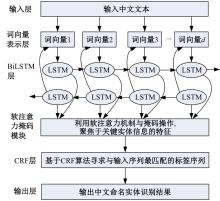
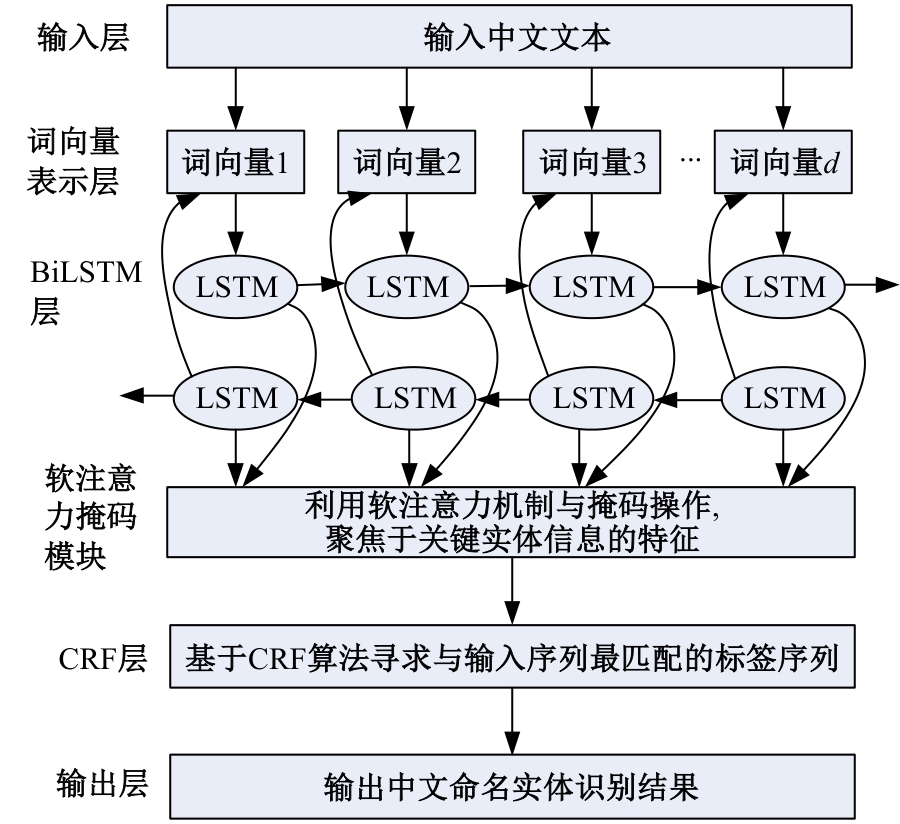
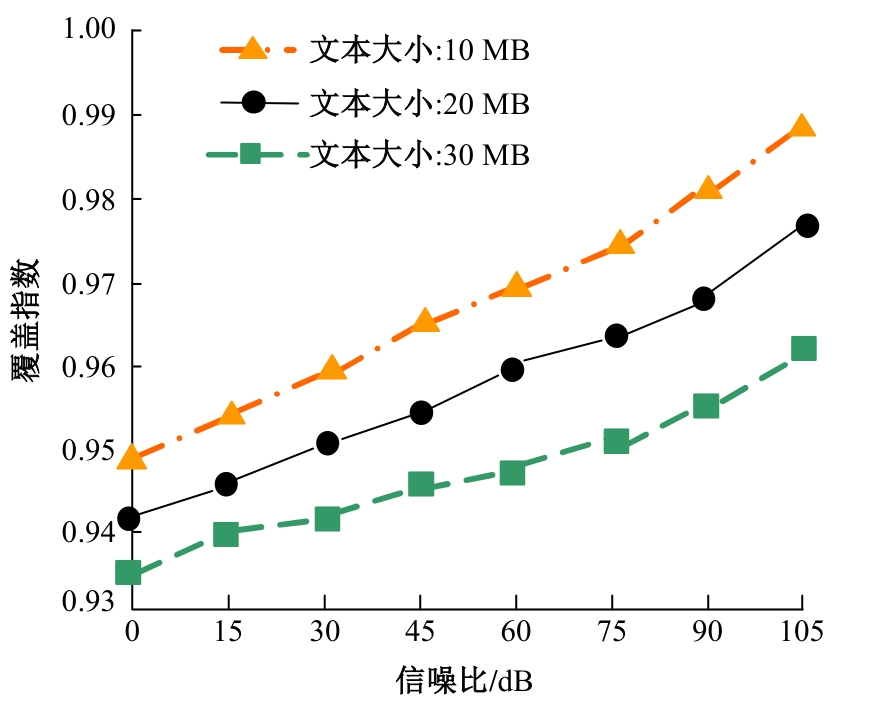
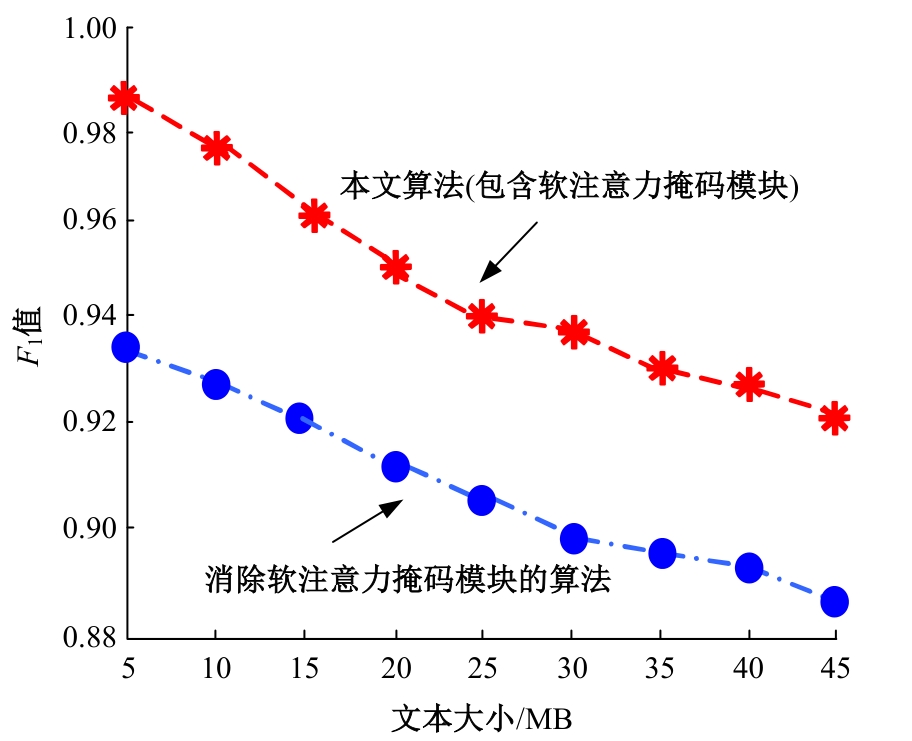
中文词汇的语义存在一定的模糊性,在中文文本中,存在一些与命名实体识别相关性较低的特征,同一个词汇在不同语境中具有不同的含义,不同的词汇和短语对命名实体的识别具有不同的贡献度,若不进行加权或掩码操作,这些特征则会干扰模型的识别准确率。为此,本文提出一种软注意力掩码嵌入的中文命名实体识别(CNER)算法。首先,建立多层次CNER模型,在模型的词向量表示层,借助jieba技术对输入层传递过来的中文文本进行分词处理,并利用Word2Vec方法获取各词汇的词向量,形成词向量序列。其次,在BiLSTM层对词向量序列进行双向长短期记忆处理,得到每个词向量对应的融合了前后文信息的特征向量。再次,在BiLSTM层后嵌入一个软注意力掩码模块,利用该模块的软注意力机制对BiLSTM层输出的特征向量进行加权和掩码操作,关注对实体识别有重要贡献的特征,去除和抑制不重要的特征,提高识别的精度。最后,在条件随机场(CRF)层对经过软注意力掩码模块处理后的特征向量进行标签标注与解码,从而得到最佳实体标签序列,该序列即为中文命名实体识别结果。实验结果表明,该算法可以精准识别中文命名实体,在实体标签标注覆盖性和F1值方面均有较好的表现。
中图分类号:
- TP391.1

| [1] | 王颖洁, 张程烨, 白凤波, 等. 中文命名实体识别研究综述[J]. 计算机科学与探索, 2023, 17(2): 324-341. |
| Wang Ying-jie, Zhang Cheng-ye, Bai Feng-bo, et al. Review of Chinese named entity recognition research[J]. Journal of Frontiers of Computer Science & Technology, 2023, 17(2): 324-341. | |
| [2] | 赵继贵, 钱育蓉, 王魁, 等. 中文命名实体识别研究综述[J]. 计算机工程与应用, 2024, 60(1): 15-27. |
| Zhao Ji-gui, Qian Yu-rong, Wang Kui, et al. Survey of Chinese named entity recognition research[J]. Computer Engineering and Applications, 2024, 60(1): 15-27. | |
| [3] | 卢青华, 袁丽娜. 基于组合神经网络的软件命名实体识别仿真[J]. 计算机仿真, 2023, 40(1): 489-492, 509. |
| Lu Qing-hua, Yuan li-na. Software named entity recognition simulation based on combined neural network[J]. Computer Simulation, 2023, 40(1): 489-492, 509. | |
| [4] | 康怡琳, 孙璐冰, 朱容波, 等. 深度学习中文命名实体识别研究综述[J]. 华中科技大学学报: 自然科学版, 2022, 50(11): 44-53. |
| Kang Yi-lin, Sun Lu-bing, Zhu Rong-bo, et al. Survey on Chinese named entity recognition with deep learning [J]. Journal of Huazhong University of Science and Technology (Natural Science Edition), 2022, 50(11): 44-53. | |
| [5] | 张昀, 黄橙, 张玉瑶, 等. 面向少量标注数据的中文命名实体识别[J]. 中文信息学报, 2023, 37(3): 101-111. |
| Zhang Yun, Huang Cheng, Zhang Yu-yao, et al. Chinese named entity recognition with few labeled data[J]. Journal of Chinese Information Processing, 2023, 37(3): 101-111. | |
| [6] | 李健, 熊琦, 胡雅婷, 等. 基于Transformer和隐马尔科夫模型的中文命名实体识别方法[J]. 吉林大学学报: 工学版, 2023, 53(5): 1427-1434. |
| Li Jian, Xiong Qi, Hu Ya-ting, et al. Chinese named entity recognition method based on Transformer and hidden Markov model [J]. Journal of Jilin University (Engineering and Technology Edition), 2023, 53(5): 1427-1434. | |
| [7] | Jeon K, Lee G, Yang S, et al. Named entity recognition of building construction defect information from text with linguistic noise[J]. Automation in Construction, 2022, 143: No.104543. |
| [8] | 方红, 苏铭, 冯一铂, 等. 结合gazetteers和句法依存树的中文命名实体识别[J]. 计算机工程与应用, 2022, 58(18): 227-232. |
| Fang Hong, Su Ming, Feng Yi-bo, et al. Chinese named entity recognition combined with gazetteers and syntactic dependency tree[J]. Computer Engineering and Applications, 2022, 58(18): 227-232. | |
| [9] | 廖梦, 贾真, 李天瑞. 基于标签信息融合与多任务学习的中文命名实体识别[J]. 计算机科学, 2024, 51(3): 198-204. |
| Liao Meng, Jia Zhen, Li Tian-rui. Chinese named entity recognition based on label information fusion and Multi-task learning[J]. Computer Science, 2024, 51(3): 198-204. | |
| [10] | 陈威达, 王林飞, 陶大鹏. 融合软注意力掩码嵌入的场景文本识别方法[J]. 中国图象图形学报, 2024,29(5): 1381-1391. |
| Chen Wei-da, Wang Lin-fei, Tao Da-peng. SAME-net:scene text recognition method based on soft attention mask embedding[J]. Journal of Image and Graphics, 2024, 29(5): 1381-1391. | |
| [11] | 廖列法, 谢树松. 基于注意力机制特征融合的中文命名实体识别[J]. 计算机工程, 2023, 49(4): 256-262. |
| Liao Lie-fa, Xie Shu-song. Chinese named entity recognition based on attention mechanism feature fusion[J]. Computer Engineering, 2023, 49(4): 256-262. | |
| [12] | 占文韬, 吴晓鸰, 凌捷. 基于多窗口注意力机制的中文命名实体识别[J]. 小型微型计算机系统, 2024,45(6): 1325-1330. |
| Zhan Wen-tao, Wu Xiao-ling, Ling Jie. Chinese named entity recognition based on multi-window attention mechanism[J]. Journal of Chinese Computer Systems, 2024, 45(6): 1325-1330. | |
| [13] | 赵丹丹, 黄德根, 孟佳娜, 等. 多头注意力与字词融合的中文命名实体识别[J]. 计算机工程与应用,2022, 58(7): 142-149. |
| Zhao Dan-dan, Huang De-gen, Meng Jia-na, et al. Chinese named entity recognition by integrating multi-heads attention mechanism and character and words fusion[J]. Computer Engineering and Applications, 2022, 58(7): 142-149. | |
| [14] | 李军怀, 陈苗苗, 王怀军, 等. 基于ALBERT-BGRU-CRF的中文命名实体识别方法[J]. 计算机工程, 2022, 48(6): 89-94, 106. |
| Li Jun-huai, Chen Miao-miao, Wang Huai-jun, et al. Chinese named entity recognition method based on ALBERT-BGRU-CRF[J]. Computer Engineering, 2022, 48(6): 89-94, 106. | |
| [15] | 张栋, 陈文亮. 基于上下文相关字向量的中文命名实体识别[J]. 计算机科学, 2021, 48(3): 233-238. |
| Zhang Dong, Chen Wen-liang. Chinese named entity recognition based on contextualized char embeddings[J]. Computer Science, 2021, 48(3): 233-238. |
| [1] | 张磊,焦晶,李勃昕,周延杰. 融合机器学习和深度学习的大容量半结构化数据抽取算法[J]. 吉林大学学报(工学版), 2024, 54(9): 2631-2637. |
| [2] | 车翔玖,徐欢,潘明阳,刘全乐. 生物医学命名实体识别的两阶段学习算法[J]. 吉林大学学报(工学版), 2023, 53(8): 2380-2387. |
| [3] | 李健,熊琦,胡雅婷,刘孔宇. 基于Transformer和隐马尔科夫模型的中文命名实体识别方法[J]. 吉林大学学报(工学版), 2023, 53(5): 1427-1434. |
| [4] | 郭晓然,罗平,王维兰. 基于Transformer编码器的中文命名实体识别[J]. 吉林大学学报(工学版), 2021, 51(3): 989-995. |
| [5] | 燕杨, 文敦伟, 王云吉, 王珂. 基于层叠条件随机场的中文病历命名实体识别[J]. 吉林大学学报(工学版), 2014, 44(6): 1843-1848. |
|
||