吉林大学学报(工学版) ›› 2025, Vol. 55 ›› Issue (9): 2969-2977.doi: 10.13229/j.cnki.jdxbgxb.20240473
• 交通运输工程·土木工程 • 上一篇
积水条件下城市路网性能恢复决策优化
贾洪飞1( ),庄博1,罗清玉1(),刘玲2,黄秋阳1
- 1.吉林大学 交通学院,长春 130022
2.长春建筑学院 土木工程学院,长春 130607
Decision optimization of urban road network performance restoration under waterlogged conditions
Hong-fei JIA1(),Bo ZHUANG1,Qing-yu LUO1(),Ling LIU2,Qiu-yang HUANG1
- 1.College of Transportation,Jilin University,Changchun 130022,China
2.College of Civil Engineering,Changchun University of Architecture and Civil Engineering,Changchun 130607,China
摘要:
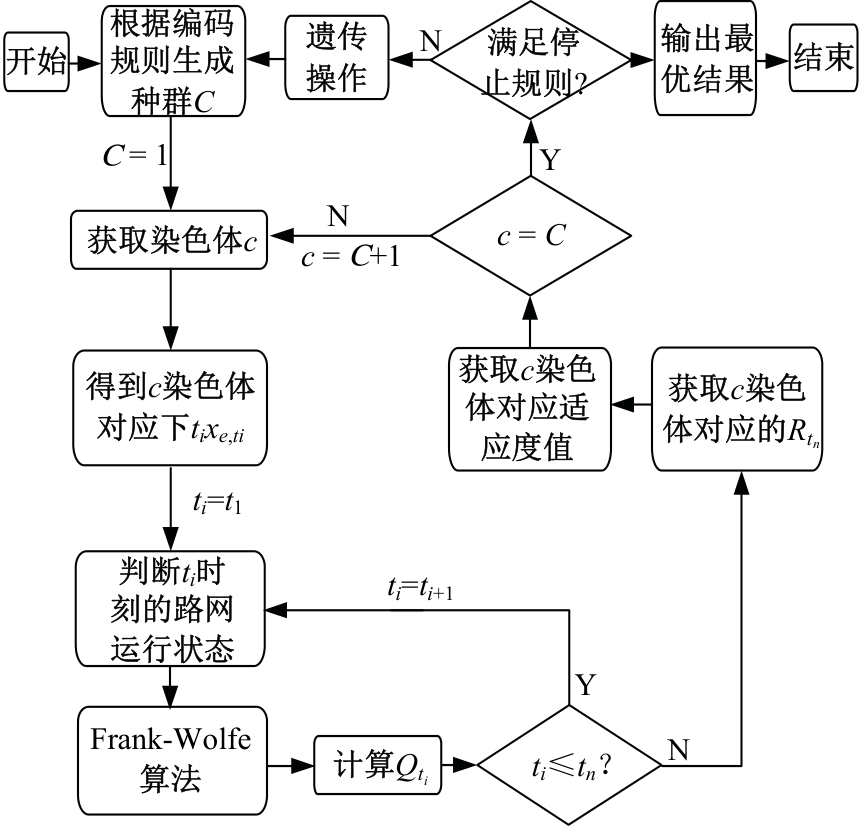
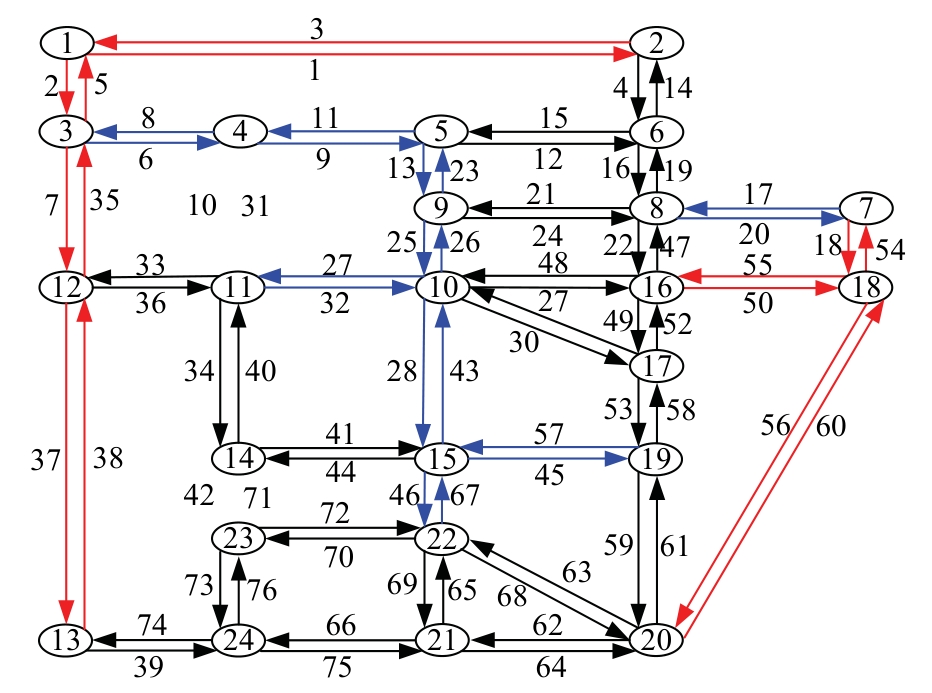
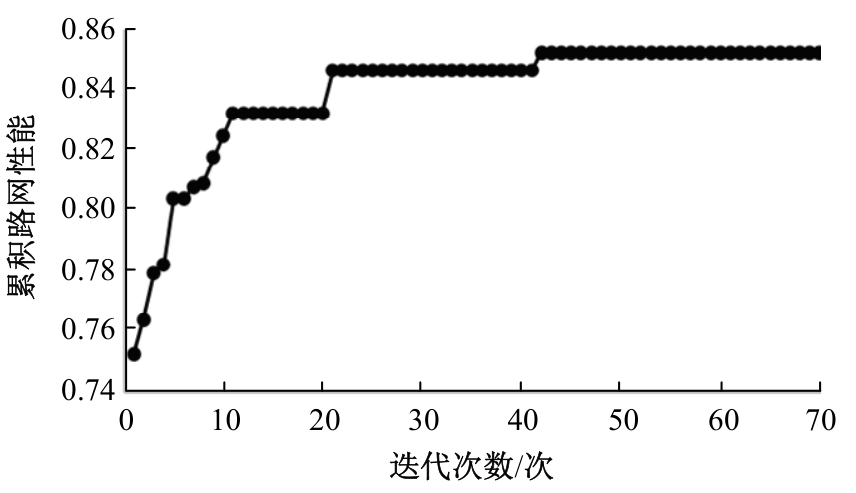
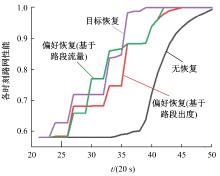
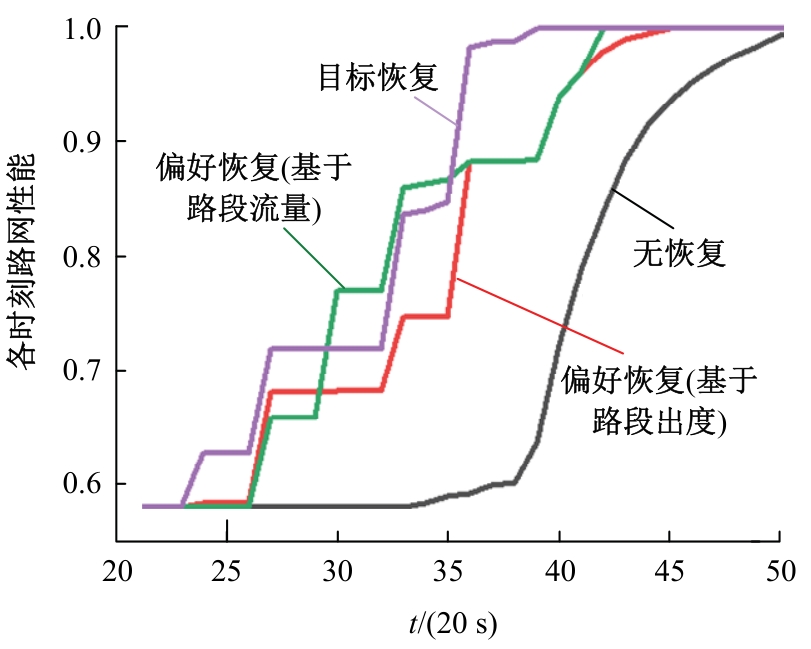
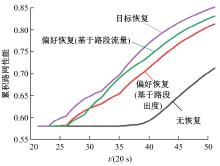
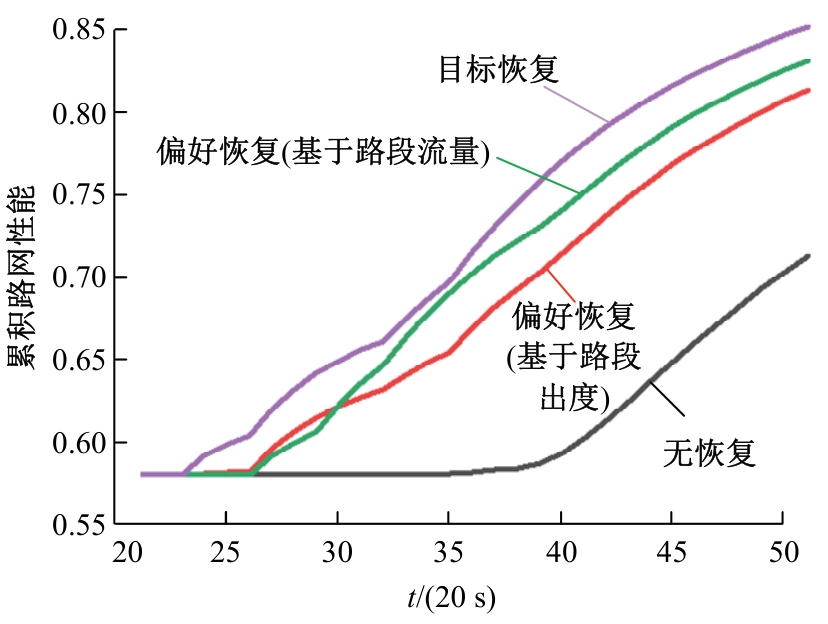
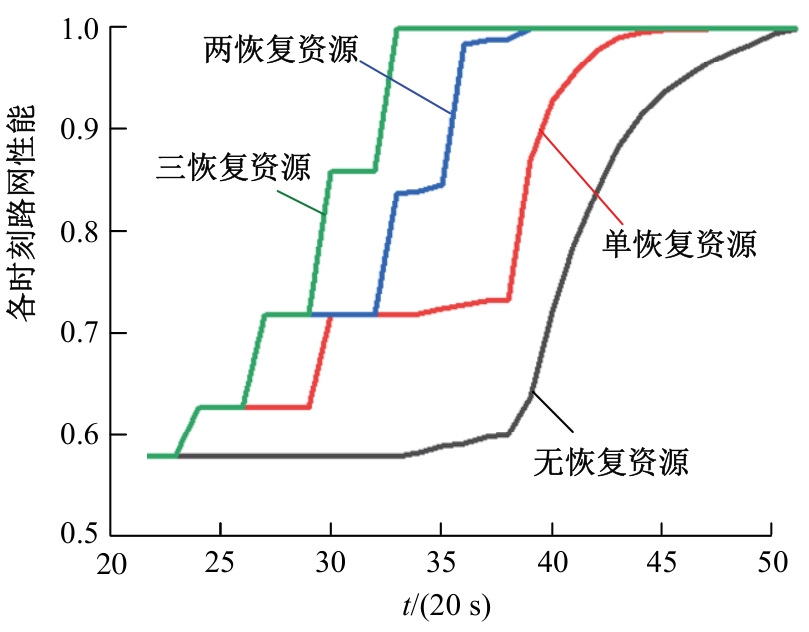
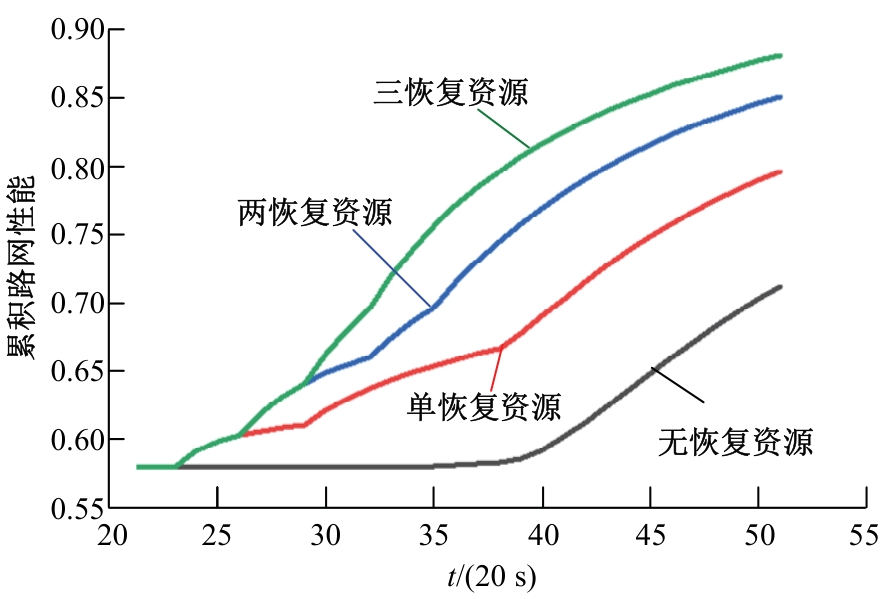
为探究积水条件下最优的路网恢复决策方案,考虑了积水深度的动态变化,构建了城市三车道路段元胞自动机仿真模型。通过改进车辆换道与位置更新规则,描述积水条件下的驾驶行为变化,并仿真积水对路段通行能力的影响;分析积水导致车辆在部分路段通行受限时交通流在路网上的分布状态变化,建立以累积路网性能指标最大化为目标的恢复决策优化模型,并采用遗传算法与Frank-Wolfe算法相结合的方式求解。选取Sioux-Falls网络对模型进行验证,结果表明:求解模型得到的恢复策略对路网性能的恢复效果优于传统基于出度和基于流量的经验恢复策略,提升程度分别为3.84%、2.02%;路段恢复顺序不仅要考虑路段的受损程度,还要考虑路网的交通需求分布;恢复资源的增加会显著缩短路网的恢复时间,但边际效用逐渐降低。
中图分类号:
- U491

| [1] | Su B, Huang H, Li Y. Integrated simulation method for waterlogging and traffic congestion under urban rainstorms[J]. Natural Hazards, 2016, 81(1): 23-40. |
| [2] | Yin J, Yu D, Yin Z, et al. Evaluating the impact and risk of pluvial flash flood on intra-urban road network: A case study in the city center of Shanghai, China[J]. Journal of Hydrology, 2016, 537: 138-145. |
| [3] | Zhang M L, Xu M H, Wang Z L,et al. Assessment of the vulnerability of road networks to urban waterlogging based on a coupled hydrodynamic model[J]. Journal of Hydrology, 2021, 603: No.127105. |
| [4] | 陈海然. 海绵化改造对城市内涝及交通的影响研究——以东莞市中心片区为例[D]. 广州: 华南理工大学土木与交通学院, 2020. |
| Chen Hai-ran. Research on the impact of urban waterlogging and traffic under the concept of sponge city—a case study in downtown district of Dongguan[D]. Guangzhou: School of Civil Engineering and Transportation, South China University of Technology, 2020. | |
| [5] | Liao T Y, Hu T Y, Ko Y N. A resilience optimization model for transportation networks under disasters[J]. Natural Hazards, 2018, 93(1): 469-489. |
| [6] | Zhao T, Zhang Y. Transportation infrastructure restoration optimization considering mobility and accessibility in resilience measures[J]. Transportation Research Part C: Emerging Technologies, 2020, 117: No.102700. |
| [7] | Wu Y, Xu Z, Liang C, et al. Post-earthquake traffic simulation considering road traversability[J]. Sustainability, 2022, 14(18): No.11145. |
| [8] | Pan X, Dang Y, Wang H, et al. Resilience model and recovery strategy of transportation network based on travel OD-grid analysis[J]. Reliability Engineering & System Safety, 2022, 223: No.108483. |
| [9] | 杜磊, 杨晓宽. 不同道路积水情况对交通影响及造成损失的研究[C]∥科技创新绿色交通——第十一次全国城市道路交通学术会议论文集. 北京:中国土木工程学会,2011: 389-393. |
| [10] | 王永明, 周磊山, 吕永波. 基于元胞自动机交通流模型的车辆换道规则[J]. 中国公路学报, 2008(1): 89-93. |
| Wang Yong-ming, Zhou Lei-shan, Lv Yong-bo. Lane changing rules based on cellular automaton traffic flow model[J]. China Journal of Highway and Transport, 2008(1): 89-93. | |
| [11] | Nagel K, Schreckenberg M. A cellular automaton model for freeway traffic[J]. Journal de Physique I, 1992, 2(12): 2221-2229. |
| [12] | Nagurney A, Qiang Q. A network efficiency measure with application to critical infrastructure networks[J]. Journal of Global Optimization, 2008, 40(1-3): 261-275. |
| [13] | 尹文君, 刘民, 吴澄. 带工艺约束并行机调度问题的一种新的遗传算法[J]. 电子学报, 2001(11): 1482-1485. |
| Yin Wen-jun, Liu Min, Wu Cheng. A new genetic algorithm for parallel machine scheduling with process constraint[J]. Acta Electronica Sinica, 2001(11): 1482-1485. |
| [1] | 何庆龄,裴玉龙,侯琳,刘静,潘胜. 混合策略改进WOA-BiLSTM的快速路出口匝道车速预测[J]. 吉林大学学报(工学版), 2025, 55(6): 2038-2049. |
| [2] | 徐慧智,郝东升,徐小婷,蒋时森. 基于深度学习的高速公路小目标检测算法[J]. 吉林大学学报(工学版), 2025, 55(6): 2003-2014. |
| [3] | 岳昊,常笑,刘建业,曲秋莳. 引入车辆窗的定制公交线路优化[J]. 吉林大学学报(工学版), 2025, 55(4): 1266-1274. |
| [4] | 孟祥海,王国锐,张明扬,田毕江. 基于选择集成的山区高速事故预测模型[J]. 吉林大学学报(工学版), 2025, 55(4): 1298-1306. |
| [5] | 吴文静,邓淳淳,贾洪飞,孙舒航. 内涝影响下路网畅通可靠度评估及关键路段识别[J]. 吉林大学学报(工学版), 2025, 55(4): 1250-1257. |
| [6] | 李昱燃,汪飞,朱才华,韩飞,李岩. 污染天气居民通勤模式选择影响因素的链式效用[J]. 吉林大学学报(工学版), 2025, 55(2): 577-590. |
| [7] | 高天洋,胡大伟,姜瑞森,吴雪,刘慧甜. 基于模块化车辆的区域灵活接驳公交线路优化[J]. 吉林大学学报(工学版), 2025, 55(2): 537-545. |
| [8] | 马书红,张俊杰,陈西芳,廖国美. 利用出租车时序数据识别城市功能区[J]. 吉林大学学报(工学版), 2025, 55(2): 603-613. |
| [9] | 姚荣涵,祁文彦,胡宏宇,杜筱婧,乔延峰,王立冰. 考虑公交-合乘车道的多车道元胞自动机模型[J]. 吉林大学学报(工学版), 2025, 55(1): 162-174. |
| [10] | 徐慧智,蒋时森,王秀青,陈爽. 基于深度学习的车载图像车辆目标检测和测距[J]. 吉林大学学报(工学版), 2025, 55(1): 185-197. |
| [11] | 郑长江,陶童统,陈志超. 基于流量可调重分配的级联失效模型[J]. 吉林大学学报(工学版), 2024, 54(9): 2441-2450. |
| [12] | 闫云娟,查伟雄,石俊刚,严丽平. 基于随机充电需求的充电桩优化双层模型[J]. 吉林大学学报(工学版), 2024, 54(8): 2238-2244. |
| [13] | 温晓岳,钱国敏,孔桦桦,缪月洁,王殿海. TrafficPro:一种针对城市信控路网的路段速度预测框架[J]. 吉林大学学报(工学版), 2024, 54(8): 2214-2222. |
| [14] | 曲大义,刘浩敏,杨子奕,戴守晨. 基于车路协同的交通瓶颈路段车流动态分配机制及模型[J]. 吉林大学学报(工学版), 2024, 54(8): 2187-2196. |
| [15] | 陈桂珍,程慧婷,朱才华,李昱燃,李岩. 考虑驾驶员生理信息的城市交叉口风险评估方法[J]. 吉林大学学报(工学版), 2024, 54(5): 1277-1284. |
|
||