吉林大学学报(工学版) ›› 2025, Vol. 55 ›› Issue (7): 2320-2332.doi: 10.13229/j.cnki.jdxbgxb.20231197
• 交通运输工程·土木工程 • 上一篇
基于变分模态分解和极端梯度提升的公路边坡位移预测
龙志友1,2( ),万昭龙1,2,董是1,2(),杨超3,刘肖扬4
- 1.长安大学 运输工程学院,西安 710064
2.道路基础设施数字化教育部工程研究中心,西安 710064
3.陕西高速公路工程试验检测有限公司,西安 710086
4.长安大学 公路学院,西安 710064
Displacement prediction of highway slope based on variational mode decomposition and extreme gradient boosting
Zhi-you LONG1,2(),Zhao-long WAN1,2,Shi DONG1,2(),Chao YANG3,Xiao-yang LIU4
- 1.School of Transportation Engineering,Chang'an University,Xi'an 710064,China
2.Engineering Research Center of Highway Infrastructure Digitalization,Ministry of Education,Xi'an 710064,China
3.Shaanxi Expressway Engineering Testing Inspection & Testing Co. ,Ltd. ,Xi'an 710086,China
4.School of Highway,Chang'an University,Xi'an 710064,China
摘要:
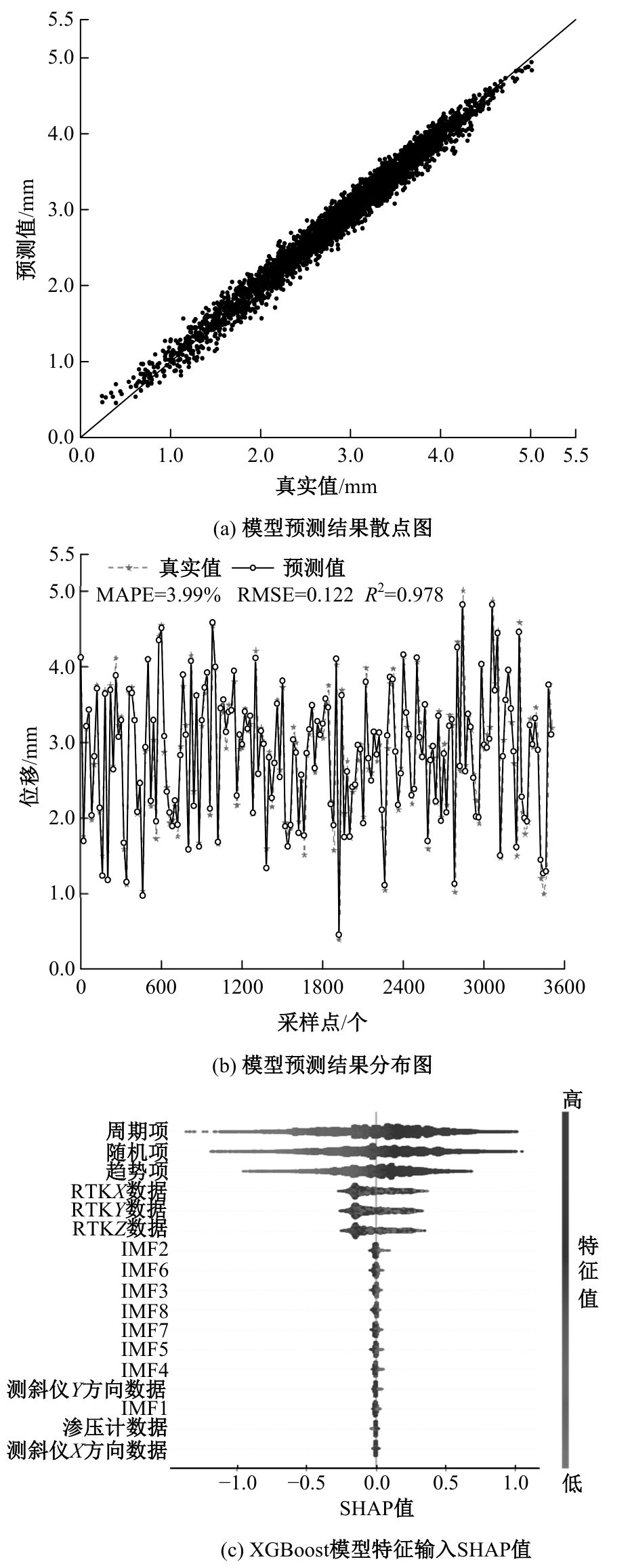
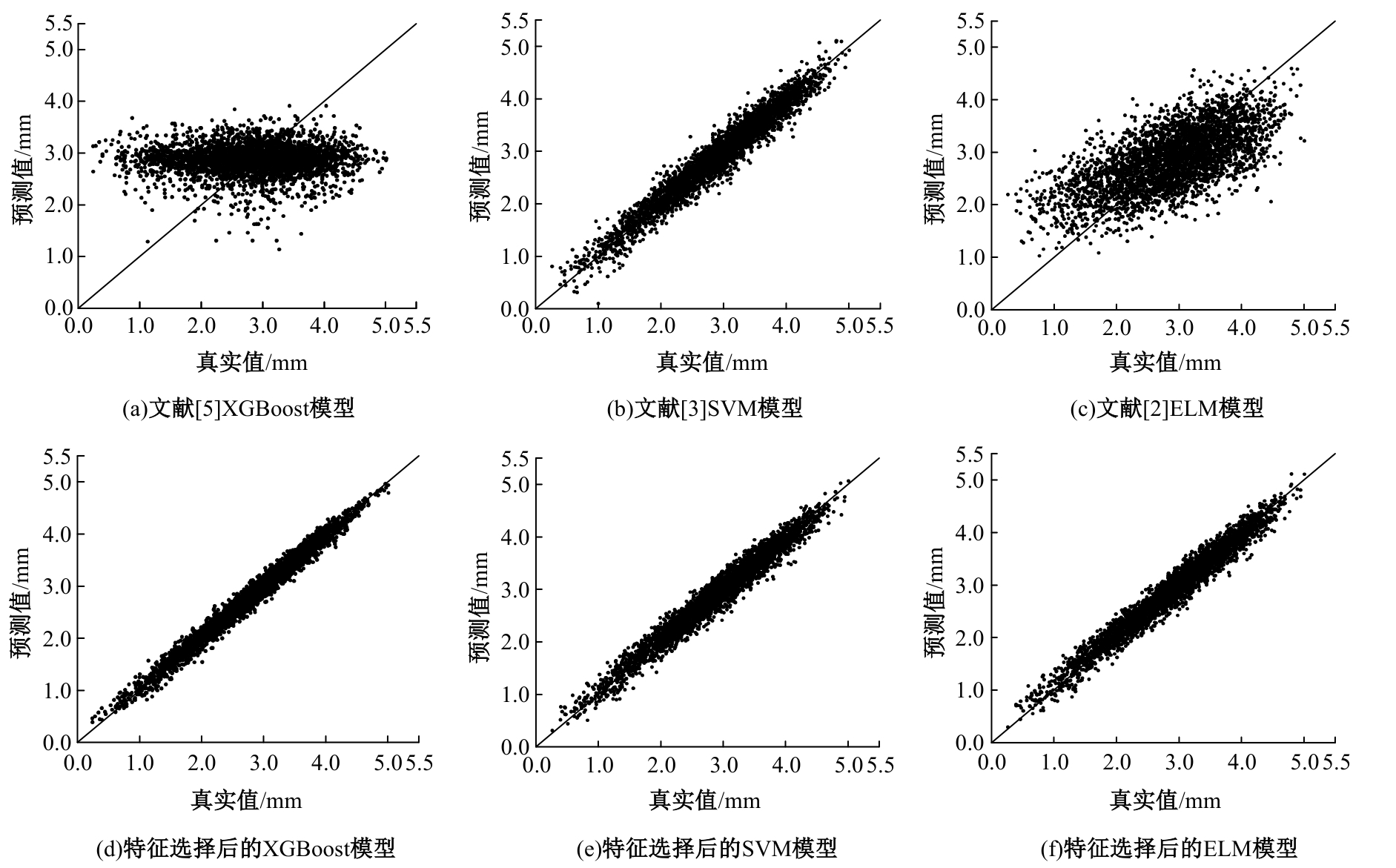
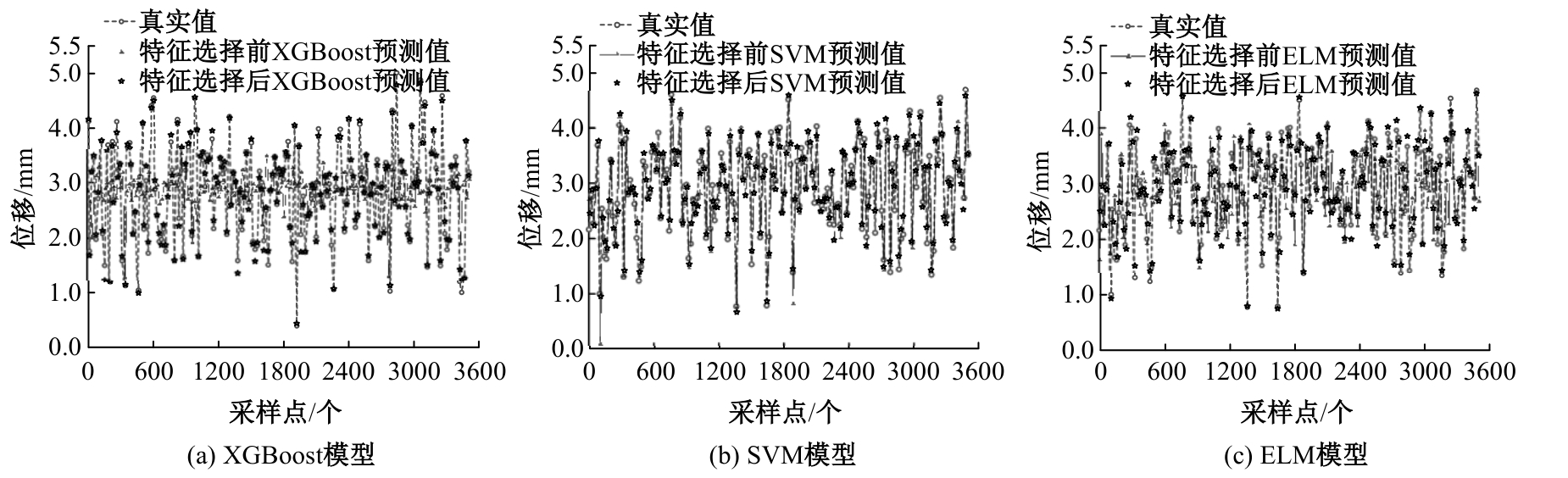
针对公路边坡位移监测数据具有非线性、噪声多、不平稳的特点,导致边坡位移预测精度不足的缺点,提出了优化变分模态分解(VMD)和极端梯度提升(XGBoost)的回归预测算法,用于公路边坡位移数据的处理和预测。首先,利用粒子群算法寻优找到VMD的最优分解层数及惩罚因子,进而对边坡位移数据进行VMD,得到趋势位移、周期性位移和随机波动性位移特征;其次,加入其他监测数据作为回归预测特征变量,并利用SHAP对输入特征变量进行重要度解释,筛选出重要特征后输入XGBoost模型进行预测,同时利用网格搜索确定XGBoost模型最优参数;最后,基于实际案例分析,验证本文提出的边坡位移分解方法和回归预测模型的适用性和鲁棒性。结果表明:在本文的实际案例中,对于边坡位移数据分解,VMD较经验模态分解(EMD)和集合经验模态分解(EEMD)适用性更强;对于边坡位移预测,XGBoost预测精度较极限学习机(ELM)和支持向量机(SVM)分别提升4.37%和0.41%。本文回归模型具有较高的预测精度和较强的鲁棒性。同时,研究表明,根据VMD提取的边坡位移特征变量(周期性位移、随机波动性位移和趋势位移)对边坡位移预测的SHAP重要性程度较高。本文模型可为公路边坡位移预测及安全预警研究提供一定思路。
中图分类号:
- U41

| [1] | 张勤, 白正伟, 黄观文, 等. GNSS滑坡监测预警技术进展[J]. 测绘学报, 2022, 51(10): 1985-2000. |
| Zhang Qin, Bai Zheng-wei, Huang Guan-wen, et al. Review of GNSS landslide monitoring and early warning[J]. Acta Geodaetica et Cartographica Sinica, 2022, 51(10): 1985-2000. | |
| [2] | 李博, 李欣, 芮红, 等. 基于变分模态分解和灰狼优化极限学习机的隧道口边坡位移预测[J]. 吉林大学学报:工学版, 2023, 53(6): 1853-1860. |
| Li Bo, Li Xin, Rui Hong, et al. Displacement prediction of tunnel entrance slope based on variational modal decomposition and grey wolf optimized extreme learning machine[J]. Journal of Jilin University(Engineering and Technology Edition), 2023, 53(6): 1853-1860. | |
| [3] | 李建新, 刘小生, 肖钢, 等. 基于PSR-WSVM模型的边坡位移预测[J]. 大地测量与地球动力学, 2020, 40(6): 577-580. |
| Li Jian-xin, Liu Xiao-sheng, Xiao Gang, et al. Slope displacement prediction based on PSR-WSVM model[J]. Journal of Geodesy and Geodynamics, 2020, 40(6): 577-580. | |
| [4] | 张凯, 张科. 基于LightGBM算法的边坡稳定性预测研究[J]. 中国安全科学学报, 2022, 32(7): 113-120. |
| Zhang Kai, Zhang Ke. Prediction study on slope stability based on LightGBM algorithm[J]. China Safety Science Journal, 2022, 32(7): 113-120. | |
| [5] | 黄智杰, 沈佳, 简文彬, 等. 基于XGBoost模型的降雨诱发阶跃型滑坡位移预测[J]. 自然灾害学报, 2023, 32(2): 217-226. |
| Huang Zhi-jie, Shen Jia, Jian Wen-bin, et al. Displacement prediction of rainfall-induced step-like landslide based on XGBoost model[J]. Journal of Natural Disasters, 2023, 32(2): 217-226. | |
| [6] | Lundberg S M, Lee S I. A unified approach to interpreting model predictions[C]∥Conference and Workshop on Neural Information Processing Systems. California, Long Beach,USA, 2017: 4765-4774. |
| [7] | 周超, 殷坤龙, 黄发明. 混沌序列WA-ELM耦合模型在滑坡位移预测中的应用[J]. 岩土力学, 2015, 36(9): 2674-2680. |
| Zhou Chao, Yin Kun-long, Huang Fa-ming. Application of the chaotic sequence WA-ELM coupling model in landslide displacement prediction[J]. Rock and Soil Mechanics, 2015, 36(9): 2674-2680. | |
| [8] | 任超, 梁月吉, 庞光锋, 等. 经验模态分解和遗传小波神经网络法用于边坡变形预测[J]. 测绘科学技术学报, 2014, 31(6): 551-555. |
| Ren Chao, Liang Yue-ji, Pang Guang-feng, et al. The empirical mode decomposition and genetic algorithm wavelet neural network for slope deformation prediction research[J]. Journal of Geomatics Science and Technology, 2014, 31(6): 551-555. | |
| [9] | 谢博, 施富强, 廖学燕, 等. 边坡位移的EEMD-PSO-ELM模型预测方法[J]. 中国安全科学学报, 2020, 30(3):157-162. |
| Xie Bo, Shi Fu-qiang, Liao Xue-yan, et al. Slope displacement prediction method based on EEMD-PSO-ELM model[J]. China Safety Science Journal, 2020, 30(3): 157-162. | |
| [10] | 周福成, 唐贵基, 何玉灵. 基于改进VMD的风电齿轮箱不平衡故障特征提取[J]. 振动与冲击, 2020, 39(5): 170-176. |
| Zhou Fu-cheng, Tang Gui-ji, He Yu-ling. Unbalanced fault feature extraction for wind power gearbox based on improved VMD[J]. Journal of Vibration and Shock, 2020, 39(5): 170-176. | |
| [11] | 蔡艳平, 范宇, 陈万, 等. 改进时频分析和特征融合在内燃机故障诊断中的应用[J]. 中国机械工程, 2020, 31(16): 1901-1911. |
| Cai Yan-ping, Fan Yu, Chen Wan, et al. Applications of improved time-frequency analysis and feature fusion in fault diagnosis of IC engines[J]. China Mechanical Engineering, 2020, 31(16): 1901-1911. | |
| [12] | 唐贵基, 王晓龙. 参数优化变分模态分解方法在滚动轴承早期故障诊断中的应用[J]. 西安交通大学学报, 2015, 49(5): 73-81. |
| Tang Gui-ji, Wang Xiao-long. Parameter optimized variational mode decomposition method with application to incipient fault diagnosis of rolling bearing[J]. Journal of Xi'an Jiaotong University, 2015, 49(5): 73-81. | |
| [13] | Dragomiretskiy K, Zosso D. Variational mode decomposition[J]. IEEE Transactions on Signal Processing, 2014, 62(3): 531-544. |
| [14] | 黄钦, 谭翠, 杨波. 基于XGBoost算法的亚热带地区生态旅游适宜性评价方法研究[J]. 地球信息科学报, 2024, 26(2): 303-317. |
| Huang Qin, Tan Cui, Yang Bo. Research on the evaluation method of ecotourism suitability in subtropical regions based on XGBoost algorithm[J]. Journal of Geo-information Science, 2024, 26(2): 303-317. | |
| [15] | 闫孟婷, 毛玉鑫, 张天遥, 等. 基于SHAP-XGBoost混合模型的梯级水电站流量动态滞时研究[J]. 电力系统保护与控制, 2023, 51(11): 159-167. |
| Yan Meng-ting, Mao Yu-xin, Zhang Tian-yao, et al. Dynamic hysteresis of cascade hydropower station discharge based on SHAP-XGBoost hybrid model[J]. Power System Protection and Control, 2023, 51(11): 159-167. | |
| [16] | 杨川, 林日成, 季建勇, 等. 基于图深度学习与北斗监测的边坡位移预测研究[J]. 工程地质学报, 2024, 32(2): 612-622. |
| Yang Chuan, Lin Ri-cheng, Ji Jian-yong, et al. Slope displacement prediction research based on the graph deep learning and beidou monitoring[J]. Journal of Engineering Geology, 2024, 32(2): 612-622. | |
| [17] | 张俊, 张建群, 钟敏, 等. 基于PSO-VMD-MCKD方法的风机轴承微弱故障诊断[J]. 振动、测试与诊断, 2020, 40(2): 287-296, 418. |
| Zhang Jun, Zhang Jian-qun, Zhong Min, et al. PSO-VMD-MCKD based fault diagnosis for incipient damagein wind turbine rolling bearing[J]. Journal of Vibration, Measurement & Diagnosis, 2020, 40(2): 287-296, 418. | |
| [18] | 赵博超, 马嘉骏, 崔磊, 等. 基于改进VMD-XGBoost-BILSTM组合模型的光伏发电异常检测方法[J]. 计算机工程, 2024, 50(3): 306-316. |
| Zhao Bo-chao, Ma Jia-jun, Cui Lei, et al. Photovoltaic anomaly detection based on improved VMD-XGBoost-BILSTM hybrid model[J]. Computer Engineering, 2024, 50(3): 306-316. | |
| [19] | 徐开心, 戴宁, 汝欣, 等. 基于概率分布和XGBoost决策算法的织机异常数据处理方法[J]. 计算机集成制造系统, 2025, 31(6): 2021-2130. |
| Xu Kai-xin, Dai Ning, Ru Xin, et al. Loom abnormal data processing method based on probability distribution and XGBoost decision algorithm[J]. Computer Integrated Manufacturing Systems, 2025, 31(6): 2021-2130. | |
| [20] | 吴飞, 王鹏程, 杨康. 基于PCA-SSA-XGBoost的车辆驾驶性评估[J]. 吉林大学学报: 工学版, 2025, 55(1): 355-365. |
| Wu Fei, Wang Peng-cheng, Yang Kang. Drivability evaluation model based on PCA-SSA-XGBoost[J]. Journal of Jilin University(Engineering and Technology Edition), 2025, 55(1): 355-365. |
| [1] | 姚康,董侨,陈雪琴,史斌,颜世傲,王翔. 基于相场正则化黏聚区模型的混凝土混合型细观断裂行为[J]. 吉林大学学报(工学版), 2025, 55(7): 2286-2297. |
| [2] | 田耀刚,蒋静,赵成,杨小敏,张军,贾侃. 水性环氧树脂改性高早强砂浆的耐温机制[J]. 吉林大学学报(工学版), 2025, 55(7): 2203-2211. |
| [3] | 杨轸,郑瑞平,巩喆. 路网道路服役性能和交通状态耦合仿真预测[J]. 吉林大学学报(工学版), 2025, 55(6): 1973-1983. |
| [4] | 韦万峰,张洪刚,张仰鹏,杨帆,唐伯明,孔令云. 废胶粉改性沥青改性机理、制备及性能研究进展[J]. 吉林大学学报(工学版), 2025, 55(6): 1834-1853. |
| [5] | 张安顺,付伟,张军辉,高峰. 长沙压实黏土剪切特性及应力-应变关系表征[J]. 吉林大学学报(工学版), 2025, 55(5): 1604-1616. |
| [6] | 王黎明,宋子坤,周辉,魏文,袁浩. 超声处置石油沥青的流变学响应及响应机理[J]. 吉林大学学报(工学版), 2025, 55(4): 1346-1355. |
| [7] | 俞靖洋,李东钊,张志清,王真,孙海林,布海玲,李明春. 环保型蓄盐沥青混合料性能损伤演变[J]. 吉林大学学报(工学版), 2025, 55(3): 888-898. |
| [8] | 徐俊鹏,郑传峰,杜艳韬,王雨航,路政,范文军. 寒区沥青混合料在水-热-力三场耦合作用下的损伤效应[J]. 吉林大学学报(工学版), 2025, 55(3): 877-887. |
| [9] | 念腾飞,韩召,魏智强,王国伟,戈锦果,李萍. 考虑骨料形态的沥青混合料细观数值建模方法[J]. 吉林大学学报(工学版), 2025, 55(2): 639-652. |
| [10] | 杨彦海,李百川,杨野,王崇骅,岳靓. 基于虚拟劈裂试验的集料椭球表面基构造[J]. 吉林大学学报(工学版), 2025, 55(2): 653-663. |
| [11] | 韦万峰,孔令云,禤炜安,杨帆,郭鹏. 沥青发泡特性及温拌混合料水分敏感性综述[J]. 吉林大学学报(工学版), 2025, 55(1): 20-35. |
| [12] | 郭风春,毕海鹏,王海涛,吴树正,杨泓雨. 基于时温等效的纳米碳粉改性沥青黏弹行为[J]. 吉林大学学报(工学版), 2025, 55(1): 221-229. |
| [13] | 高英力,谷小磊,廖美捷,胡新浪,谢雨彤. SiO2气凝胶/反应性弹性体三元共聚物/多聚磷酸复合改性沥青流变性能与改性机理[J]. 吉林大学学报(工学版), 2024, 54(7): 1978-1987. |
| [14] | 汤小红,龚永健. 考虑能耗与负载因素的抓取机械臂运动轨迹规划算法[J]. 吉林大学学报(工学版), 2024, 54(7): 1862-1868. |
| [15] | 崔亚宁,司春棣,凡涛涛,王飞. 水-荷耦合作用下沥青桥面铺装层裂缝扩展分析[J]. 吉林大学学报(工学版), 2024, 54(7): 1988-1996. |
|
||