吉林大学学报(医学版) ›› 2025, Vol. 51 ›› Issue (3): 632-641.doi: 10.13481/j.1671-587X.20250308

• 基础研究 • 上一篇    

鹿茸多肽对C2C12成肌细胞分化的调控作用及机制

王博,林喆()   

  1. 长春中医药大学药学院临床药学与中药药理教研室, 吉林 长春 130117
  • 收稿日期:2024-06-22 接受日期:2024-12-20 出版日期:2025-05-28 发布日期:2025-07-18
  • 通讯作者: 林喆 E-mail:linzhe1228@163.com
  • 作者简介:王 博(1992-),女,吉林省长春市人,在读硕士研究生,主要从事中药药理方面的研究。
  • 基金资助:
    吉林省科技厅医药健康领域项目(20210204014YY)

Regulatory effect of velvet antler polypeptides on differentiation of C2C12 myoblasts and its mechanism

Bo WANG,Zhe LIN()   

  1. Department of Clinical Pharmacy and Chinese Medicine Pharmacology,School of Pharmacy,Changchun University of Chinese Medicine,Changchun 130117,China
  • Received:2024-06-22 Accepted:2024-12-20 Online:2025-05-28 Published:2025-07-18
  • Contact: Zhe LIN E-mail:linzhe1228@163.com

摘要:

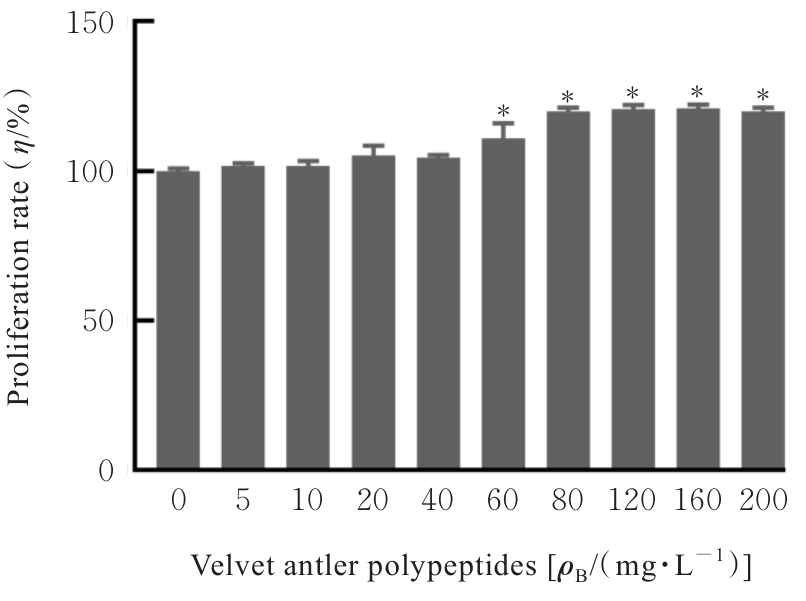
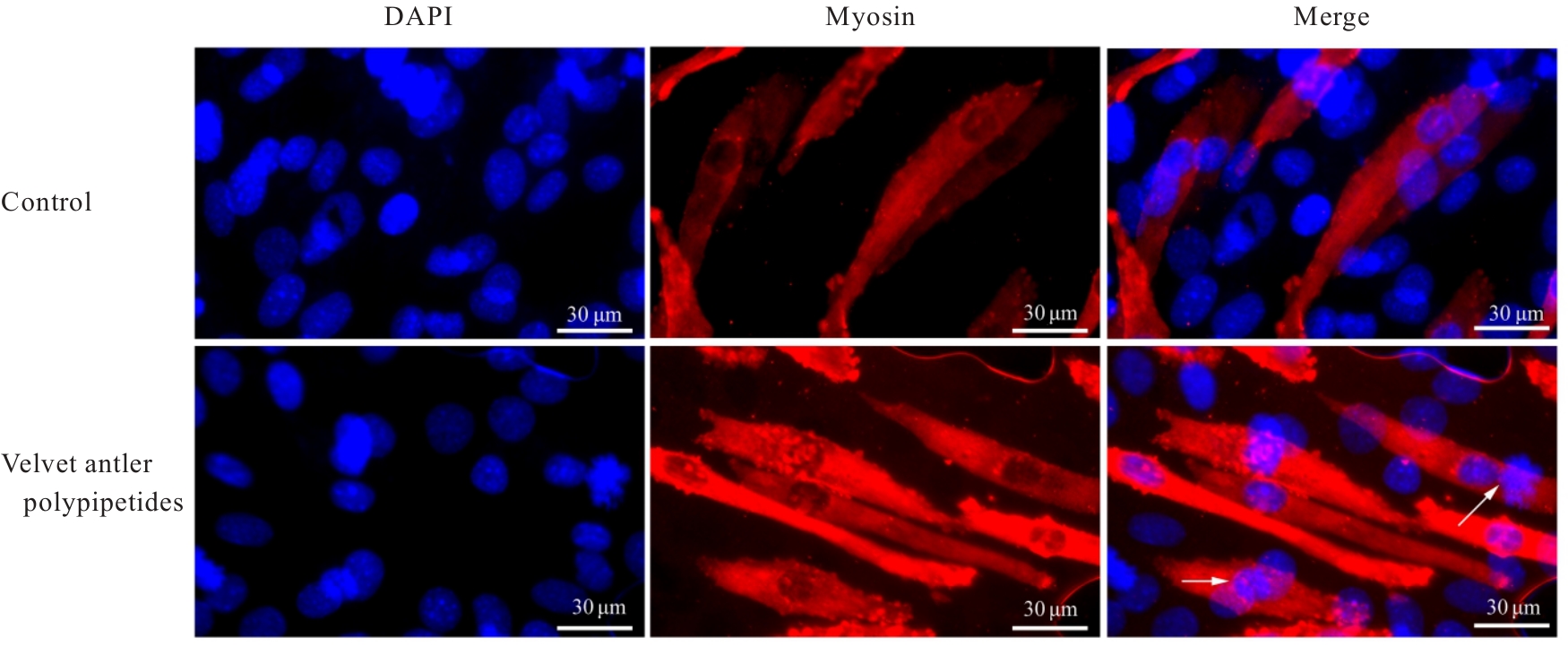
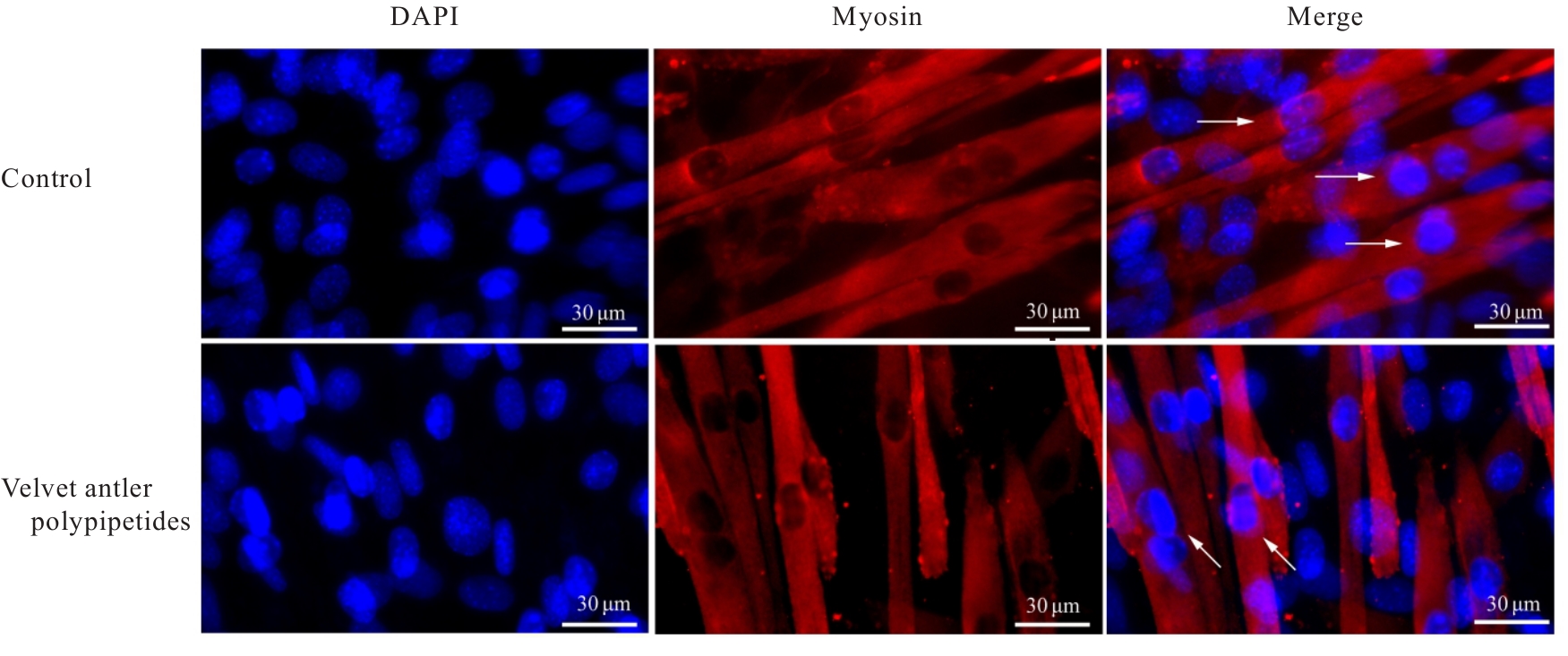
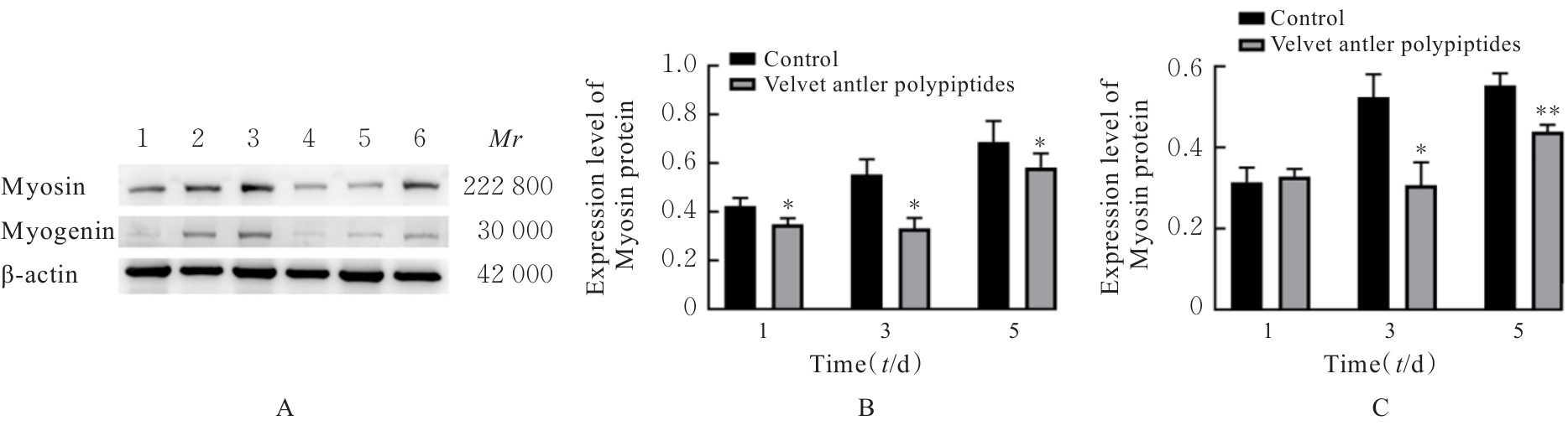
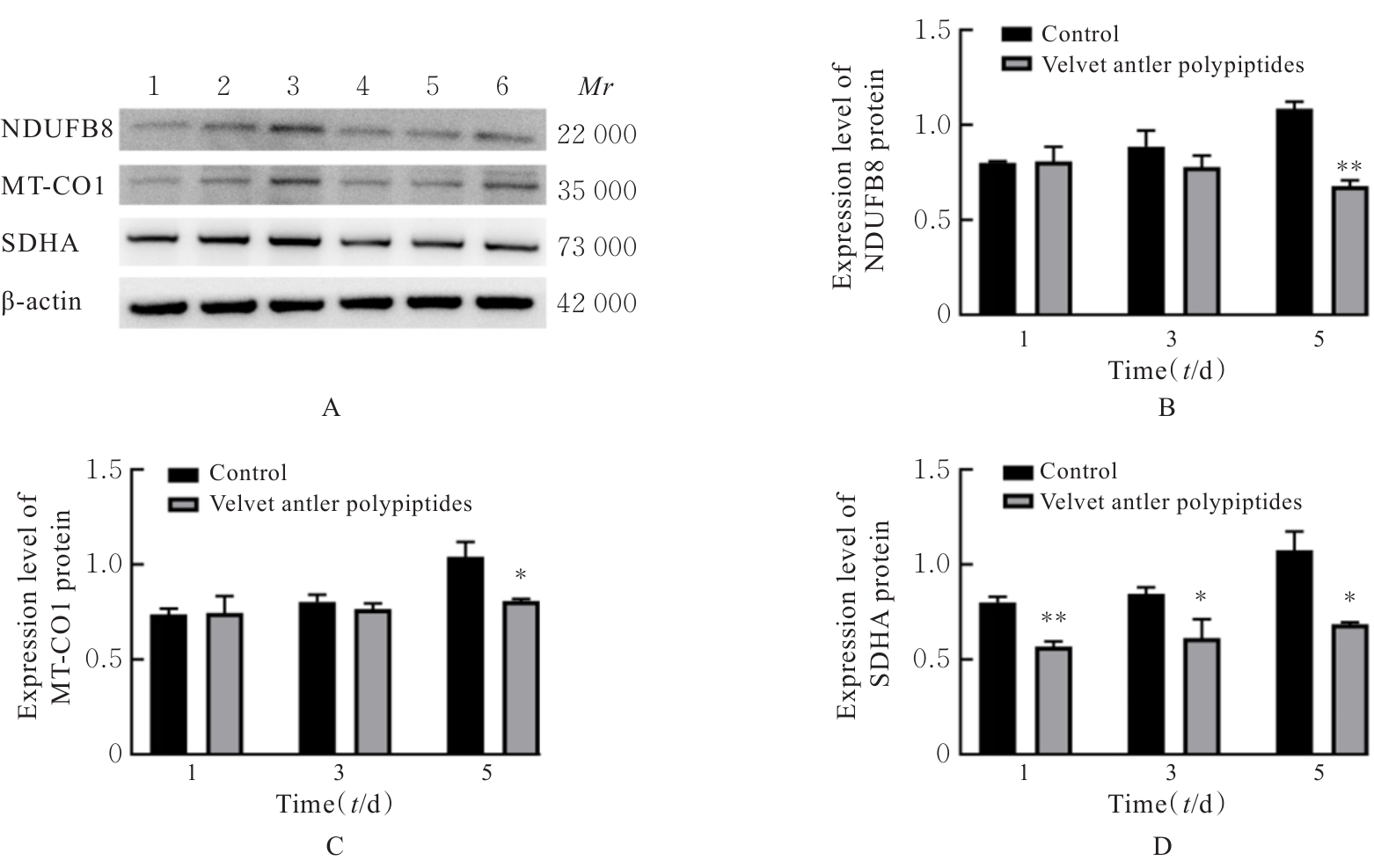
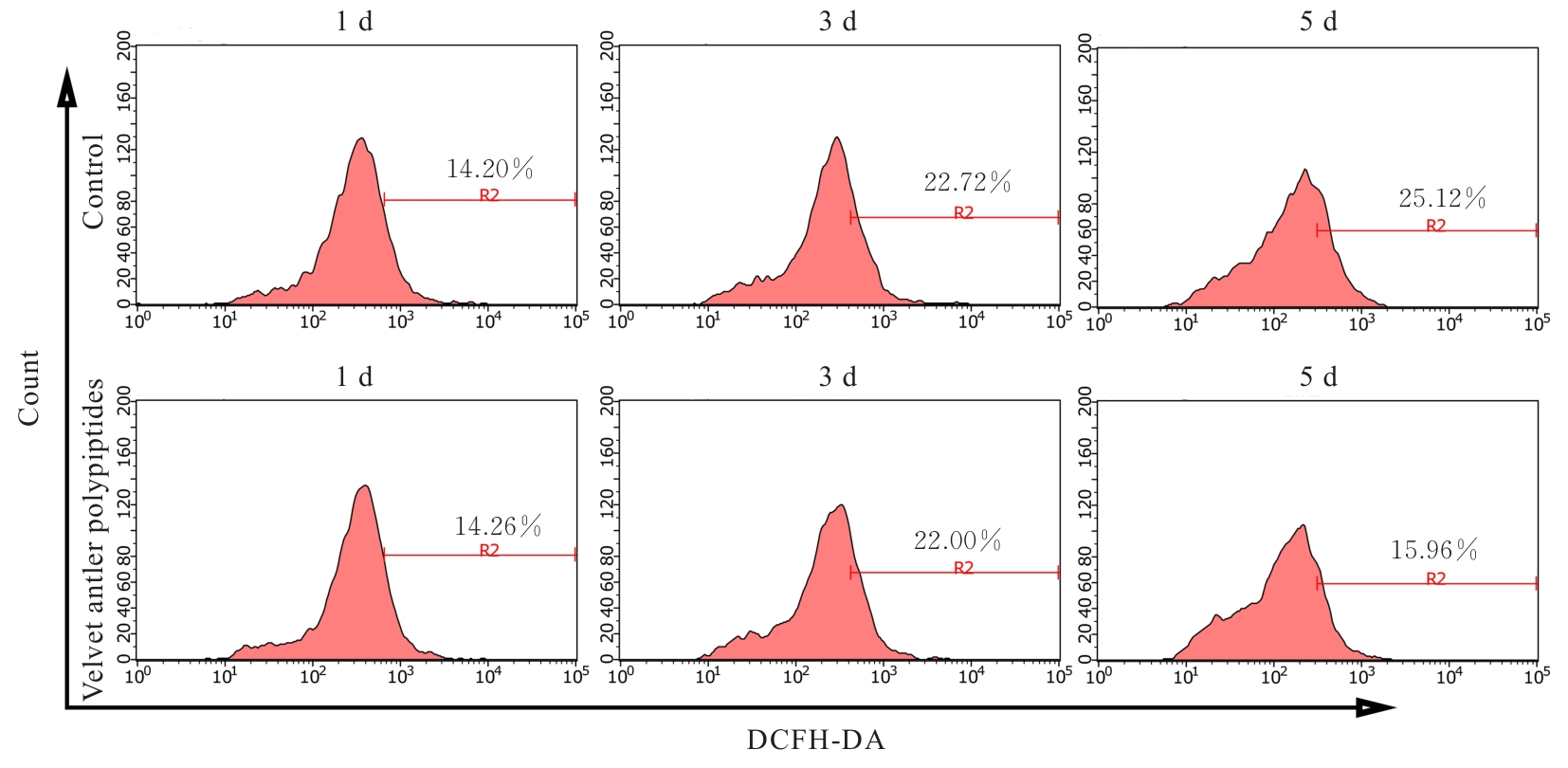
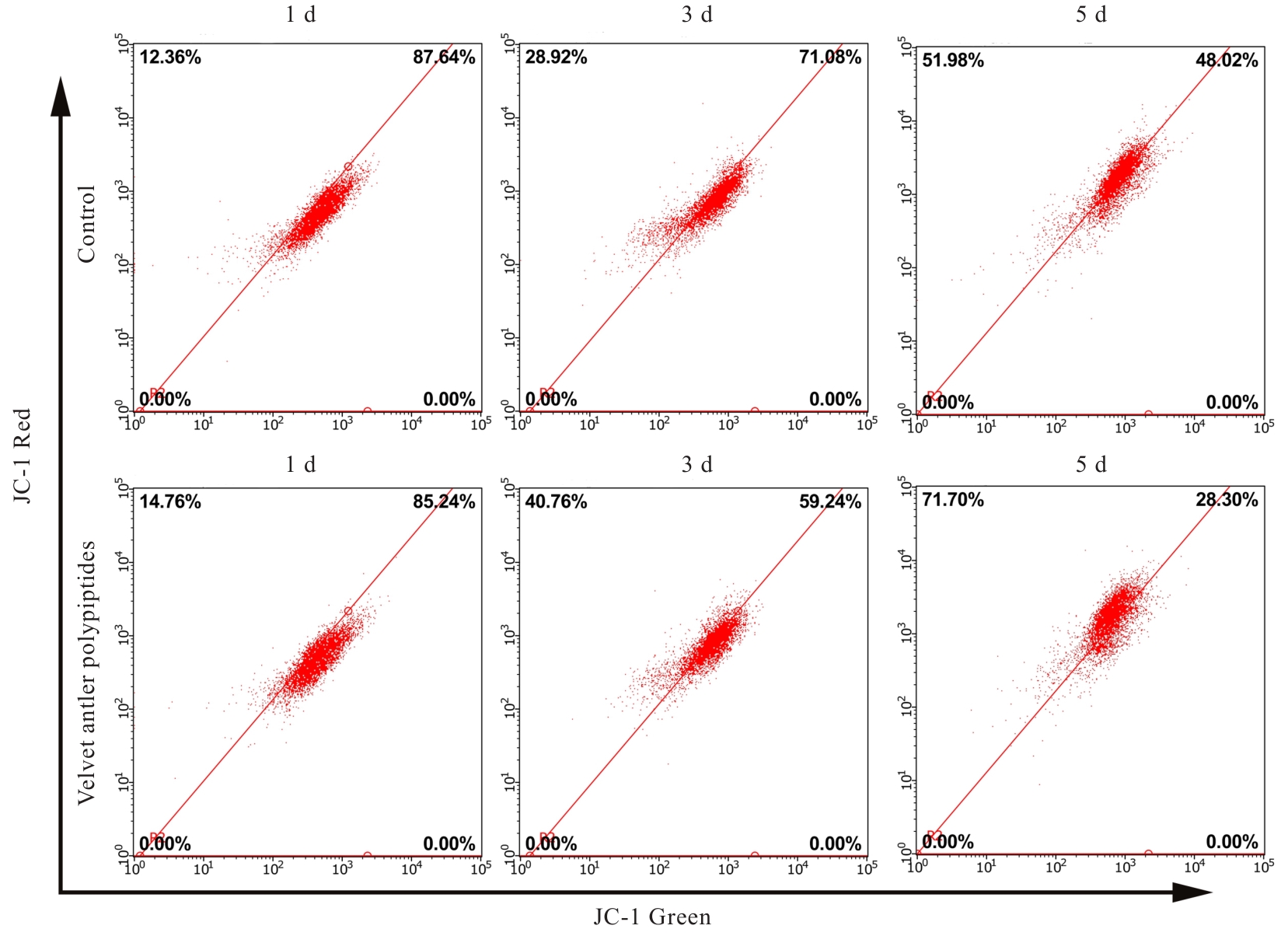
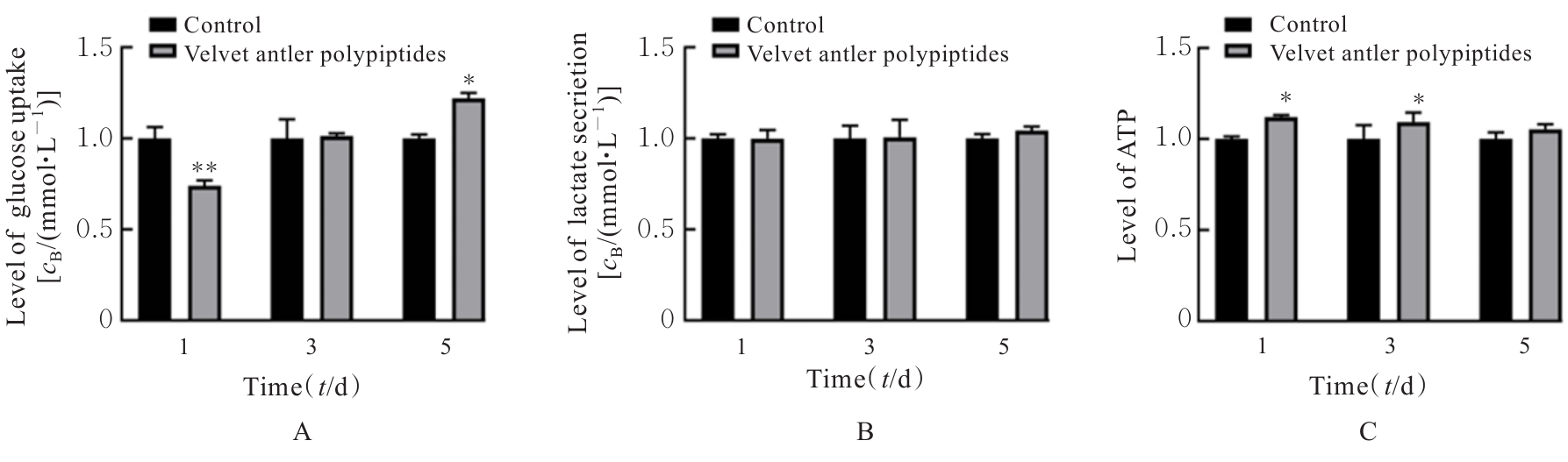
目的 探讨鹿茸多肽对C2C12成肌细胞分化过程中线粒体能量代谢效率的调控作用,并阐明其相关机制。 方法 采用生长培养基(GM)维持C2C12成肌细胞增殖,加入分化培养基(DM)诱导细胞分化,分化时间为1、3和5 d,分化的C2C12成肌细胞分为对照组和鹿茸多肽组,鹿茸多肽组加入80 mg·L-1鹿茸多肽,对照组给予同等体积磷酸盐缓冲液(PBS)。采用细胞计数试剂盒8(CCK-8)法检测0、5、10、20、40、60、80、120、160和200 mg·L-1鹿茸多肽处理后各组未分化细胞增殖率,免疫荧光法检测各组细胞融合指数,Western blotting法检测各组细胞中肌球蛋白、肌细胞生成素、泛醌氧化还原酶B8(NDUFB8)、线粒体编码细胞色素C氧化酶1(MT-CO1)和琥珀酸脱氢酶复合体黄蛋白亚基A(SDHA)蛋白表达水平,2',7'-二氯荧光素二乙酸酯(DCFH-DA)荧光探针法检测各组细胞中活性氧(ROS)水平,线粒体膜电位检测试剂盒(JC-1)检测各组细胞线粒体膜电位,试剂盒检测各组细胞中三磷酸腺苷(ATP)水平、葡萄糖摄取量和乳酸水平。 结果 与 0 mg·L-1 鹿茸多肽处理组比较,60、80、120、160和200 mg·L-1鹿茸多肽处理组未分化C2C12成肌细胞增殖率均明显升高(P<0.05)。免疫荧光法检测,与分化同期对照组比较,分化3和5 d鹿茸多肽处理组C2C12成肌细胞融合指数均明显降低(P<0.05),多核肌管细胞数量明显减少。Western blotting法,与分化同期对照组比较,分化1、3和5 d鹿茸多肽组细胞中肌球蛋白表达水平均明显降低(P<0.05),分化3和5 d鹿茸多肽组细胞中肌细胞生成素蛋白表达水平明显降低(P<0.05或P<0.01);与分化同期对照组比较,分化5 d鹿茸多肽组细胞中NDUFB8和MT-CO1蛋白表达水平均明显降低(P<0.05或P<0.01),分化1、3和5 d鹿茸多肽组细胞SDHA蛋白表达水平均明显降低(P<0.05或P<0.01)。DCFH-DA荧光探针法,与分化同期对照组比较,分化5 d鹿茸多肽组细胞ROS水平明显降低(P<0.01)。JC-1试剂盒检测,与分化同期对照组比较,分化3和5 d鹿茸多肽组细胞线粒体膜电位均明显升高(P<0.05)。与分化同期对照组比较,分化1 d鹿茸多肽组细胞葡萄糖摄取量明显降低(P<0.01),分化5 d鹿茸多肽组细胞葡萄糖摄取量明显升高(P<0.05),分化1、3和5 d鹿茸多肽组细胞乳酸水平差异均无统计学意义(P>0.05);分化1和3 d鹿茸多肽组细胞ATP水平均明显升高(P<0.05)。 结论 鹿茸多肽对C2C12成肌细胞分化具有抑制作用,其机制可能与鹿茸多肽降低线粒体氧化磷酸化复合体亚基表达,提高线粒体氧化磷酸化效率有关。

关键词: 鹿茸多肽, 成肌细胞分化, 线粒体, 衰老, 肌肉退行性疾病

Abstract:

Objective To discuss the regulatory effect of velvet antler polypeptide on mitochondrial energy metabolism efficiency during myoblast differentiation, and to clarify its related mechanism. Methods The C2C12 myoblasts were maintained in growth medium (GM) and then induced to differentiate in differentiation medium(DM) for 1, 3, and 5 d. The differentiated C2C12 myoblasts were divided into control group and velvet antler polypeptide group. The VAP group was treated with 80 mg·L-1 velvet antler polypeptide, while the control group was given an equal volume of phosphate buffer saline (PBS). Cell counting kit-8 (CCK-8) method was used to detect the proliferation rate of the undifferentiated cells in various groups after treated with 0, 5, 10, 20, 40, 60, 80, 120, 160, and 200 mg·L-1 velvet antler polypeptide; immunofluorescence staining was used to detect the fusion indexes of the cells in various groups; Western blotting method was used to detect the expression levels of myosin, myogenin, myogenin:ubiquinone oxidoreductase subunit B8 (NDUFB8), mitochondrially encoded cytochrome c oxidase Ⅰ (MT-CO1), and succinate dehydrogenase complex flavoprotein subunit A (SDHA) proteins in the cells in various groups; 2',7'-dichlorodihydrofluorescein diacetate (DCFH-DA) fluorescence probe assay was used to detect the reactive oxygen species (ROS) level in the cells in various groups; JC-1 mitochondrial membrane potential assay kit was used to detect the mitochondrial membrane potential of the cells in various groups; commercial kits were used to detect the adenosine triphosphate (ATP) level, glucose uptake, and lactate level in the cells in various groups. Results The CCK-8 results showed that compared with 0 mg·L-1 velvet antler polypeptide group, the proliferation rates of undifferentiated C2C12 myoblasts in 60, 80, 120, 160, and 200 mg·L-1 velvet antler polypeptide groups were significantly increased (P<0.05). The immunofluorescence results showed that compared with control group at the same differentiation stage, the fusion indices of the C2C12 myoblasts in velvet antler polypeptide group at 3 and 5 d of differentiation were significantly decreased (P<0.05), and the number of multinucleated myotubes was significantly decreased. The Western blotting results showed that compared with control group at the same differentiation stage, the expression levels of myosin in the cells in velvet antler polypeptide group at 1, 3, and 5 d of differentiation were significantly decreased (P<0.05); the expression levels of myogenin protein in the cells in velvet antler polypeptide group at 3 and 5 d of differentiation were significantly decreased (P<0.05 or P<0.01). Compared with control group at the same differentiation stage, the expression levels of NDUFB8 and MT-CO1 proteins in the cells in velvet antler polypeptide group at 5 d of differentiation were significantly decreased (P<0.05 or P<0.01); the expression levels of SDHA protein in the cells in velvet antler polypeptide group at 1, 3, and 5 d of differentiation were significantly decreased (P<0.05 or P<0.01). The DCFH-DA results showed that compared with control group at the same differentiation stage, the ROS level in velvet antler polypeptide group at 5 d of differentiation was significantly decreased (P<0.01). The JC-1 assay results showed that compared with control group at the same differentiation stage, the mitochondrial membrane potentials in the cells in velvet antler polypeptide group at 3 and 5 d of differentiation were significantly increased (P<0.05). Compared with control group at the same differentiation stage, the glucose uptake in the cells in velvet antler polypeptide group at 1 d of differentiation was significantly decreased (P<0.01), and the glucose uptake at 5 d of differentiation was significantly increased (P<0.05); there were no significant differences in lactate levels in the cells in velvet antler polypeptide group at 1, 3, and 5 d of differentiation (P>0.05); the ATP levels in velvet antler polypeptide group at 1 and 3 d of differentiation were significantly increased (P<0.05). Conclusion Velvet antler polypeptide inhibits the differentiation of the C2C12 myoblasts, and its mechanism may be related to the down-regulation of mitochondrial oxidative phosphorylation complex subunit expression and the improvement of mitochondrial oxidative phosphorylation efficiency.

Key words: Velvet antler polypeptide, Myoblast differentiation, Mitochondria, Aging, Muscular degenerative diseases

中图分类号: 

  • R285.5