吉林大学学报(工学版) ›› 2025, Vol. 55 ›› Issue (12): 3907-3917.doi: 10.13229/j.cnki.jdxbgxb.20240484
• 交通运输工程·土木工程 • 上一篇
基于改进开普勒优化算法的区域停车分配模型
王喆1( ),范文波1(),刘昕1,杨欢2,宋现敏2,杨柏婷3
- 1.吉林大学 大数据和网络管理中心,长春 130022
2.吉林大学 交通学院,长春 130022
3.长春职业技术学院,长春 130033
Regional parking allocation model based on improved Kepler optimization algorithm
Zhe WANG1(),Wen-bo FAN1(),Xin LIU1,Huan YANG2,Xian-min SONG2,Bai-ting YANG3
- 1.Center for Big Data and Network Management,Jilin University,Changchun 130022,China
2.College of Transportation,Jilin University,Changchun 130022,China
3.Changchun Polytechnic,Changchun 130033,China
摘要:
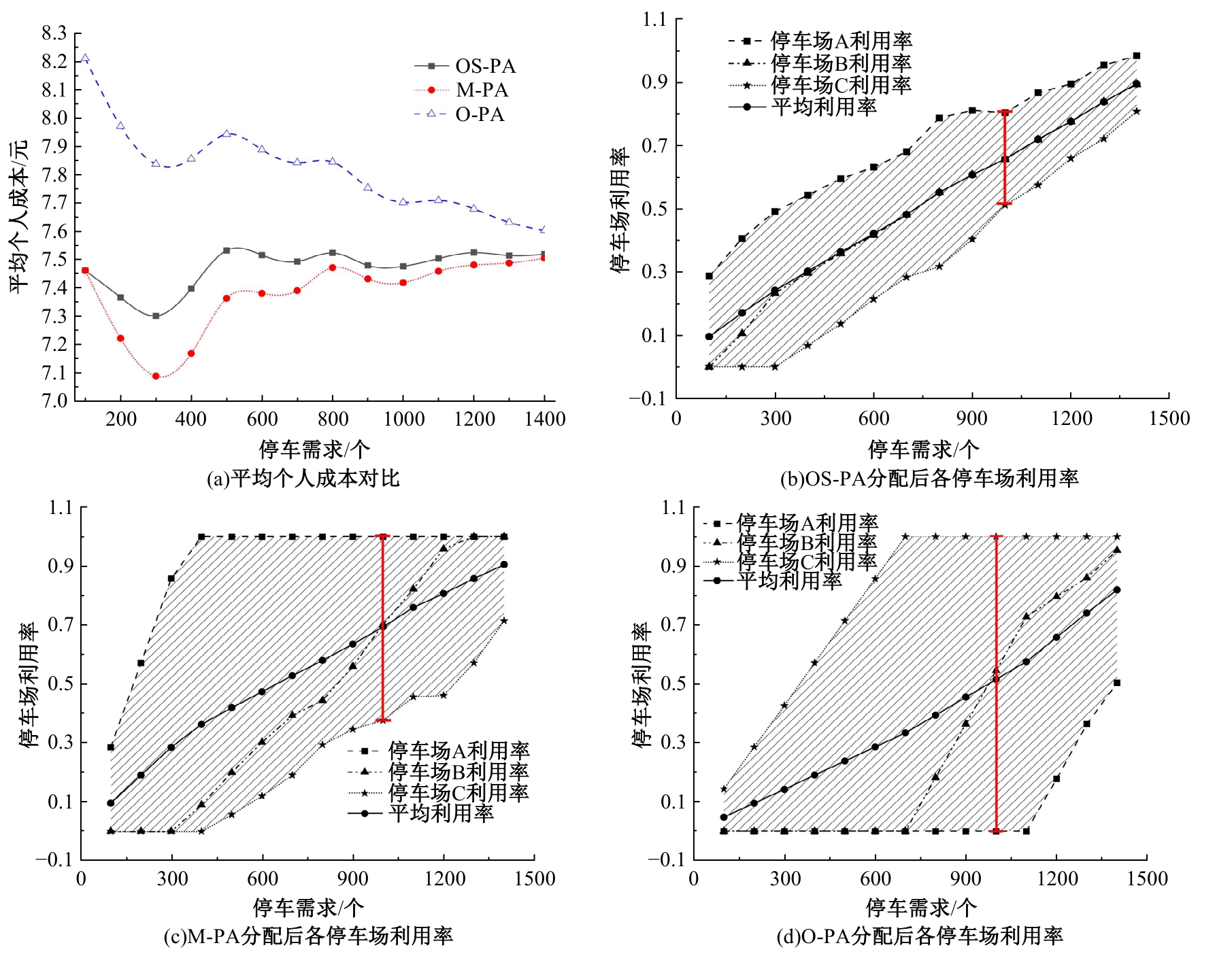
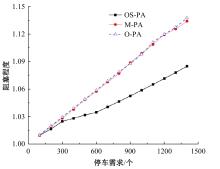
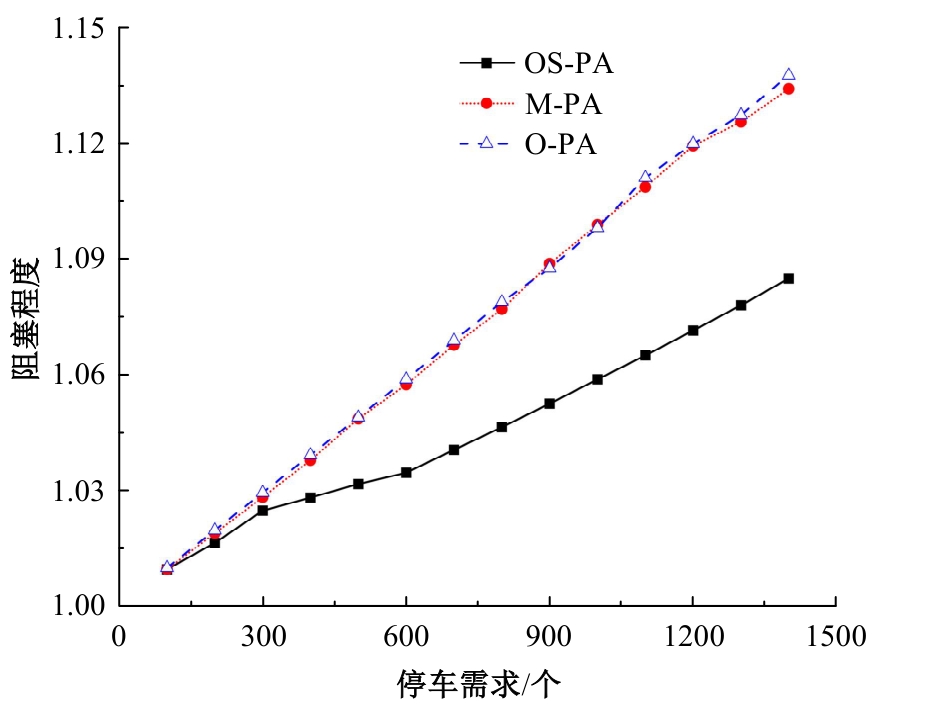
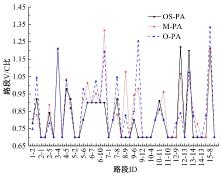
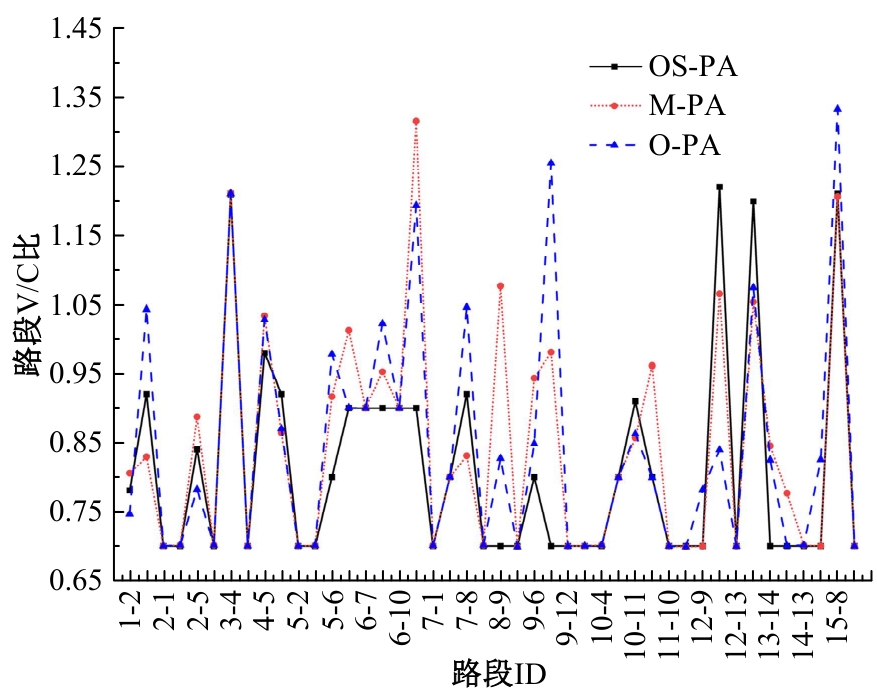
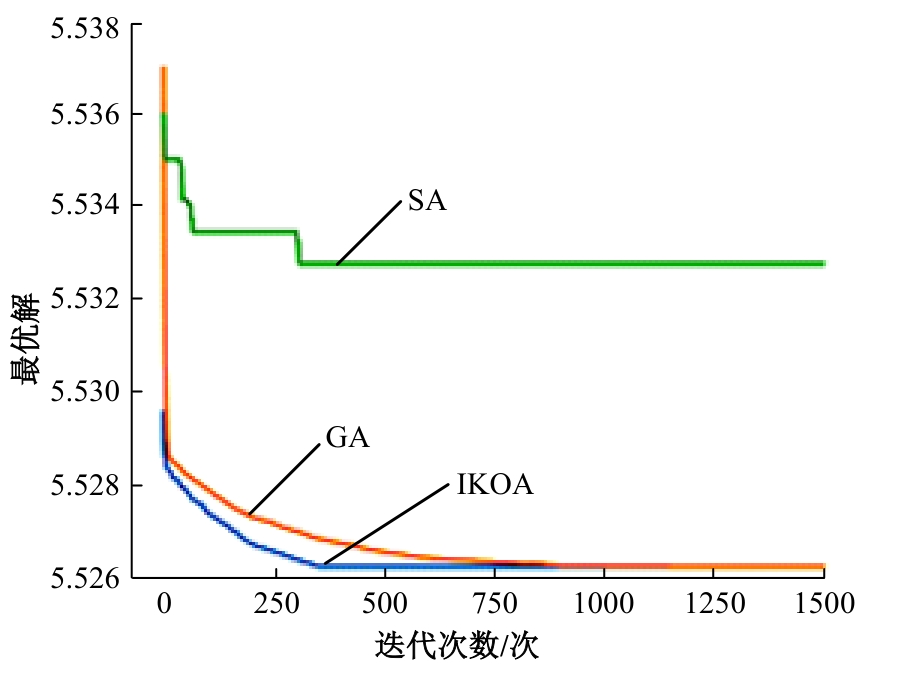
为了提高现有停车资源利用效率,减少出行者无效停车泊位搜索行为所带来的交通拥堵、尾气排放等问题,提出了一种优化停车资源配置的多目标非线性整数规划模型。首先,在综合考虑用户步行距离、停车费用、区域内各停车场利用率均衡性以及停车附加的路网交通压力基础上,建立停车分配的个人成本和社会成本函数;其次,以系统综合成本最小为优化目标,构建区域内多停车场的停车分配模型,同时,考虑到模型求解的复杂性,设计了一种融合多策略的改进开普勒优化算法进行模型求解。最后,为了检验本文模型的有效性,设计了不同停车供需情况下的数值实验,并将本文模型和算法与经典分配模型以及传统求解算法进行对比分析,结果表明:本文模型使个人成本平均降低了4.4%,各停车场利用率的均衡性得到了显著提高;同时,本文模型在减少停车群体附加的路网交通压力方面有着明显优势,最高降低了33.6%的路段阻抗增长率;与传统的遗传算法以及模拟退火算法对比,本文提出的改进开普勒优化算法有着更快的收敛速度以及更好的寻优能力。
中图分类号:
- U491.2

| [1] | Shoup D C. Cruising for parking[J]. Transport Policy, 2006, 13(6): 479-486. |
| [2] | Chu C P, Wang C Y, Hu S R. Application of e-tag in pricing road tolls and parking fees for traffic congestion mitigation[J]. Transportation Research Procedia, 2017, 25: 2913-2922. |
| [3] | Bao H X H, Ng J. Tradable parking permits as a transportation demand management strategy: A behavioural investigation[J]. Cities, 2022, 120: 103463. |
| [4] | Lin T, Rivano H, Le M F. A survey of smart parking solutions[J]. IEEE Transactions on Intelligent Transportation Systems, 2017, 18(12): 3229-3253. |
| [5] | Shao C, Yang H, Zhang Y, et al. A simple reservation and allocation model of shared parking lots[J]. Transportation Research Part C: Emerging Technologies, 2016, 71: 303-312. |
| [6] | Jiang B, Fan Z P. Optimal allocation of shared parking slots considering parking unpunctuality under a platform-based management approach[J]. Transportation Research Part E: Logistics and Transportation Review, 2020, 142: 102062. |
| [7] | Kim O T T, Tran N H, Pham C, et al. Parking assignment: Minimizing parking expenses and balancing parking demand among multiple parking lots[J]. IEEE Transactions on Automation Science and Engineering, 2019, 17(3): 1320-1331. |
| [8] | Nakazato T, Fujimaki Y, Namerikawa T. Parking lot allocation using rematching and dynamic parking fee design[J]. IEEE Transactions on Control of Network Systems, 2022, 9(4): 1692-1703. |
| [9] | 卢凯, 林茂伟, 邓兴栋, 等. 停车总成本最小的停车位动态分配与诱导模型[J]. 华南理工大学学报:自然科学版, 2018, 46(9): 82-91, 98. |
| Lu Kai, Lin Maowei, Deng Xing-dong, et al. Dynamic allocation and inducement model of parking spaces with minimum total parking cost[J]. Journal of South China University of Technology (Natural Science Edition), 2018, 46(9): 82-91, 98. | |
| [10] | Wang Y, Chen Q. Dynamic parking allocation model in a multidestination multiple parking lot system[J]. IEEE Intelligent Transportation Systems Magazine, 2022, 14(5): 195-208. |
| [11] | 张水潮, 蔡逸飞, 黄锐, 等. 基于预约需求的共享停车平台泊位分配方法[J]. 交通运输系统工程与信息, 2020, 20(3): 137-143, 162. |
| Zhang Shui-chao, Cai Yi-fei, Huang Rui, et al. Shared parking space allocation method considering reservation demand[J]. Journal of Transportation Systems Engineering and Information Technology, 2020,20(3): 137-143, 162. | |
| [12] | 刘永红, 罗霞, 胡剑鹏. 考虑临时和预约需求的共享泊位动态分配方法[J]. 交通运输系统工程与信息,2022, 22(1): 171-181. |
| LIU Yonghong, LUO Xia, HU Jianpeng. Dynamic allocation method for shared berth considering immediate and reservation demands[J]. Journal of Transportation Systems Engineering and Information Technology, 2022, 22(1): 171-181. | |
| [13] |
Abdel-Basset M, Mohamed R, Azeem S A A, et al. Kepler optimization algorithm: A new metaheuristic algorithm inspired by Kepler's laws of planetary motion. Knowledge-Based Systems, 2023 (May 23): 268. DOI: 1016/j.knosys. 2023. 110454 .
doi: 1016/j.knosys. 2023. 110454 |
| [1] | 吴德华,陈荣峰. 智能网联客货混合交通流特性及集聚换道策略[J]. 吉林大学学报(工学版), 2025, 55(8): 2588-2596. |
| [2] | 侯越,郭劲松,林伟,张迪,武月,张鑫. 分割可跨越车道分界线的多视角视频车速提取方法[J]. 吉林大学学报(工学版), 2025, 55(5): 1692-1704. |
| [3] | 宋现敏,湛天舒,李海涛,刘博,张云翔. 考虑用户成本和泊位利用率的停车预约分配模型[J]. 吉林大学学报(工学版), 2025, 55(4): 1287-1297. |
| [4] | 江晟,王祎笛,谢睿麟,夏淼磊. 基于门控循环网络时空关联的交通事故预测模型[J]. 吉林大学学报(工学版), 2025, 55(3): 954-962. |
| [5] | 李立,鲍宇健,杨文臣,楚庆玲,汪贵平. 路侧多源感知数据集规范化构建方法[J]. 吉林大学学报(工学版), 2025, 55(2): 529-536. |
| [6] | 杨楠,肖军. 序列二次规划算法下城市智能交通运行节能优化控制[J]. 吉林大学学报(工学版), 2024, 54(8): 2223-2228. |
| [7] | 李立,吴晓强,杨文臣,周瑞杰,汪贵平. 基于路侧毫米波雷达的群体车辆目标识别与跟踪[J]. 吉林大学学报(工学版), 2024, 54(7): 2104-2114. |
| [8] | 朱瑾,刘洋. 进口集装箱堆场箱位分配与场桥调度协同优化[J]. 吉林大学学报(工学版), 2024, 54(5): 1347-1354. |
| [9] | 杨秀建,贾晓寒,张生斌. 考虑汽车队列动态特性的混合交通流特性[J]. 吉林大学学报(工学版), 2024, 54(4): 947-958. |
| [10] | 郭洪艳,于文雅,刘俊,戴启坤. 复杂场景智能车辆车道与速度一体化滚动优化决策[J]. 吉林大学学报(工学版), 2023, 53(3): 693-703. |
| [11] | 高海龙,徐一博,侯德藻,王雪松. 基于深度异步残差网络的路网短时交通流预测算法[J]. 吉林大学学报(工学版), 2023, 53(12): 3458-3464. |
| [12] | 高明华,杨璨. 基于改进卷积神经网络的交通目标检测方法[J]. 吉林大学学报(工学版), 2022, 52(6): 1353-1361. |
| [13] | 邝先验,罗会超,钟蕊,欧阳鹏. 基于天牛须小波神经网络的公交到站时间预测[J]. 吉林大学学报(工学版), 2022, 52(1): 110-117. |
| [14] | 张健,吴坤润,杨敏,冉斌. 智能网联环境下交叉口双环自适应控制模型[J]. 吉林大学学报(工学版), 2021, 51(2): 541-548. |
| [15] | 赵宏伟, 刘宇琦, 董立岩, 王玉, 刘陪. 智能交通混合动态路径优化算法[J]. 吉林大学学报(工学版), 2018, 48(4): 1214-1223. |
|
||