吉林大学学报(医学版) ›› 2025, Vol. 51 ›› Issue (4): 1094-1099.doi: 10.13481/j.1671-587X.20250425

• 临床研究 • 上一篇    

系统性红斑狼疮患者血清腺苷脱氨酶2活性对诊断和病情评估的临床价值

陈俊霖,郜赵伟,董轲,李自越()   

  1. 空军军医大学第二附属医院检验科,陕西 西安 710038
  • 收稿日期:2024-09-18 接受日期:2024-11-04 出版日期:2025-07-28 发布日期:2025-08-25
  • 通讯作者: 李自越 E-mail:liziyue_79@126.com
  • 作者简介:陈俊霖(1986-),男,陕西省渭南市人,主治医师,医学硕士,主要从事体液细胞形态学和肾脏相关疾病方面的研究。
  • 基金资助:
    陕西省科技厅自然科学基础研究计划项目(2020JM-315);空军军医大学唐都医院社会人才基金资助计划项目(2021SHRC004)

Clinical value of serum adenosine deaminase 2 activity in diagnosis and severity evaluation of systemic lupus erythematosus

Junlin CHEN,Zhaowei GAO,Ke DONG,Ziyue LI()   

  1. Department of Clinical Laboratory,Second Affiliated Hospital,Air Force Medical University,Xi’an 710038,China
  • Received:2024-09-18 Accepted:2024-11-04 Online:2025-07-28 Published:2025-08-25
  • Contact: Ziyue LI E-mail:liziyue_79@126.com

摘要:

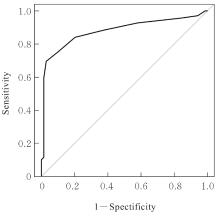
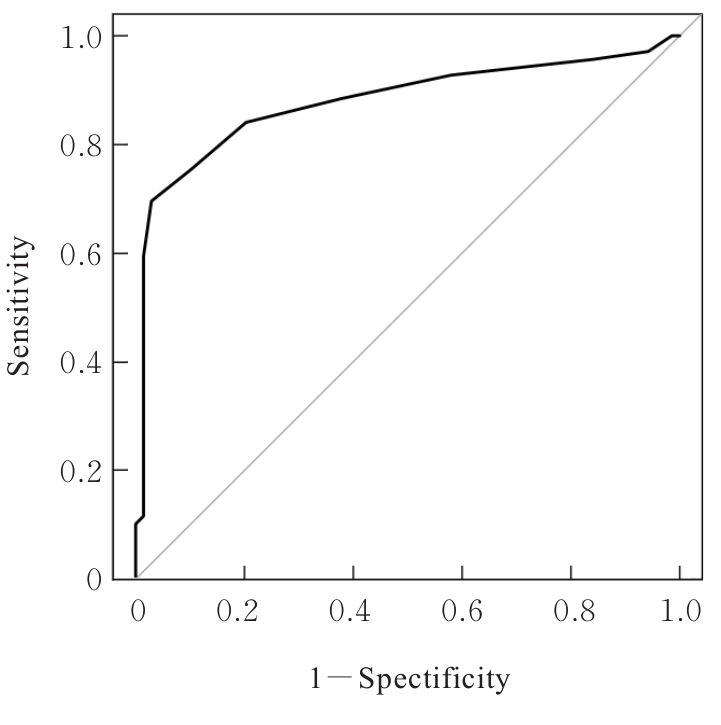
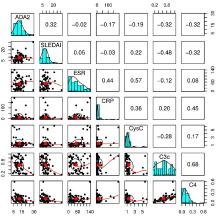
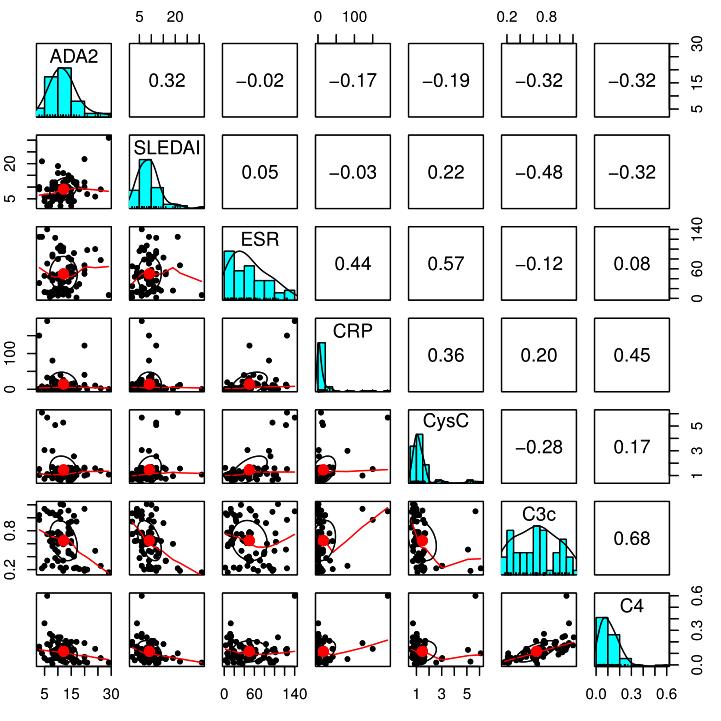
目的 探讨系统性红斑狼疮(SLE)患者血清中腺苷脱氨酶2(ADA2)活性的变化,阐明其对SLE患者诊断和病情评估的临床价值。 方法 按照纳入和排除标准,收集69例SLE患者(SLE组)及69名健康对照者(对照组)作为研究对象。SLE患者疾病活动度采用SLE疾病活动指数(SLEDAI)表示,检测2组研究对象血清中ADA2活性。根据患者是否具有下列临床症状进行亚分组(关节炎、肌炎、血尿、蛋白尿、脓尿、脱发、新发皮疹、黏膜溃疡、胸膜炎、低补体血症、抗双链DNA抗体升高、血小板降低和白细胞减少症)。分析有症状组与无症状组患者血清中ADA2活性的差异;利用受试者工作特征(ROC)曲线分析血清ADA2活性的诊断效能。利用Spearman相关性分析ADA2活性与SLE患者疾病活动度的相关性。 结果 与对照组比较,SLE组患者血清中ADA2活性升高(P<0.01)。ROC曲线分析,当ADA2活性截断值为8.5 U·L-1时,诊断效能最佳,ROC曲线下面积(AUC)为0.879[95%置信区间(CI):0.817~0.94],诊断特异度为89.86%,灵敏度为75.36%。血清中ADA2活性与SLE患者SLEDAI呈正相关关系(r=0.32,P=0.007)。临床症状的亚组分析,具有症状的SLE患者血清中ADA2活性高于不具有症状的SLE患者(P<0.01),具有肌炎、血尿症状、蛋白尿、脓尿、脱发、新发皮疹、黏膜溃疡、胸膜炎、低补体血症、抗双链DNA抗体升高、血小板降低和白细胞减少症状的SLE患者与无症状组SLE患者血清中ADA2活性比较差异无统计学意义(P>0.05)。 结论 SLE患者血清中ADA2活性升高,其可作为SLE的诊断指标。血清中ADA2活性与患者疾病活动度呈正相关关系,并与患者的关节炎表现有关,可以作为病情评估及监测的指标。

关键词: 腺苷脱氨酶2, 系统性红斑狼疮, 诊断, 疾病活动度, 受试者工作特征曲线

Abstract:

Objective To discuss the changes of adenosine deaminase 2 (ADA2) activity in the serum of the systemic lupus erythematosus (SLE) patients, and to clarify its clinical value in the diagnosis and disease assessment of the SLE patients. Methods According to the inclusion and exclusion criteria, 69 SLE patients (SLE group) and 69 healthy controls (control group) were enrolled as study subjects. The disease activity of SLE patients was evaluated by SLE Disease Activity Index (SLEDAI). The ADA2 activity in the serum of the subjects in both groups was detected. The patients were further divided into subgroups based on the presence or absence of the following clinical symptoms: arthritis, myositis, hematuria, proteinuria, pyuria, alopecia, new rash, mucosal ulcer, pleuritis, hypocomplementemia, elevated anti-double-stranded DNA (anti-dsDNA) antibody, thrombocytopenia, and leukopenia. The differences in serum ADA2 activity between joint symptomatic group and joint asymptomatic group were analyzed. The diagnostic efficacy of serum ADA2 activity was evaluated by receiver operating characteristic (ROC) curve analysis. The correlation between ADA2 activity and disease activity in the SLE patients was analyzed by Spearman correlation analysis. Results Compared with control group, the ADA2 activity in the serum of the patients in SLE group was significantly increased (P<0.01). The ROC analysis results showed that when the cut-off value of ADA2 activity was set at 8.5 U·L-1, the diagnostic performance was optimal, with an area under the curve (AUC) of 0.879 (95%CI: 0.817-0.940), the specificity was 89.86%, and the sensitivity was 75.36%. The serum ADA2 activity was positively correlated with disease activity in the SLE patients (r=0.32, P=0.007). The subgroup analysis of clinical symptoms results showed that the serum ADA2 activity in the SLE patients with symptoms was significantly higher than that in the SLE patients without symptoms (P<0.01). No significant differences were observed in serum ADA2 activity between the SLE patients with and without myositis, hematuria, proteinuria, pyuria, alopecia, new rash, mucosal ulcer, pleuritis, hypocomplementemia, elevated anti-dsDNA antibody, thrombocytopenia, or leukopenia (P>0.05). Conclusion The serum ADA2 activity is increased in the SLE patients and can serve as a diagnostic marker for SLE. Serum ADA2 activity is positively correlated with disease activity and is associated with arthritis in the SLE patients, suggesting its potential as an indicator for disease assessment and monitoring.

Key words: Adenosine deaminase 2, Systemic lupus erythematosus, Diagnosis, Disease activity, Receiver operating characteristic curve

中图分类号: 

  • R714.25