吉林大学学报(医学版) ›› 2025, Vol. 51 ›› Issue (6): 1709-1716.doi: 10.13481/j.1671-587X.20250628

• 方法学 • 上一篇    

SPHK1过表达慢病毒载体的构建和稳定转染SKOV3细胞系的建立

苏秋源1,赵玲1,谭佳佳1,莫世恩1,周海琴1,卢芳芳1,韦依1,周洋1,况燕1,2()   

  1. 1.广西医科大学第一附属医院妇科,广西 南宁 530021
    2.广东省广州市第一人民医院妇科,广东 广州 510180
  • 收稿日期:2025-01-12 接受日期:2025-02-22 出版日期:2025-11-28 发布日期:2025-12-15
  • 通讯作者: 况燕 E-mail:kuangyan_2004@163.com
  • 作者简介:苏秋源(1998-),女,广西壮族自治区钦州市人,在读硕士研究生,主要从事妇科肿瘤的诊断和治疗方面的研究。
  • 基金资助:
    国家自然科学基金项目(82260566);国家自然科学基金项目(81960466)

Construction of SPHK1 overexpression lentiviral vectors and establishment of stable transfected SKOV3 cell lines

Qiuyuan SU1,Ling ZHAO1,Jiajia TAN1,Shien MO1,Haiqin ZHOU1,Fangfang LU1,Yi WEI1,Yang ZHOU1,Yan KUANG1,2()   

  1. 1.Department of Gynecology,First Affiliated Hospital,Guangxi Medical University,Nanning 530021,China
    2.Department of Gynecology,First People’s Hospital,Guangzhou City,Guangdong Provivce,Guangzhou 510180,China
  • Received:2025-01-12 Accepted:2025-02-22 Online:2025-11-28 Published:2025-12-15
  • Contact: Yan KUANG E-mail:kuangyan_2004@163.com

摘要:

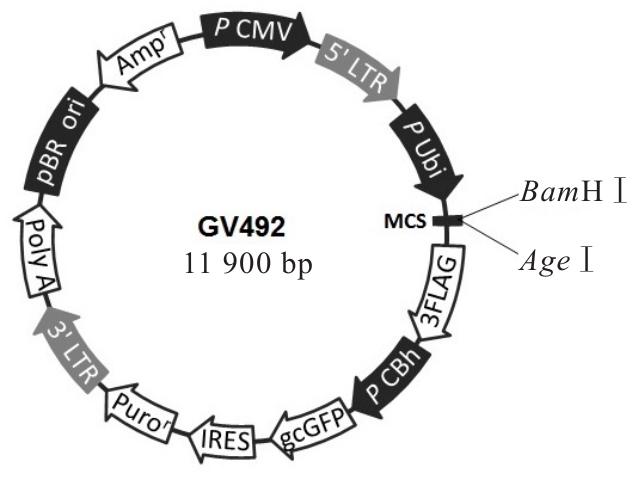
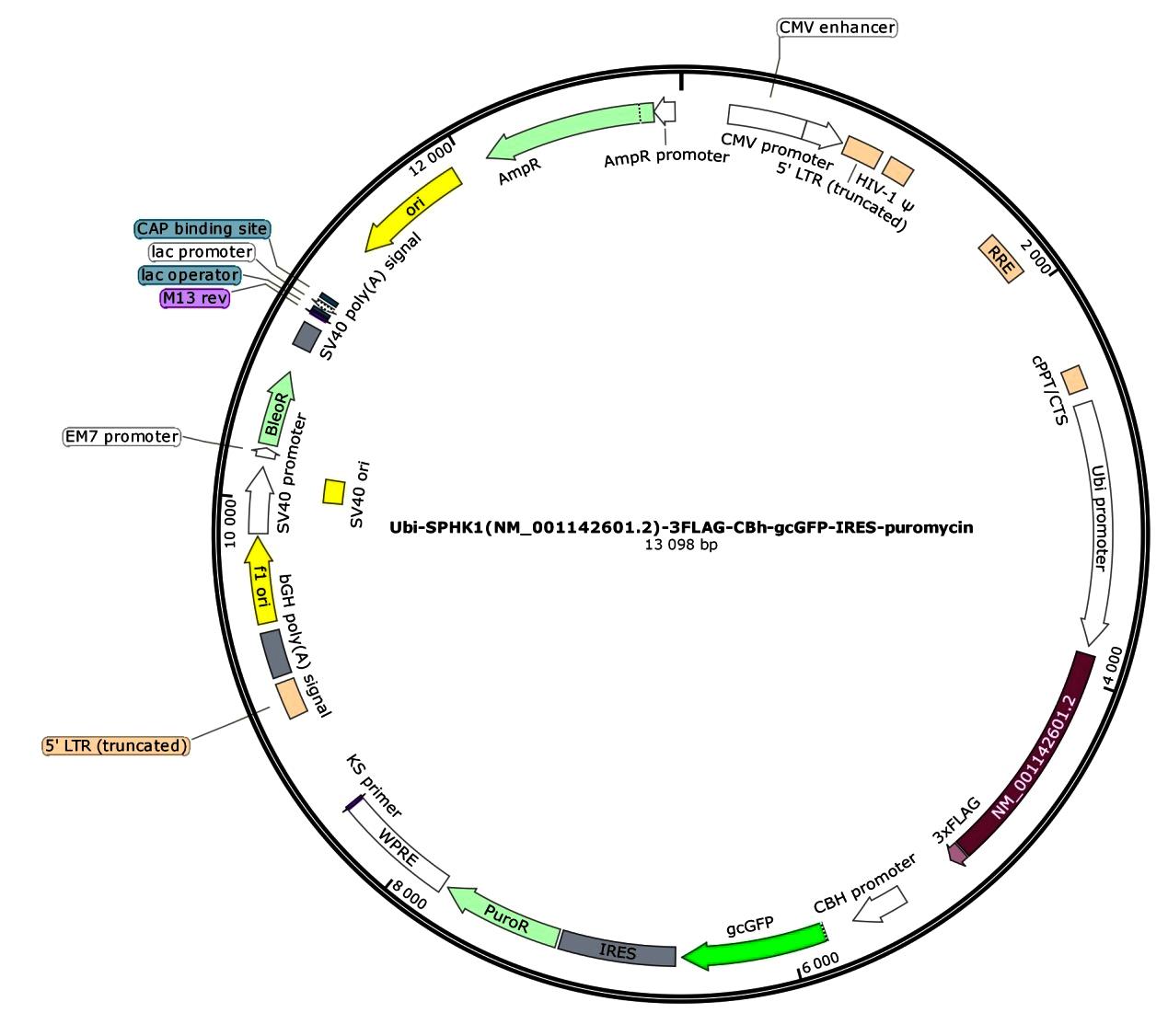
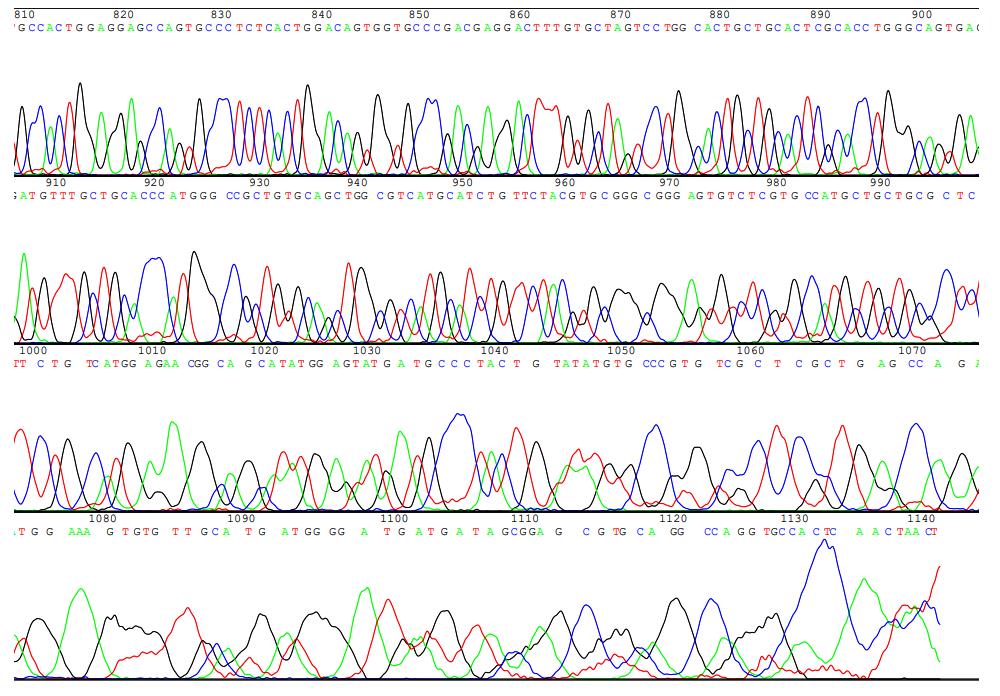
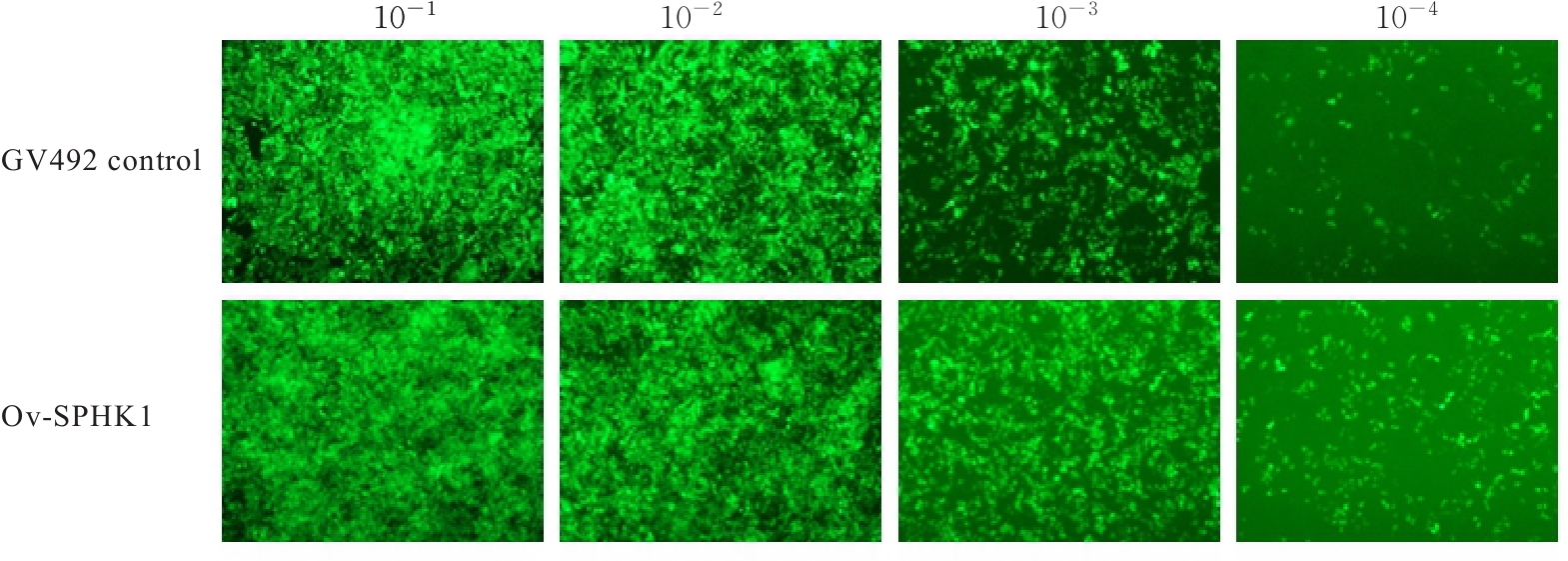
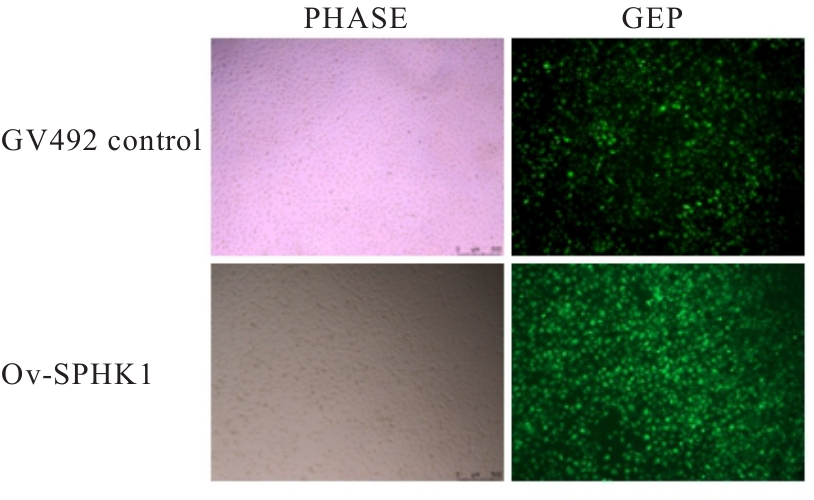
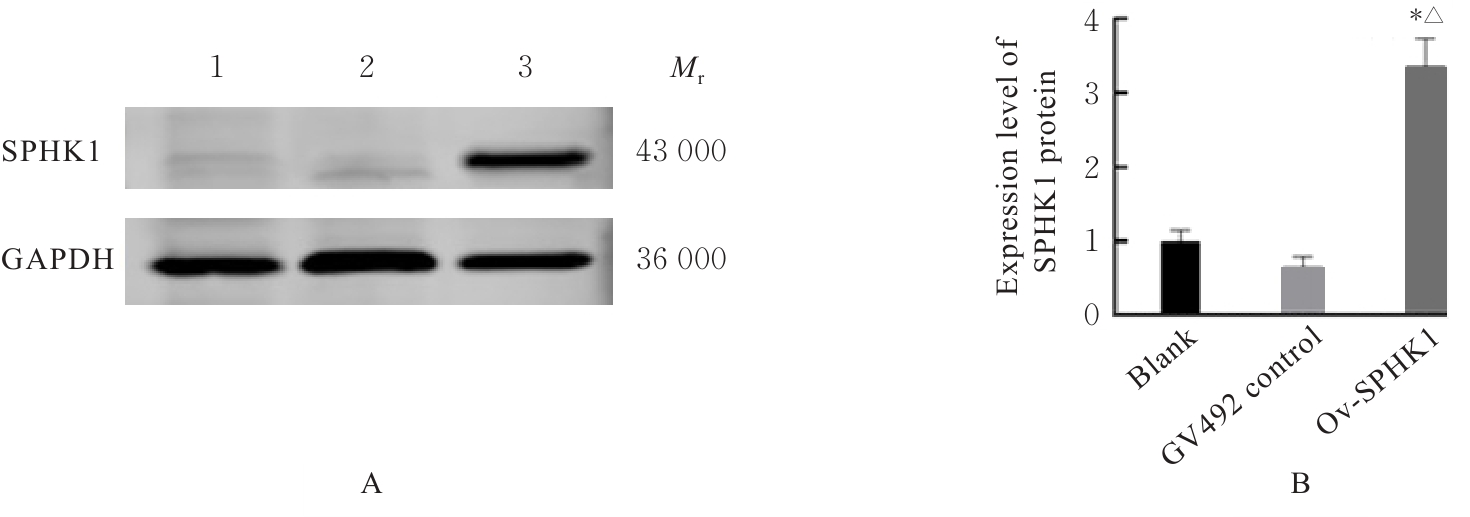
目的 构建鞘氨醇激酶1(SPHK1)过表达慢病毒载体,建立SKOV3慢病毒稳定转染细胞系。 方法 根据美国生物技术信息中心(NCBI)数据库提供的SPHK1的数据信息设计并合成引物,扩增目的基因,连接至经BamHAgeⅠ限制性内切酶处理的GV492质粒,构建SPHK1过表达慢病毒载体,选取阳性克隆进行PCR和测序鉴定。将慢病毒质粒和慢病毒包装辅助质粒共同转染至HEK-293T细胞进行包装和滴度测定。根据测得的最佳感染复数(MOI)为10,将各组相应的慢病毒量转染至SKOV3细胞,分为空白组(不进行处理)、GV492对照组(GV492对照慢病毒感染SKOV3细胞)和GV492-SPHK1过表达组(GV492-SPHK1过表达慢病毒感染SKOV3细胞,ov-SPHK1组)。使用最佳浓度为2 mg·L-1的嘌呤霉素筛选稳定转染的SKOV3细胞系,48 h后换液,更换浓度为1 mg·L-1嘌呤霉素筛选14 d,荧光显微镜下观察细胞形态和荧光表达情况。采用实时荧光定量PCR(RT-qPCR)法检测各组SKOV3细胞中SPHK1 mRNA表达水平,Western blotting法检测各组SKOV3细胞中SPHK1蛋白表达水平。 结果 PCR测序,SPHK1过表达慢病毒载体基因序列与目标序列完全一致,成功构建SPHK1过表达慢病毒载体,GV492对照组和ov-SPHK1组慢病毒滴度分别为5×10¹¹及8×10¹¹ TU·L-1。GV492对照组和ov-SPHK1组SKOV3细胞状态良好,荧光表达强烈,提示成功构建SPHK1过表达的SKOV3稳定转染细胞系。RT-qPCR法检测,与空白组和GV492对照组比较,ov-SPHK1组SKOV3细胞中SPHK1 mRNA表达水平明显升高(P<0.01)。Western blotting法检测,与空白组和GV492对照组比较,ov-SPHK1组SKOV3细胞中SPHK1蛋白表达水平明显升高(P<0.01)。 结论 成功构建了SPHK1过表达慢病毒载体,并建立了稳定转染的SKOV3细胞。

关键词: 鞘氨醇激酶1, SKOV3细胞, 慢病毒, 稳定转染细胞系, 卵巢肿瘤

Abstract:

Objective To construct the sphingosine kinase 1 (SPHK1) overexpression lentiviral vector, and to establish the SKOV3 lentiviral stable transfection cell line. Methods According to the SPHK1 data information provided by the National Center for Biotechnology Information (NCBI) database, the primers were designed and synthesized, the target gene was amplified, and connected to the GV492 plasmid treated with BamH and AgeⅠ restriction enzymes to construct the SPHK1 overexpression lentiviral vector; the positive clones were selected for PCR and sequencing identification; the lentiviral plasmid and the lentiviral packaging auxiliary plasmid were co-transfected into the HEK-293T cells for packaging and titer determination; according to the measured optimal multiplicity of infection (MOI) of 10, the corresponding lentiviral amounts in various groups were transfected into the SKOV3 cells, and the SKOV3 cells were divided into blank group (without treatment), GV492 control group (GV492 control lentivirus infected SKOV3 cells), and GV492-SPHK1 overexpression group (GV492-SPHK1 overexpression lentivirus infected SKOV3 cells, ov-SPHK1 group); the optimal concentration of 2 mg·L-1 puromycin was used to screen the stably transfected SKOV3 cell line; after 48 h, the medium was changed and replaced with 1 mg·L-1 puromycin for screening for 14 d; the morphology and fluorescence expression of the cells were observed under fluorescence microscope; real-time fluorescence quantitative PCR (RT-qPCR) method was used to detect the expression levels of SPHK1 mRNA in the SKOV3 cells in various groups; Western blotting method was used to detect the expression level of SPHK1 protein in the SKOV3 cells in various groups. Results The PCR sequencing results showed that the gene sequence of the SPHK1 overexpression lentiviral vector was completely consistent with the target sequence, and the SPHK1 overexpression lentiviral vector was successfully constructed; the titer determination results showed that the lentiviral titers in GV492 control group and ov-SPHK1 group were 5×10¹¹ and 8×10¹¹ TU·L?1, respectively; the SKOV3 cells in GV492 control group and ov-SPHK1 group were in good state and showed strong fluorescence expression, suggesting that the SKOV3 stable transfection cell line overexpressing SPHK1 was successfully established; the RT-qPCR results showed that compared with blank group and GV492 control group, the expression level of SPHK1 mRNA in the SKOV3 cells in ov-SPHK1 group was significantly increased (P<0.01); the Western blotting results showed that compared with blank group and GV492 control group, the expression level of SPHK1 protein in the SKOV3 cells in ov-SPHK1 group was significantly increased (P<0.01). Conclusion The SPHK1 overexpression lentiviral vector is successfully constructed, and the SKOV3 stable transfection cell line is established.

Key words: Sphingosine kinase 1, SKOV3 cells, Lentivirus, Stable transfection cell line, Ovarian neoplasms

中图分类号: 

  • R392