吉林大学学报(医学版) ›› 2025, Vol. 51 ›› Issue (4): 1028-1038.doi: 10.13481/j.1671-587X.20250419

• 临床研究 • 上一篇    

糖尿病患者发生心绞痛的影响因素分析及其贝叶斯网络风险预测

李爽,葛佳瑜,丛显铸,王爱民,孔雨佳,石福艳(),王素珍()   

  1. 山东第二医科大学公共卫生学院卫生统计学教研室,山东 潍坊 261053
  • 收稿日期:2024-08-29 接受日期:2024-10-31 出版日期:2025-07-28 发布日期:2025-08-25
  • 通讯作者: 石福艳,王素珍 E-mail:shifuyan@sdsmu.edu.cn;wangsz@sdsmu.edu.cn
  • 作者简介:李 爽(2000-),女,山东省菏泽市人,在读硕士研究生,主要从事卫生统计学方面的研究。
  • 基金资助:
    国家自然科学基金面上项目(81872719);国家自然科学基金青年科学基金项目(81803337);山东省科技厅自然科学基金项目(ZR2019MH034);山东省科技厅自然科学基金项目(ZR2023MH313)

Analysis on influencing factors for occurrence of angina pectoris in diabetic mellitus patients and its Bayesian network risk prediction

Shuang LI,Jiayu GE,Xianzhu CONG,Aimin WANG,Yujia KONG,Fuyan SHI(),Suzhen WANG()   

  1. Department of Health Statistics,School of Public Health,Shandong Second Medical University,Weifang 261053,China
  • Received:2024-08-29 Accepted:2024-10-31 Online:2025-07-28 Published:2025-08-25
  • Contact: Fuyan SHI,Suzhen WANG E-mail:shifuyan@sdsmu.edu.cn;wangsz@sdsmu.edu.cn

摘要:

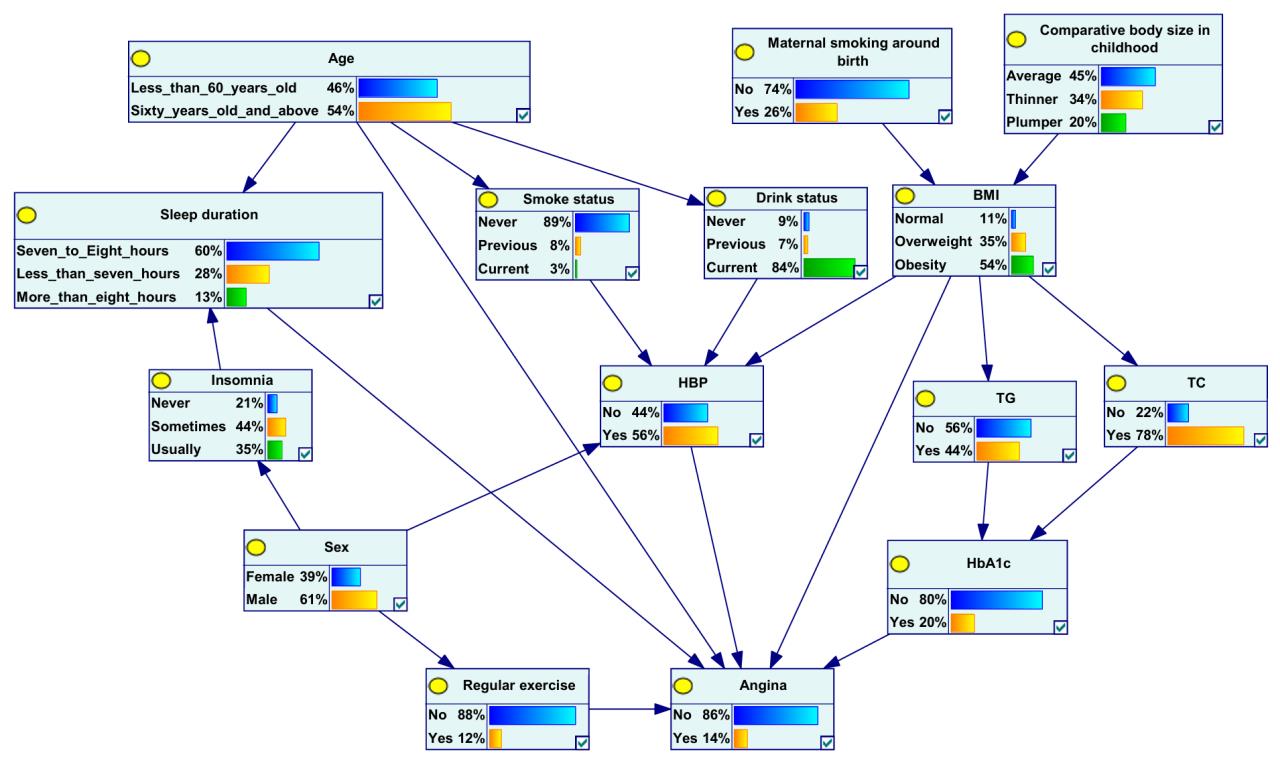
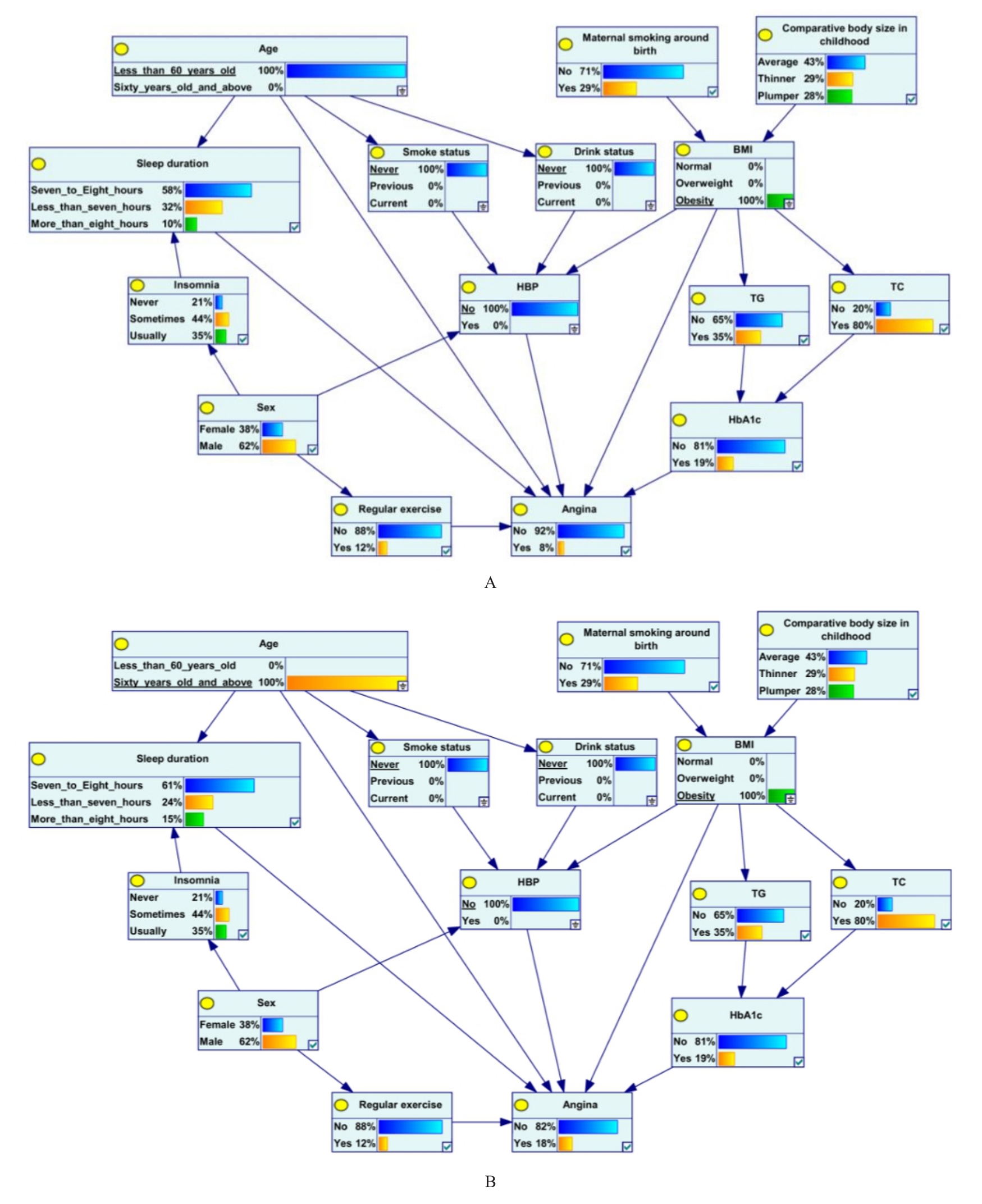
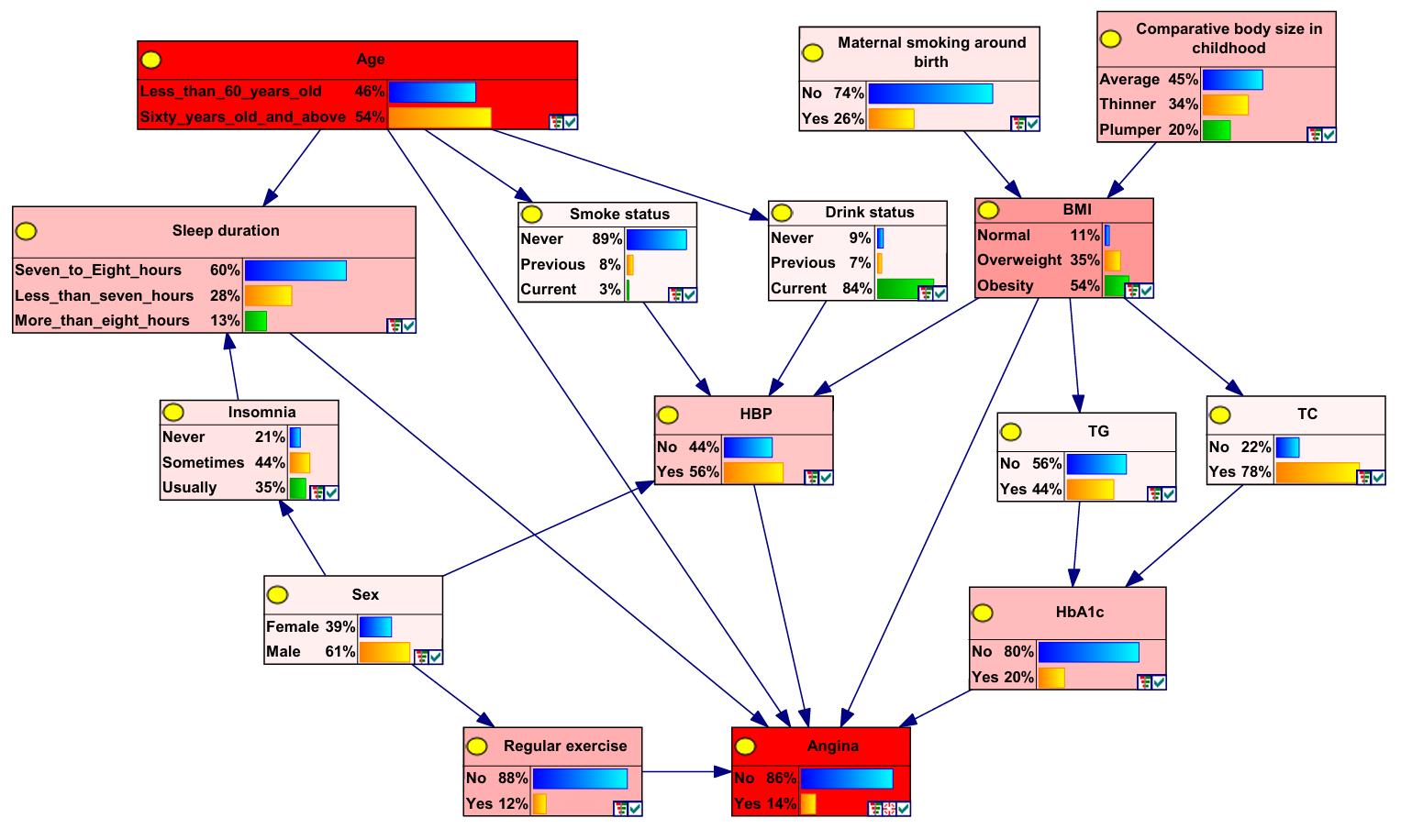
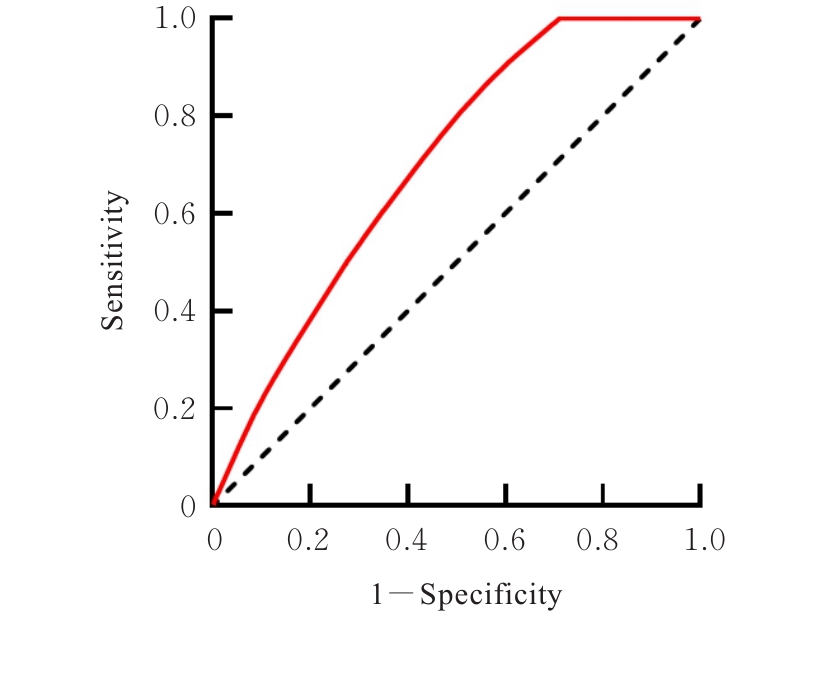
目的 探讨糖尿病(DM)患者发生心绞痛的影响因素,构建贝叶斯网络模型探索影响因素间的网络关系,并对DM患者发生心绞痛的风险进行预测。 方法 基于英国生物银行(UKB)数据库,使用Logistic回归分析模型筛选DM患者发生心绞痛的影响因素。采用禁忌搜索算法进行结构学习,贝叶斯估计方法进行参数学习并构建贝叶斯网络模型。 结果 共纳入22 712例DM患者。DM患者发生心绞痛的影响因素为患者性别、年龄、体质量指数(BMI)、甘油三酯(TG)、总胆固醇(TC)、糖化血红蛋白(HbA1c)、患高血压、母亲分娩前后吸烟、吸烟状况、饮酒状况、规律运动、失眠、睡眠时长和儿童时期相对体型共14个变量(P<0.05)。构建1个包含15个节点和22条有向边的贝叶斯网络模型,其中患者年龄、HbA1c、患高血压、规律运动、BMI和睡眠时长与DM患者发生心绞痛直接相关,患者性别、吸烟状况、饮酒状况、TC、TG、失眠、儿童时期相对体型、母亲分娩前后吸烟与DM患者发生心绞痛间接相关。 结论 患者年龄、HbA1c、患高血压、规律运动、BMI和睡眠时长是DM患者发生心绞痛的直接影响因素,控制HbA1c、血压和BMI水平,进行规律运动和保持适当的睡眠时长有利于降低DM患者发生心绞痛的风险。

关键词: 糖尿病, 心绞痛, 贝叶斯网络, 风险预测, 禁忌搜索算法

Abstract:

Objective To discuss the influencing factors of angina pectoris in the patients with diabetes mellitus (DM), to construct a Bayesian network model to explore the network relationships among the influencing factors, and to predict the risk of angina pectoris in the patients with DM. Methods Based on the UK Biobank(UKB) database, the Logistic regression aralysis model was used to screen the influencing factors of angina pectoris in the patients with DM. The taboo search algorithm was used for structure learning, and the Bayesian parameter estimation method was used for parameter learning to construct the Bayesian network model. Results A total of 22 712 DM patients were included. The influencing factors of angina pectoris in the patients with DM included 14 variables: gender, age, body mass index (BMI), triglycerides (TG), total cholesterol (TC), glycated hemoglobin (HbA1c), hypertension, maternal smoking around delivery, smoking status, alcohol consumption, regular exercise, insomnia, sleep duration, and childhood relative body size (P<0.05). A Bayesian network model was constructed with 15 nodes and 22 directed edges. Among them, age, HbA1c, hypertension, regular exercise, BMI, and sleep duration were directly associated with the occurrence of angina pectoris in the patients with DM, while gender, smoking status, alcohol consumption, TC, TG, insomnia, childhood relative body size, and maternal smoking around delivery were indirectly associated with the occurrence of angina pectoris in the patients with DM. Conclusion Age, HbA1c, hypertension, regular exercise, BMI, and sleep duration are direct influencing factors of angina pectoris in the patients with DM. Controlling HbA1c, blood pressure, and BMI levels, engaging in regular exercise, and maintaining appropriate sleep duration are beneficial for reducing the risk of angina pectoris in the patients with DM.

Key words: Diabetes mellitus, Angina pectoris, Bayesian network, Risk prediction, Taboo search algorithm

中图分类号: 

  • R587.1