吉林大学学报(工学版) ›› 2025, Vol. 55 ›› Issue (6): 2030-2037.doi: 10.13229/j.cnki.jdxbgxb.20230931
考虑公交与地铁换乘需求的公交时刻表优化
赖元文( ),陈艳生,王书易,张宇龙,朱新运
- 福州大学 土木工程学院,福州 350116
Bus schedule optimization considering bus and metro interchange needs
Yuan-wen LAI(),Yan-sheng CHEN,Shu-yi WANG,Yu-long ZHANG,Xin-yun ZHU
- College of Civil Engineering,Fuzhou University,Fuzhou 350116,China
摘要:
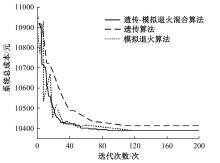
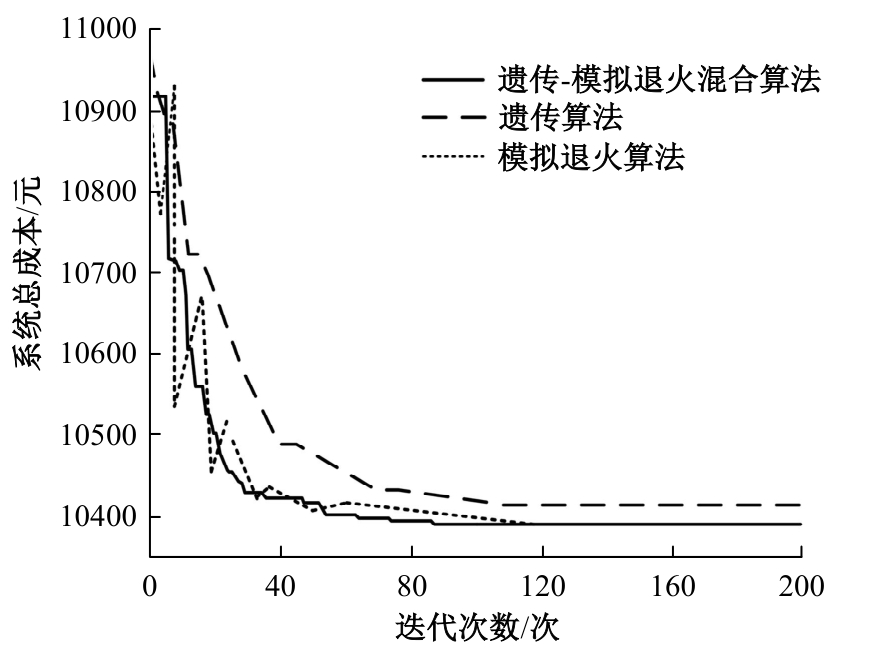
在考虑公交与地铁之间换乘需求的情况下,提出了一种全天的公交时刻表优化方法。首先,构建了一个优化模型,旨在最小化乘客候车时间成本和公交企业运营成本。然后,设计了遗传-模拟退火混合算法进行求解。最后,以福州市公交1路上行方向为例,验证了本文模型及算法的有效性和实用性。时刻表优化后,B-M模式、M-B模式和非换乘模式下乘客候车时间成本平均降低了19.30%,公交企业运营成本由于公交发车次数的增加而提升了4.95%,系统总成本节约了5.05%。
中图分类号:
- U491

| [1] | Ma C, Xu X. Providing spatial-temporal priority control strategy for BRT lanes: a simulation approach[J]. Journal of Transportation Engineering, Part A: Systems, 2020, 146(7): No.04020060. |
| [2] | 罗孝羚, 蒋阳升. 基于公交数据挖掘的时刻表排班协同换乘优化[J]. 交通运输系统工程与信息, 2017, 17(5): 173-178. |
| Luo Xiao-ling, Jiang Yang-sheng. Timetable transfer-coordination optimization based on transit data mining[J]. Journal of Transportation Systems Engineering and Information Technology, 2017, 17(5): 173-178. | |
| [3] | 孙杨, 宋瑞, 何世伟. 接运公交时刻表与区域车辆调度的综合优化[J]. 吉林大学学报: 工学版, 2011, 41(5): 1228-1233. |
| Sun Yang, Song Rui, He Shi-wei. Comprehensive optimization of feeder bus timetable and regional vehicle scheduling[J]. Journal of Jilin University (Engineering and Technology Edition), 2011, 41(5): 1228-1233. | |
| [4] | 邰国璇, 黄友能, 李春驰, 等. 基于灵活编组的市域快轨时刻表优化方法研究[J]. 交通运输系统工程与信息, 2023, 23(3): 195-203. |
| Tai Guo-xuan, Huang You-neng, Li Chun-chi, et al. An optimization method of train scheduling for urban rapid rail transit based on flexible train composition mode[J]. Journal of Transportation Systems Engineering and Information Technology, 2023, 23(3): 195-203. | |
| [5] | 马晓磊, 沈宣良, 张钊, 等. 基于拉格朗日松弛算法的自动驾驶公交调度优化研究[J]. 中国公路学报, 2019, 32(12): 10-24. |
| Ma Xiao-lei, Shen Xuan-liang, Zhang Zhao, et al. Optimization of autonomous bus scheduling based on lagrangian relaxation[J]. China Journal of Highway and Transport, 2019, 32(12): 10-24. | |
| [6] | Ibarra-rojas O J, Giesen R, Rios-solis Y A. An integrated approach for timetabling and vehicle scheduling problems to analyze the trade-off between level of service and operating costs of transit networks[J]. Transportation Research Part B: Methodological, 2014, 70: 35-46. |
| [7] | 宋俪婧, 白同舟, 贺玉龙, 等. 基于混合整数非线性规划的接驳公交优化模型[J]. 交通运输系统工程与信息, 2022, 22(3): 104-111. |
| Song Li-jin, Bai Tong-zhou, He Yu-long, et al. Feeder bus routes and frequency optimization based on mixed integer nonlinear programming[J]. Journal of Transportation Systems Engineering and Information Technology, 2022, 22(3): 104-111. | |
| [8] | 胡金成. 考虑运行能效的公交区域时刻表优化[J]. 交通运输系统工程与信息, 2021, 21(2): 139-144. |
| Hu Jin-cheng. Optimization of bus regional timetable considering operating efficiency[J]. Journal of Transportation Systems Engineering and Information Technology, 2021, 21(2): 139-144. | |
| [9] | 于滨, 杨忠振, 程春田. 公交线路发车频率优化的双层规划模型及其解法 [J]. 吉林大学学报: 工学版, 2006, 36(5): 664-668. |
| Yu Bin, Yang Zhong-zhen, Cheng Chun-tian. Bi-level programming model for optmizing bus frequencies and its algorithm[J]. Journal of Jilin University(Engineering and Technology Edition), 2006, 36(5): 664-668. | |
| [10] | Zhang W Y, Xia D Y, Liu T, et al. Optimization of Single-line bus timetables considering time-dependent travel times: a case study of Beijing, China[J]. Computers and Industrial Engineering, 2021, 158(4): No.107444. |
| [11] | Sergio J, Andrés F, Antonio G. Optimal fleet size, frequencies and vehicle capacities considering peak and off-peak periods in public transport[J]. Transportation Research Part A: Policy and Practice, 2017, 106(dec.): 65-74. |
| [12] | 张海, 吕苗苗, 倪少权. 基于非均匀发车间隔的大小交路时刻表优化模型[J]. 交通运输系统工程与信息, 2022, 22(6): 224-233. |
| Zhang Hai, Lv Miao-miao, Ni Shao-quan. Train timetable optimization model for full-length and short-turn routings with irregular departure intervals[J]. Journal of Transportation Systems Engineering and Information Technology, 2022, 22(6): 224-233. | |
| [13] | 李得伟, 丁世顺, 张琦, 等. 基于客流需求的城际列车时刻表模型改进研究[J]. 交通运输系统工程与信息, 2017, 17(3): 157-164. |
| Li De-wei, Ding Shi-shun, Zhang Qi, et al. Improved dynamic demand oriented timetabling model for intercity railway[J]. Journal of Transportation Systems Engineering and Information Technology, 2017, 17(3): 157-164. | |
| [14] | 张晓春, 高永, 于壮, 等. 基于公交GPS和IC卡数据的乘客人均候车时间估算方法研究[J]. 交通运输系统工程与信息, 2019, 19(5): 236-241. |
| Zhang Xiao-chun, Gao Yong, Yu Zhuang, et al. Passenger average waiting time estimation based on bus GPS and IC card data[J].Journal of Transportation Systems Engineering and Information Technology, 2019, 19(5): 236-241. | |
| [15] | Vallada E, Ruiz R. A genetic algorithm for the unrelated parallel machine scheduling problem with sequence dependent setup times[J]. European Journal of Operational Research, 2011, 211(3): 612-622. |
| [16] | 王淑伟, 孙立山, 荣建. 北京市轨道站点吸引范围研究[J]. 交通运输系统工程与信息, 2013, 13(3): 183-188. |
| Wang Shu-wei, Sun Li-shan, Rong Jian. Catchment area analysis of Beijing transit stations[J]. Journal of Transportation Systems Engineering and Information Technology, 2013, 13(3): 183-188. | |
| [17] | 杨小露. 考虑共享单车影响的微循环公交线路优化研究[D]. 北京: 北京交通大学交通运输学院, 2021. |
| Yang Xiao-lu. Research on optimization of microcirculation bus route considering the influence of shared bicycles[D]. Beijing: School of Transportation, Beijing Jiaotong University, 2021. | |
| [18] | 王子甲, 贾慧慧, 朱亚迪, 等. 基于智能卡数据的轨道与公交复合网络通勤方式选择行为研究[J]. 交通运输系统工程与信息, 2022, 22(1): 67-73. |
| Wang Zi-jia, Jia Hui-hui, Zhu Ya-di, et al. Commuting mode choice behavior in rail and bus composite network based on smart carddata[J]. Journal of Transportation Systems Engineering and Information Technology, 2022, 22(1): 67-73. | |
| [19] | 邓吉浩, 宋瑞, 陈小鸿, 等. 开放式小区公交微循环站点与线网综合设计[J]. 北京交通大学学报, 2020, 44(1): 34-41. |
| Deng Ji-hao, Song Rui, Chen Xiao-hong, et al. Integrated design of station sites and network of bus microcirculation system in open communities[J]. Journal of Beijing Jiaotong University, 2020, 44(1): 34-41. | |
| [20] | 刁鸣, 邹丽. 模拟退火遗传禁忌搜索的多用户检测算法[J]. 哈尔滨工程大学学报, 2014, 35(3): 373-377. |
| Diao Ming, Zou Li. Multi-user detection based on the simulated annealing genetic Tabu search[J]. Journal of Harbin Engineering University, 2014, 35(3): 373-377. |
| [1] | 周成栋,宋菲,赵小梅,姚俊杰. 基于多模式双动态演化的拥堵收费模型[J]. 吉林大学学报(工学版), 2025, 55(4): 1319-1327. |
| [2] | 孙峣,姚宝珍,白子建. 基于随机森林模型的交通拥堵疏导效果评估[J]. 吉林大学学报(工学版), 2025, 55(2): 512-519. |
| [3] | 年光跃,潘海啸,孙健. 城市建成环境与道路交通运行关系[J]. 吉林大学学报(工学版), 2025, 55(1): 141-149. |
| [4] | 董春娇,陆育霄,马社强,李鹏辉. 考虑等待忍耐时间的电动自行车违规行为研判[J]. 吉林大学学报(工学版), 2024, 54(9): 2540-2546. |
| [5] | 马书红,廖国美,黄岩,张俊杰. 建成环境对交通小区地铁通勤客流的异质性影响[J]. 吉林大学学报(工学版), 2024, 54(7): 1913-1922. |
| [6] | 熊志华,董黛悦,董春娇,郑炎,解超. 考虑个人偏好的观赛人群组合决策选择行为[J]. 吉林大学学报(工学版), 2024, 54(4): 979-986. |
| [7] | 吴娇蓉,林清凯,邓泳淇. 基于公交线路运行稳定性的潜在公交专用道需求识别方法[J]. 吉林大学学报(工学版), 2024, 54(3): 692-699. |
| [8] | 庄焱,董春娇,米雪玉,张小雨,王菁. 基于随机参数Logit的中小城市居民出行方式选择建模[J]. 吉林大学学报(工学版), 2024, 54(2): 461-468. |
| [9] | 张文会,伊静. 考虑通行能力和排队延误的公交停靠系统优化[J]. 吉林大学学报(工学版), 2024, 54(1): 146-154. |
| [10] | 邝先验,陈自如. 基于CA的无信号灯控制路段行人过街横道处动态博弈礼让行为[J]. 吉林大学学报(工学版), 2022, 52(4): 837-846. |
| [11] | 贾洪飞,邵子函,杨丽丽. 终点不确定条件下网约车合乘匹配模型及算法[J]. 吉林大学学报(工学版), 2022, 52(3): 564-571. |
| [12] | 董春娇,董黛悦,诸葛承祥,甄理. 电动自行车出行特性及骑行决策行为建模[J]. 吉林大学学报(工学版), 2022, 52(11): 2618-2625. |
| [13] | 杨世军,裴玉龙,潘恒彦,程国柱,张文会. 城市公交车辆驻站时间特征分析及预测[J]. 吉林大学学报(工学版), 2021, 51(6): 2031-2039. |
| [14] | 孙宝凤,姜源,郑黎黎,崔万坤,任欣欣. 变覆盖半径下城市轨道交通维护保障网络设计模型[J]. 吉林大学学报(工学版), 2020, 50(2): 526-534. |
| [15] | 陈磊,王江锋,谷远利,闫学东. 基于思维进化优化的多源交通数据融合算法[J]. 吉林大学学报(工学版), 2019, 49(3): 705-713. |
|