吉林大学学报(工学版) ›› 2025, Vol. 55 ›› Issue (5): 1595-1603.doi: 10.13229/j.cnki.jdxbgxb.20230814
基于参数相关性分析和机器学习算法的高强混凝土徐变预测
梅生启1,2( ),刘晓东2,王兴举3,李旭峰2,武腾2,程相旭2
- 1.道路与铁道工程安全保障教育部重点实验室,石家庄 050043
2.石家庄铁道大学 土木工程学院,石家庄 050043
3.石家庄铁道大学 交通运输学院,石家庄 050043
Prediction of high strength concrete creep based on parametric MIC analysis and machine learning algorithm
Sheng-qi MEI1,2(),Xiao-dong LIU2,Xing-ju WANG3,Xu-feng LI2,Teng WU2,Xiang-xu CHENG2
- 1.Key Laboratory of Roads and Railway Engineering Safety of Ministry of Education,Shijiazhuang 050043,China
2.School of Civil Engineering,Shijiazhuang Tiedao University,Shijiazhuang 050043,China
3.School of Traffic and Transportation,Shijiazhuang Tiedao University,Shijiazhuang 050043,China
摘要:
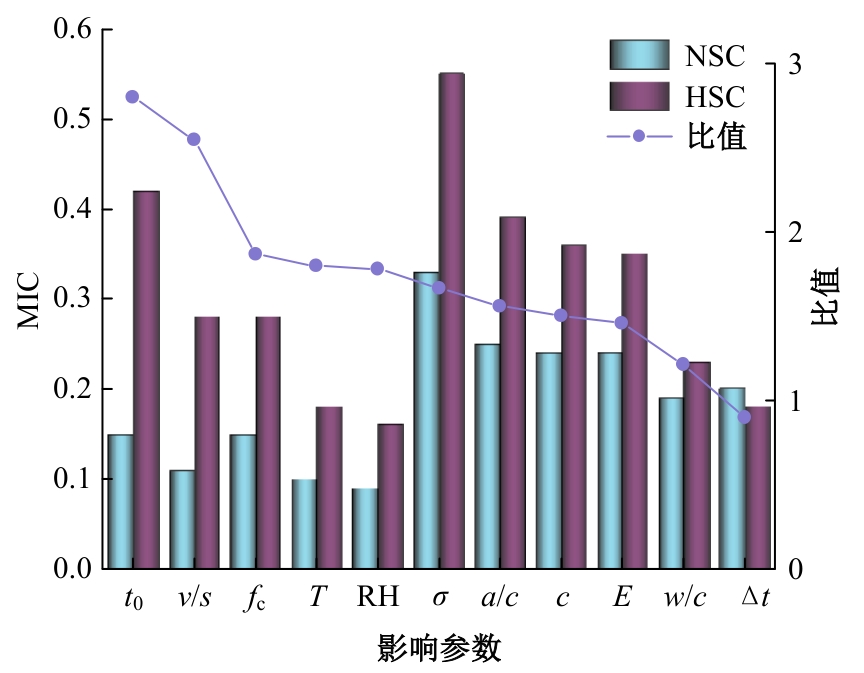
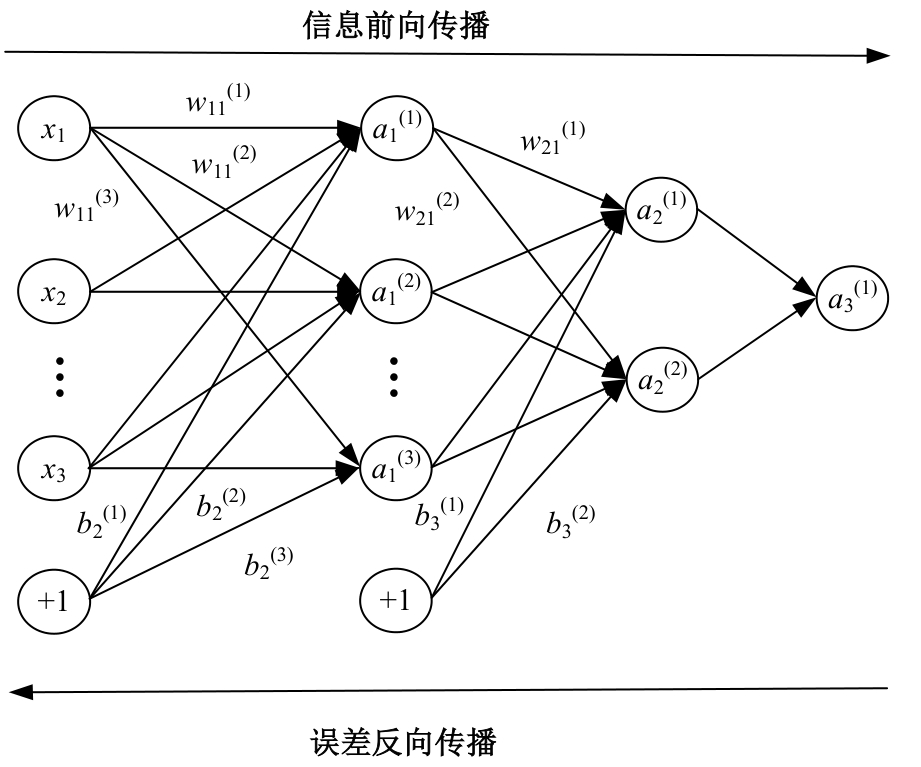
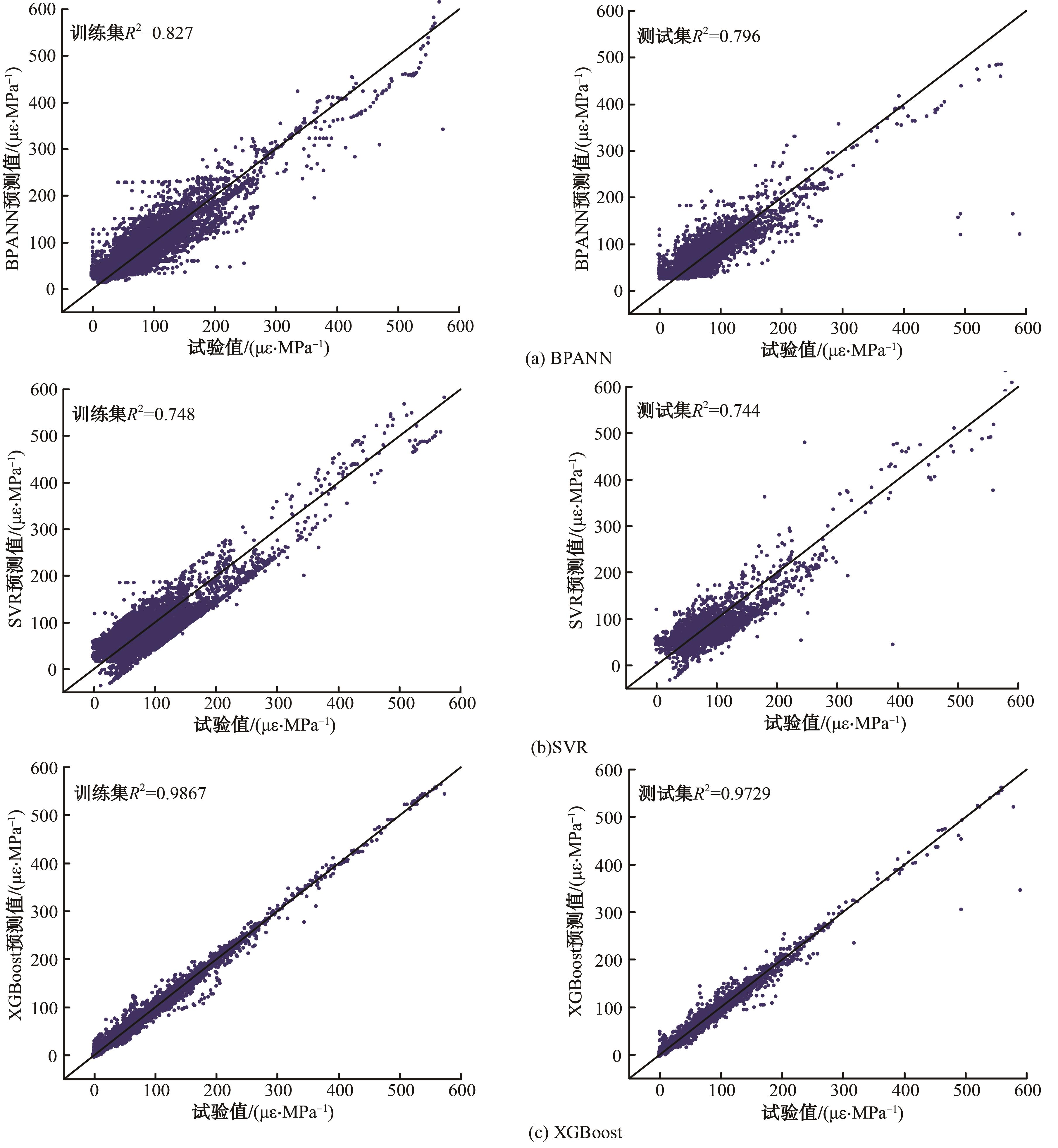
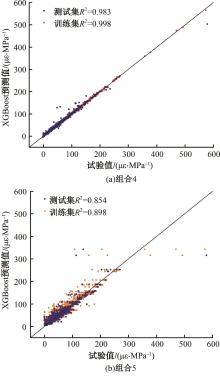
针对预测混凝土徐变的机器学习模型已有较多研究,但区分混凝土强度的研究较少的问题,基于NU-ITI数据库,采用3种机器学习模型,即反向传播人工神经网络、支持向量回归和极端梯度提升(XGBoost)建立了混凝土徐变的预测模型。结果表明,XGBoost能很好地预测混凝土的徐变(R2=0.972 9)。通过对高强混凝土参数的相关性分析,筛选出相关系数最高和最低的参数组。基于参数筛选后的XGBoost模型重新对高强混凝土徐变进行计算,发现筛除弱相关参数会显著降低计算结果的鲁棒性。本文研究表明,高强混凝土徐变影响参数之间存在不同程度的相关性,筛除强相关参数对模型计算准确性影响较小,而筛除弱相关参数影响较大。研究成果可为高强混凝土徐变的建模提供参考。
中图分类号:
- TU17

| [1] | Vandamme M, Ulm F J. Nanogranular origin of concrete creep[J]. Proceedings of the National Academy of Sciences, 2009, 106(26): 10552-10557. |
| [2] | 黄永辉, 刘爱荣, 傅继阳, 等.高强钢管高强混凝土徐变特性试验研究[J]. 工程力学, 2021,38(8): 204-212. |
| Huang Yong-hui, Liu Ai-rong, Fu Ji-yang, et al. Experimental study on the creep characteristics of high-strength concrete filled high-strength steel tube [J]. Engineering Mechanics, 2021, 38(8): 204-212. | |
| [3] | 柯敏勇, 刘海祥, 陈松.桥用高强混凝土双轴徐变试验研究[J].建筑结构学报,2012, 33(6): 116-122. |
| Ke Min-yong, Liu Hai-xiang, Chen Song. Biaxial creep experiment for high strength concrete in bridge engineering [J]. Journal of Building Structures, 2012, 33(6): 116-122. | |
| [4] | Le Roy R, Le Maou F, Torrenti J M. Long term basic creep behavior of high performance concrete: data and modelling[J]. Materials and Structures, 2017, 50(1): 1-11. |
| [5] | ACI Committee 209.209R1-92: Prediction of creep, shrinkage and temperature effects in concrete structures. manual of concrete practice part 1 [S/OL]. [1992-01-03]. |
| [6] | Betonbau. Fib model code for concrete structures 2010[J]. Ernst Shon, 2013: 97834336. |
| [7] | Gardner N J, Lockman M J. Design provisions for drying shrinkage and creep of normal strength concrete [J]. ACI Materials Journal, 2001, 98(2): 159-167. |
| [8] | Bažant Z P, Baweja S. Creep and shrinkage prediction model for analysis and design of concrete structures: model B3[J]. Materials and Structures, 1995, 28(6): 357-365. |
| [9] | Bažant Z P, Wendner R. RILEM draft recommendation. TC-242-MDC multi-decade creep and shrinkage of concreteL Material model and structural analysis Model B4 for creep, drying shrinkage and autogenous shrinkage of normal and high-strength concretes with multi-decad applicability[J]. Materials Structures, 2015, 48(4): 753-770. |
| [10] | Peng Y, Unluer C. Modeling the mechanical properties of recycled aggregate concrete using hybrid machine learning algorithms[J]. Resources, Conservation and Recycling, 2023, 190: 106812. |
| [11] | Yang Z, Zhu H, Zhang B, et al. Short-term creep behaviors of seawater sea-sand coral aggregate concrete: An experimental study with rheological model and neural network[J]. Construction and Building Materials, 2023, 363: 129786. |
| [12] | Pham A D, Hoang N D, Nguyen Q T. Predicting compressive strength of high-performance concrete using metaheuristic-optimized least squares support vector regression[J]. Journal of Computing in Civil Engineering, 2016, 30(3): No.06015002. |
| [13] | Liang M, Chang Z, Wan Z, et al. Interpretable ensemble-machine-learning models for predicting creep behavior of concrete[J]. Cement and Concrete Composites, 2022, 125: 104295. |
| [14] | 曲广雷, 闫宗伟, 郑木莲, 等. 基于神经网络与回归分析的多孔混凝土性能预测[J]. 吉林大学学报:工学版, 2025, 55(1): 269-282. |
| Qu Guang-lei, Yan Zong-wei, Zheng Mu-lian, et al. Performance prediction of porous concrete based on neural network and regression analysis[J]. Journal of Jilin University (Engineering and Technology Editon), 2025, 55(1): 269-282. | |
| [15] | Xu J, Zhao X, Yu Y, et al. Parametric sensitivity analysis and modelling of mechanical properties of normal-and high-strength recycled aggregate concrete using grey theory, multiple nonlinear regression and artificial neural networks[J]. Construction and Building Materials, 2019, 211: 479-491. |
| [16] | Park D, Rilett L R. Forecasting freeway link travel times with a multilayer feedforward neural network[J]. Computer‐Aided Civil and Infrastructure Engineering, 1999, 14(5): 357-367. |
| [17] | Reshef D N, Reshef Y A, Finucane H K, et al. Detecting novel associations in large data sets[J]. Science, 2011, 334(6062): 1518-1524. |
| [18] | Li K, Long Y, Wang H, et al. Modeling and sensitivity analysis of concrete creep with machine learning methods[J]. Journal of Materials in Civil Engineering, 2021, 33(8): 04021206. |
| [19] | Hubler M H, Wendner R, Bazant Z P. Comprehensive database for concrete creep and shrinkage: Analysis and recommendations for testing and recording[J]. ACI Materials Journal, 2015, 112(4): 547-558. |
| [20] | Tang L, Na S H. Comparison of machine learning methods for ground settlement prediction with different tunneling datasets[J]. Journal of Rock Mechanics and Geotechnical Engineering, 2021, 13(6): 1274-1289. |
| [21] | Hastie T, Tibshirani R, Friedman J H, et al. The Elements of Statistical Learning: Data Mining, Inference, and Prediction[M]. New York: Springer, 2009. |
| [22] | Cortes C, Vapnik V. Support-vector networks[J]. Machine Learning, 1995, 20: 273-297. |
| [23] | Pedregosa F, Varoquaux G, Gramfort A, et al. Scikit-learn: machine learning in python[J]. Journal of Machine Learning Research, 2011, 12: 2825-2830. |
| [24] | Chen T, Guestrin C. XGBoost: a scalable tree boosting system[C]∥Proceedings of the 22nd ACM SIGKDD International Conference on Knowledge Discovery and Data Mining, San Francisco, USA, 2016: 785-794. |
| [25] | Zeghal M. Modeling the creep compliance of asphalt concrete using the artificial neural network technique[C]∥GeoCongress 2008: Characterization, Monitoring, and Modeling of GeoSystems, New Orleans, USA, 2008: 910-916. |
| [1] | 樊学平,杨渡,李九谕,赵启凡,刘月飞. 温度和车辆荷载耦合产生的桥梁极值应力预测[J]. 吉林大学学报(工学版), 2025, 55(5): 1588-1594. |
| [2] | 张亮亮,程桦,王晓健. 常规三轴压缩下高强混凝土能量演化和破坏准则[J]. 吉林大学学报(工学版), 2025, 55(3): 974-985. |
| [3] | 周宇,李萌,狄生奎,石贤增,陈东. 变截面两铰拱推力影响线解析解及损伤识别应用[J]. 吉林大学学报(工学版), 2025, 55(2): 664-672. |
| [4] | 王羽岱,王斌,苗福生,马楠. 水热耦合变化下衬砌渠道冻胀响应[J]. 吉林大学学报(工学版), 2025, 55(1): 256-268. |
| [5] | 姜浩,赵正文. 玄武岩纤维网格水泥基复合材料加固RC梁抗剪性能试验[J]. 吉林大学学报(工学版), 2025, 55(1): 211-220. |
| [6] | 韦芳芳,李丽萍,徐庆鹏,赵有正,杨晶晶. 受火双钢板-混凝土组合剪力墙加固后抗震性能试验[J]. 吉林大学学报(工学版), 2025, 55(1): 230-244. |
| [7] | 赵金全,周龙,丁永刚,朱熔基. 螺旋箍筋-波纹管浆锚连接锚固性能试验[J]. 吉林大学学报(工学版), 2024, 54(9): 2484-2494. |
| [8] | 杨伟松,张安,许卫晓,李海生,杜轲. 刚度增强型金属连梁阻尼器的抗震性能[J]. 吉林大学学报(工学版), 2024, 54(9): 2469-2483. |
| [9] | 阎奇武,邹忠亮. 减震结构阻尼器优化布置混合算法[J]. 吉林大学学报(工学版), 2024, 54(8): 2267-2274. |
| [10] | 姜封国,周玉明,白丽丽,梁爽. 改进磷虾群算法及其在结构优化中的应用[J]. 吉林大学学报(工学版), 2024, 54(8): 2256-2266. |
| [11] | 张广泰,周乘孝,刘诗拓. 盐渍土环境下纤维锂渣混凝土柱恢复力模型[J]. 吉林大学学报(工学版), 2024, 54(7): 1944-1957. |
| [12] | 刁延松,任义建,杨元强,赵凌云,刘秀丽,刘芸. 带有摩擦耗能组件的可更换钢梁柱拼接节点抗震性能试验[J]. 吉林大学学报(工学版), 2024, 54(6): 1643-1656. |
| [13] | 樊学平,刘月飞. 基于改进高斯混合粒子滤波新算法的桥梁极值应力动态预测[J]. 吉林大学学报(工学版), 2024, 54(4): 1038-1044. |
| [14] | 刘一凡,缪志伟,申晨,耿祥东. 基于蒙特卡罗法的不均匀锈蚀钢筋力学性能评估[J]. 吉林大学学报(工学版), 2024, 54(4): 1007-1015. |
| [15] | 樊学平,周衡,刘月飞. 基于Gaussian Copula-贝叶斯动态模型的桥梁构件时变可靠性分析[J]. 吉林大学学报(工学版), 2024, 54(2): 485-493. |
|