吉林大学学报(工学版) ›› 2026, Vol. 56 ›› Issue (3): 700-710.doi: 10.13229/j.cnki.jdxbgxb.20240812
• 交通运输工程·土木工程 • 上一篇
基于耐震时程法的耗能自复位铰节点RC框架抗震性能
鲁亮1,2( ),颜浩天2
- 1.同济大学 土木工程防灾减灾全国重点实验室,上海 200092
2.同济大学 结构防灾减灾工程系,上海 200092
Seismic behavior of reinforced concrete frame with energy dissipation self-centering hinge joints based on endurance time method
Liang LU1,2(),Hao-tian YAN2
- 1.State Key Laboratory of Disaster Reduction in Civil Engineering,Tongji University,Shanghai 200092,China
2.Department of Disaster Mitigation for Structures,Tongji University,Shanghai 200092,China
摘要:
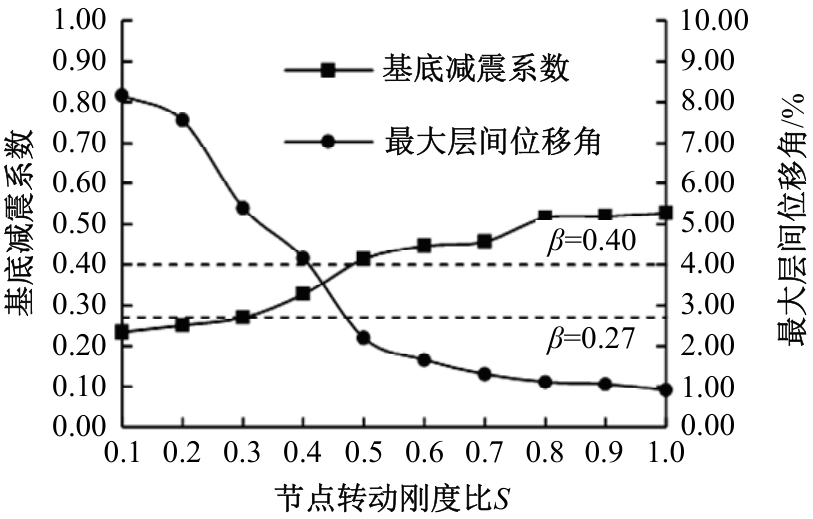
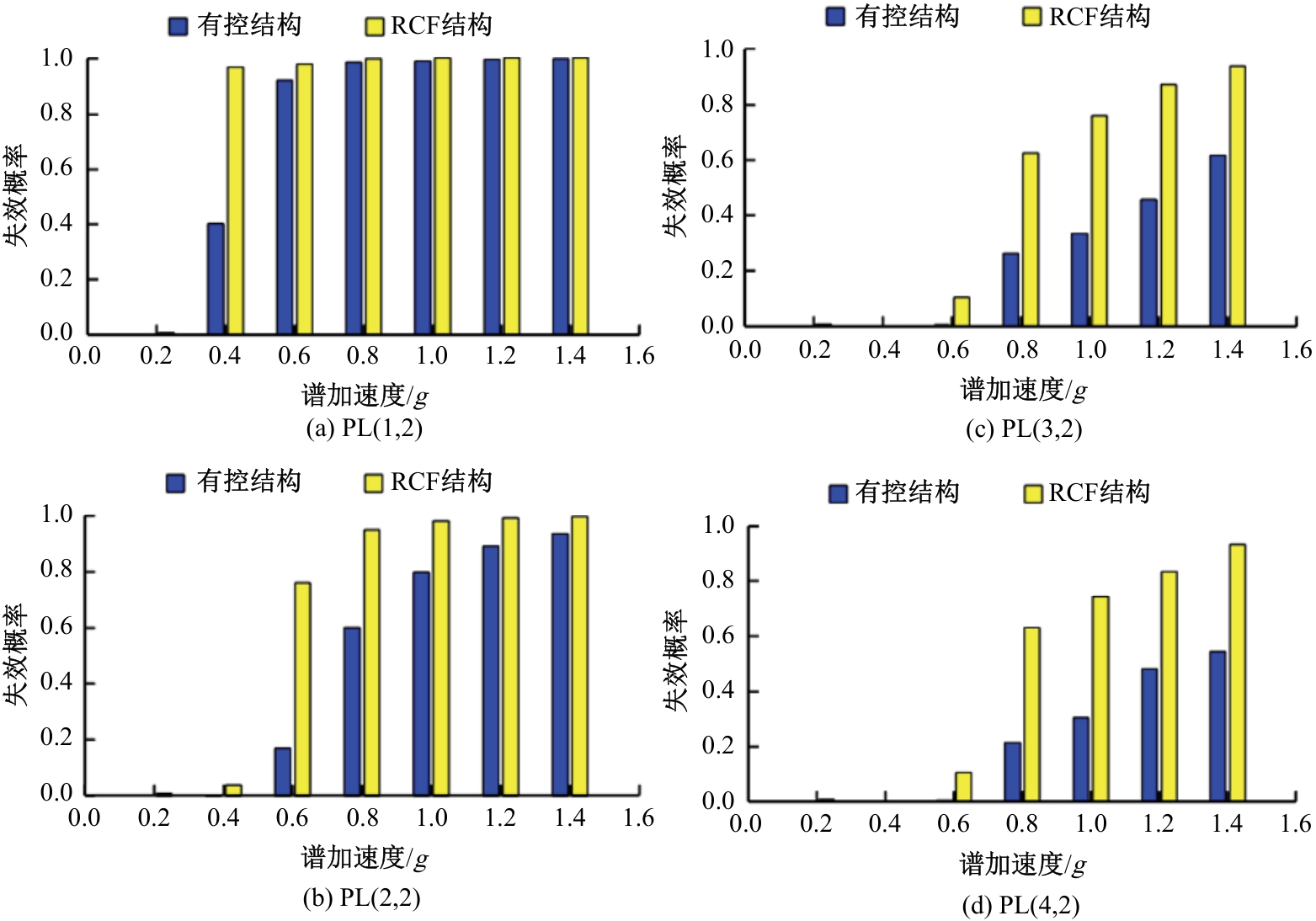
设置耗能自复位铰节点(EDSC-HJ)的钢筋混凝土框架结构是一种新型韧性结构体系。首先,介绍了EDSC-HJ框架结构的基本构造和有限元建模方法;其次,介绍了耐震时程法的基本原理,采用耐震时程法对EDSC-HJ框架结构和常规钢筋混凝土框架结构(RCF)的抗震性能进行了数值模拟对比研究。研究结果表明:节点相对转动刚度比在[0.2, 0.5]范围内,不同节点刚度的EDSC-HJ框架结构地震作用下的动力响应变化明显,过大的节点刚度将导致EDSC-HJ框架结构的性能趋近于RCF结构;罕遇地震下,EDSC-HJ框架结构通过弱化节点约束,最大基底剪力响应和最大加速度响应相比于RCF结构分别降低了68%和76%,最大层间位移响应上升了19%,但仅为设计限值1/20的31.5%;相比于RCF结构,EDSC-HJ框架结构强震下的可修复性能显著提高。
中图分类号:
- TU351

| [1] | Hua W, Ye J H. Research on seismic resilience evaluation index of mid-rise CFS structures[J]. Journal of Constructional Steel Research, 2024, 212: 108271. |
| [2] | Wang X Y, Xie L L, Chong X, et al. Seismic resilience of reinforced concrete frame equipped with energy dissipative cladding panel system[J]. Journal of Earthquake Engineering, 2023, 28(3): 617-636. |
| [3] | . 建筑抗震韧性评价标准 [S]. |
| [4] | Applied Technology Council, National Earthquake Hazards Reduction Program. Seismic performance assessment of buildings[M]. Washington: Federal Emergency Management Agency, 2012. |
| [5] | FEMA—P58. Seismic Performance Assessment of Buildings: Volume1: Methodology [S]. |
| [6] | Almufti I, Willford M. REDi rating system: resilience-based earthquake design initiative for the next generation of buildings[R]. London: Arup, 2013. |
| [7] | Resiliency Council U. S.. Rating building performance in natural disasters[EB/OL]. [2020-02-10]. |
| [8] | Nigel P M J, Tao J R. Seismic response of precast prestressed concrete frames with partially debonded tendons[J]. PCI Journal, 1993, 38(1): 58-69. |
| [9] | Stone W, Cheok G, Stanton J. Performance of hybrid moment-resisting precast beam-column concrete connections subjected to cyclic loading[J]. Aci Structural Journal, 1995, 92: 229-249. |
| [10] | 赵军, 赵齐, 陈纪伟. CFRP筋钢筋混凝土剪力墙自复位性能试验研究[J]. 土木建筑与环境工程, 2016, 38(3): 18-24. |
| Zhao Jun, Zhao Qi, Chen Ji-wei. Experimental analysis of the self-centering performance of shear walls reinforced by CFRP and steel bars[J]. Journal of Civil Architectural & Environmental Engineering, 2016, 38(3): 18-24. | |
| [11] | 谢鲁齐, 吴京, 章锦洋, 等. 可更换耗能连接力学机理及变形性能研究[J]. 工程力学, 2020, 37(6): 186-195. |
| Xie Lu-qi, Wu Jing, Zhang Jin-yang, et al. Study on the mechanical and deformation properties of replaceable energy dissipation connectors[J]. Engineering Mechanics, 2020, 37(6): 186-195. | |
| [12] | 谢鲁齐, 吴京, 章锦洋, 等. 基于可更换耗能连接的装配式混凝土梁柱节点力学性能试验研究[J]. 东南大学学报: 自然科学版, 2021, 51(1): 1-8. |
| Xie Lu-qi, Wu Jing, Zhang Jin-yang, et al. Experimental study on mechanical property of precast concrete frame with replaceable energy dissipation connectors[J]. Journal of Southeast University (Natural Science Edition), 2021, 51(1): 1-8. | |
| [13] | 叶建峰, 郑莲琼, 颜桂云, 等. 装配式可更换耗能铰滞回性能试验研究[J]. 工程力学, 2021, 38(8): 42-54. |
| Ye Jian-feng, Zheng Lian-qiong, Yan Gui-yun, et al. Experimental study on hysteretic performance replaceable energy-dissipating prefabricated hinges[J]. Engineering Mechanics, 2021, 38(8): 42-54. | |
| [14] | 毕仲君, 胡志强, 王琪, 等. 基于新型自复位摩擦耗能支撑的RC框架结构地震残余变形控制[J]. 振动与冲击, 2020, 39(15): 95-102. |
| Bi Zhong-jun, Hu Zhi-qiang, Wang Qi, et al. Seismic residual deformation control for RC frame structures based on a novel self-centering friction damping brace[J]. Journal of Vibration and Shock, 2020, 39(15): 95-102. | |
| [15] | 徐龙河, 敬祺轲, 谢行思. 主余震下自复位支撑RC框架结构性能研究[J]. 工程力学, 2023, 40(5): 117-124. |
| Xu Long-he, Jing Qi-ke, Xie Xing-si. Performance study on RC frame structures with self-centering braces under main-and after-earthquakes[J]. Engineering Mechanics, 2023, 40(5): 117-124. | |
| [16] | 鲁亮, 陈凯芳, 胡宇飞. 梁端弹簧自复位框架耗能节点试验研究[J]. 结构工程师, 2019, 35(1): 122-130. |
| Lu Liang, Chen Kai-fang, Hu Yu-fei. Experimental research on the energy-dissipating self-centering frame joint with beam-end spring[J]. Structural Engineers, 2019, 35(1): 122-130. | |
| [17] | Estekanchi H E, Riahi H T, Vafai A. Application of endurance time method in seismic assessment of steel frames[J]. Engineering Structures, 2011, 33(9): 2535-2546. |
| [18] | 鲁亮, 颜浩天, 夏婉秋, 等. 设置耗能自复位铰节点的RC框架结构振动台试验研究[J]. 建筑结构学报, 2022, 43(): 53-60. |
| Lu Liang, Yan Hao-tian, Xia Wan-qiu, et al. Shaking table test of RC frame structure with energy dissipating self-centering hinge joint[J]. Journal of Building Structures, 2022, 43(Sup.1): 53-60. | |
| [19] | 吴晓涵. NosaCAD与ABAQUS和PERFORM-3D弹塑性模型转换及分析应用[J]. 建筑结构, 2012, 42(): 207-212. |
| Wu Xiao-han. Model transformation from NosaCAD to ABAQUS and PERFORM-3D and nonlinear structure analysis by these software[J]. Building Structure, 2012, 42(Sup.2): 207-212. | |
| [20] | 汪梦甫, 龙思. 高层钢-混凝土混合结构抗震分析的耐震时程方法[J]. 工程抗震与加固改造, 2016, 38(4): 1-11. |
| Wang Meng-fu, Long Si. Endurance time method for seismic response analysis of steel-concrete hybrid structures[J]. Earthquake Resistant Engineering and Retrofitting, 2016, 38(4): 1-11. | |
| [21] | Hariri-Ardebili M A, Sattar S, Estekanchi H E. Performance-based seismic assessment of steel frames using endurance time analysis[J]. Engineering Structures, 2014, 69(15): 216-234. |
| [22] | Jalayer F, Cornell C A. Alternative non-linear demand estimation methods for probability-based seismic assessments[J]. Earthquake Engineering and Structural Dynamic, 2009, 38(8): 951-972. |
| [23] | . 建筑抗震设计规范 [S]. |
| [24] | Miri M S, Riahi T H, Mahmoudy A S. Uniform deformation distribution of structures at different seismic hazard levels using endurance time method[J]. Structures, 2024, 60: 105836. |
| [25] | Uma S R, Pampanin S, Christopoulos C. Development of probabilistic framework for performance-based seismic assessment of structures considering residual deformations[J]. Journal of Earthquake Engineering, 2010, 14(7): 1092-1111. |
| [26] | Vamvatsikos D, Cornell C A. Incremental dynamic analysis[J]. Earthquake Engineering and Structural Dynamics, 2002, 31(3): 491-514. |
| [27] | Luco N, Cornell C A. Effects of random connection fractures on the demands and reliability for a 3-story pre-northridge SMRF structure[C]∥Proceedings of the 6th US National Conference on Earthquake Engineering, Seattle, USA, 1998. |
| [28] | 武大洋, 吕西林.复合自复位结构基于概率的性能评估[J]. 建筑结构学报, 2017, 38(8): 14-24. |
| Wu Da-yang, Xi-lin Lyu. Probabilistic performance assessment of self-centering dual systems[J]. Journal of Building Structures, 2017, 38(8): 14-24. | |
| [29] | Kam W Y, Pampanin S, Carr A J, et al. Design procedure and behaviour of advanced flag-shaped(afs) mdof systems[C]∥New Zealand Society of Earthquake Engineering Conference, Wairakei, New Zealand, 2008: 38. |
| [1] | 刘正楠,唐佳伟,张维科,陈兴冲,马华军. 钢筒内置可更换橡胶穿心式摩擦阻尼器滞回特性及其在自复位桥墩中的应用[J]. 吉林大学学报(工学版), 2026, 56(2): 407-415. |
| [2] | 李义,刘轶,姚卫国. 汽车内饰件胶接过程中产品质量的提升[J]. 吉林大学学报(工学版), 2025, 55(9): 2926-2934. |
| [3] | 姜歌东,王昊,荆亚彬. 接触热阻对高速滚珠丝杠副温升特性的影响[J]. 吉林大学学报(工学版), 2025, 55(6): 1915-1922. |
| [4] | 韦芳芳,李丽萍,徐庆鹏,赵有正,杨晶晶. 受火双钢板-混凝土组合剪力墙加固后抗震性能试验[J]. 吉林大学学报(工学版), 2025, 55(1): 230-244. |
| [5] | 刘化民,杨舒涵,李义,梁策,韩奇钢. 推力杆球铰仿生表面改进及有限元分析[J]. 吉林大学学报(工学版), 2024, 54(9): 2733-2740. |
| [6] | 秦拥军,陈奇,张驰,王建虎. 含起波钢筋预制梁柱节点抗震性能试验[J]. 吉林大学学报(工学版), 2024, 54(6): 1677-1687. |
| [7] | 刁延松,任义建,杨元强,赵凌云,刘秀丽,刘芸. 带有摩擦耗能组件的可更换钢梁柱拼接节点抗震性能试验[J]. 吉林大学学报(工学版), 2024, 54(6): 1643-1656. |
| [8] | 何华飞,李兆平,符瑞安,马绍麟,黄明利. 考虑地层约束效应的预制侧墙节点抗震性能试验[J]. 吉林大学学报(工学版), 2024, 54(6): 1601-1611. |
| [9] | 杨志军,张驰,黄观新. 基于浮动坐标法的刚柔耦合定位平台力学模型[J]. 吉林大学学报(工学版), 2024, 54(2): 385-393. |
| [10] | 雷鸣,尹思阳,王德玲,张继承,路世伟. 基于静力推覆分析算法的高层建筑混凝土核心筒抗震性能模拟[J]. 吉林大学学报(工学版), 2023, 53(9): 2573-2580. |
| [11] | 邸振勇,杨新辉,林霄. 基于荷载⁃位移滞回曲线的建筑双梁⁃柱节点抗震性能分析[J]. 吉林大学学报(工学版), 2023, 53(7): 2061-2066. |
| [12] | 王林峰,夏万春,徐浪,黄晓明,谭国金,张继旭. 板簧式减震锚头结构及抗震性能分析[J]. 吉林大学学报(工学版), 2023, 53(6): 1842-1852. |
| [13] | 张玥,刘传森,宋飞. 桥台背墙对连续梁桥地震易损性的影响[J]. 吉林大学学报(工学版), 2023, 53(5): 1372-1380. |
| [14] | 闫清峰,张纪刚,王涛,陈德刚,郁有升,杨迎春. 预制预装修模块化建筑连接节点抗震性能[J]. 吉林大学学报(工学版), 2023, 53(2): 505-514. |
| [15] | 肖阳,王洁,刘孟军,杨发庆,张天瑶,兰巍. 质子交换膜燃料电池气体扩散层的力学改进模型[J]. 吉林大学学报(工学版), 2022, 52(9): 2147-2155. |
|
||