吉林大学学报(工学版) ›› 2025, Vol. 55 ›› Issue (7): 2243-2250.doi: 10.13229/j.cnki.jdxbgxb.20231056
• 交通运输工程·土木工程 • 上一篇
面向高速公路服务区自洽能源系统的RAMS评价方法
李艳波1( ),汪静远1,陈圆媛2,程绍峰3,吕浩楠1,陈俊硕1()
- 1.长安大学 能源与电气工程学院,西安 710064
2.河南交通投资集团,郑州 450000
3.中国兵器工业集团航空弹药研究院,哈尔滨 150030
RAMS assessment approach of self-consistent energy system in highway service areas
Yan-bo LI1(),Jing-yuan WANG1,Yuan-yuan Chen2,Shao-feng CHENG3,Hao-nan LYU1,Jun-shuo CHEN1()
- 1.School of Energy and Electrical Engineering,Chang'an University,Xi'an 710064,China
2.Henan Transportation Investment Group,Zhengzhou 450000,China
3.Air Ammunition Research Institute,China North Industries Group Corporation (Norinco Group),Harbin 150030,China
摘要:
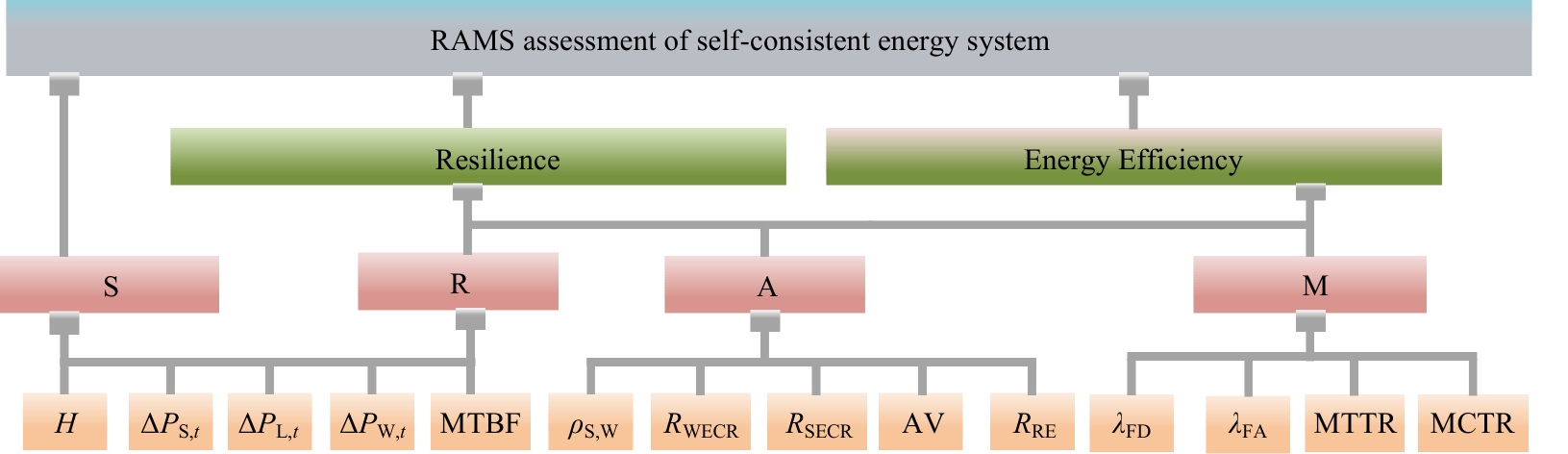
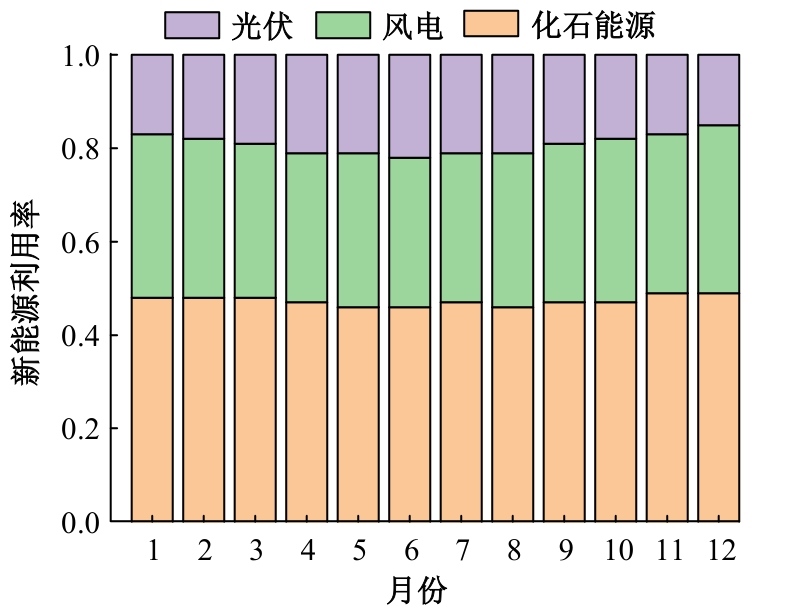
针对如何科学评价高速公路服务区自洽能源系统的弹性和能效这一难题,本文提出了一种基于传统RAMS评价方法的高速公路服务区自洽能源系统的评价方法。首先,分析了服务区自洽能源系统的结构及特点,考虑可靠性、可用性、可维修性和安全性4个方面的影响因素,建立了面向服务区自洽能源系统的评价模型,并设计评价策略。其次,基于熵权-TOPSIS法确定各项指标的权重,基于改进AHP-VIKOR法确定系统各项属性的权重,建立新型多准则综合评价体系。最后,选取某服务区作为算例进行对比分析,验证了本文方法在评价自洽能源系统方面的正确性与合理性。
中图分类号:
- U491.8

| [1] | 刘洋, 刘吉成. 基于大数据与粒子群的清洁能源协同优化调度方法[J]. 吉林大学学报:工学版, 2023,53(5): 1443-1448. |
| Liu Yang, Liu Ji-cheng. Collaborative optimization scheduling method of clean energy based on big data and particle swarm optimization [J]. Journal of Jilin University(Engineering and Technology Edition), 2023, 53(5): 1443-1448. | |
| [2] | Xiong Y Q, Cheng Q. Effects of new energy vehicle adoption on provincial energy efficiency in China: From the perspective of regional imbalances[J]. Energy, 2023, 281: No.128324. |
| [3] | 任建强, 王璐阳, 吴家浩, 等. 基于情景构建与推演的新能源电力设备运行风险评估[J]. 清华大学学报:自然科学版, 2022, 62(10): 1571-1578. |
| Ren Jian-qiang, Wang Lu-yang, Wu Jia-hao, et al. Operating risk assessments of new energy power equipment based on scenario construction and deduction[J]. Journal of Tsinghua University(Science and Technology), 2022, 62(10): 1571-1578. | |
| [4] | 马静, 黄韦博, 聂珍存, 等. 基于新能源快速调节的孤岛微网弹性恢复策略[J]. 电网技术, 2024, 48(3): 1103-1115. |
| Ma Jing, Huang Wei-bo, Nie Zhen-cun, et al. Elastic recovery strategy of island micro-network based on rapid adjustment of new energy[J]. Power System Technology, 2024, 48(3): 1103-1115. | |
| [5] | 王振刚, 陈渊睿, 曾军. 面向完全分布式控制的微电网信息物理系统建模与可靠性评估[J]. 电网技术, 2019, 43(7): 2413-2421. |
| Wang Zhen-gang, Chen Yuan-rui, Zeng Jun. Modeling and reliability assessment of completely distributed microgrid cyber physical system[J]. Power System Technology, 2019, 43(7): 2413-2421. | |
| [6] | 郭伟, 安佳坤, 贺春光, 等. 计及冰灾影响的电力系统韧性评估与提升方法[J]. 电力系统及其自动化学报, 2021, 33(8): 116-122. |
| Guo Wei, An Jia-kun, He Chun-guang, et al. Resilience assessment and improvement method for power system considering the influences of ice disaster[J]. Proceedings of the CSU-EPSA, 2021, 33(8): 116-122. | |
| [7] | 李响, 牛赛. 双碳目标下源-网-荷多层评价体系研究[J]. 中国电机工程学报, 2021, 41(): 178-184. |
| Li Xiang, Niu Sai. Study on multi-layer evaluation system of source-grid-load under carbon-neutral goal[J]. Proceeding of the CSEE, 2021, 41(Sup.1): 178-184. | |
| [8] | Chang K, Yu C, Liu S, et al. Design and application of power grid security risk assessment and hierarchical control system in natural disasters[C]∥International Conference on Power System Technology(POWERCON), Shenyang, China, 2021: 2080-2086. |
| [9] | Stover O, Karve P, Mahadevan S. Reliability and risk metrics to assess operational adequacy and flexibility of power grids[J]. Reliability Engineering & System Safety, 2023, 231: No.109018. |
| [10] | Chen P. Effects of the entropy weight on TOPSIS[J]. Expert Systems with Applications, 2021, 168: No.114186. |
| [11] | Gupta C, Gupta V. Requirements risk estimation Using TOPSIS method[C]∥The 27th Asia-Pacific Software Engineering Conference(APSEC), Singapore, 2020: 505-506. |
| [12] | Mo L. New energy industry investment risk assessment method based on fuzzy AHP[J]. International Journal of Global Energy Issues, 2023, 45(4,5): 436-447. |
| [13] | Hashemi A, Dowlatshahi M B, Nezamabadi-pour H. VMFS: A VIKOR-based multi-target feature selection[J]. Expert Systems with Application, 2021, 182: No.115224. |
| [14] | Khan M J, Kumam P, Kumam W. Theoretical justifications for the empirically successful VIKOR approach to multi-criteria decision making[J]. Soft Computing, 2021, 25(12): 7761-7767. |
| [15] | 史卓鹏, 黄韦博, 李勇, 等. 基于转动惯量存储与释放的风电场快速功率调控策略[J]. 华北电力大学学报:自然科学版, 2024, 51(4): 35-48. |
| Shi Zhuo-peng, Huang Wei-bo, Li Yong, et al. Wind farm rapid active power control strategy based on moment of inertia storage and release[J]. Journal of North China Electric Power University(Natural Science Edition), 2024, 51(4): 35-48. | |
| [16] | 李艳波, 李林宜, 刘维宇, 等. 基于TSO-MSMA算法在光伏系统MPPT中的研究[J]. 太阳能学报, 2023, 44(8): 324-330. |
| Li Yan-bo, Li Lin-yi, Liu Wei-yu,et al. Research on TSO-MSMA algorithm in MPPT of photovoltaic systems[J]. Acta Energiae Solaris Sinica, 2023, 44(8): 324-330. | |
| [17] | 马苗苗, 邵黎阳, 刘向杰. 分布式预测控制在微电网协调控制中的应用[J]. 吉林大学学报:工学版,2020, 50(6): 2258-2265. |
| Ma Miao-miao, Shao Li-yang, Liu Xiang-jie. Application of distributed predictive control in coordinated control of microgrid[J]. Journal of Jilin University (Engineering and Technology Edition), 2020, 50(6): 2258-2265. |
| [1] | 戢晓峰,邓若凡,乔新,关昊天. 建成环境对共享单车时间集聚模式的非线性影响[J]. 吉林大学学报(工学版), 2025, 55(7): 2233-2242. |
| [2] | 柴树山,周志强,李海涛,徐炅旸. 基于图时空模式学习网络的路网实时交通事件自动检测方法[J]. 吉林大学学报(工学版), 2025, 55(7): 2145-2161. |
| [3] | 潘福全,牛远征,张丽霞,杨金顺,陈秀锋,陈德启. 智能网联环境下无信号交叉口车辆通行控制策略[J]. 吉林大学学报(工学版), 2025, 55(6): 1948-1962. |
| [4] | 闫晟煜,程铭杰,田宏策,王洪瑀,周永恒,马博浩. 封闭式景区纯电动客车调度方法[J]. 吉林大学学报(工学版), 2025, 55(6): 1984-1993. |
| [5] | 赵红专,吴泽健,张鑫,石胜文,李文勇,展新,许恩永,王佳明. 基于密度离散度和信息传输延迟的网联商用车弯道格子模型[J]. 吉林大学学报(工学版), 2025, 55(6): 2015-2029. |
| [6] | 潘义勇,徐家聪,尤逸文,全勇俊. 网约车出行需求影响因素多尺度空间异质性分析[J]. 吉林大学学报(工学版), 2025, 55(5): 1567-1575. |
| [7] | 卢凯明,陈艳艳,仝瑶,张健,李永行,罗莹. 数据驱动的信号交叉口排队尾车驶离状态预测[J]. 吉林大学学报(工学版), 2025, 55(4): 1275-1286. |
| [8] | 周成栋,宋菲,赵小梅,姚俊杰. 基于多模式双动态演化的拥堵收费模型[J]. 吉林大学学报(工学版), 2025, 55(4): 1319-1327. |
| [9] | 张河山,范梦伟,谭鑫,郑展骥,寇立明,徐进. 基于改进YOLOX的无人机航拍图像密集小目标车辆检测[J]. 吉林大学学报(工学版), 2025, 55(4): 1307-1318. |
| [10] | 秦严严,肖腾飞,罗钦中,王宝杰. 雾天高速公路车辆跟驰安全分析与控制策略[J]. 吉林大学学报(工学版), 2025, 55(4): 1241-1249. |
| [11] | 宋现敏,湛天舒,李海涛,刘博,张云翔. 考虑用户成本和泊位利用率的停车预约分配模型[J]. 吉林大学学报(工学版), 2025, 55(4): 1287-1297. |
| [12] | 郭祎,魏书威,姜涛. 基于区位势能和多源数据的城市客运交通规划算法[J]. 吉林大学学报(工学版), 2025, 55(4): 1328-1335. |
| [13] | 潘义勇,徐翔宇. 数据不平衡的MobileViT网络交通事故严重程度预测模型[J]. 吉林大学学报(工学版), 2025, 55(3): 947-953. |
| [14] | 陈永恒,杨家伟,孙经宇. 借道左转交叉口的网联左转车辆最佳轨迹控制[J]. 吉林大学学报(工学版), 2025, 55(2): 614-622. |
| [15] | 陈发城,鲁光泉,林庆峰,张浩东,马社强,刘德志,宋会军. 有条件自动驾驶下驾驶人接管行为综述[J]. 吉林大学学报(工学版), 2025, 55(2): 419-433. |
|
||