吉林大学学报(工学版) ›› 2025, Vol. 55 ›› Issue (10): 3228-3241.doi: 10.13229/j.cnki.jdxbgxb.20240876
• 交通运输工程·土木工程 • 上一篇
季冻区沥青路面灌缝胶工作性能试验
王伟1,2( ),何荣森1,陈志国2,石家乐1,徐亮1(),孙彦楠2
- 1.长春工程学院 土木工程学院,长春 130012
2.吉林省交通科学研究所,长春 130012
Experiment on performance of asphalt pavement grouting adhesive in seasonal frozen zone
Wei WANG1,2(),Rong-sen HE1,Zhi-guo CHEN2,Jia-le SHI1,Liang XU1(),Yan-nan SUN2
- 1.School of Civil Engineering,Changchun Institute of Technology,Changchun 130012,China
2.Jilin Provincial Transport Scientific Research Institute,Changchun 130012,China
摘要:
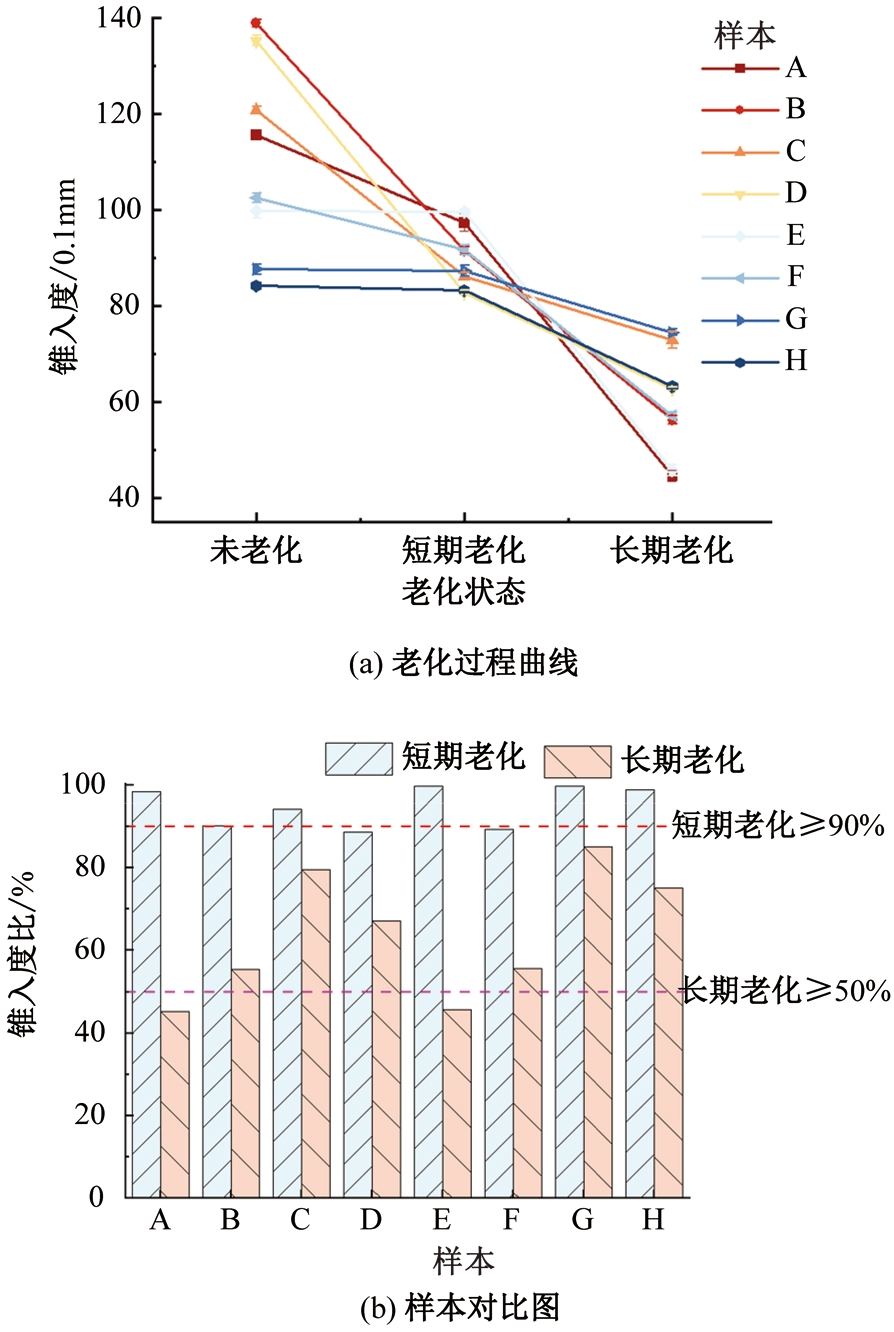
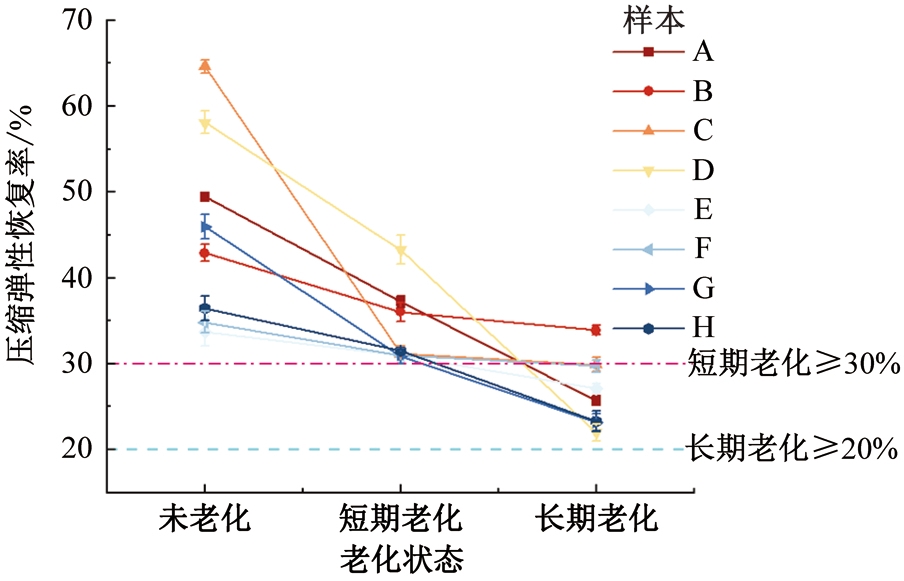
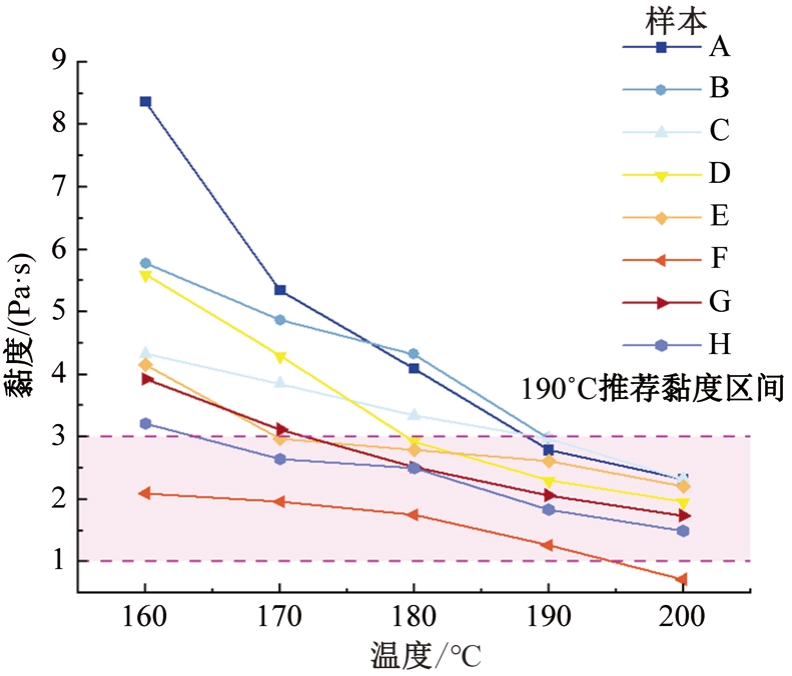
在现行灌缝胶评价指标基础上,通过短期和长期老化试验,提出增设锥入度比、压缩弹性恢复率、低温拉伸等评价指标,并采用熵权-TOPSIS组合方法,构建了适用于季冻区沥青路面灌缝胶工作性能的指标评价模型。试验结果表明:短期老化后锥入度比和压缩弹性恢复率控制标准分别为90%、30%,长期老化后的锥入度比和压缩弹性恢复率控制标准分别为50%和20%;灌缝胶黏度的评价标准为190 ℃时的1~3 Pa·s,灌入深度评价标准为5 cm,浸水后灌缝胶的低温拉伸应力评价标准为0.06 MPa(-30 ℃)和0.03 MPa(-20 ℃),而冻融循环后的灌缝胶黏附力评价标准为0.03 MPa(-30 ℃)和0.025 MPa(-20 ℃);采用熵权-TOPSIS法不仅可以判断样本合格与否,还可以根据各个指标的评价结果全面综合地判断样本的优劣。本文研究有助于提高灌缝材料应用效果和耐久性评价水平,为寒区灌缝胶性能评价及规范修订提供补充与参考数据。
中图分类号:
- U414

| [1] | 许正森, 雷相达, 管海燕. 多尺度局部特征增强Transformer道路裂缝检测模型[J]. 中国图象图形学报, 2023, 28(4): 1019-1028. |
| Xu Zheng-sen, Lei Xiang-da, Guan Hai-yan. Multi-scale local feature enhanced transformer network for pavement crack detection[J]. Journal of Image and Graphics, 2023, 28(4):1019-1028. | |
| [2] | 陈嘉锐, 崔得龙, 邱泽环, 等. 基于YOLOv5s模型的新型道路裂缝检测系统[J]. 现代电子技术, 2023, 46(13): 62-66. |
| Chen Jia-rui, Cui De-long, Qiu Ze-huan, et al. A new road crack detection system based on YOLOv5s model[J]. Modern Electronics Technique, 2023, 46(13): 62-66. | |
| [3] | 逄蕴泽. SBS/CNTs改性沥青灌缝胶的制备及性能研究[D]. 长春: 吉林大学交通学院, 2023. |
| Pang Yun-ze. Investigation on the preparation and properties of SBS/CNTs modified asphalt sealant[D]. Changchun: College of Transportation, Jilin University, 2023. | |
| [4] | 李艳博. 适用于甘肃省典型气候环境的沥青路面灌缝胶研制与应用[D]. 兰州: 兰州交通大学土木工程学院, 2017. |
| Li Yan-bo. Preparation and application of asphalt pavement´s sealants and fillers for the typical climate of gansu province[D]. Lanzhou: School of Civil Engineering, Lanzhou Jiaotong University, 2017. | |
| [5] | 覃金顺, 王振军, 孙宁, 等. 橡胶粉对沥青灌缝胶高温稳定性提升与机理[J]. 公路, 2023, 68(8): 332-340. |
| Qin Jin-shun, Wang Zhen-jun, Sun Ning, et al. Improvements and mechanism of crumb rubber on high temperature stability performance of asphalt sealant[J]. Highway, 2023, 68(8): 332-340. | |
| [6] | 1:2004. |
| Hot applied joint sealants [S]. | |
| [7] | . 路面加热型密封胶 [S]. |
| [8] | Soliman H, Shalaby A, Kavanagh L. Performance evaluation of joint and crack sealants in cold climates using DSR and BBR tests[J]. Journal of Materials in Civil Engineering, 2008, 20(7): 470-477. |
| [9] | Al-Qadi I L, Yang W, Fini E, et al. Towards performance-based selection guidelines for roadway crack sealants[C]∥International ISAP Symposium on Asphalt Pavements Environment, Zurich, Switzerland, 2008:161-172. |
| [10] | 薛恒潇. 灌缝胶拉伸设备改进及低温性能评价研究[D].哈尔滨: 哈尔滨工业大学交通科学与工程学院, 2013. |
| Xue Heng-xiao. Research on crack sealant stretching tester improvement and performance evaluation in low temperature[D]. Harbin: School of Transportation Science and Engineering, Harbin Institute of Technology, 2014. | |
| [11] | 董岩岩. 基于弱边界层理论的灌缝胶失效机理研究[D]. 哈尔滨: 哈尔滨工业大学交通科学与工程学院, 2017. |
| Dong Yan-yan. The failure mechanism of crack sealant based on the weak boundary layer theory[D]. Harbin: School of Transportation Science and Engineering, Harbin Institute of Technology, 2017. | |
| [12] | 刘忠骥. 灌缝胶失效判别方法及自愈性研究[D]. 哈尔滨:哈尔滨工业大学交通科学与工程学院, 2017. |
| Liu Zhong-ji. The failure evaluation and self-healing investigation of crack sealant[D]. Harbin: School of Transportation Science and Engineering, Harbin Institute of Technology, 2017. | |
| [13] | Poulikakos L D, Falchetto A C, Wang D, et al. Impact of asphalt aging temperature on chemo-mechanics[J]. RSC Advances, 2019, 9(21): 11602-11613. |
| [14] | Wang S Q, Jia Y S, Li Z R, et al. Evaluating the effect of aging on adhesion for hot-poured road sealants through a modified adhesion test[J]. Construction and Building Materials, 2022, 347: No. 128576. |
| [15] | Masson J F, Collins P, Bundalo-Perc S, et al. Early thermodegradation of bituminous sealants resulting from improper installation: field study[J]. Transportation Research Record: Journal of the Transportation Research Board, 2007, 1991(1): 119-123. |
| [16] | Masson J F, Woods J R, Collins P, et al. Accelerated aging of bituminous sealants: small kettle aging[J]. International Journal of Pavement Engineering, 2008, 9(5): 365-371. |
| [17] | Masson J F, Lacasse M A. Effect of hot-air lance on crack sealant adhesion[J]. Journal of Transportation Engineering, 1999, 125(4): 357-363. |
| [18] | . Standard test methods for sealants and fillers, hot-applied, for joints and cracks in asphalt pavements and portland cement concrete pavements [S]. |
| [19] | Wang S Q, Gao Y, Jia Y S, et al. Development of a modified bond test for hot applied crack sealants by using hot-cold cycles[J]. Road Materials and Pavement Design, 2023, 24(8): 1-21. |
| [20] | Wang S Q, Li Y S, Wei Z Y, et al. Effects of periodically changing temperatures on the bond interface between crack sealant and repaired pavement[J]. Journal of Transportation Engineering, Part B: Pavements, 2024, 150(1): No. 04024003. |
| [21] | Al-Qadi I L, Masson J F, Yang S H, et al. Development of performance-based guidelines for selection of bituminous-based hot-poured pavement crack sealant:an executive summary repor[R]. Virginia:Virginia Transportation Research Council,2009. |
| [22] | .Standard test method for effect of heat and air on a moving film of asphalt binder [S]. |
| [1] | 李伟,李萍,王晖,张留博,念腾飞,张强,李宁. 自修复微胶囊在沥青路面智能养护中的应用进展[J]. 吉林大学学报(工学版), 2025, 55(11): 3446-3462. |
| [2] | 蔡正森,伍宇,许新权,范剑伟,马涛,郑鸿柔. 多孔沥青路面路用性能跟踪检测[J]. 吉林大学学报(工学版), 2024, 54(10): 2941-2951. |
| [3] | 宫亚峰,吴树正,毕海鹏,谭国金. 基于现场监测技术的装配式箱涵温度场及冻胀分析[J]. 吉林大学学报(工学版), 2023, 53(8): 2321-2331. |
| [4] | 李岩,张久鹏,陈子璇,黄果敬,王培. 基于PCA-PSO-SVM的沥青路面使用性能评价[J]. 吉林大学学报(工学版), 2023, 53(6): 1729-1735. |
| [5] | 阙云,季雪,蒋子平,戴伊,王叶飞,陈嘉. GAN数据增强下路面裂缝语义分割算法[J]. 吉林大学学报(工学版), 2023, 53(11): 3166-3175. |
| [6] | 陈栩,曹超飞,尚静,黄明星,艾长发,任东亚. 动静水环境作用下级配离析对沥青混合料水损害的影响评价[J]. 吉林大学学报(工学版), 2023, 53(1): 210-219. |
| [7] | 廖汉超,单汨源. 基于模糊聚类最大树算法的高层建筑基坑工程风险识别方法[J]. 吉林大学学报(工学版), 2022, 52(12): 2892-2897. |
| [8] | 于晓贺,罗蓉,柳子尧,黄婷婷,束裕. 沥青路面典型裂缝湿度场数值模拟[J]. 吉林大学学报(工学版), 2022, 52(10): 2343-2351. |
| [9] | 薛锋,何传磊,黄倩,罗建. 多式轨道交通网络的耦合协调度[J]. 吉林大学学报(工学版), 2021, 51(6): 2040-2050. |
| [10] | 董伟智,张爽,朱福. 基于可拓层次分析法的沥青混合料路用性能评价[J]. 吉林大学学报(工学版), 2021, 51(6): 2137-2143. |
| [11] | 毛昱,李萍,念腾飞,林梅,魏西应. 基于分形理论的沥青路面层间机械摩阻强度行为[J]. 吉林大学学报(工学版), 2020, 50(2): 594-605. |
| [12] | 李伊,刘黎萍,孙立军. 沥青面层不同深度车辙等效温度预估模型[J]. 吉林大学学报(工学版), 2018, 48(6): 1703-1711. |
| [13] | 孟繁宇, 潘晓东. 基于神经网络-遗传算法的功能性沥青路面材料优选[J]. 吉林大学学报(工学版), 2013, 43(增刊1): 535-538. |
| [14] | 吉淑娇, 朱明, 胡汉平, 邢笑雪. 基于特征匹配的视频稳像算法[J]. 吉林大学学报(工学版), 2013, 43(增刊1): 322-325. |
| [15] | 谭忆秋, 赵立东, 岳军声, 蓝天云. 沥青路面凝冰损坏程度检测设备[J]. 吉林大学学报(工学版), 2012, 42(01): 57-62. |
|
||