吉林大学学报(工学版) ›› 2025, Vol. 55 ›› Issue (2): 700-708.doi: 10.13229/j.cnki.jdxbgxb.20230535
• 计算机科学与技术 • 上一篇
基于动静态和关系特征全局捕获的社交推荐模型
蔡晓东( ),周青松,张言言,雪韵
- 桂林电子科技大学 信息与通信学院,广西 桂林 541004
Social recommendation based on global capture of dynamic, static and relational features
Xiao-dong CAI(),Qing-song ZHOU,Yan-yan ZHANG,Yun XUE
- School of Information and Communication,Guilin University of Electronic Technology,Guilin 541004,China
摘要:
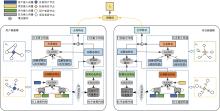
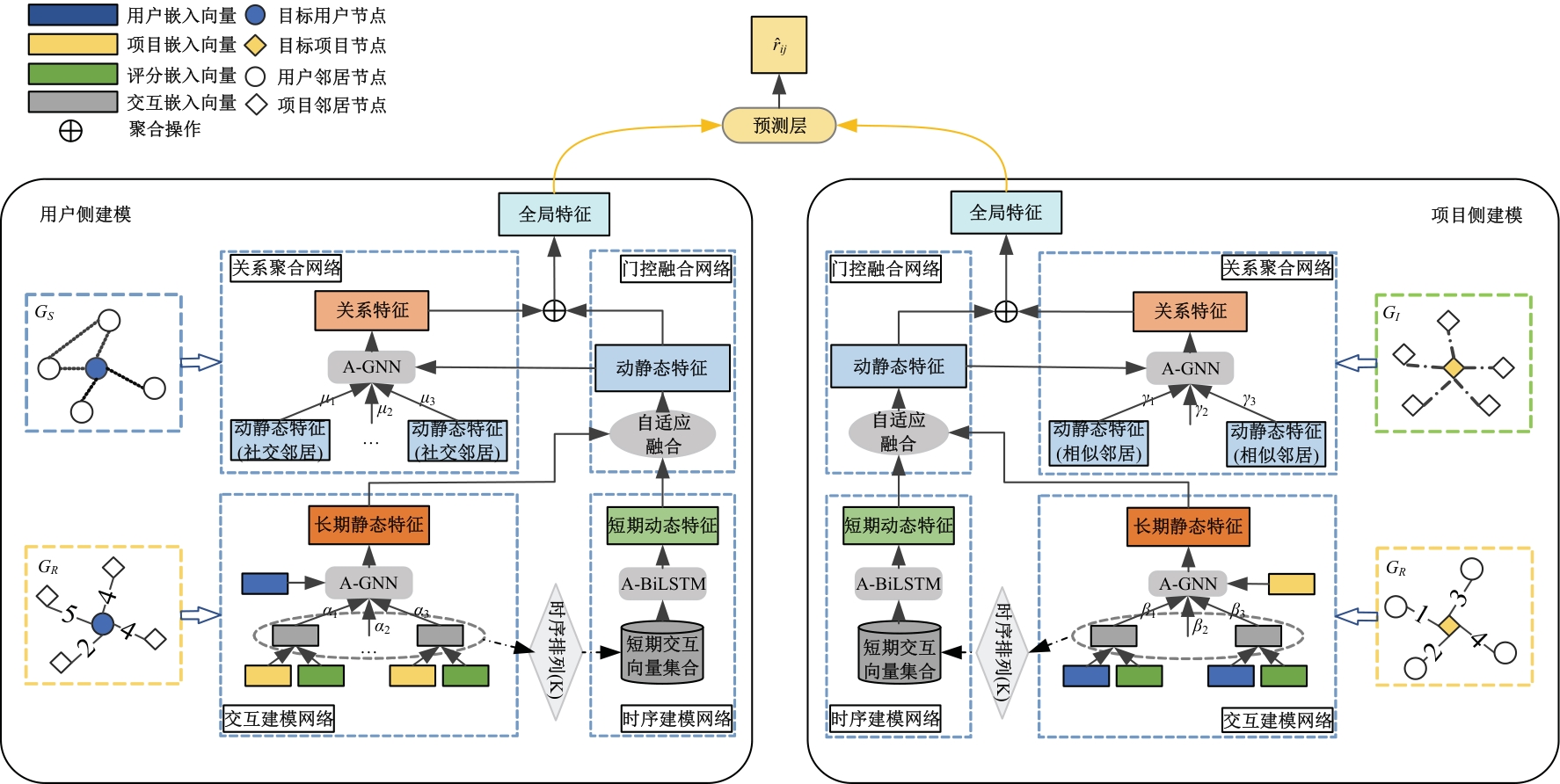
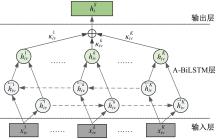
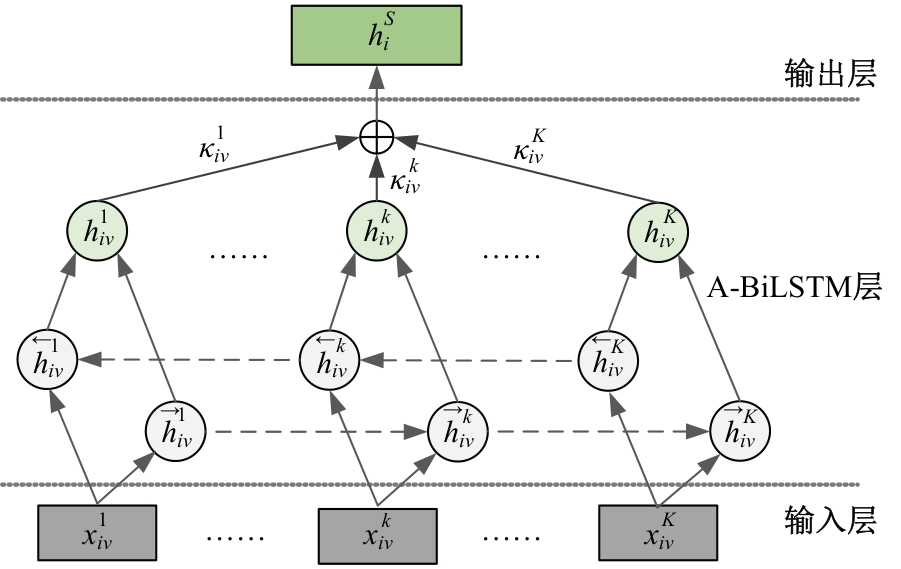
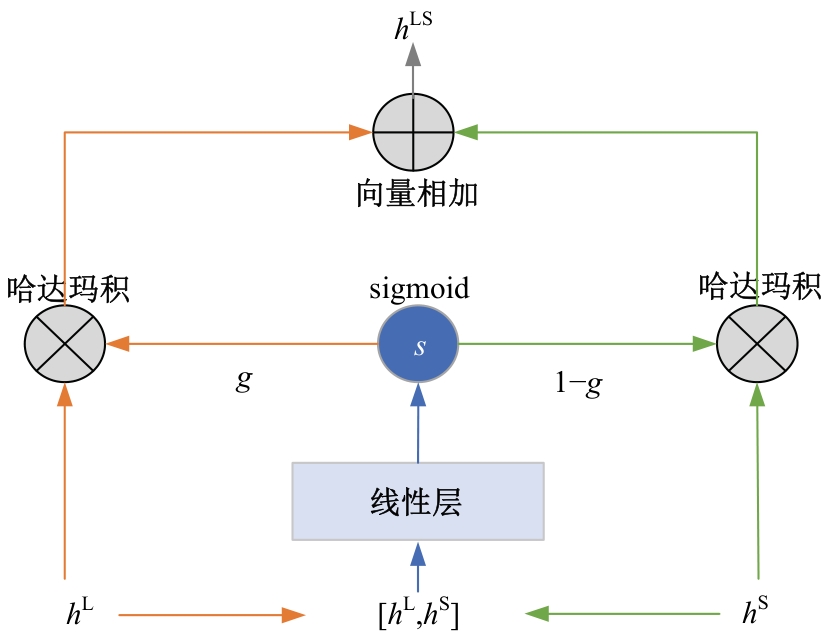
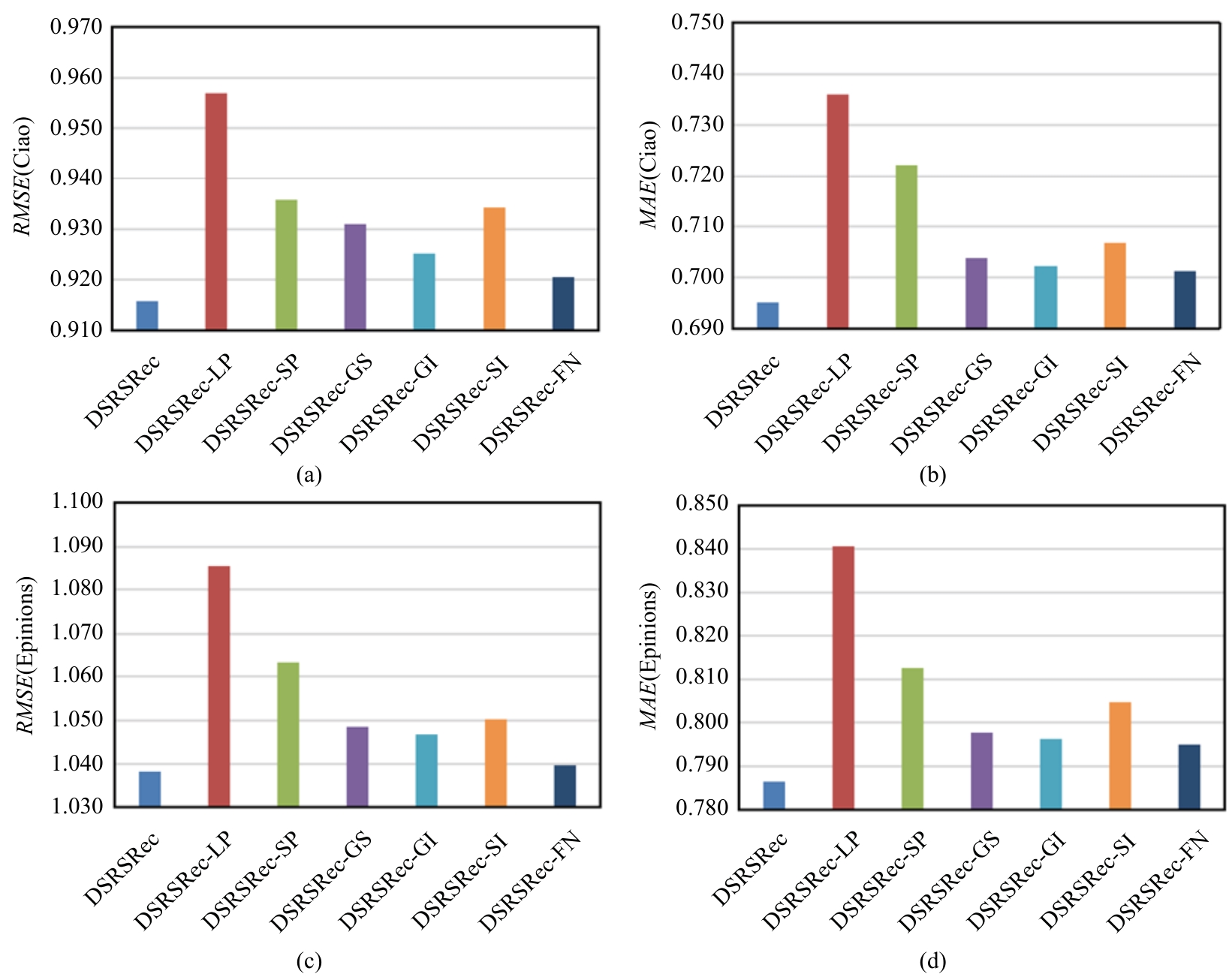
基于图神经网络的社交推荐算法在提升推荐系统性能方面取得不错表现,但现有方法忽略了用户兴趣偏好和项目吸引力的动态演变,以及项目与项目间存在潜在联系,这会导致模型学习到的特征不够准确和丰富,限制预测精度。针对此问题,本文提出一种基于动静态和关系特征全局捕获的社交推荐模型。该模型先分别经交互建模网络和时序建模网络捕获出用户和项目的长期静态特征、短期动态特征,再由门控融合网络对长期静态特征和短期动态特征进行自适应融合得到动静态特征,最后利用关系聚合网络实现关系特征的捕获。在Ciao和Epinions数据集上的实验结果表明:本文模型的预测误差较现有先进方法有明显降低,具有良好的应用价值。
中图分类号:
- TP391

| 1 | Dau A, Salim N. Recommendation system based on deep learning methods: a systematic review and new directions[J]. Artificial Intelligence Review, 2020, 53(4): 2709-2748. |
| 2 | Mcpherson M, Smith L L, Cook J M. Birds of a feather: homophily in social networks[J]. Annual Review of Sociology, 2001, 27(1): 415-444. |
| 3 | Marsden P V, Friedkin N E. Network studies of social influence[J]. Sociological Methods & Research, 1993, 22(1): 127-151. |
| 4 | Hamilton W, Ying Z, Leskovec J. Inductive representation learning on large graphs[J]. Advances in Neural Information Processing Systems, 2017, 17: 1025-1035. |
| 5 | Zhou J, Cui G, Hu S, et al. Graph neural networks: a review of methods and applications[J]. AI Open, 2020, 1: 57-81. |
| 6 | Wu S, Sun F, Zhang W, et al. Graph neural networks in recommender systems: a survey[J]. ACM Computing Surveys, 2022, 55(5): 1-37. |
| 7 | 吴静, 谢辉, 姜火文. 图神经网络推荐系统综述[J]. 计算机科学与探索, 2022, 16(10): 2249-2263. |
| Wu Jing, Xie Hui, Jiang Huo-wen. Survey of graph neural network in recommendation system[J]. Journal of Frontiers of Computer Science and Technology, 2022, 16(10): 2249-2263. | |
| 8 | Fan W, Ma Y, Li Q, et al. Graph neural networks for social recommendation[C]∥The World Wide Web Conference, San Francisco, USA, 2019: 417-426. |
| 9 | Xu H, Huang C, Xu Y, et al. Global context enhanced social recommendation with hierarchical graph neural networks[C]∥EEE International Conference on Data Mining, Sorrento, Italy, 2020: 701-710. |
| 10 | Dong M, Yao L, Wang X, et al. Adversarial dual autoencoders for trust-aware recommendation[J]. Neural Computing and Applications, 2021, 35(18): 13065-13075. |
| 11 | Yu Y, Qian W, Zhang L, et al. A graph neural network based social network recommendation algorithm using high order neighbor information[J]. Sensors, 2022, 22(19): 22197122. |
| 12 | Chen J, Xin X, Liang X, et al. GDSRec: graph-based decentralized collaborative filtering for social recommendation[J]. IEEE Transactions on Knowledge and Data Engineering, 2022, 35(5): 4813-4824. |
| 13 | 章琪, 于双元, 尹鸿峰, 等. 基于图注意力的神经协同过滤社会推荐算法[J]. 计算机科学, 2023, 50(2): 115-122. |
| Zhang Qi, Yu Shuang-yuan, Yin Hong-feng, et al. Neural collaborative filtering for social recommendation algorithm based on graph attention[J]. Computer Science, 2023, 50(2): 115-122. | |
| 14 | Zhu H, Xiong F, Chen H, et al. Incorporating a triple graph neural network with multiple implicit feedback for social recommendation[J]. ACM Transactions on the Web, 2024, 18(2): 1-26. |
| 15 | Huang C, Xu H, Xu Y, et al. Knowledge-aware coupled graph neural network for social recommendation[J]. Proceedings of the AAAI Conference on Artificial Intelligence, 2021, 35(5): 4115-4122. |
| 16 | Song W, Xiao Z, Wang Y, et al. Session-based social recommendation via dynamic graph attention networks[C]∥Proceedings of the Twelfth ACM International Conference on Web Search and Data Mining, Melbourne, Australia, 2019: 555-563. |
| 17 | Fu B, Zhang W, Hu G, et al. Dual side deep context-aware modulation for social recommendation[C]∥Proceedings of the Web Conference 2021, Ljubljana, Slovenija, 2021: 2524-2534. |
| 18 | Yu Z, Lian J, Mahmoody A, et al. Adaptive user modeling with long and short-term preferences for personalized recommendation[C]∥IJCAI19, Macao, China, 2019: 4213-4219. |
| 19 | Fan W, Li Q, Cheng M. Deep modeling of social relations for recommendation[C]∥Proceedings of the AAAI Conference on Artificial Intelligence, New Orleans, USA, 2018: 8075-8076. |
| 20 | Yang L, Liu Z, Dou Y, et al. Consisrec: enhancing gnn for social recommendation via consistent neighbor aggregation[C]∥Proceedings of the 44th International ACM SIGIR Conference on Research and Development in Information Retrieval, New York, USA, 2021: 2141-2145. |
| 21 | Koren Y. Factorization meets the neighborhood: a multifaceted collaborative filtering model[C]∥Proceedings of the 14th ACM SIGKDD International Conference on Knowledge Discovery and Data Mining, New York,USA, 2008: 426-434. |
| [1] | 车翔玖,武宇宁,刘全乐. 基于因果特征学习的有权同构图分类算法[J]. 吉林大学学报(工学版), 2025, 55(2): 681-686. |
| [2] | 郭晓然,王铁君,闫悦. 基于局部注意力和本地远程监督的实体关系抽取方法[J]. 吉林大学学报(工学版), 2025, 55(1): 307-315. |
| [3] | 汪豪,赵彬,刘国华. 基于时间和运动增强的视频动作识别[J]. 吉林大学学报(工学版), 2025, 55(1): 339-346. |
| [4] | 刘元宁,臧子楠,张浩,刘震. 基于深度学习的核糖核酸二级结构预测方法[J]. 吉林大学学报(工学版), 2025, 55(1): 297-306. |
| [5] | 李路,宋均琦,朱明,谭鹤群,周玉凡,孙超奇,周铖钰. 基于RGHS图像增强和改进YOLOv5网络的黄颡鱼目标提取[J]. 吉林大学学报(工学版), 2024, 54(9): 2638-2645. |
| [6] | 赵宏伟,武鸿,马克,李海. 基于知识蒸馏的图像分类框架[J]. 吉林大学学报(工学版), 2024, 54(8): 2307-2312. |
| [7] | 张云佐,郑宇鑫,武存宇,张天. 基于双特征提取网络的复杂环境车道线精准检测[J]. 吉林大学学报(工学版), 2024, 54(7): 1894-1902. |
| [8] | 孙铭会,薛浩,金玉波,曲卫东,秦贵和. 联合时空注意力的视频显著性预测[J]. 吉林大学学报(工学版), 2024, 54(6): 1767-1776. |
| [9] | 李延风,刘名扬,胡嘉明,孙华栋,孟婕妤,王奥颖,张涵玥,杨华民,韩开旭. 基于梯度转移和自编码器的红外与可见光图像融合[J]. 吉林大学学报(工学版), 2024, 54(6): 1777-1787. |
| [10] | 张丽平,刘斌毓,李松,郝忠孝. 基于稀疏多头自注意力的轨迹kNN查询方法[J]. 吉林大学学报(工学版), 2024, 54(6): 1756-1766. |
| [11] | 张玺君,余光杰,崔勇,尚继洋. 基于聚类算法和图神经网络的短时交通流预测[J]. 吉林大学学报(工学版), 2024, 54(6): 1593-1600. |
| [12] | 梁礼明,周珑颂,尹江,盛校棋. 融合多尺度Transformer的皮肤病变分割算法[J]. 吉林大学学报(工学版), 2024, 54(4): 1086-1098. |
| [13] | 张云佐,郭威,李文博. 遥感图像密集小目标全方位精准检测算法[J]. 吉林大学学报(工学版), 2024, 54(4): 1105-1113. |
| [14] | 拉巴顿珠,扎西多吉,珠杰. 藏语文本标准化方法[J]. 吉林大学学报(工学版), 2024, 54(12): 3577-3588. |
| [15] | 周丰丰,于涛,范雨思. 基于质谱数据的生成对抗自编码器整合投票算法[J]. 吉林大学学报(工学版), 2024, 54(10): 2969-2977. |
|
||